Shop Antique Caucasian Rugs and Kazak, Shirvan and Kuba Carpets
Caucasian rugs are hand-knotted village and tribal carpets from the Caucasus — the mountain region between the Black Sea and the Caspian, covering present-day Azerbaijan, Armenia, Georgia and Dagestan. Browse and buy them at Nazmiyal‘s New York gallery: bold angular geometry, saturated natural dyes, and border architecture that reads like floor art. Almost everything genuine in this category was woven before about 1925, and each piece is priced on request. Shop the collection below, or speak with a specialist about a specific rug.
“Caucasian” is a regional description rather than a single weaving type. The Caucasus is a dense patchwork of valleys and districts sitting between Eastern Europe and Western Asia, and its position on the old trade routes made it unusually diverse. Rugs are grouped by district rather than by workshop, and each district carries its own colour habits, drawing conventions and motifs.
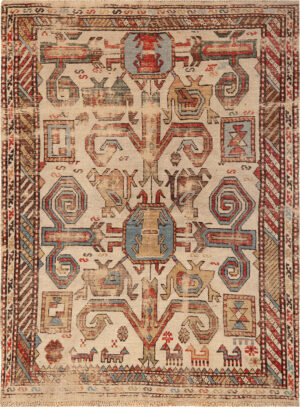
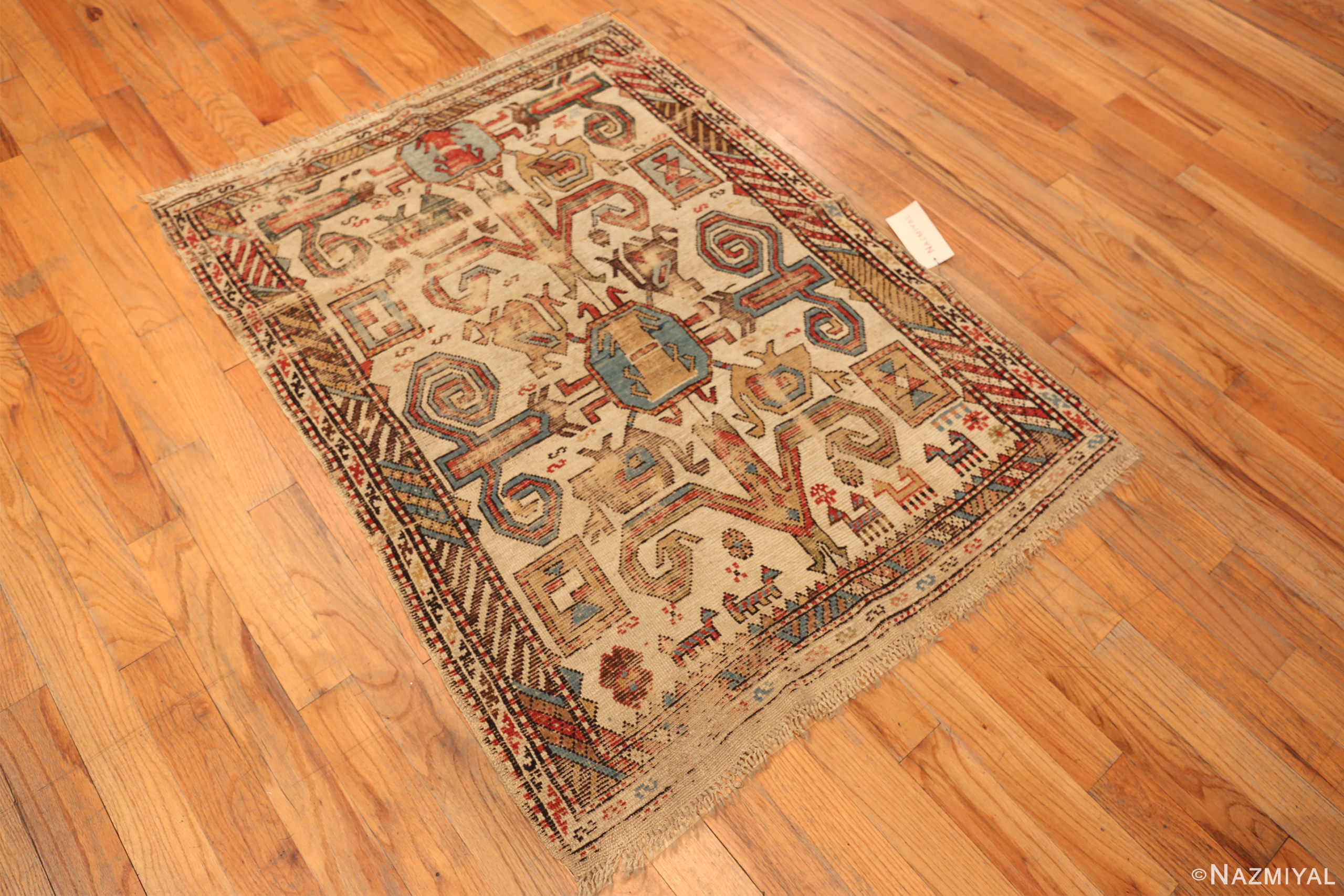
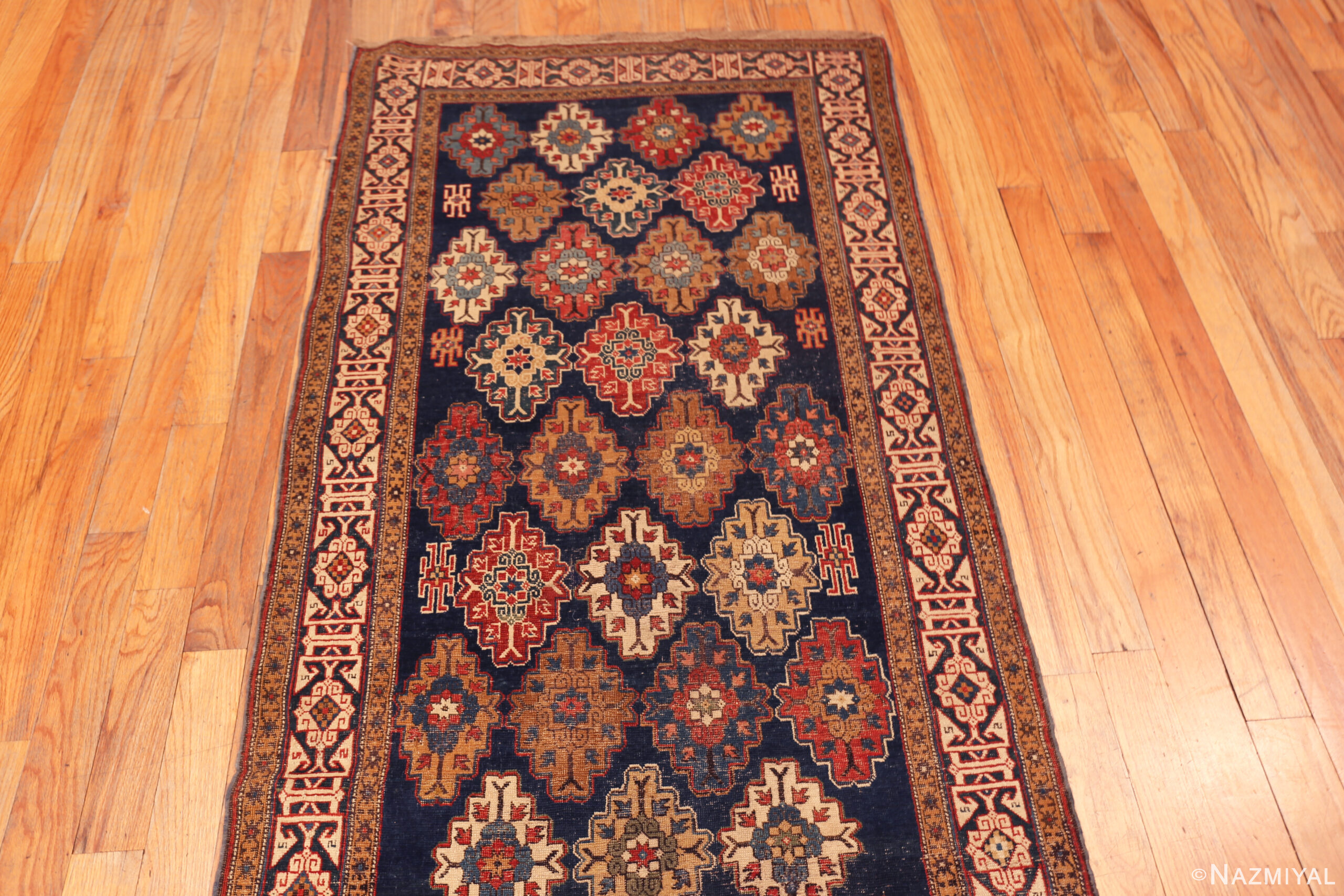
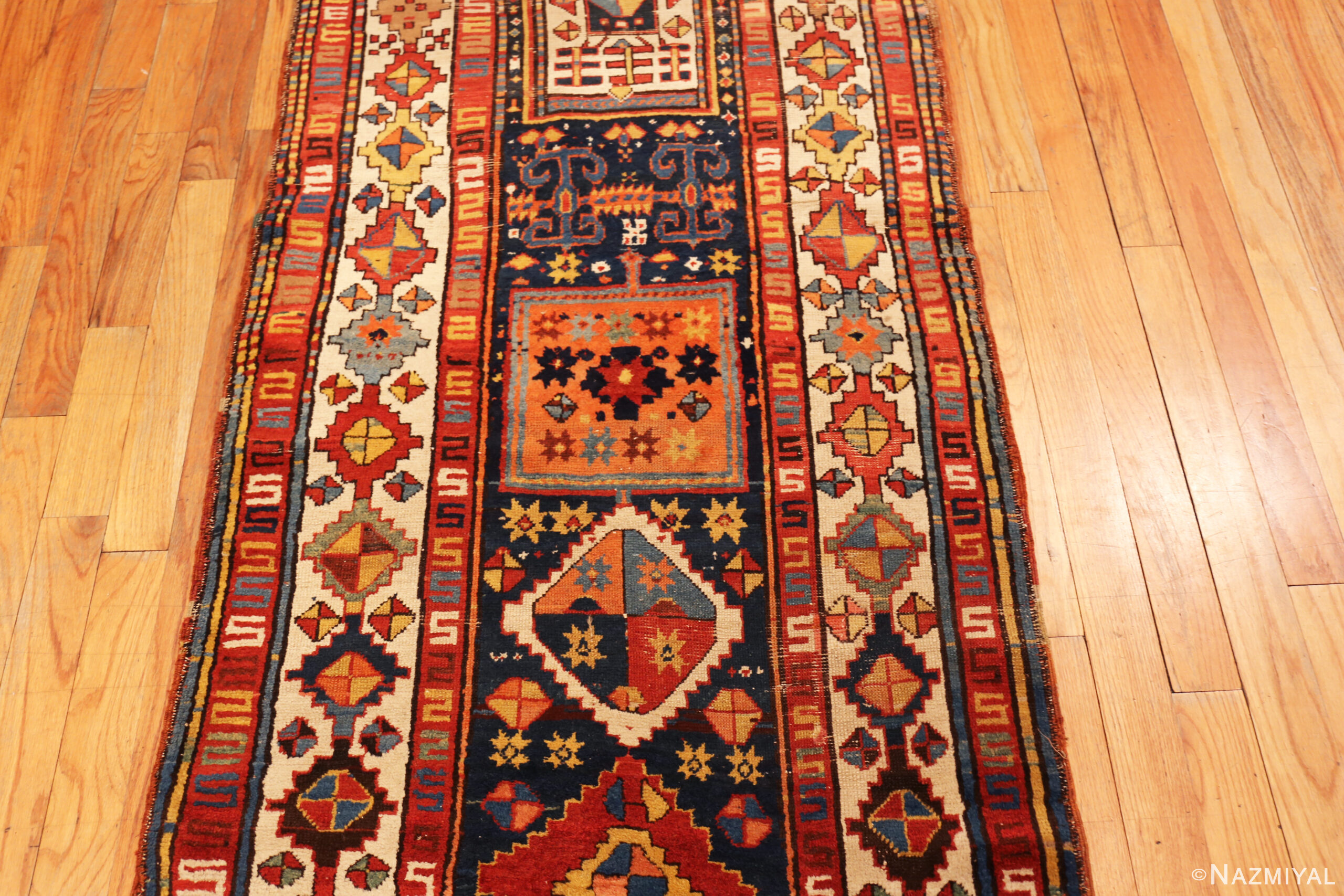
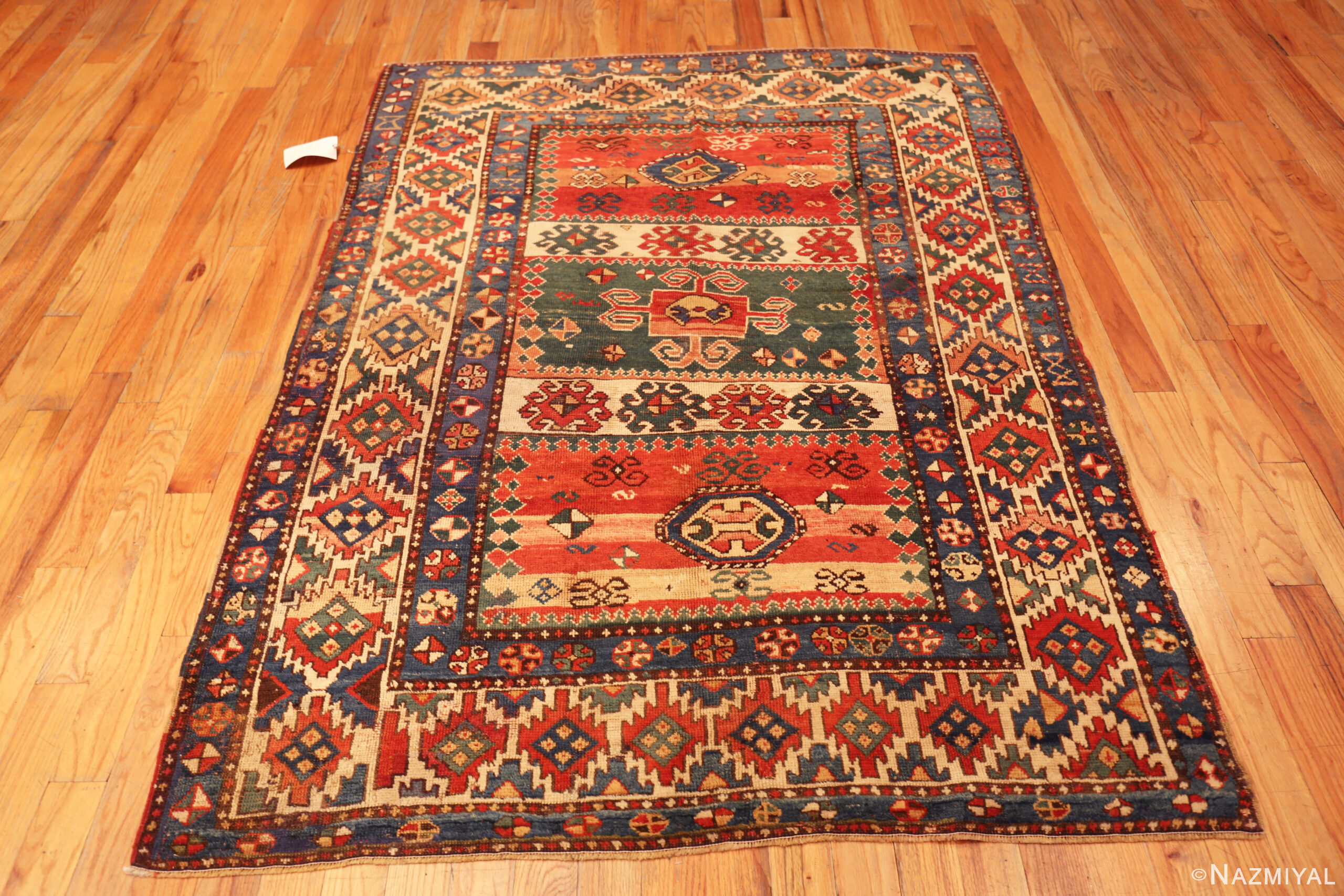
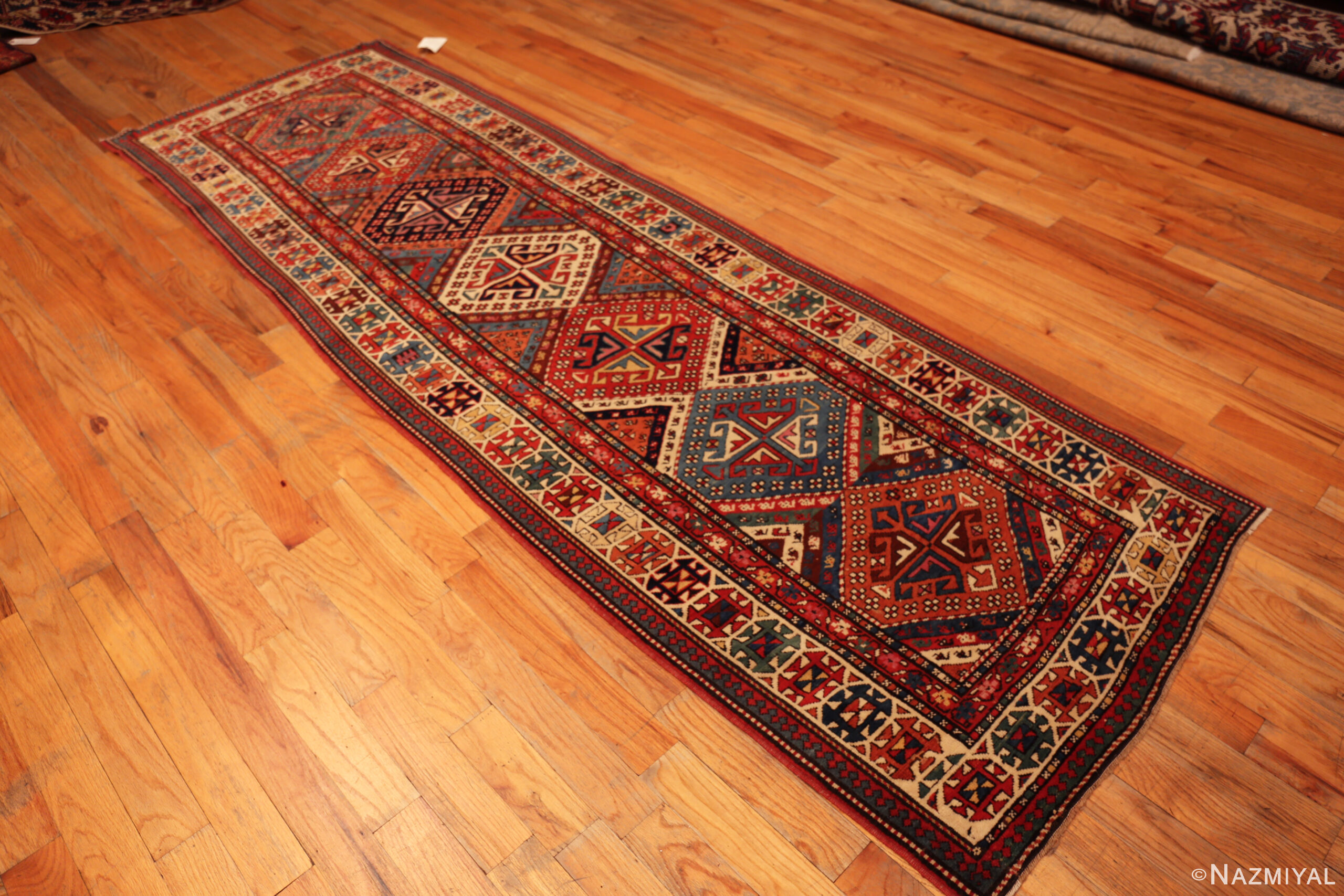
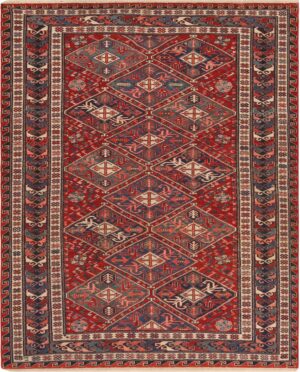
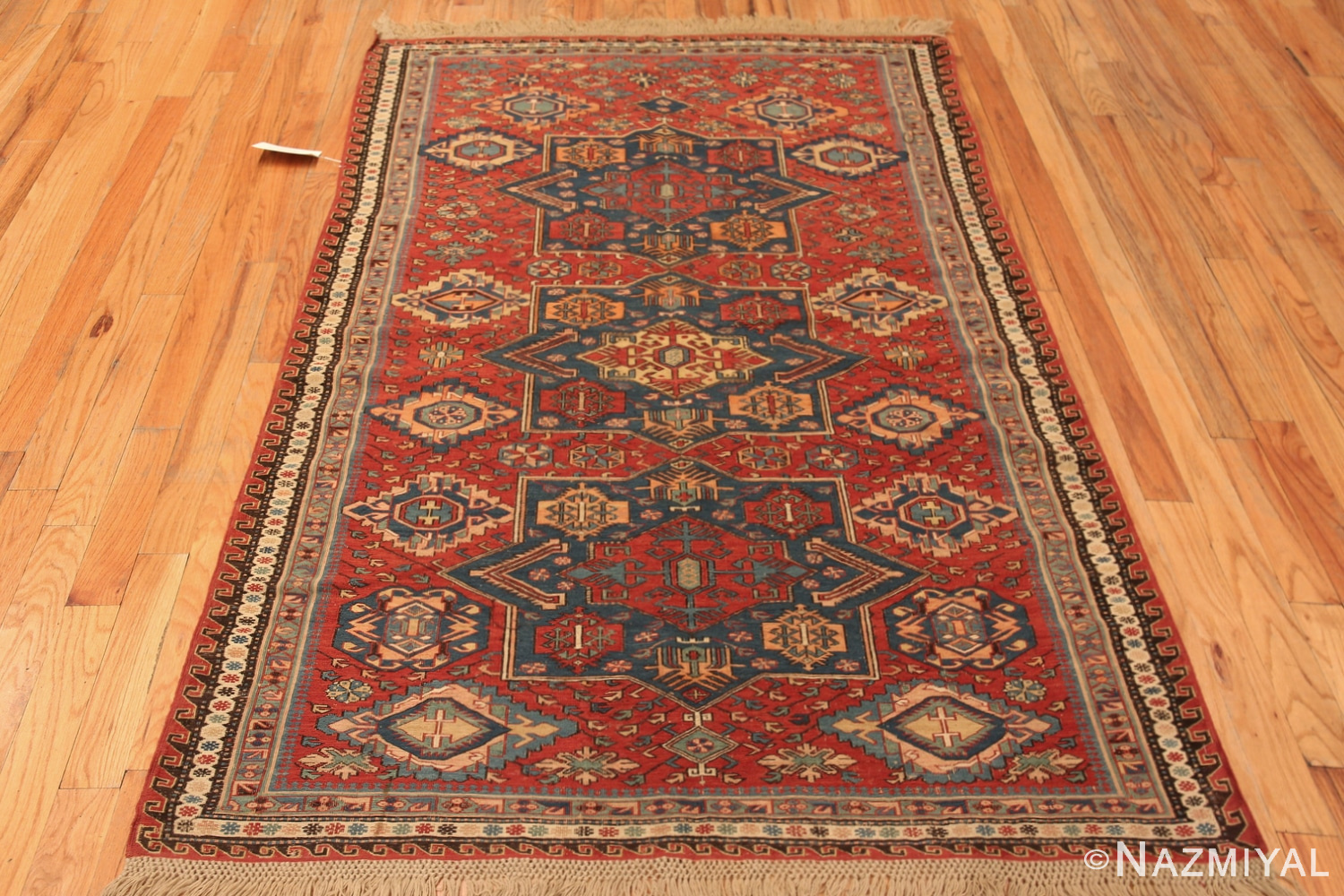
What unites them is an approach. Caucasian weavers worked in straight lines and angles where Persian city weavers worked in curves. Motifs are stylised to the point of becoming symbols — a stag becomes a hooked diamond, a flower becomes an eight-pointed star — and the borders are as considered as the field. The result reads as graphic design a century before the term existed, which is much of why these rugs sit so well in modern rooms.
Caucasian weaving sits within the wider world of tribal rugs and geometric rugs. See rug origins for how the weaving regions relate to one another, and compare directly with Persian rugs, the tradition Caucasian work is most often set against.
What “Antique” Means in This Category
This is the most useful thing to understand about Caucasian rugs, and most listings never mention it.
Independent village weaving in the Caucasus effectively ended in the 1920s. As the region was absorbed into the Soviet Union, weaving was collectivised: state workshops replaced village looms, designs were standardised and issued centrally, and the individual pattern vocabulary that makes these rugs worth collecting was administered out of existence. Later attempts to revive production, including in the 1950s, produced commercial goods rather than the old work.
The practical dividing line therefore sits around 1925. Rugs woven before it generally carry the drawing, the dye character and the individuality collectors buy Caucasian rugs for; rugs woven after it generally do not, whatever they are called. It is a collecting convention rather than an administrative date, and the change was a process across the late 1920s and 1930s — but it is a convention the trade uses consistently, and it is real.
It also means “antique Caucasian” is one of the few category descriptions where the word is doing real work rather than decorating a listing: the collectible period genuinely is a century and more behind us. Each rug here carries its own dating, and we are glad to discuss it on any piece you are considering. Compare across eras in antique rugs and vintage rugs.
The Five Classic Groups
Caucasian rugs are conventionally sorted into five groups, and each has its own collection here. If you already know which one you want, start there rather than on this page — those pages carry the depth, the inventory and the detail for each group.
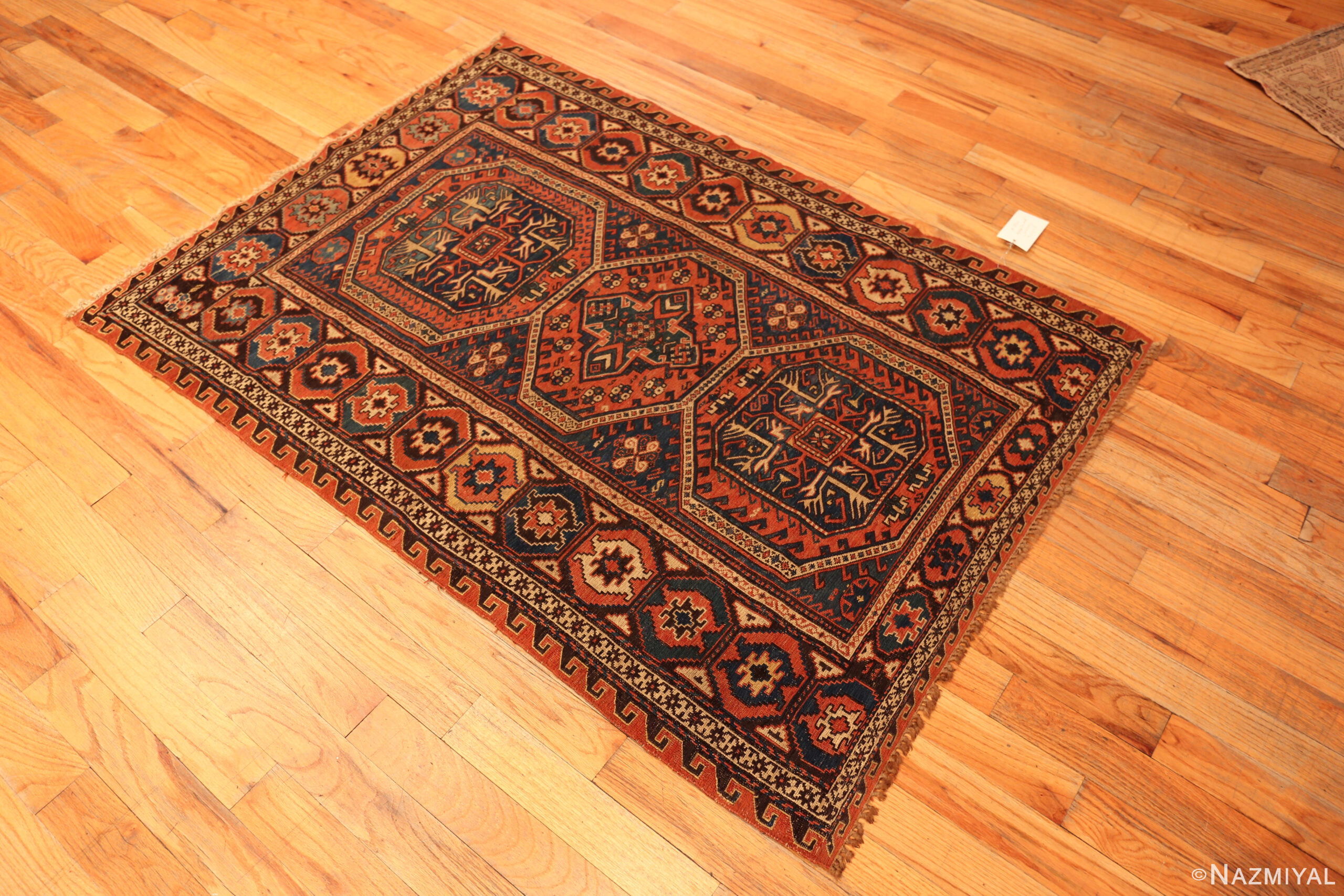
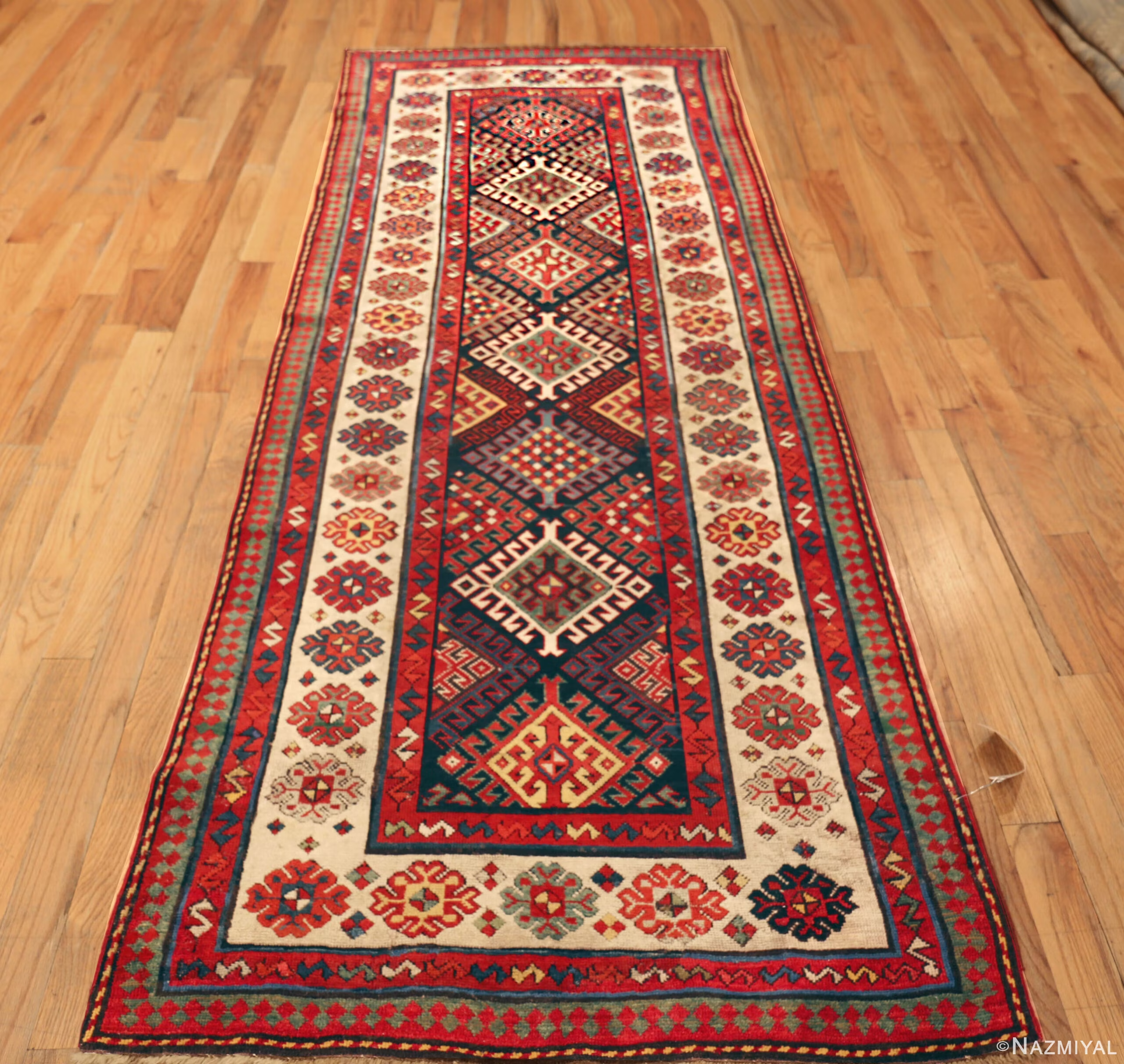
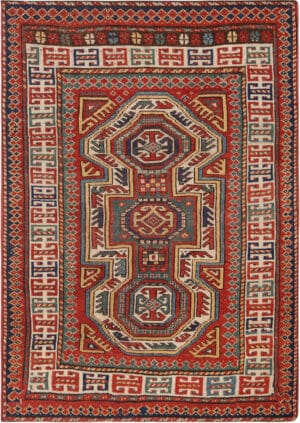
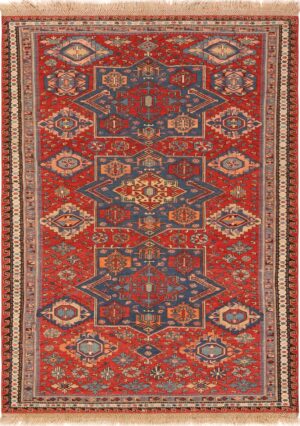
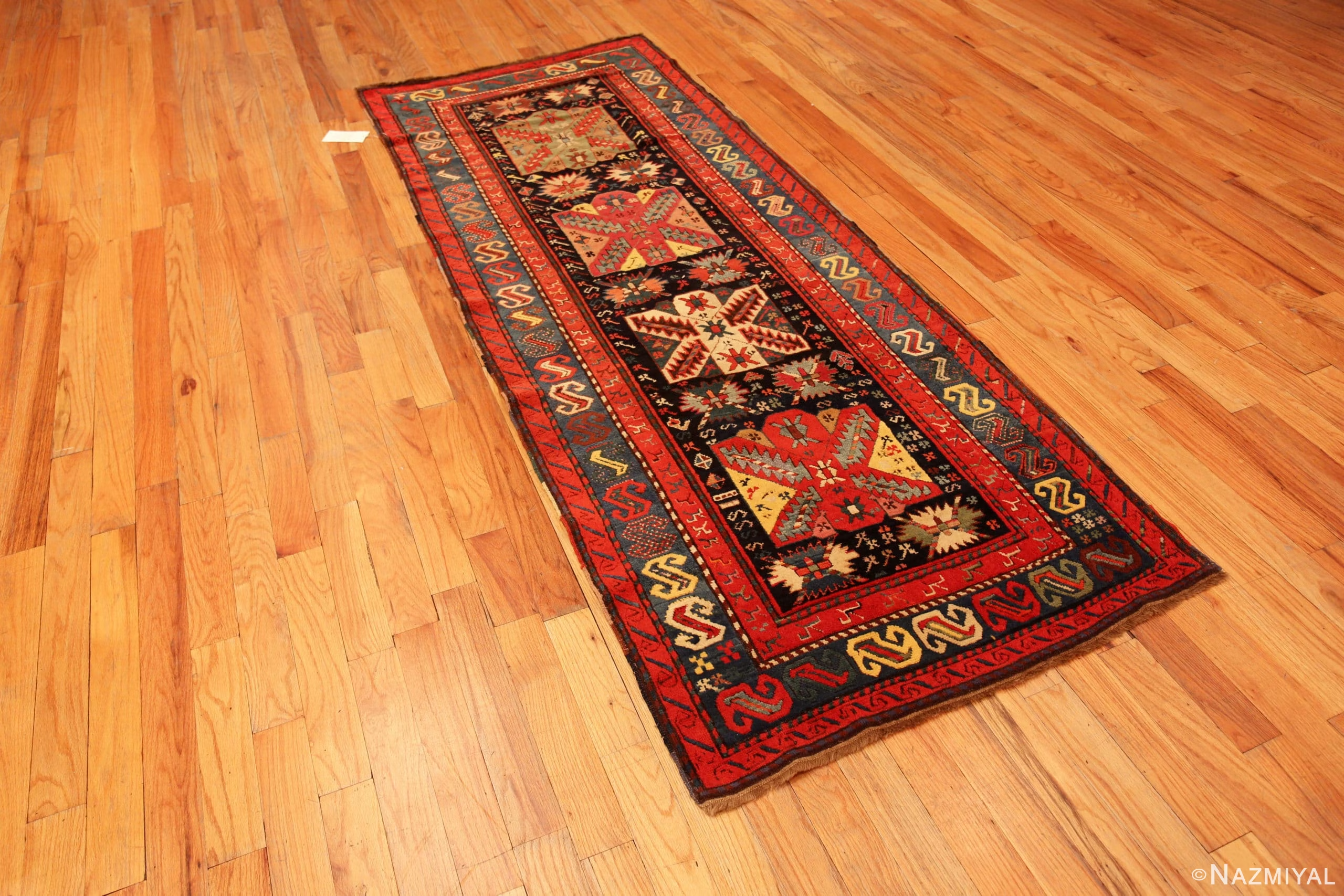
Antique Kazak rugs — the boldest and best known. Large-scale medallions, long lustrous pile, and the most saturated reds and greens in the region. Southwest Caucasus, in what is now Armenia and western Azerbaijan.
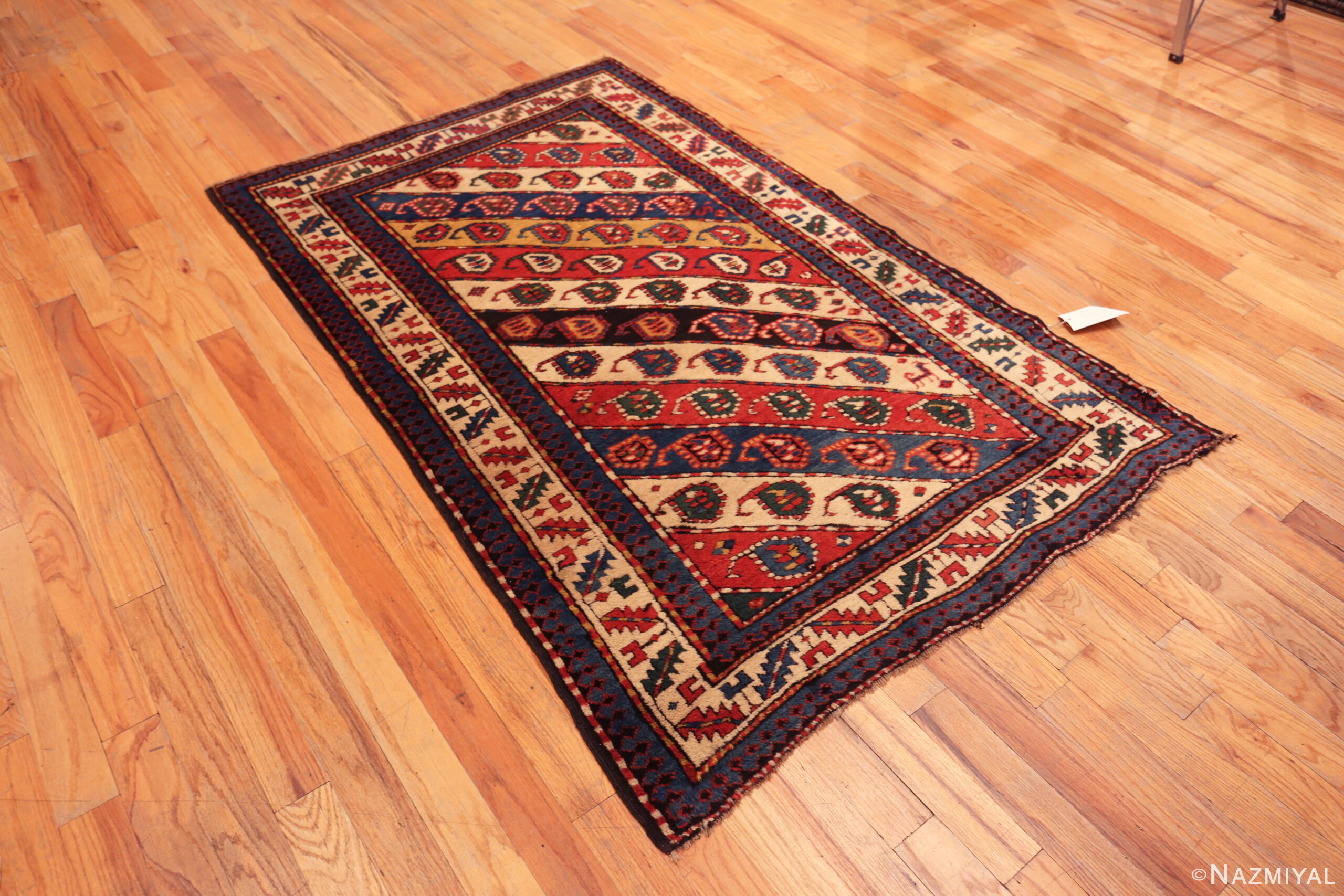
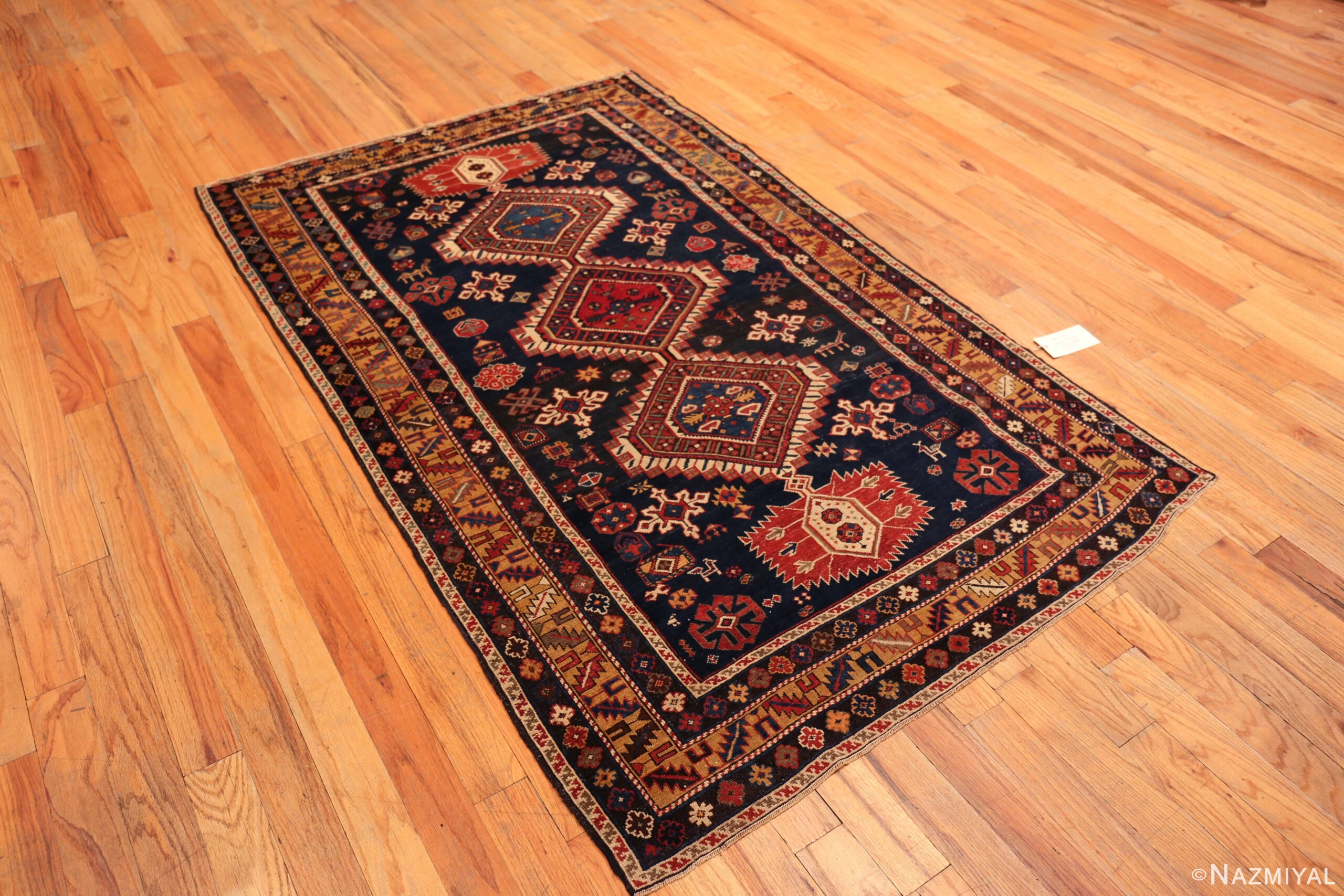
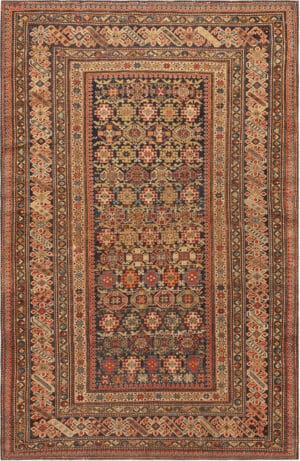
Antique Shirvan rugs — finer, flatter and more intricate. Small repeating motifs held in tight order, often on a dark ground. Eastern Azerbaijan, inland from Baku.
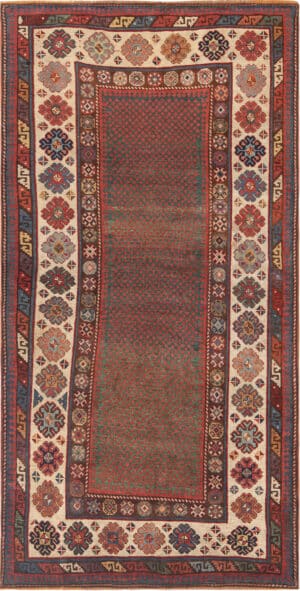
Antique Karabagh rugs — the most floral of the five and the most influenced by Persian drawing. Long formats are common. Southern Caucasus, on the Persian border.
Antique Caucasian Kuba rugs — crisp, dense allover pattern with exceptional border work, and often the most technically accomplished drawing in the Caucasus. Northeast Azerbaijan.
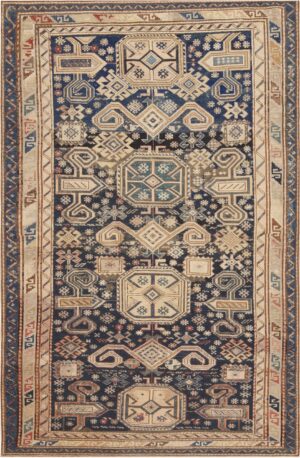
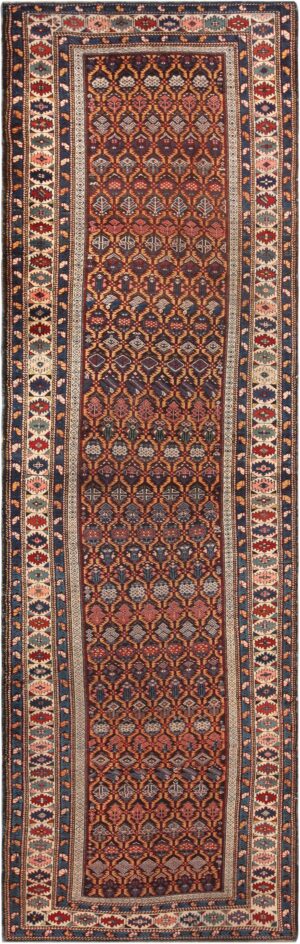
Antique Dagestan rugs — tightly organised lattice fields and a high proportion of prayer formats. The northern end of the region, in the Russian Caucasus.
Beyond the five you will meet district and sub-group names on individual rugs — Chi Chi, Seychour, Perpedil, Akstafa, Lesghi, Talish, Gendje, Moghan, Karachopf and Chelaberd, the so-called eagle Kazak. These are useful attributions rather than separate traditions, and a rug can honestly carry more than one label.
Construction and Materials
Knot — the symmetrical Turkish knot almost universally, which suits the straight-sided drawing and is one reason Caucasian pattern is angular rather than curved.
Foundation — commonly wool on wool, wool warps and wefts, on earlier and more tribal pieces, with cotton appearing on later and more commercial work. A wool foundation is a good sign of age.
Pile — mountain wool, hard-wearing and often lustrous. Kazak pile is characteristically long; Shirvan and Kuba are clipped much shorter to hold the finer drawing.
Dyes — natural throughout the classic period: madder for red, indigo for blue, and yellows from local plants. Abrash, the banding from a change of dye lot, is common and desirable.
Handle — firm and substantial. These rugs were made to be used, not admired from a distance.
For how knotting is measured and what the numbers do and do not tell you, see the guide to rug making and weaving.
Symbols, Colour and Format
Caucasian design is a symbol vocabulary, and knowing a handful of the forms changes how a rug reads. The hooked diamond or latch-hook is the most common device, appearing at every scale from a border repeat to a whole medallion. The eight-pointed star is a stylised flower or sun and one of the oldest forms in the region. The ram’s horn is the paired curling motif; the Chelaberd medallion is the great winged form of the eagle Kazak; the mihrab is the directional niche of a prayer rug, common in Dagestan and Shirvan. Running dog, wine glass and boteh are the standard border repeats.
One thing worth saying plainly: symbolic readings of these motifs are largely reconstructions. The weavers did not leave explanations, and a good deal of what is written about “meaning” in Caucasian rugs is later interpretation presented as fact. The forms are real and consistent; the stories attached to them should be held loosely. Browse the wider index of rug designs and carpet patterns.
Colour runs to madder red and deep indigo as ground colours, ivory to open a dense field, yellow and gold used sparingly, and green — rarer and prized, and a strong green will lift a Kazak noticeably. Abrash is a feature rather than a fault: on a village rug dyed in small batches, horizontal banding shows the wool was dyed as it was needed, while flat, perfectly even colour across a large antique field is more often a sign of later synthetic dyeing. Browse by shade in red and rust rugs, blue rugs, or the full rugs by colour index.
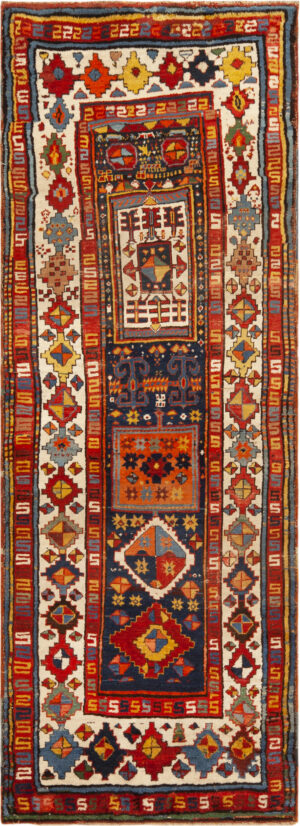
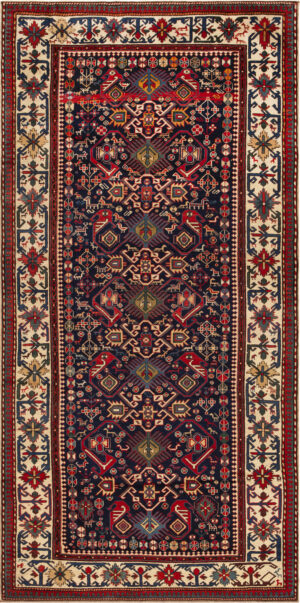
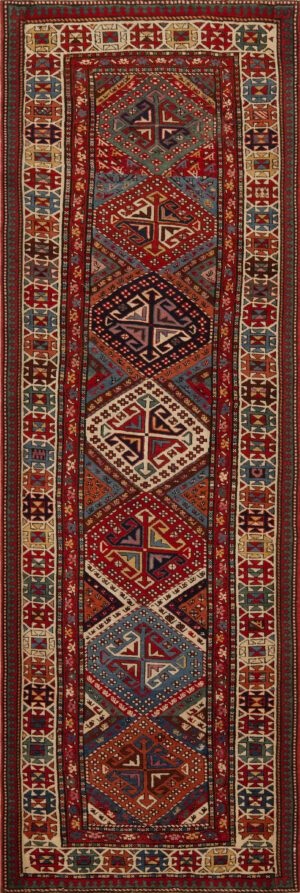
Because Caucasian looms were village looms, this is a small-format tradition, which makes these among the easiest antique rugs to place. Scatter and prayer formats around 3 ft x 5 ft are the most numerous — see small rugs. Small room sizes around 5 ft x 8 ft are the classic Kazak format; long rugs and runners are a Caucasian speciality, particularly from Karabagh and Kuba; and genuine room size pieces are uncommon enough to be worth noticing. The rug size chart and rug size guide explain the standard formats room by room.
How to Identify an Antique Caucasian Rug
Look at the angles. Caucasian drawing is built from straight lines and steps. Curves generally belong to Persian workshops.
Turn it over. A wool warp and weft foundation points to an earlier, more tribal piece; cotton points to later or more commercial work.
Read the abrash. Banding that follows the weft line indicates natural dyeing. Even colour across a large old field deserves a second look.
Check the greens and yellows. Natural dyes in these two age distinctively, and they are the hardest to fake convincingly.
Look at the borders before the field. Caucasian border drawing is where skill shows; a weak border with a strong field usually means a later copy of an older design.
Ask about the date. The collectible work is generally pre-1925, and we will tell you what we know about any individual piece.
For the wider process, see the ultimate guide to buying antique rugs. Imitation designs sold as Indo-Tabriz-style or later Caucasian-pattern work are common and can be convincing from the front, so structure is where the answer is.
What an Antique Caucasian Rug Is Worth
Caucasian value is driven by drawing and colour far more than by size or fineness, which is unusual and worth understanding before you compare pieces.
Quality of drawing. Two rugs of the same group and age can be far apart in value because one draws confidently and the other copies. This matters more here than almost anywhere.
Colour, and particularly the rare colours. Good greens and clear yellows raise a Caucasian rug substantially.
Date. Pre-1925, and the earlier the better within that. Eighteenth-century Caucasian work is a different market entirely.
Group and district. A well-drawn Chelaberd or a fine Kuba sits above general Caucasian work.
Condition, with the usual caveat that honest wear on a village rug is far less damaging than clumsy restoration.
Size, inverted. Because the tradition is small-format, a genuinely large antique Caucasian rug in good condition is the scarce thing.
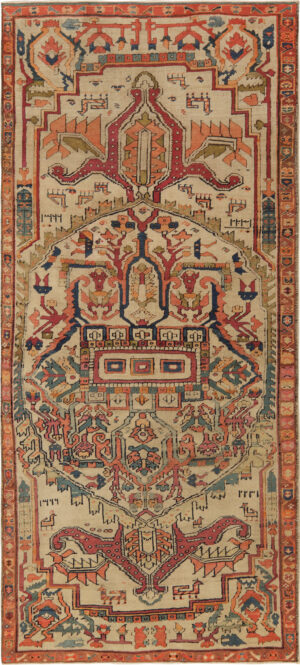
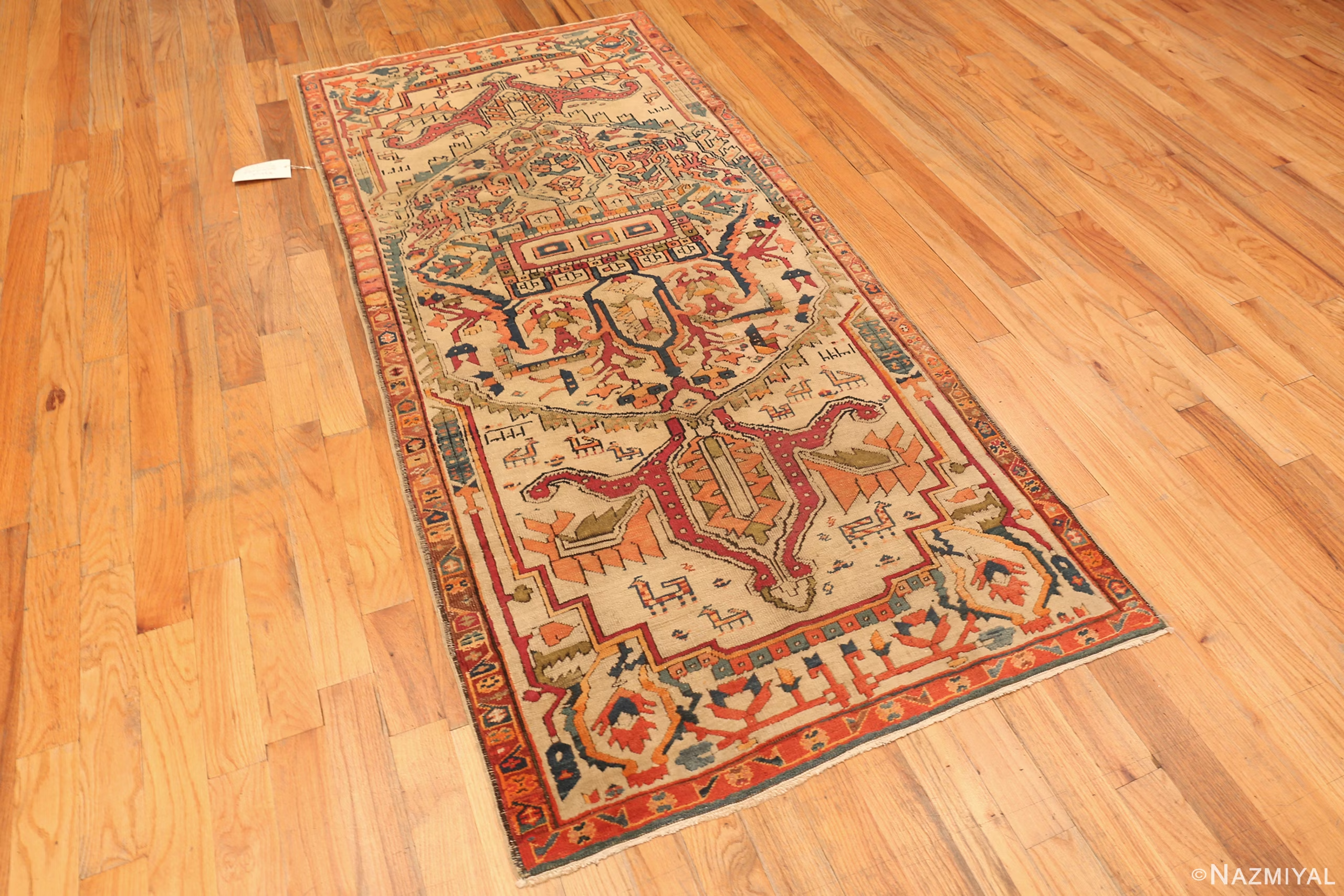
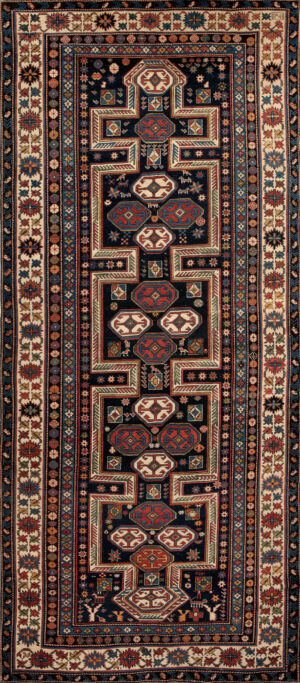
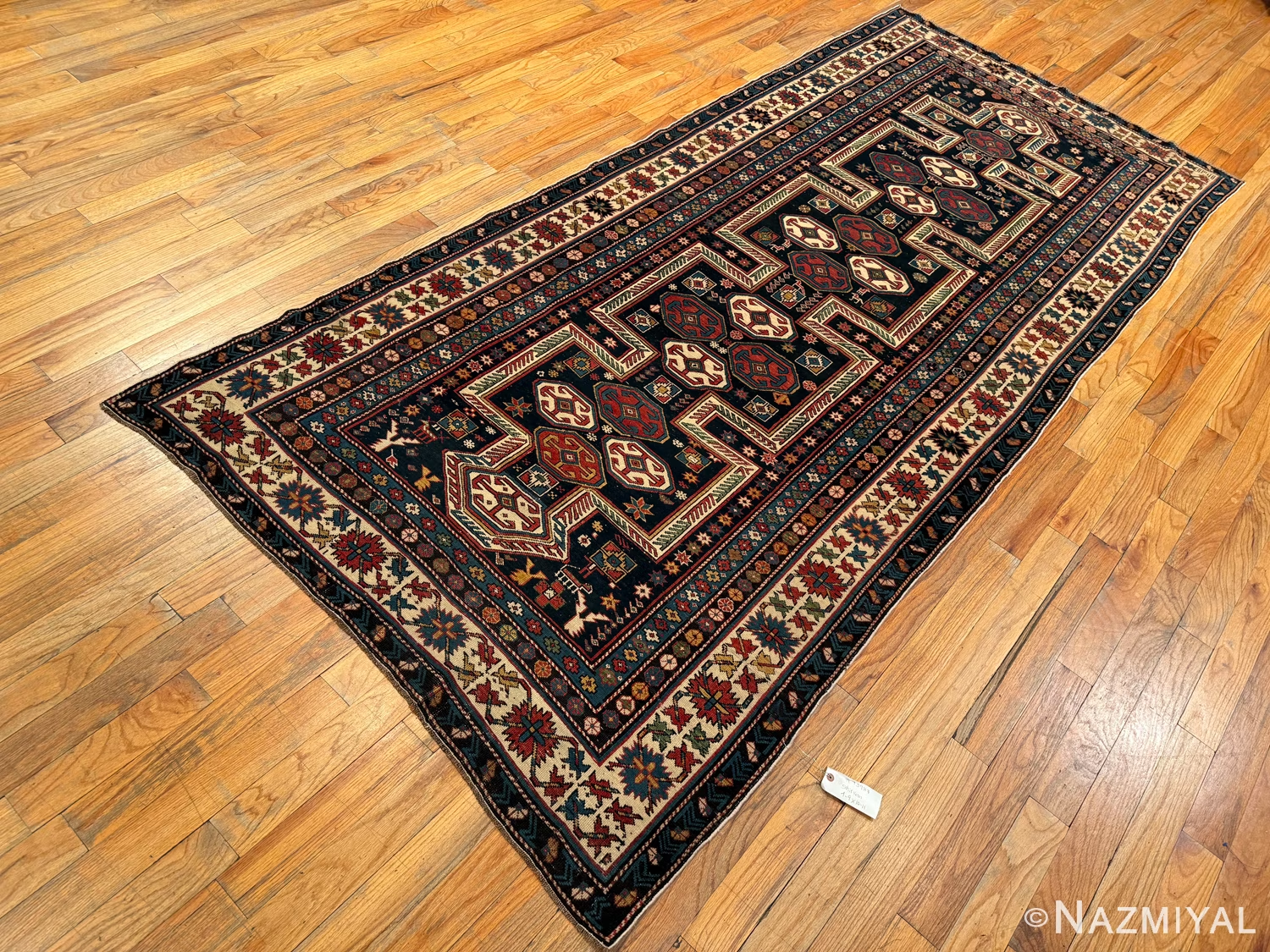
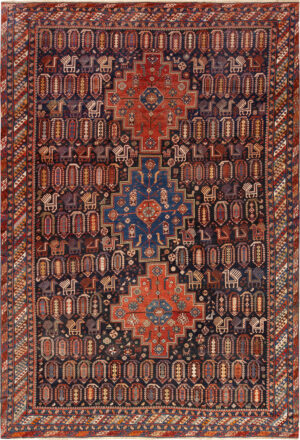
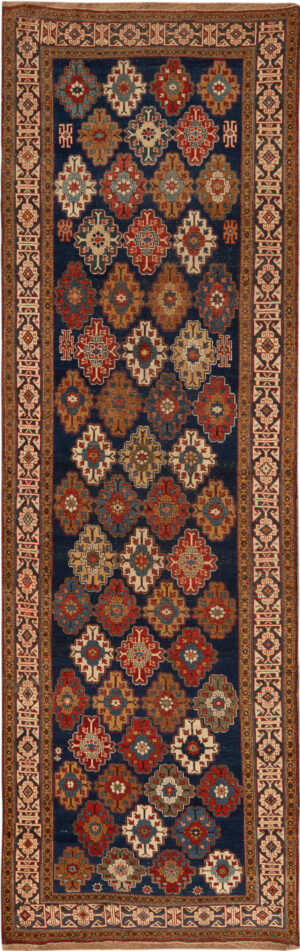
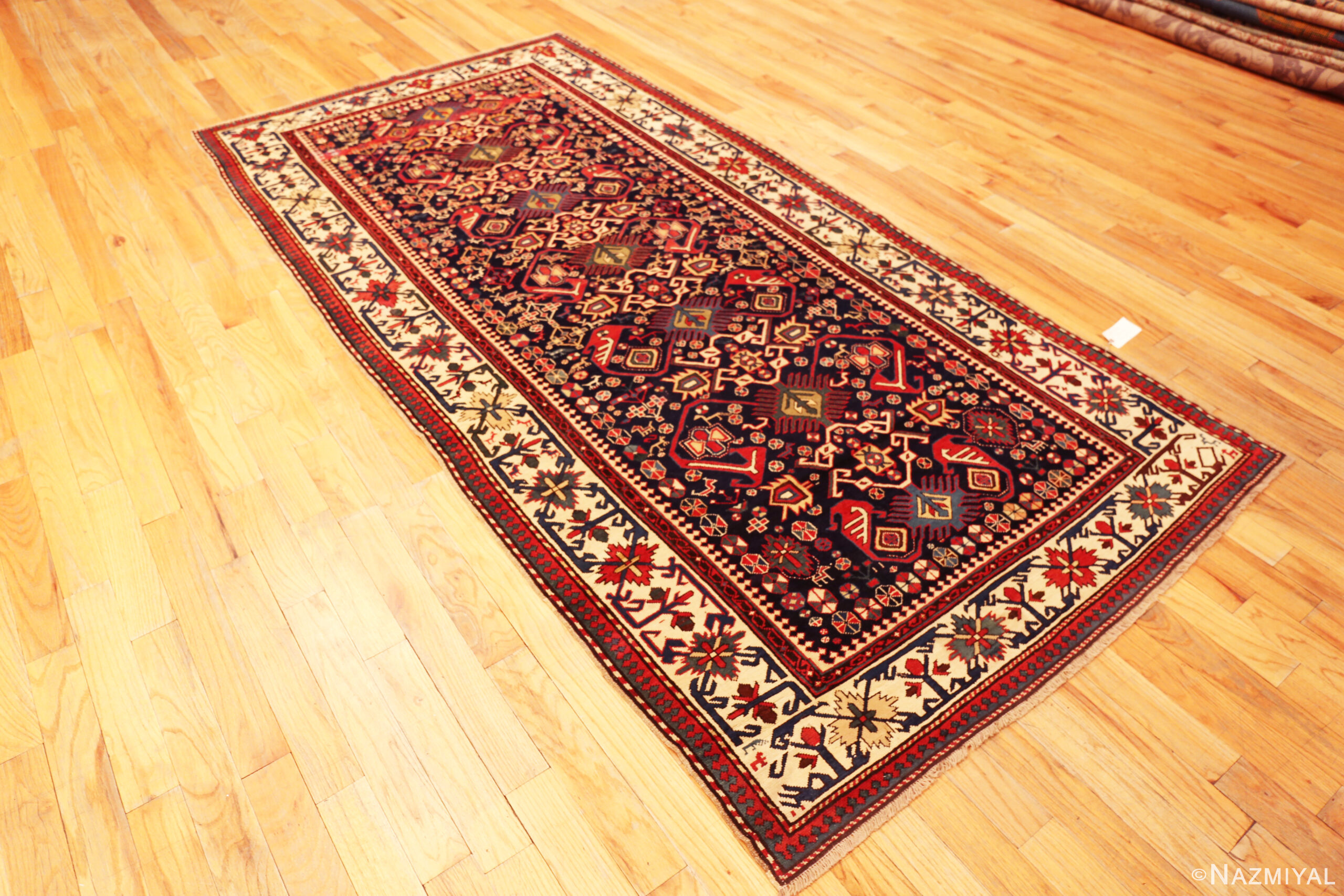
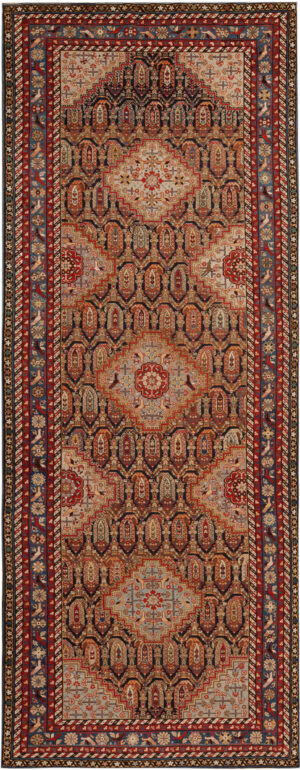
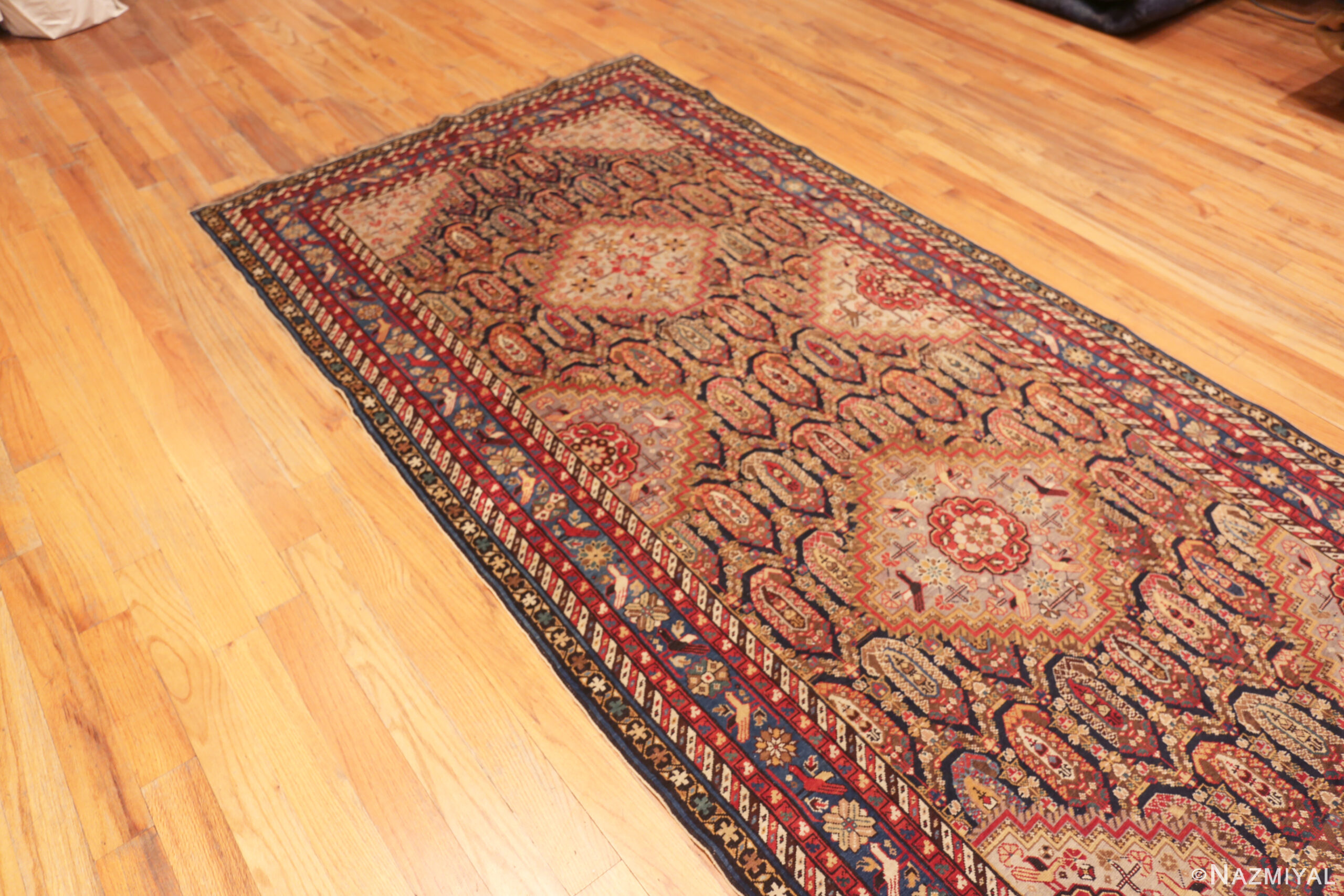
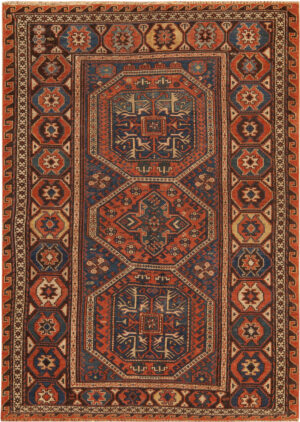
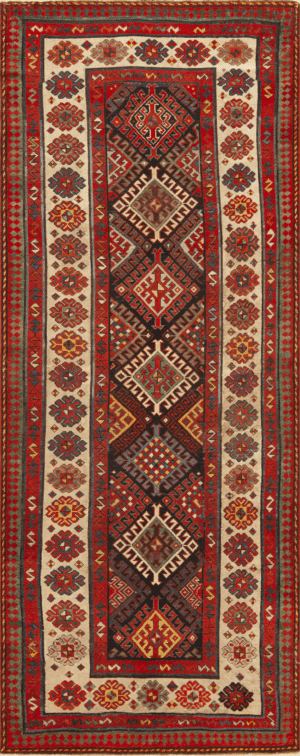
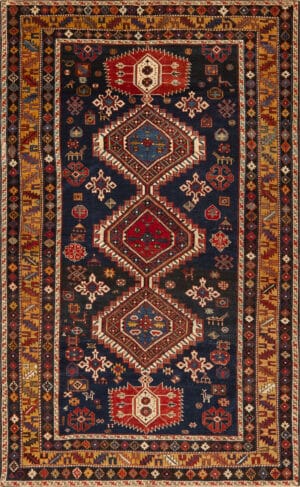
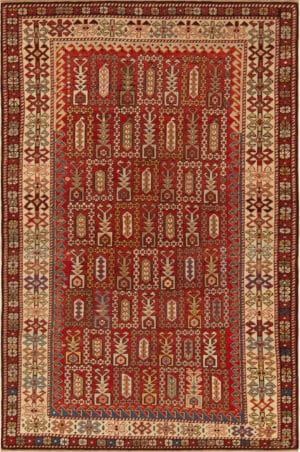
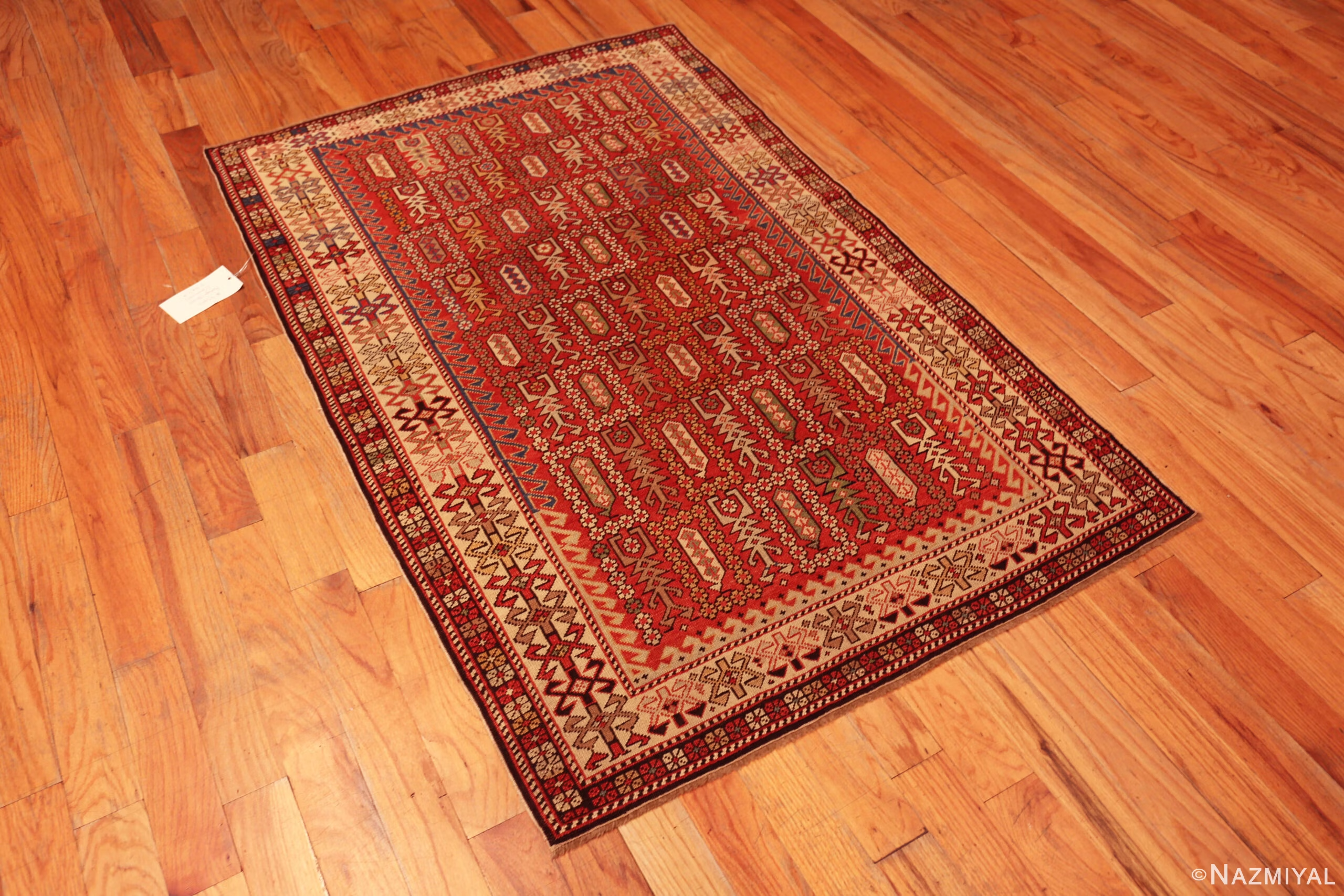
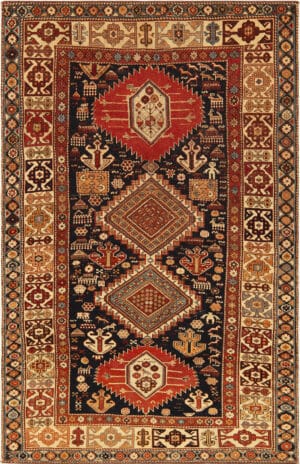
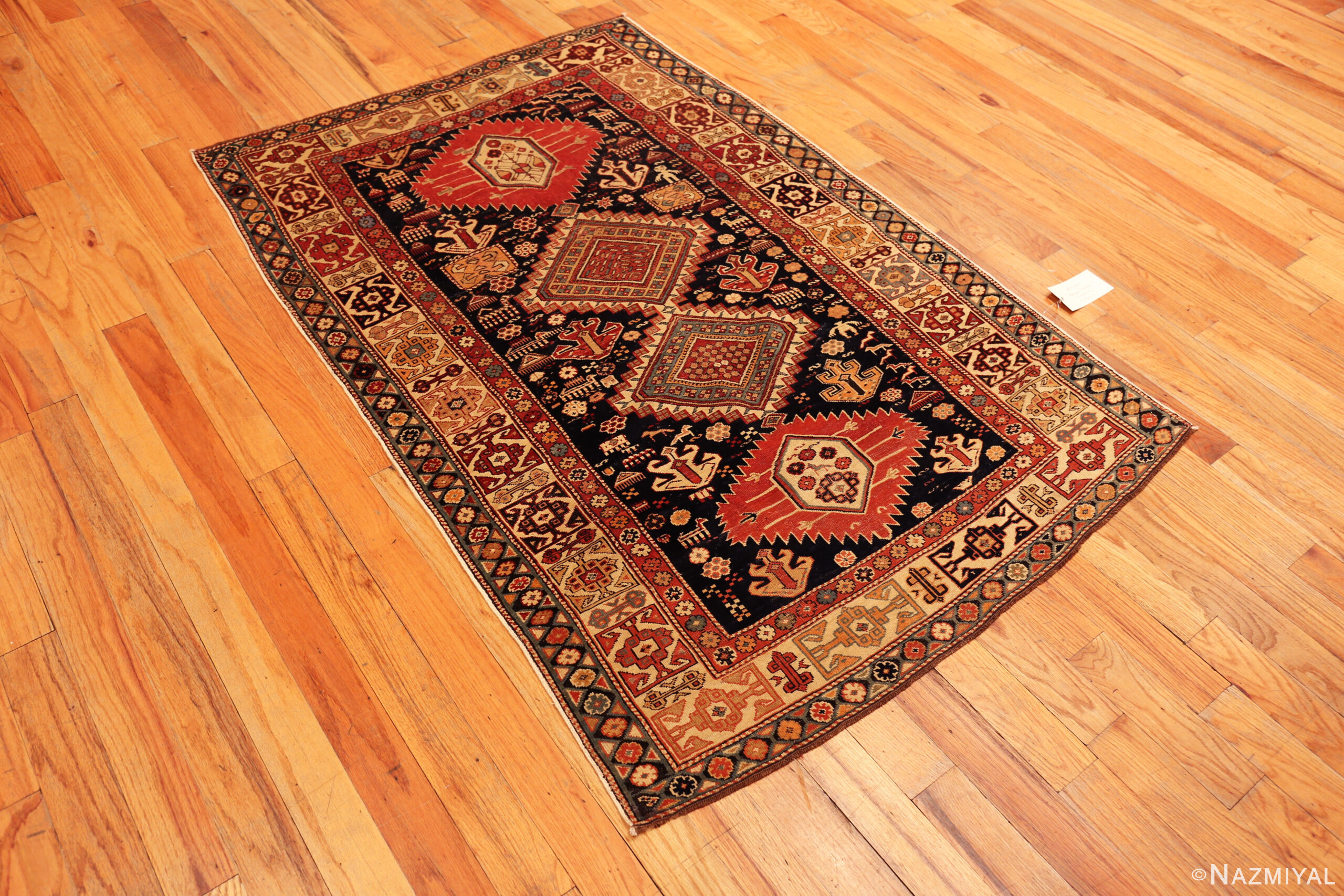
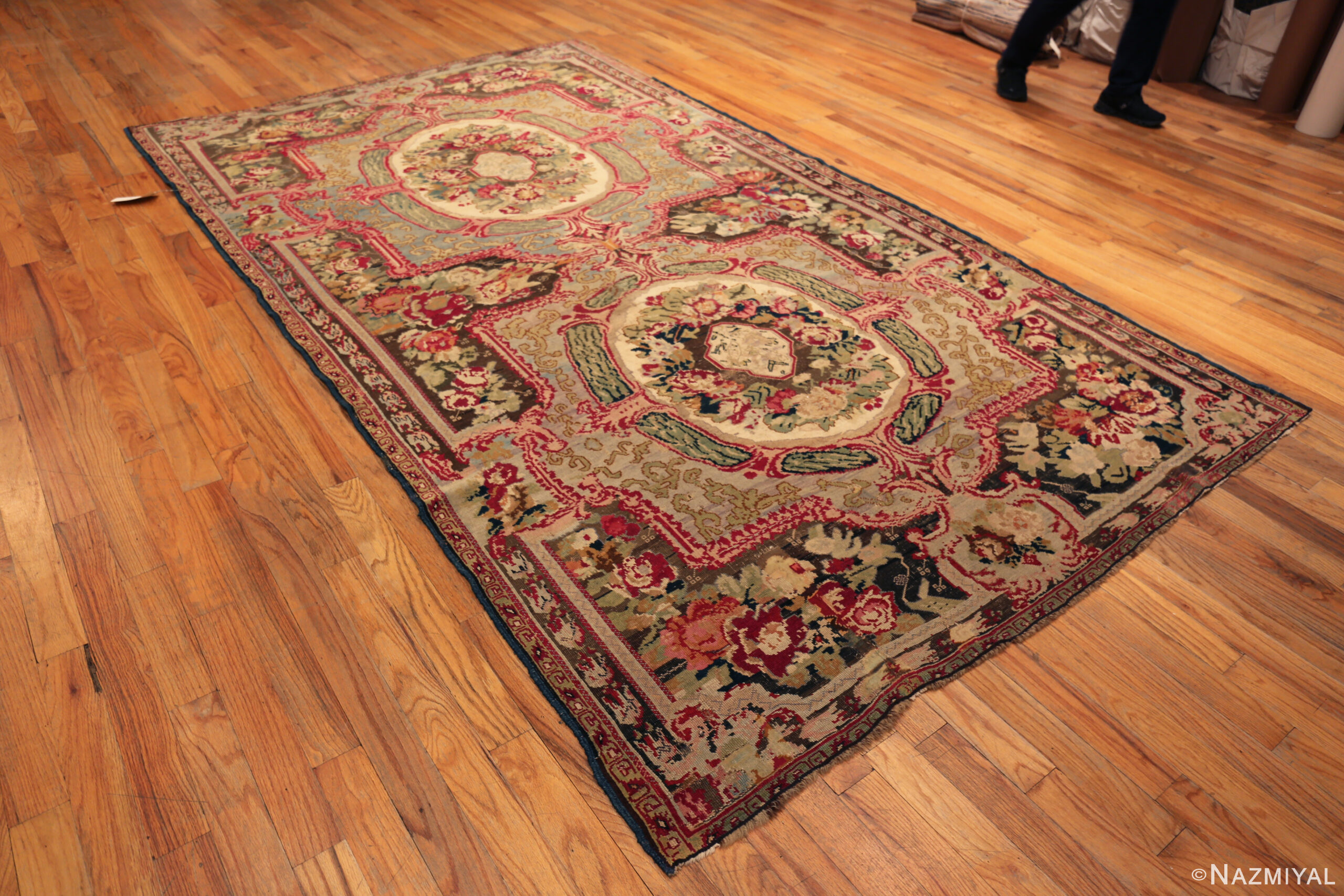
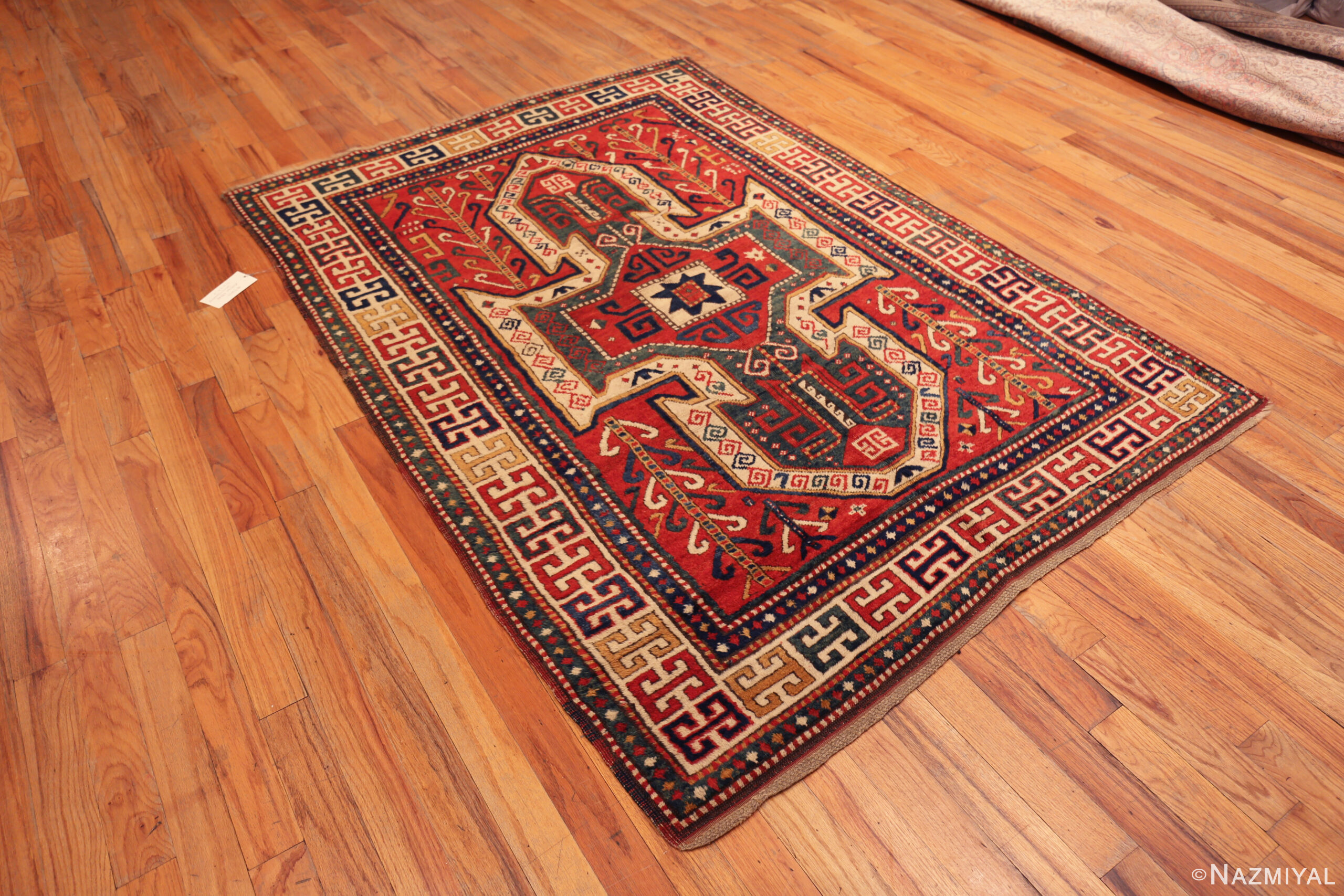
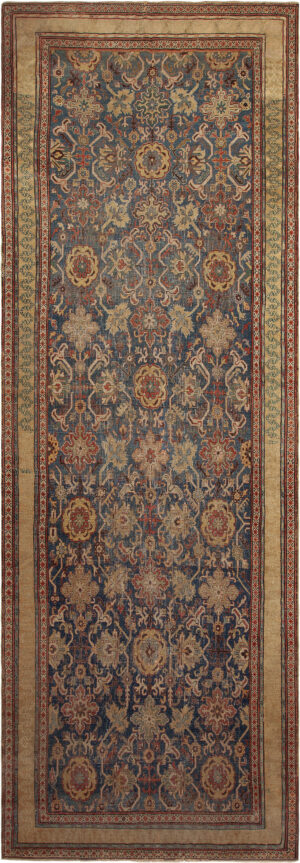
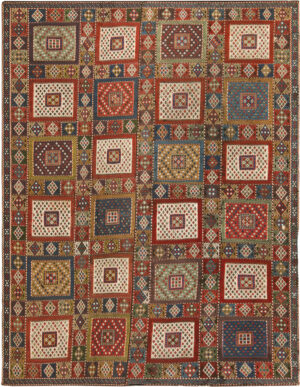
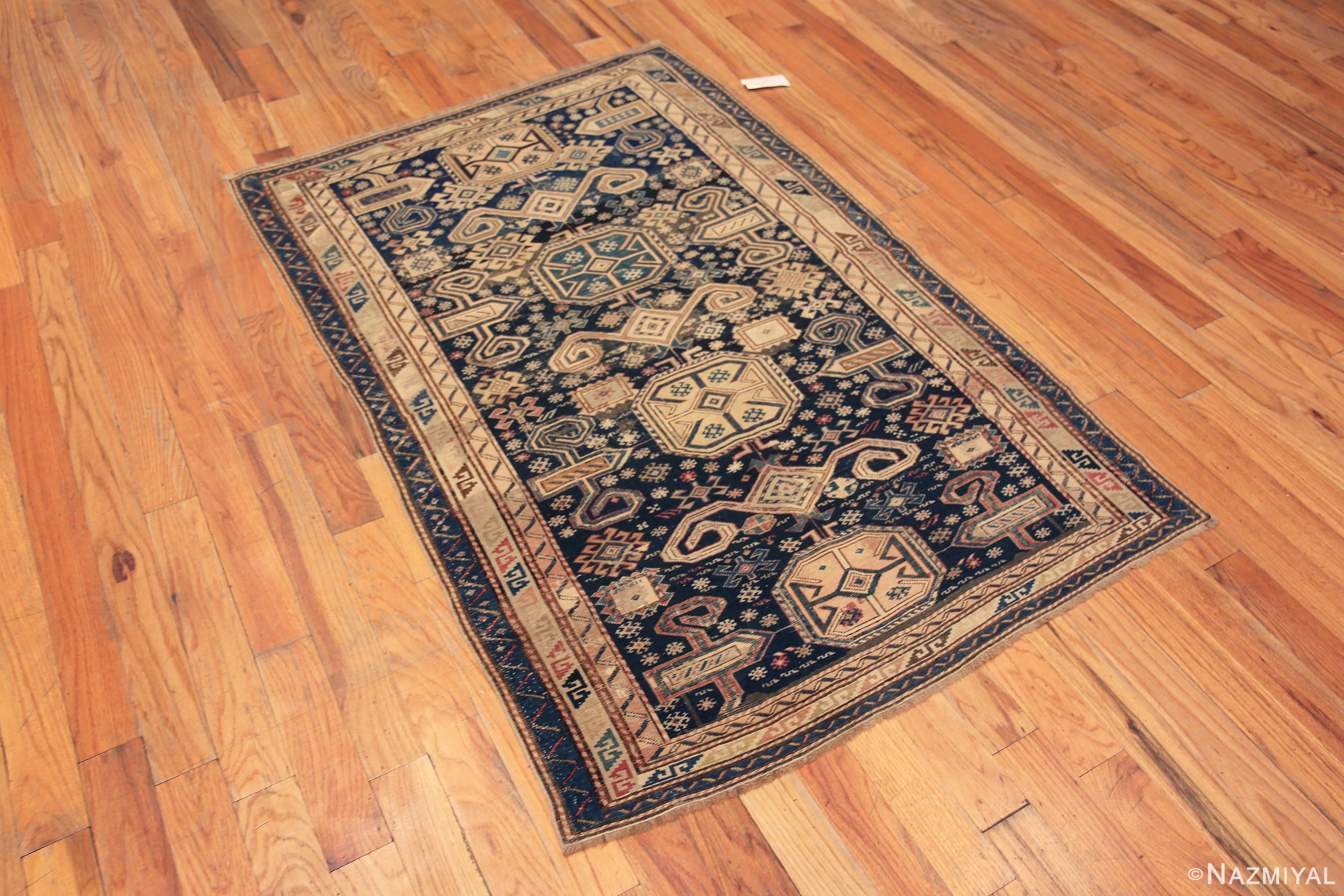
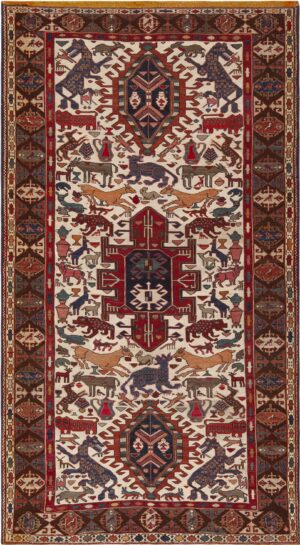
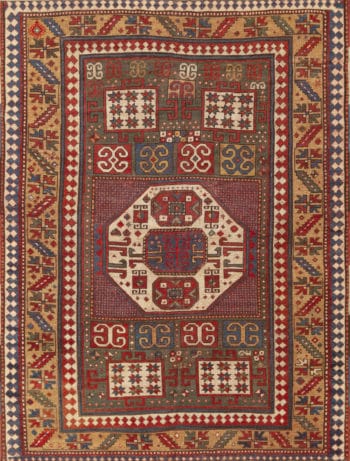
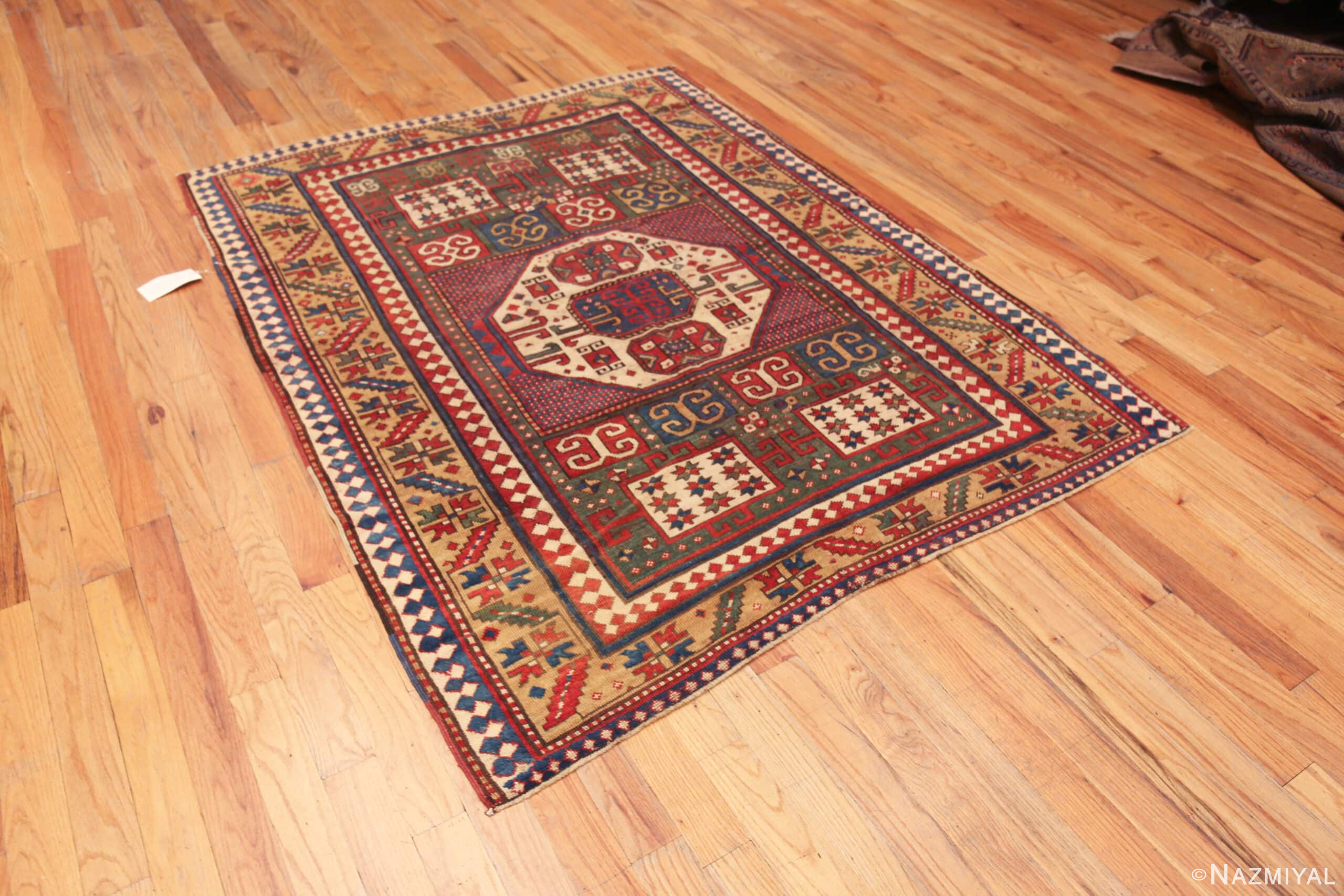
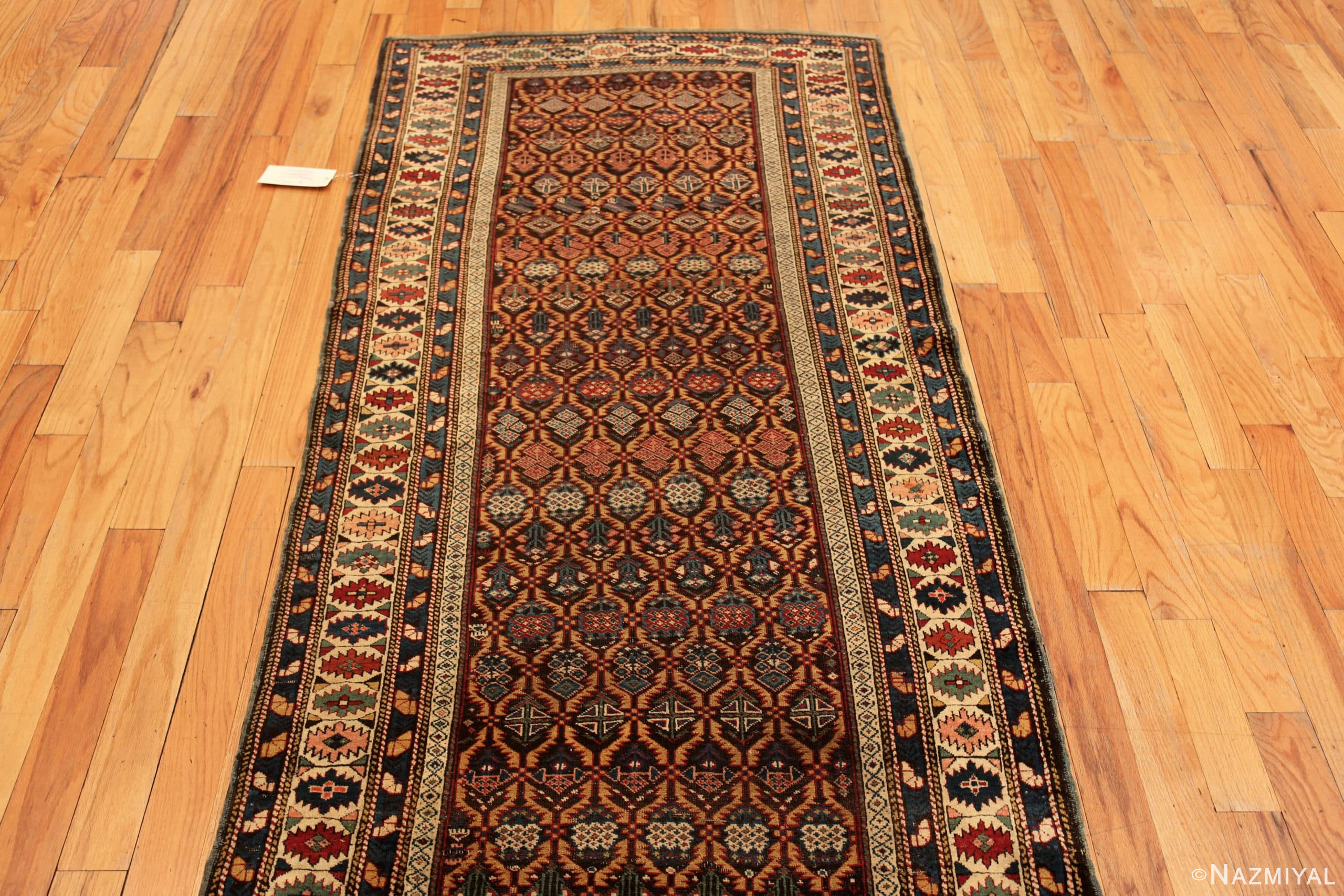
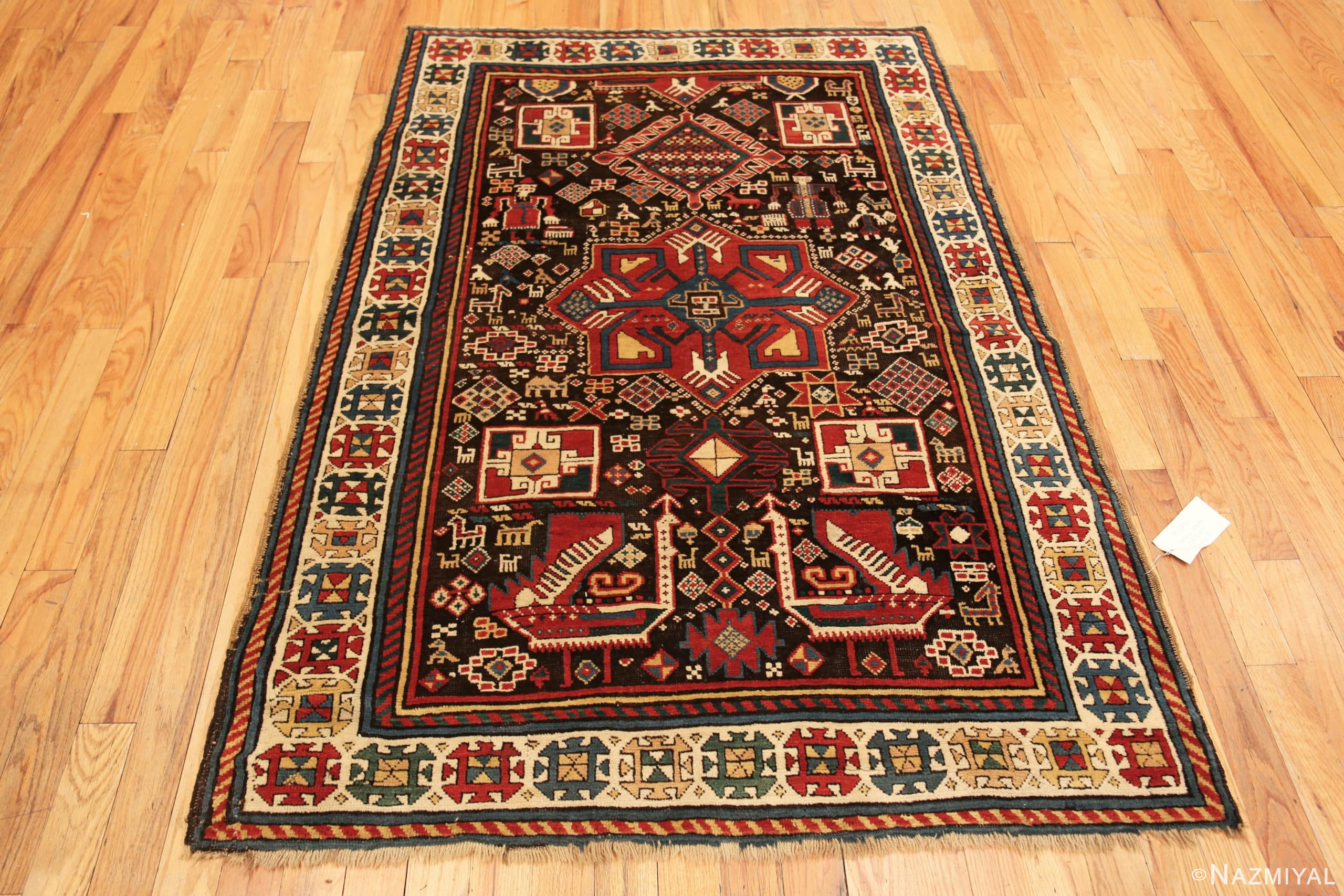
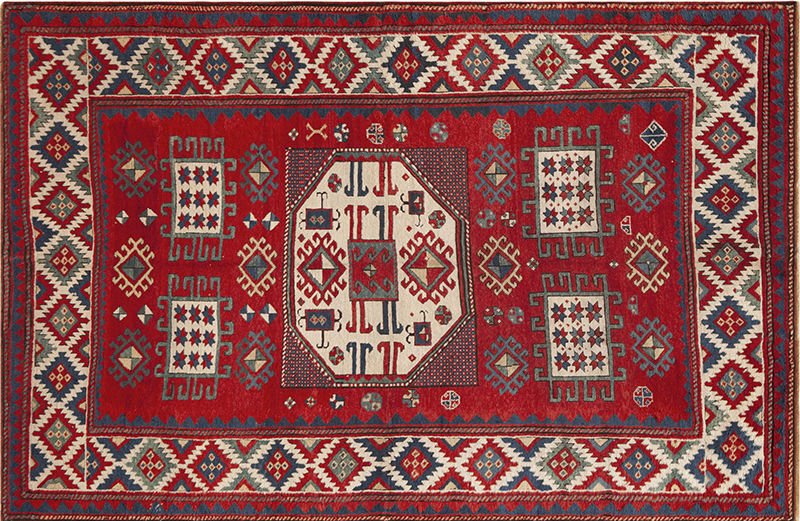
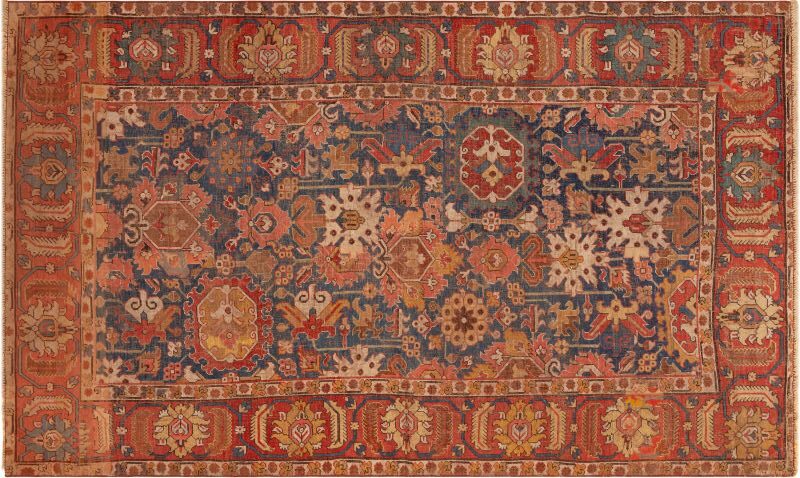
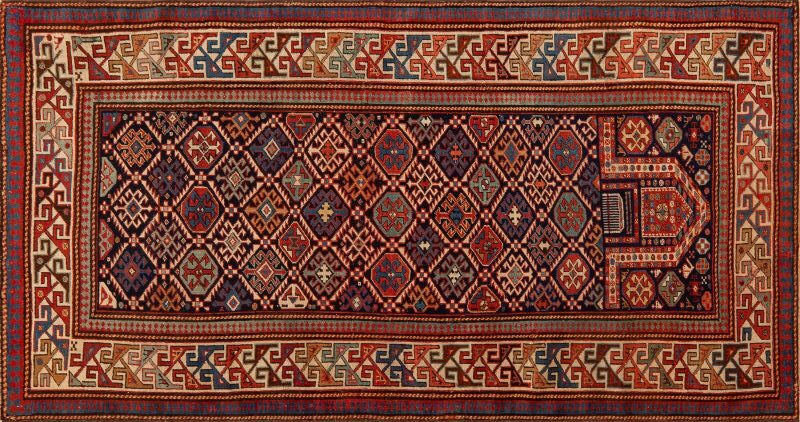
Charming Red Bold Geometric Antique Caucasian Kazak Rug Nazmiyal Collection #73852 Historical Weave Antique 18th Century Caucasian Kuba Rug Nazmiyal Collection #73511 Striking Antique Dagestan Rug – Caucasian Prayer with Geometric Design Nazmiyal Collection #73701
Caucasian Rugs in Decoration
These are the antique rugs that suit modern rooms most easily, and the reason is structural rather than decorative: the pattern is graphic, the palette is limited, and the scale is small enough to place without rearranging a room around it.
Let the rug set the palette — pull one red, one blue and one neutral from the field and repeat them sparingly elsewhere. Keep the furniture quiet, because Caucasian geometry against a patterned sofa becomes noise. The small formats layer well over sisal or a larger plain rug, and the long runners suit hallways where the repeat has room to do its work. In a minimal room a single good Kazak will carry the whole floor. Compare with modern rugs and decorative rugs to see how the geometry sits alongside contemporary design.
“Caucasian rugs are the ones I show people who think they do not like antique rugs. There is no fussiness in them. A good Kazak is three colours and a shape, and it will hold a modern room better than almost anything woven since. Look at the border before the field — that is where you find out whether the weaver knew what she was doing.”
— Jason Nazmiyal, founder, Nazmiyal Antique Rugs
Care, Handling and Glossary
Use a proper pad, particularly on the small formats, which move more than large carpets. Vacuum with suction rather than a beater bar, and never over the fringe. Rotate periodically for even wear and light exposure, and watch the ends and selvedges — on a wool-foundation rug those are the first things to go. Antique dyes and wool foundations need a specialist: ordinary carpet cleaning can be genuinely damaging. For anything beyond routine care use professional rug cleaning, and for damage, expert rug repair and restoration.
Abrash — banding from a change of dye lot; a sign of natural dyeing.
Latch-hook — the hooked diamond, the most common Caucasian motif.
Chelaberd — the winged medallion of the so-called eagle Kazak.
Mihrab — the directional niche of a prayer rug.
Symmetrical knot — the Turkish or Ghiordes knot, used almost universally in the Caucasus.
Selvedge — the finished side edge of a rug.
Wool on wool — wool warps and wefts as well as pile; usually indicates an earlier piece.
Soumak — a Caucasian flatweave technique using wrapped rather than knotted wefts.
Terms are defined more fully in the rug glossary, and for international enquiries our worldwide hub covers countries and cities.
Why Buy Your Caucasian Rug from Nazmiyal?
Since 1980, Nazmiyal has hand-selected antique, vintage and decorative rugs from our New York gallery at 31 East 32nd Street, where designers, collectors and private clients view pieces by appointment. Every rug is vetted by our own specialists, and we issue certificates of authenticity with the pieces in this collection.
Clients work with us for authenticated rugs, specialist advice, accurate measurements, detailed photography, condition guidance, white-glove delivery and a three-day return policy. Shipping within the USA is free. International orders ship worldwide and are quoted individually. Designers working on residential, hospitality or collector interiors can ask about our interior designers trade program. To see a rug in person or ask about a specific piece, call (212) 545-8029 or contact a specialist.
             Posted on Google        Clay Pendergrast     Trustindex verifies that the original source of the review is Google. My wife and I are so pleased with the antique Uzbek Bokhara Rug purchased from the Nazmiyal Collection. Not only does the rug have a spectacular design, it also was very reasonably priced. The way it transforms our living room, reconciling the classic modern furniture with the 1913 Craftsman interior is remarkable.         Posted on Google        Terence Hayes     Trustindex verifies that the original source of the review is Google. I have purchased multiple rugs at multiple Nazmiyal auctions and I am extremely pleased with the quality, price, and experience.  Highly recommended!         Posted on Google        Victor Florintsev     Trustindex verifies that the original source of the review is Google. The only ones I'd ever buy rugs from. The best.         Posted on Google        Jeffrey NeumanB     Trustindex verifies that the original source of the review is Google. I bought two gorgeous Serapi rugs from Farhad at Nazmiyal Rugs!  Beautiful carpets, fair prices and great service.  Very happy customer.  Farhad (the sales person) was very patient and gave us great service.         Posted on Google        john haid     Trustindex verifies that the original source of the review is Google. Alen is a gentleman and an expert.  Really great to work with.         Posted on Google        Edward Yasuna     Trustindex verifies that the original source of the review is Google. I recently purchased a modern Kandinsky rug from Nazmiyal Auctions.  It was just as described, and the director (Farhad) of the auctions had it sent to me quickly and safely.  Payment was easy, the rug was reasonably priced, and I highly recommend Nazmiyal Auctions and Antique Rugs.  Quality merchandise and first-class service.         Posted on Google        Nicholas Carr     Trustindex verifies that the original source of the review is Google. Had a excellent experience buying a rug in Nazmiyal's 1/18/26 online auction.  First, prior to the auction, viewing a number of lots at the 32nd St showroom (I had prepared a list from the online catalog). The staff were great to work with: helpful, knowledgable, honest, and flexible.  Second, after placing an online bid and winning the desired item, arranging payment and pickup was simple and straightforward. Everything went seamlessly and the overall experience was educational and fun. Many thanks to Jason and his team.         Posted on Google        Andrea Gared     Trustindex verifies that the original source of the review is Google. Everyone at Naziyal is proffessional, especially Jason and Farhad.
They are knowledgeable, truthful, and true gentlemen. I have sold several rugs through them and will always go to them first, to buy or sell. The best in the business!
Frequently Asked Questions
A hand-knotted rug woven in the Caucasus — the mountain region between the Black Sea and the Caspian, covering present-day Azerbaijan, Armenia, Georgia and Dagestan. It is a regional description rather than a single weaving type, and rugs are grouped by district: Kazak, Shirvan, Karabagh, Kuba and Dagestan are the five classic groups.
Independent village weaving in the region effectively ended when the Caucasus was absorbed into the Soviet Union. Weaving was collectivised into state workshops, designs were standardised centrally, and the individual pattern vocabulary that made these rugs collectible disappeared. Later revivals produced commercial goods rather than the old work, so the practical dividing line for collectors sits around 1925.
Kazak rugs come from the southwest Caucasus and are the bold ones — large-scale medallions, long lustrous pile, the most saturated reds and greens. Shirvan rugs come from eastern Azerbaijan and are the fine ones — short pile, small repeating motifs in tight order, frequently on a dark ground. If it is loud and long-piled it is probably Kazak; if it is intricate and flat it is probably Shirvan.
The recurring forms are real and consistent — hooked diamonds, eight-pointed stars, ram's horns, running-dog borders. The meanings usually attached to them are largely later reconstruction. The weavers left no explanations, so treat symbolic readings as interesting rather than authoritative, and judge a rug on its drawing.
No. They are distinct traditions from different regions, though they share a long border and centuries of exchange, and Karabagh in particular shows Persian influence in its floral drawing. Caucasian weaving is angular and symbol-driven; Persian weaving ranges from tribal geometry to curvilinear workshop floral.
Turn it over and look at the foundation — wool warps and wefts suggest an earlier tribal piece, cotton suggests later or more commercial work. Then read the abrash: banding that follows the weft line indicates natural dyeing, while flat even colour across a large old field deserves scrutiny. Finally look at the borders before the field, because that is where a copyist's skill runs out first.
Quality of drawing above everything, then colour — good greens and clear yellows raise a Caucasian rug substantially. Then date, with pre-1925 the threshold and earlier better, the specific group or district, and condition. Note that size works in reverse here: because the tradition is small-format, a large antique Caucasian rug in sound condition is the scarce thing. Caucasian rugs at Nazmiyal are priced on request.
THE NAZMIYAL NEWSLETTER
Discover Your Next Favorite Rug
Get new arrivals, rug inspiration, educational blogs, and collection highlights delivered to your inbox.
By subscribing, you agree to receive marketing emails from Nazmiyal. Unsubscribe anytime. View our Privacy Policy.