Learn More About Antique Azerbaijan Embroideries And Azerbaijani Rugs
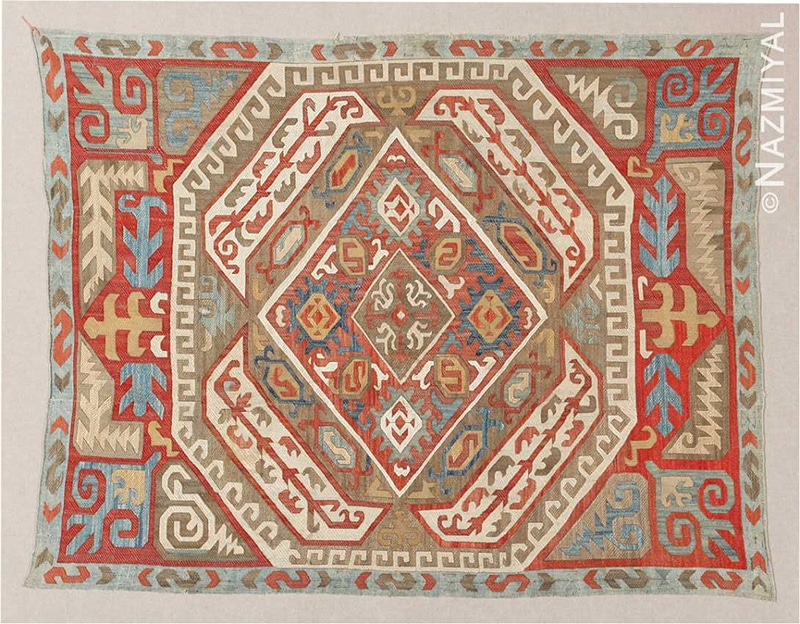
Azerbaijan rugs and embroideries are historic Caucasian works—best known for confident geometric design, saturated natural color, and textiles (notably silk embroideries) that preserve tribal symbolism in portable, collectible formats.
Azerbaijan rugs and embroideries sit at the crossroads of the Caucasus and northern Persia—where bold tribal geometry, powerful borders, and highly collectible textiles developed side by side. This page focuses on antique Azerbaijani pile rugs as well as silk embroidery textiles (including famous Kaitag-style works) that echo the region’s design language in a different medium. If you’re exploring the wider family of Caucasian rugs, you’ll recognize many of the same symbols—stars, hooks, protective devices, and strong color contrast. For curated inventory and expert guidance, start at Nazmiyal Collection.
Updated January 23, 2026 • Reviewed by Jason Nazmiyal
Looking for a specific format (small panel, runner, room-size) or a particular palette? Browse the broader antique textiles & embroideries selection and compare what’s currently available.
Identification & Construction
Historically, Azerbaijan’s position on the Caspian side of the Caucasus created a design language that’s both distinctive and widely influential. Many motifs and layout habits later seen across the region—strongly framed fields, bold geometric medallions, and “protective” border devices—have close relatives in Persian rugs, but they’re typically rendered with a more graphic, tribal directness. For broader context on geography and weaving regions, start with Rug Origins.
How to recognize Azerbaijan rugs
Geometry first: stars, diamonds, hooked medallions, and compartmented fields that feel architectural.
Border logic: multiple borders that “lock” the composition, often with repeating S-hooks, rosettes, or latch-hook devices.
High-contrast color: saturated dark grounds (often blue) balanced by ivory accents and decisive outlines.
Village character: intentional asymmetries, charming drawing changes, and abrash that reads as honest age rather than inconsistency.
Embroideries (Kaitag and related Caucasian textiles)
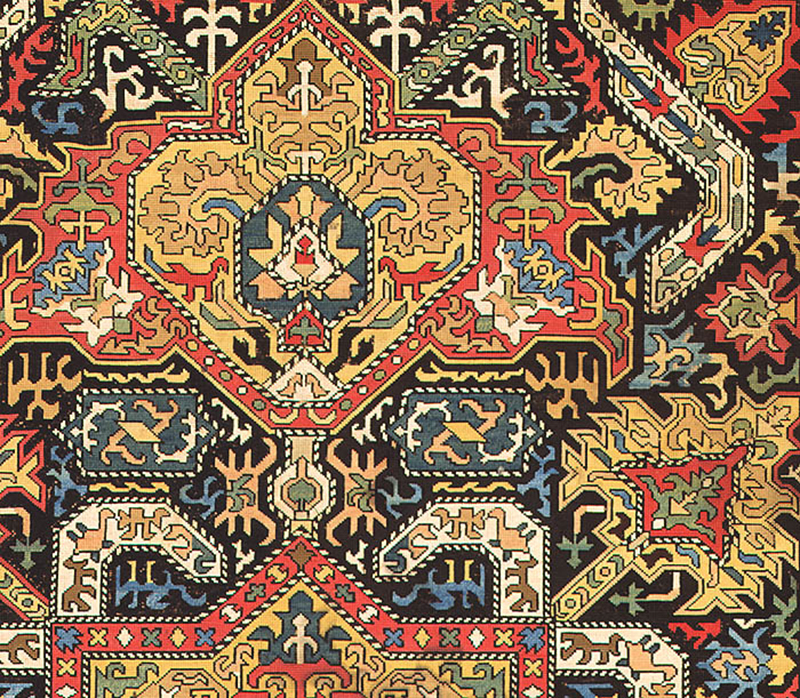
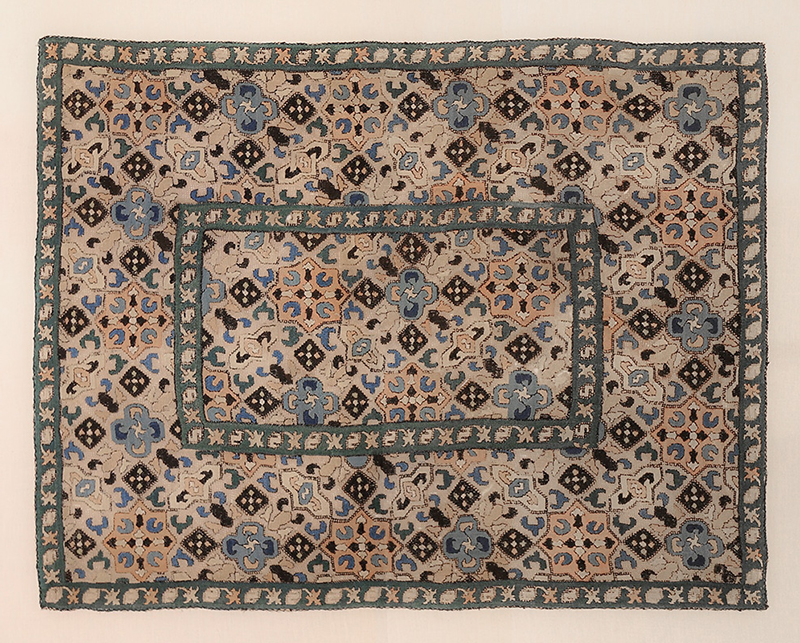
Azerbaijan-associated embroideries are prized because they preserve the same symbolic vocabulary as rugs, but in stitch rather than knot. Many were made as domestic or ceremonial textiles—portable works that could serve as covers, wall decoration, or special-occasion pieces. In the Kaitag tradition, embroidered silk floss is laid onto a cotton surface to build dense, luminous pattern and a distinctive surface texture. To explore this family in depth, see Kaitag embroideries textiles.
Materials, structure, and dyes
Rugs: typically wool pile with structure varying by district; focus on handle, clarity of drawing, and stable edges.
Textiles: commonly silk embroidery on cotton grounds; look for even stitching, cohesive color planning, and intact perimeter.
Color: strong natural-looking reds and blues are common; the best pieces keep contrast without feeling harsh.
Decorating & Placement Guidance
Azerbaijani pieces decorate beautifully because they read clearly: they have structure, rhythm, and strong “anchor” motifs. Whether you collect Antique Rugs, decorate with Vintage Rugs, or mix tribal pattern into clean-lined rooms with Modern Rugs, these works tend to hold the space without overwhelming it.
Use embroideries like art: framed or mounted, they add textile depth where a painting might feel too flat.
Let geometry do the work: pair bold motifs with quieter upholstery and solid-color walls for a collected, intentional look.
Layer smartly: smaller Azerbaijan textiles can sit over larger neutrals to add detail without changing the room’s scale.
Mind traffic: silk textiles are best used as decorative accents, not heavy-wear floor pieces.
Azerbaijan Rugs & Embroideries vs Karabagh Rugs
The closest “cousin” to Azerbaijan rugs and embroideries is often Karabagh rugs. Both sit within the larger Caucasian world, but they tend to emphasize different strengths—Azerbaijan-associated pieces often lean more geometric (and include exceptional embroideries), while Karabagh is famous for varied traditions that can move from bold village graphics to more floral, workshop-inflected looks.
Bold florals and varied design traditions (village to workshop)
Common formats
Runners, small rugs, and embroidery panels (often silk on cotton)
Room-size rugs and runners; strong decorative presence
Palette
High contrast; deep blues, reds, and ivory highlights
Lively color with frequent floral emphasis and warm tones
Best for
Interiors that want structure, symbolism, and “graphic clarity”
Collected rooms that want color, movement, and floral energy
If you love tighter, more intricate drawing in smaller formats, you may also want to compare with Shirvan rugs, which often feel especially “designed” in their pattern organization.
Kaitag: A celebrated Caucasian embroidery tradition (often associated with Daghestan/Azerbaijan) known for silk-on-cotton stitchwork and bold symbolic compositions.
Gul: A repeated emblematic motif (often polygonal) used as a structural “unit” in many tribal designs.
Latch hook: A hooked, angular device that often reads as protective symbolism and appears along borders and medallion outlines.
Abrash: Natural, subtle color variation in yarns that creates gentle striping or shifts across a field.
Medallion: A central anchoring motif (or repeated anchor motifs) that organizes the composition.
For more terms and clear definitions, see the Rug Glossary.
FAQ
Are Azerbaijan rugs considered “Caucasian rugs”?
Yes—Azerbaijan is part of the broader Caucasus context, and many Azerbaijan-related weavings (and their closest relatives) are grouped under the wider Caucasian tradition.
What are Azerbaijan embroideries?
They are stitched textiles—often silk embroidery on cotton grounds—that preserve regional design vocabulary (medallions, borders, symbolic devices) in a portable format. Many were made for domestic and ceremonial use.
How do Azerbaijan pieces relate to Persian rugs?
The region sits adjacent to northern Persia, so you’ll see shared ideas—floral concepts, medallion logic, and dye preferences—translated into more graphic, tribal geometry in many Caucasian contexts.
What sizes are most common?
Rugs often appear as runners and small-to-room sizes, while embroideries are frequently smaller panels intended for use as covers, decoration, or display.
How should I use silk embroideries at home?
Treat them like textile art: wall display, framed mounting, or low-traffic decorative placement. Avoid heavy foot traffic and direct sunlight exposure where possible.
What should I check before buying?
Look for stable structure, clean edges, coherent drawing, and color that feels naturally aged. For embroideries, confirm even stitching, intact perimeter, and consistent condition across the surface.
Trust & About Nazmiyal
Reviewed by: Jason Nazmiyal. Learn more about our gallery standards and expertise at About Nazmiyal.
Nazmiyal White-Glove Service
We make it easy to shop with confidence—whether you’re choosing a single statement piece or curating a full room.
Nazmiyal Collection has been a trusted source for antique rugs and vintage carpets for over 45 years. Our NYC gallery curates one-of-a-kind pieces with an emphasis on authenticity, provenance, and lasting decorative value.
Need help? Call us at (212) 545-8029 or visit our New York City showroom to work with a rug expert.
             Posted on Google        Clay Pendergrast     Trustindex verifies that the original source of the review is Google. My wife and I are so pleased with the antique Uzbek Bokhara Rug purchased from the Nazmiyal Collection. Not only does the rug have a spectacular design, it also was very reasonably priced. The way it transforms our living room, reconciling the classic modern furniture with the 1913 Craftsman interior is remarkable.         Posted on Google        Terence Hayes     Trustindex verifies that the original source of the review is Google. I have purchased multiple rugs at multiple Nazmiyal auctions and I am extremely pleased with the quality, price, and experience.  Highly recommended!         Posted on Google        Victor Florintsev     Trustindex verifies that the original source of the review is Google. The only ones I'd ever buy rugs from. The best.         Posted on Google        Jeffrey NeumanB     Trustindex verifies that the original source of the review is Google. I bought two gorgeous Serapi rugs from Farhad at Nazmiyal Rugs!  Beautiful carpets, fair prices and great service.  Very happy customer.  Farhad (the sales person) was very patient and gave us great service.         Posted on Google        john haid     Trustindex verifies that the original source of the review is Google. Alen is a gentleman and an expert.  Really great to work with.         Posted on Google        Edward Yasuna     Trustindex verifies that the original source of the review is Google. I recently purchased a modern Kandinsky rug from Nazmiyal Auctions.  It was just as described, and the director (Farhad) of the auctions had it sent to me quickly and safely.  Payment was easy, the rug was reasonably priced, and I highly recommend Nazmiyal Auctions and Antique Rugs.  Quality merchandise and first-class service.         Posted on Google        Nicholas Carr     Trustindex verifies that the original source of the review is Google. Had a excellent experience buying a rug in Nazmiyal's 1/18/26 online auction.  First, prior to the auction, viewing a number of lots at the 32nd St showroom (I had prepared a list from the online catalog). The staff were great to work with: helpful, knowledgable, honest, and flexible.  Second, after placing an online bid and winning the desired item, arranging payment and pickup was simple and straightforward. Everything went seamlessly and the overall experience was educational and fun. Many thanks to Jason and his team.         Posted on Google        Andrea Gared     Trustindex verifies that the original source of the review is Google. Everyone at Naziyal is proffessional, especially Jason and Farhad.
They are knowledgeable, truthful, and true gentlemen. I have sold several rugs through them and will always go to them first, to buy or sell. The best in the business!
THE NAZMIYAL NEWSLETTER
Discover Your Next Favorite Rug
Get new arrivals, rug inspiration, educational blogs, and collection highlights delivered to your inbox.
By subscribing, you agree to receive marketing emails from Nazmiyal. Unsubscribe anytime. View our Privacy Policy.