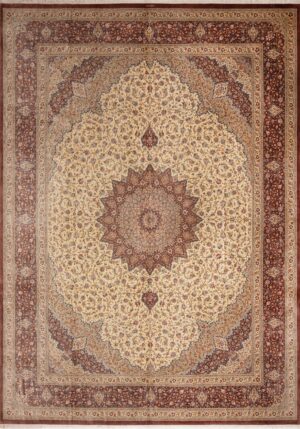
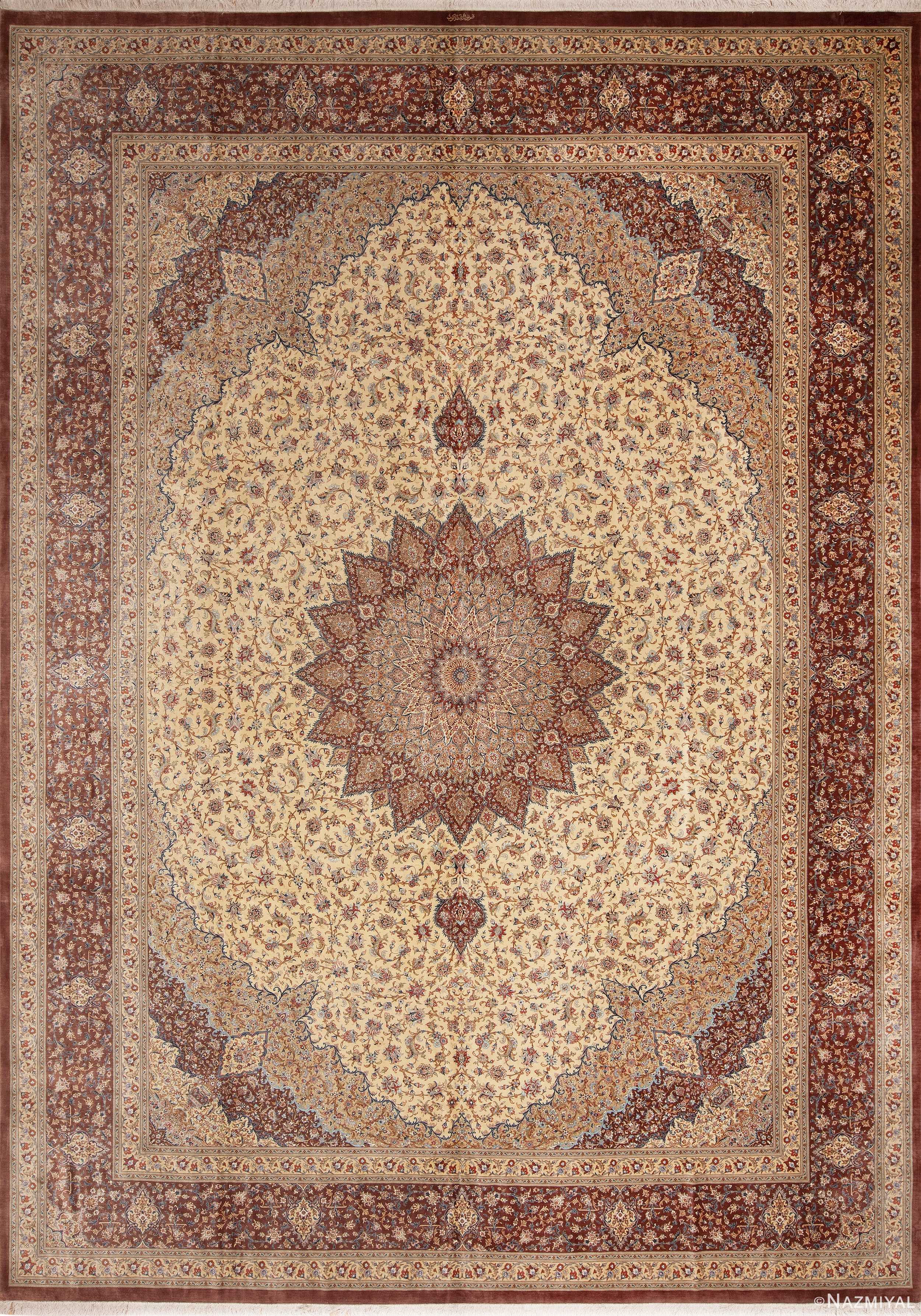
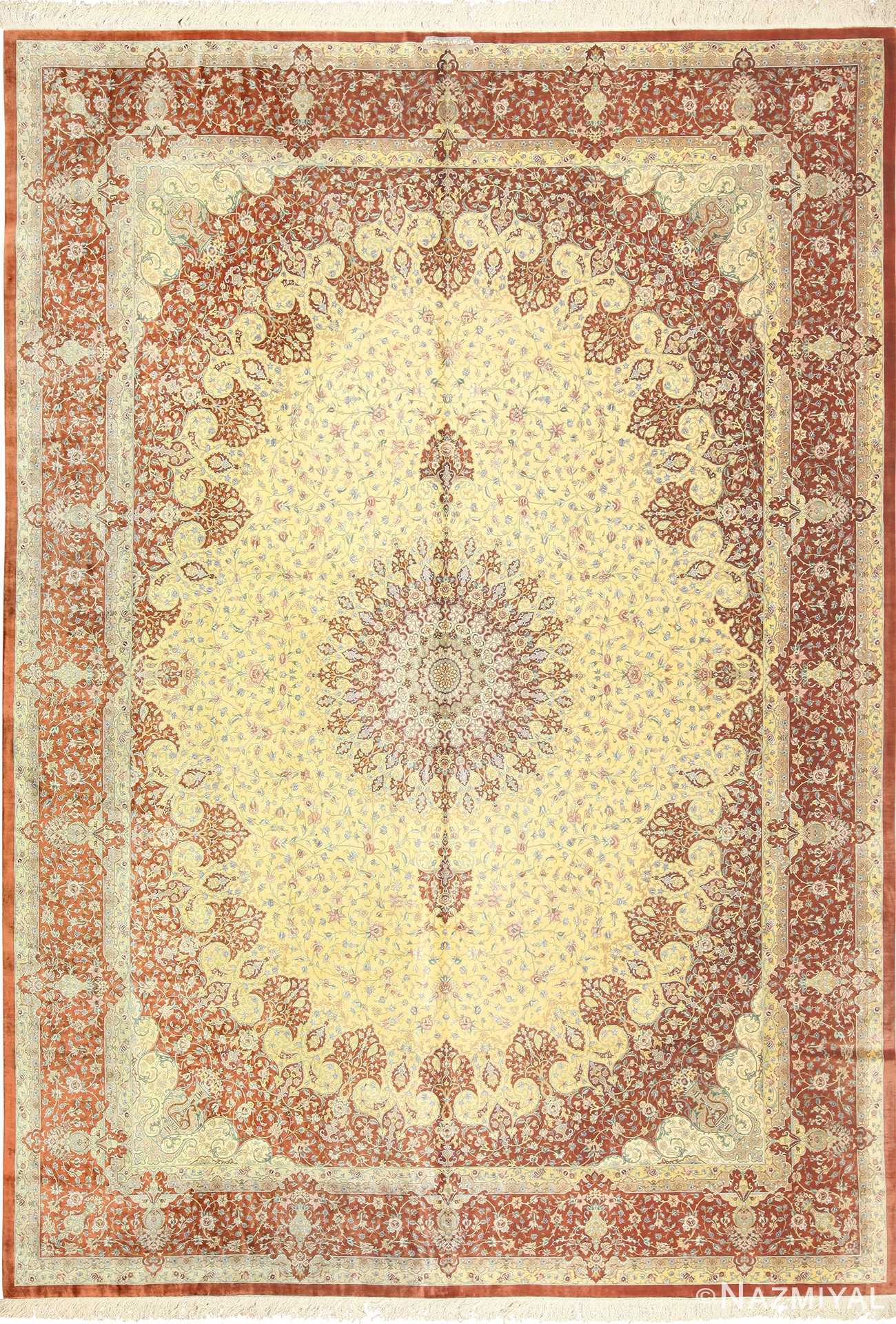
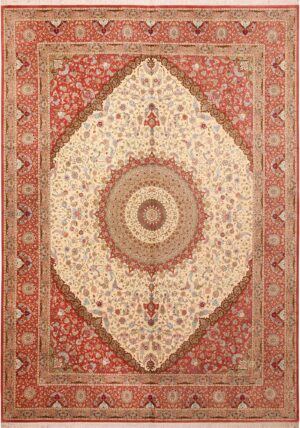
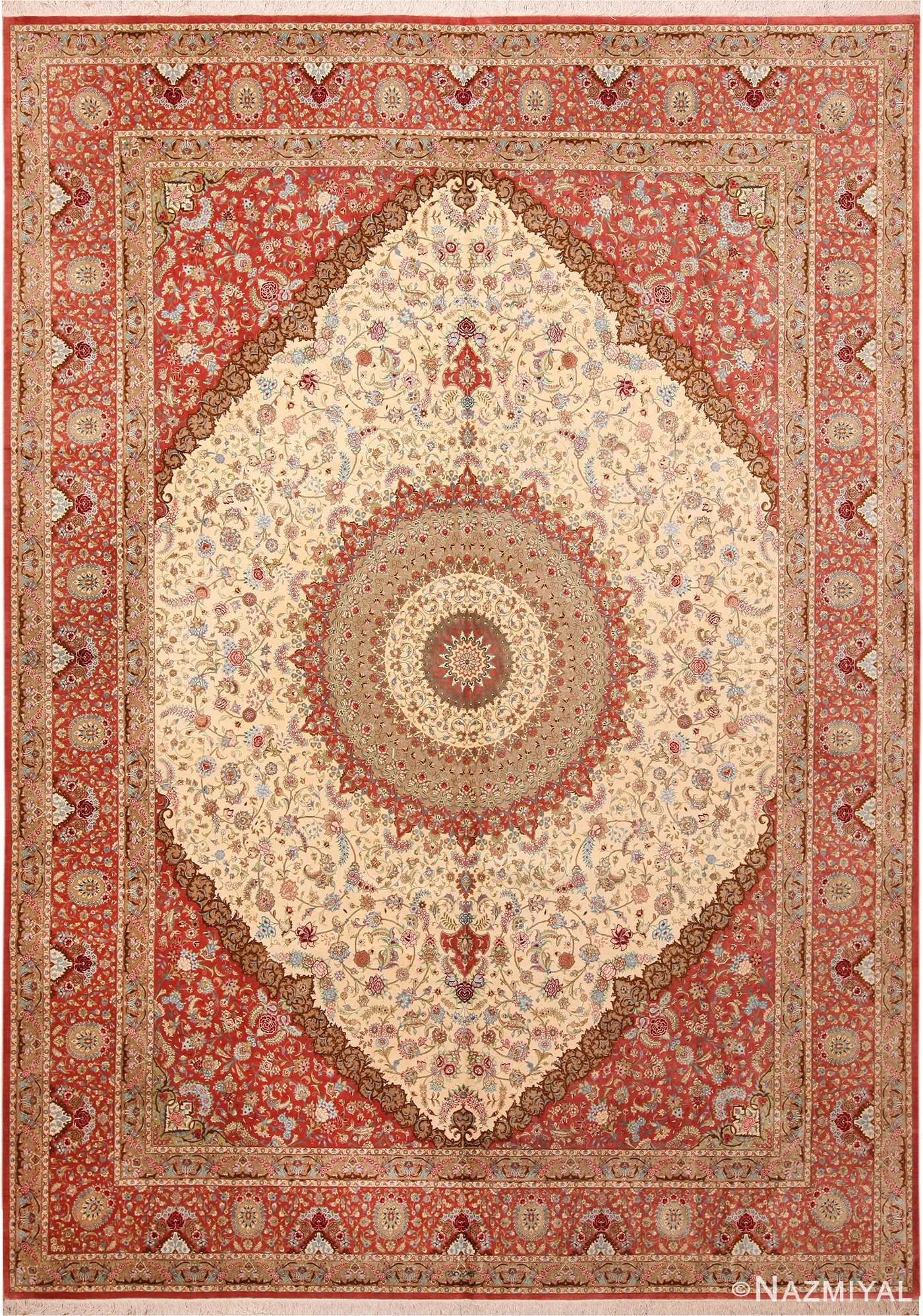
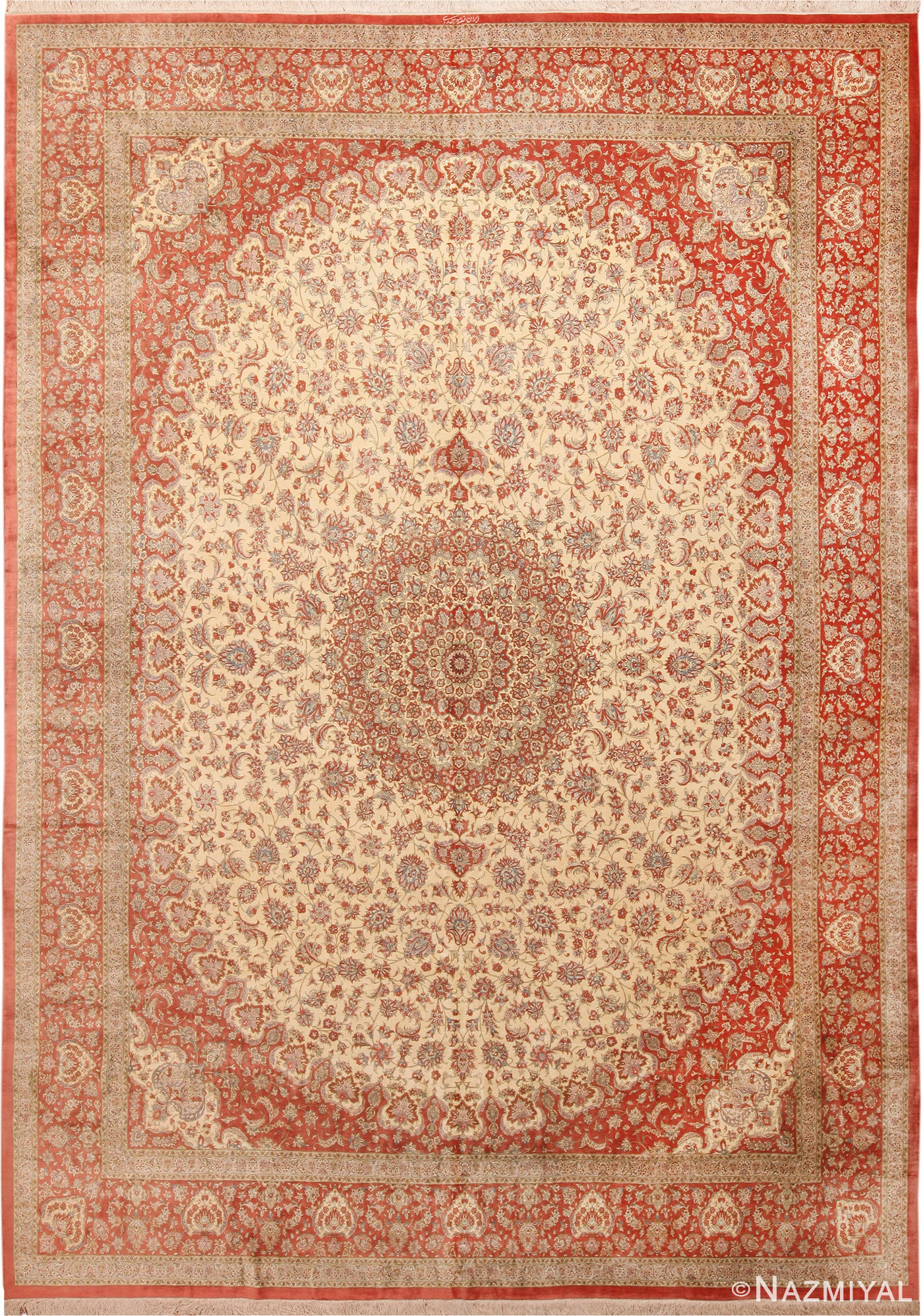
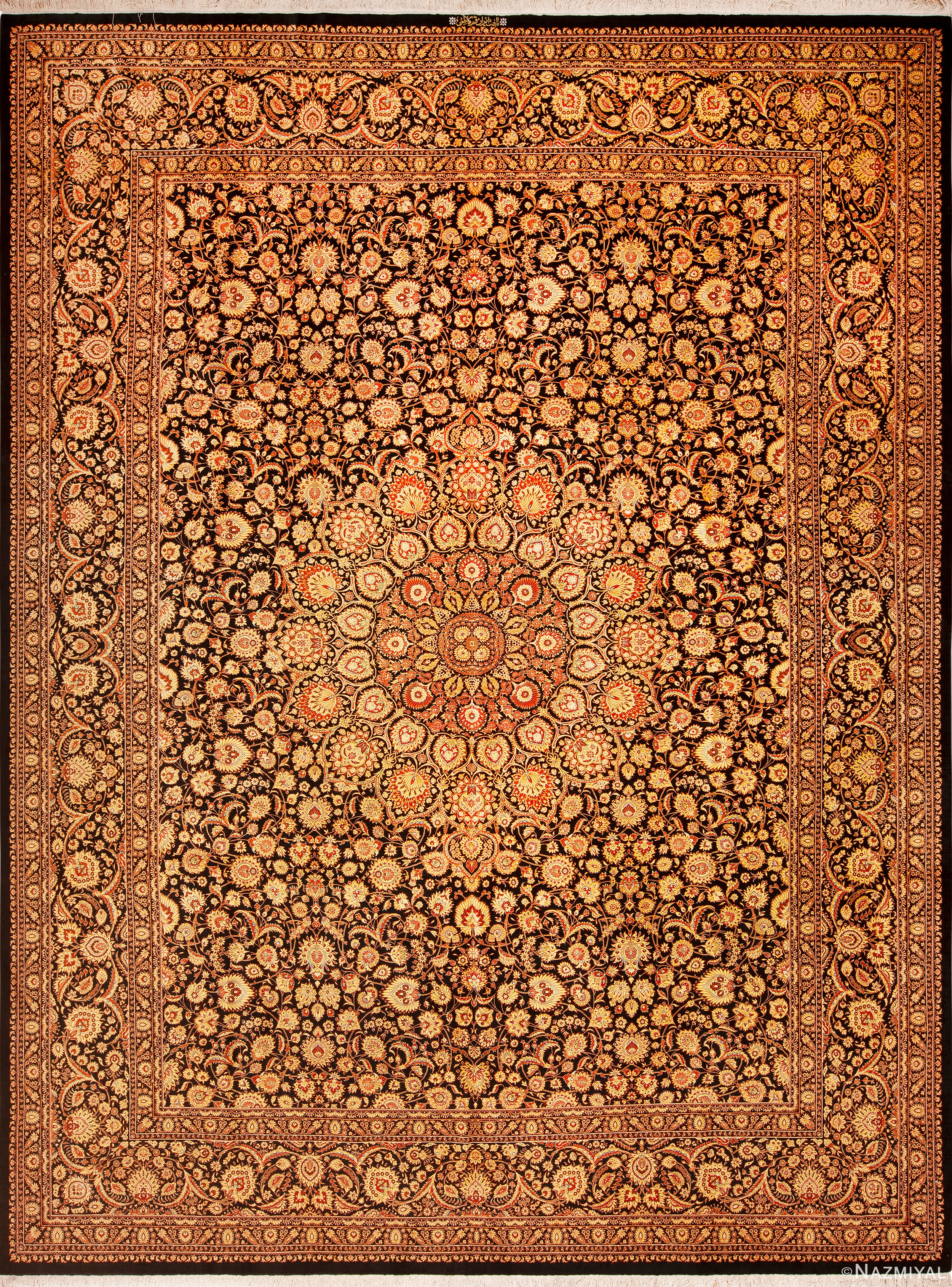
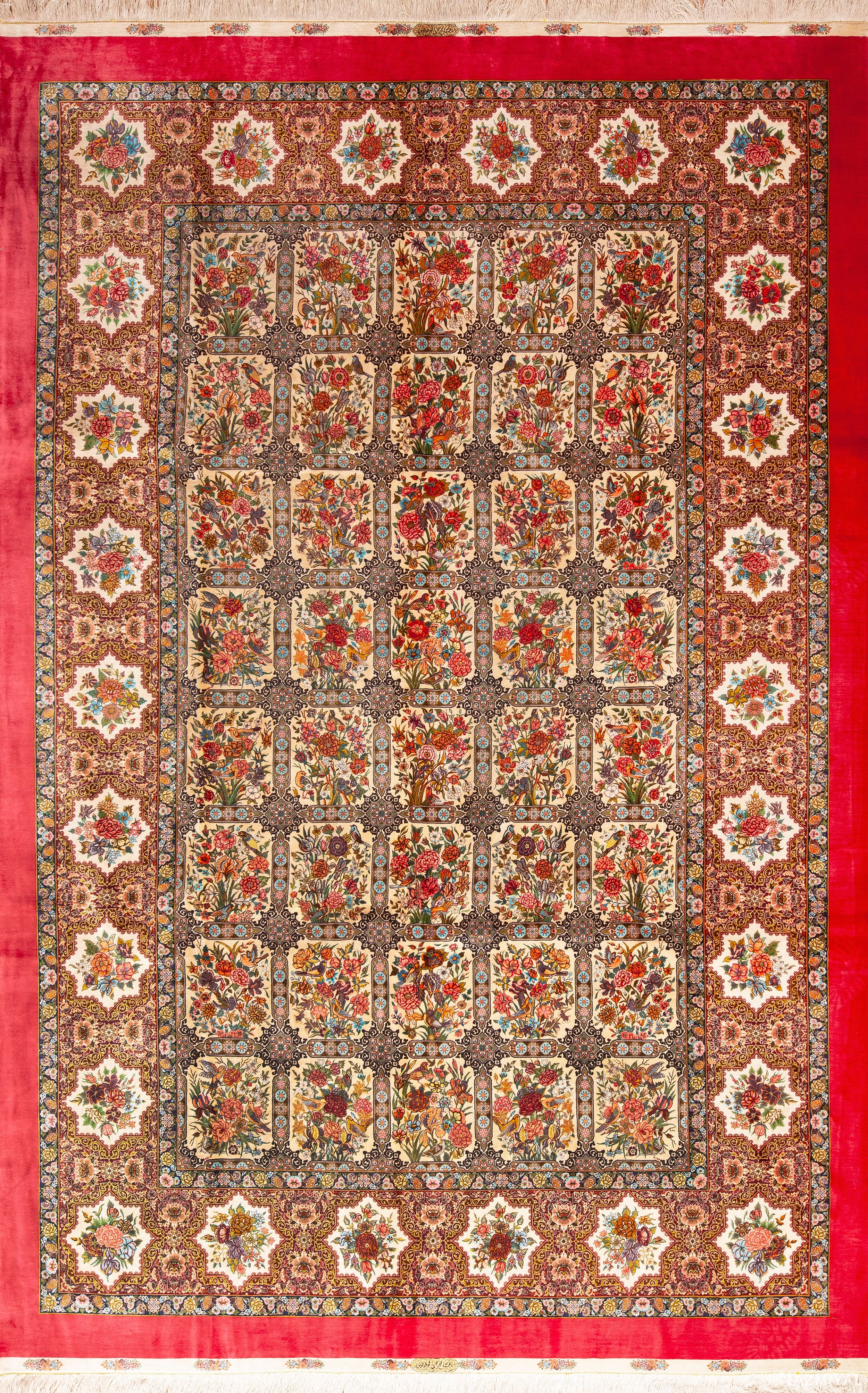
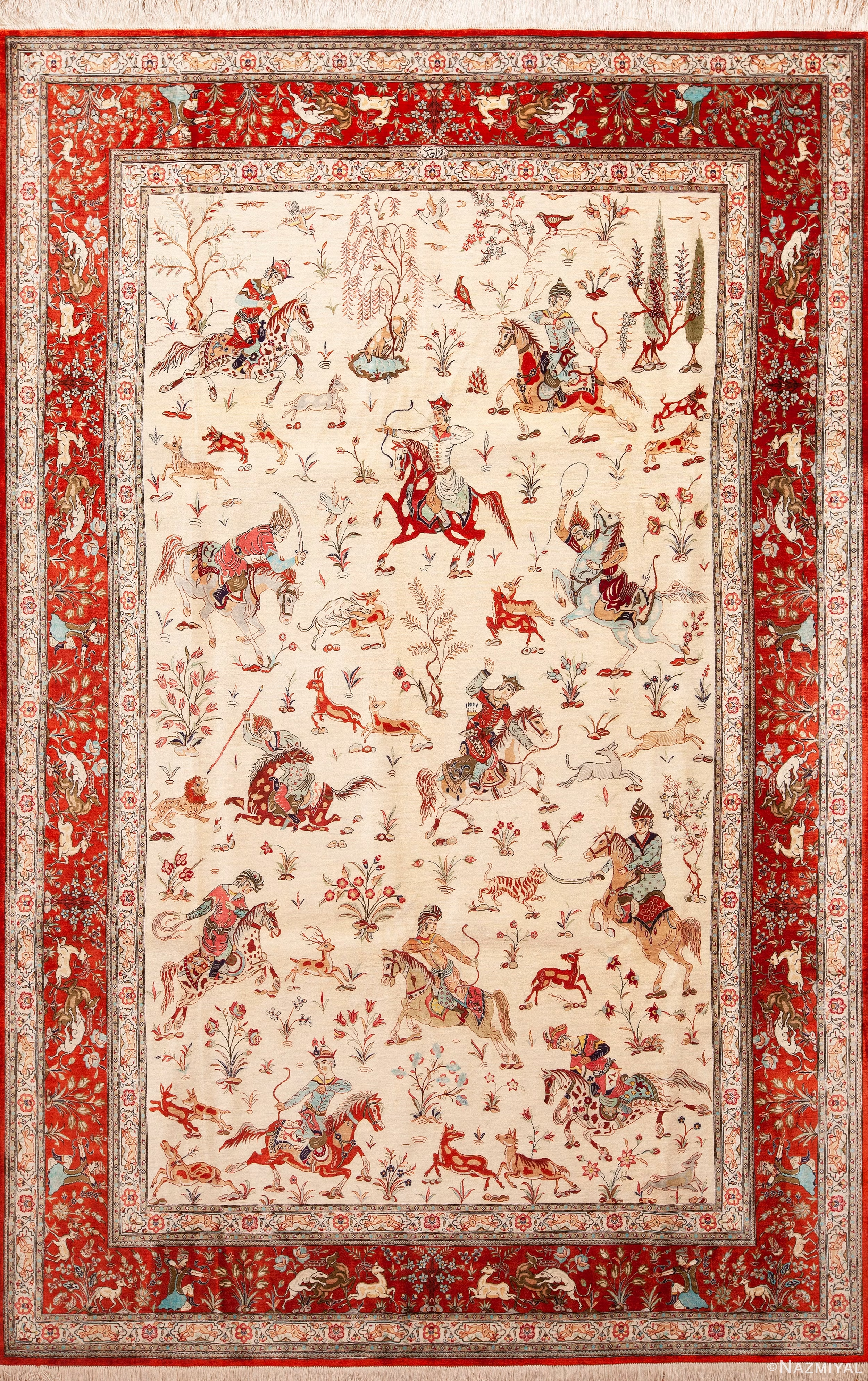
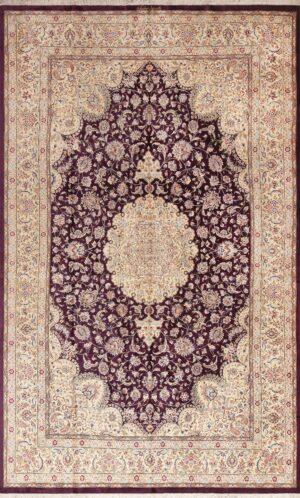
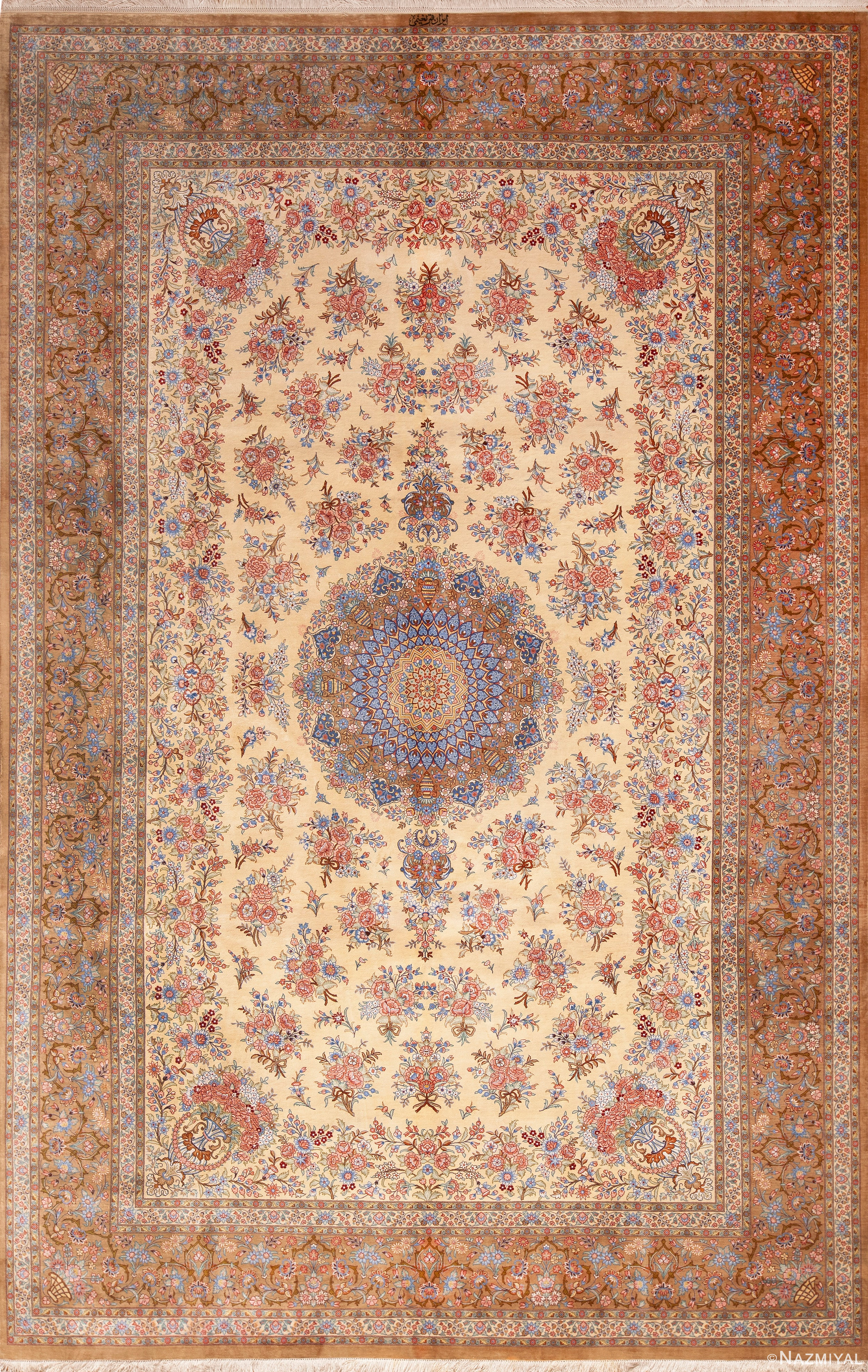
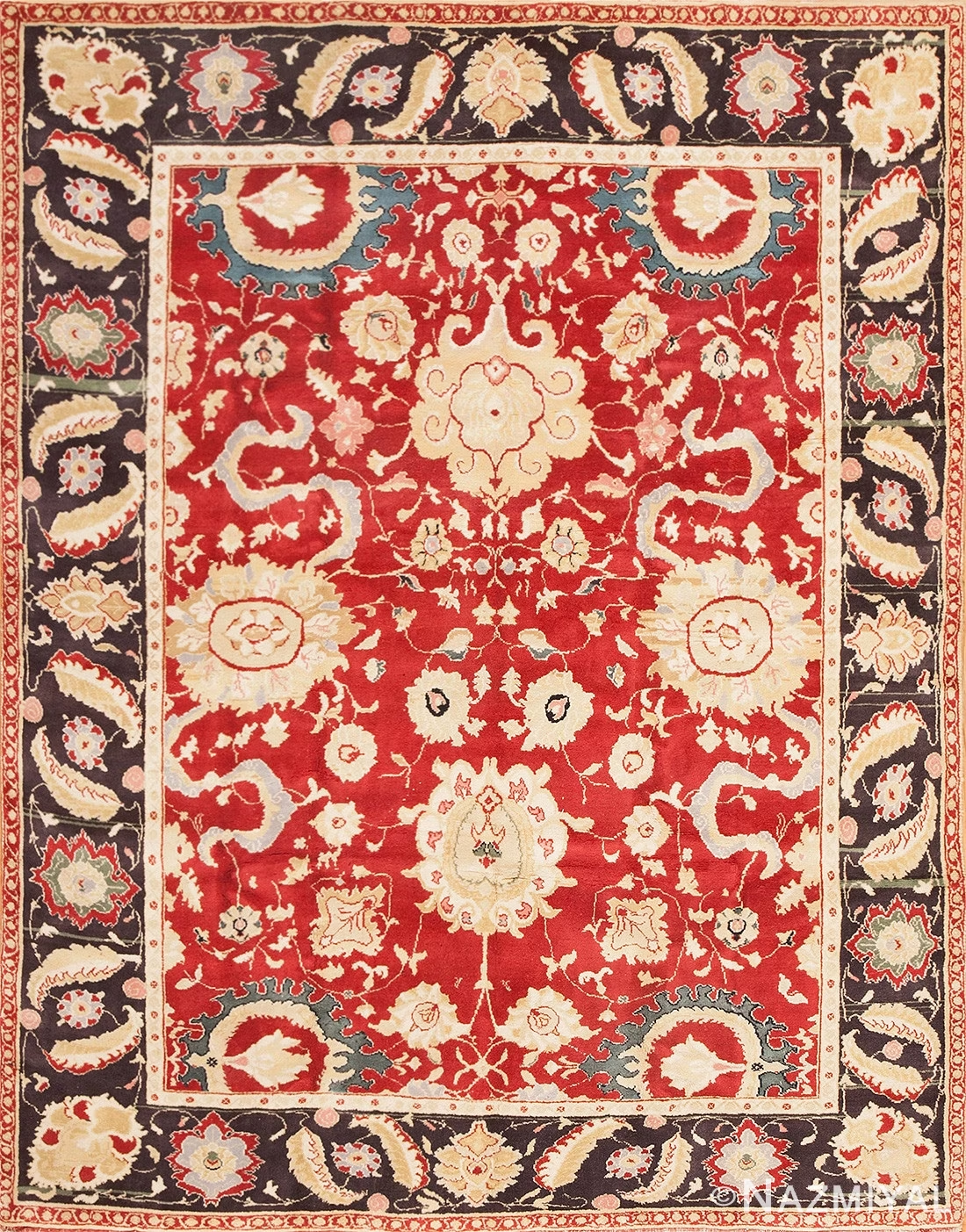
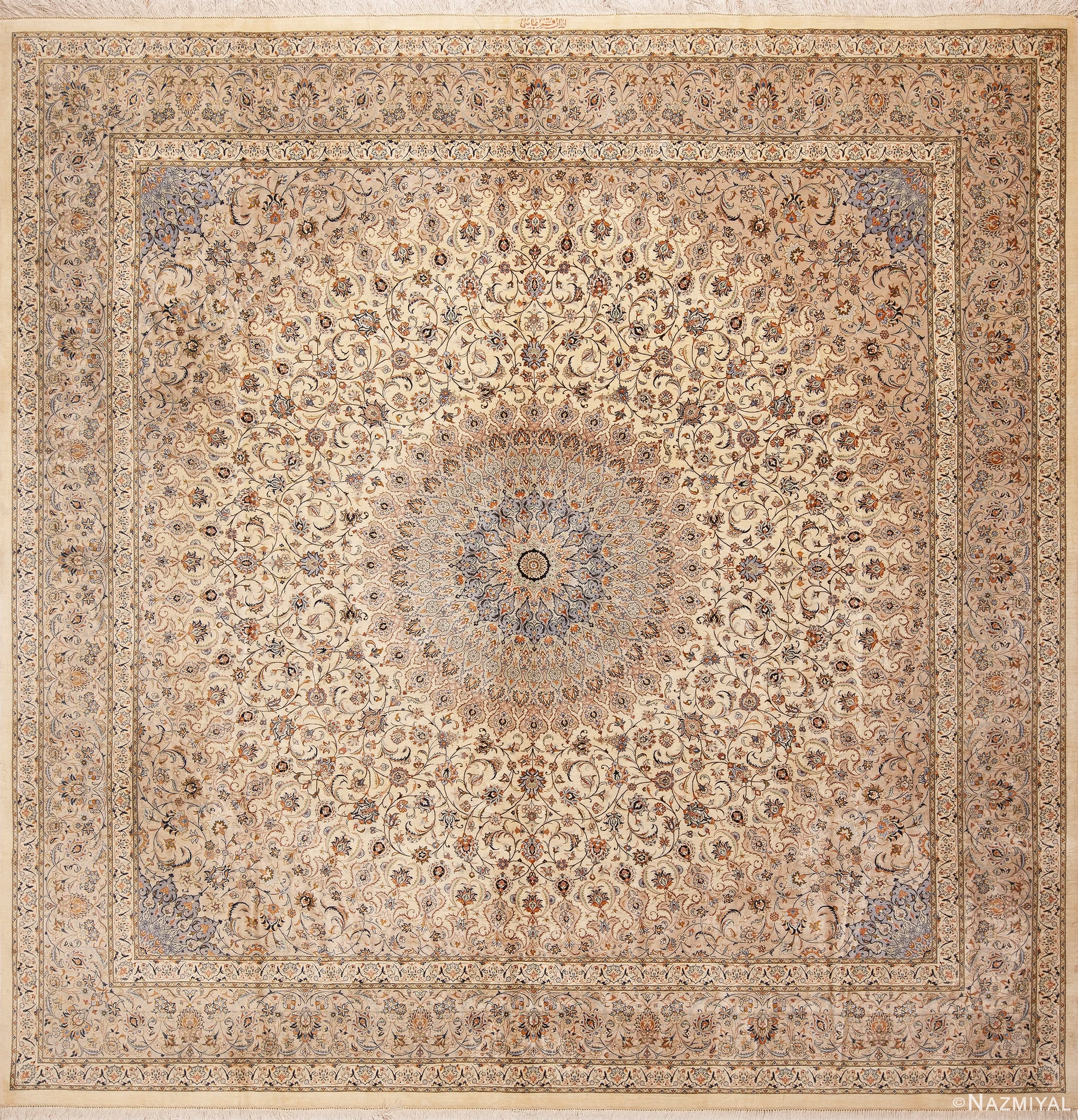
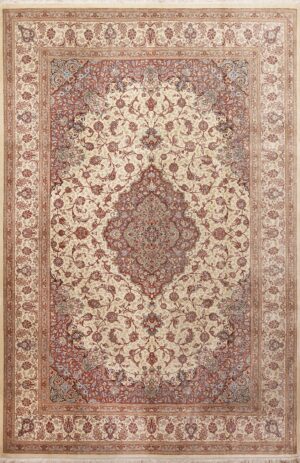
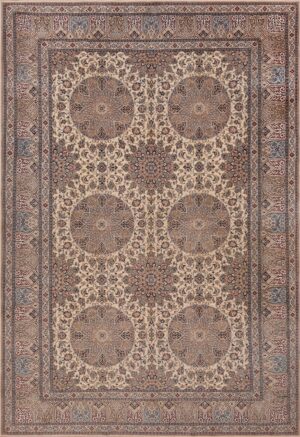
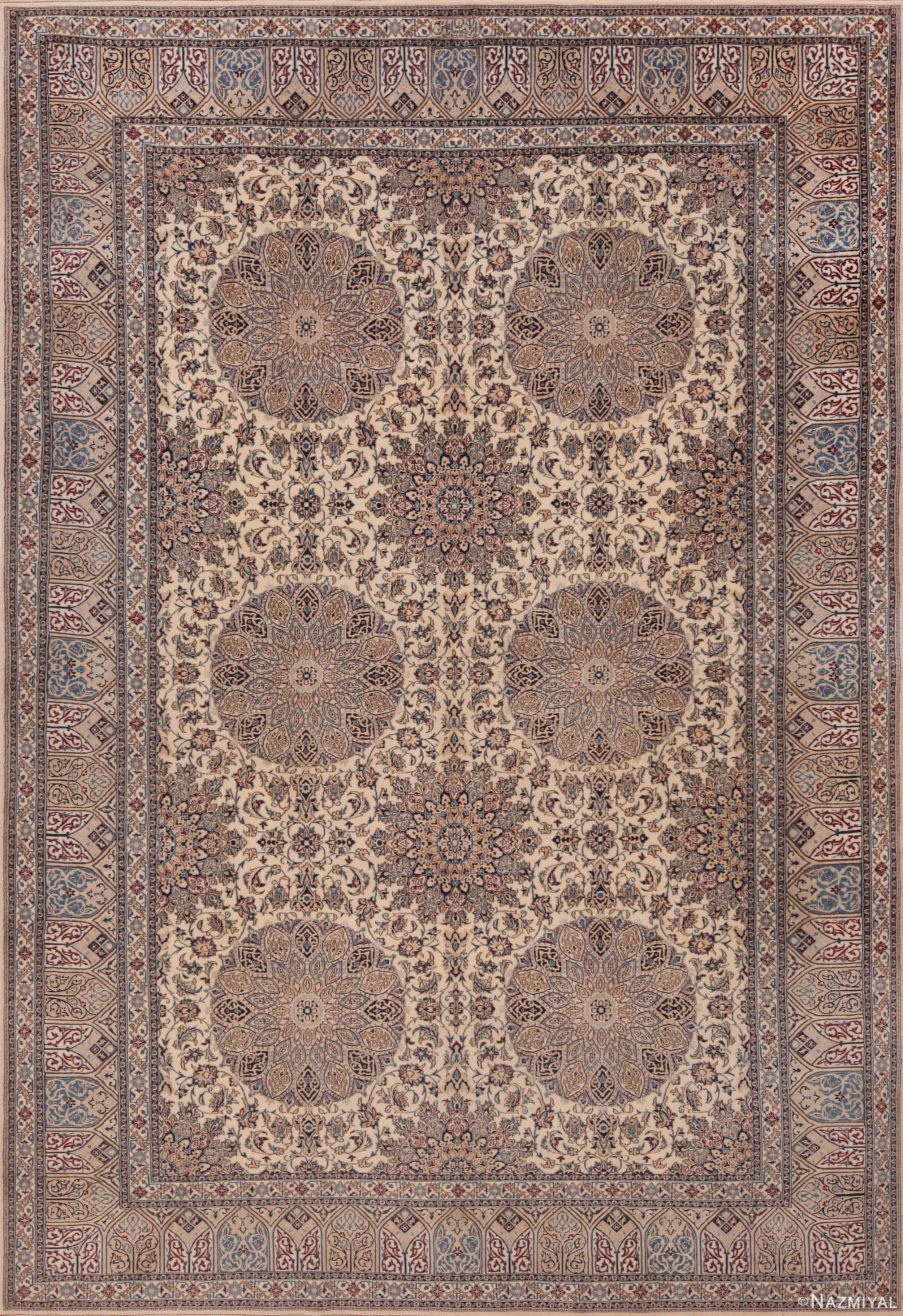
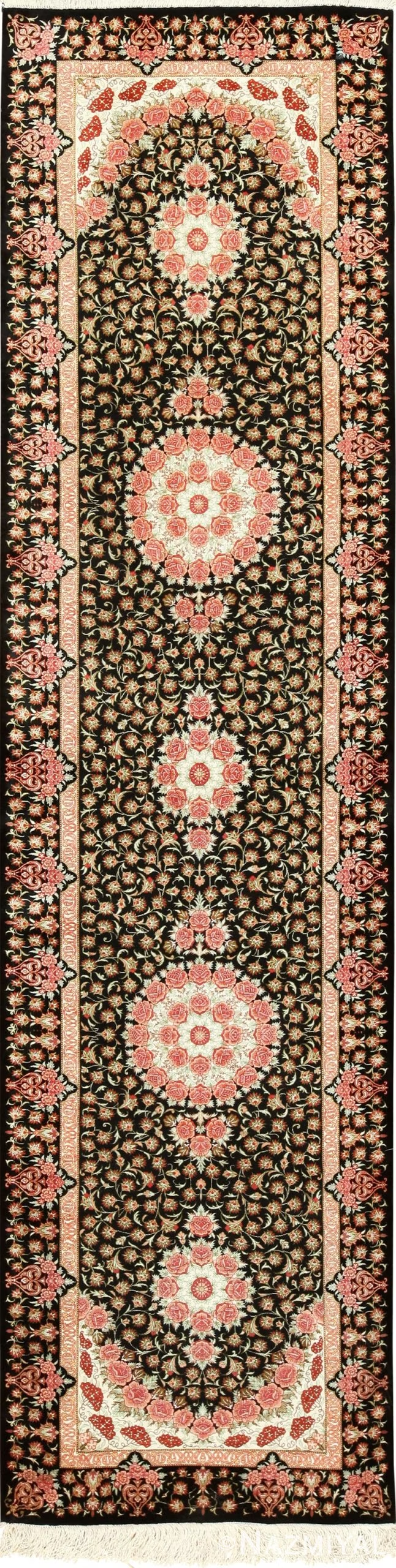
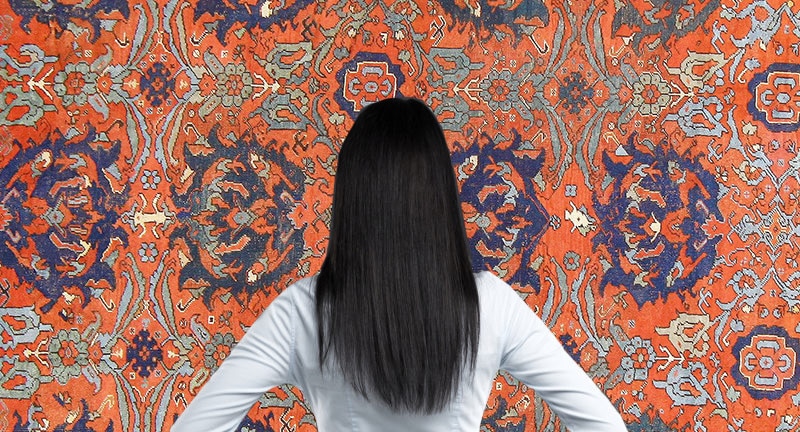
Traditional Oriental rugs have many uses. They can be used to cover an unpleasant looking floor, to define a space or to set boundaries in a room. They can be a focus, or bring a room together.
The presence of a rug from the Orient in a room can be a statement in itself. A rug is much like a piece of art on the wall. The choice to own a unique antique oriental rug with a particular design or weave says much about a person’s lifestyle and sense of design. These rugs can be used to warm up a room. They can totally change the mood of a room. Whatever your reason to place a particular rug in a room, you are creating your own unique environment for you to enjoy.
Are Oriental Rugs In Style These Days?
Contrary to what some may think, Persian and oriental rugs are very much in tyle these days and the demand for them is constantly increasing. For much of the twentieth and twenty first century, the interest in traditional Oriental rugs has been evolving. Buyers have begun to focus on the concept that an antique rug can be a standard of excellence, and there are certainly good reasons for this. The influence of western dye and machine spinning technologies, along with the enormous new demand for antique Oriental rugs that developed from the late nineteenth century onward, all contributed to a rapid decrease in quality in terms of the materials, the weave, and the designs.
A Guide To Traditional Oriental Rugs
By the 1930’s it was easy to tell the difference between rugs made up to about World War I, and those made after.
Can You Hang An Oriental Rug On The Wall?
A finished rug can be used either as a floor covering or as a decorative piece. Traditional Oriental rugs are often used as beautiful wall hangings, bringing color into a blank space, or even as drapes for doors. Antique carpets are sometimes hung so as to protect them from future damage.
Regardless of price, a great traditional Oriental rug is a wonderful work of art.
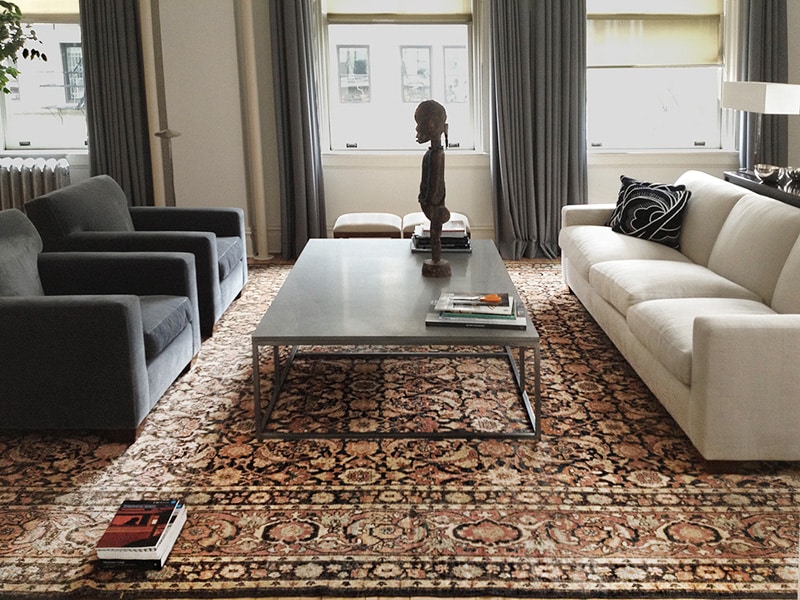
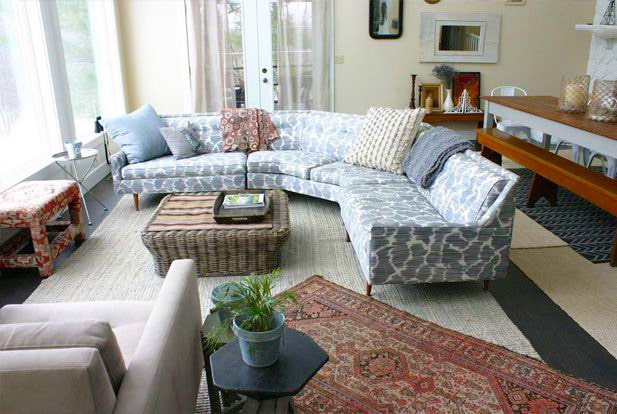
Antique Traditional Oriental Rug With Grey Sofa- Interior Design by Denise Kuriger
What are Traditional Oriental Carpets and Rugs?
A original meaning of a traditional Oriental rug is a carpet or rug that would be classified by the region where it was woven – Asia. With the modern rugs though, the terms “traditional rugs” and “Oriental rugs” refer more to the patterns and design rather than the actual place they were woven.
The original traditional Oriental rugs would have been woven in countries such as Persia, India, China and so forth. Rugs such as these are commonly made in “Eastern” styles that were made popular by Islam’s cultural golden age.
Echoing depictions of nature and the weavers surroundings for more stylized patterns and representations. Features such as abrashes (color shifts present in the rug due to changes in the dye lots) can distinguish two otherwise seemingly identical carpets. While these traits can be replicated to some degree in modern or machine-made rugs, they can never achieve the same patina and charm as an original.
Shopping for Oriental Rugs Online
When it comes to shopping for Oriental rugs online, buyers don’t only want access to the largest selection of pieces; they would like to choose their favorite from the best collection of rugs from the Far East. Oriental rugs represent an outstanding variety of artistic creations from China, India, Tibet, Mongolia and East Turkestan.
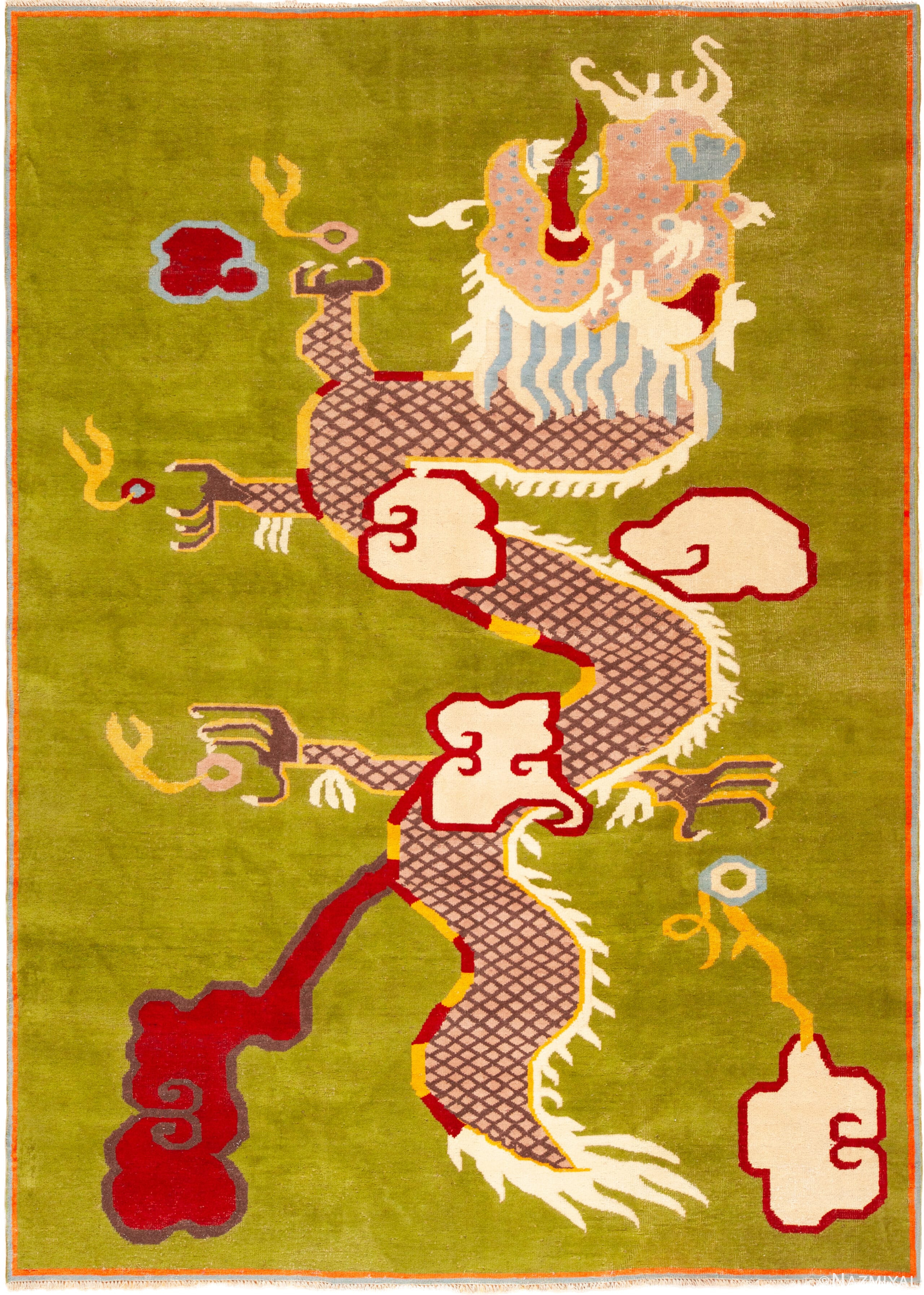
There are traditional Ningxia rugs with fretwork embellishments, super saturated Chinese Art Deco rugs, symbolic Chinese dragon rugs and Oriental carpets that feature abstract patterns and baroque designs from Europe. Because Oriental rugs are so diverse, they can complement many interior styles. Rug aficionados and new collectors will be delighted by the selection of traditional Oriental rugs available today.
When did Antique Oriental Rugs Become Popular?
For hundreds of years, antique Oriental rugs have been a staple of class and culture. They became popular in Europe and the East thanks to the Silk Road. Items from as far as China spread to the West through the hands of Asian and Islamic traders and they quickly developed into cultural centerpieces. Aristocrats throughout Europe (such as Henry VIII and the 17th century Polish royalty) are known to have been big rug collectors. The history of these beautiful pieces in Europe is well documented in writing records as well as other artistic relics like the paintings of Hans Holbein. In modern times, antique Oriental rugs are still collected and used for their decorative and investment significance.
Are There People Who Collect Traditional Oriental Rugs?
Yes, there are people from all walks of life who collect traditional Oriental rugs. One of the most famous collectors of modern times is Sigmund Freud. Freud is known to have draped smaller antique Oriental rugs on his couch at all times. Interior designers and architects frequently use antique Oriental rugs for modern spaces.
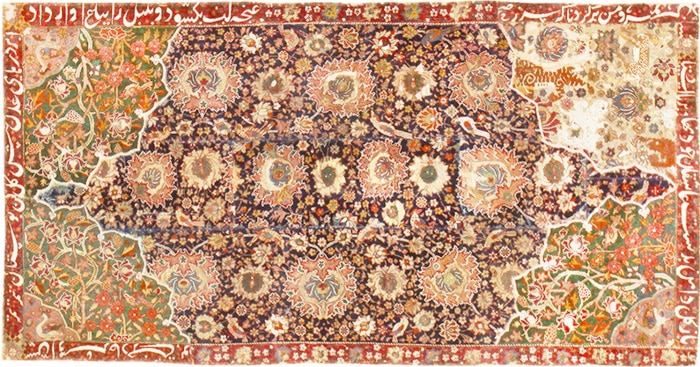
The aged dyes of these weaving’s are unmatched and blend seamlessly with modern decor. Rugs are typically the first design element to be chosen when decorating. They are, be default, a keystone for the space’s decorative schema. These pieces are not simply meant for beautification. Since good pieces retain their value over time they are considered investments as well. In a recent auction at Sotheby’s NYC auction, an antique rug broke all previous records for any textile sold at auction bringing nearly $34 million.
Most Expensive Antique Oriental Rug Ever Sold
These rugs comprise an artistic essence that is much more complex than simply being from Asia. Spanning hundreds of years, these pieces have been used for both practical floor and decorative wall hangings. Their intrinsic value makes them ideal investments and their rich history give them a ton of collectible appeal.
What Does it Mean When a Rug is Called a “Traditional Oriental Rug”?
“Oriental rugs” are part of a broad international classification that includes a diverse set of distinct carpet-weaving traditions in China, Mongolia, East Turkestan, Persia, India and other regions. While the traditional Oriental rug designation is an umbrella term that includes a tremendous variety of regional designs, it primarily focuses on carpets produced in the Far East. Like rugs produced in Europe, Persia and the Caucasus, rugs from the Orient feature medallions, spandrels, intricate repeating patterns, and stylized botanical motifs. However, these constants are depicted in a distinctly Eastern style.
Political and economic empires in China had a far-reaching presence. They absorbed influences from Persia and the Asian Steppe while also influencing culture and design traditions in East Turkestan, Mongolia and Tibet. The Chinese vintage rugs encompass a tremendous range of styles that are linked by a common thread. Rugs produced in Mongolia and Tibet often feature intense fretwork borders and endlessly repeating patterns that are combined with Buddhist symbols.
These traditional Oriental rugs that depict animals, flowers and natural motifs take on secondary meanings although they may appear entirely profane. Oriental rugs frequently use symbolic motifs that represent tangible and intangible things and concepts.
For example, antique Chinese dragon rugs with their stylized decorations bridge a gap between myth and reality. Although rugs from the Orient often feature stylized motifs, they are much more true to the natural world than some abstractions used by distant tribal groups.
Antique carpets from Khotan often depict clouds, sun rays, pomegranate fruits and stylized shrubs. Khotan Rugs produce a symbolic picture while weavers in Tibet may use flowers, animals and fur-like prints to represent spiritual concepts. Even in China, many art Deco carpets were produced exclusively for their aesthetic beauty and appeal to Western consumers. Art Deco rugs favor naturalistic compositions that embody minimalist principles.
Later rugs combine traditional Oriental motifs with rich, over-saturated colors and experimental Art Deco patterns. Although antique Oriental rugs are part of a very unique and original aesthetic tradition, carpet producers in the region have also been influenced by faraway styles. This includes reproductions of European designs and the assimilation of Persian patterns in parts of East Turkestan.
Rugs from the Orient have left an important legacy that has affected historic and modern design trends.
Designing with Traditional Oriental Carpets to Achieve a Polished Look
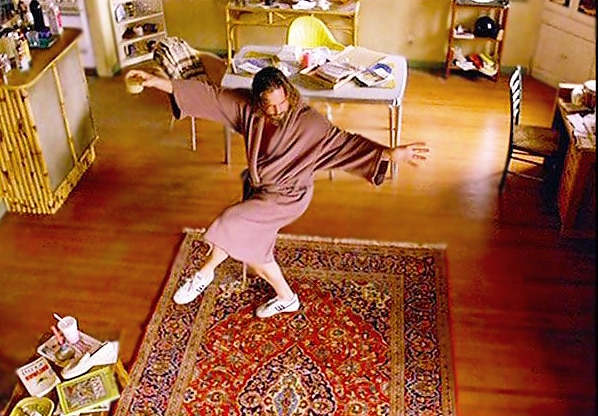
We all know the famous Big Lebowski quote about the ill-fated rug that “really tied the room together”. Though the movie is comedic, the quote rings true: A beautiful and well-made oriental rug can do wonders to bring together disparate design elements in a space. The right rug or carpet has the ability to add texture, a complementary dose of color, and a sense of elegance to a space. The right carpet also grounds a room: It gives the space a new point of focus and makes furniture and room accessories really stand out.
The Big Lebowski Dancing On His Oriental Rug
Here we’ll take a glimpse at several gorgeous interior designs that utilize antique carpets to accomplish a finished, cohesive look, as well as suggest pieces from the Nazmiyal Collection that can give your home the same sense of polish.
Create Tranquility With Traditional Oriental Rugs:
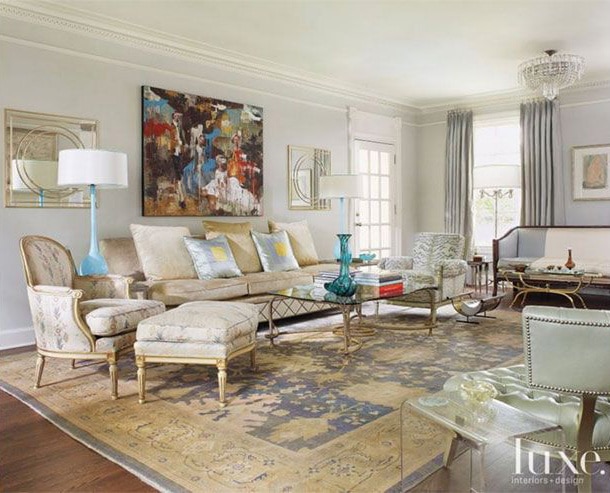
Create Tranquil Interiors with Oriental Rugs
This neutral living room is a great example of how sticking to a strict color palette can lend a sense of tranquility to a room. Because the carpet is woven in the same color family as the furniture, walls, and accents, the elements don’t have to compete together, but rather work in harmony, each reinforcing the rest. Choosing a rug composed in light colors keeps the room feeling airy and bright, and the large scale of the rug’s pattern gives the eye plenty of room to rest.
Interior Design With Oriental Rugs
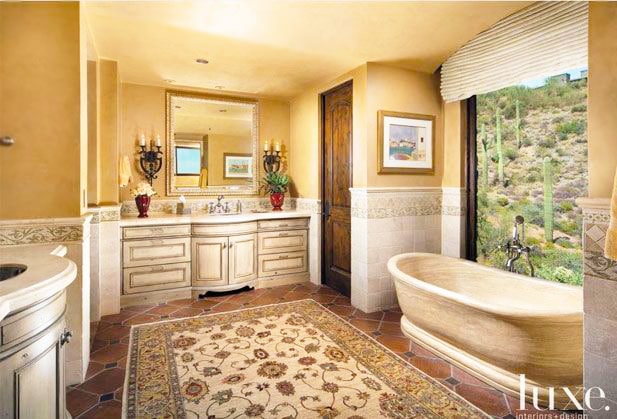
Warm Up Your Space:
If you’re dealing with a large space with large amounts of tile, stone, or otherwise “cold” materials, adding an Oriental rug can warm up the room and make it seem cozier and more inviting. Sticking to a palette of warm rusts and golds, and adding as many natural elements as possible gives the room a subtle rustic flavor.
Combine Traditional Oriental Rugs & Contemporary Elements:
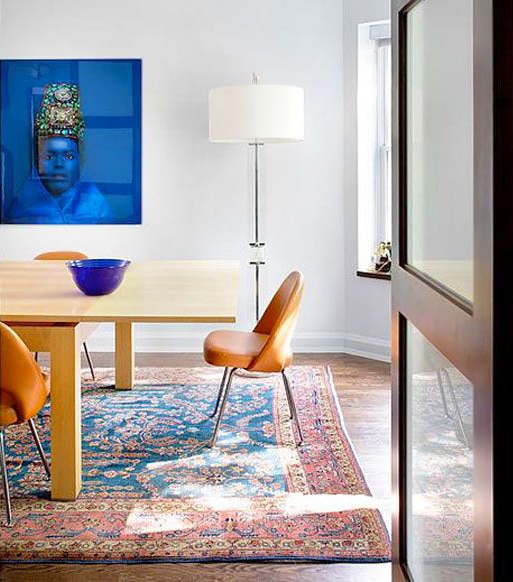
Dining Room Interior Design With Oriental Rug
Contrary to popular belief, you don’t have to choose between traditional and contemporary design when decorating your home. If you bring in elements of both styles in similar colors, the room will feel fresh, modern, and cohesive. Keeping an eye on color ensures that the classical and contemporary elements in the space reinforce and highlight, rather than undermine each other.
Adding Direction and Focus To Your Interior With Oriental Rugs:
Living Room Interior With Layered Oriental Rugs
Sometimes a space is an awkward shape or size, and it can be hard to find direction. Small scatter rugs are a great way to reinforce the flow of a room, and provide a sense of balance to an otherwise disproportionate space. Arranging your rug in a calculated manner helps guide inhabitants and guests, so the function of the room may be fully realized.
Mixing & Matching Patterns With Oriental Rugs:
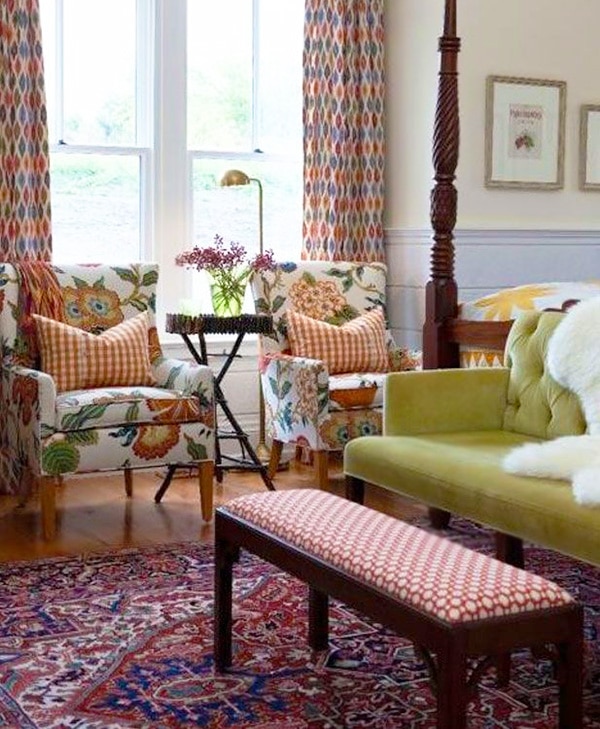
Bedroom interior Design With Persian Heriz Oriental Rug
Mixing patterns and textures is a balancing act, but a harmonious design can still be achieved when combining several designs. Changing up the scale of the pattern on your pieces helps to create a sense of intention, rather than looking hodge-podged or too busy.
History Of Antique Oriental Carpets Continues
The weaving of Persian rugs probably began in the ancient Persian Empire of Cyrus and Darius the Great. While no extant rugs of this early period have been found in Persia itself, they have been preserved in the ‘frozen tombs’ of the nomadic Scythians in modern day Siberia.
History of Antique Oriental Persian Carpets
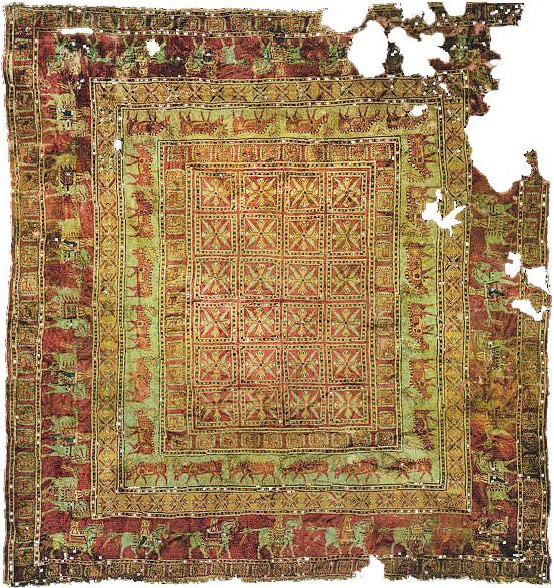
The tombs at Pazyryk produced fragments of a flat-woven wool tapestry and a virtually intact knotted pile carpet, known as the Pazyryk carpet, with figurative depictions and ornamental designs precisely like those in the reliefs of the Royal Persian Palace at Persepolis. Experts have not hesitated to see these as imports from Persia.
Image Of The Pazyryk Rug – The Oldest rug In The World
The various fragments in a Sassanian Persian style discovered more recently in Afghanistan appear to also be Persian exports or local provincial copies. It is difficult to attribute the many rug fragments of the early Islamic period collected from Fostat in Egypt, but it is likely that some of these are Persian imports or copies as well.
Persian traditional classical carpet production begins during the Mongol and Timurid dynasties in the 14th 15th centuries, where it is documented primarily in miniature painting and rare fragments showing mostly geometric designs precisely like those of the paintings.
Antique 17th century Persian Polonaise Rug #40787
However, it is the Safavid period (1501-1722) that ushered in the Golden Age of classical Persian carpet weaving. Safavid court workshops produced carpets which, though often immense in scale, were woven in a remarkably fine technique with sinuous arabesque or floral designs of the utmost elegance and delicacy. Safavid court rugs were so highly respected and prized across the Islamic world that they were imitated in the court workshops of contemporary Ottoman Turkey and Mogul India.
During this period Oriental carpets, especially those from Persia, were widely imported into Europe, where they still represent the core of the finest modern European private and museum antique carpet collections. This taste for Persian carpets is also well attested in the masterpieces of 17th century European painting, where they are frequently depicted as symbols of affluence or luxury.
Antique 16th Century Persian Salting Safavid Rug
This extraordinary Persian production came to an end with the collapse of the Safavid Empire in 1722. But during the nineteenth century, the Qajar dynasty began to foster a revival of traditional Persian arts and crafts in which carpet making and weaving figured prominently.
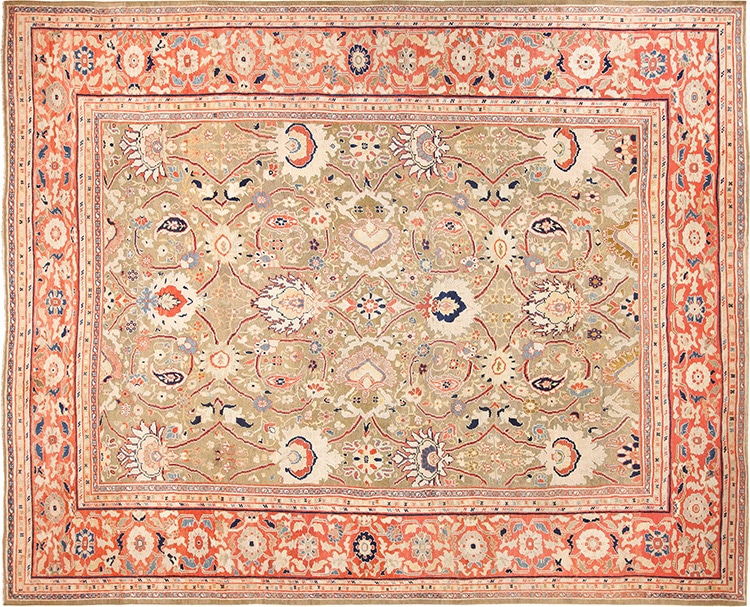
All the great design traditions and technical accomplishment of Safavid rug weaving rapidly came to life once more, and by the later nineteenth century Persia had again assumed a dominant position in Oriental rug manufacture, with European offices established in Persia itself to accommodate the enormous European and now American demand.
19th Century Qajar Dynasty Antique Sultanabad Persian Rug
Since that time, the word ‘Persian’ has continued to remain virtually synonymous with the concept of the Oriental carpet. Innovations in the spinning and dyeing of the wool materials have done little to alter the fundamental traditional techniques and Persian carpet pattern design principles of fine Persian rug production, which even today remains faithful to the higher standards of bygone times in a world where that is seldom the case.
             Posted on Google        Victor Florintsev     Trustindex verifies that the original source of the review is Google. The only ones I'd ever buy rugs from. The best.         Posted on Google        Jeffrey NeumanB     Trustindex verifies that the original source of the review is Google. I bought two gorgeous Serapi rugs from Farhad at Nazmiyal Rugs!  Beautiful carpets, fair prices and great service.  Very happy customer.  Farhad (the sales person) was very patient and gave us great service.         Posted on Google        john haid     Trustindex verifies that the original source of the review is Google. Alen is a gentleman and an expert.  Really great to work with.         Posted on Google        Edward Yasuna     Trustindex verifies that the original source of the review is Google. I recently purchased a modern Kandinsky rug from Nazmiyal Auctions.  It was just as described, and the director (Farhad) of the auctions had it sent to me quickly and safely.  Payment was easy, the rug was reasonably priced, and I highly recommend Nazmiyal Auctions and Antique Rugs.  Quality merchandise and first-class service.         Posted on Google        Nicholas Carr     Trustindex verifies that the original source of the review is Google. Had a excellent experience buying a rug in Nazmiyal's 1/18/26 online auction.  First, prior to the auction, viewing a number of lots at the 32nd St showroom (I had prepared a list from the online catalog). The staff were great to work with: helpful, knowledgable, honest, and flexible.  Second, after placing an online bid and winning the desired item, arranging payment and pickup was simple and straightforward. Everything went seamlessly and the overall experience was educational and fun. Many thanks to Jason and his team.         Posted on Google        Andrea Gared     Trustindex verifies that the original source of the review is Google. Everyone at Naziyal is proffessional, especially Jason and Farhad.
They are knowledgeable, truthful, and true gentlemen. I have sold several rugs through them and will always go to them first, to buy or sell. The best in the business!         Posted on Google        Lori Silverberg     Trustindex verifies that the original source of the review is Google.          Posted on Google        Jesse Zilberman     Trustindex verifies that the original source of the review is Google. Excellent customer service! Alen was very helpful over the phone and email. The rug we acquired was stunning, and photos do not do it justice. I would definitely work with Alen and team again!         Posted on Google        Rachel Paul     Trustindex verifies that the original source of the review is Google. Jason was incredibly kind and helpful! I work for a small museum that had some rugs we had no information on. Jason responded to us quickly and gave us the information we needed for free! Incredible service, we are super thankful for his help!

 Size: 6 ft 8 in x 10 ft 2 in (2.03 m x 3.1 m)
 Size: 11 ft 2 in x 13 ft (3.4 m x 3.96 m)
 Size: 7 ft 1 in x 10 ft (2.16 m x 3.05 m)
 Size: 10 ft x 13 ft 9 in (3.05 m x 4.19 m)
 Size: 10 ft x 13 ft 8 in (3.05 m x 4.17 m)
 Size: 2 ft 9 in x 13 ft 7 in (0.84 m x 4.14 m)
 Size: 9 ft 6 in x 13 ft 6 in (2.9 m x 4.11 m)
 Size: 9 ft 9 in x 13 ft 5 in (2.97 m x 4.09 m)
 Size: 9 ft 10 in x 13 ft (3 m x 3.96 m)
 Size: 8 ft 2 in x 11 ft 7 in (2.49 m x 3.53 m)
 Size: 6 ft 10 in x 10 ft 3 in (2.08 m x 3.12 m)
 Size: 6 ft 10 in x 10 ft 3 in (2.08 m x 3.12 m)
 Size: 6 ft 5 in x 10 ft 2 in (1.96 m x 3.1 m)
 Size: 6 ft 7 in x 10 ft 1 in (2.01 m x 3.07 m)
 Size: 7 ft 9 in x 10 ft (2.36 m x 3.05 m)
 Size: 9 ft 10 in x 9 ft 10 in (3 m x 3 m)
 Size: 6 ft 6 in x 9 ft 8 in (1.98 m x 2.95 m)
 Size: 6 ft 6 in x 9 ft 8 in (1.98 m x 2.95 m)
 Size: 2 ft 8 in x 9 ft 8 in (0.81 m x 2.95 m)
 Size: 6 ft 6 in x 9 ft 6 in (1.98 m x 2.9 m)
 Size: 2 ft 5 in x 9 ft (0.74 m x 2.74 m)
 Size: 5 ft 11 in x 8 ft 11 in (1.8 m x 2.72 m)
 Size: 2 ft 6 in x 8 ft 9 in (0.76 m x 2.67 m)