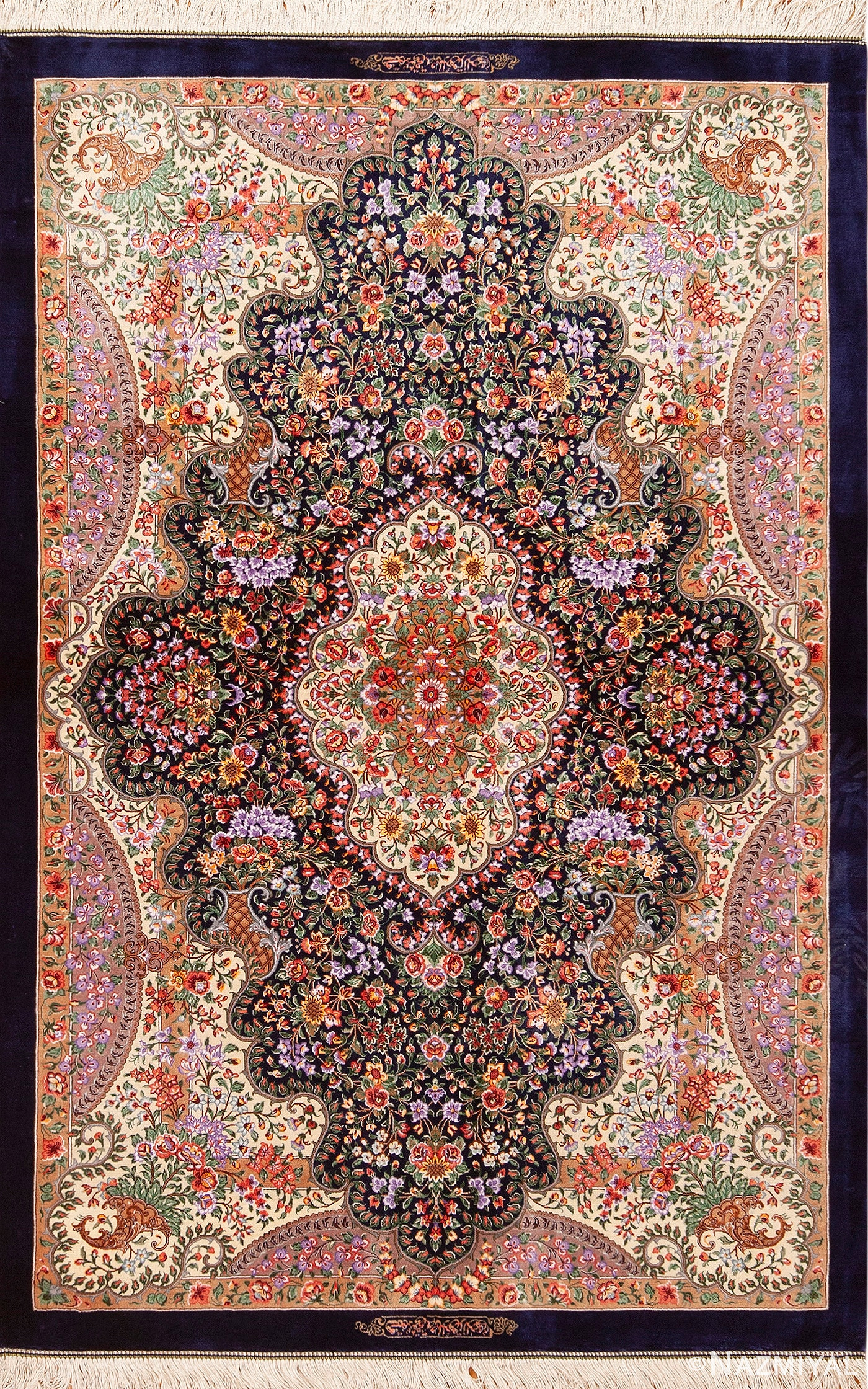
Why Buyers Choose Silk Rugs
Silk rugs are often selected for:
• Fine and intricate drawing
• A soft sheen that changes with the light
• Elegant floral, medallion and pictorial designs
• Refined color and surface detail
• Formal rooms and lower-traffic interiors
• Exceptional workshop craftsmanship
A well-chosen silk rug can bring light, refinement and visual depth to a room without overpowering the furnishings.
Silk Rugs at a Glance
• Materials: Natural silk, wool-and-silk combinations and, in some later rugs, manufactured fibers marketed as silk-like materials.
• Construction: Most Persian, Turkish and Indian silk pile rugs in this collection are hand-knotted.
• Common origins: Persia, Turkey, India and China.
• Important weaving centers: Qum, Tabriz and Hereke.
• Common designs: Bedrooms, formal sitting rooms, libraries and lower-traffic living spaces.
• Best rooms: Bedrooms, formal sitting rooms, libraries and lower-traffic living spaces.
• Main consideration: Silk generally requires more careful use and maintenance than wool.
All-Silk Rugs vs Wool-and-Silk Rugs
All-silk rugs offer maximum sheen and can support extremely fine detail. They are often best suited to formal, lower-traffic rooms.
Wool-and-silk rugs combine the body and durability of wool with the reflective quality of silk. Silk is often used to highlight flowers, borders, medallions or selected design details.
Choose an all-silk rug when you want maximum refinement and delicate detail.
Choose a wool-and-silk rug when you want the elegance of silk with greater practicality for regular residential use.
Popular Types of Silk Rugs
Persian Silk Rugs
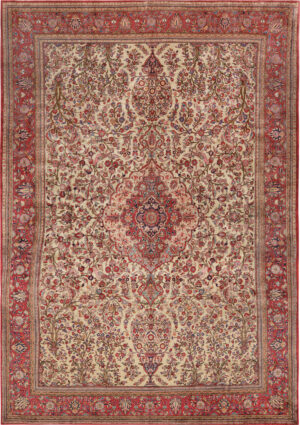
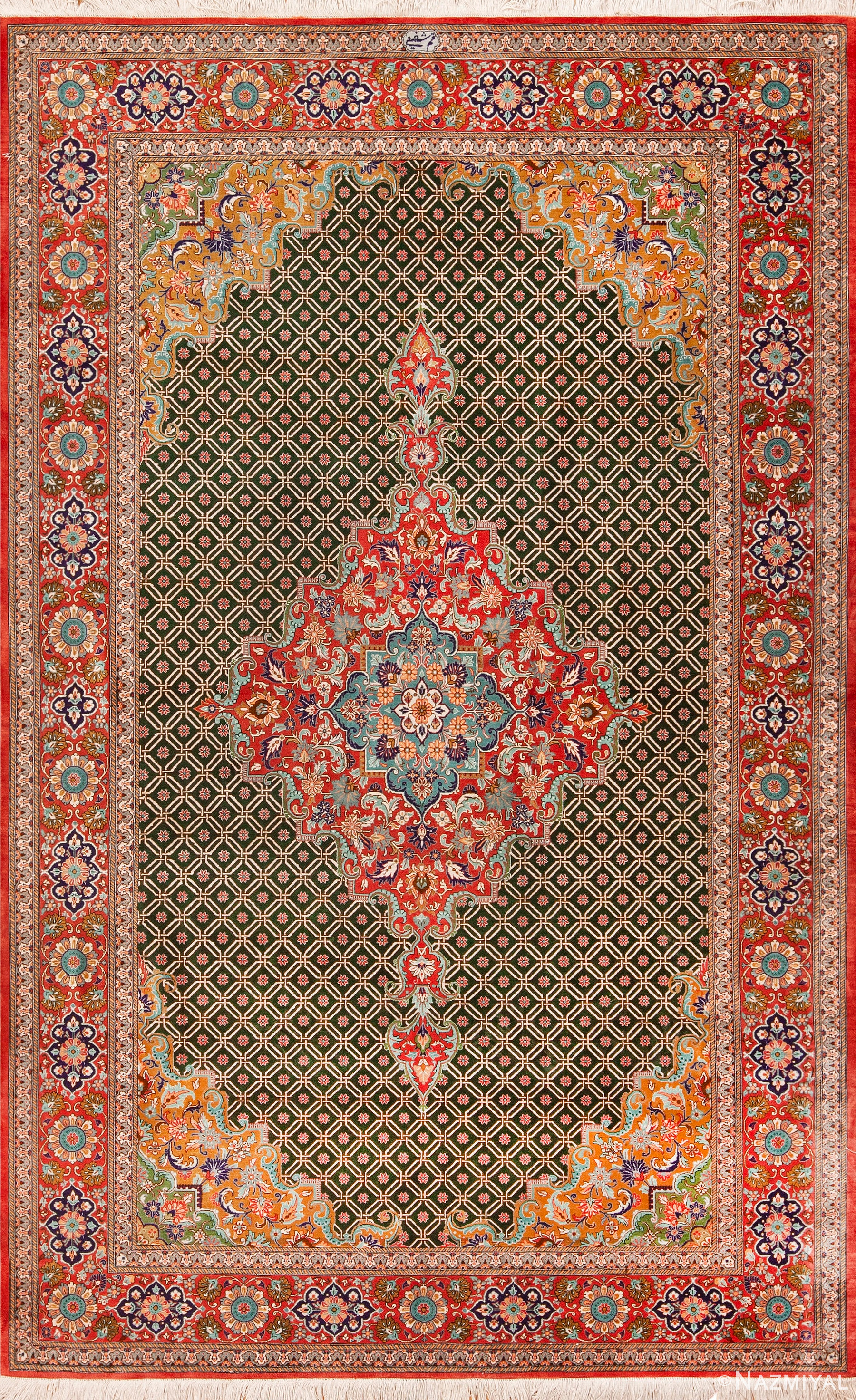
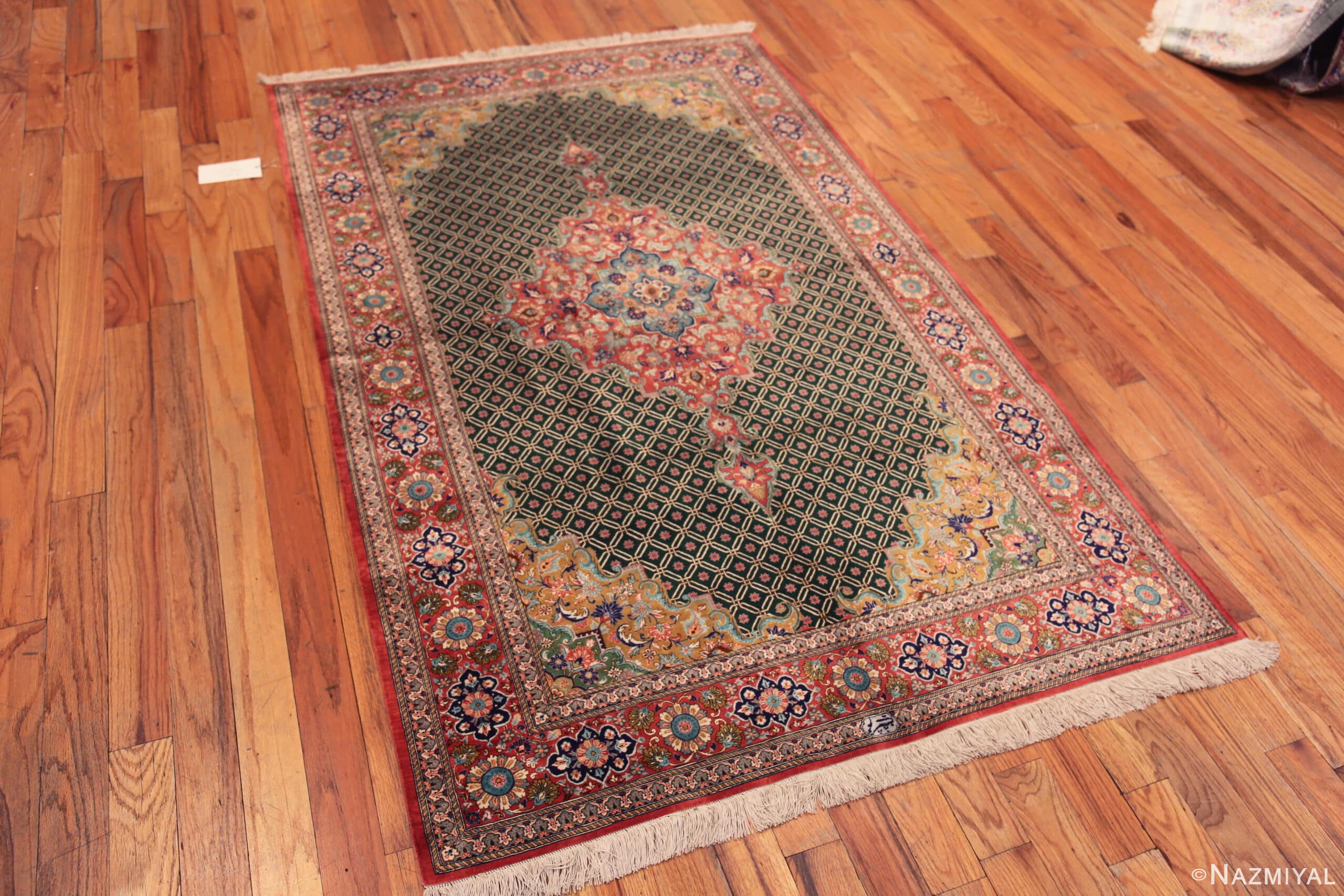
Persian silk rugs may include examples from Qum, Tabriz and other workshop centers. Their quality should be judged by drawing, color, materials, construction and condition rather than silk content alone.
Silk Qum Rugs
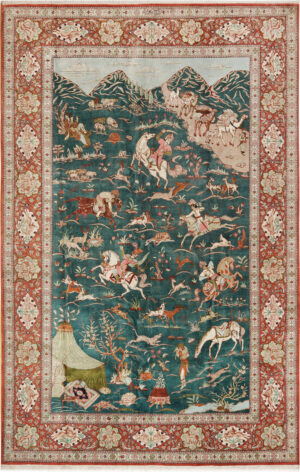
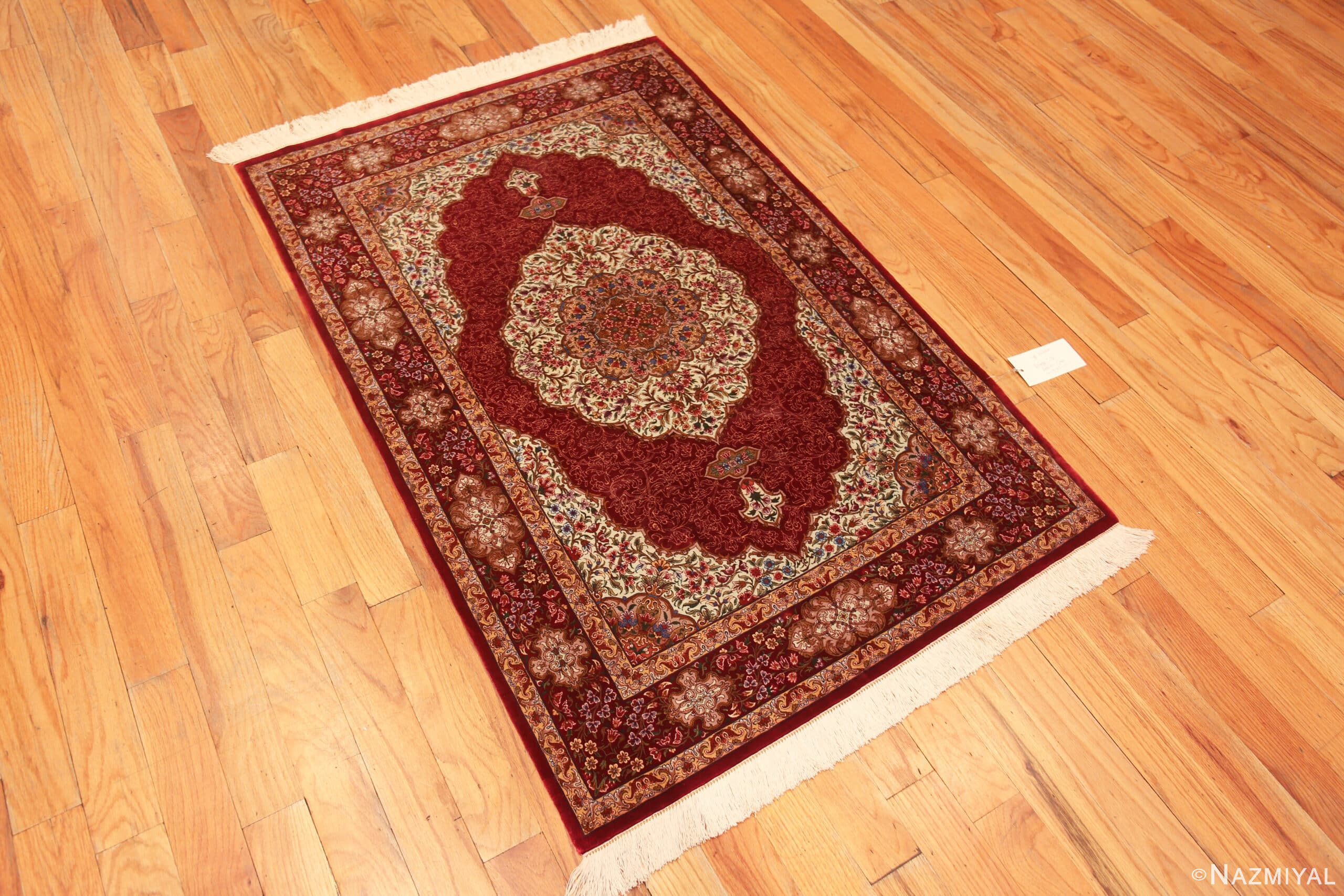
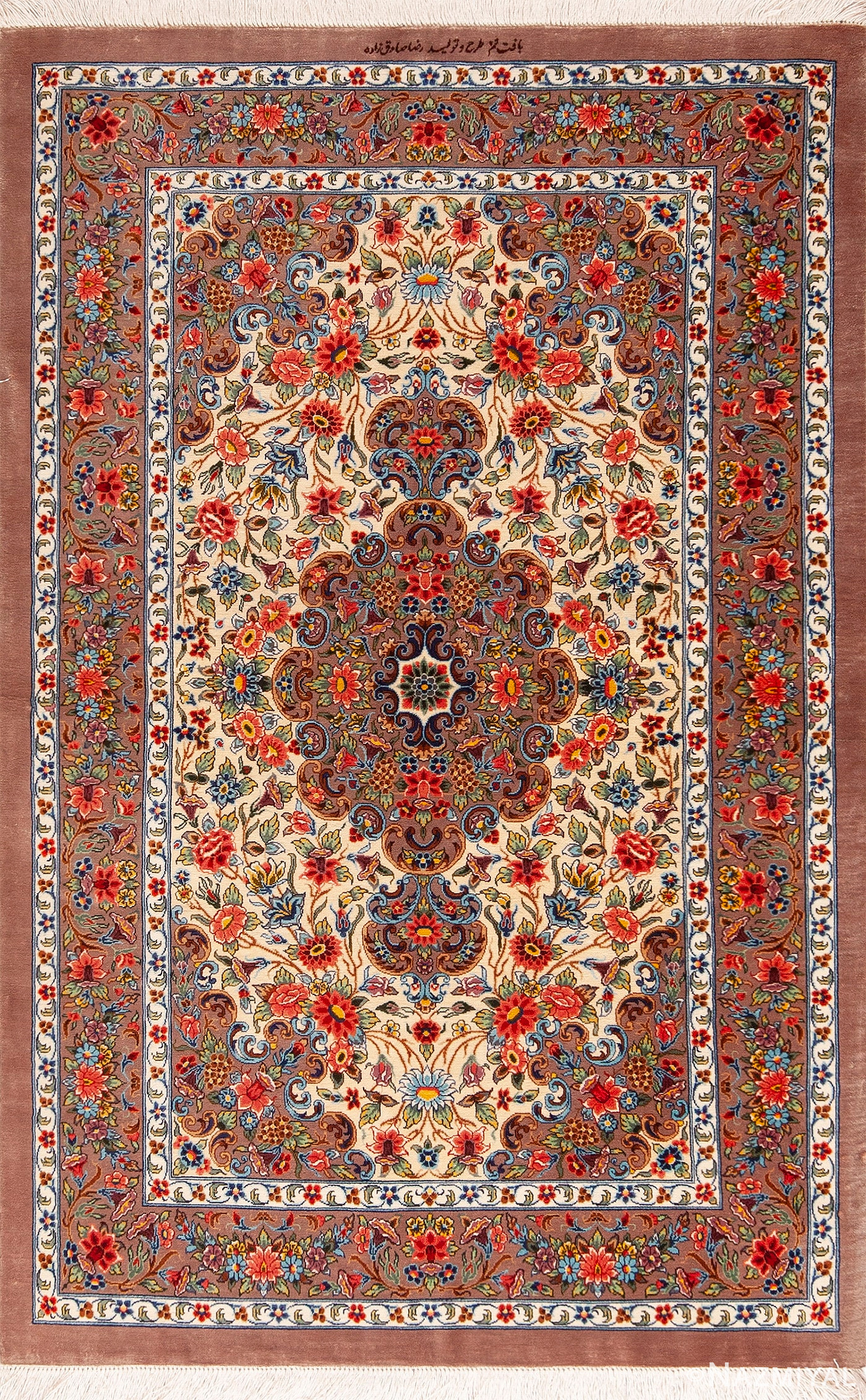
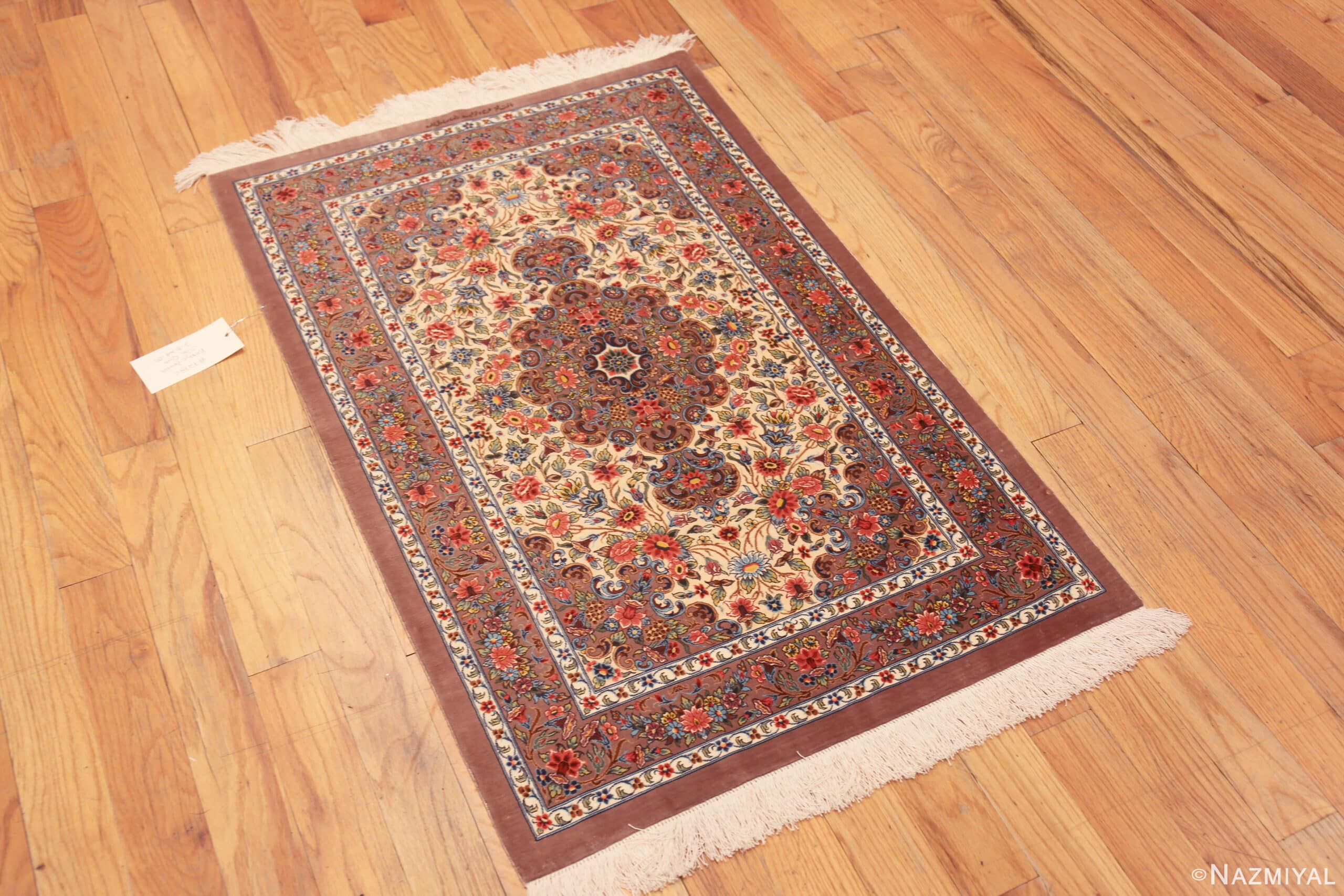
Qum is especially known for finely woven silk rugs, although Qum rugs may also be made from wool or wool-and-silk combinations.
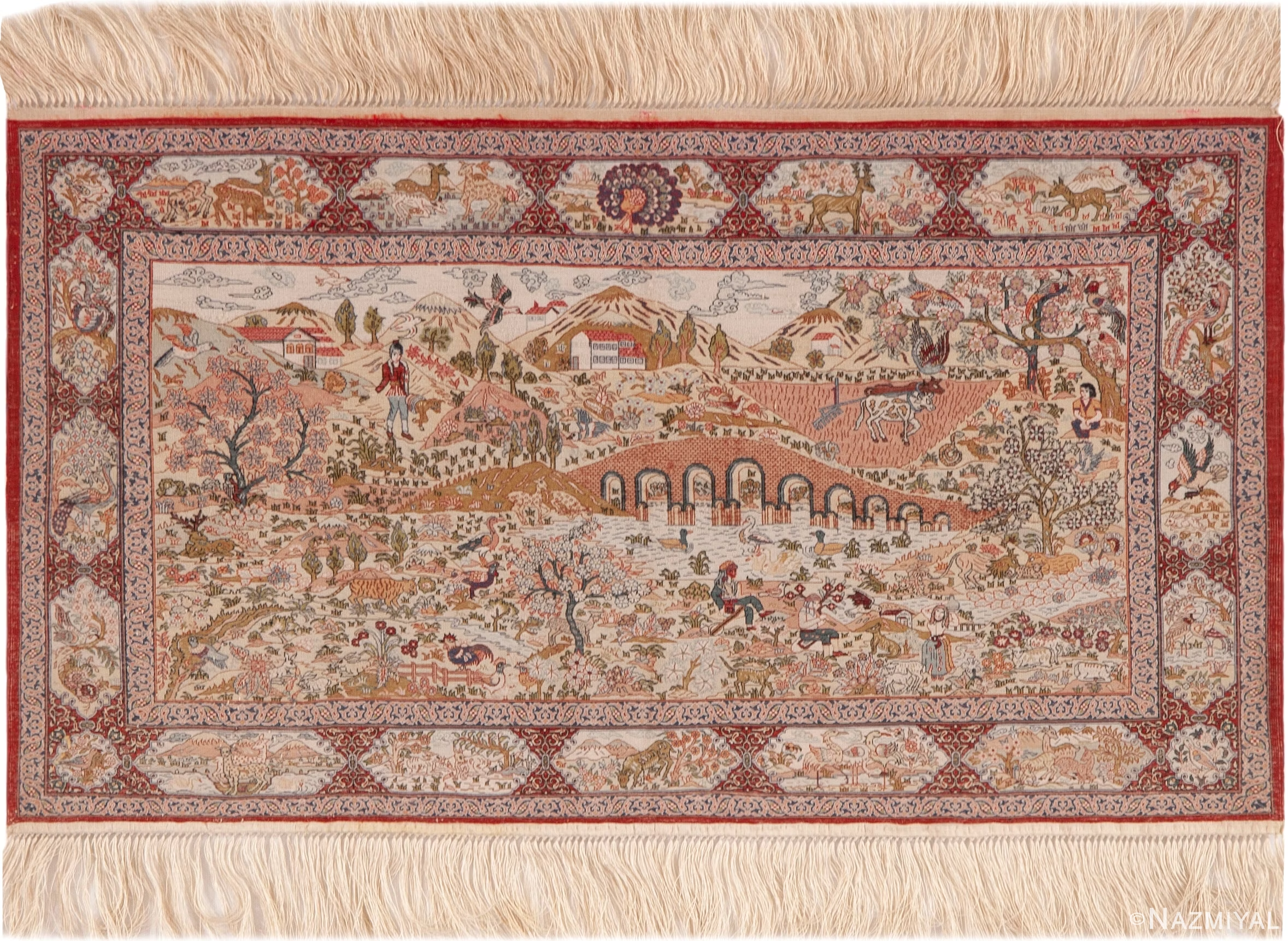
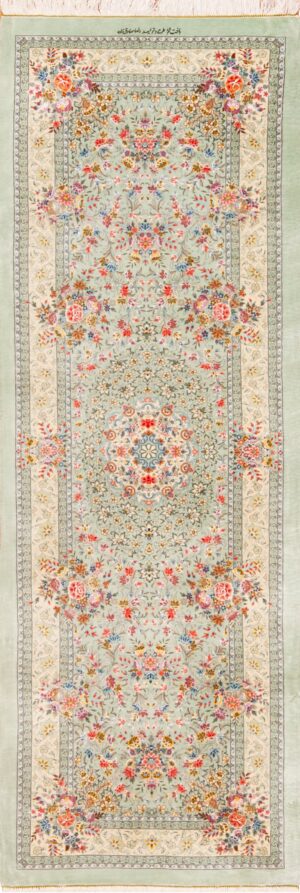
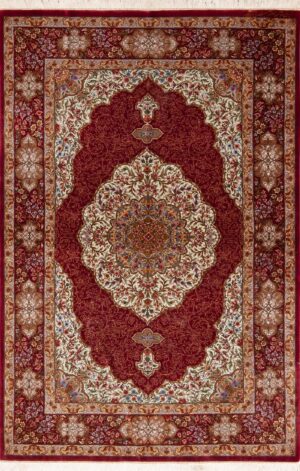
Silk Qum rugs often feature detailed floral patterns, medallions, garden designs and pictorial scenes.
Silk Tabriz Rugs
Silk Tabriz rugs are known for disciplined workshop drawing and formal design.
Silk may be used throughout the pile or as highlights within wool. Fine examples may feature medallions, Mahi or Herati patterns, pictorial subjects and carefully organized floral fields.
Hereke Silk Rugs
Hereke rugs are associated with fine Turkish workshop weaving.
Silk Hereke rugs are often admired for dense construction, delicate drawing and formal floral, prayer or pictorial designs.
What Makes a Fine Silk Rug?
A silk rug should not be judged by material or knot count alone.
When we evaluate a silk rug, we consider:
• The quality and feel of the silk
• The precision and confidence of the drawing
• The consistency of the weave
• The depth and harmony of the colors
• The balance and proportions of the design
• The condition of the pile, foundation, ends and sides
• The quality of previous restoration
• The rug’s origin, age and workshop attribution
A finely knotted rug may still be ordinary if its drawing is stiff, colors are weak or proportions are poorly resolved.
A less technically fine rug may be more desirable if its artistry, materials, color and condition are stronger.
How to Tell If a Silk Rug Is Real
Not every rug marketed as silk is made from natural silk. Some are made from viscose, rayon, bamboo silk or other manufactured fibers.
Natural silk generally has a fine, smooth feel and a softer, more complex reflection than many synthetic substitutes. Appearance alone, however, is not always enough to identify the fiber correctly.
A specialist may examine:
• The fiber under magnification
• The way the pile reflects light
• The strength and fineness of the fibers
• The rug’s foundation and knot structure
• Its construction and claimed origin
• Laboratory testing when necessary
Do not cut or burn fibers from an antique rug yourself. Testing the wrong area can permanently damage the rug and may not produce a reliable conclusion.
How Experts Determine Origin and Age
Real silk, hand-knotted construction, geographic origin and age are separate questions.
A rug can be genuine silk but machine made. It can be hand-knotted but woven outside the region claimed by a seller. It can also be old but incorrectly attributed to a famous workshop.
Experts examine:
• Knot type
• Foundation materials
• Wefting
• Ends and sides
• Fiber characteristics
• Drawing and design conventions
• Dyes and color behavior
• Wear and oxidation
• Inscriptions or signatures
• Provenance and documentation
A signature alone is not proof of origin, age or workshop attribution.
What Is a Silk Rug Worth?
Silk rug prices vary widely.
Decorative vintage silk rugs may begin in the several-thousand-dollar range. Fine Persian silk Qum rugs, silk Tabriz carpets, Hereke rugs and exceptional antique examples may command substantial five-figure prices.
Rare, historically important, palace-size or highly collectible examples may reach six-figure prices.
Value depends on:
• Origin and age
• Natural silk content
• Knot density
• Quality of drawing
• Color and dyes
• Condition and restoration
• Size
• Workshop attribution
• Signature or inscription
• Provenance
• Market demand
Silk does not automatically make a rug more valuable than wool. An exceptional antique wool rug may be worth far more than a later silk rug with ordinary drawing, commercial color or poor condition.
Silk Rug Sizes and Placement
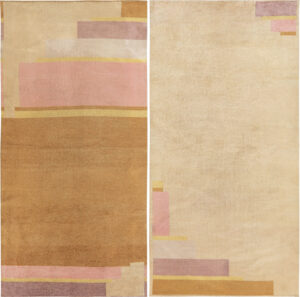
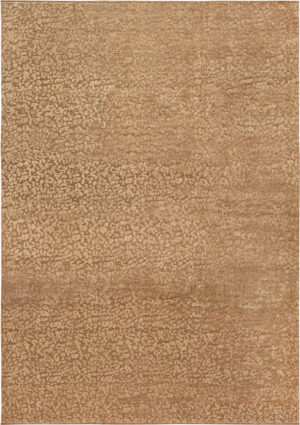
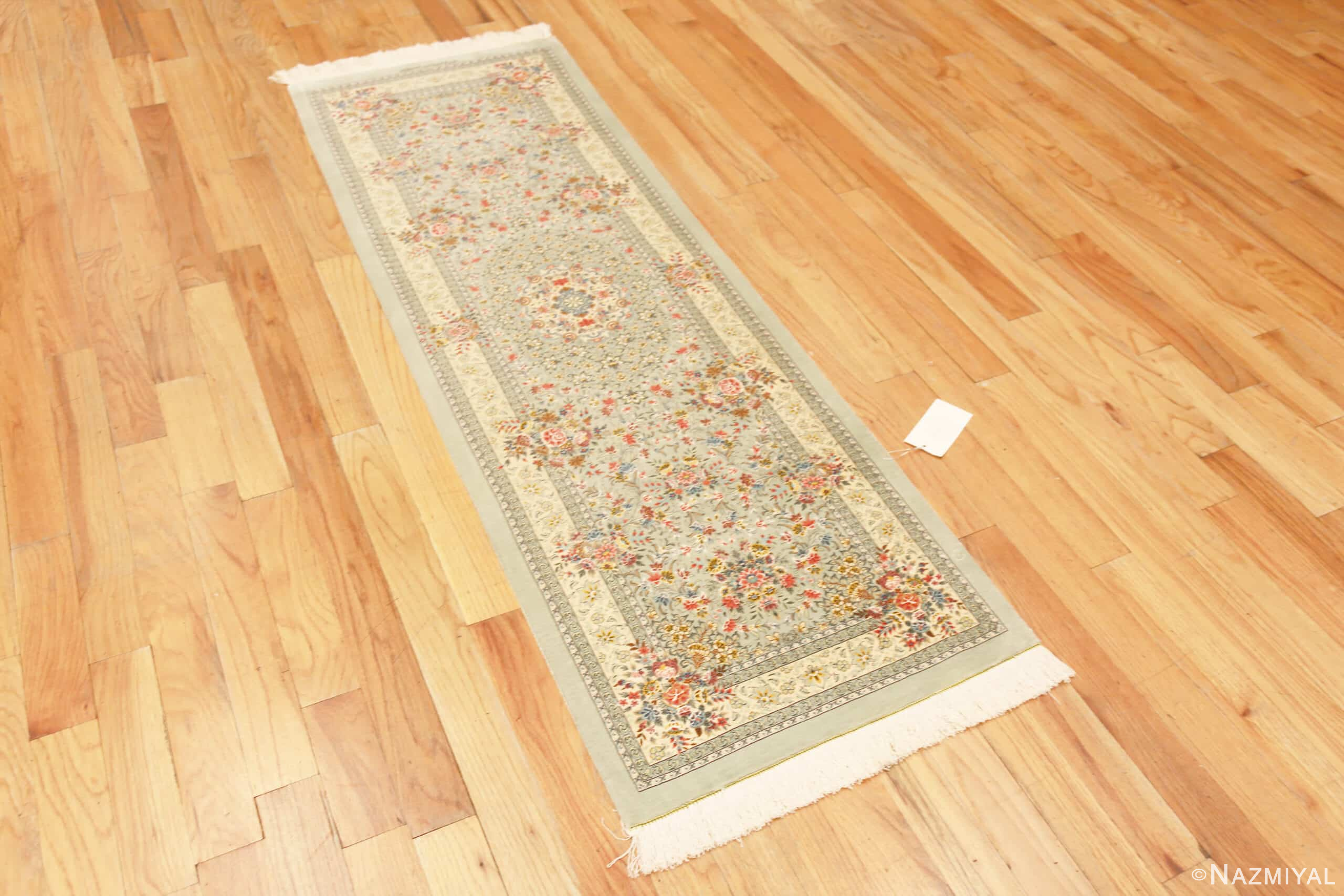
Silk rugs are available in small decorative formats, runners, room-size carpets and larger examples.
Small silk rugs can work beside a bed, in a library or as decorative wall displays.
Room-size silk rugs are best suited to bedrooms, formal sitting rooms and lower-traffic living spaces.
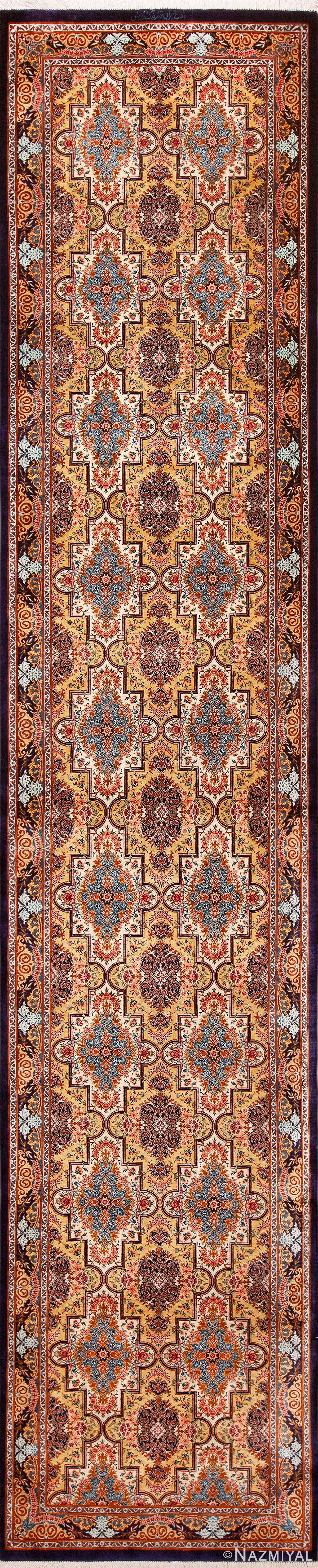
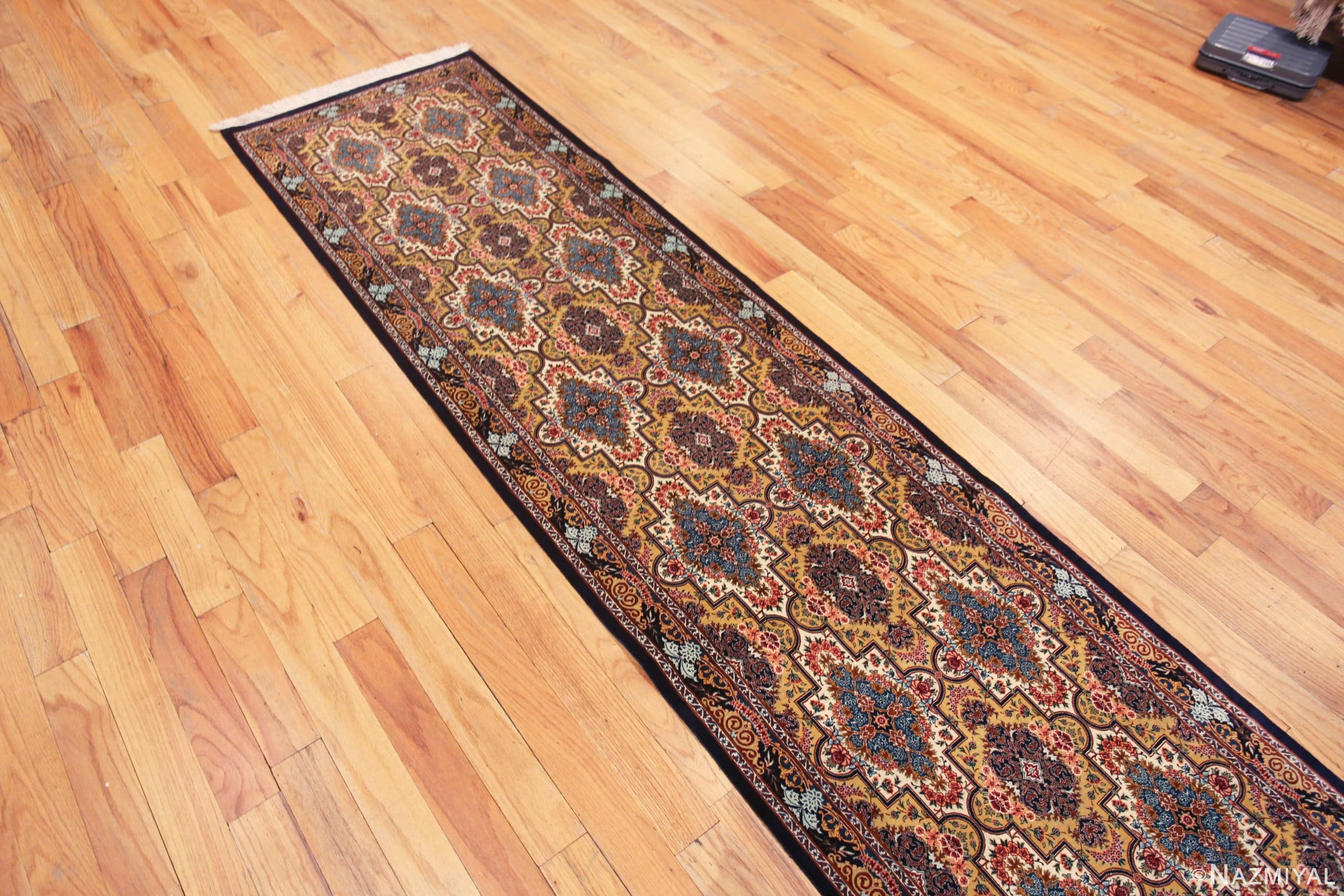
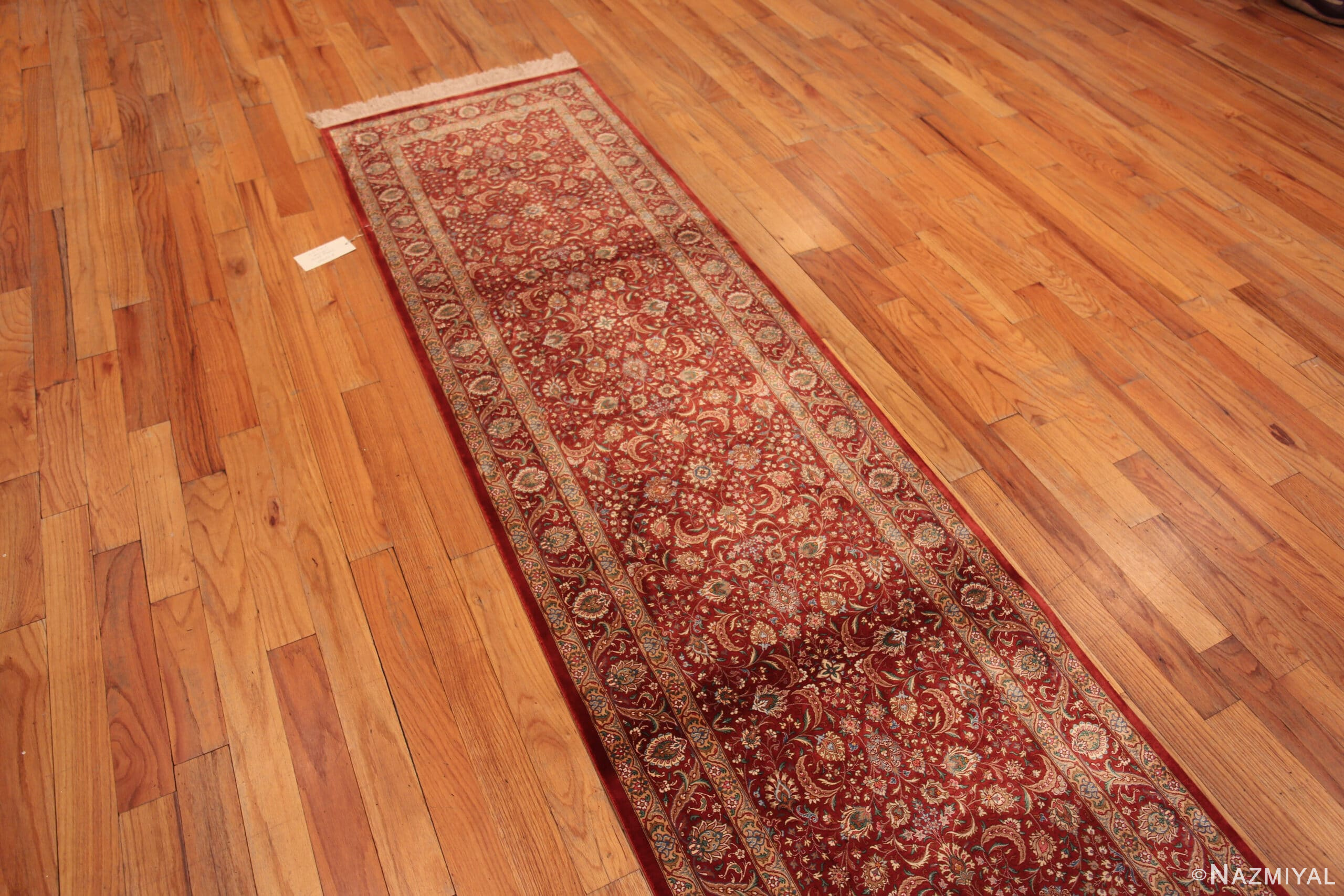
Silk runners should be used cautiously in heavily trafficked hallways.
Large silk and wool-and-silk carpets can create a refined foundation in formal rooms, but their condition and suitability should be carefully evaluated before purchase.
How to Care for a Silk Rug
To protect a silk rug:
• Avoid heavy foot traffic
• Protect it from prolonged direct sunlight
• Keep it away from moisture and damp conditions
• Rotate it periodically
• Use an appropriate rug pad
• Avoid aggressive vacuuming
• Do not use household spot cleaners
• Have it cleaned only by a silk-rug specialist
• Address spills and structural damage promptly
Improper cleaning can cause color migration, pile distortion or permanent fiber damage.
Why Buy a Silk Rug From Nazmiyal?
Nazmiyal Collection has specialized in antique and handmade rugs for more than four decades.
Our experience allows us to distinguish between natural silk, manufactured fibers, all-silk construction, wool-and-silk weaving and incorrectly described rugs.
Clients rely on Nazmiyal for:
• A broad selection of antique, vintage and modern silk rugs
• Persian silk Qum and Tabriz rugs
• Turkish Hereke rugs
• All-silk and wool-and-silk examples
• Experienced evaluation of materials, origin and condition
• Accurate descriptions of age and construction
• Assistance with size, placement, care and value
• Worldwide service for collectors, designers and institutions
Nazmiyal Silk Rug Services
Nazmiyal provides professional silk rug cleaning, restoration, appraisals and assistance for owners considering selling a silk rug.
• Nazmiyal White-Glove Service
• Certificate of authenticity
• Three-day return policy
• Worldwide shipping and international home approval
• Interior designer trade program
• White-glove delivery service
For assistance selecting, evaluating or placing a silk rug, contact a Nazmiyal specialist.