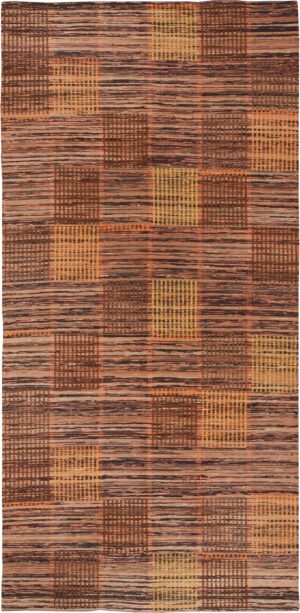
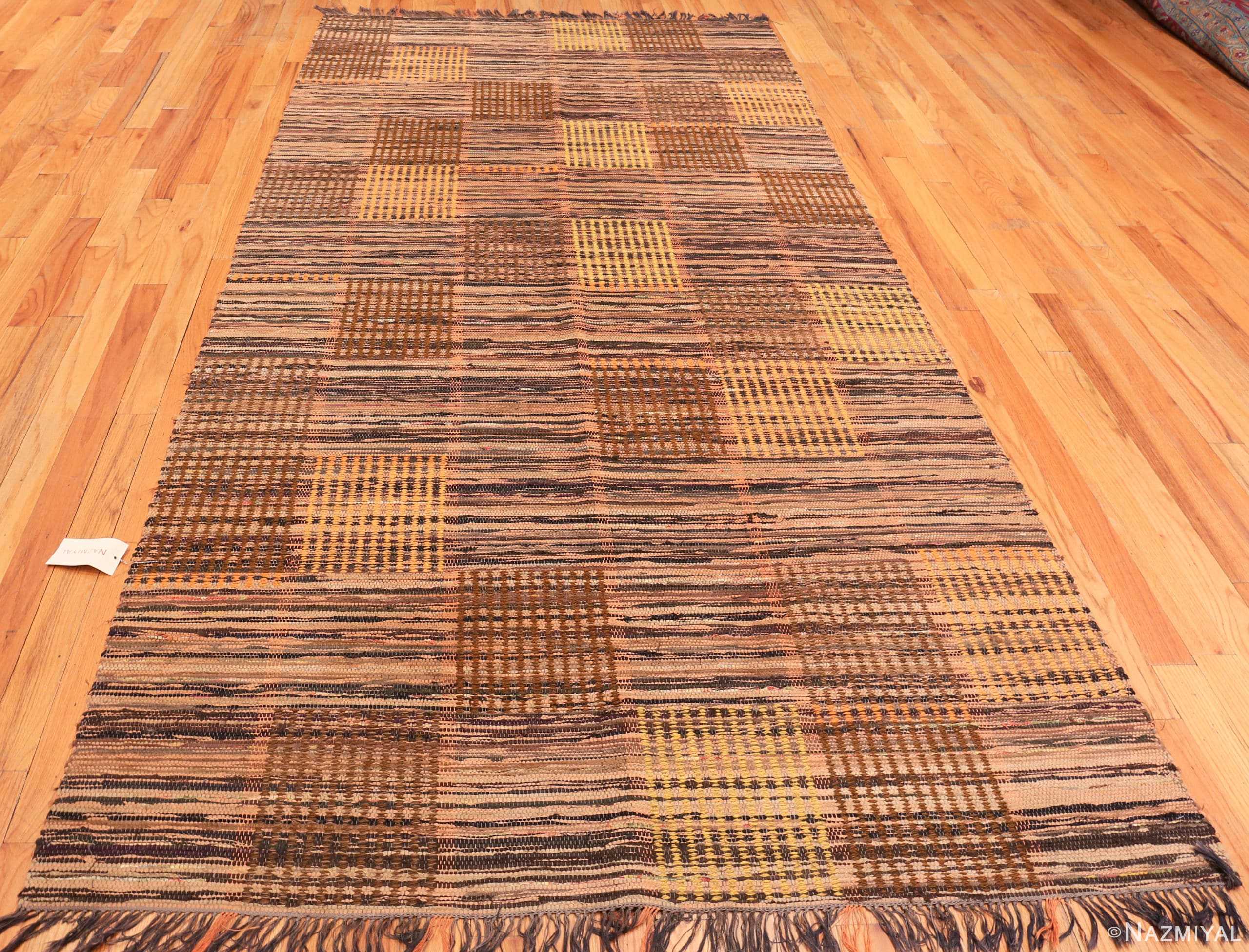
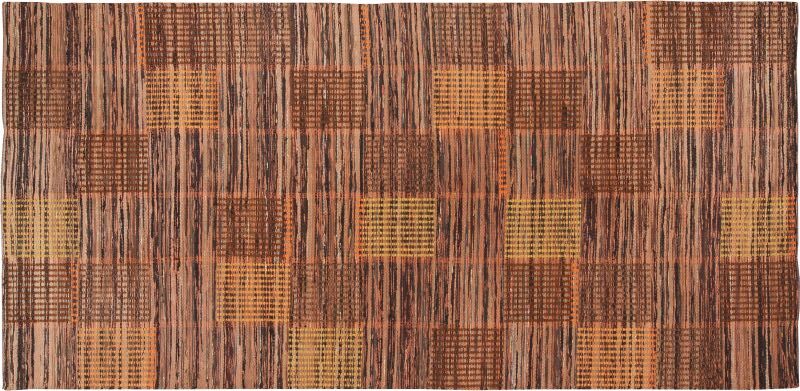
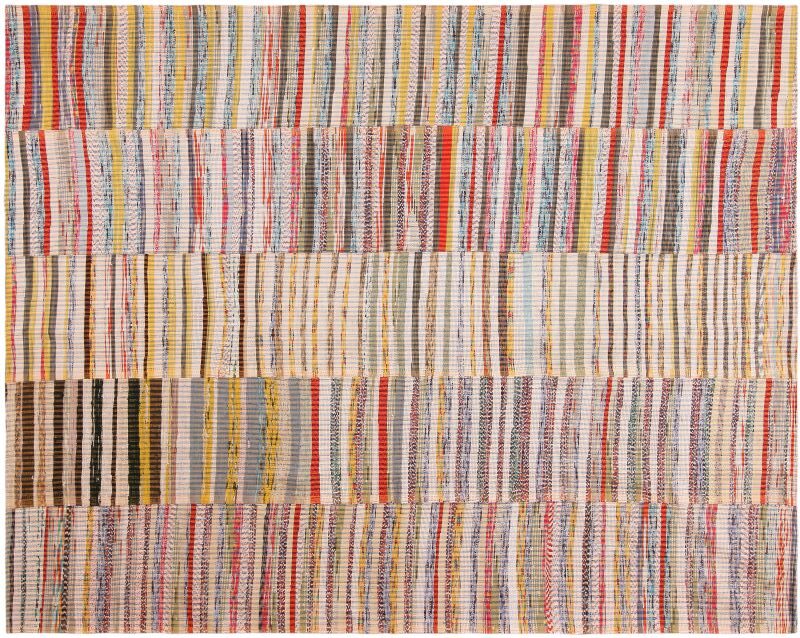
Rag rugs are textile floor coverings made by weaving, braiding, or hooking strips of repurposed fabric into a sturdy base—valued for their color, texture, and folk-art charm.
These rugs are beloved for their colorful striping, relaxed folk-craft character, and practical origins as textiles made from repurposed fabric. At Nazmiyal Collection, you can browse antique and vintage rag rugs across multiple traditions—especially American and Scandinavian examples—then filter by size, palette, and room needs. For broader context, explore our American rugs hub and compare across eras in our Vintage rugs collection.
Updated February 6, 2026 • Reviewed by Jason Nazmiyal
For a fast way to shop, decide first on the “feel” you want (bold multicolor vs calm neutrals), then lock in the right scale using the rug size guide.
Why Nazmiyal Collection? 3 Pillars of Nazmiyal Collection
Rag rugs can look deceptively simple—so the difference is in selection, condition, and honest representation. Here’s what our clients rely on when shopping with Nazmiyal:
Unmatched Inventory Depth: A wide range of eras, palettes, and constructions—so you can compare before committing.
Rigorous Authenticity Standards: Expert-vetted pieces that are accurately described and photographed.
Expert Advisory: Real guidance on size, placement, layering, and value—so the rug fits the room and the intent.
Identification & Construction
Rag rugs are defined by their material “story”: strips of reclaimed fabric become the design itself—often as stripes, bands, or gently shifting color rhythms. Many are woven by passing fabric strips as weft through a foundation (cotton or wool warps), producing a flatter profile that works well under furniture. Other rag rugs are braided (creating a thicker, rope-like structure), or made in related hooked techniques that punch strips through a base for a looped surface.
If you are comparing these utilitarian textiles to finely knotted traditions—such as Persian rugs—think of rag rugs as a different design language: less about knot density and ornament, and more about texture, color cadence, and the honest character of repurposed materials. For broader country-and-region context, start with Rug origins.
History & Origins
Rag rugs grew from necessity—turning worn textiles into durable floor coverings. In America, rag rugs became part of a wider tradition of practical domestic craft; in Scandinavia, rag-rug weaving developed into a distinctive design vocabulary that pairs beautifully with modern interiors. Today, vintage examples are prized because they combine a functional foundation with a visual rhythm that feels timeless and fresh.
Decorating & Placement Guidance
Rag rugs excel in spaces that benefit from warmth and texture: entryways, kitchens, studios, bedrooms, and casual living rooms. A striped rag runner can create direction in a hallway; a room-size rag rug can soften a minimalist layout by introducing gentle color movement; and layered setups pair especially well with curated vintage rugs and expressive folk art rugs.
If you want a cleaner, more architectural read, choose calmer palettes (denim blues, warm neutrals, or restrained multicolor). If you want energy, lean into bolder “scrap” color mixes and let the rug lead the room’s accent choices.
Care & Cleaning
Routine care: Vacuum gently and rotate periodically for even wear.
Spills: Blot quickly; avoid aggressive scrubbing that can distort woven or braided structure.
Deep cleaning: Cleaning method depends on construction and dyes—when in doubt (especially for antique pieces), use professional rug care.
Padding: Use a quality rug pad to reduce shifting and protect the rug’s edges.
Rag Rugs vs Antique American Hooked Rugs
Both categories sit comfortably in the world of American folk craft, but they differ in structure and surface feel. Use this quick comparison to decide faster.
Rag rug: A rug made using strips of repurposed fabric (often cotton or wool) as the primary design material.
Warp / weft: Foundation threads (warp) and the threads woven across them (weft). Many rag rugs use fabric strips as weft.
Braided construction: Fabric strips braided into cords, then shaped and stitched to form a thicker rug.
Hooked construction: A technique where strips or yarn are pulled through a base cloth to form a looped surface.
For more terms (materials, dyes, motifs, and condition language), see the Rug glossary.
FAQ
What is a rag rug? A rag rug is a textile floor covering made using strips of repurposed fabric—woven, braided, or worked into a base—creating a durable, color-rich surface.
Are rag rugs washable? It depends on construction, age, and dyes. Some sturdier, newer examples may tolerate careful washing, but many vintage and antique rag rugs should be cleaned conservatively (spot care and professional cleaning when needed).
Are vintage rag rugs durable? Many are, especially when the structure is tight and edges are stable. Durability depends on weave/braid strength, existing wear, and the traffic level of the room.
Do rag rugs work in modern interiors? Yes. Their stripes and simple geometry read as clean and graphic—while the recycled textile texture keeps the room warm and approachable.
How do I choose the right size? Start with furniture layout (room-size anchor vs runner rhythm), then confirm proportions using the rug size guide.
What should I look for when buying? Stable edges, a balanced palette, and wear that fits your plan (patina is fine; structural weakness is not).
Nazmiyal White-Glove Service
We make it easy to shop with confidence—whether you’re choosing a single statement piece or curating a full room.
Nazmiyal Collection has been a trusted source for antique rugs and vintage carpets for over 45 years. Our NYC gallery curates one-of-a-kind pieces with an emphasis on authenticity, provenance, and lasting decorative value.
Need help? Call us at (212) 545-8029 or visit our New York City showroom to work with a rug expert.
             Posted on Google        Clay Pendergrast     Trustindex verifies that the original source of the review is Google. My wife and I are so pleased with the antique Uzbek Bokhara Rug purchased from the Nazmiyal Collection. Not only does the rug have a spectacular design, it also was very reasonably priced. The way it transforms our living room, reconciling the classic modern furniture with the 1913 Craftsman interior is remarkable.         Posted on Google        Terence Hayes     Trustindex verifies that the original source of the review is Google. I have purchased multiple rugs at multiple Nazmiyal auctions and I am extremely pleased with the quality, price, and experience.  Highly recommended!         Posted on Google        Victor Florintsev     Trustindex verifies that the original source of the review is Google. The only ones I'd ever buy rugs from. The best.         Posted on Google        Jeffrey NeumanB     Trustindex verifies that the original source of the review is Google. I bought two gorgeous Serapi rugs from Farhad at Nazmiyal Rugs!  Beautiful carpets, fair prices and great service.  Very happy customer.  Farhad (the sales person) was very patient and gave us great service.         Posted on Google        john haid     Trustindex verifies that the original source of the review is Google. Alen is a gentleman and an expert.  Really great to work with.         Posted on Google        Edward Yasuna     Trustindex verifies that the original source of the review is Google. I recently purchased a modern Kandinsky rug from Nazmiyal Auctions.  It was just as described, and the director (Farhad) of the auctions had it sent to me quickly and safely.  Payment was easy, the rug was reasonably priced, and I highly recommend Nazmiyal Auctions and Antique Rugs.  Quality merchandise and first-class service.         Posted on Google        Nicholas Carr     Trustindex verifies that the original source of the review is Google. Had a excellent experience buying a rug in Nazmiyal's 1/18/26 online auction.  First, prior to the auction, viewing a number of lots at the 32nd St showroom (I had prepared a list from the online catalog). The staff were great to work with: helpful, knowledgable, honest, and flexible.  Second, after placing an online bid and winning the desired item, arranging payment and pickup was simple and straightforward. Everything went seamlessly and the overall experience was educational and fun. Many thanks to Jason and his team.         Posted on Google        Andrea Gared     Trustindex verifies that the original source of the review is Google. Everyone at Naziyal is proffessional, especially Jason and Farhad.
They are knowledgeable, truthful, and true gentlemen. I have sold several rugs through them and will always go to them first, to buy or sell. The best in the business!
Frequently Asked Questions
A rag rug is a type of rug made from recycled or repurposed fabric scraps, typically old clothing or fabric remnants. The fabric strips are woven or braided together to create a colorful and textured rug. Rag rugs have a long history and were often made as a practical way to reuse materials that would otherwise be discarded.
Rag rugs are typically made by pushing small strips of fabric, often recycled, through a base material, made usually of hessian or wool. Hessian is a strong and coarse fabric made from jute or hemp. Although vintage and antique rag rugs are highly decorative and charming, they were originally made purely for utilitarian purposes.
Yes, you can wash a rag rug, but it’s important to follow specific care instructions to ensure that the rug maintains its quality and appearance.
The width of strips for a rag rug can vary depending on personal preference and the type of rug you’re making. However, a common width for fabric strips used in rag rug making is around 1 to 1.5 inches (2.5 to 3.8 centimeters). This width is versatile and works well for both braided and woven rag rugs.
Here are some tips for decorating around a rag rug:rnColor Coordination: Consider the colors of the rag rug and use them as a guide for coordinating other elements in the room. You can choose throw pillows, curtains, or other accessories that complement or match the colors in the rug.rnBalance Patterns: If the rag rug has a bold or intricate pattern, balance it with simpler patterns in other elements of the room. For example, if the rug has a busy pattern, opt for solid-colored furniture or vice versa.
Here are some reasons why individuals may choose to buy rag rugs:rnEco-Friendly: Rag rugs are often made from recycled or repurposed fabric scraps, contributing to sustainable practices by reusing materials that might otherwise be discarded. This eco-friendly aspect appeals to individuals who are conscious of environmental impact.rnHandmade and Artisanal: Many rag rugs are handmade, either through braiding, weaving, or other crafting techniques. The artisanal quality and craftsmanship add a personal touch, making each rug unique and special.
A braided rag rug is a type of rug made by braiding together fabric strips to create a sturdy and often circular or oval-shaped floor covering. This rug-making technique has a long history and is known for its simplicity and the ability to repurpose old fabric scraps.