Popular Searches
Antique textiles & embroideries | Ikat textiles | Kaitag embroideries | Ottoman embroidery textiles | Uzbekistani | Persian rugs
Quick Navigation
Key Takeaways
- Suzanis are prized for bold color, graphic medallions, and hand-stitched character that reads both traditional and surprisingly modern.
- Many antique examples show panel construction (multiple pieces stitched together), a hallmark of how these textiles were made.
- For interiors, suzanis work best when treated like art: give them breathing room and repeat one accent color elsewhere for cohesion.
At-a-Glance Specs
- Region: Central Asia (commonly Uzbekistan, Tajikistan, Kazakhstan)
- Construction: embroidered textile, often panel-joined
- Common ground materials: cotton cloth • silk cloth (piece-dependent)
- Common stitching: chain stitch • satin stitch • buttonhole stitch (varies by workshop and era)
- Typical motifs: roundels (sun/disc forms) • vines • tulips • hyacinths • pomegranate blossoms • boteh-like forms
- Best uses: wall hangings • bed/sofa throws • table coverings • layered “textile moment” over rugs
- What to look for: confident drawing • pleasing irregularity • stable seams • honest wear • strong color balance
Featured Suzani Textiles from the Collection
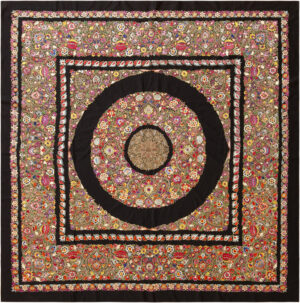
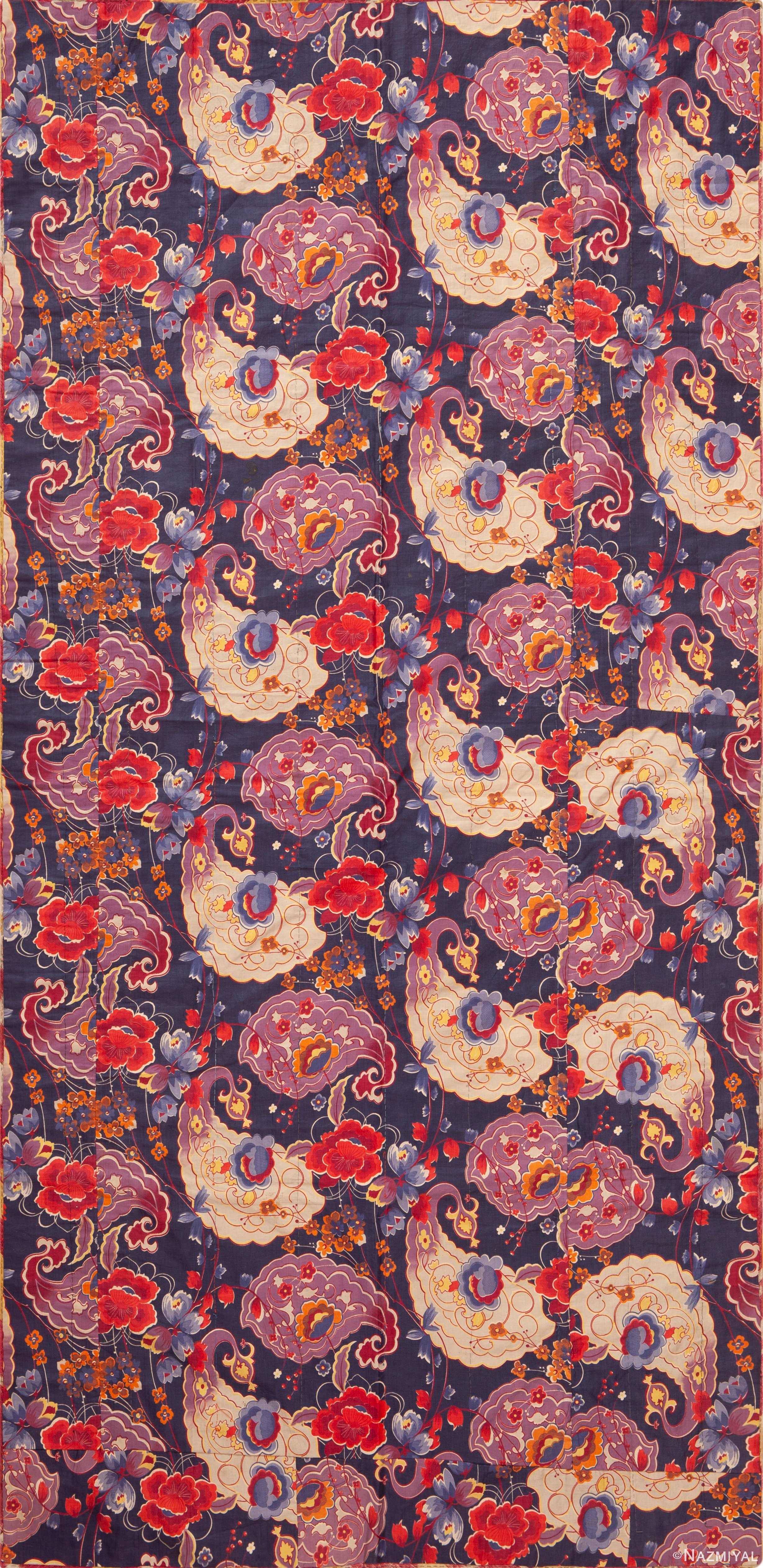
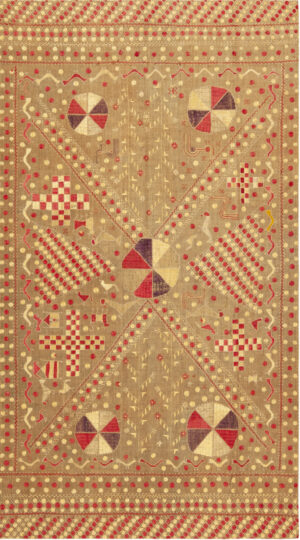
Inventory changes frequently. These featured pieces are examples of antique Suzani embroidery across different palettes and design moods.
- 19th Century Antique Suzani Textile 73348
Circa: 19th Century
Size: 3 ft 3 in x 8 ft 3 in
Origin/Type: Central Asia • antique Suzani embroidery textile - 19th Century Silk Antique Persian Suzani Embroidery 70344
Circa: 19th Century
Size: 5 ft 6 in x 7 ft 1 in
Origin/Type: Persia / Central Asia sphere • silk Suzani embroidery (piece-dependent) - 20th Century Persian Silk Antique Suzani Textile 49254
Circa: 20th Century
Size: 4 ft 4 in x 5 ft 4 in
Origin/Type: Persia / Central Asia sphere • silk Suzani textile
Identification & Construction
What makes a Suzani a Suzani?
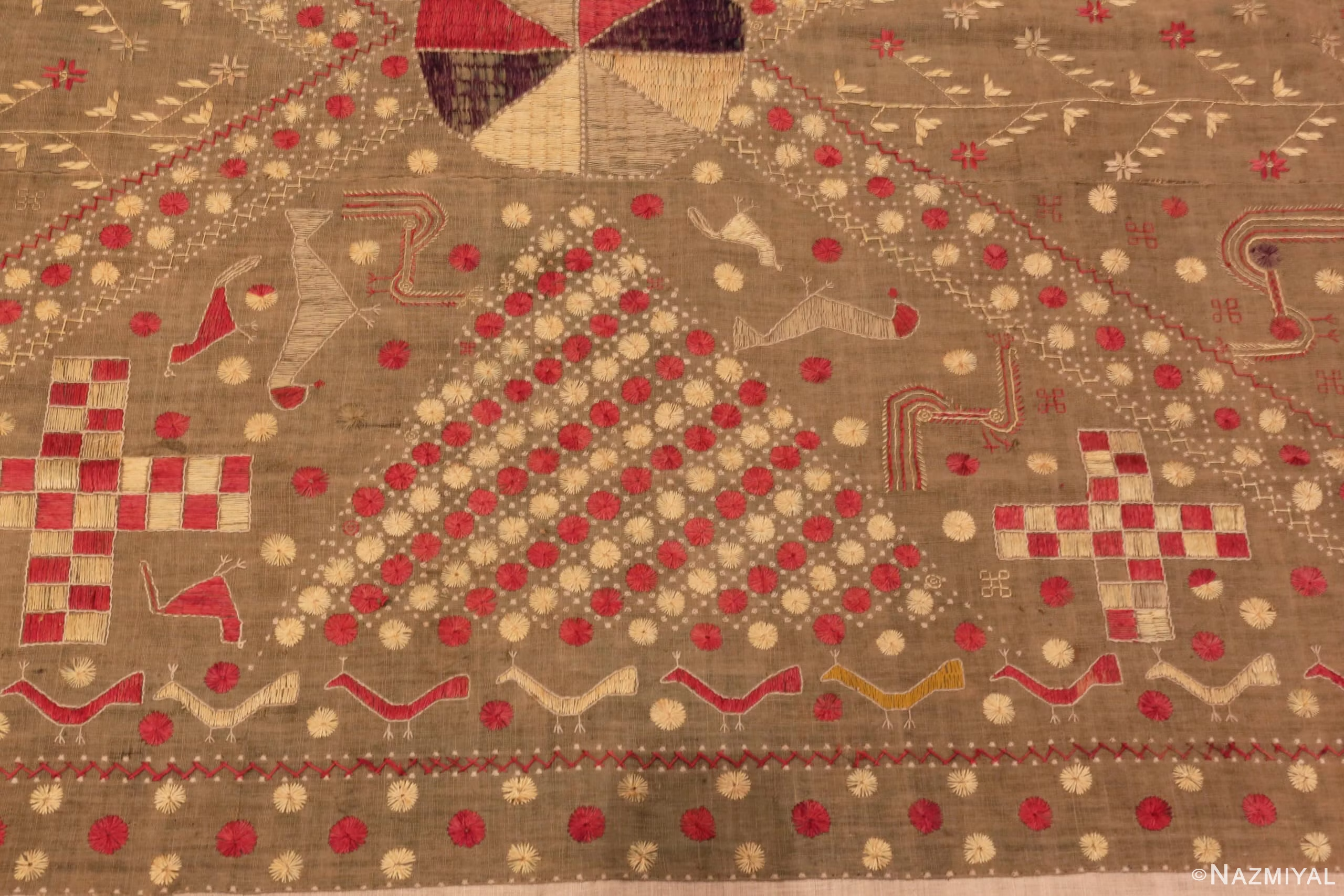
Suzanis are embroidered (not woven like kilims or knotted like rugs), and their visual identity often comes from large, confident motifs—sun/disc roundels, flowering sprays, and symbolic forms—arranged in a way that feels celebratory and graphic. Many antique examples were made as part of household tradition (including dowry contexts), which helps explain the warmth and immediacy of their design language.
Panel construction, seams, and the “handmade signal”
A classic hallmark is panel assembly: multiple embroidered sections stitched together to create a larger cloth. Those seams are not a flaw—collectors often see them as evidence of process and authenticity. When evaluating a piece, look for stable joins, even tension, and a cloth ground that lies flat without pulling.
Stitch types and materials (what to notice up close)
Traditional suzanis are typically worked with stitches such as chain, satin, and buttonhole (the exact mix varies). Grounds are often cotton, while embroidery threads may be cotton or silk. Small irregularities and charming asymmetries are common—and often part of the appeal—so focus on overall balance, confident motif resolution, and how the colors “sing” together.
Decorating & Placement Guidance
Think of a Suzani like wall art (scale and placement first)
Suzanis reward good placement. On a wall, choose a size that visually “fills” the zone (over a sofa, console, or bed) without feeling cramped. If used on furniture or as a throw, let the motif breathe—avoid covering it with too many small objects that break up the design.
Pairing with rugs: a collected, layered look
Suzanis pair beautifully with rugs—especially when you repeat one or two accent colors across the room. For a harmonious foundation, browse Persian rugs or explore the wider textile family at antique textiles and embroideries. A good rule: let one hero pattern lead (either the rug or the suzani) and keep the other slightly quieter.
Color control: keep it intentional, not busy
Because suzanis can be vivid, they look best when surrounded by calmer solids and natural textures (linen, wood, stone, leather). Repeat one warm tone (red, saffron, coral) or one cool accent (indigo, teal) elsewhere for an intentional, designed feel.
Suzani Textiles vs Ikat Textiles
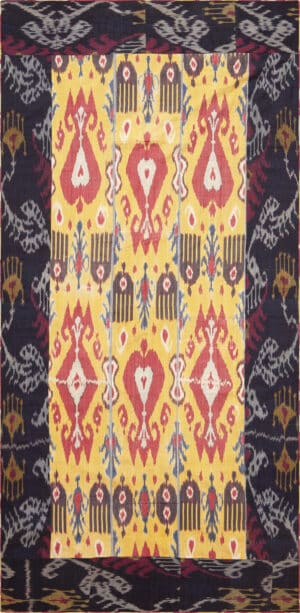
If you love Central Asian color and want another closely related collectible textile family, compare Suzani embroidery with ikat textiles, which use a resist-dyeing approach rather than embroidery.
| Feature | Suzani Textiles | Ikat Textiles |
|---|
| Primary technique | Embroidered motifs stitched onto cloth | Resist-dyed yarns woven into patterned cloth |
| Visual character | Bold floral/symbolic ornament, graphic roundels | Hazy, energetic geometry with soft “bleed” edges |
| Best styling role | Statement wall hanging or decorative covering | Accent textile for upholstery, pillows, and layered color |
| What to prioritize | Motif clarity, stable seams, balanced palette | Color harmony, weave stability, clean condition |
Closest Cousins
Glossary
Suzani: A Central Asian embroidered textile, often made in joined panels, prized for bold ornament and color.
Roundel: A circular motif (often sun-like) commonly used as a major compositional element in suzanis.
Panel construction: Multiple cloth sections embroidered and stitched together to form a larger textile.
Chain stitch: A looping stitch that creates a linked “chain” line, common in many embroidery traditions.
For more definitions, see the rug glossary.
FAQ
Where do Suzani textiles come from?
Suzani embroideries are associated with Central Asia, commonly including Uzbekistan, Tajikistan, and Kazakhstan. Many pieces reflect the aesthetics of Silk Road exchange and local tradition.
Are suzanis woven like rugs?
No. Suzani textiles are embroidered cloths (often cotton or silk ground with embroidered thread), rather than knotted-pile rugs or flatwoven kilims.
Why do some suzanis have visible seams?
Many were made in panels and then stitched together. Those joins are often a normal, authentic feature of construction rather than damage.
How do I decorate with a Suzani?
Use it like art: hang it as a wall textile, drape it over a sofa, or layer it in a room with calmer solids so the motifs can stand out. Repeating one accent color elsewhere helps it feel intentional.
What should I look for when buying an antique Suzani?
Prioritize stable seams, pleasing overall balance, confident motif drawing, and condition that fits your intended use (wall display vs. decorative covering).
Why Nazmiyal? 3 Pillars of Nazmiyal Collection
- Curated Collection: A deep inventory of rugs, textiles, and decorative arts—chosen for beauty, rarity, and design relevance.
- Trusted Expertise: Multi-decade specialization in antique rugs and historic textiles, with knowledgeable guidance for collectors and designers.
- Global Service: International logistics and support built for confident, high-touch purchases—near or far.
Nazmiyal White-Glove Service
We make it easy to shop with confidence—whether you’re choosing a single statement piece or curating a full room.
Nazmiyal Collection has been a trusted source for antique rugs and vintage carpets for over 45 years. Our NYC gallery curates one-of-a-kind pieces with an emphasis on authenticity, provenance, and lasting decorative value.
Need help? Call us at (212) 545-8029 or visit our New York City showroom to work with a rug expert.