QUICK NAVIGATION
Key Takeaways
- The “gul” is the tell: repeating octagonal guls create the classic Bokhara rhythm and instantly signal the family.
- Red is a feature, not a limitation: great examples use controlled reds, deep browns, and ivory/black accents for strong clarity.
- Shop by structure + condition: crisp drawing, balanced borders, and stable edges matter more than the label alone.
At-a-Glance Specs
- Region association: Central Asia (Turkmen design family) with historic trade tied to Bukhara
- Construction: hand-knotted pile carpets
- Design language: repeating gul motifs • geometric field organization • disciplined borders
- Typical palettes: red/burgundy grounds • brown/black structure • ivory highlights
- Common formats: runners • room-size rugs • long gallery proportions
- What to look for: clear gul geometry • consistent spacing • strong corners • stable ends/selvages • honest wear
Popular Searches
Runner rugs | Room size rugs | Oversized rugs | Tribal rugs | Central Asian rugs | Shop by color | Rug size guide
Featured Bokhara Rugs (Nazmiyal Collection)
Long Statement Format
Primitive Antique Tribal Uzbek Bokara Design Area Rug 70390 (circa 1900) — a longer proportion that delivers classic repetition and serious visual rhythm in larger layouts.
The Gul Motif: What You’re Seeing
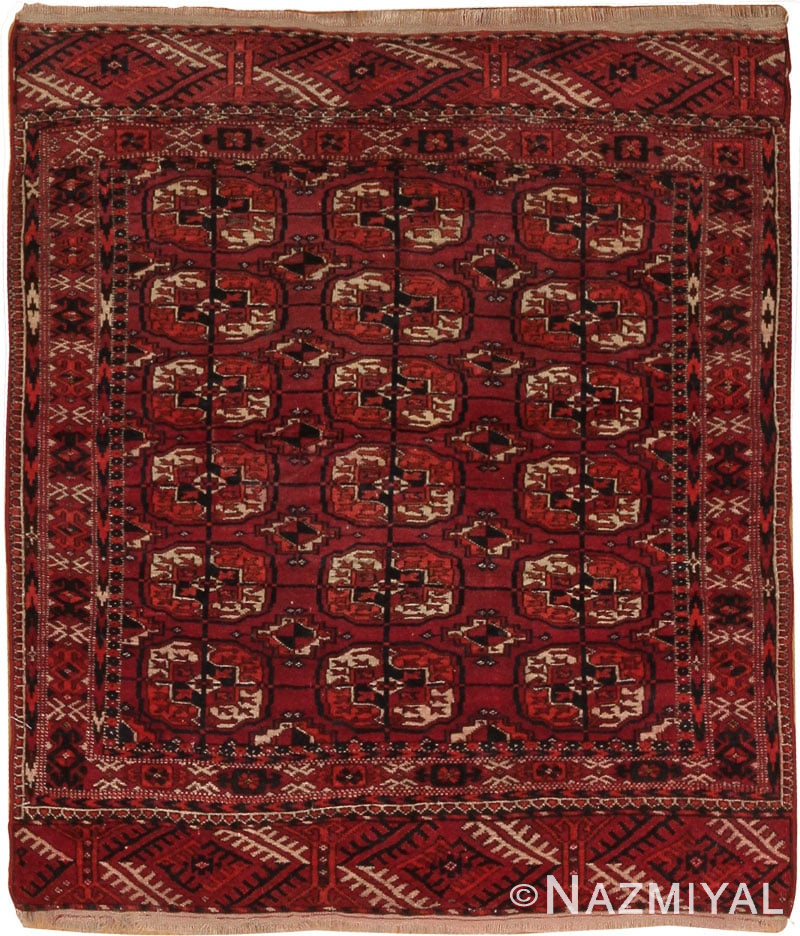
The signature “gul” is the repeating emblem-like form that organizes most classic Bokhara fields. The best examples feel structured and calm: guls line up in clean rows, spacing is consistent, and borders reinforce the geometry instead of fighting it. When the drawing is crisp and the palette is disciplined, Bokhara rugs read as timeless—graphic enough for modern rooms, traditional enough for layered interiors.
How to Identify Bokhara Rugs (Fast) + Construction Notes
Use these quick tells when comparing pieces side by side:
- Repeating guls: the field is built from repeated units (often octagonal), usually in tidy rows.
- Red-forward palette: reds and burgundies lead, supported by dark structure and light highlights.
- Border discipline: multiple guard borders and a strong main border frame the field without crowding it.
- Handle: many examples feel supple and “silky” for wool, especially in finer weaves.
- Condition reality: look for stable ends/edges; repairs are normal in antiques, but instability should be priced accordingly.
Decorating & Placement Guidance
Bokhara rugs are one of the easiest ways to add structure and warmth without visual chaos. Their repeating pattern acts like a “texture” that supports furniture and art instead of competing with it. To compare feel and wear by era, browse Antique Rugs, Vintage Rugs, and Modern Rugs before you decide.
- Living room: use the repeating guls to “quiet” a busy space and unify mixed furniture.
- Dining room: choose a stable, appropriately sized rug so chairs stay on the rug when pulled out.
- Hallways: long formats shine here—Bokhara repetition makes corridors feel intentional.
- Bedrooms: a red-forward Bokhara adds warmth and contrast against light bedding and walls.
Bokhara Rugs vs Afghan Rugs
Closest cousin: Afghan rugs
| Feature | Bokhara | Afghan |
| Common market use | Often used for gul-pattern Turkmen-style designs | Broader national/regional umbrella; includes many “Bokhara-style” pieces |
| Signature look | Repeating gul rows, disciplined geometry, strong borders | Varies widely; can include tribal, workshop, and Bokhara-style gul rugs |
| Palette tendency | Red/burgundy with dark structure and ivory highlights | Wider palette range depending on region and workshop |
| Best use | Graphic warmth; structured rooms; runners and anchors | Great for exploring variety (including Bokhara-like options) by region |
If you want to stay inside the Turkmen design family and compare a tighter tribal identity, explore Tekke rugs.
Closest Cousins
For broader regional discovery and adjacent tribal families, you can also browse by geography via Rug Origins (Countries & Cities) or compare to workshop traditions like Persian rugs.
Glossary
Gul: an emblem-like repeating motif commonly used to structure many Turkmen-style fields.
Field / border: the central design area (field) and the framing system around it (borders).
Pile: the raised surface created by knotted yarn ends on a foundation.
Full A–Z: Rug Glossary
FAQ
Are Bokhara rugs actually made in Bukhara?
Not always. “Bokhara/Bukhara” is widely used as a trade label. Many examples reflect Turkmen design families produced across a broader Central Asian and adjacent regional landscape.
What is the “gul” motif?
The gul is the repeating emblem-like unit that organizes many classic Bokhara fields. It’s the fastest visual cue for recognizing the family.
Why are so many Bokhara rugs red?
Red-forward palettes are part of the category’s identity. The best pieces use controlled reds with dark structure and light highlights for clarity and depth.
Are Bokhara rugs good for runners and hallways?
Yes. Their repeating geometry reads cleanly in long, narrow formats and adds warmth while staying visually organized.
How do I evaluate quality in a Bokhara rug?
Prioritize crisp drawing, consistent spacing, stable edges/ends, and honest condition. Labels matter less than structure, design, and integrity.
Nazmiyal White-Glove Service
We make it easy to shop with confidence—whether you’re choosing a single statement piece or curating a full room.
Nazmiyal Collection has been a trusted source for antique rugs and vintage carpets for over 45 years. Our NYC gallery curates one-of-a-kind pieces with an emphasis on authenticity, provenance, and lasting decorative value.
Need help? Call us at (212) 545-8029 or visit our New York City showroom to work with a rug expert.

 Size: 6 ft 7 in x 13 ft 8 in (2.01 m x 4.17 m)
 Size: 3 ft 2 in x 3 ft 5 in (0.97 m x 1.04 m)