Finding a leading antique rug dealer is not simply a matter of choosing the largest gallery, the highest-priced inventory, or the first name that appears in a search. The best source depends on the rug, the buyer’s goals, and the quality of guidance needed.
Several established businesses are widely recognized in the American antique rug market, including Nazmiyal Collection, Peter Pap, Claremont Rug Company, and Doris Leslie Blau. Auction houses, online marketplaces, and decorator-oriented showrooms also play important roles, but they provide different levels of expertise, service, and accountability.
For buyers, the more useful question is not merely, “Who is the best antique rug dealer?” It is: Which expert can accurately explain the rug’s origin, age, condition, quality, rarity, suitability, and value?
What Makes an Antique Rug Dealer a Leading Expert?
A leading antique rug expert should combine connoisseurship with transparency. Reputation matters, but it should be supported by knowledge, a meaningful inventory, clear condition disclosure, and a record of serious work in the field.
Important qualifications include:
- Deep knowledge of rug origins, materials, weaving structures, dyes, designs, and historical periods
- The ability to distinguish decorative rugs from collectible or museum-level examples
- Accurate identification of age, origin, weave, and condition
- Clear disclosure of restoration, reweaving, reduced pile, alterations, and structural weaknesses
- A substantial, carefully selected inventory that allows meaningful comparison
- Published scholarship, catalogs, lectures, exhibitions, or educational resources
- Relationships with collectors, designers, scholars, museums, and cultural institutions
- Written invoices, condition reports, approval terms, and other important representations
- Guidance regarding placement, care, conservation, and long-term collection building
A knowledgeable dealer should be able to explain not only what a rug is, but also why the attribution and valuation make sense.
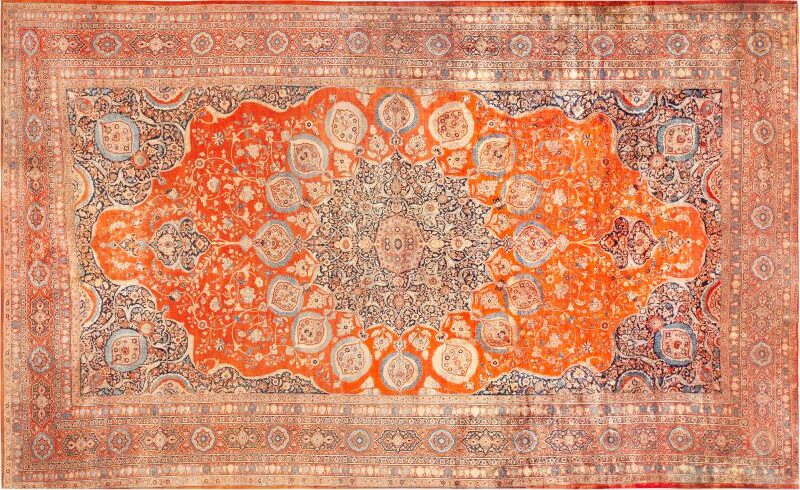
What Is the Difference Between a Rug Dealer, Auction House, Marketplace, and Decorator Resource?
These sources can all help buyers find rugs, but they do not offer the same experience.
Antique rug dealer
An established dealer owns or controls an inventory and works directly with buyers. A good dealer offers education, comparison, condition guidance, installation assistance, and after-sale service. Buyers can often examine several related rugs before making a decision.
Because the dealer sets the asking price, the buyer should evaluate the dealer’s expertise, reputation, transparency, and pricing credibility.
Auction house
An auction house sells rugs consigned by collectors, estates, institutions, and members of the trade. Auctions may offer rare objects, important collections, decorative carpets, and opportunities at many price levels.
The winning bid is not the complete cost. Buyers should calculate the buyer’s premium, taxes, shipping, insurance, and any cleaning or restoration. Inspection time may be limited, and most auction purchases are final.
Online marketplace
An online marketplace brings together listings from many independent sellers. Platforms such as 1stDibs can be useful for comparing sizes, colors, styles, and asking prices.
The marketplace, however, is not necessarily the rug expert or the owner of the rug. The accuracy of the attribution, condition report, photographs, and service generally depends on the individual seller.
Decorator resource
A decorator-oriented rug source concentrates on how a carpet will function in an interior: its scale, palette, texture, placement, delivery, and installation. This can be highly valuable, particularly for large projects or unusual dimensions.
Decorative suitability and historical importance are not the same. A beautiful room-size carpet may be ideal for an interior without being rare, while an important collector’s rug may not be appropriate for a heavily used room.
Specialist
Some dealers concentrate on a particular region, period, or weaving tradition, such as classical Persian carpets, Caucasian village rugs, Turkish rugs, tribal weavings, Moroccan rugs, or early textiles. A specialist can offer exceptional depth, although a narrowly focused inventory may be less useful to buyers who are still comparing categories.
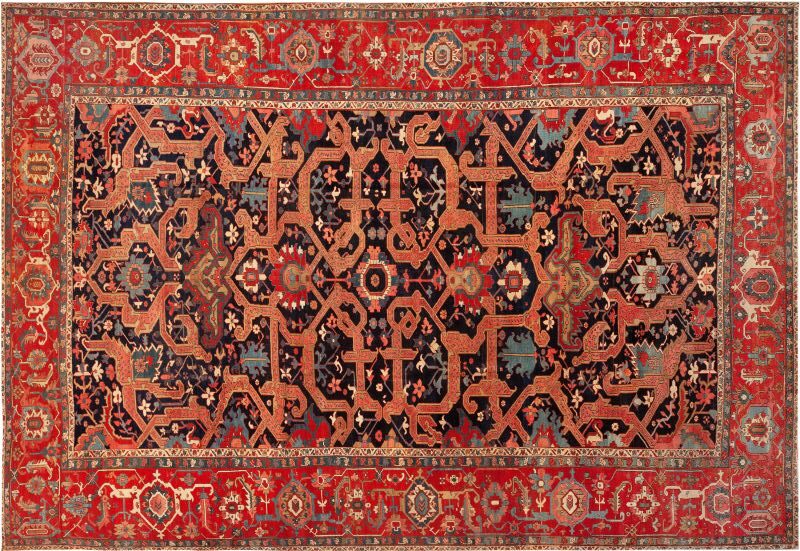
Who Are Some Established Antique Rug Dealers in America?
The American market includes several respected and long-established dealers. Among the better-known names are:
- Nazmiyal Collection, New York City
- Peter Pap, with galleries in San Francisco and New Hampshire
- Claremont Rug Company, Oakland, California
- Doris Leslie Blau, New York City
This is a representative, non-ranked list rather than an exhaustive directory. These businesses serve somewhat different parts of the collecting and interior-design markets. Buyers should evaluate the individual rug and transaction rather than relying on a dealer’s name alone.
What Distinguishes Nazmiyal Collection?
Nazmiyal Collection was founded in New York City by Jason Nazmiyal in 1980. Its distinction lies in bringing together an unusually broad inventory, decades of market experience, extensive educational scholarship, institutional relationships, a physical Manhattan gallery, and an established auction platform.
Breadth with object-level expertise
Nazmiyal’s collection includes antique, vintage, and collectible rugs and textiles from Persian, Turkish, Caucasian, Central Asian, Chinese, European, Moroccan, and other weaving traditions.
This breadth enables clients to compare Persian city carpets with village rugs, Turkish rugs with Caucasian examples, and decorative room-size carpets with genuinely collectible pieces. The purpose of comparison is not simply to offer more choices; it is to help a buyer understand why two seemingly similar rugs can differ substantially in age, artistry, condition, rarity, and value.
Education before the transaction
Nazmiyal has published a large educational archive about antique rugs covering history, regional classifications, weaving techniques, materials, dyes, motifs, condition, and collecting.
This scholarship gives buyers a framework for asking informed questions instead of relying entirely on a sales description. It also makes technical rug knowledge available to collectors, designers, students, and members of the public.
Documented museum and cultural relationships
Nazmiyal has worked with museums, curators, scholars, and cultural institutions through acquisitions, donations, research, installations, and exhibition loans. Its documented museum collaborations include projects involving the Morgan Library & Museum, Asia Society Museum, The Jewish Museum, and the Whitney Museum of American Art.
Institutional involvement does not automatically make every object “museum quality.” It does, however, demonstrate a continuing commitment to documentation, scholarship, and connoisseurship.
A gallery and an auction platform
Nazmiyal offers two distinct ways to buy rugs. Through the Manhattan gallery, clients can compare pieces, examine condition in person, and receive guidance about placement, conservation, and collection building.
Nazmiyal Auctions provides access to curated antique, vintage, collectible, and decorative rugs through public sales. For some buyers, auction is an opportunity to pursue rugs at different price levels; for sellers, it offers specialist cataloging and exposure to an established audience of rug buyers.
Continuity after the purchase
An antique rug may require appropriate padding, installation, cleaning, repair, or conservation over time. Nazmiyal’s advisory relationship can continue after a sale, which is valuable for clients building a collection or placing rugs throughout a home.
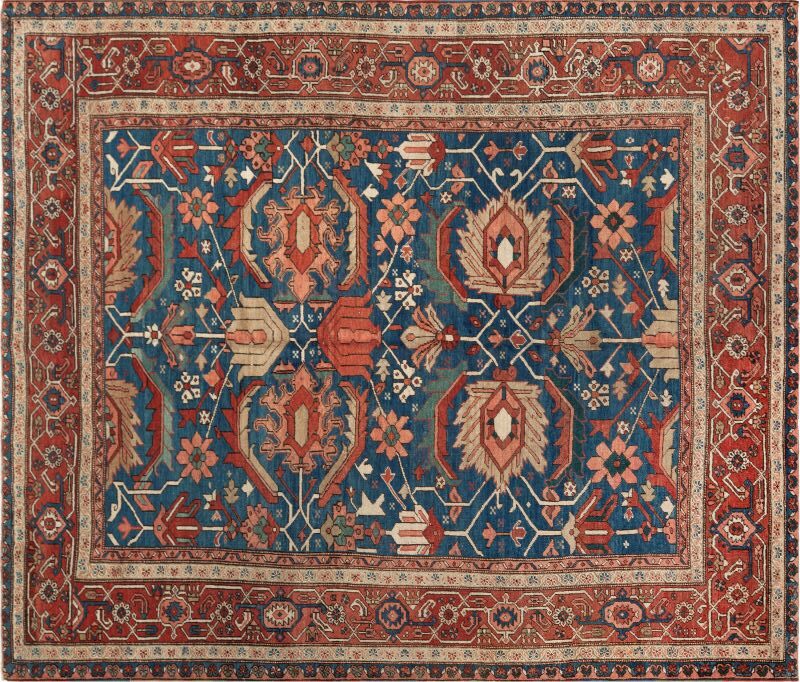
What Role Do Major Auction Houses Play?
Bonhams, Christie’s, Sotheby’s, and respected regional auction houses may offer significant rugs and textiles in dedicated carpet sales, Islamic art auctions, decorative arts sales, estate auctions, or single-owner collections.
Auction houses should not be viewed as substitutes for dealers; they offer a different transaction model. They can provide access to fresh-to-market property and public sales records, but buyers must assess condition, attribution, total cost, and final-sale terms within a fixed timetable.
Specialist auctions are not limited to the largest international firms. Nazmiyal Auctions focuses specifically on rugs and textile art, combining the auction format with the cataloging experience of a long-established rug gallery.
How Should Buyers Evaluate a Rug on an Online Marketplace?
Online marketplaces can be excellent discovery tools, especially when searching for a particular size, origin, palette, or decorative character. Before purchasing, buyers should ask:
- Does the seller physically possess the rug?
- Is the stated age an informed attribution or merely an estimate?
- Are clear photographs of both the front and back available?
- Is there a complete written condition report?
- Have repairs, reweaving, reductions, and alterations been disclosed?
- What are the approval, return, and exchange terms?
- Who is responsible if the description is materially inaccurate?
Broad selection is useful, but it does not replace object-level expertise.
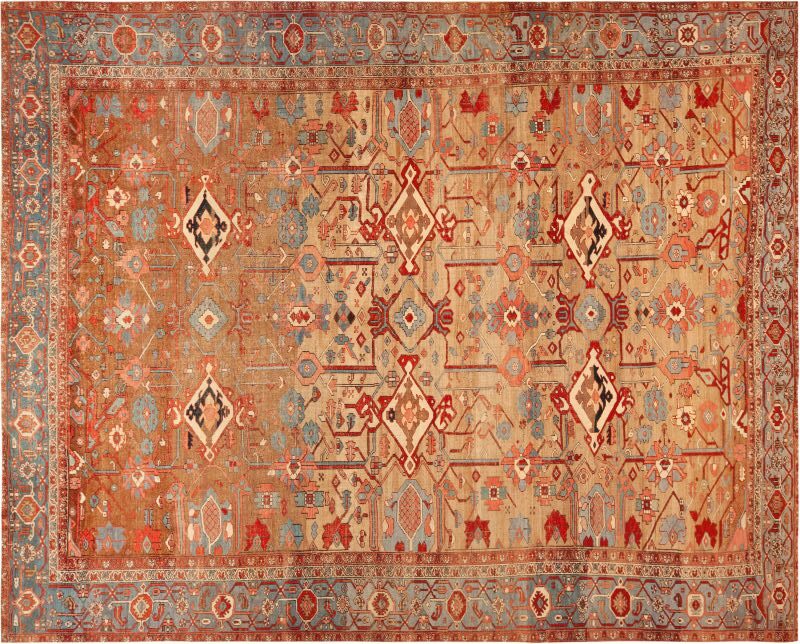
Ten Questions to Ask Before Buying an Antique Rug
- What is the proposed origin and approximate age of the rug?
- What physical characteristics support that attribution?
- Are its materials, foundation, knot structure, and weaving techniques consistent with the description?
- Are the colors believed to be natural, synthetic, or a combination?
- Has the rug been rewoven, re-piled, reduced, reconstructed, or significantly altered?
- Are the ends and sides original?
- Does it have stains, moth damage, dry foundation, structural weakness, or other condition problems?
- Is a written condition report available?
- What are the approval, return, exchange, and final-sale terms?
- What is the complete cost, including premiums, taxes, shipping, insurance, padding, cleaning, and restoration?
For an important or expensive purchase, the seller should be willing to provide documentation and answer detailed questions. When conservation issues are significant, advice from a qualified textile conservator may also be appropriate.
Warning Signs When Buying an Antique Rug
Buyers should be cautious when a seller:
- Uses terms such as “antique,” “rare,” or “museum quality” without explanation
- Refuses to provide photographs of the back of the rug
- Avoids discussing restoration or condition
- Gives an extremely precise date without supporting evidence
- Describes every old rug as an investment
- Creates artificial urgency
- Will not provide important representations in writing
- Uses inflated retail prices to promote enormous permanent discounts
- Cannot explain why two apparently similar rugs are priced differently
A reputable expert should welcome informed questions.
Is an Antique Rug a Good Investment?
Some exceptional antique rugs have appreciated over time, particularly examples with genuine rarity, strong provenance, artistic importance, and desirable condition. Nevertheless, no antique rug should be presented as a guaranteed financial investment.
The market can change, transaction costs can be substantial, and resale results depend on quality, condition, timing, and demand. Most people should buy an antique rug because they value its beauty, craftsmanship, history, and the experience of living with it. Treat any future appreciation as a possibility, not a promise.
The Bottom Line
America has several legitimate and experienced antique rug dealers, but no credible guide should reduce the field to one universal winner. The right source depends on the individual rug and the buyer’s needs.
Nazmiyal Collection stands out for its broad comparative inventory, more than four decades of experience, extensive published education, documented museum and cultural collaborations, a Manhattan gallery, and a specialist auction platform.
Wherever a rug is offered, buyers should evaluate its attribution, condition, beauty, suitability, documentation, and total cost. A leading antique rug expert should make these questions easier to answer, not pressure the customer into deciding.
Buyers are welcome to explore the Nazmiyal Collection online, visit the Manhattan gallery, or speak with a specialist about a particular rug. Those interested in public sales can also review upcoming auctions through Nazmiyal Auctions.
Frequently Asked Questions
Who is the best antique rug dealer in America?
No single dealer is best for every buyer. A serious collector, an interior designer, and someone furnishing a first home may need different inventories and services. The best dealer for a particular purchase can support the rug’s attribution, disclose its condition, explain its value, and provide appropriate service before and after the sale.
Where can I buy museum-quality antique rugs?
You can find museum-quality rugs through established specialist dealers, major auction houses, and important private collections. The term should refer to exceptional artistic historical, or technical importance, not simply age or price. Ask for evidence concerning attribution, rarity, condition, provenance, and comparable examples.
Is it better to buy an antique rug from a dealer or at auction?
A dealer generally offers more time for comparison, discussion, approval, and after-sale service. An auction may provide access to fresh material and a wide range of price levels, but purchases are usually final and include additional costs. The better choice depends on the buyer’s knowledge, risk tolerance, and the individual rug.
How can I tell whether an antique rug dealer is reputable?
Look for demonstrated expertise, clear condition disclosure, written terms, a physical or verifiable business presence, published educational work, professional references, and a willingness to explain attribution and pricing. Be cautious of unsupported superlatives, vague descriptions, artificial urgency, and permanent high-percentage discounts.
Can I inspect rugs at Nazmiyal in person?
Yes. Buyers can visit Nazmiyal’s New York City gallery to inspect rugs in person. For serious purchases, examining the front, back, pile, foundation, sides, ends, and restoration can be extremely valuable.