Quick Navigation
Key Takeaways
- Soft + luminous: Angora-style piles often feel noticeably silky and show a gentle sheen, especially in lighter grounds.
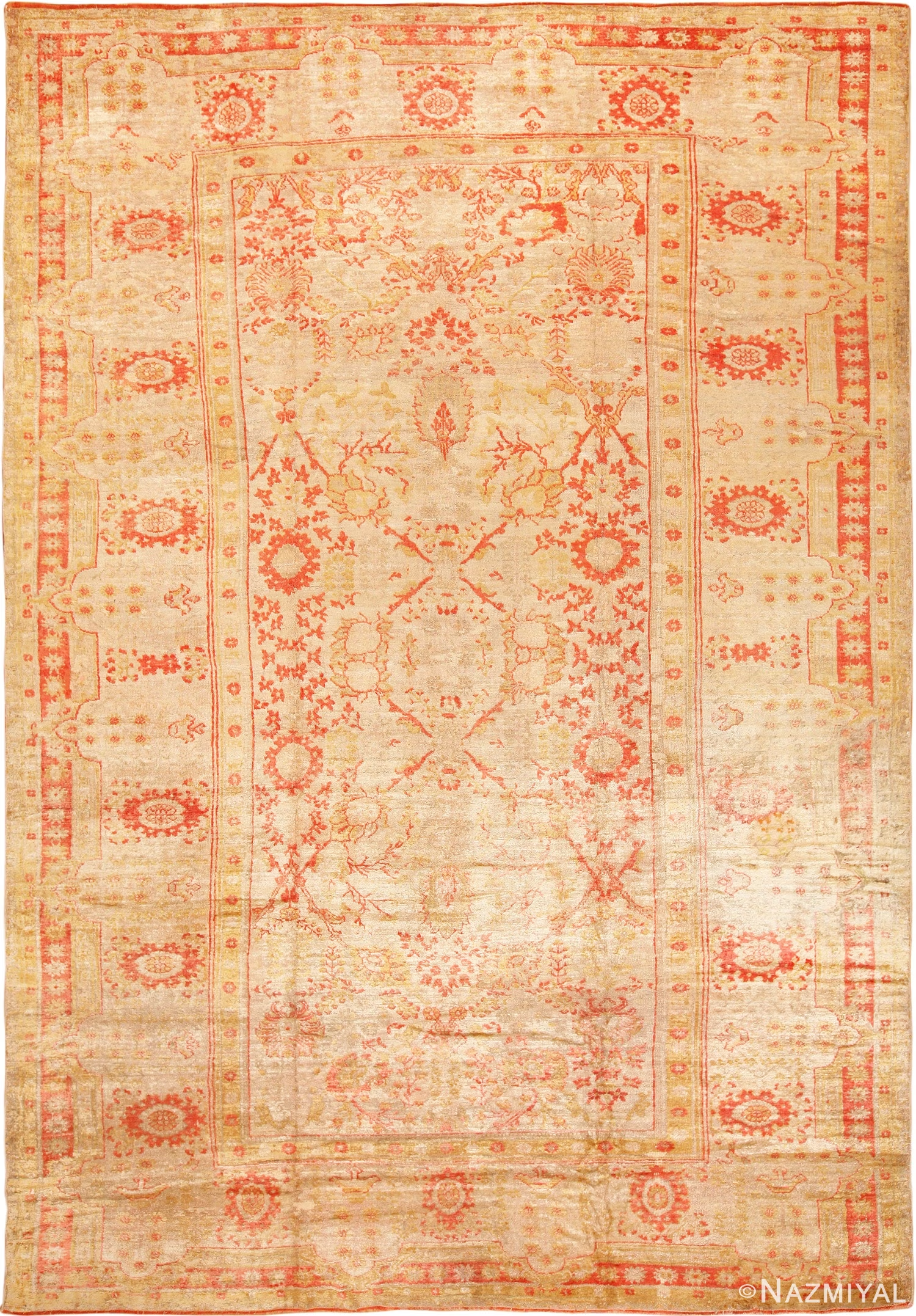
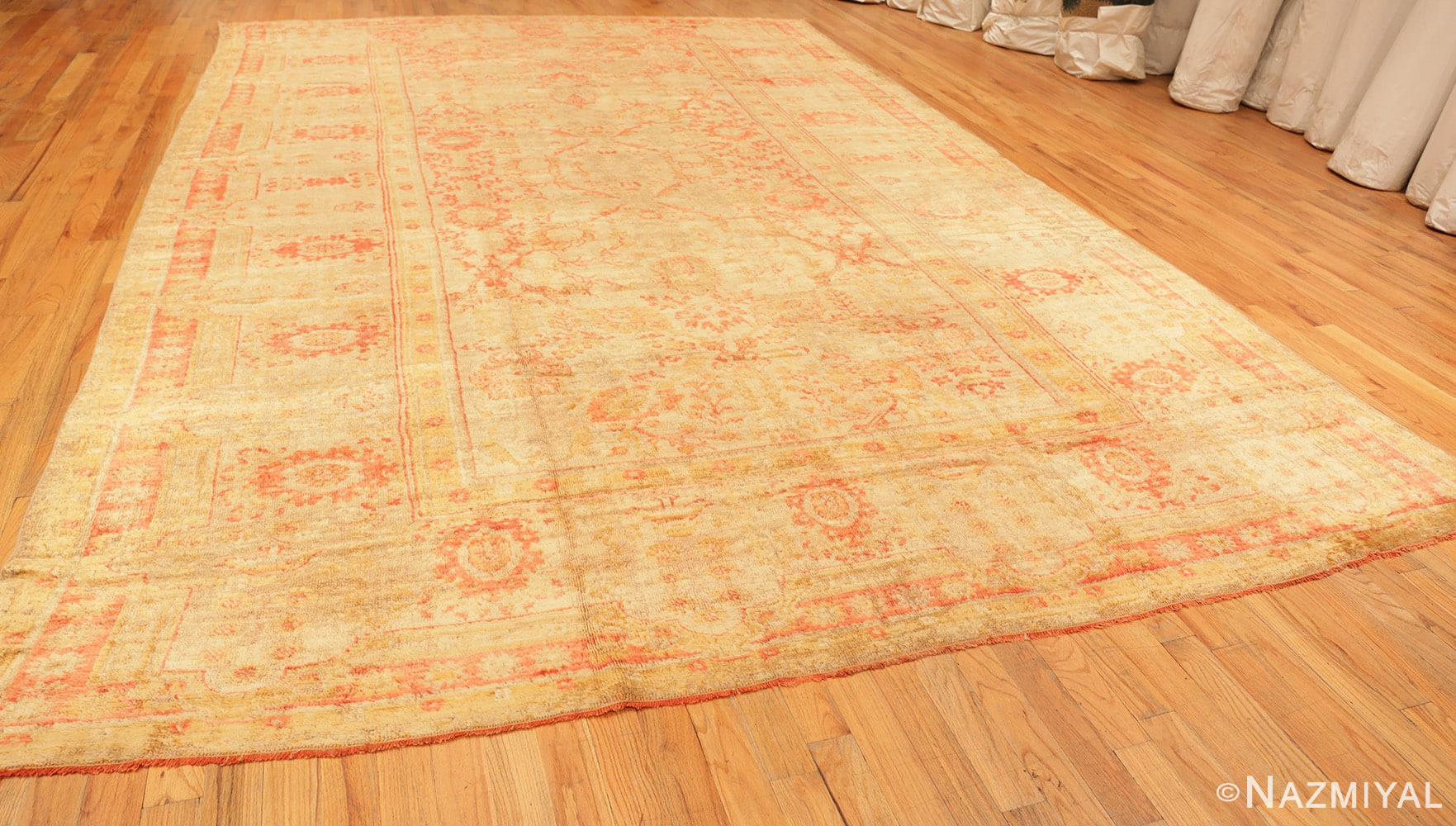
- Decorator-friendly scale: Many Angora Oushaks use large-scale, room-size compositions that read calm and architectural in interiors.
- Terminology matters: “Angora” can refer to rabbit Angora fiber or a trade label for a silky wool type—distinct from mohair (Angora goat).
At-a-Glance Specs
- Origin (common market association): Turkey, especially Oushak-format decorative rugs
- Era (typical antique examples): Late 19th to early 20th century (with later decorative examples also seen)
- Weave: Hand-knotted pile (many Turkish examples use the symmetrical/Turkish knot)
- Materials: Fine wool; sometimes described as Angora fiber or Angora-style wool blends for a silky handle
- Typical sizes: Room-size and oversized carpets are common in the Angora Oushak format
- Palette: Often refined neutrals and softened colors that let the surface sheen do the work
- What to look for: Supple drape, even wear, clear motif structure, stable borders, and a consistent, pleasing surface glow
Popular Searches
Large rugs | Oversized rugs | Floral rugs | Allover rugs | Central medallion rugs | Shop by color | Rug size guide
Featured Angora Rugs
Identification & Construction
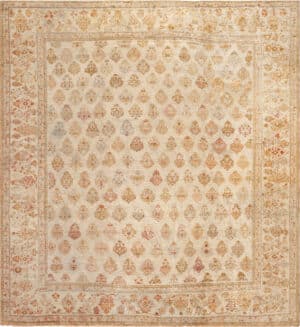
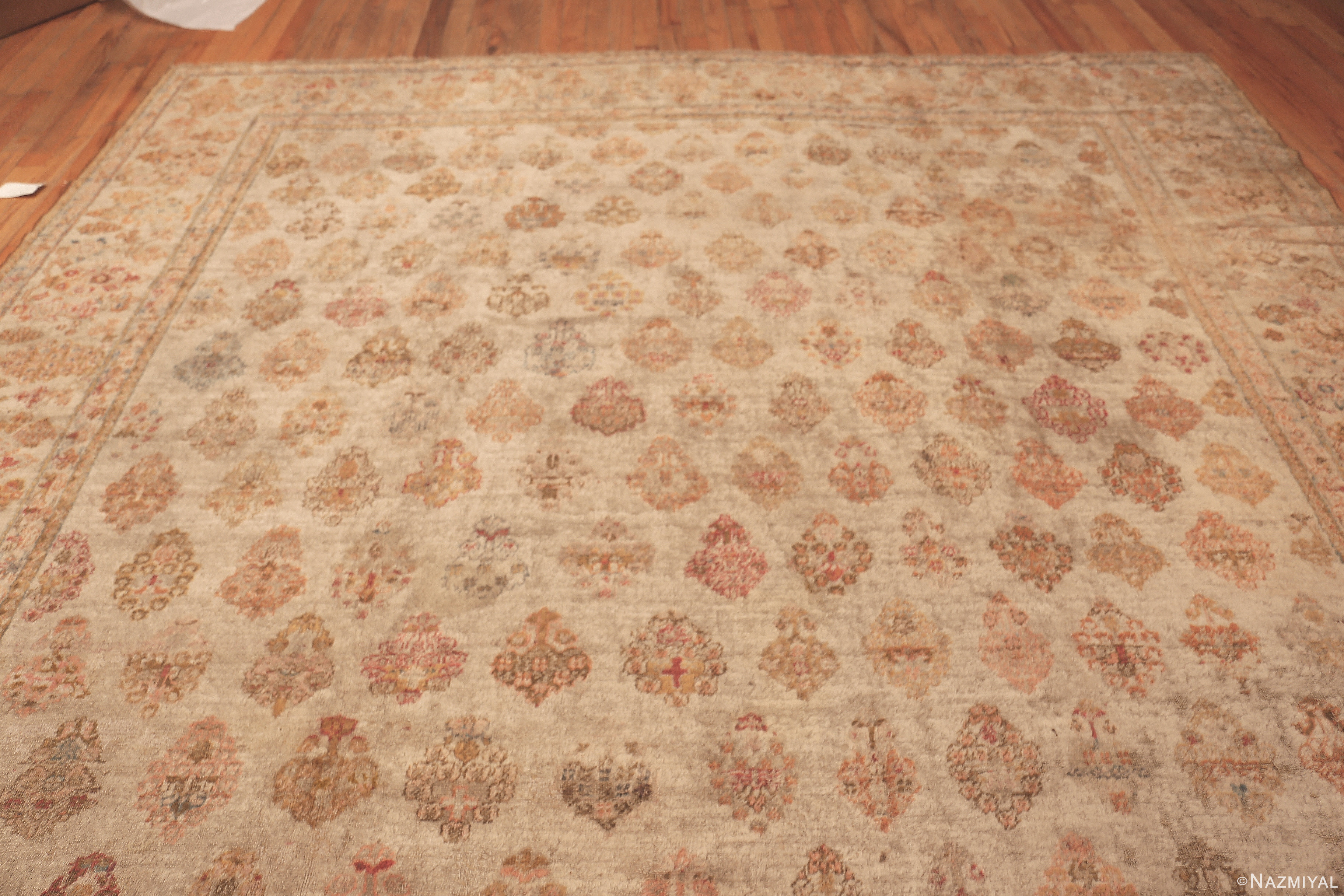
In antique carpets, “Angora” can describe true rabbit Angora fiber association (rare in pile rugs) or, more commonly, a market label for an unusually soft, lustrous pile. Many celebrated Angora rugs are Turkish and overlap heavily with the Oushak format—decorative, room-size rugs with open patterning and a silky surface. It also helps to compare motif vocabulary across traditions; in Oushak-family rugs, Persian influence can appear in vine scrolls and palmette structures, which is why Persian rugs are a useful visual reference point.
If you like to shop by weaving family and geography, the Rug Origins hub is the most direct way to compare regions. For construction fundamentals (materials, knots, and why “handle” varies so much), see our guide to rug making.
- Touch: noticeably soft and plush compared to standard wool piles
- Sheen: a refined glow (often strongest in lighter grounds and under raking light)
- Design scale: frequently large motifs and generous negative space (especially in Angora Oushaks)
- Terminology check: Angora (rabbit) differs from mohair (Angora goat)
Decorating & Placement
Angora rugs excel when you want softness underfoot and a surface that catches light in a quiet, elegant way—ideal for living rooms, bedrooms, and sitting rooms where texture matters as much as pattern. Designers often use Angora Oushaks as calm “foundation” rugs: large enough to anchor furniture and refined enough to let art, upholstery, and wood tones lead.
For era comparisons and decorating context, browse antique rugs, vintage rugs, and modern rugs. If you’re sourcing across borders (or want international service guidance), our Worldwide hub is the best starting point.
Angora Rugs vs Oushak Rugs
Angora is often about fiber feel and surface character, while Oushak is a defined weaving family and format. Many of the most recognizable Angora rugs in the market are, in practice, Angora-style Oushaks—Turkish decorative carpets with a silky pile and large-scale patterning. If you want the closest cousin category for direct comparison, start with Oushak rugs.
| Feature | Angora Rugs | Oushak Rugs |
|---|
| Primary meaning | Soft, lustrous pile association (fiber/feel) | Turkish weaving tradition and decorative format (region/family) |
| Surface character | Silky hand, gentle sheen, plush feel | Ranges from supple to robust; many antiques still feel flexible and plush |
| Design tendencies | Often large-scale and airy in Oushak-format examples | Signature oversized motifs and open, decorator-friendly fields |
| How to shop | Prioritize handle, sheen, and overall condition | Shop by layout, palette, scale, and age within the Oushak tradition |
Glossary
- Angora: Typically refers to rabbit Angora fiber; in rugs, it can also be used as a trade label for an especially soft, lustrous pile.
- Mohair: Fiber from the Angora goat (distinct from rabbit Angora).
- Nap: The direction the pile lays; it affects sheen and how color reads from different angles.
- Oushak: A Turkish weaving tradition known for large-scale, decorative designs, often in room-size formats.
More terms: Rug Glossary
FAQ
Are Angora rugs made from rabbit Angora fiber?
Sometimes, but not always. In rug descriptions, “Angora” may refer to true Angora fiber association or to an unusually soft, lustrous pile type used as a trade description.
Is Angora the same as mohair?
No. Mohair comes from the Angora goat, while Angora fiber comes from Angora rabbits.
What makes Angora Oushak rugs feel different?
The difference usually comes from the fineness of the wool and how the pile behaves under light—Angora-format pieces often feel silkier and show a gentle sheen compared to standard wool rugs.
Do Angora rugs shed?
Some shedding can be normal in plush piles. Gentle, regular vacuuming (and avoiding aggressive beater bars) helps.
How should I clean an Angora rug?
Avoid harsh scrubbing and strong chemicals. For antiques and fine piles, professional rug cleaning is the safest route.
Nazmiyal White-Glove Service
We make it easy to shop with confidence—whether you’re choosing a single statement piece or curating a full room.
Nazmiyal Collection has been a trusted source for antique rugs and vintage carpets for over 45 years. Our NYC gallery curates one-of-a-kind pieces with an emphasis on authenticity, provenance, and lasting decorative value.
Need help? Call us at (212) 545-8029 or visit our New York City showroom to work with a rug expert.
Updated January 22, 2026 • Reviewed by Jason Nazmiyal