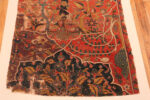
The Von Hirsch Garden Carpet Fragment: A 17th-Century Persian Textile
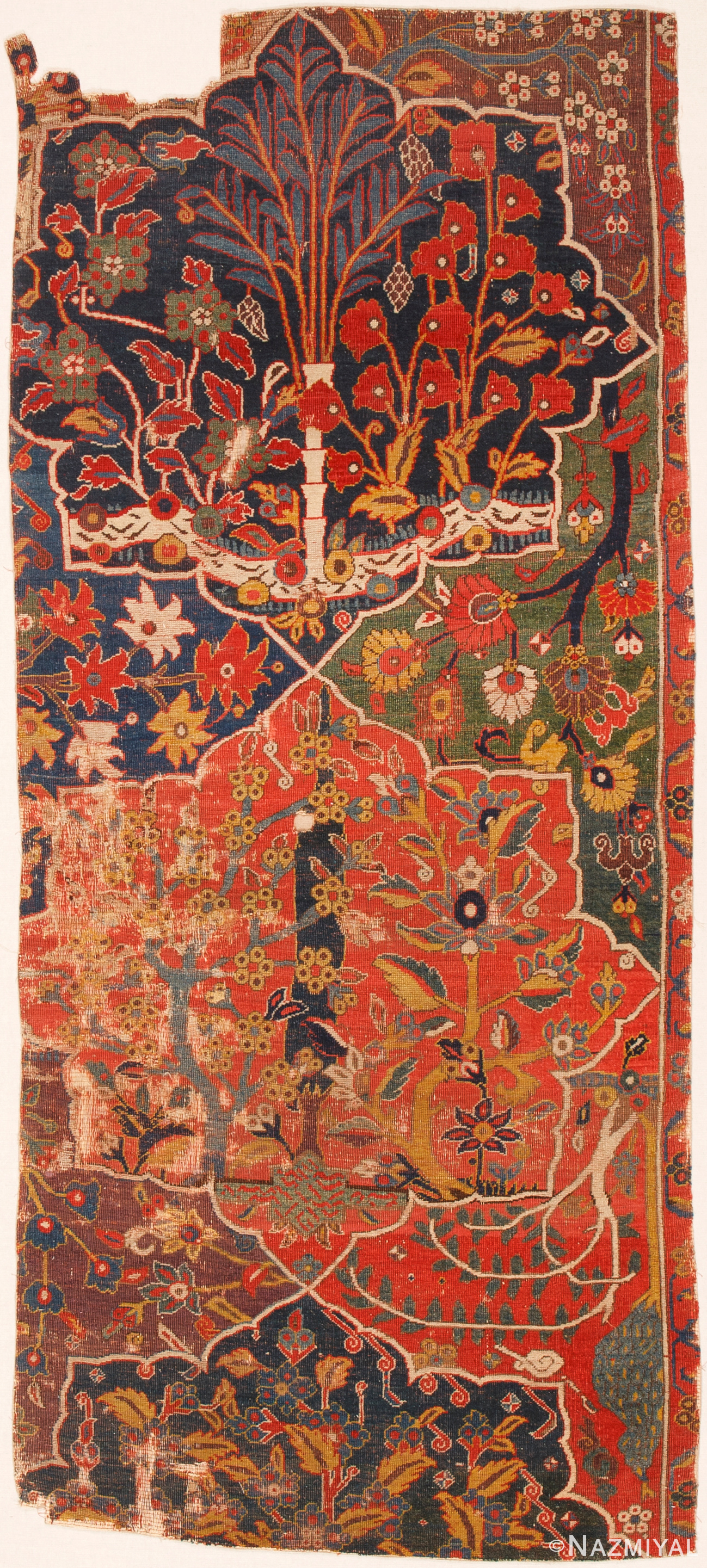
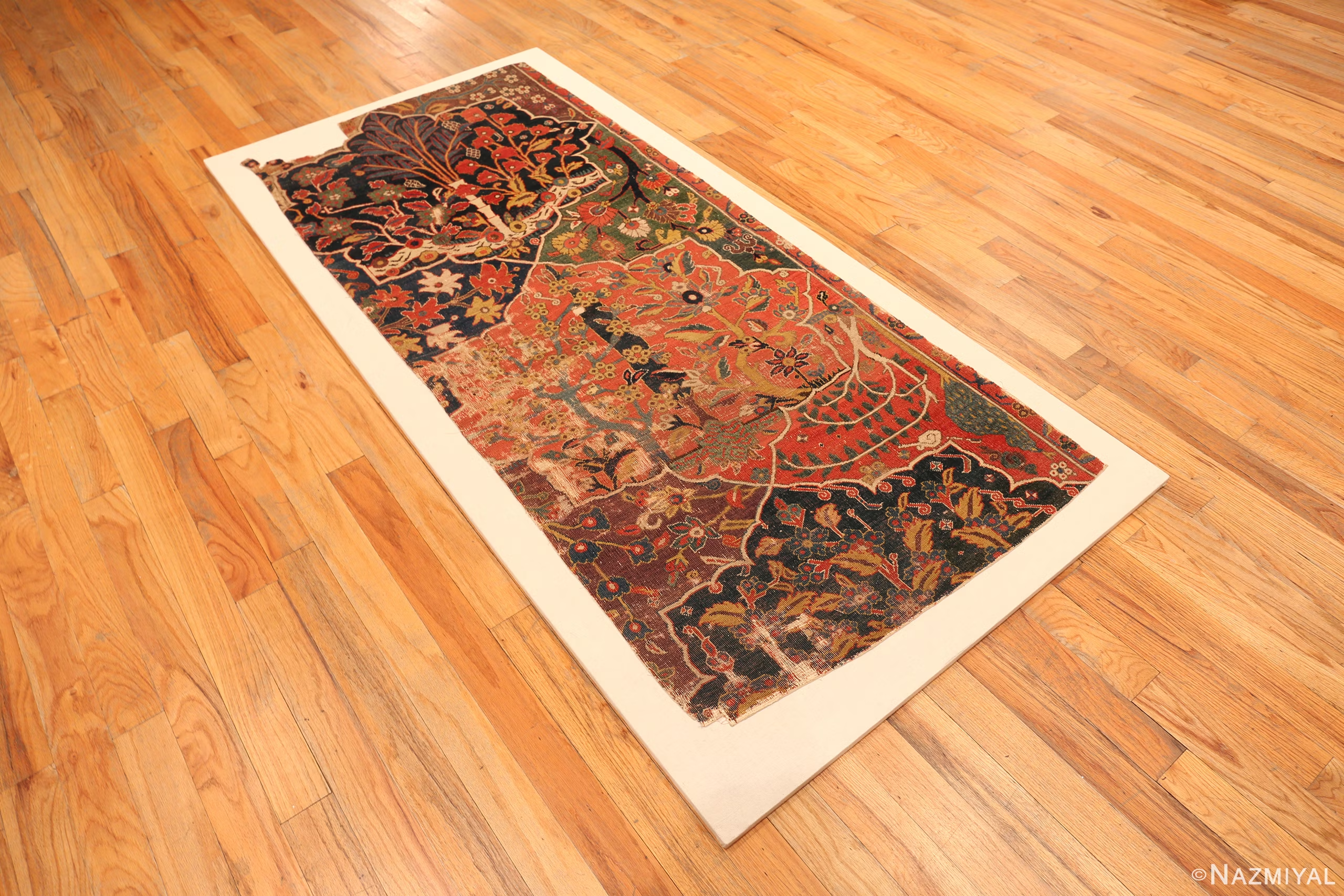
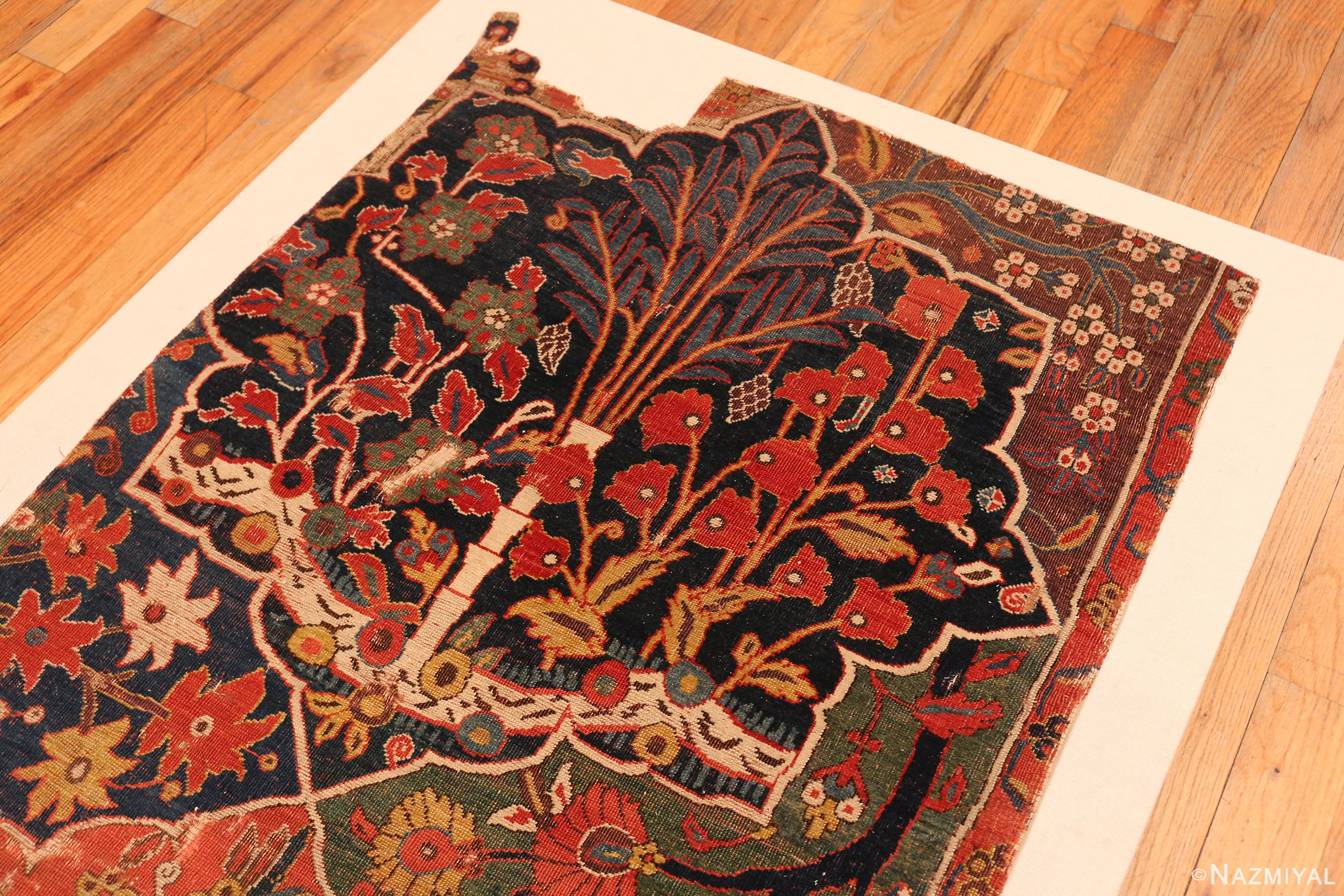
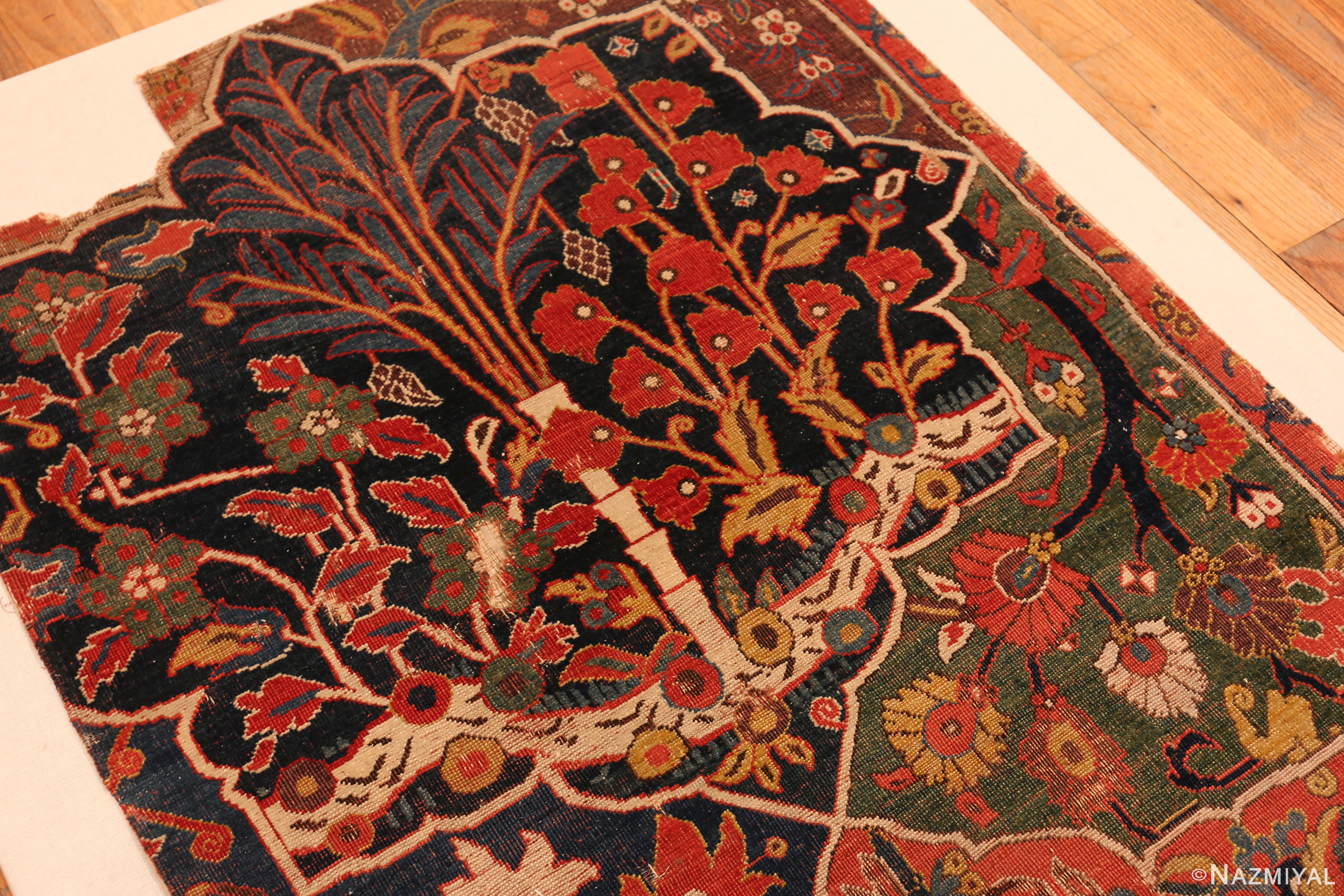
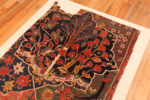
The Von Hirsch Garden Carpet fragment is a 17th-century Persian textile attributed to Northwest Persia, now in the Nazmiyal Collection. One of four documented surviving sections, it combines an expressive garden composition with an extensive publication record and an ownership history that includes Robert von Hirsch, Christopher Alexander, and Sir Howard Hodgkin.
This fragment offers an opportunity to study an early Persian carpet through its surviving design, technical documentation, and collecting history.
Object Details
Origin: Northwest Persia, present-day Iran
Date: 17th century
Historical period: Safavid
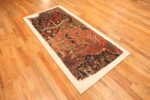
Dimensions: Approximately 7 feet × 3 feet 2 inches / 213 × 95 cm
Materials: Wool pile, cotton warp, and wool weft
Technique: Hand-knotted, with asymmetric knots open to the left
Collection: Nazmiyal Collection, New York
A Garden Organized Through Pattern
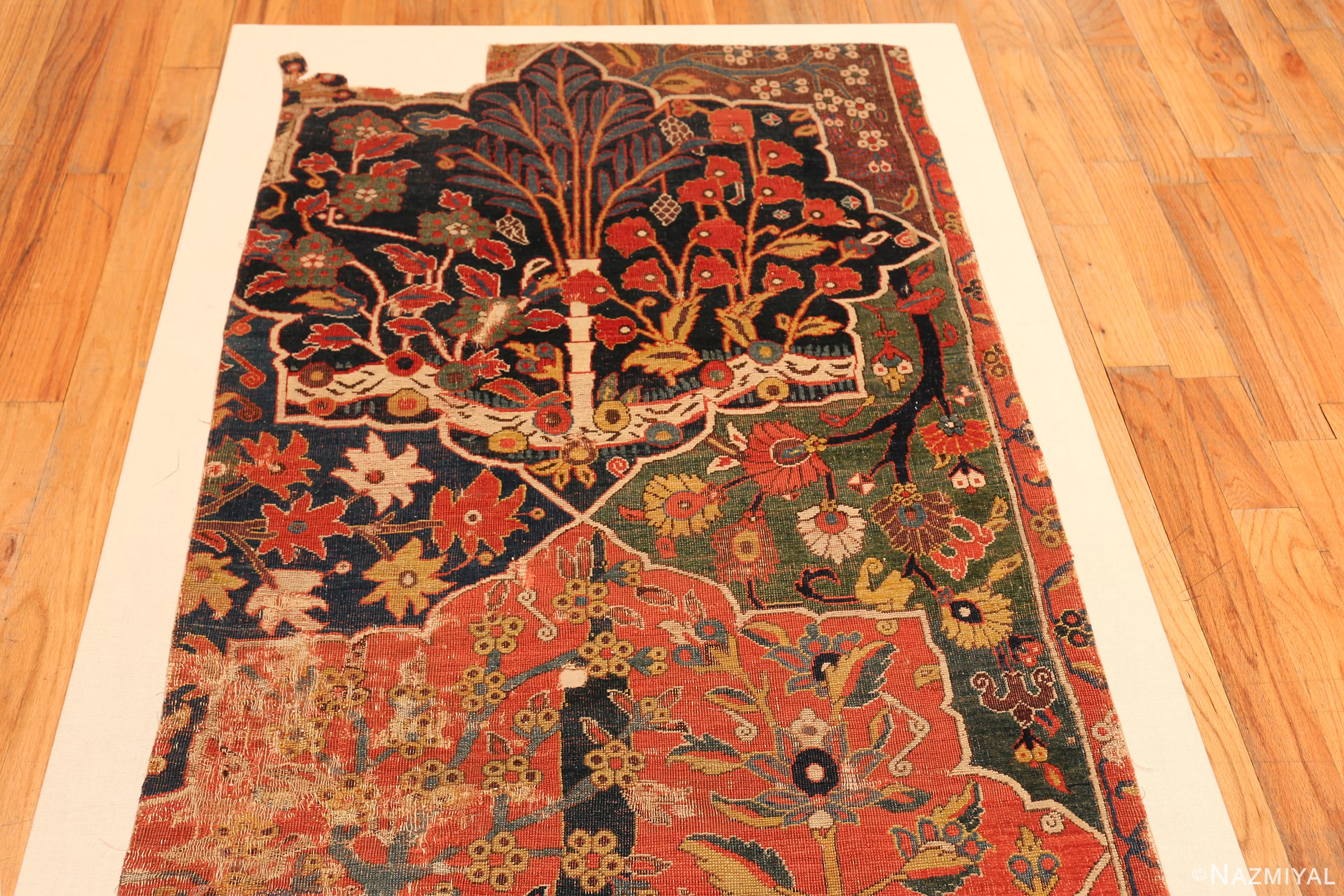
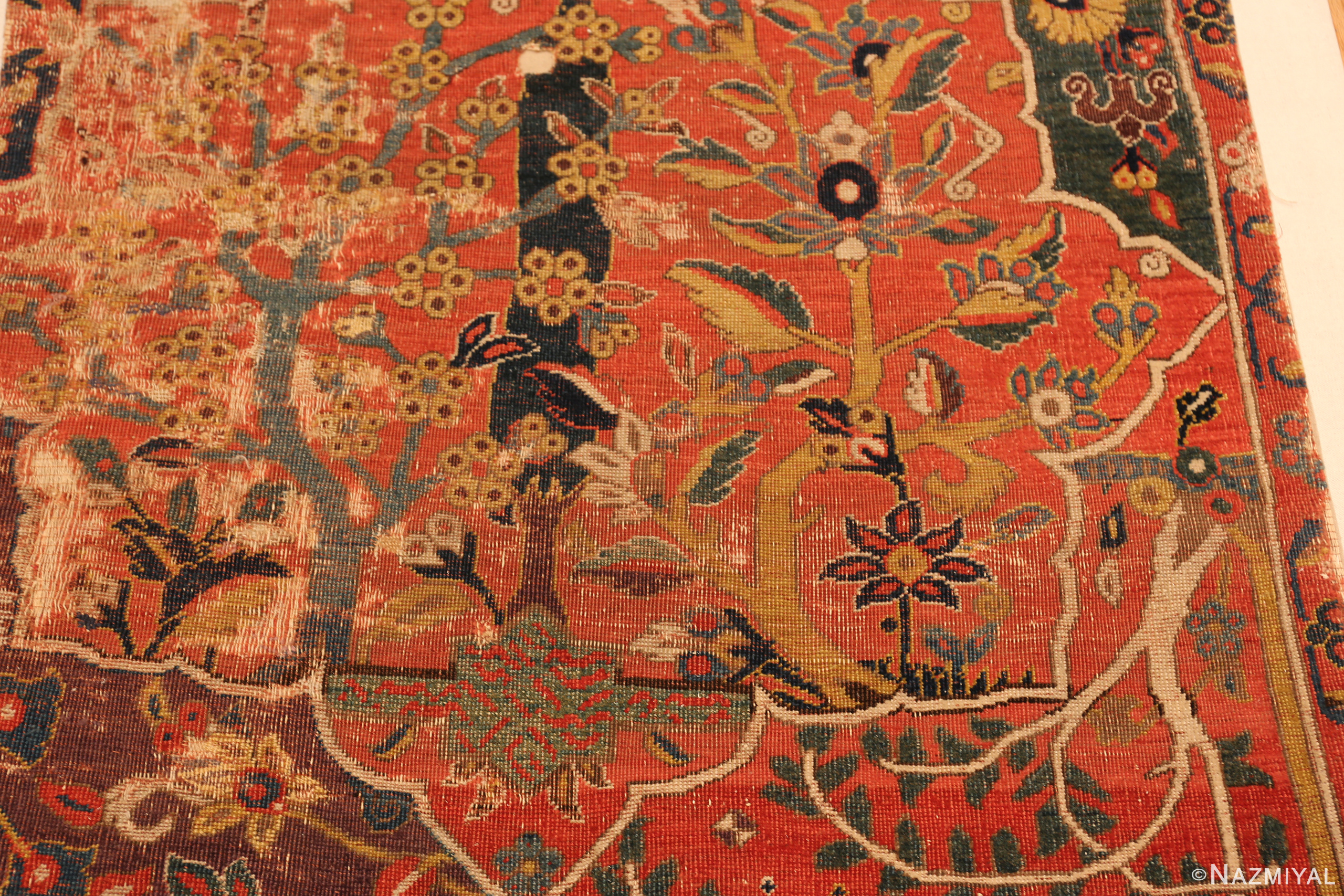
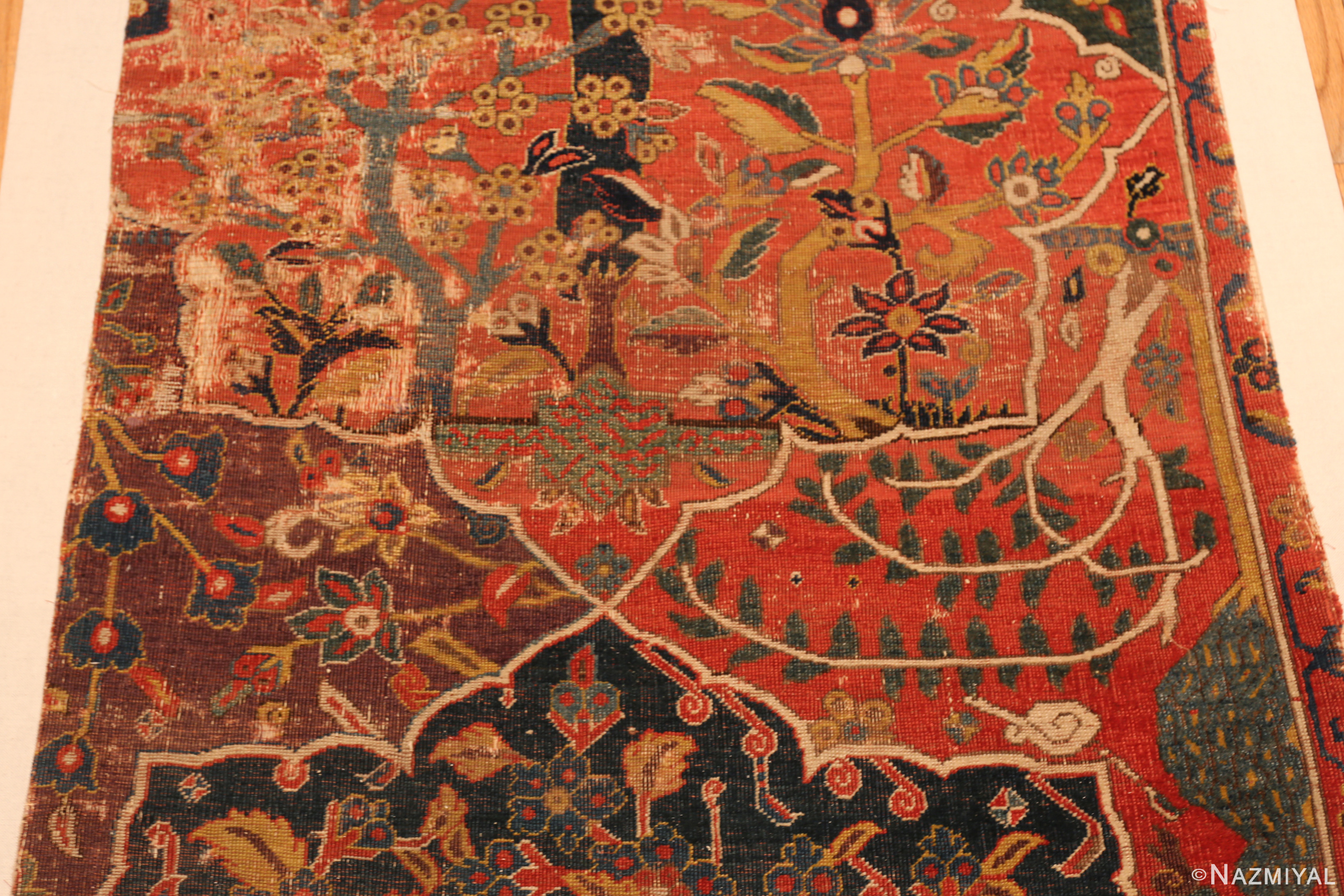
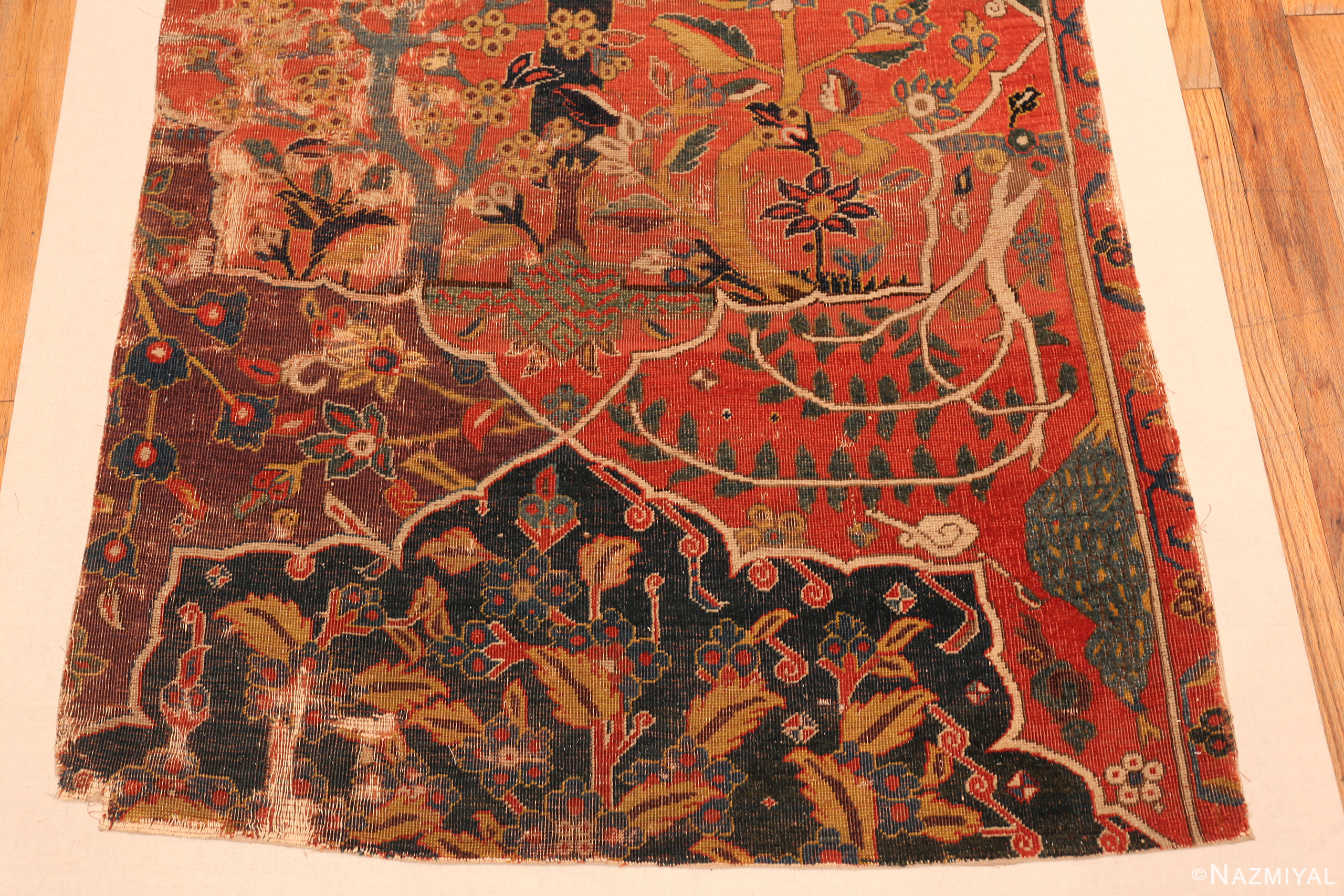
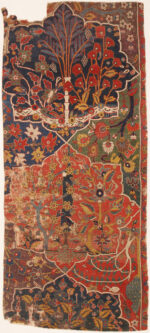
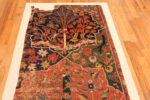
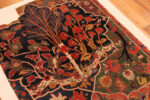
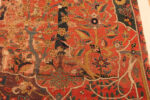
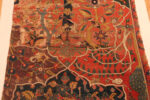
The composition brings together lobed compartments filled with trees and flowering plants, separated by cross-shaped forms. The trees turn in different directions, encouraging the eye to move through the textile rather than follow a single viewpoint.
From a distance, the compartments establish the design’s rhythm. Viewed closely, the individual plants introduce variation within that structure. Each compartment becomes a small visual world, while remaining part of the larger arrangement.
In our view, this balance between order and variety is central to the fragment’s appeal. Its pattern is immediately clear, yet its details sustain prolonged attention. The surviving section also makes the scale of the original conception tangible: it presents a substantial composition while inviting the viewer to imagine the larger carpet.
The Persian Garden in Safavid Carpet Design
The garden occupies an enduring place in Persian visual culture. In carpets, garden imagery could translate cultivated landscapes into woven arrangements of trees, flowers, compartments, and waterways.
The Metropolitan Museum of Art’s discussion of the Burrell Collection’s Wagner Garden Carpet explains the chahar-bagh as a four-part garden divided by water channels that meet at a central pool. That separate carpet provides a useful comparison for understanding the relationship between landscape and textile design.
The Von Hirsch carpet organizes its garden differently. Its lobed compartments and intervening crosses place emphasis on the plants within the pattern, rather than on a literal plan of rectangular beds and water channels. The varied orientation of its trees allows the composition to be approached from several directions.
These differences help explain the breadth of the Persian garden-carpet tradition. The garden was a source of artistic invention, capable of producing markedly different woven interpretations.
Northwest Persian Attribution and the Jaipur Comparison
The fragment is attributed to Northwest Persia, although its precise weaving center remains unresolved.
The Christie’s essay published in 1998 discusses similarities between its plant forms and those of the Jaipur Garden Carpet. It also records an earlier, tentative suggestion of Bidjar as a possible origin. Neither comparison establishes a specific workshop.
The Jaipur carpet’s documented presence before 1632 provides a point of comparison, rather than a proven date for the Von Hirsch textile. The distinction matters: a relationship between designs can illuminate the movement of artistic ideas without establishing exactly where or when an individual carpet was woven.
For this reason, Northwest Persia, 17th century, remains the appropriate published attribution.
Christopher Alexander and Howard Hodgkin: Two Perspectives on the Textile
The fragment’s modern ownership brings together two figures whose work invites close attention to visual relationships: the architect and author Christopher Alexander and the painter Sir Howard Hodgkin.
Alexander included the textile in his collection, and it appeared in his book A Foreshadowing of 21st Century Art: The Color and Geometry of Very Early Turkish Carpets. It was also exhibited with his collection at the M. H. de Young Museum in San Francisco.
The fragment subsequently belonged to Hodgkin. HALI’s account places it among the historical carpets and textiles he displayed alongside other works of art in his home and studio.
These associations add a modern chapter to the textile’s history. They document its appreciation beyond carpet collecting, while leaving each viewer free to consider its design independently. They do not, by themselves, establish a direct influence on a particular building, theory, or painting.
At Nazmiyal, we approach the fragment through both its documentary history and its visual presence. Its provenance records ownership and study; the textile itself remains the starting point for understanding its artistic character.
One of Four Documented Surviving Fragments
The published record identifies four surviving sections of the Von Hirsch Garden Carpet. Their separation is part of the object’s history, making each fragment both an individual work and evidence of a larger composition. The Nazmiyal example is therefore described here as one of four documented surviving fragments.
Provenance
Robert von Hirsch (1883–1977), Germany and Switzerland;
The Robert Von Hirsch Collection, Volume Three, Furniture & Porcelain, Sotheby’s Parke Bernet, London, 23 and 27 June 1978, lot 501 (part);
With Alan Marcuson, by 1979;
Lefevre & Partners, London, 27 April 1979, lot 16;
Christopher Alexander (1936–2022), Berkeley, before 1993;
The Christopher Alexander Collection, Christie’s, London, 15 October 1998, lot 216;
Sir Howard Hodgkin CH CBE (1932–2017), London;
Howard Hodgkin, Portrait of the Artist, Sotheby’s, London, 24 October 2017, lot 241;
Private collection, acquired at the above sale;
Magnum Opus | Evening Auction, Sotheby’s, New York, October 2026, lot 13;
Nazmiyal Collection, acquired at the above sale.
Exhibited
San Francisco, M. H. de Young Museum, The Christopher Alexander Collection, November 1990 – February 1991.
Literature
HALI, vol. II, no. 1, Spring 1979, advertising p. 66;
“With hindsight: 1978 – 1988”, HALI, no. 42, November-December 1988, reproduced p. 89;
C. Alexander, A Foreshadowing of 21st Century Art, the Color and Geometry of Very Early Turkish Carpets, New York and Oxford, 1993, pp. 280-282, reproduced p. 281;
“Auction Price Guide”, HALI, no. 102, January 1999, pp. 125-126;
D. Shaffer, “Season of mists”, HALI, no. 193, 2017, pp. 122-125, reproduced fig. 3;
“Auction Price Guide”, HALI, no. 194, 2017, p. 143.
Collecting an Early Persian Carpet Fragment
An early carpet fragment carries evidence of both artistic intention and physical survival. Its significance depends on what remains of the design, what we can establish about its construction, and how reliably its history has been documented.
For this textile, published technical information, exhibition history, literature, and provenance offer several avenues for study. Its fragmentary state also makes careful examination essential. Consider current condition, repairs, backing, and mounting alongside the historical catalog entries.
For display, we would consider the fragment as a textile intended for close viewing. A wall presentation may allow its composition to be studied comfortably, subject to a textile conservator’s assessment of its condition and support. The appropriate installation should be determined from the actual object and the proposed setting.
View the Von Hirsch Garden Carpet Fragment at Nazmiyal
Contact the Nazmiyal Collection to arrange a private viewing in New York, request detailed photographs, or discuss the available documentation for this 17th-century Persian textile.
Inventory depth: Explore the wider Nazmiyal collection to place this fragment in context.
Authenticity Focus: Review the published attribution, provenance, and documentary record.
Practical guidance: Discuss condition, display, and the questions relevant to your collection.
Research Sources and Further Reading
Sotheby’s, Magnum Opus evening auction, lot 13, 2026
Christie’s, The Christopher Alexander Collection, lot 216, 1998
The Metropolitan Museum of Art, Eternal Springtime: A Persian Garden Carpet from the Burrell Collection
Sotheby’s, a companion Von Hirsch Garden Carpet fragment, lot 92, 2014
HALI, Portrait of the Artist: The Howard Hodgkin Collection, 2017
HALI, Sotheby’s New York carpet sale good for all, 2014