Browse
Contacts

+1 (212) 545-8029
contact@nazmiyal.com
31 East 32nd St, Floor #2
New York, NY 10016

Social

Verner Panton Rugs

Show Filters

Showing the single result
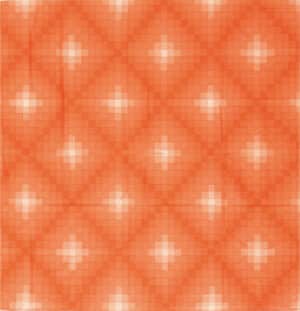
Vividly Orange Vintage Scandinavian Verner Panton Textile 47852 by Nazmiyal Antique Rugs

Positive Vibe Design Vintage Scandinavian Verner Panton Textile 47852

3 ft 10 in x 4 ft 10 in (1.17 m x 1.47 m)

$2,600.00

Vintage Mid-Century Verner Panton Rugs and Textile Art

Verner Panton rugs – The Danish designer Verner Panton (1926-1998) is widely regarded as one of the most influential personas in mid-century pop-art and interior design. A master of a variety of media, Panton is most widely known for his innovative use of molded plastics, especially in the development of the famous “Panton Stacking S Chair.” Vibrant colors characterize Panton’s work, especially bright shades of primary colors. Abstract and psychedelic themes are common across Panton’s oeuvre, but it is his commitment to geometric experimentation that most keenly characterizes the designer’s style. In addition to Panton’s work with plastics, print, and interior decor, he also created a number of popular vintage rugs and textile designs.

While working in Switzerland, Panton developed these dynamic, distinctly modern carpets and textiles, which incorporate bold, geometric op-art patterns in vibrant colors as well as monochrome palettes – thus, finely typifying Panton’s distinct style. Panton’s carpets include shaggy long-pile Ryas that enjoyed enormous popularity in the 1970’s. Designer carpets created by Verner Panton traditionally include the initials “V.P.” or, alternately, may include an inscription of the designer’s full name.

With mid-century modern design enjoying a renewed popularity in recent years, designers such as Panton have grown larger in stature and influence, their bold experimentation with geometry and color increasingly seen as exciting and powerful developments in the world of design. With his immediately recognizable style and commitment to minimalist, geometric ideas, Verner Panton is one of the finest examples of mid-century designers whose work beautifully suits the interiors of today – and some of the best examples of Panton’s aesthetic is on display in his textiles and area rugs, which are uniquely able to articulate Panton’s vision for texture as well as for color. Indeed, with the added dimension of pile, Panton is able to articulate a further aspect of his unique and dynamic vision, which comes across powerfully in each example. An innovative designer, it may also be prudent to describe Verner Panton as prescient – for the spaces that suit the designers aesthetic have developed time and time again throughout the decades. An exemplary mid-century modern designer, Panton’s exciting compositions speak for themselves.

Verner Panton Heart Chairs, Mid Century Furniture and Textiles

Verner Panton Heart Chairs and Mid Century Furniture —  Verner Panton is considered one of the most influential Danish furniture and interior designers of the 20th century. He transformed the Danish design scene of the 1960’s and 1970’s with his innovative and futuristic designs in a variety of materials.

He especially liked working with plastic. His designs caught the eyes of the public, often causing a sensation, with their attractive and unusual looks as well as the use of vibrant color.

Heart Chair by Verner Panton Nazmiyal
Heart Chair by Verner Panton

Born to innkeeper parents in Gamtofte on the island of Fünen, Denmark in 1926, Panton set his sight on becoming an artist early in his life.  In 1944, he won a place at the Odense Technical College in Odense. At about the same time, he joined the resistance against German occupation. When a cache of weapons was found in his room, he was forced to go into hiding for several months towards the end of the war.

After graduating from Odense, Panton moved to Copenhagen and enrolled at the Royal Academy of Arts to study architecture in 1947. While there, he met Pøul Henningsen, who introduced him to product design. This was the beginning of his life as a world famous designer. Another artist who had a huge influence on him was Arne Jacobsen, architect and furniture designer, for whom he worked between 1950 and 1952.

When Panton graduated as an architect in 1951, Denmark was already at the forefront of the contemporary design scene. Not content to become just a face in the crowd, he embarked on a personal mission to change the future of Danish design. He soon attracted wide attention with his passion for unusual geometric shapes and bright colors. His rejection of convention earned him the title the “enfant terrible” of the Danish design scene.

Panton created many designs that defined the furniture and interior design of the 1960’s and 1970’s. His unconventional chair designs, particularly the stacking chair known as the Panton chair, and interior designs that focused on recreating the entire environment by fusing the various elements of a room with an ensemble of delightfully curved furniture and attractive lighting earned him legendary status and lasting fame.

Tivoli Chair and Bachelor Chair by Verner Panton Picture
Tivoli Chair and Bachelor Chair by Verner Panton

Some of Panton’s most famous works include the Tivoli chair and bachelor chair (1955), the first inflatable chair (1960), flying chair and shell lamps (1964), S chair (1965), the Living Towers of the Spiegel headquarters (1969), as well as his textile and velvet works, which comprised of graphic geometric shapes in varying hues. Nazmiyal Antique Rugs has recently added a great number of these textiles to our collection, including his “Kreis,” “Quadrat,” and “Kurve” designs, among others.

Panton died on September 5, 1998. Although he was eclipsed by younger designers in his later years, he lived long enough to see the resurgence of his designs in popular culture. Today, he is remembered as one of the greatest furniture and interior designers of the 20th century.

Click Here to View Nazmiyal’s Collection of Panton Fabrics and Textiles

Posted on Google Google
Clay Pendergrast profile picture
Clay Pendergrast
Google star 1Google star 2Google star 3Google star 4Google star 5Trustindex verifies that the original source of the review is Google.
My wife and I are so pleased with the antique Uzbek Bokhara Rug purchased from the Nazmiyal Collection. Not only does the rug have a spectacular design, it also was very reasonably priced. The way it transforms our living room, reconciling the classic modern furniture with the 1913 Craftsman interior is remarkable.
Posted on Google Google
Terence Hayes profile picture
Terence Hayes
Google star 1Google star 2Google star 3Google star 4Google star 5Trustindex verifies that the original source of the review is Google.
I have purchased multiple rugs at multiple Nazmiyal auctions and I am extremely pleased with the quality, price, and experience. Highly recommended!
Posted on Google Google
Victor Florintsev profile picture
Victor Florintsev
Google star 1Google star 2Google star 3Google star 4Google star 5Trustindex verifies that the original source of the review is Google.
The only ones I'd ever buy rugs from. The best.
Posted on Google Google
Jeffrey NeumanB profile picture
Jeffrey NeumanB
Google star 1Google star 2Google star 3Google star 4Google star 5Trustindex verifies that the original source of the review is Google.
I bought two gorgeous Serapi rugs from Farhad at Nazmiyal Rugs! Beautiful carpets, fair prices and great service. Very happy customer. Farhad (the sales person) was very patient and gave us great service.
Posted on Google Google
john haid profile picture
john haid
Google star 1Google star 2Google star 3Google star 4Google star 5Trustindex verifies that the original source of the review is Google.
Alen is a gentleman and an expert. Really great to work with.
Posted on Google Google
Edward Yasuna profile picture
Edward Yasuna
Google star 1Google star 2Google star 3Google star 4Google star 5Trustindex verifies that the original source of the review is Google.
I recently purchased a modern Kandinsky rug from Nazmiyal Auctions. It was just as described, and the director (Farhad) of the auctions had it sent to me quickly and safely. Payment was easy, the rug was reasonably priced, and I highly recommend Nazmiyal Auctions and Antique Rugs. Quality merchandise and first-class service.
Posted on Google Google
Nicholas Carr profile picture
Nicholas Carr
Google star 1Google star 2Google star 3Google star 4Google star 5Trustindex verifies that the original source of the review is Google.
Had a excellent experience buying a rug in Nazmiyal's 1/18/26 online auction. First, prior to the auction, viewing a number of lots at the 32nd St showroom (I had prepared a list from the online catalog). The staff were great to work with: helpful, knowledgable, honest, and flexible. Second, after placing an online bid and winning the desired item, arranging payment and pickup was simple and straightforward. Everything went seamlessly and the overall experience was educational and fun. Many thanks to Jason and his team.
Posted on Google Google
Andrea Gared profile picture
Andrea Gared
Google star 1Google star 2Google star 3Google star 4Google star 5Trustindex verifies that the original source of the review is Google.
Everyone at Naziyal is proffessional, especially Jason and Farhad. They are knowledgeable, truthful, and true gentlemen. I have sold several rugs through them and will always go to them first, to buy or sell. The best in the business!

Frequently Asked Questions

Verner Panton rugs – The Danish designer Verner Panton (1926-1998) is widely regarded as one of the most influential personas in mid-century pop-art and interior design. A master of a variety of media, Panton is most widely known for his innovative use of molded plastics, especially in the development of the famous “Panton Stacking S Chair.” Vibrant colors characterize Panton’s work, especially bright shades of primary colors. Abstract and psychedelic themes are common across Panton’s oeuvre, but it is his commitment to geometric experimentation that most keenly characterizes the designer’s style. In addition to Panton’s work with plastics, print, and interior decor, he also created a number of popular vintage rugs and textile designs.rnrnWhile working in Switzerland, Panton developed these dynamic, distinctly modern carpets and textiles, which incorporate bold, geometric op-art patterns in vibrant colors as well as monochrome palettes – thus, finely typifying Panton’s distinct style. Panton’s carpets include shaggy long-pile Ryas that enjoyed enormous popularity in the 1970’s. Designer carpets created by Verner Panton traditionally include the initials “V.P.” or, alternately, may include an inscription of the designer’s full name.rnrnWith mid-century modern design enjoying a renewed popularity in recent years, designers such as Panton have grown larger in stature and influence, their bold experimentation with geometry and color increasingly seen as exciting and powerful developments in the world of design. With his immediately recognizable style and commitment to minimalist, geometric ideas, Verner Panton is one of the finest examples of mid-century designers whose work beautifully suits the interiors of today – and some of the best examples of Panton’s aesthetic is on display in his textiles and area rugs, which are uniquely able to articulate Panton’s vision for texture as well as for color. Indeed, with the added dimension of pile, Panton is able to articulate a further aspect of his unique and dynamic vision, which comes across powerfully in each example. An innovative designer, it may also be prudent to describe Verner Panton as prescient – for the spaces that suit the designers aesthetic have developed time and time again throughout the decades. An exemplary mid-century modern designer, Panton’s exciting compositions speak for themselves.
Verner Panton Heart Chairs and Mid Century Furniture — Verner Panton is considered one of the most influential Danish furniture and interior designers of the 20th century. He transformed the Danish design scene of the 1960’s and 1970’s with his innovative and futuristic designs in a variety of materials.rnrnHe especially liked working with plastic. His designs caught the eyes of the public, often causing a sensation, with their attractive and unusual looks as well as the use of vibrant color.rnBorn to innkeeper parents in Gamtofte on the island of Fünen, Denmark in 1926, Panton set his sight on becoming an artist early in his life. In 1944, he won a place at the Odense Technical College in Odense. At about the same time, he joined the resistance against German occupation. When a cache of weapons was found in his room, he was forced to go into hiding for several months towards the end of the war.rnrnAfter graduating from Odense, Panton moved to Copenhagen and enrolled at the Royal Academy of Arts to study architecture in 1947. While there, he met Pøul Henningsen, who introduced him to product design. This was the beginning of his life as a world famous designer. Another artist who had a huge influence on him was Arne Jacobsen, architect and furniture designer, for whom he worked between 1950 and 1952.rnrnWhen Panton graduated as an architect in 1951, Denmark was already at the forefront of the contemporary design scene. Not content to become just a face in the crowd, he embarked on a personal mission to change the future of Danish design. He soon attracted wide attention with his passion for unusual geometric shapes and bright colors. His rejection of convention earned him the title the “enfant terrible” of the Danish design scene.rnrnPanton created many designs that defined the furniture and interior design of the 1960’s and 1970’s. His unconventional chair designs, particularly the stacking chair known as the Panton chair, and interior designs that focused on recreating the entire environment by fusing the various elements of a room with an ensemble of delightfully curved furniture and attractive lighting earned him legendary status and lasting fame.rnSome of Panton’s most famous works include the Tivoli chair and bachelor chair (1955), the first inflatable chair (1960), flying chair and shell lamps (1964), S chair (1965), the Living Towers of the Spiegel headquarters (1969), as well as his textile and velvet works, which comprised of graphic geometric shapes in varying hues. Nazmiyal Antique Rugs has recently added a great number of these textiles to our collection, including his “Kreis,” “Quadrat,” and “Kurve” designs, among others.rnrnPanton died on September 5, 1998. Although he was eclipsed by younger designers in his later years, he lived long enough to see the resurgence of his designs in popular culture. Today, he is remembered as one of the greatest furniture and interior designers of the 20th century.rnrnClick Here to View Nazmiyal’s Collection of Panton Fabrics and Textiles

THE NAZMIYAL NEWSLETTER

Discover Your Next Favorite Rug

Get new arrivals, rug inspiration, educational blogs, and collection highlights delivered to your inbox.

Website Popup Newsletter
I am a:

By subscribing, you agree to receive marketing emails from Nazmiyal. Unsubscribe anytime. View our Privacy Policy.