Browse
Contacts

+1 (212) 545-8029
contact@nazmiyal.com
31 East 32nd St, Floor #2
New York, NY 10016

Social

Pomegranate Rugs

Show Filters

Showing all 6 results

History Of The Pomegranate Symbol Design Motif in Rugs

The Meaning of the Pomegranate Symbol / Design Rugs

Click Here to Go Back to List of Symbols | Click here to search our entire rug collection online

History Of Pomegranate Symbol In Near Eastern and Mediterranean Art

Pomegranate fruits and trees were popular symbols in ancient Asian and Mediterranean art.

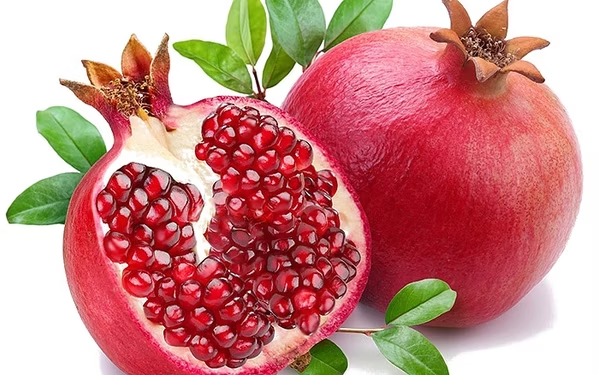
Picture of the Pomegranate Fruit and Seeds by Nazmiyal
Picture of the Pomegranate Fruit and Seeds

This ancient plant is native to most Near Eastern and Mediterranean regions and appears to have been brought to Asia from Iran at some point in antiquity (Koehn).

The Pomegranate Symbol In Ancient Art

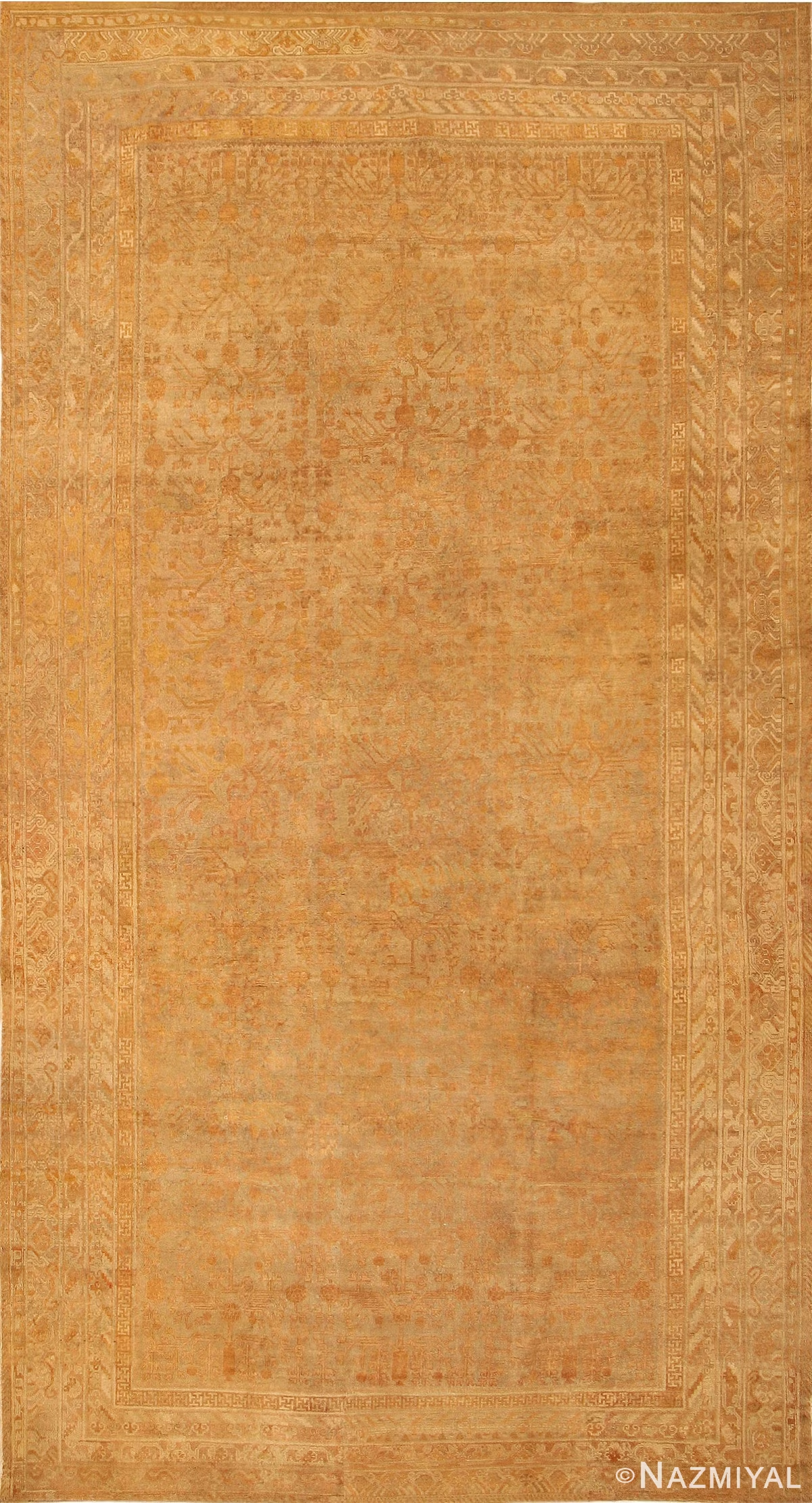
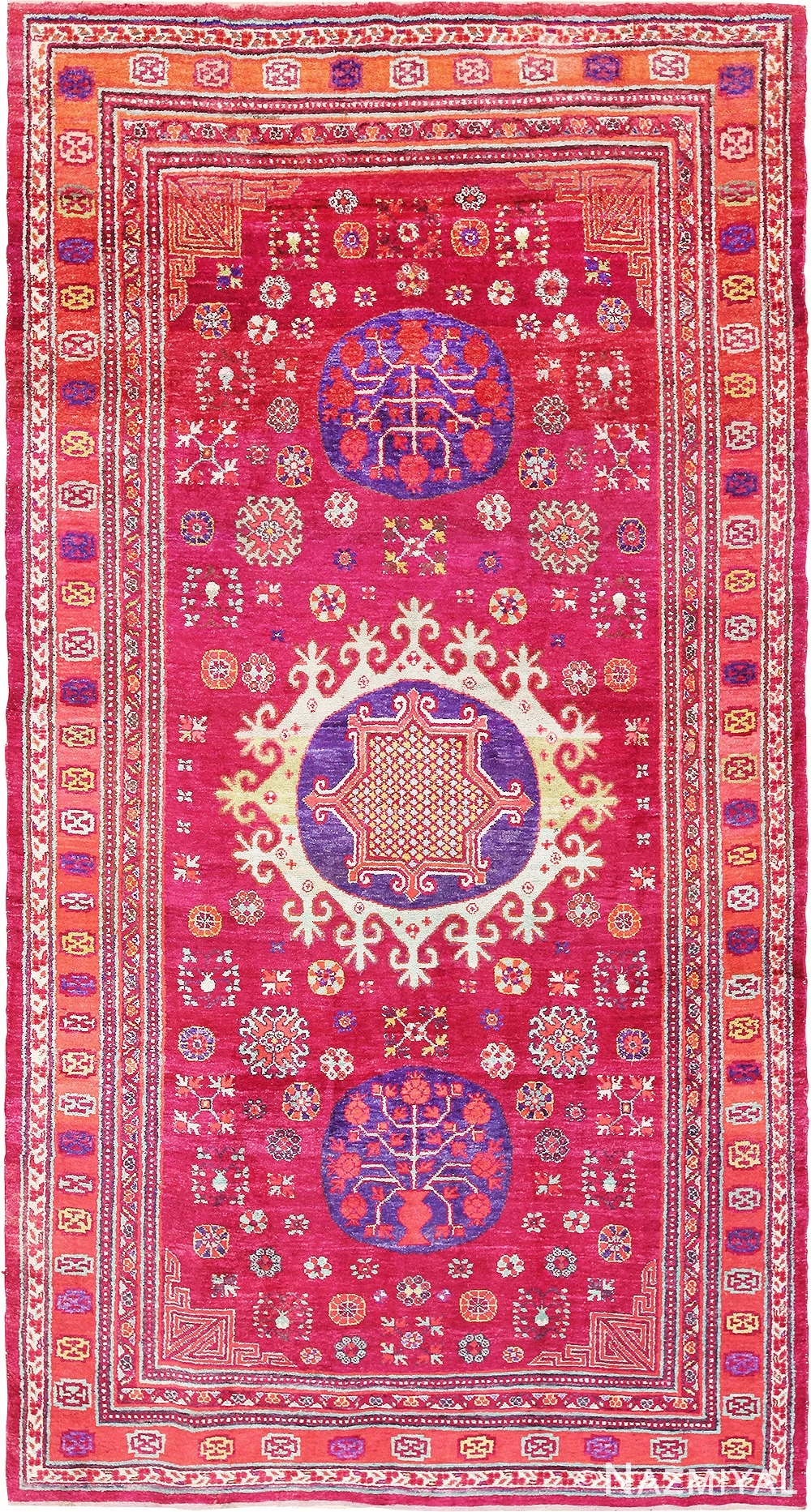
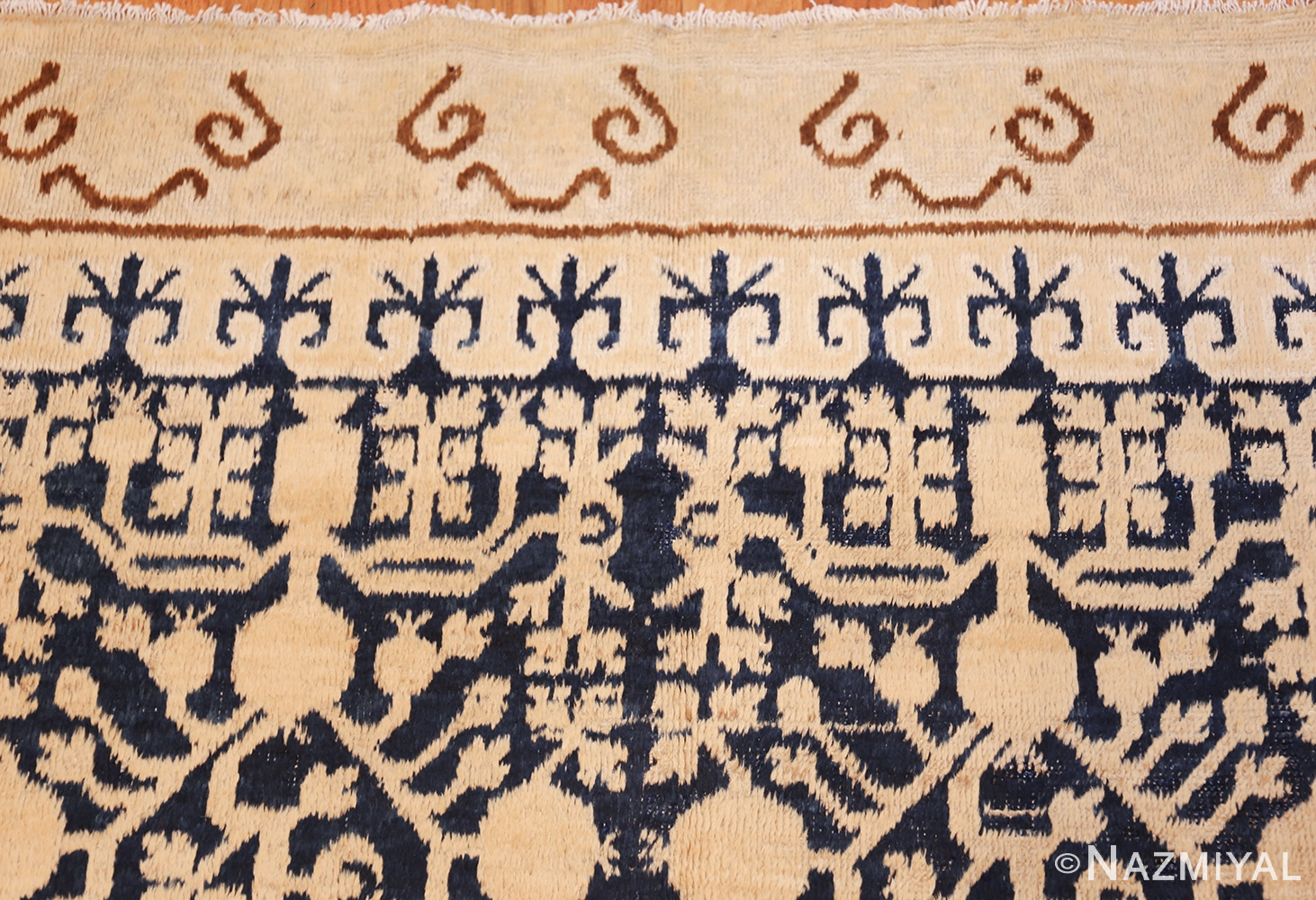
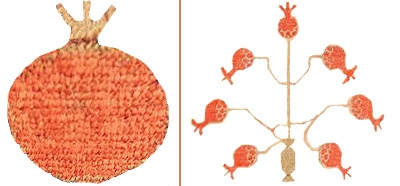
As a symbol in ancient art it is generally used to denote fertility and abundance, a meaning which holds true in rug making traditions throughout the Orient. It’s use as a design motif in Oriental rugs is most prevalent in East Turkestan, where the motif is termed “liuka baiza” and is generally used as an all-over pattern (Stone).

Pomegranate Design Pattern in Antique Rugs by nazmiyal
Pomegranate Design Pattern in Antique Rugs

Pomegranates and Fertility

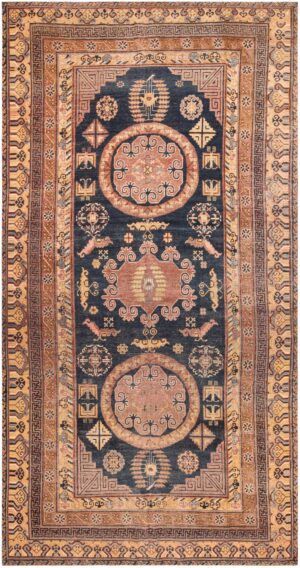
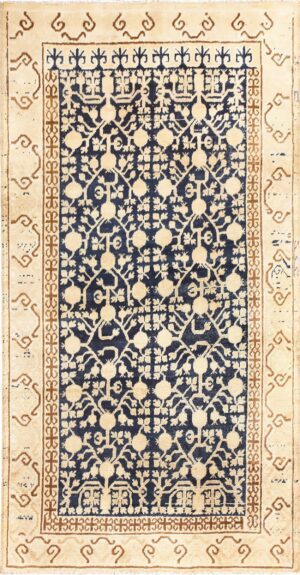
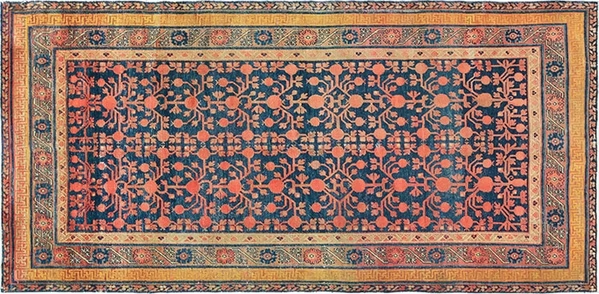
The connection that the pomegranate bears to fertility and abundance is derived from the fact that it has many sweet and beautiful seeds that are contained within the fruit itself. In Samarkand carpets and Khotan rug weaving from East Turkestan, and consequently Chinese rugs from neighboring regions, the pomegranate design is often shown half open with it’s seeds exposed to highlight the plentifulness of the fruit.

Antique Pomegranate Design Khotan Rug By Nazmiyal
Antique Pomegranate Design Khotan Rug

Pomegranates in Persian Rug Imagery

While common in Central Asian and Chinese rugs, the pomegranate is less common in Persian rugs. This is most likely due to the Safavid artist’s love for word play within their imagery. The artists may have shied away from using the Pomegranate motif because the Persian word for pomegranate “anar”, could easily be mistaken for the Arabic (not Farsi) word “al-Nar” meaning “hell fire”.

Pomegranate Textile Dyestuff

Aside from being a source of healthy sweet juice, the pomegranate was useful by textile artists for color purposes. The dye makers would produce a red color dye from the pomegranate’s flowers and the tannin within its rind was used for tanning leather hides. Tannin is also a useful compound that is frequently used in natural medicine with a variety of applications.

The Meaning Of The Pomegranate Symbol

For all of these reasons, the pomegranate symbol, design and fruit itself, was highly prized. Predominantly for its aesthetic look, medicinal properties and practical uses (Schneider). When used as a symbol in art from these regions it can thus be interpreted as representing fertility, healthy and plentiful bounty.

Frequently Asked Questions

<p>“Pictorial rugs” refers to artistic pieces that depict scenic designs or portray specific people, figures, times, or places. They can depict the a traditional hunt like this fantastic <a title="Agra Rug" href="https://nazmiyalantiquerugs.com/antique-rugs/antique-india-rugs/agra-rugs/antique-silk-and-wool-agra-oriental-rug-3450/">Agra</a>, a simple portrait, or a myriad of animals and people like in this exquisite <a title="17th Century Esfahan" href="https://nazmiyalantiquerugs.com/antique-rugs/persian-rugs/isfahan-rugs/17th-century-silk-wool-esfahan-persian-rug-8034/">17th century Esfahan</a> from Persia. Tapestries are also often pictorial and vary tremendously.</p><p>This example, a <a title="Flemish Tapestry" href="https://nazmiyalantiquerugs.com/tapestry/belgium-flemish/antique-flemish-of-a-spanish-noble-admiral-2399/">17th Century Tapestry</a>, shows the heraldic symbols of a Spanish admiral. In addition to being very collectible, these types of pieces are often decorative. However they are designed they are always robust and full of life as if the scene is unfolding before your very eyes.</p><p>Pictorial rugs are some of the most over-the-top examples of the artistry, talent and determination needed to design and construct a fine, everlasting carpet. From antique tapestries to lavish hunting rugs, these pictorial rugs pay homage to history, people and important events. Pictorial Persian carpets have been traditionally produced in Kashan, Isfahan, Tabriz and cities where the great master weavers worked. <a title="Indian rugs" href="https://nazmiyalantiquerugs.com/antique-indian-rugs/">Indian</a> and Persian <a title="Hunting rugs" href="https://nazmiyalantiquerugs.com/hunting-scene-rugs-carpets/">hunting rugs</a> are excellent examples of pictorial rugs and scenic carpets that depict countless animals, horsemen and animated predators set among a lush, forested background.</p><p>Portraits of dignitaries, important officials and high-ranking people are also found in antique pictorial rugs. With the same token, weavers also choose to illustrate important scenes from history and literature. Pastoral landscape scenes and geographic illustrations of particular places are also found in some prestigious pictorial rugs. Even tribal weavers depict people and animals, but they do this in a much more simplified and abstract manner.</p><p>In many ways, pictorial and scenic carpets feature a more detailed and specific composition that is similar to traditional works of art and breaks away from the ambiguity of allover <a title="Rug Patterns" href="https://nazmiyalantiquerugs.com/rug-patterns-carpet-designs/">rug patterns</a> filled with lush vine-scrolls.</p><p>Fine antique European <a title="Antique Tapestries" href="https://nazmiyalantiquerugs.com/tapestry/">tapestries</a> that feature formal compositions and gilded frames resemble classical paintings and works of art more closely while other pictorial rugs are more abstract and open to interpretation. Due to their rarity, quality and execution, antique pictorial rugs are coveted representations of the varied art of carpet weaving.</p>