Popular Searches
Floral rugs | Allover rugs | Central medallion rugs | Shop rugs by color | Rug size guide | Persian rugs
Quick Navigation
Key Takeaways
- Signature look: controlled color, clear motif drawing, and calm negative space.
- Common era: many market examples fall broadly in the early 1900s through the interwar decades.
- Best use: a composed “foundation rug” when you want character without busy patterning.
At-a-Glance Specs
- Origin: China (export-era and Beijing-associated market usage)
- Typical era: early 20th century (many listed examples around c. 1900–1930s)
- Weave: hand-knotted pile carpets
- Materials: wool pile is common; silk highlights appear on select pieces
- Design language: composed motifs (dragons, florals, auspicious symbols), calm grounds, formal borders
- Palette tendency: often limited and intentional (frequently two dominant tones + restrained accents)
- What to look for: clean drawing, balanced spacing, stable borders/ends, and honest wear consistent with age
Featured Peking Rugs

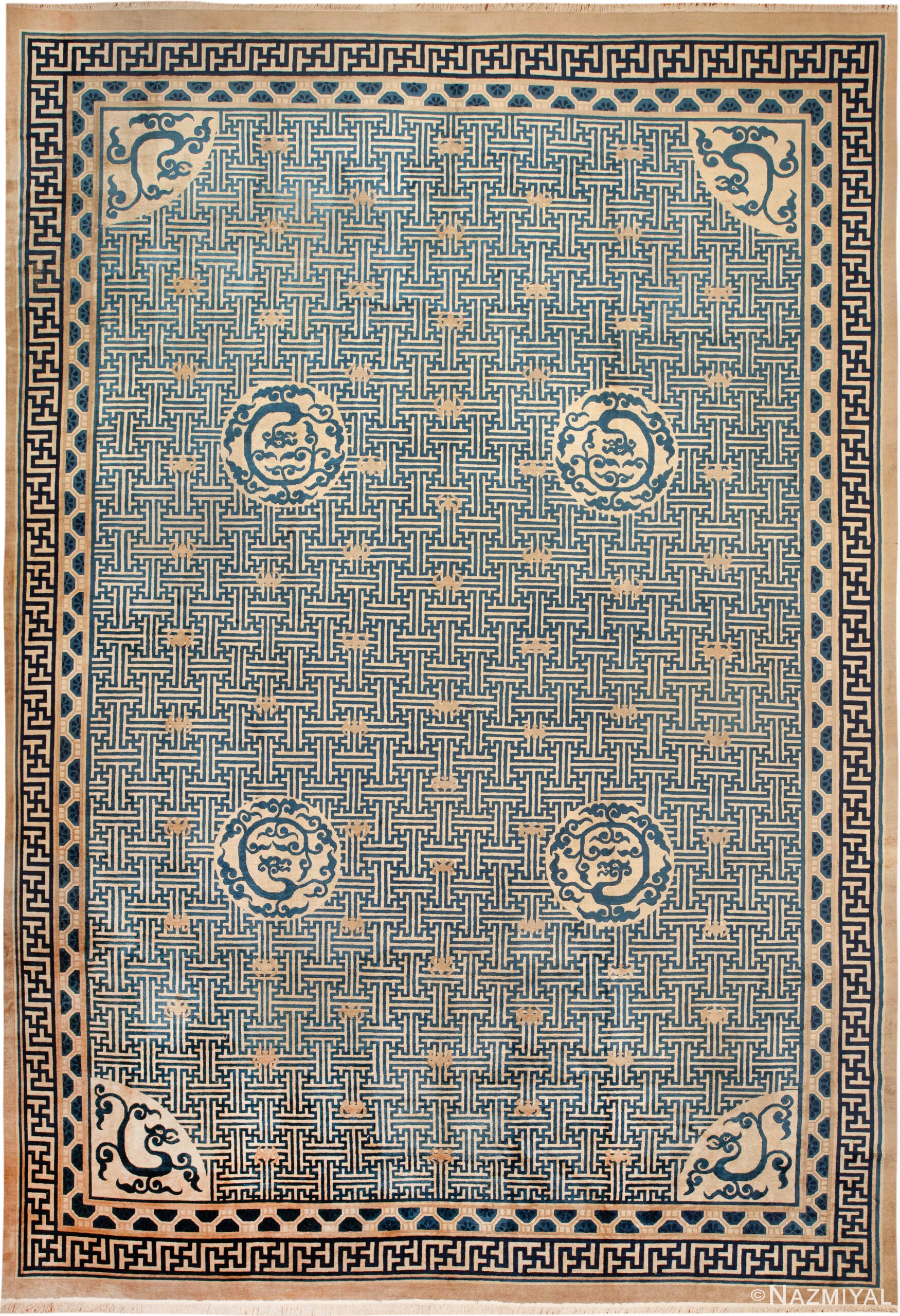
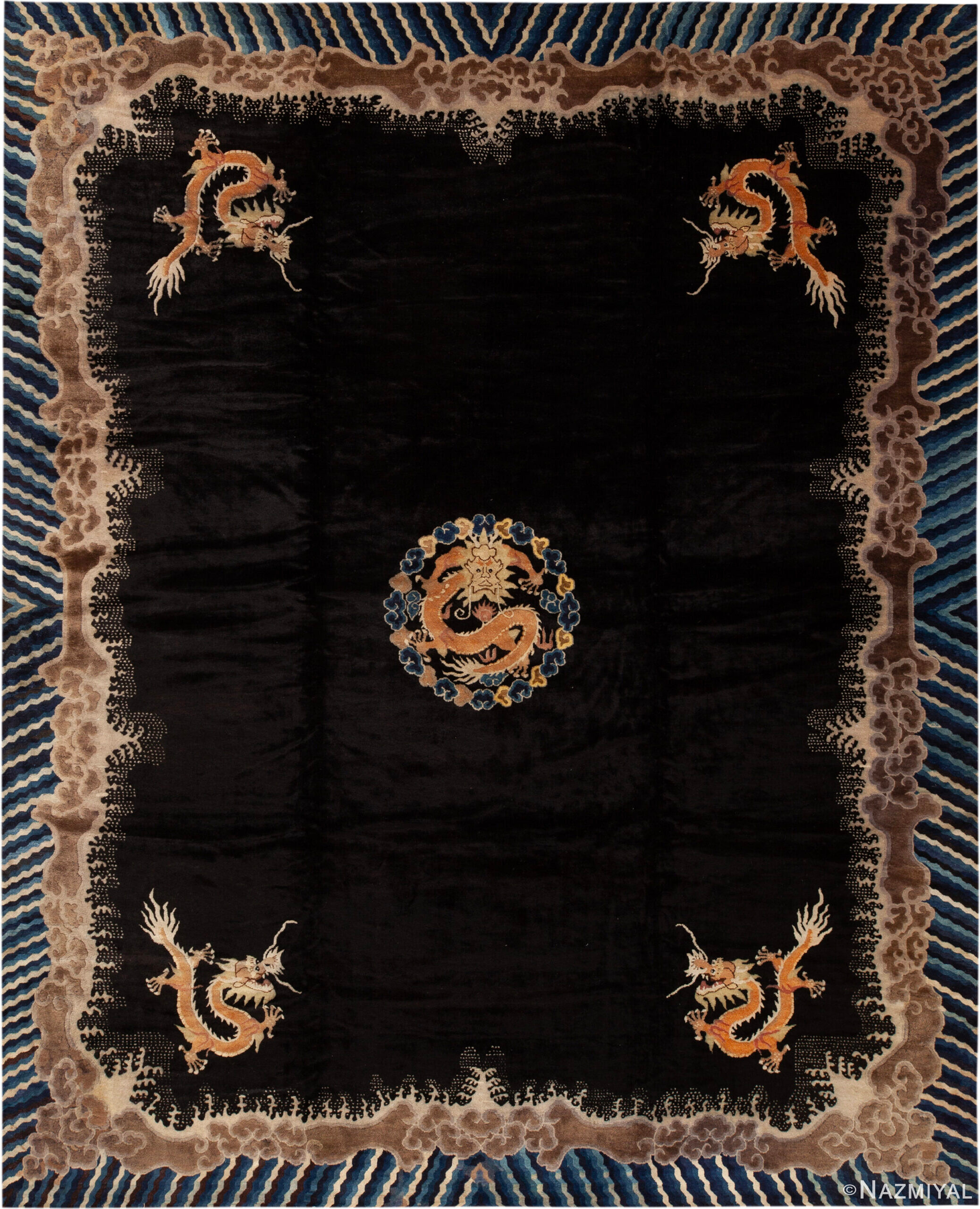
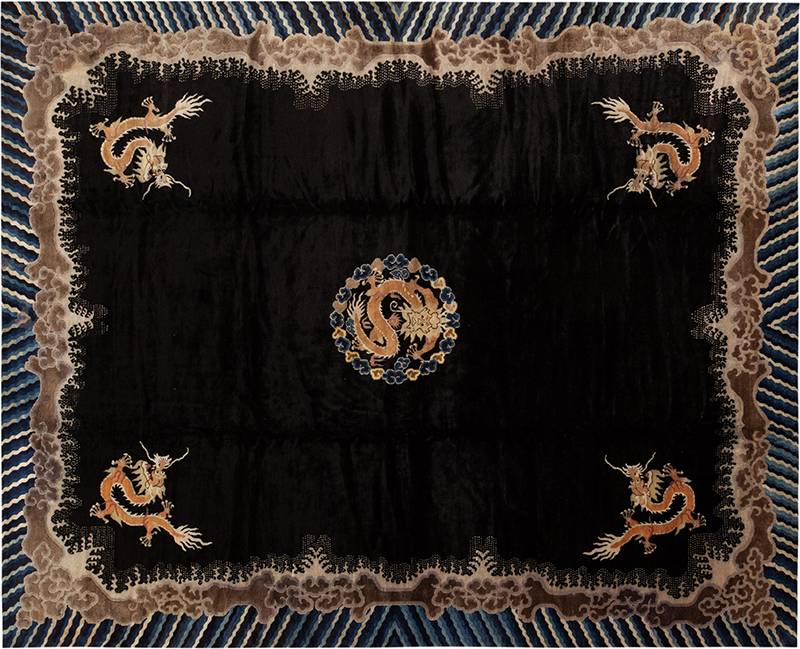
Antique Chinese Black & Gold Peking Dragon Motif Rug — Nazmiyal Collection #73914

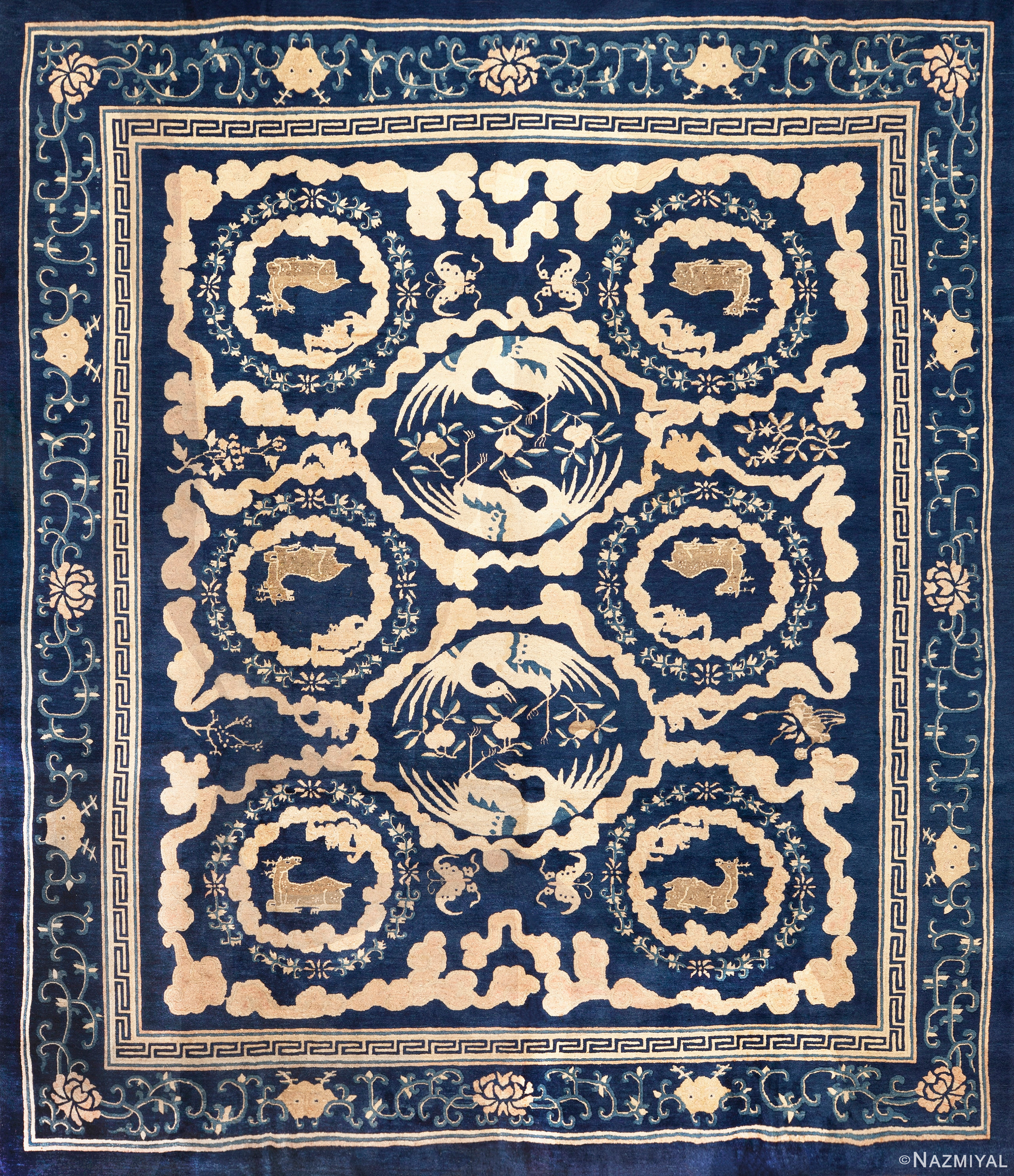
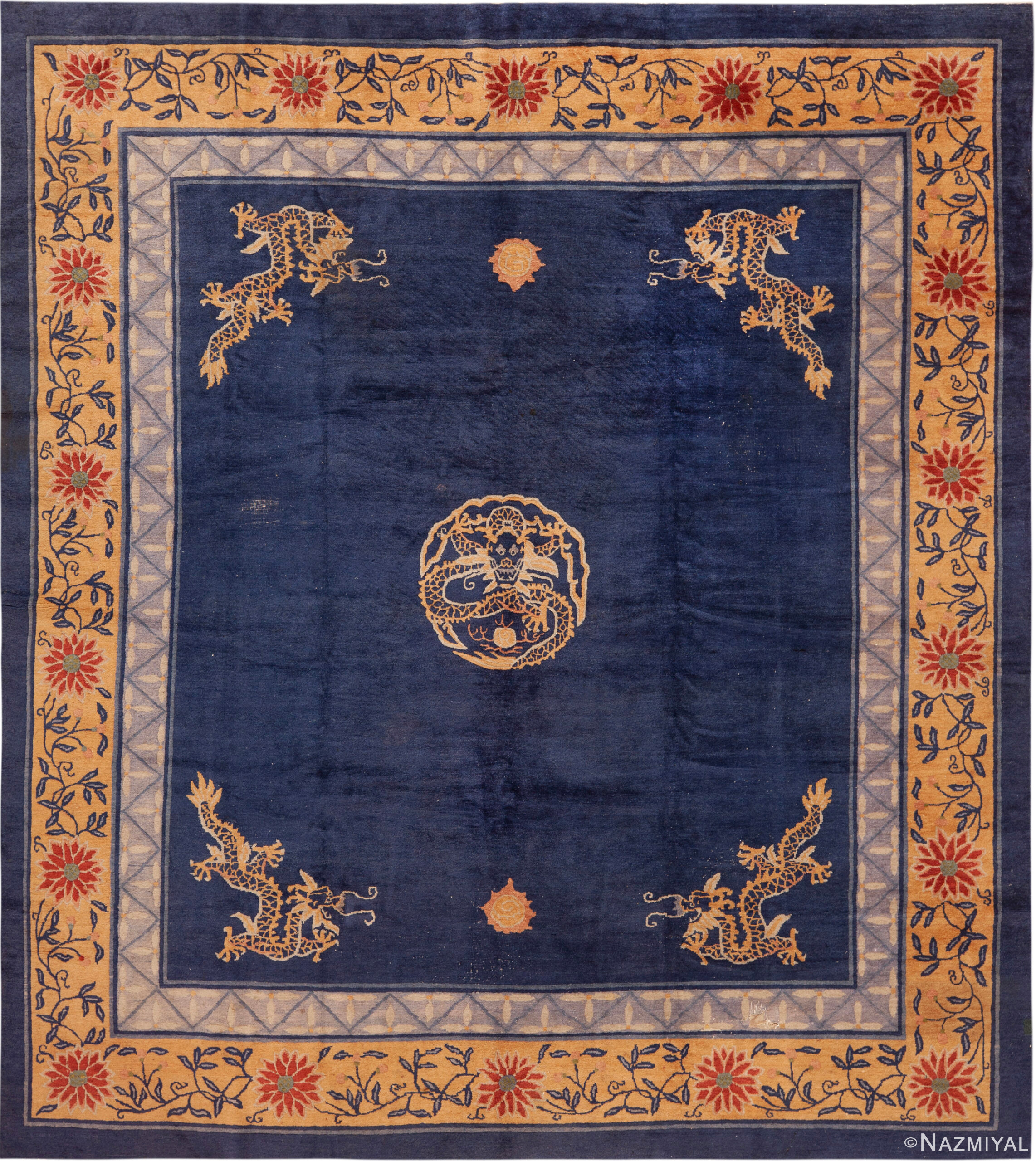
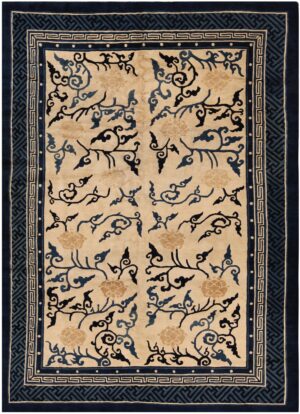
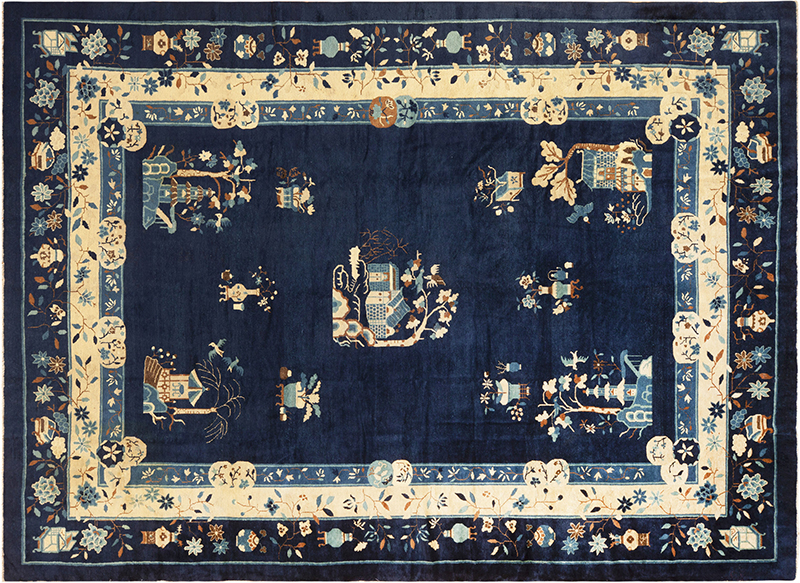
Eye-Catching Antique Chinese Peking Rug — Nazmiyal Collection #73729

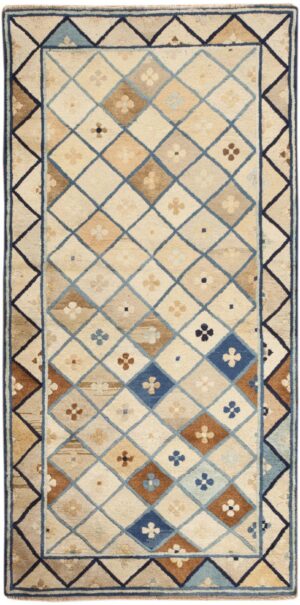
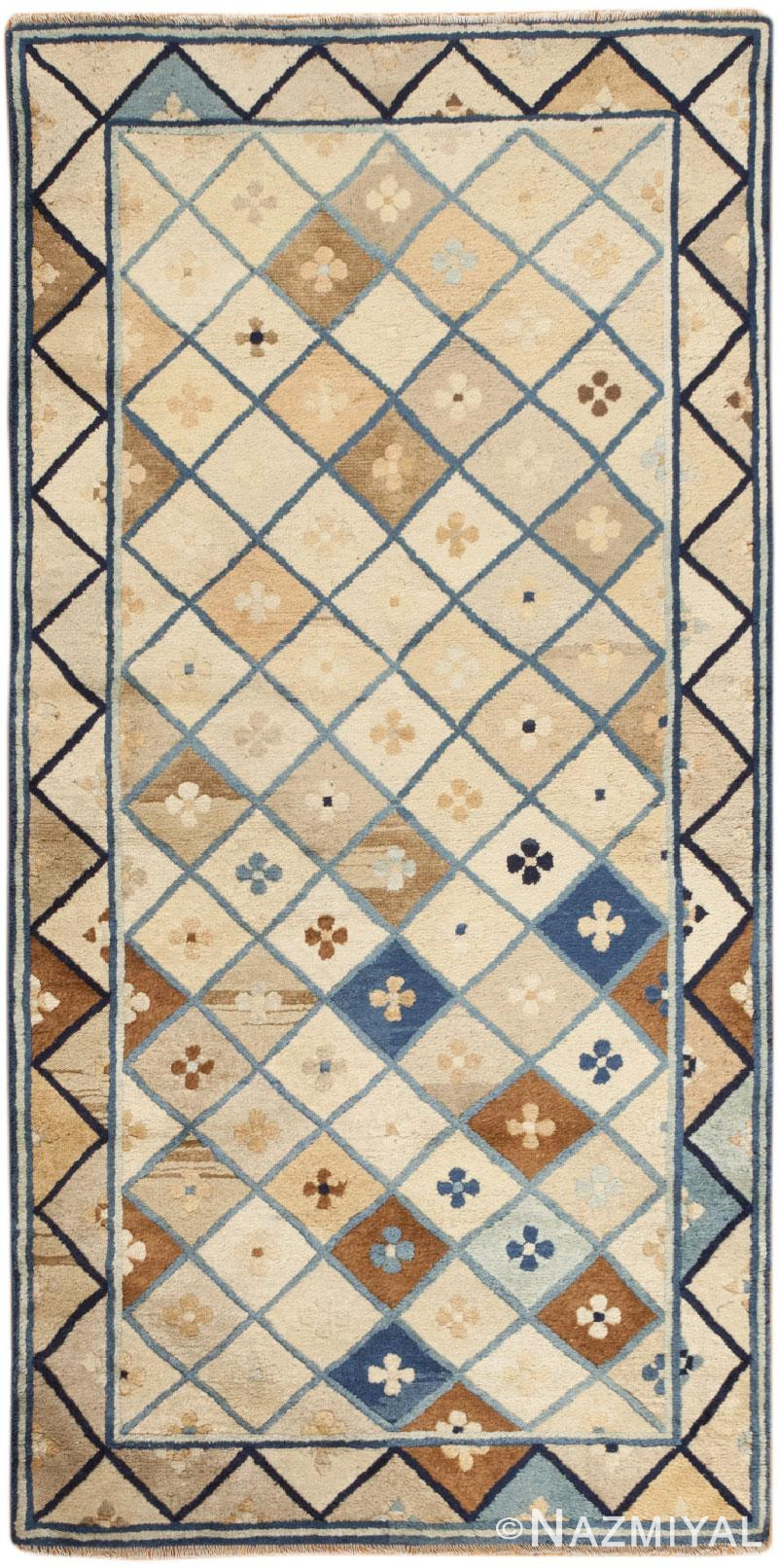
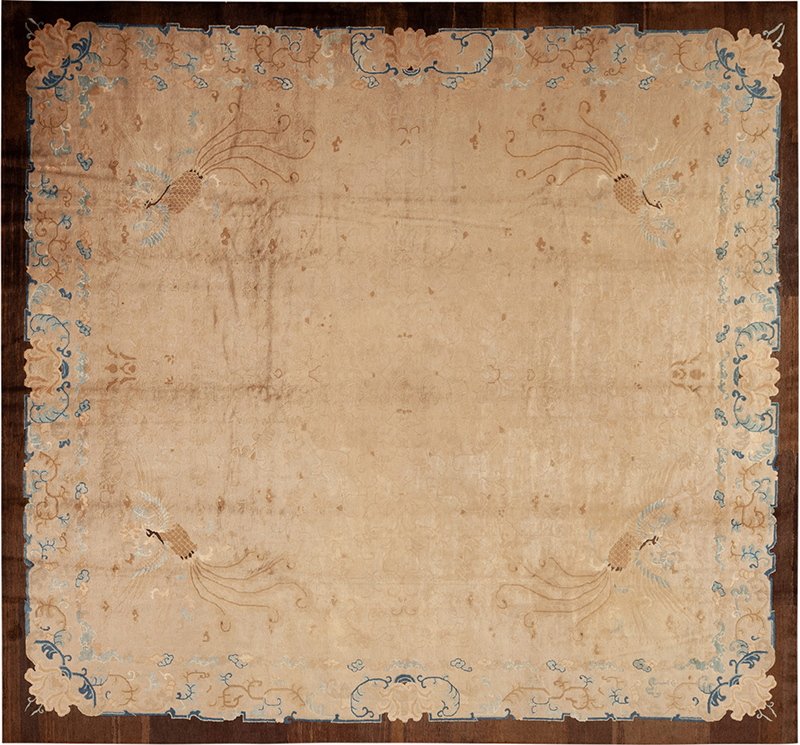
Antique Floral Chinese Peking Neutral Tone Rug — Nazmiyal Collection #73916
Identification & Construction
How to recognize the “Peking” look
- Palette discipline: many classic Peking rugs keep the color story intentionally narrow (often two dominant tones) so the design reads calm at room scale.
- Clean drawing: motifs should feel resolved and intentional—clear outlines, stable proportions, and confident spacing.
- Border logic: borders typically frame the field with consistent weight and tidy corner handling, rather than competing for attention.
Materials, structure, and surface character
- Construction: hand-knotted pile carpets; many examples aim for a composed surface and readable motif clarity.
- Materials: wool is most common; some pieces use silk for highlights or detail emphasis.
- Condition focus: prioritize structural stability (edges, ends, foundation integrity) and honest wear over “perfect” surface uniformity.
Decorating & Placement Guidance
Peking rugs are designer favorites when a room needs a refined foundation that doesn’t compete with furniture, art, or architecture. They work especially well under sculptural pieces, in libraries and bedrooms, and in living rooms where you want calm structure with real character. If you’re mixing eras, pair a Peking rug with complementary finds from our antique rugs, vintage rugs, and modern rugs collections to balance warmth, texture, and proportion.
- Scale first: Peking rugs look strongest when furniture sits confidently on the rug.
- Let the calm ground work: if your room already has pattern, choose a Peking with generous negative space.
- Border as a frame: match border weight to the room’s architecture—heavier borders can “anchor,” lighter borders feel airy.
Peking Rugs vs. Chinese Art Deco Rugs
Both are Chinese classics, but they behave differently in a room. If you want a more modern, spacious, export-era look (often with bolder scale and graphic layouts), explore Chinese Art Deco rugs.
| Feature | Peking Rugs | Chinese Art Deco Rugs |
|---|
| Design intent | Composed, classical vocabulary; calm framing | More modern scale; often more spacious and graphic |
| Palette behavior | Often narrow and disciplined (frequently two dominant tones) | Frequently broader or bolder; strong decorator palettes |
| Best room fit | Rooms with art/furniture detail; you want calm authority | Open plans and modern spaces; you want statement scale |
| Quick choosing rule | Choose Peking when you want the room to feel “resolved” and quiet | Choose Deco when you want a more graphic, modern Chinese look |
Glossary
- Peking / Beijing: “Peking” is the older Western name for Beijing; both appear in trade descriptions for this style.
- Key-fret border: a repeating geometric “meander” often used as a framing device on Chinese rugs.
- Cloud band: stylized cloud forms used in Chinese decorative arts, sometimes appearing in borders or medallions.
- Negative space: intentionally open areas of the field that make motifs feel clearer and more architectural.
- Medallion: a central focal motif used to organize the field; often paired with corner spandrels and a formal border system.
For more terms, see the Rug Glossary.
Frequently Asked Questions
Are Peking rugs the same as Beijing rugs?
Yes. “Peking” is an older Western usage for Beijing, and both labels appear in rug trade descriptions.
Do Peking rugs usually have only two colors?
Many classic examples are intentionally limited in palette—often two dominant tones—using small accents and subtle shading to create depth without visual noise.
What motifs are common on antique Peking rugs?
Dragons, refined florals, auspicious symbols, octagonal frameworks, and composed geometric borders are frequently seen.
How do I date a Peking rug accurately?
Dating is best supported by a combination of construction, material character, dye behavior, and wear evidence rather than a single stylistic cue.
What drives value in antique Peking rugs?
Value typically reflects design balance, palette desirability, workshop quality, size usability, and condition—especially border stability and structural integrity.
Do Peking rugs work in modern interiors?
Yes. Their calm grounds and disciplined composition make them easy to place in contemporary rooms, especially when you want a refined anchor under furniture and artwork.
Nazmiyal White-Glove Service
Nazmiyal Collection has been a trusted source for antique rugs and vintage carpets for over 45 years. Our NYC gallery curates one-of-a-kind pieces with an emphasis on authenticity, provenance, and lasting decorative value.
Need help? Call us at (212) 545-8029 or visit our New York City showroom to work with a rug expert.

 Size: 10 ft 3 in x 11 ft 5 in (3.12 m x 3.48 m)
 Size: 13 ft 6 in x 19 ft 4 in (4.11 m x 5.89 m)
 Size: 11 ft 10 in x 14 ft 6 in (3.61 m x 4.42 m)
 Size: 9 ft x 9 ft 9 in (2.74 m x 2.97 m)
 Size: 6 ft x 8 ft 2 in (1.83 m x 2.49 m)
 Size: 3 ft x 5 ft 8 in (0.91 m x 1.73 m)