Key Takeaways
- Look for bold geometric medallions, stacked diamonds, and confident border systems that read clearly from across a room.
- Many classic examples blend nomadic spontaneity with village-level control—expressive drawing, but structurally practical.
- Older Afshar pieces often show saturated reds, saffron-gold accents, and ivory highlights with natural-looking abrash.
At-a-Glance Specs
- Origin: Southern & southeastern Iran (commonly associated with Kerman province and surrounding tribal/village weaving areas).
- Era: Most collectible antique examples are late 1800s to early 1900s (later vintage examples also exist).
- Weave: Hand-knotted pile; structure varies by workshop and weaving context (nomadic vs village).
- Materials: Typically wool pile; foundations can be wool or cotton depending on weaving context.
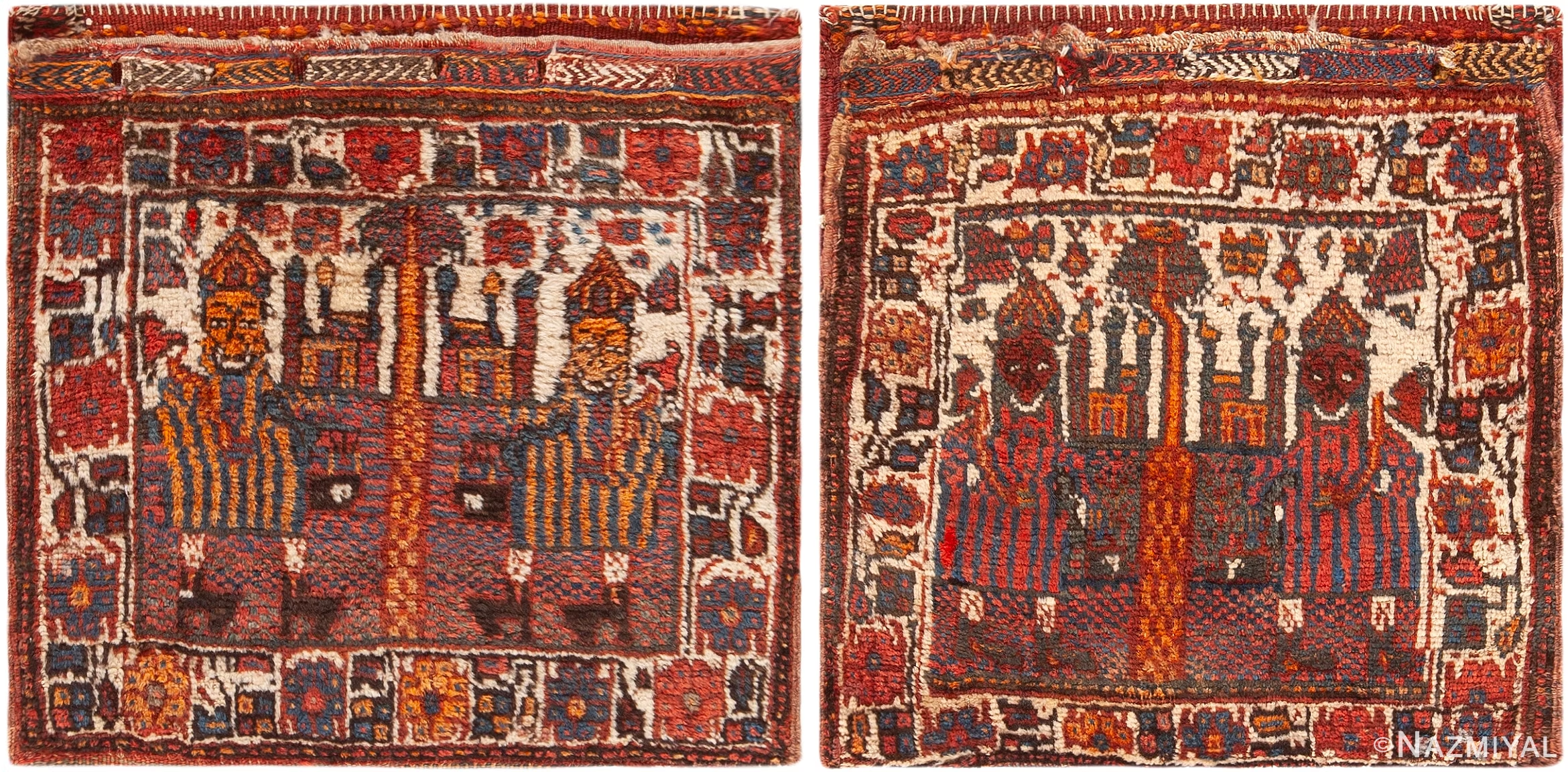
- Typical sizes: Area rugs, runners, and occasional larger room-size carpets; related bag-faces and small-format pieces appear in the broader Afshar weaving family.
- Palette: Commonly deep reds/crimsons, indigo/blues, ivory, saffron-gold, terracotta, and green accents.
- What to look for: Geometric medallions and diamond motifs, pendant-like end devices on some designs, tribal borders, and honest handmade variation.
Popular Searches
Large rugs | Oversized rugs | Allover rugs | Central medallion rugs | Shop by rug color | Rug size guide | Tribal rugs
Featured Afshar Rugs from Nazmiyal Collection
Identification & Construction
Afshar rugs are often described as a meeting point between nomadic expression and village-level weaving control. Many examples favor geometric organization—diamond lattices, bold medallions, and compartmentalized fields—yet the drawing can remain lively and human rather than rigidly “workshop-perfect.”
- Design grammar: Geometric medallions, stacked diamonds, hooked devices, and stylized floral elements (including vase-like and pomegranate-associated motifs in some designs).
- End devices: Some Afshar designs feature pendant-like forms near one or both ends, which can help with quick visual identification.
- Border systems: Strong tribal borders are common; minor borders may include “running dog” style meanders or crisp geometric guards.
- Handle & structure: Most examples are wool-pile rugs with practical, durable builds. Foundation materials and knotting approach can vary by weaving context, so structure should be evaluated rug-by-rug.
For geography-first browsing beyond Iran, use Rug Origins to compare weaving families across the wider rug world.
Decorating & Placement Guidance
Designers use Afshar rugs when a room needs a strong graphic “center of gravity” without feeling overly formal. Medium-to-deep palettes (especially reds and indigos) anchor seating areas, while runner formats can bring structure and rhythm to long corridors.
- Living rooms: If the architecture and furniture are clean-lined, an Afshar adds pattern with clear geometry and readable borders.
- Runners & halls: Long, narrow Afshar pieces can visually “pull” a hallway together—pair with simple walls and warm lighting.
- Mixing eras: Afshar rugs layer beautifully with edited Antique Rugs, and they also add soul and structure to curated Vintage Rugs and Modern Rugs interiors.
Afshar and Qashqai rugs can overlap in “tribal energy,” but their design priorities and regional fingerprints often differ. Use this comparison as a field guide, then confirm with structure and materials on the specific rug.
| Feature | Afshar Rugs | Qashqai Rugs |
|---|
| Regional association | Southern & southeastern Iran (often linked with Kerman province weaving areas) | Southern Iran (Fars region tribal traditions) |
| Design feel | Geometric medallions, diamonds, compartmentalized fields; some designs show pendant-like end devices | Confident, lively geometry; often direct drawing with strong tribal rhythm |
| Color behavior | Saturated reds and blues with ivory/saffron accents; abrash often reads bold | Highly prized for “alive” color in strong older examples; rich tribal palettes |
| Common formats | Area rugs, runners, occasional larger carpets; related small-format weavings appear in the broader family | Area rugs and runners are common; many collectible hallway formats |
Closest Cousins
- Qashqai rugs — closest tribal cousin in the southern Iran conversation.
- Caucasian rugs — a stylistic cousin for bold geometry, medallions, and high-contrast palettes.
Glossary
- Medallion: A central (or repeating) focal device that organizes the rug’s field composition.
- Abrash: Natural-looking tonal variation from hand-dyeing and small-batch wool use.
- Running dog: A repeating border meander motif often used as a guard border in tribal and village rugs.
- Pendant: A hanging geometric form that extends from a medallion or appears near an end, adding directional emphasis.
For more terminology, visit the Rug Glossary.
FAQ
What are Afshar rugs?
Afshar rugs are Persian tribal and village carpets associated with southern and southeastern Iran, known for bold geometric design systems and saturated color palettes.
Where are Afshar rugs woven?
Afshar weaving traditions are commonly associated with southern and southeastern Iran, including weaving areas linked with Kerman province and nearby tribal/village production.
How can I identify an Afshar rug?
Look for geometric medallions and diamond devices, strong tribal border logic, and the overall balance of “tribal expression” with practical village structure. Identification is strongest when you confirm structure and materials on the specific rug.
Are Afshar rugs always antique?
No. Afshar-type design vocabulary can appear in later pieces, but the most collectible examples are typically late 19th to early 20th century weavings with strong materials and honest, handmade color behavior.
Do Afshar rugs use vegetable dyes?
Many older Afshar rugs show dye behavior consistent with traditional methods, but dye type varies by period and maker. Evaluating color saturation, abrash, and overall harmony is often more useful than relying on a single label.
How do Afshar rugs compare to Qashqai rugs?
Both are valued for tribal energy, but Afshar rugs often lean into geometric medallion systems and compartmentalized fields, while Qashqai rugs are especially known for lively drawing and “alive” color in strong older examples.
Nazmiyal White-Glove Service
We make it easy to shop with confidence—whether you’re choosing a single statement piece or curating a full room.
Nazmiyal Link Map
UPLINKS
DOWNLINKS
LATERALS
REFERENCE LINKS
Nazmiyal Collection has been a trusted source for antique rugs and vintage carpets for over 45 years. Our NYC gallery curates one-of-a-kind pieces with an emphasis on authenticity, provenance, and lasting decorative value.
Need help? Call us at (212) 545-8029 or visit our New York City showroom to work with a rug expert.
Updated January 22, 2026 • Reviewed by Jason Nazmiyal

 Size: 2 ft x 2 ft (0.61 m x 0.61 m)