Signature Bessarabian Kilims and European Carpets: What They Are, Where They Come From, and How to Shop Them
Bessarabian rugs (often flatwoven kilims) are richly decorative Eastern European carpets known for bold florals, high-contrast palettes, and tapestry-style weaving associated with the historic Bessarabia region.
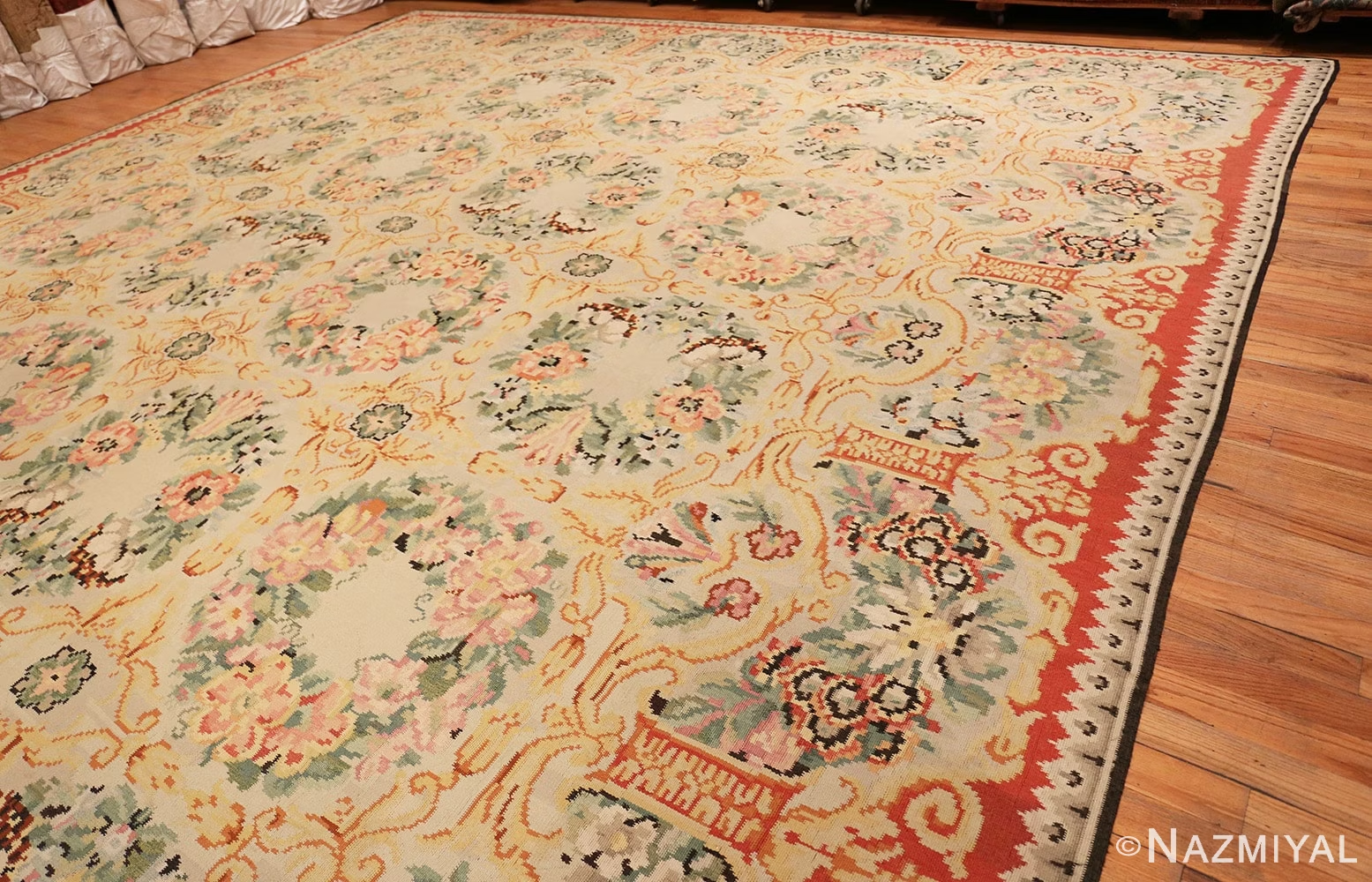
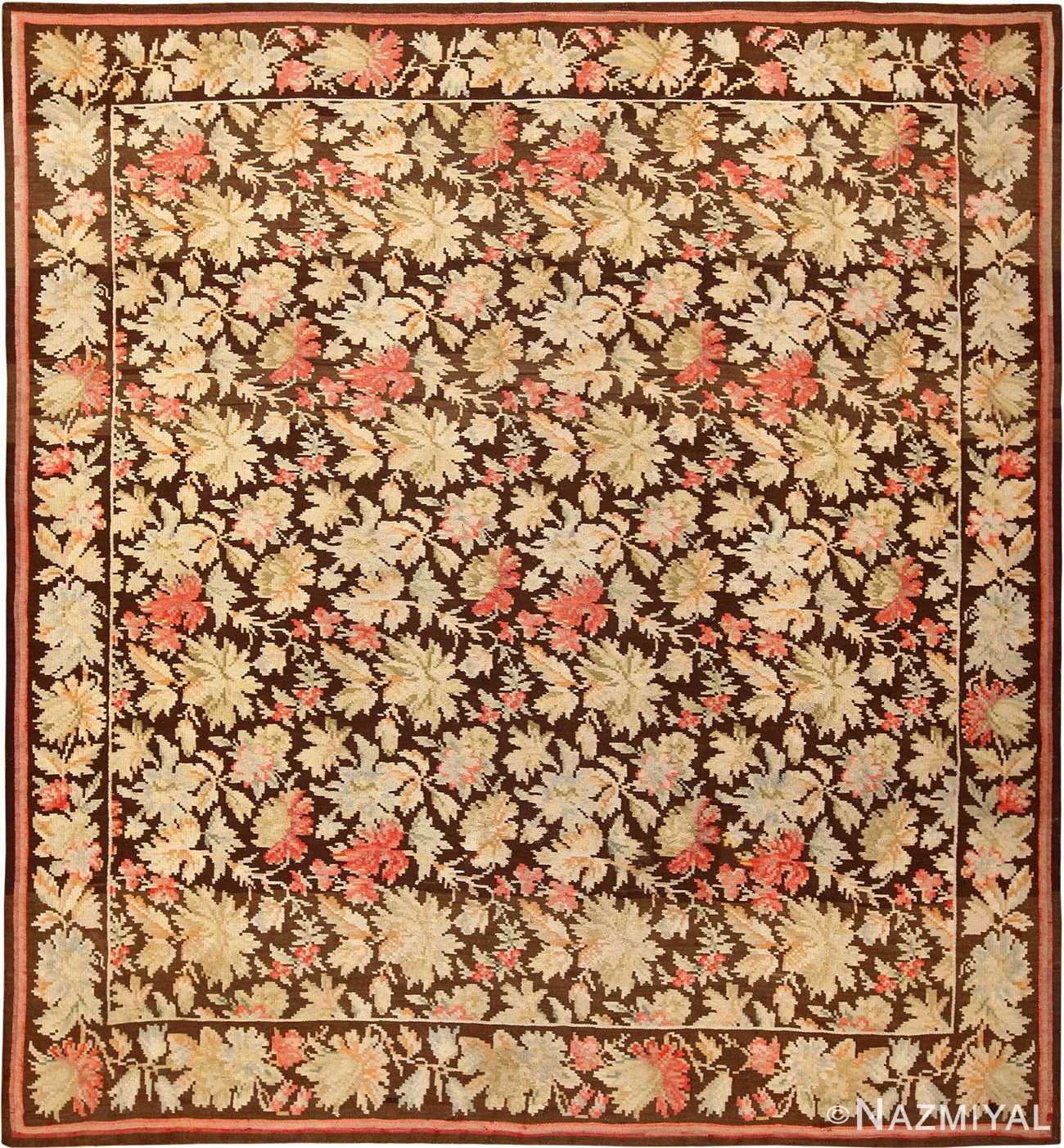
Bessarabian rugs and kilims are a rare European category that balances two notes at once: romantic florals and crisp structure. Many are tapestry-woven flatweaves with lush roses, garlands, and bouquets set on dramatic dark grounds—yet the borders and layout stay architectural, which is why they can feel equally right in classic rooms and modern spaces. For curated inventory and guidance from the Nazmiyal Collection, explore these pieces in the wider context of European rugs.
Updated January 29, 2026 • Reviewed by Jason Nazmiyal
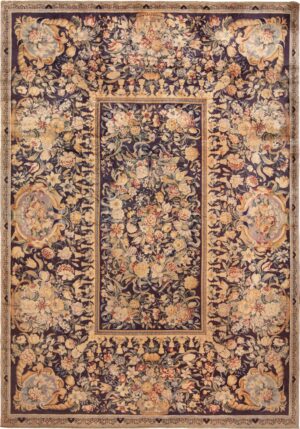
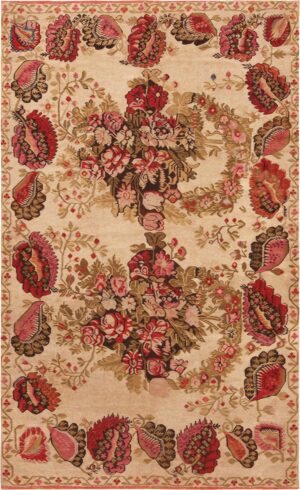
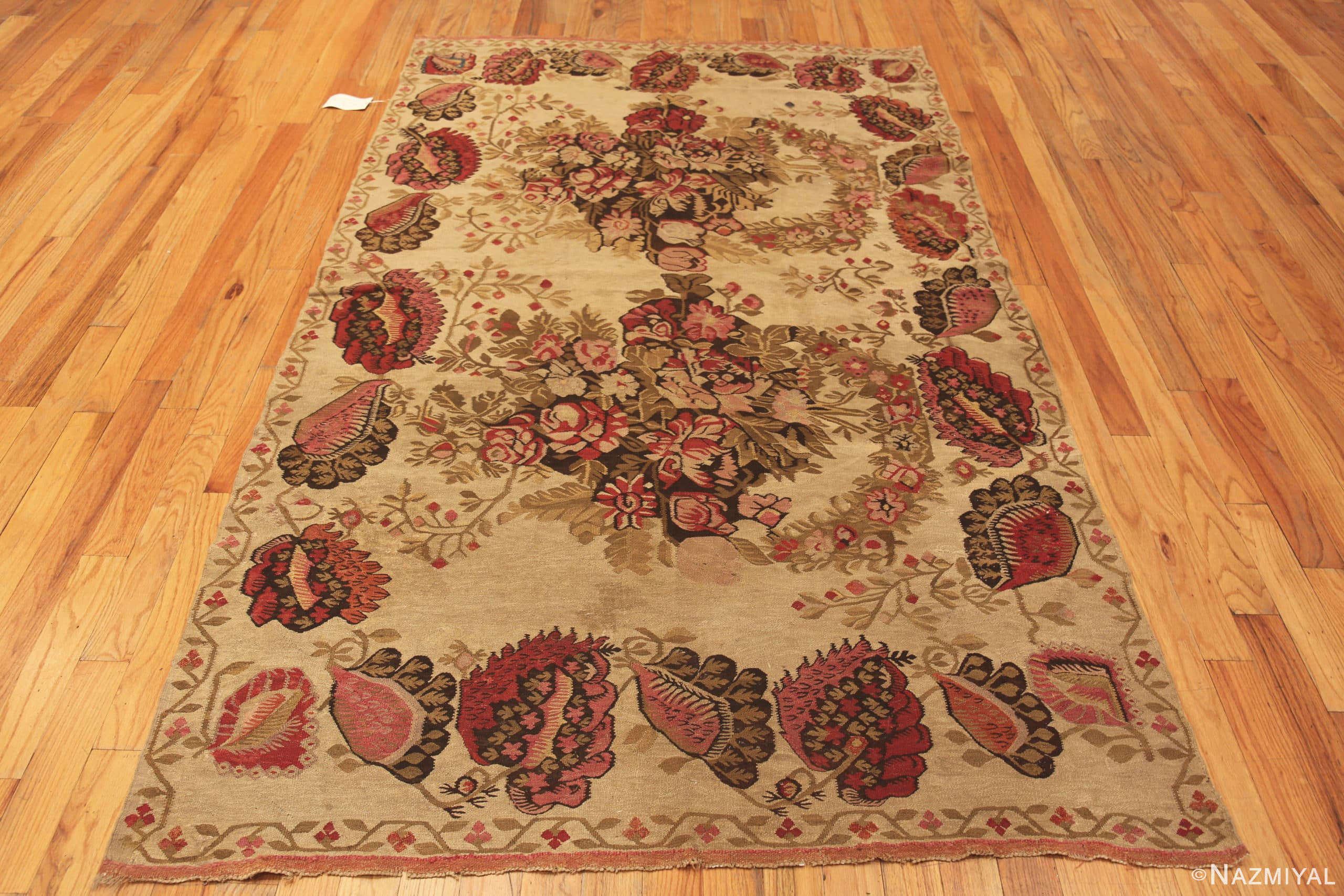
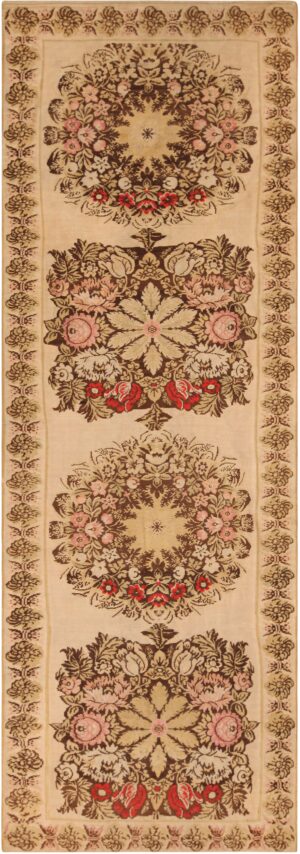
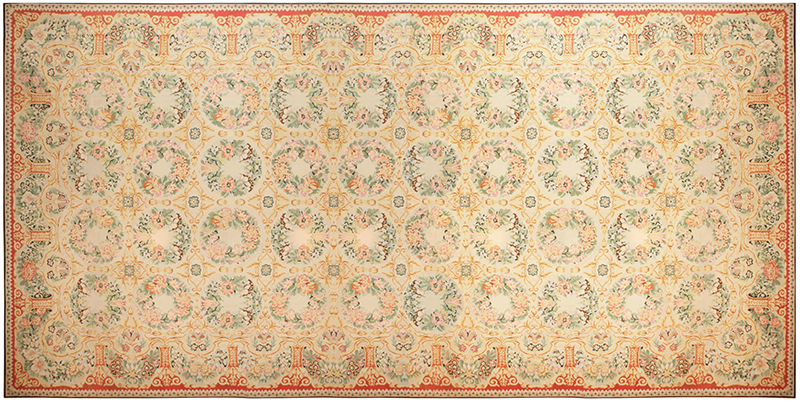
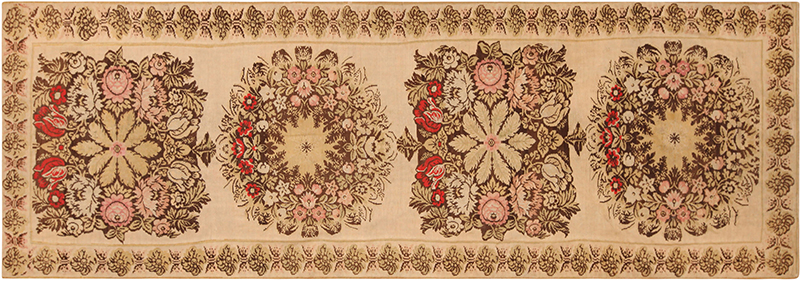
A quick “Featured 3” to match how designers actually shop this look: one classic dark-ground floral, one oversized statement carpet, and one runner for corridors and galleries.
Classic Dark-Ground Floral
Charcoal Black Background Floral Antique Ukrainian Rug Nazmiyal Collection #73069
How to Identify Bessarabian Rugs (Fast) + Construction Notes
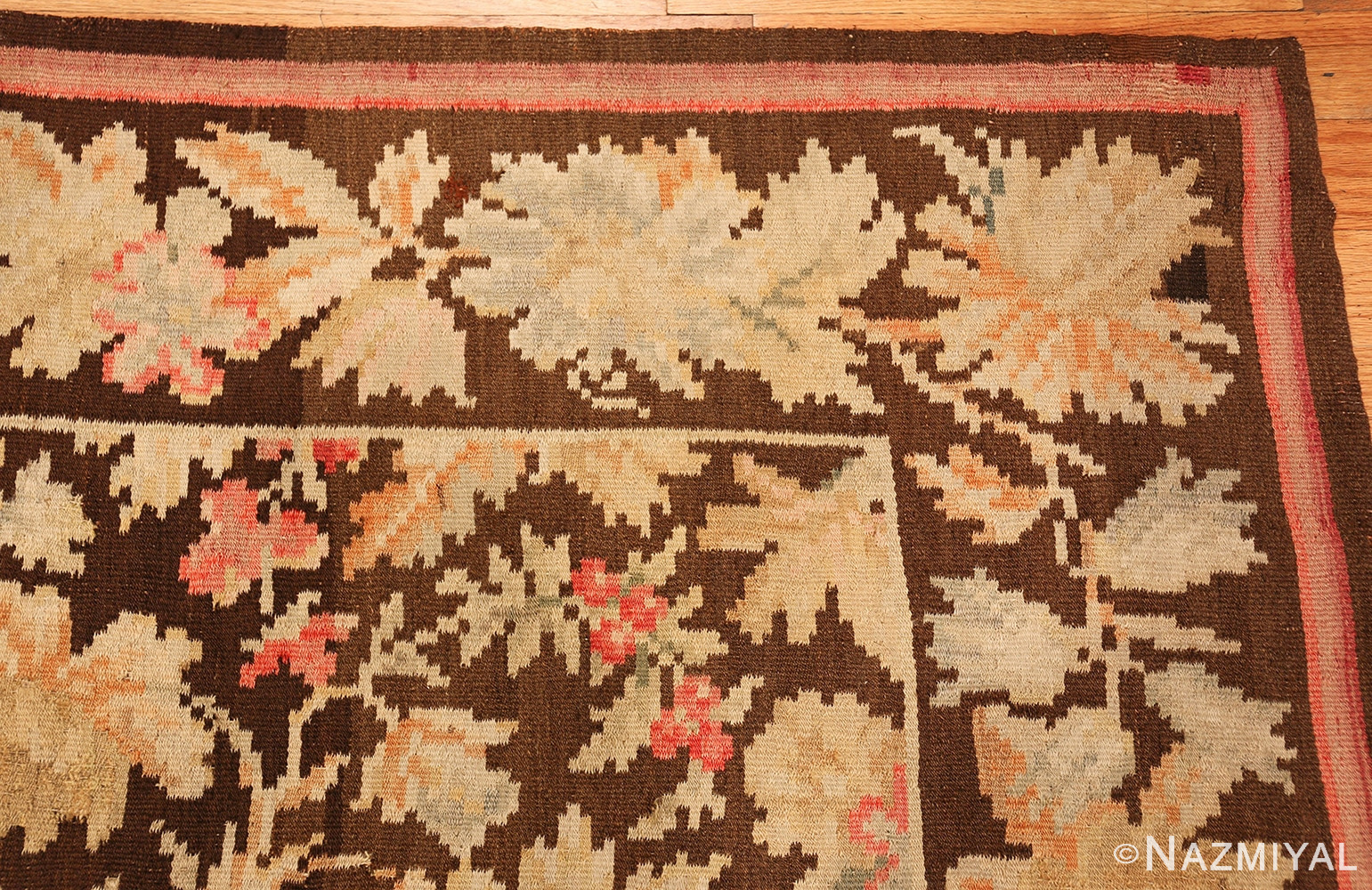
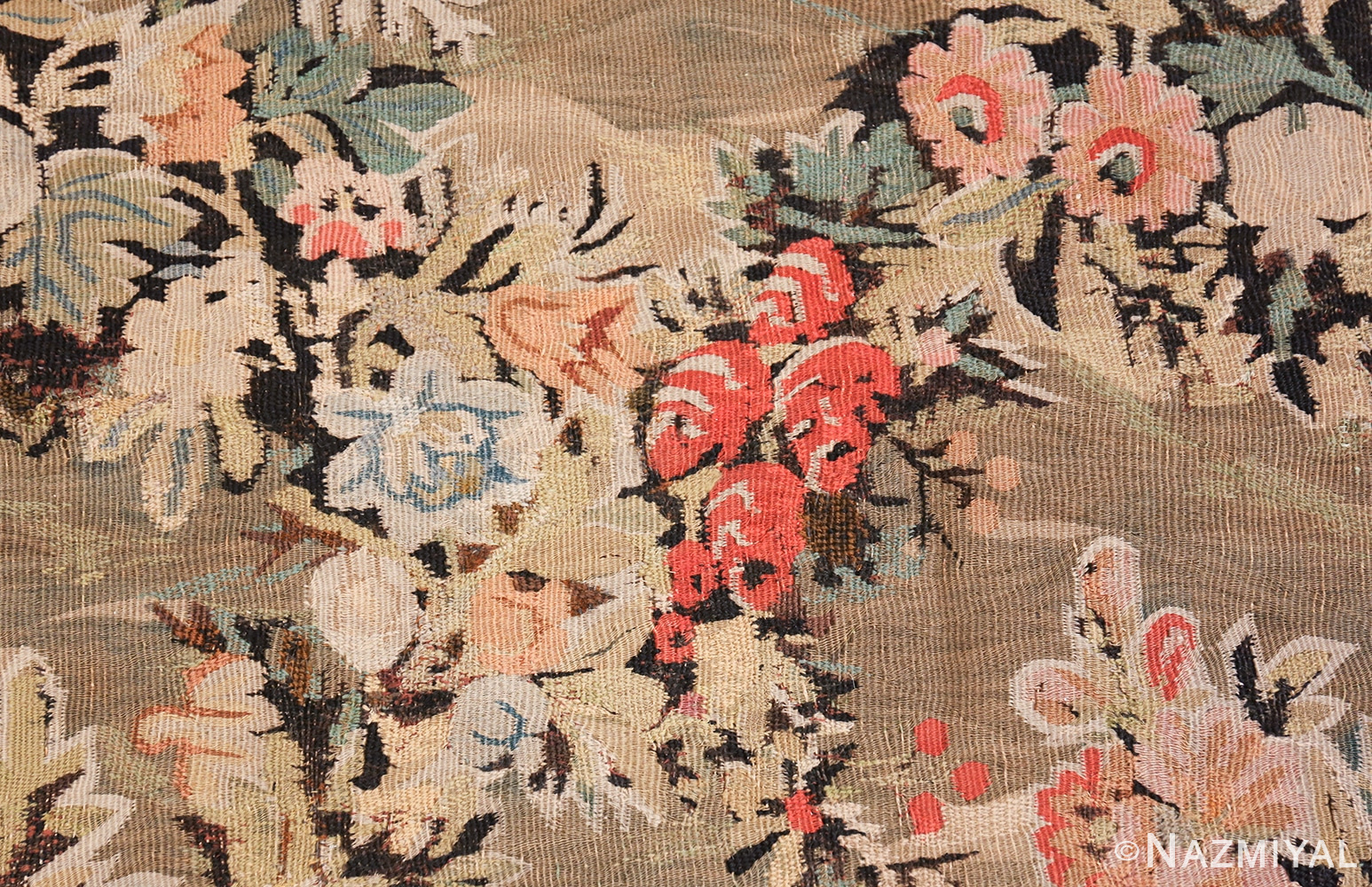
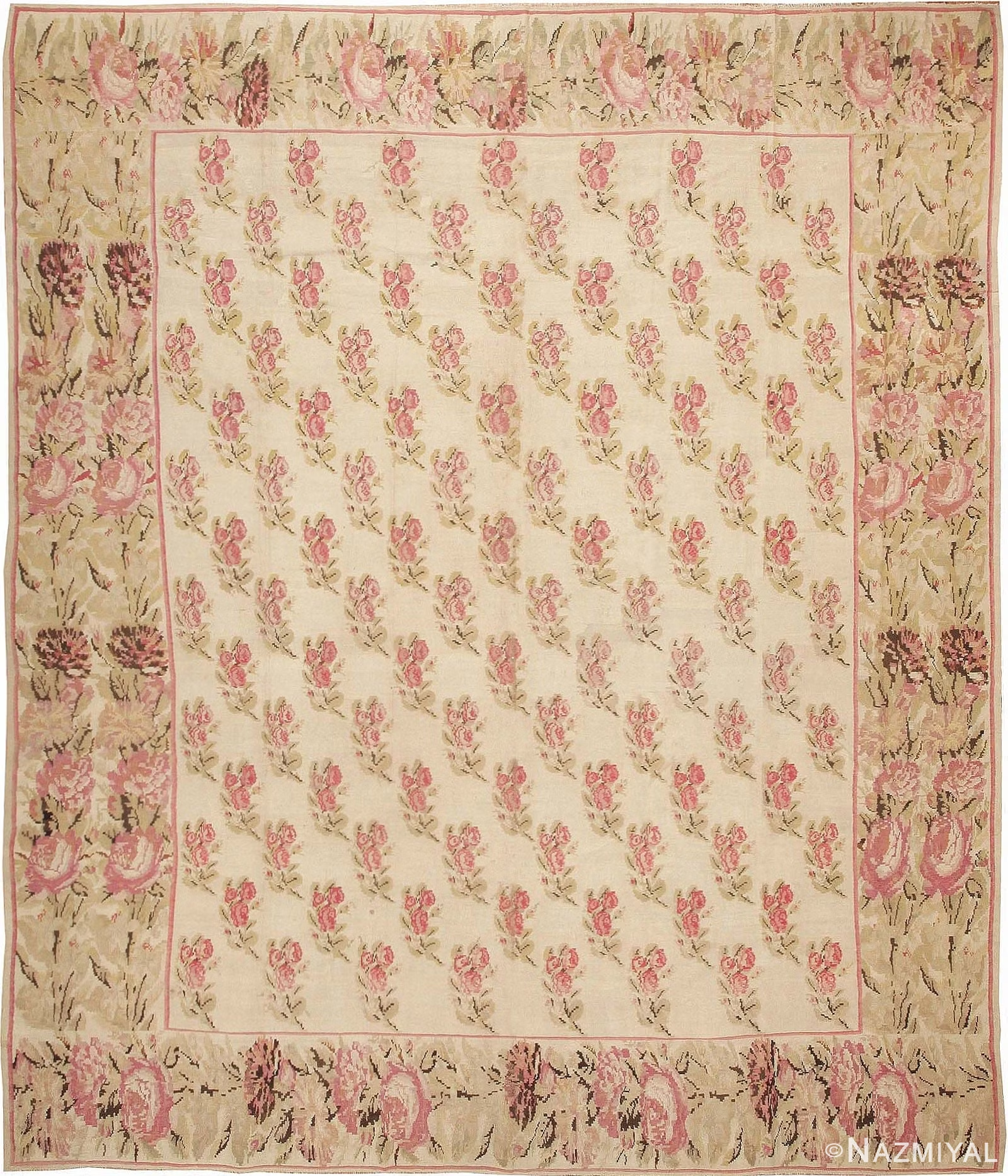
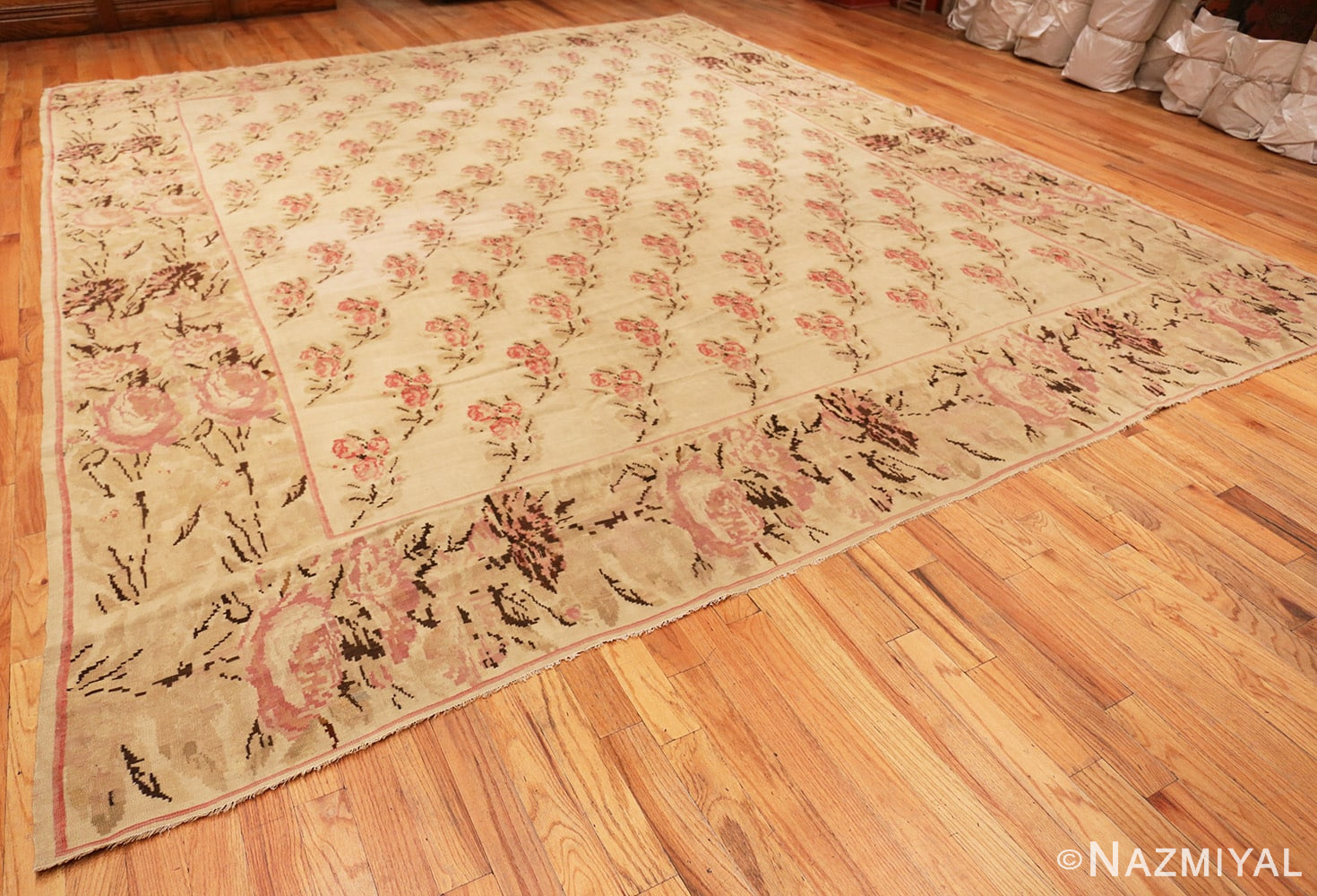
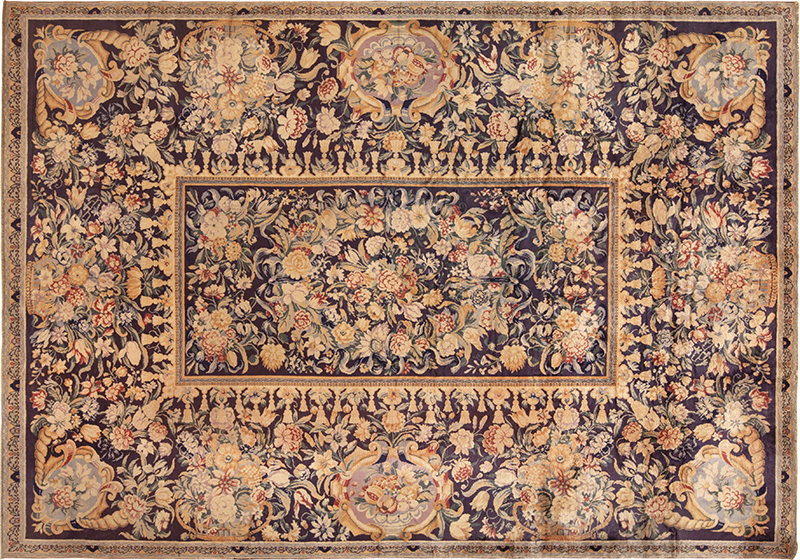
If you only remember a few tells, make them these: oversized florals that read from across the room, a bold border that frames the field like a painting, and a palette that often leans into deep grounds so the bouquets “pop.” Many classic examples are tapestry-woven flatweaves—thin profile, no pile, and crisp drawing—while related Eastern European floral carpets can be knotted pile and feel plusher underfoot.
Floral scale: roses, garlands, and bouquets drawn large enough to work as the room’s “art.”
Border architecture: strong framing borders with repeated floral or vine elements.
Handle & profile: flatwoven pieces sit low and stable; pile pieces have thickness and nap.
Color behavior: dramatic contrast (often dark grounds) with saturated floral highlights.
Back vs. face: on many flatweaves, the reverse is visually coherent and confirms a tapestry-style weave.
Decorating & Placement Guidance
Designers use Bessarabian florals like “room jewelry”: they anchor furniture, add instant color intelligence, and bring a European decorative feeling without looking overly precious. If you want to compare by era as you decorate, cross-shop antique rugs, vintage rugs, and modern rugs to match the room’s tone.
Dining room: flatwoven examples are ideal—thin, stable, and visually dramatic under a table.
Living room: use the border like a picture frame to “lock” your seating group in place.
Bedroom: if you prefer softness, look for related floral pile carpets with the same design language.
Hallways: runners are the secret weapon—florals add warmth without narrowing the space.
Bessarabian Rugs vs Aubusson Rugs
Both traditions can feel “tapestry-like,” but they come from different worlds. Aubusson is French decorative refinement; Bessarabian keeps that salon spirit and turns up the contrast, scale, and folk vitality.
Classical French motifs, refined decorative balance
Common palette
High contrast; dark grounds are common
Often lighter, airy, pastel-to-softly saturated
Typical feel
European tapestry meets folk vitality
Formal decorative elegance
Best use
Statement rooms, dining rooms, bold interiors
Salon-style rooms, layered decorative schemes
Construction note: “kilim” names a flatweave structure. Many Bessarabians are kilims, but not all kilims are Bessarabian—compare with Turkish kilims to see how different design grammars can be within the same flatwoven family.
If you’re browsing by geography, use our Rug Origins (Countries & Cities) hub. If you want a broader floral tradition to compare against (knotted and flatwoven), explore Persian rugs.
Glossary
Kilim: a flatwoven carpet with no pile. Tapestry weave: a weft-faced structure that can produce crisp, pictorial floral drawing. Border / field: the framing system and the central ground where the main design lives. Motif: a repeatable design element (rose, garland, vine, bouquet). Full A–Z: Rug Glossary
FAQ
Are Bessarabian rugs antique?
Many examples were produced in the 19th through early 20th century; whether a specific piece is “antique” depends on its date and documentation.
Are Bessarabian rugs always flatwoven?
No. Many are flatwoven kilims/tapestry weaves, but related Eastern European floral carpets can be knotted pile.
Why do so many Bessarabian rugs use black or dark grounds?
Dark grounds create dramatic contrast and let the florals read clearly from across the room—part of the category’s signature look.
Are Bessarabian kilims good for dining rooms?
Yes. Flatwoven pieces are especially practical under tables because they have a thinner profile and tend to sit stably.
How do I care for a Bessarabian kilim?
Use a rug pad, rotate for even wear, vacuum gently, and avoid soaking. For cleaning or repairs, use a specialist—especially for older flatweaves.
Nazmiyal White-Glove Service
We make it easy to shop with confidence—whether you’re choosing a single statement piece or curating a full room.
Nazmiyal Collection has been a trusted source for antique rugs and vintage carpets for over 45 years. Our NYC gallery curates one-of-a-kind pieces with an emphasis on authenticity, provenance, and lasting decorative value.
Need help? Call us at (212) 545-8029 or visit our New York City showroom to work with a rug expert.
             Posted on Google        Clay Pendergrast     Trustindex verifies that the original source of the review is Google. My wife and I are so pleased with the antique Uzbek Bokhara Rug purchased from the Nazmiyal Collection. Not only does the rug have a spectacular design, it also was very reasonably priced. The way it transforms our living room, reconciling the classic modern furniture with the 1913 Craftsman interior is remarkable.         Posted on Google        Terence Hayes     Trustindex verifies that the original source of the review is Google. I have purchased multiple rugs at multiple Nazmiyal auctions and I am extremely pleased with the quality, price, and experience.  Highly recommended!         Posted on Google        Victor Florintsev     Trustindex verifies that the original source of the review is Google. The only ones I'd ever buy rugs from. The best.         Posted on Google        Jeffrey NeumanB     Trustindex verifies that the original source of the review is Google. I bought two gorgeous Serapi rugs from Farhad at Nazmiyal Rugs!  Beautiful carpets, fair prices and great service.  Very happy customer.  Farhad (the sales person) was very patient and gave us great service.         Posted on Google        john haid     Trustindex verifies that the original source of the review is Google. Alen is a gentleman and an expert.  Really great to work with.         Posted on Google        Edward Yasuna     Trustindex verifies that the original source of the review is Google. I recently purchased a modern Kandinsky rug from Nazmiyal Auctions.  It was just as described, and the director (Farhad) of the auctions had it sent to me quickly and safely.  Payment was easy, the rug was reasonably priced, and I highly recommend Nazmiyal Auctions and Antique Rugs.  Quality merchandise and first-class service.         Posted on Google        Nicholas Carr     Trustindex verifies that the original source of the review is Google. Had a excellent experience buying a rug in Nazmiyal's 1/18/26 online auction.  First, prior to the auction, viewing a number of lots at the 32nd St showroom (I had prepared a list from the online catalog). The staff were great to work with: helpful, knowledgable, honest, and flexible.  Second, after placing an online bid and winning the desired item, arranging payment and pickup was simple and straightforward. Everything went seamlessly and the overall experience was educational and fun. Many thanks to Jason and his team.         Posted on Google        Andrea Gared     Trustindex verifies that the original source of the review is Google. Everyone at Naziyal is proffessional, especially Jason and Farhad.
They are knowledgeable, truthful, and true gentlemen. I have sold several rugs through them and will always go to them first, to buy or sell. The best in the business!
Frequently Asked Questions
Bessarabian Kilims and carpets are flat woven rugs that originate in the Russian provinces of the Ukraine and Moldova in the late 1800’s to the early 1900’s. While most carpet experts will classify the flat woven rugs as Bessarabian they will often refer to the knotted pile carpets as Ukrainian.
Bessarabian Kilims and carpets are flat woven rugs that originate in the Russian provinces of the Ukraine and Moldova in the late 1800’s to the early 1900’s. While most carpet experts will classify the flat woven rugs as Bessarabian they will often refer to the knotted pile carpets as Ukrainian.
Bessarabian Kilim rugs, also known as Moldavian Kilims, are a type of flat-woven textile that originated in the historical region of Bessarabia, which spans parts of modern-day Moldova, Ukraine, and Romania. These Romanian area rugs are characterized by their unique designs, vibrant colors, and flat weaving technique.
The specialness of Bessarabian Kilim rugs lies in their distinctive designs, cultural richness, traditional craftsmanship, vibrant colors, versatility, durability, collectible value, and their role in preserving the cultural traditions of the Bessarabian
THE NAZMIYAL NEWSLETTER
Discover Your Next Favorite Rug
Get new arrivals, rug inspiration, educational blogs, and collection highlights delivered to your inbox.
By subscribing, you agree to receive marketing emails from Nazmiyal. Unsubscribe anytime. View our Privacy Policy.