Antique Indian Amritsar Carpets with Elegant Florals and a Softer Palette
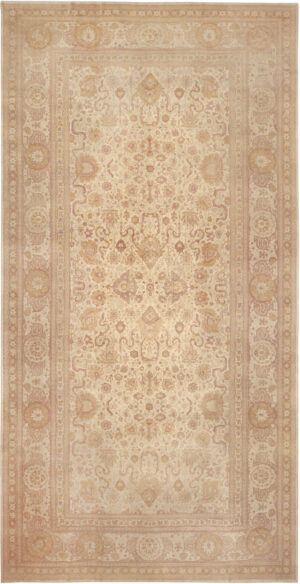
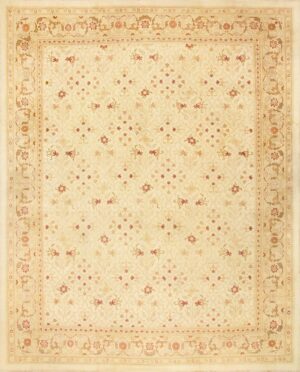
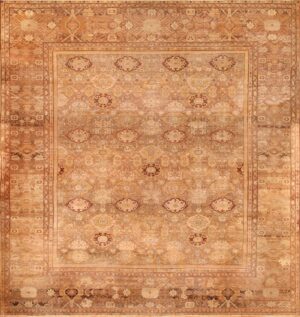
Amritsar rugs are among the most decorator-friendly antique Indian carpets: they deliver the romance of “Oriental” design with a calmer, more livable color story. Many were developed under British-era export demand and were designed from the start to work beautifully in Western interiors—elegant florals, generous negative space, and earthy tones that don’t overpower.
Amritsar rugs are late-19th / early-20th-century Indian carpets created to satisfy Western decorative taste—known for curving botanical motifs, excellent wool, and a softer, earthier palette.
Amritsar carpets stand out in Indian weaving because they were created with Western interiors in mind from the beginning—an export-driven decorative tradition with flexible design vocabulary and color that plays nicely with furniture, art, and architecture.
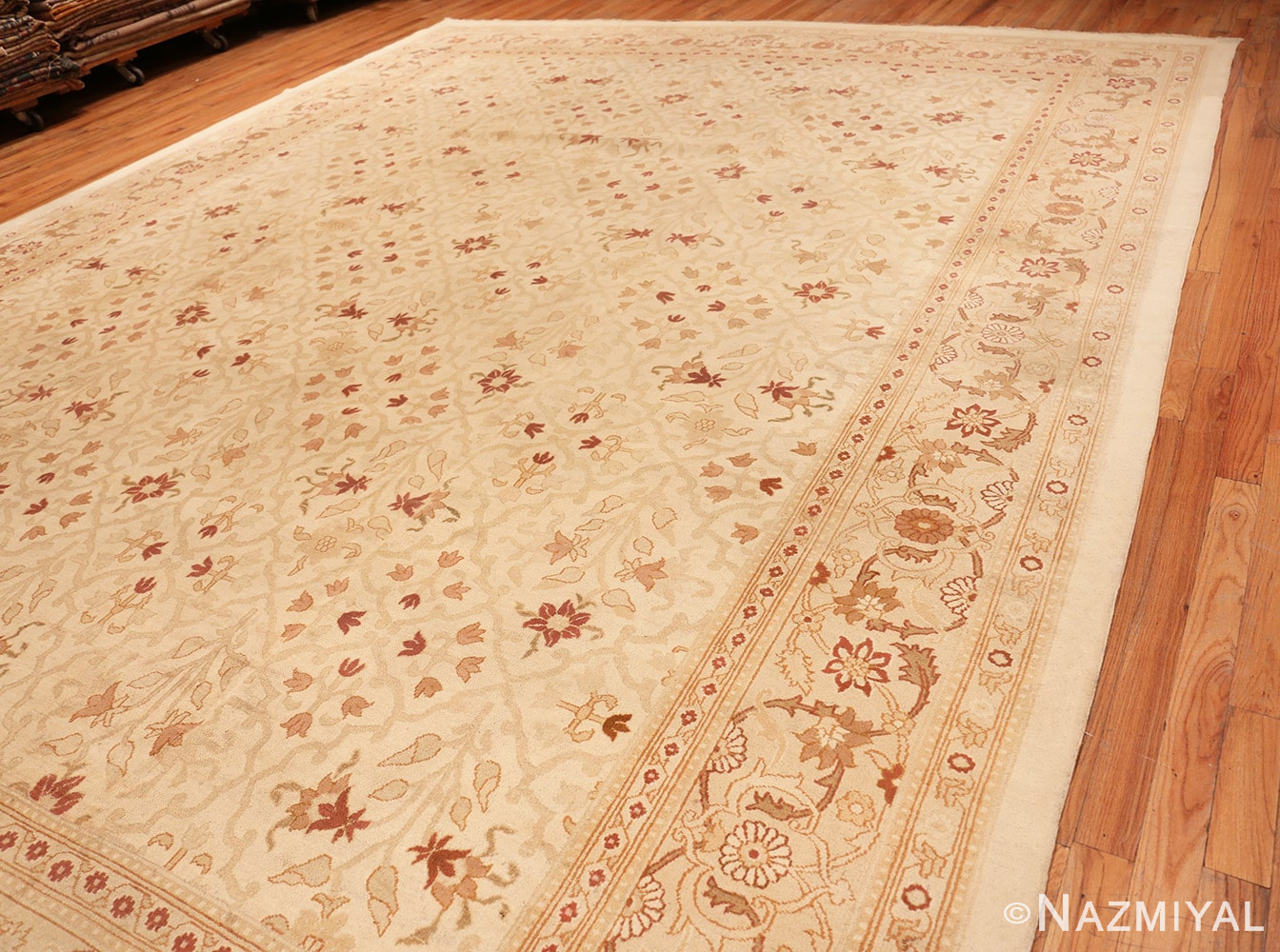
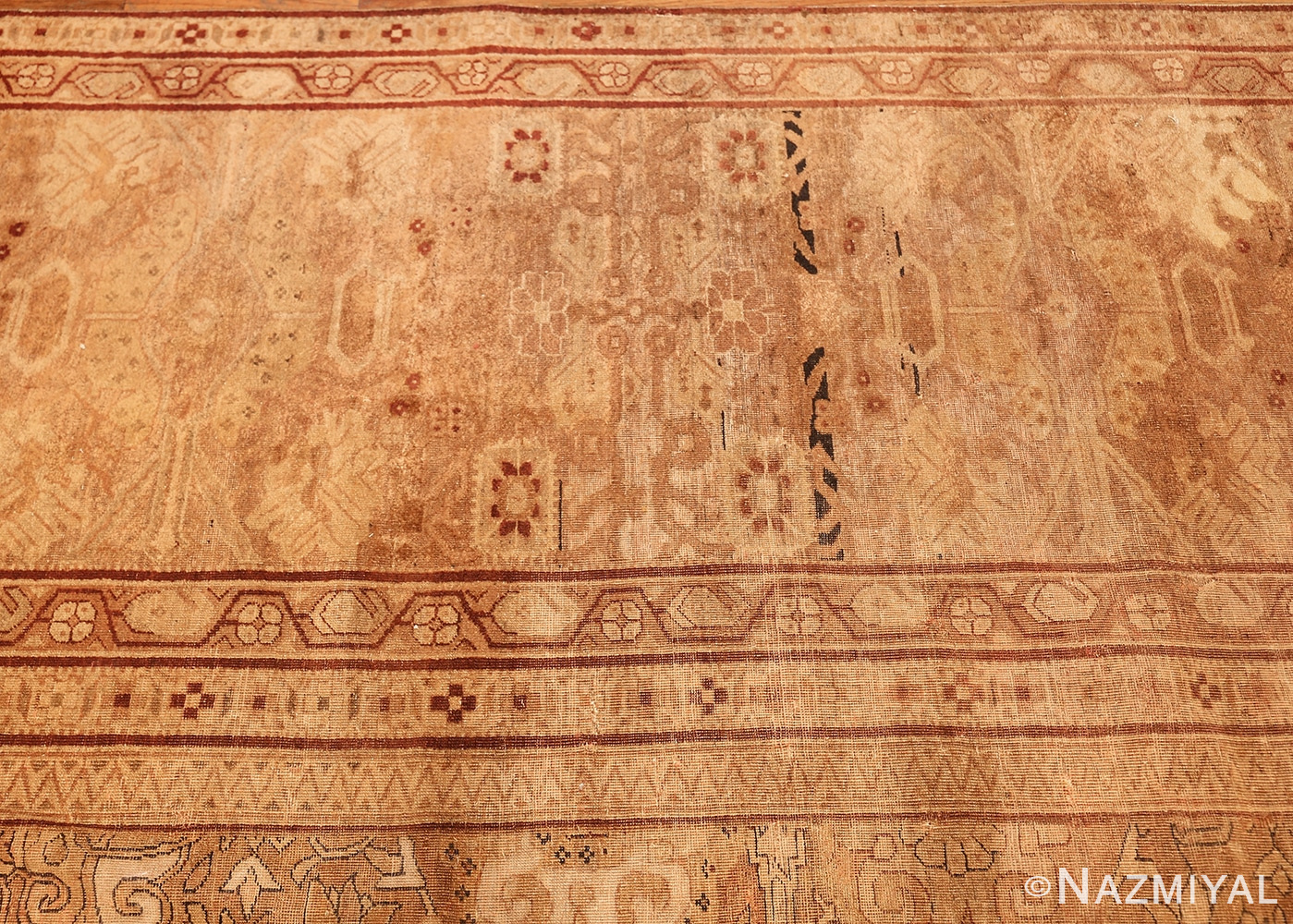
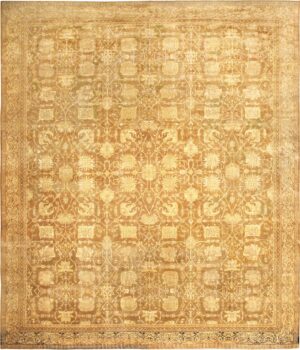
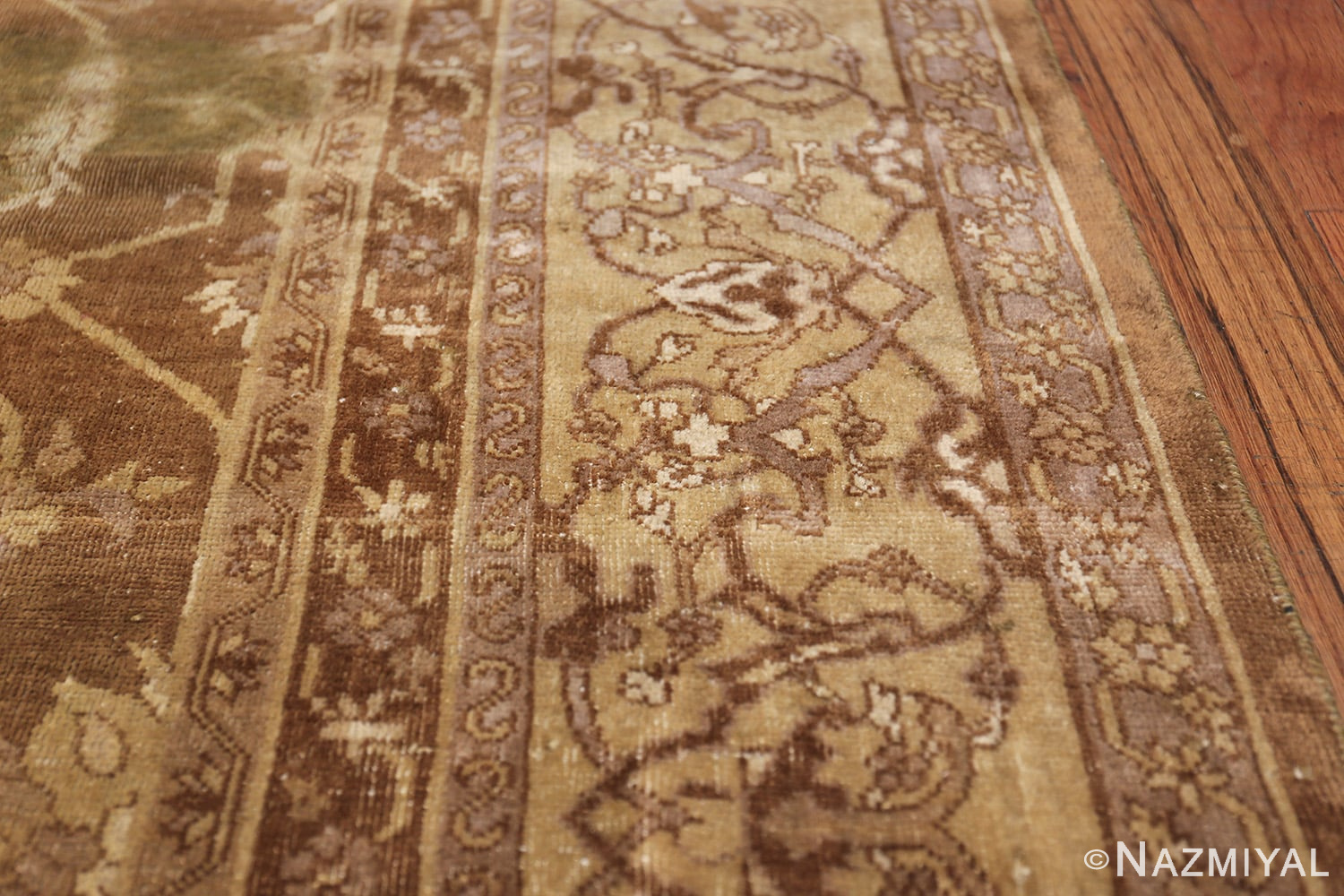
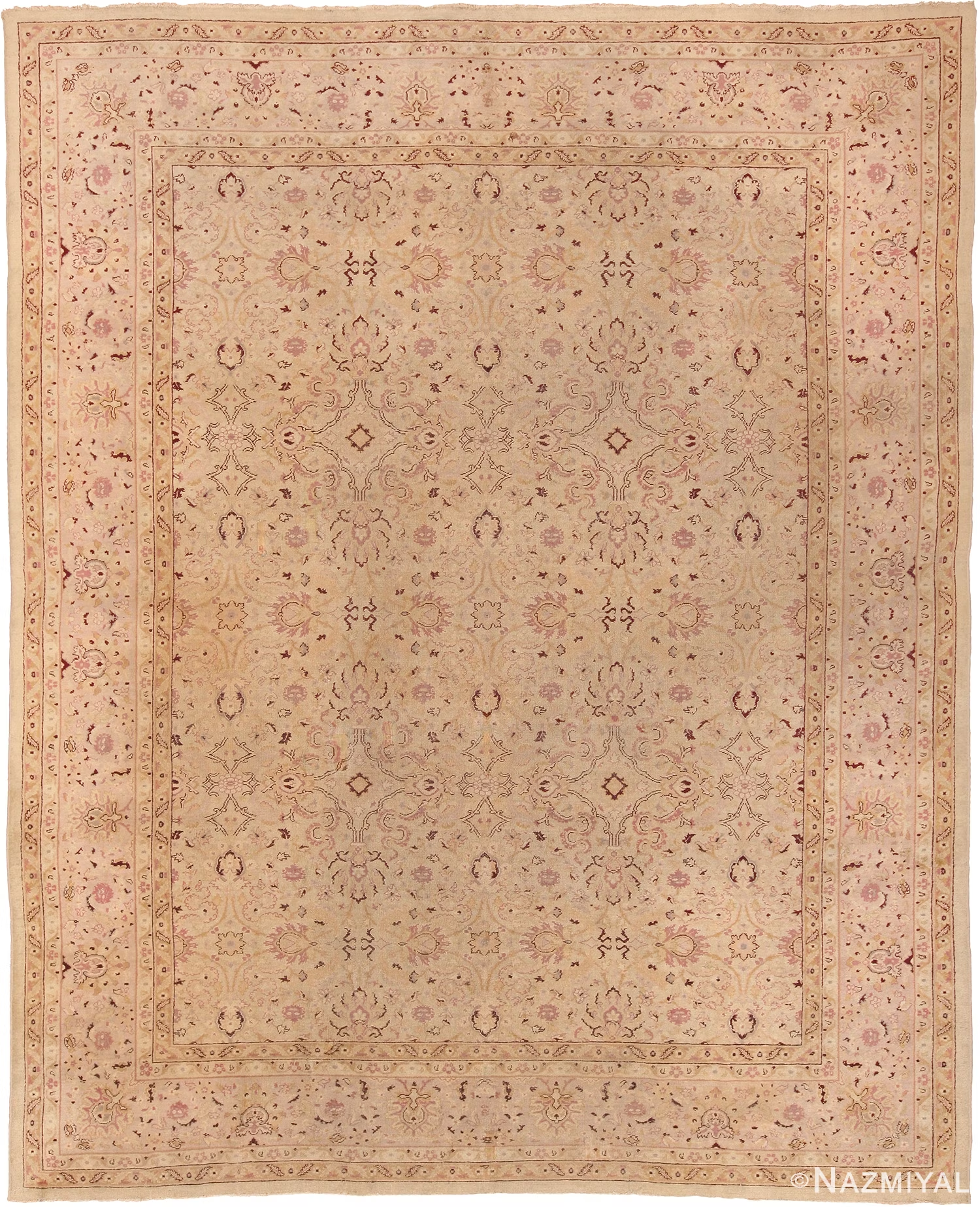
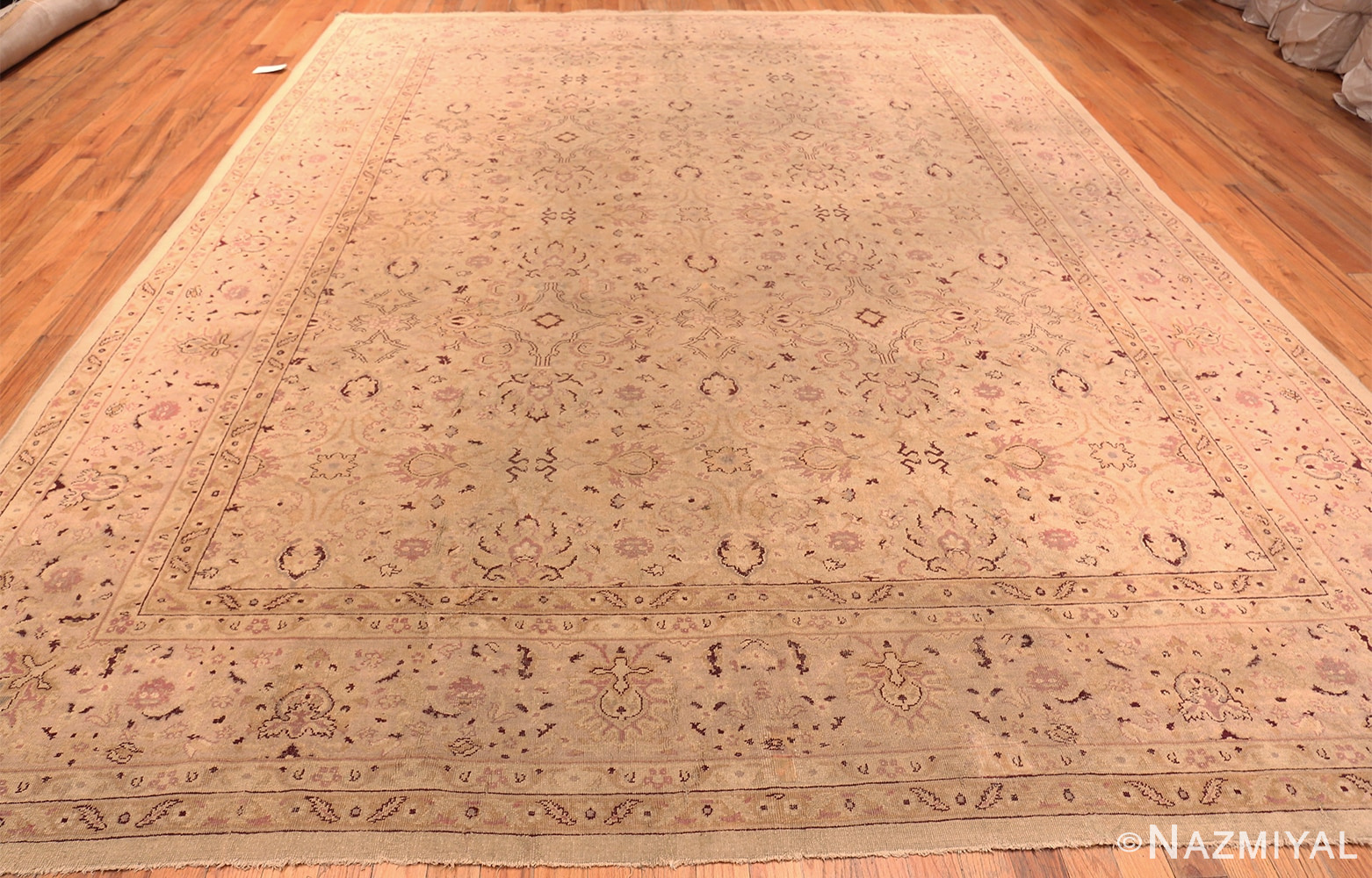
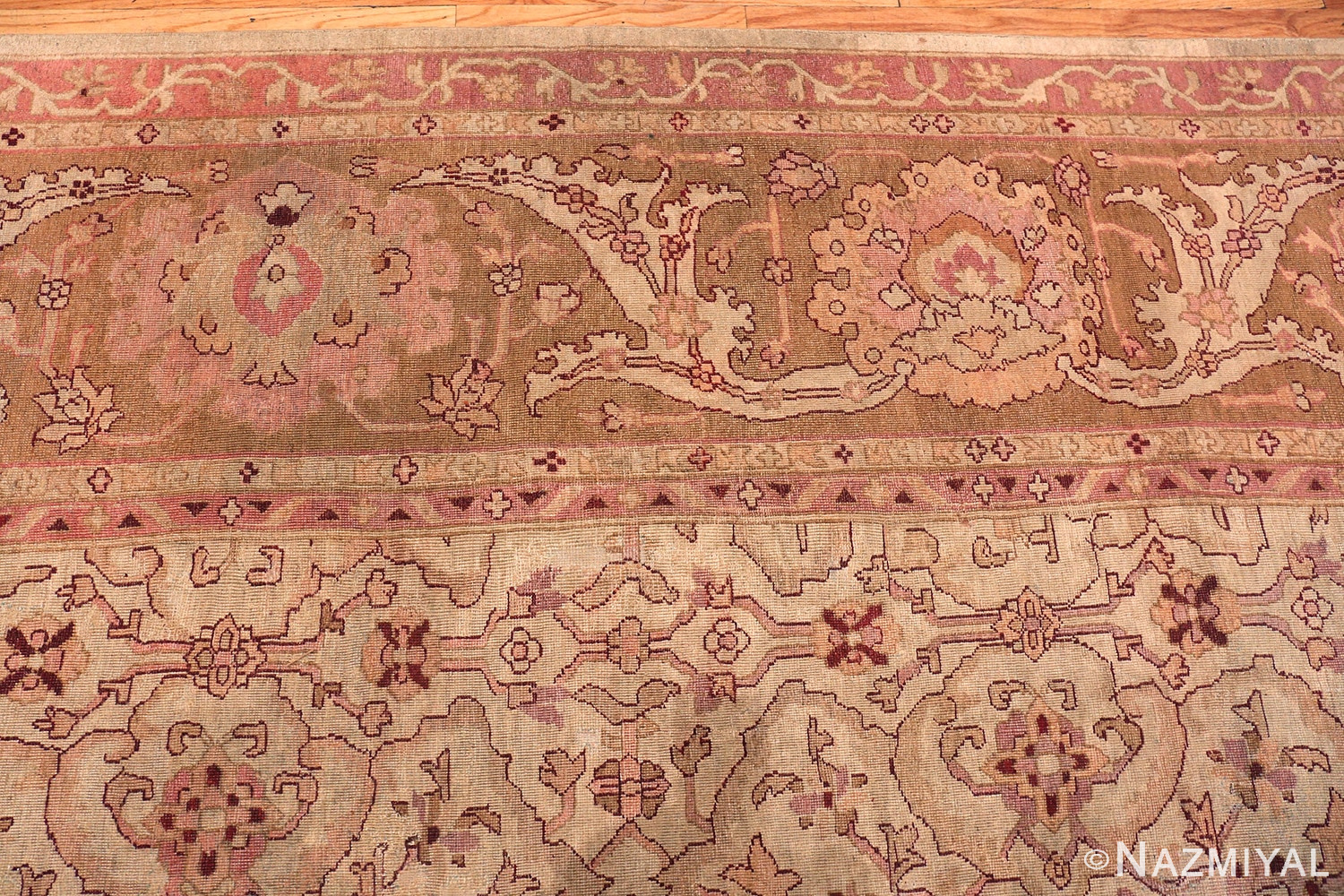
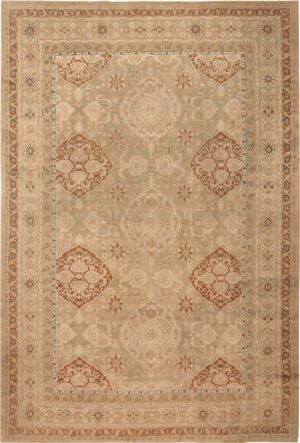
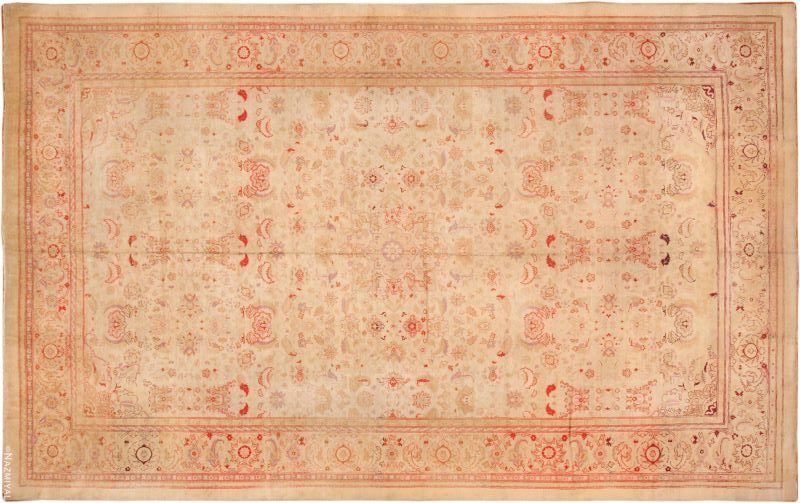
Picture of Antique Oversized Indian Amritsar Rug #49538
Common design signatures:
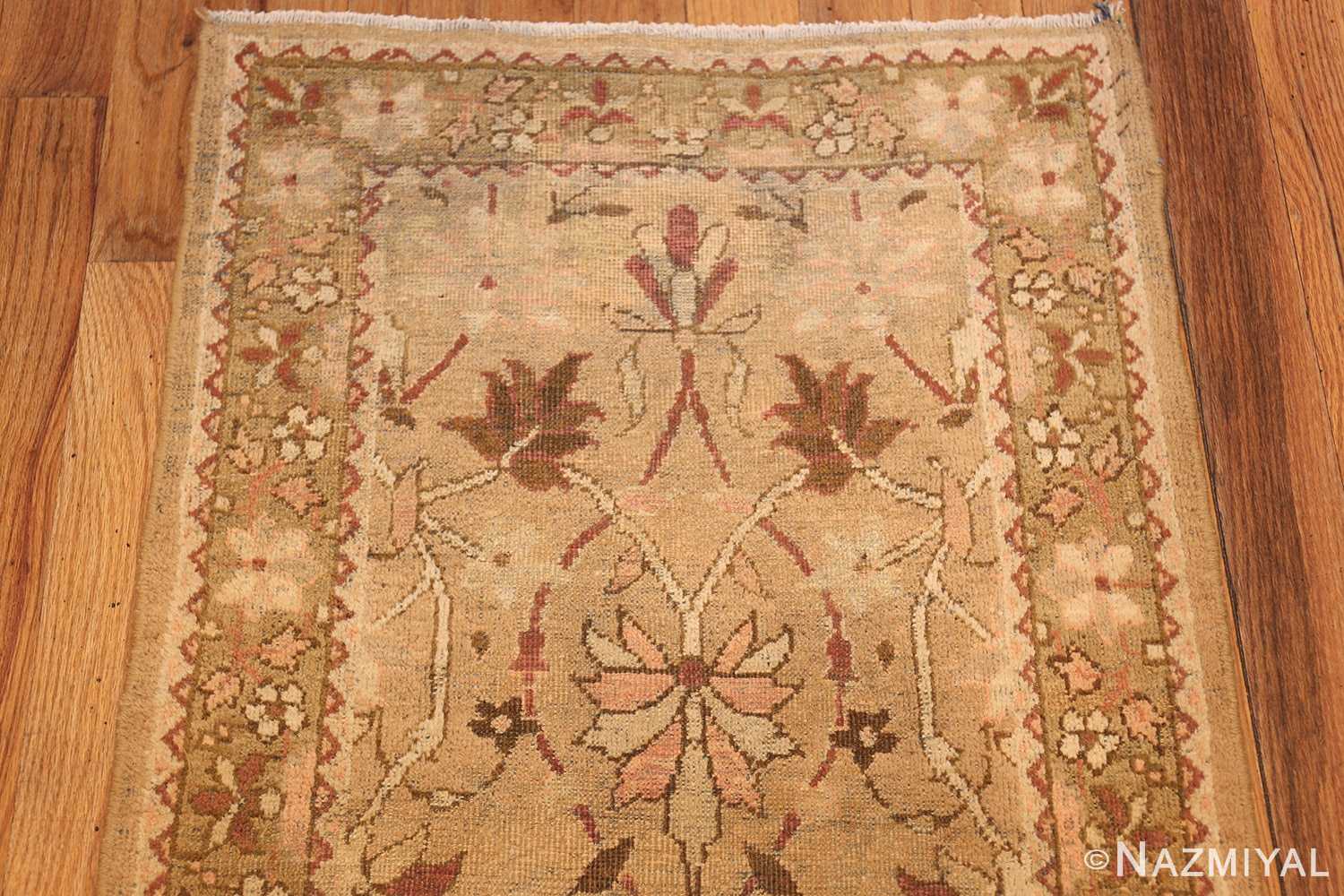
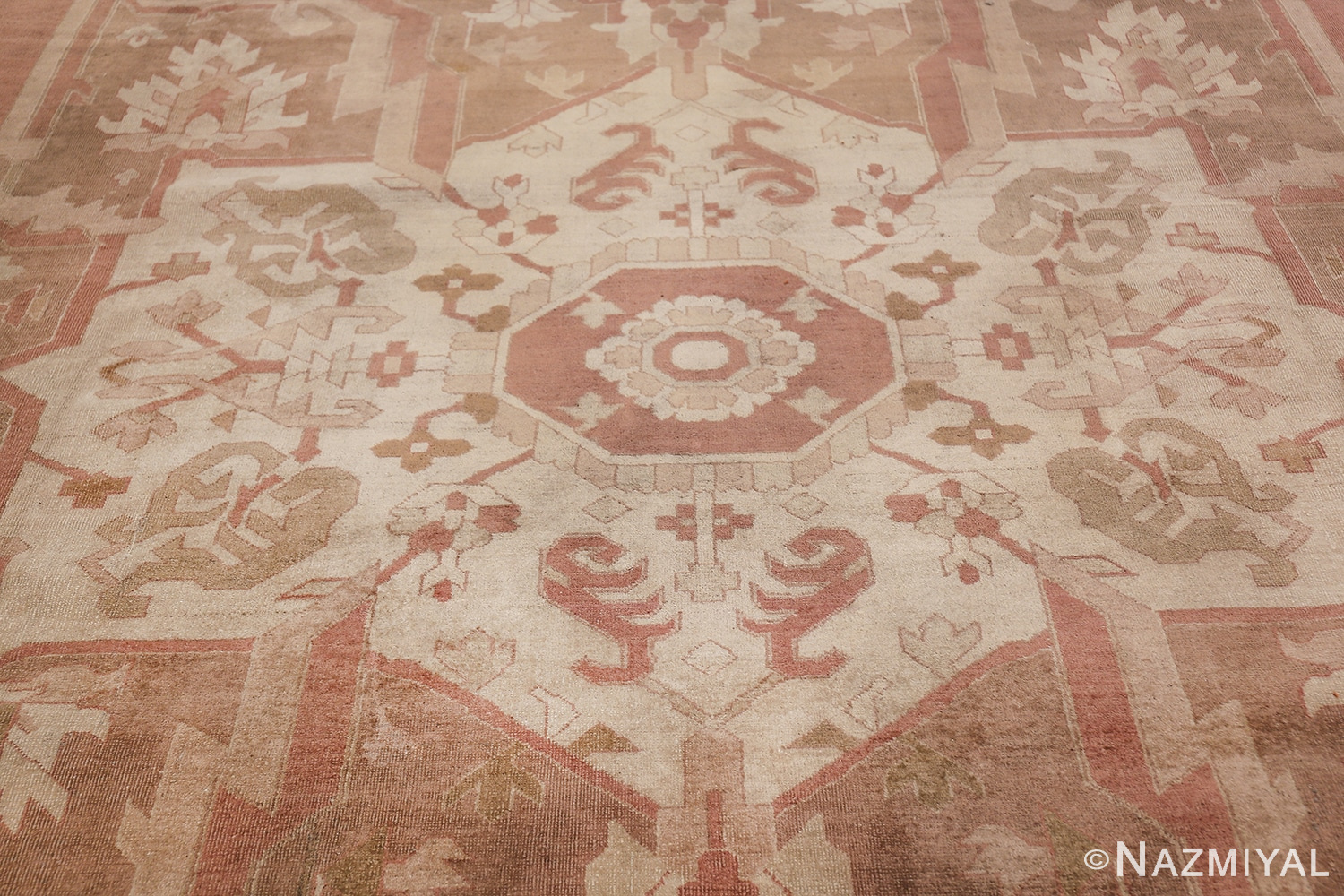
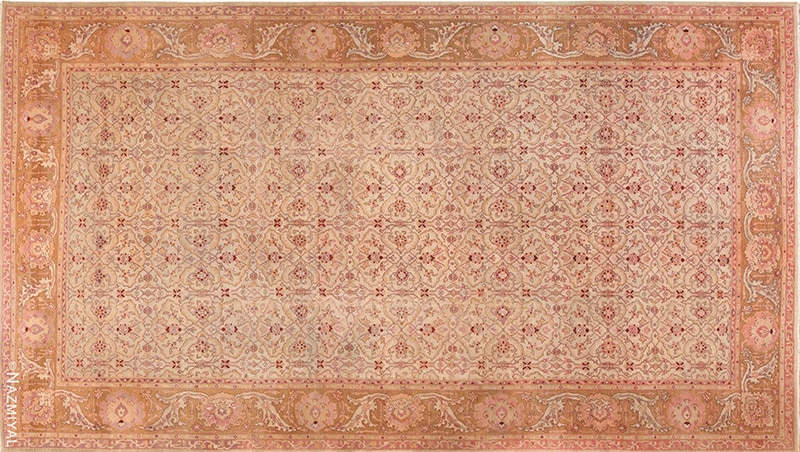
Millefleur (“thousands of flowers”) feel—dense but refined botanical movement
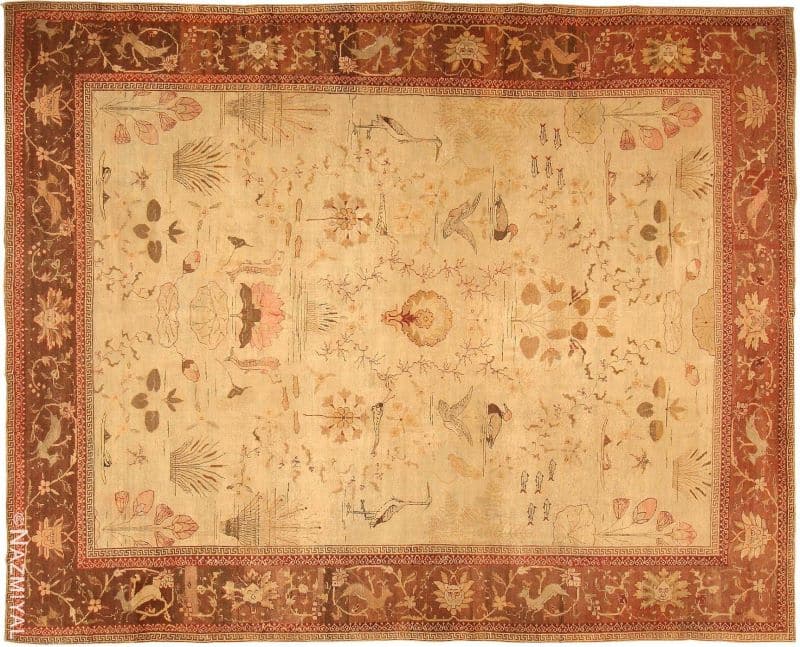
Curving floral and vine motifs with a graceful, decorative rhythm
Softer palettes that feel elegant rather than loud
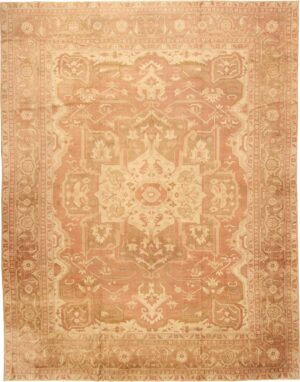
Formal + tailored: more structure (medallion formats), stronger borders
2) Decide: allover vs medallion
Allover reads calm and continuous (great for open plans).
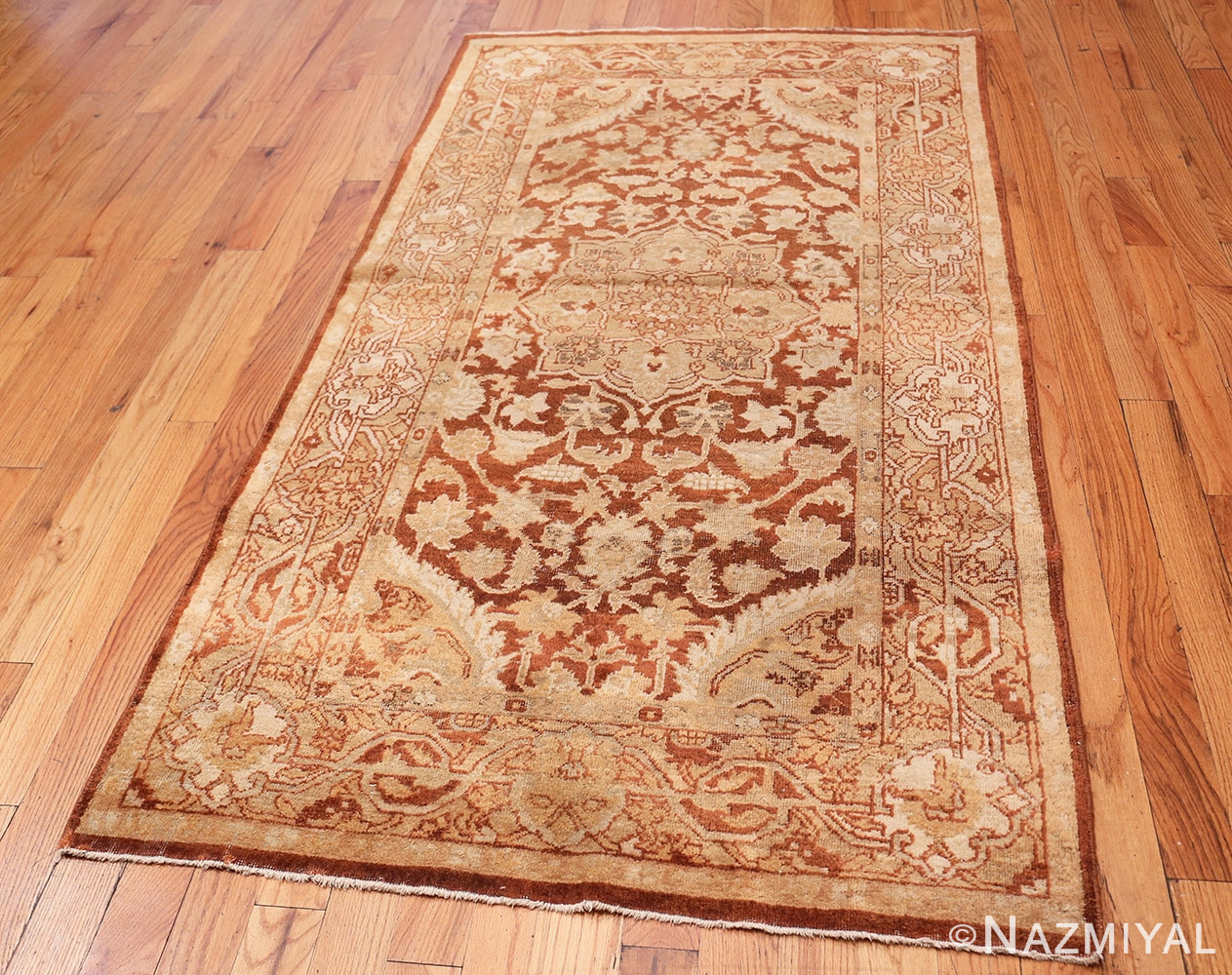
Medallion creates a focal point (great for seating groups).
3) Size it correctly so the drawing reads as intended
For living rooms and dining rooms, we recommend choosing size before you choose style—especially when you want the floral drawing to read as a full composition. Use our Rug Size Guide to confirm layout rules, then refine by era across Vintage Rugs and Modern Rugs if you’re comparing tone and wearability.
Agra production has deeper continuity back toward Mughal-era traditions; Amritsar rugs are more clearly a late-19th/early-20th export initiative with a softer, more Western-decorative color approach.
Mughal carpets lean into courtly grandeur and classical imperial design; Amritsar rugs often translate that elegance into a more decorator-friendly vocabulary and palette. If you’re tracking design influence across the broader “classical” language, compare against Persian Rugs as well.
Many are antique (often late 1800s–early 1900s), but you’ll also find later pieces in the Amritsar style. The best indicators are materials, weave, design quality, and condition.
Why do Amritsar rugs look more “decorative” than some other Indian rugs?
Because the tradition was shaped by export demand and Western decorative preferences—so softer palettes and flexible formal repertoire were part of the design brief.
What colors are typical in Amritsar rugs?
Soft earth tones with muted blues/yellows/teals and rust are common, and many examples lean toward burgundy or aubergine notes.
How are Amritsar rugs constructed?
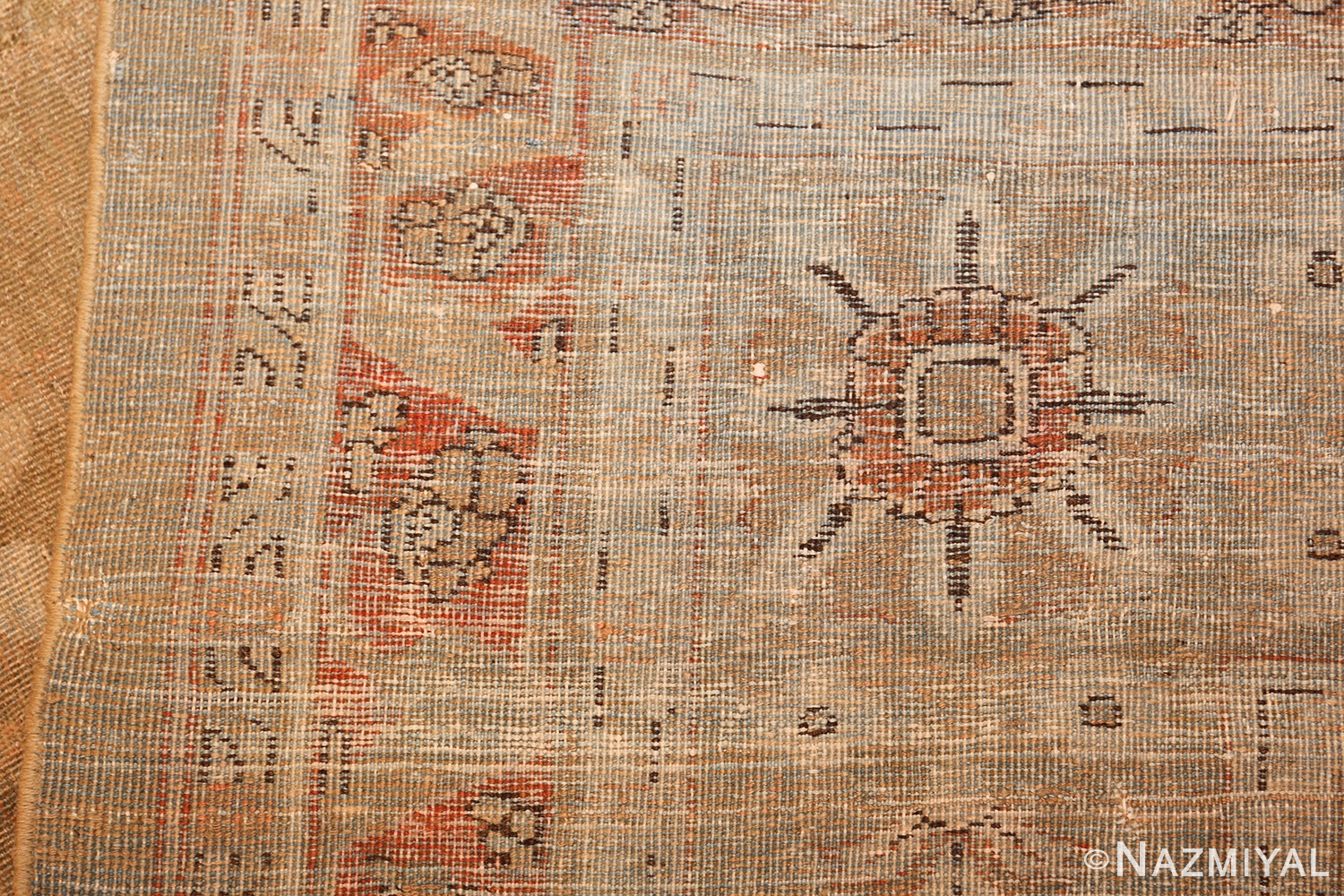
Many use cotton foundations, double wefts, and asymmetrical knots, paired with very good wool that creates a luxurious hand.
Are Amritsar rugs good for modern interiors?
Yes—especially because the palettes tend to be calmer and the floral drawing reads elegant rather than busy.
What’s the best Amritsar rug size for a living room or dining room?
Choose based on furniture layout so chairs and legs stay on the rug where needed. Start with the Rug Size Guide.
Nazmiyal White-Glove Service
We make it easy to shop with confidence—whether you’re choosing a single statement piece or curating a full room.
Need help choosing between two Amritsar rugs (or comparing Amritsar vs Agra)? Contact us—we’ll guide you quickly and honestly.
Nazmiyal Collection has been a trusted source for antique rugs and vintage carpets for over 45 years. Our NYC gallery curates one-of-a-kind pieces with an emphasis on authenticity, provenance, and lasting decorative value.
Need help? Call us at (212) 545-8029 or visit our New York City showroom to work with a rug expert.
             Posted on Google        Clay Pendergrast     Trustindex verifies that the original source of the review is Google. My wife and I are so pleased with the antique Uzbek Bokhara Rug purchased from the Nazmiyal Collection. Not only does the rug have a spectacular design, it also was very reasonably priced. The way it transforms our living room, reconciling the classic modern furniture with the 1913 Craftsman interior is remarkable.         Posted on Google        Terence Hayes     Trustindex verifies that the original source of the review is Google. I have purchased multiple rugs at multiple Nazmiyal auctions and I am extremely pleased with the quality, price, and experience.  Highly recommended!         Posted on Google        Victor Florintsev     Trustindex verifies that the original source of the review is Google. The only ones I'd ever buy rugs from. The best.         Posted on Google        Jeffrey NeumanB     Trustindex verifies that the original source of the review is Google. I bought two gorgeous Serapi rugs from Farhad at Nazmiyal Rugs!  Beautiful carpets, fair prices and great service.  Very happy customer.  Farhad (the sales person) was very patient and gave us great service.         Posted on Google        john haid     Trustindex verifies that the original source of the review is Google. Alen is a gentleman and an expert.  Really great to work with.         Posted on Google        Edward Yasuna     Trustindex verifies that the original source of the review is Google. I recently purchased a modern Kandinsky rug from Nazmiyal Auctions.  It was just as described, and the director (Farhad) of the auctions had it sent to me quickly and safely.  Payment was easy, the rug was reasonably priced, and I highly recommend Nazmiyal Auctions and Antique Rugs.  Quality merchandise and first-class service.         Posted on Google        Nicholas Carr     Trustindex verifies that the original source of the review is Google. Had a excellent experience buying a rug in Nazmiyal's 1/18/26 online auction.  First, prior to the auction, viewing a number of lots at the 32nd St showroom (I had prepared a list from the online catalog). The staff were great to work with: helpful, knowledgable, honest, and flexible.  Second, after placing an online bid and winning the desired item, arranging payment and pickup was simple and straightforward. Everything went seamlessly and the overall experience was educational and fun. Many thanks to Jason and his team.         Posted on Google        Andrea Gared     Trustindex verifies that the original source of the review is Google. Everyone at Naziyal is proffessional, especially Jason and Farhad.
They are knowledgeable, truthful, and true gentlemen. I have sold several rugs through them and will always go to them first, to buy or sell. The best in the business!
Frequently Asked Questions
Amritsar rugs were woven in northern India and are known for their luxurious wool, soft color palettes, and spacious floral compositions. They often feature large-scale botanical motifs rendered with subtle shading and refined Mughal-inspired artistry.
Collectors appreciate Amritsar rugs for their elegant drawing and exceptional wool quality, while designers value their muted palettes and flowing patterns that pair naturally with sophisticated, high-end interiors.
Identification focuses on soft, high-grade wool; large-scale floral designs; and balanced, uncluttered layouts. Amritsar rugs typically employ earthy tones, rose shades, soft blues, and refined Mughal-influenced ornamentation.
Yes. Amritsar rugs were woven with dense, resilient wool and strong construction, making them suitable for living rooms, dining rooms, and elegant contemporary spaces when properly maintained.
Value is shaped by age, condition, wool quality, and the clarity of the floral drawing. Early examples with rich texture, harmonious colors, and minimal restoration are especially desirable among collectors and interior designers.
THE NAZMIYAL NEWSLETTER
Discover Your Next Favorite Rug
Get new arrivals, rug inspiration, educational blogs, and collection highlights delivered to your inbox.
By subscribing, you agree to receive marketing emails from Nazmiyal. Unsubscribe anytime. View our Privacy Policy.