Antique Persian Tribal Rugs with Hand-Spun Wool, Vegetable-Dye Color, and Confident Geometry
Qashqai (Gashgai) rugs are among the most collectible Persian tribal weavings—direct in drawing, rich in character, and often quietly undervalued compared to their quality. The best older examples (especially from the late 1800s into the early 1900s) combine hand-spun wool with traditional dye behavior, creating color that feels alive rather than flat. If you’re building a long-term collection or designing with authentic tribal work, this is a category worth understanding early. Browse these rugs within the wider world of Persian Rugs, and explore more at Nazmiyal.
Qashqai rugs are Persian tribal carpets woven in southern Iran, known for confident geometry, lively drawing, and color that feels “alive” because the best older examples were made with hand-spun wool and traditional vegetable dyes.
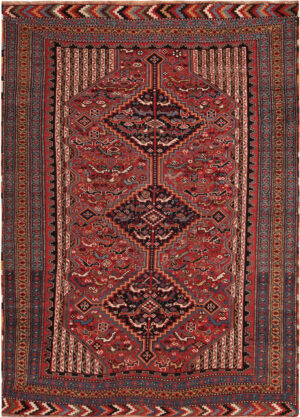
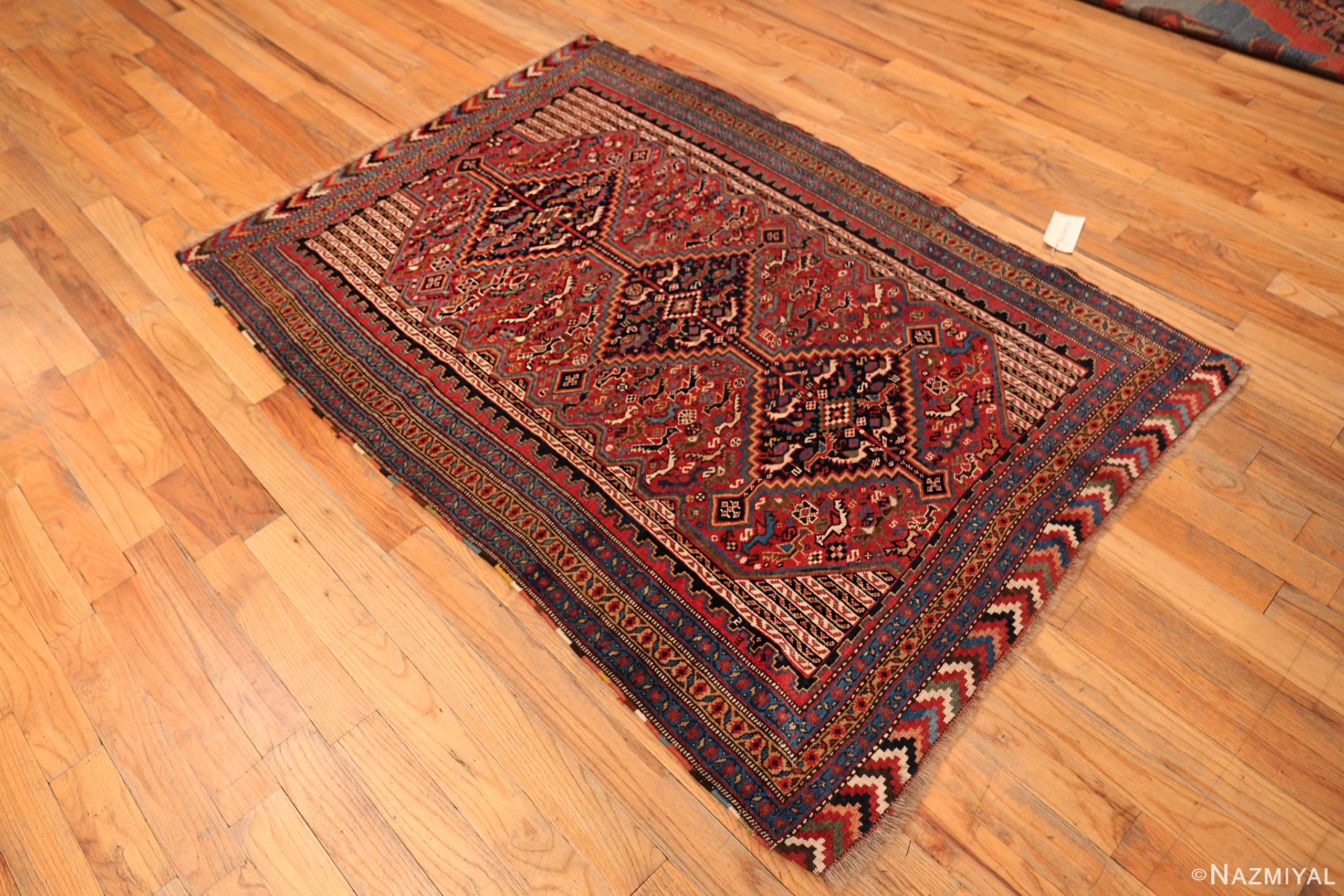
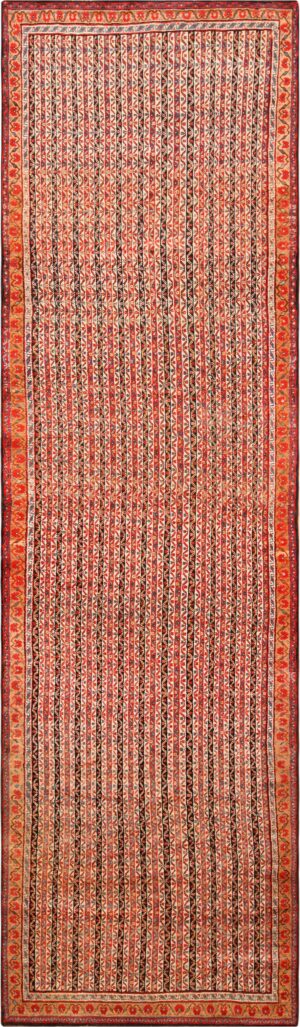
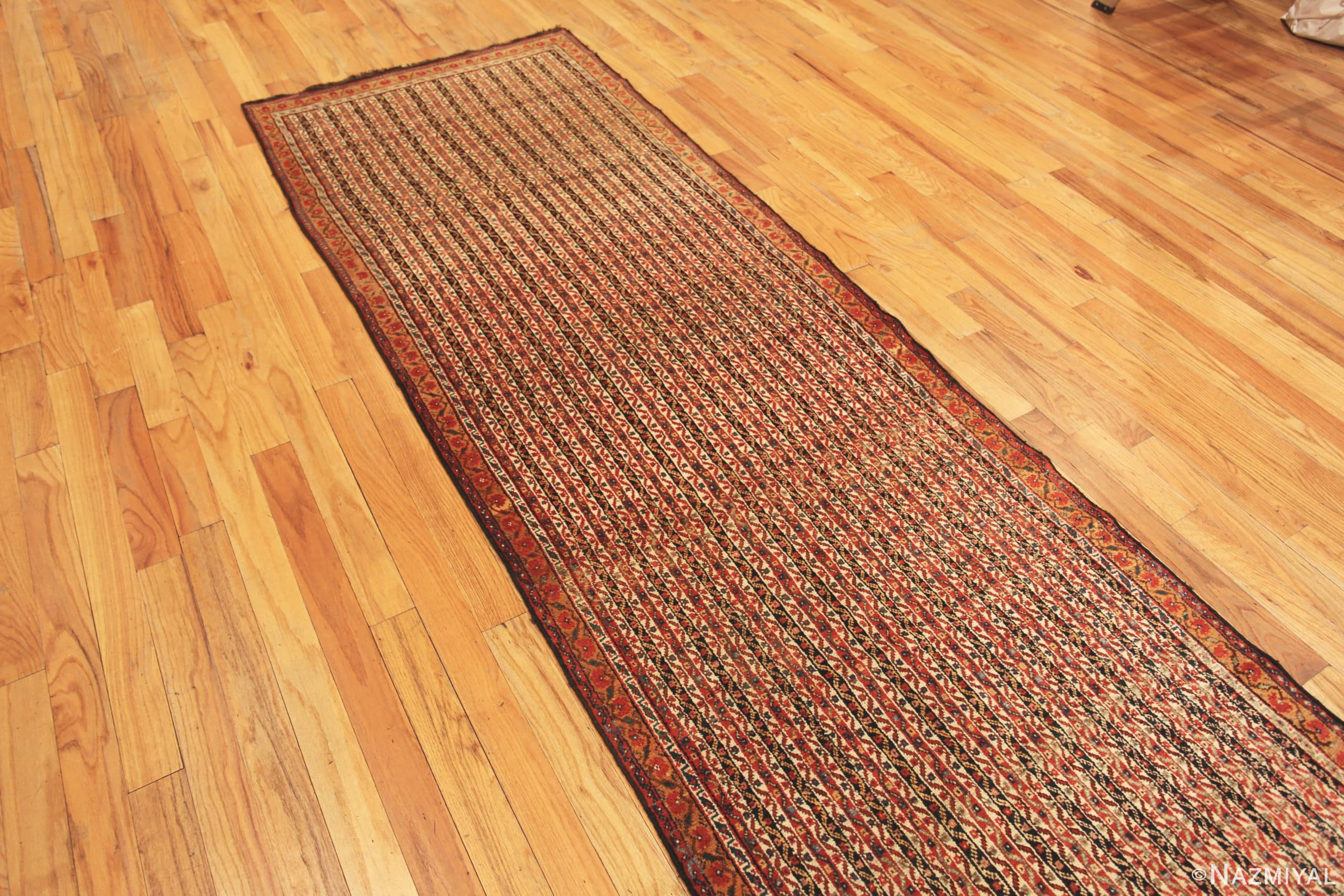
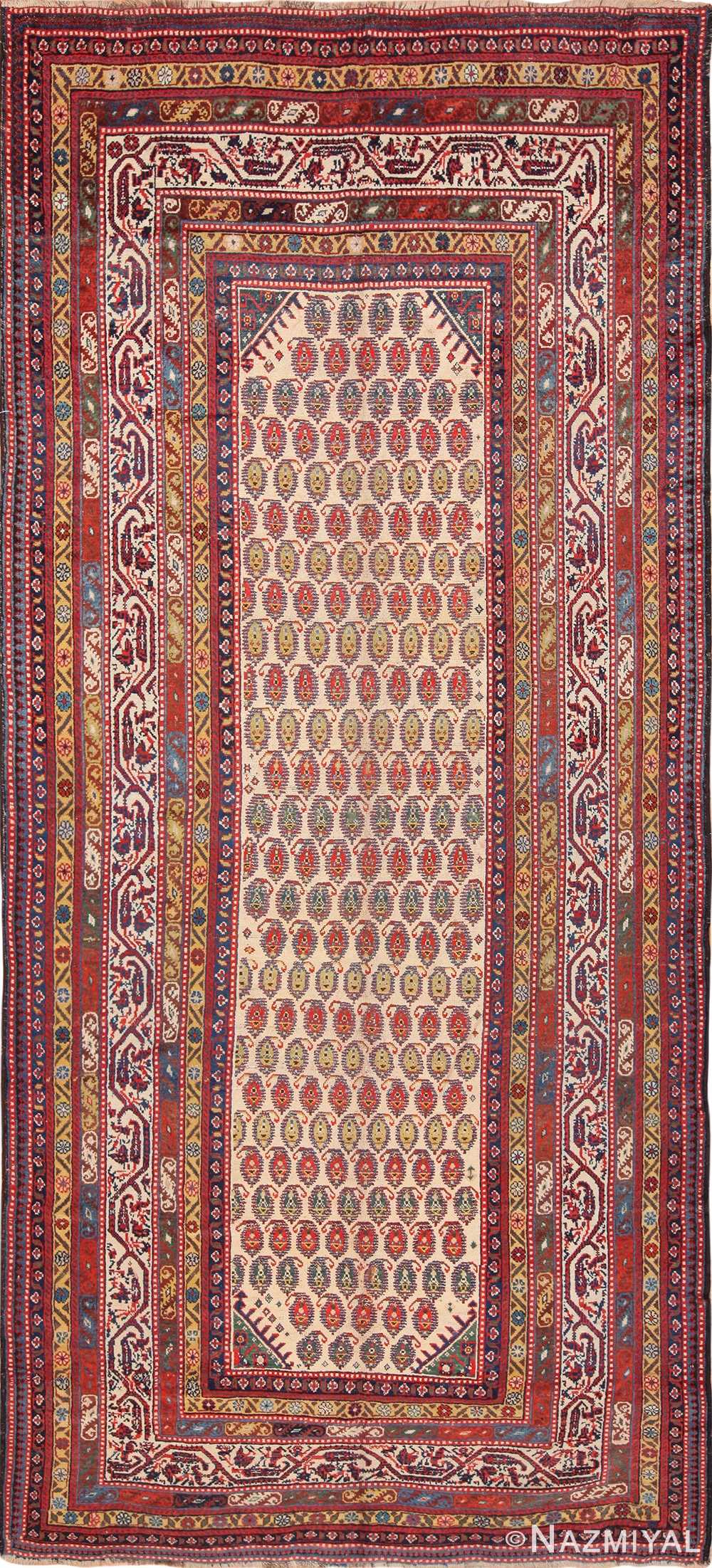
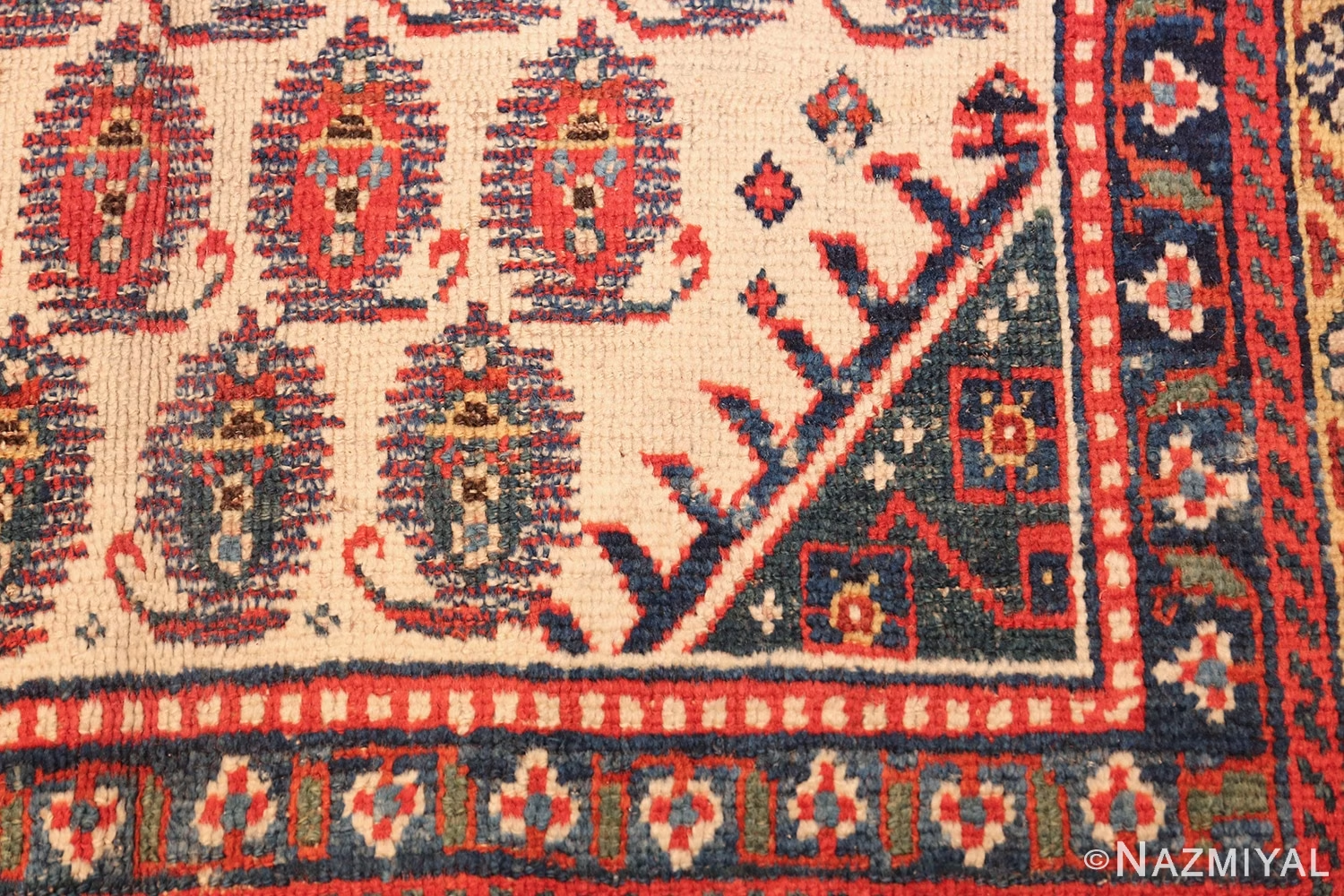
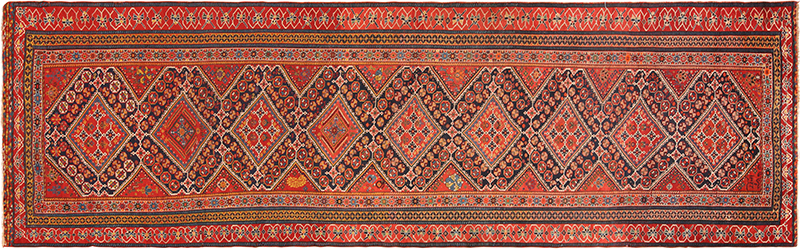
Signed Tribal Antique Persian Jewel Tone Color Wool Pile Qashqai Hallway Runner Rug Nazmiyal Collection #71098
Key Takeaways
The real investment window is 1860–1910: it’s where you most often see the combination collectors chase—hand-spun wool first, then vegetable-dye color—with a look that modern production doesn’t truly recreate.
Supply is finite: these were woven in a specific historical moment, and the best examples are getting harder to replace year after year.
Value is still lagging quality: in my view, many strong Qashqai rugs are priced like “decor,” while they behave more like collectible, one-of-a-kind works.
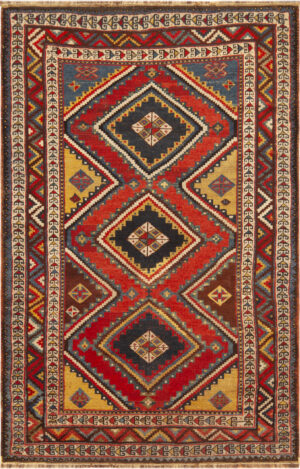
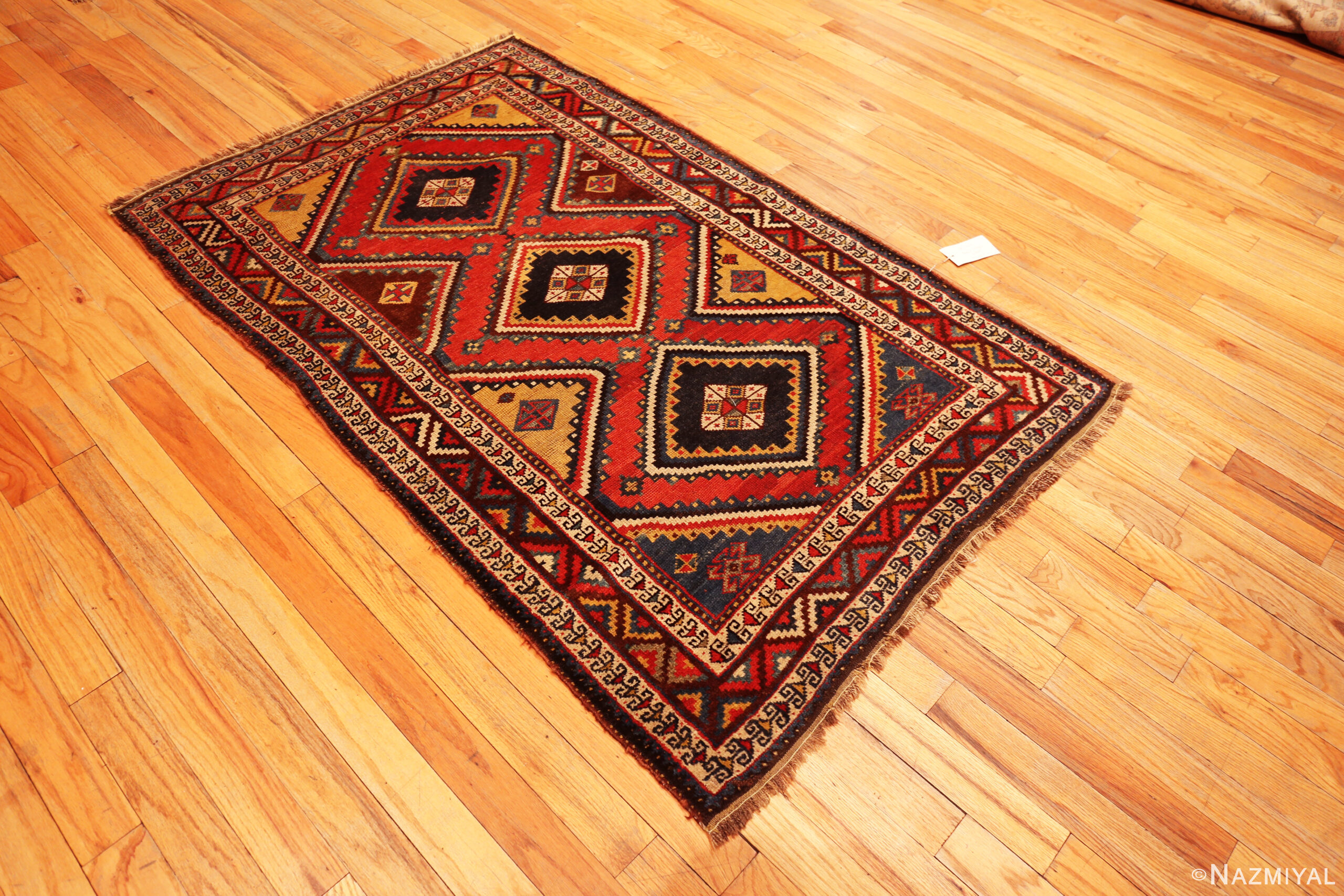
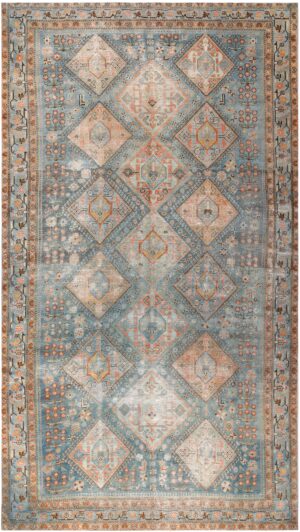
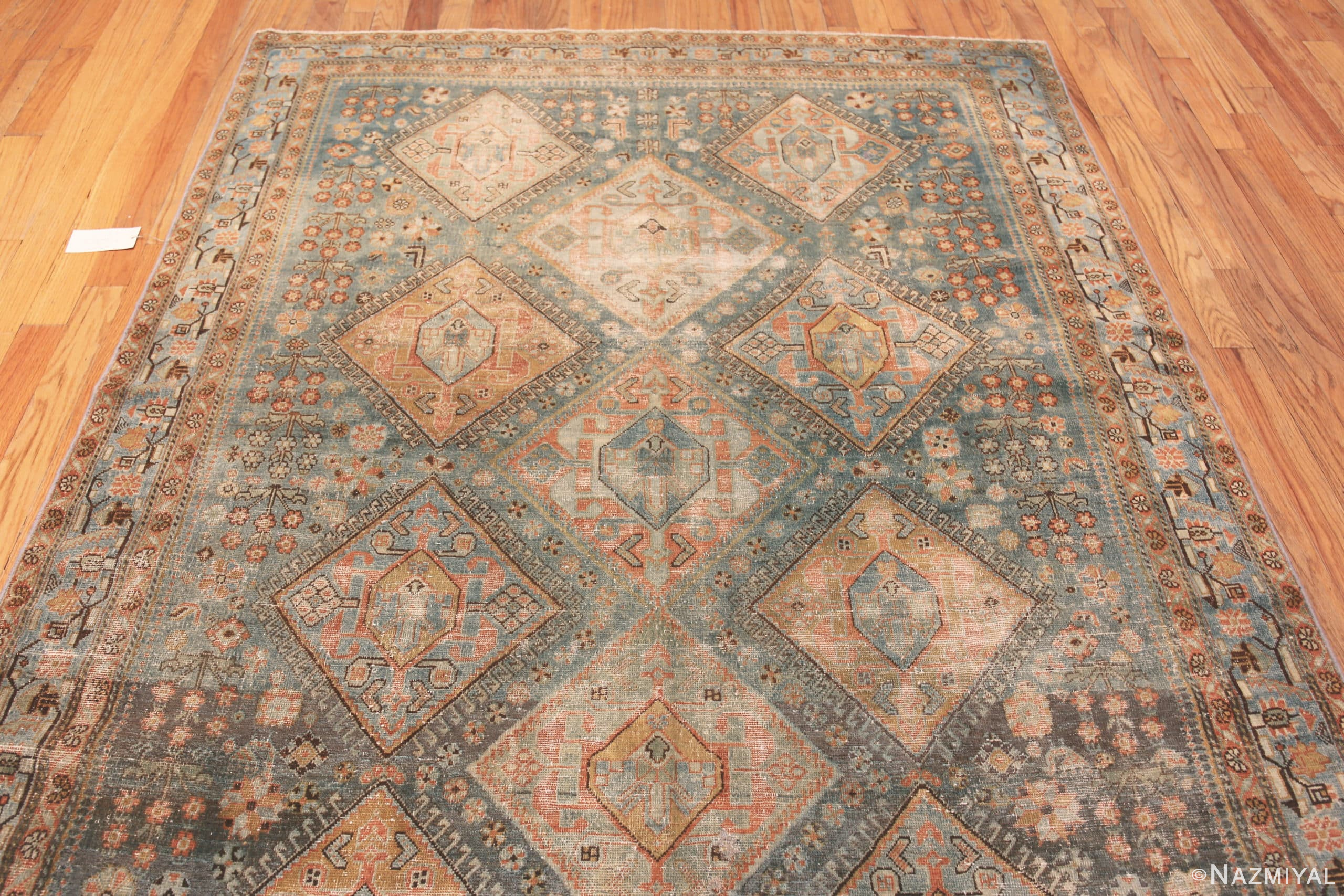
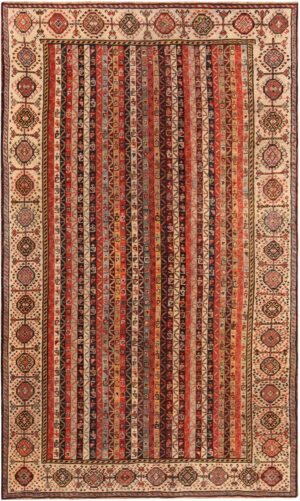
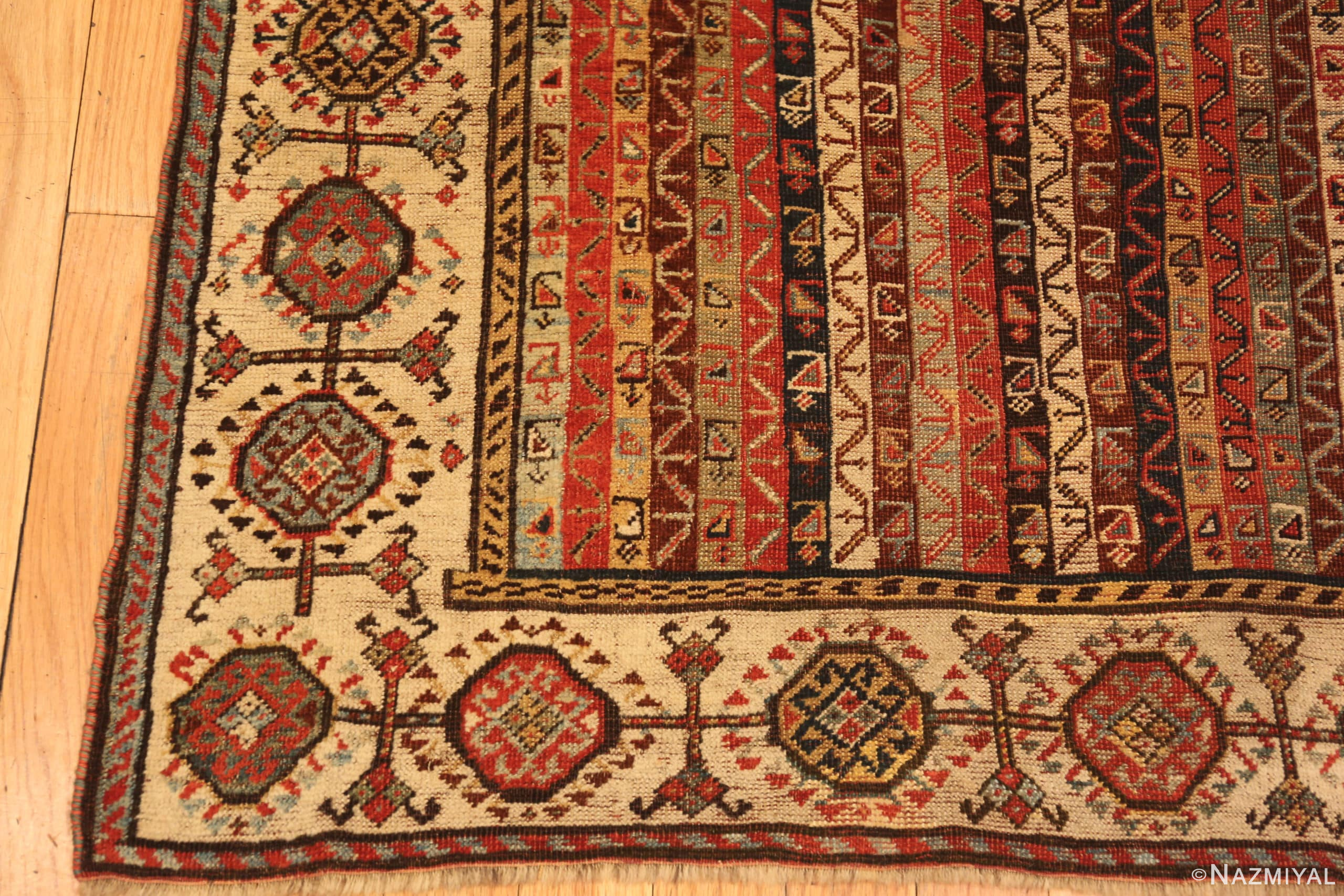
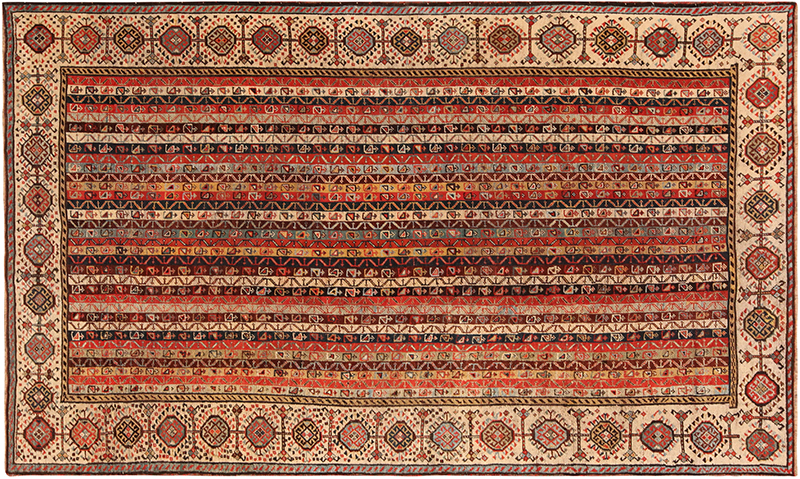
Tribal Geometric Antique Persian Qashqai Area Rug Nazmiyal Collection #71385
Color character: Traditional dye palettes; best 1860–1910 examples show vegetable-dye nuance + abrash movement
Common formats: Runners, area rugs, occasional pictorial / narrative pieces
Also spelled: Qashqai, Gashgai, Kashgai, Ghashghai
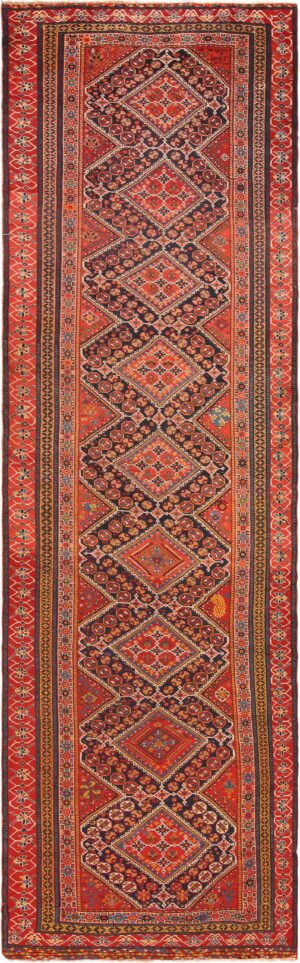
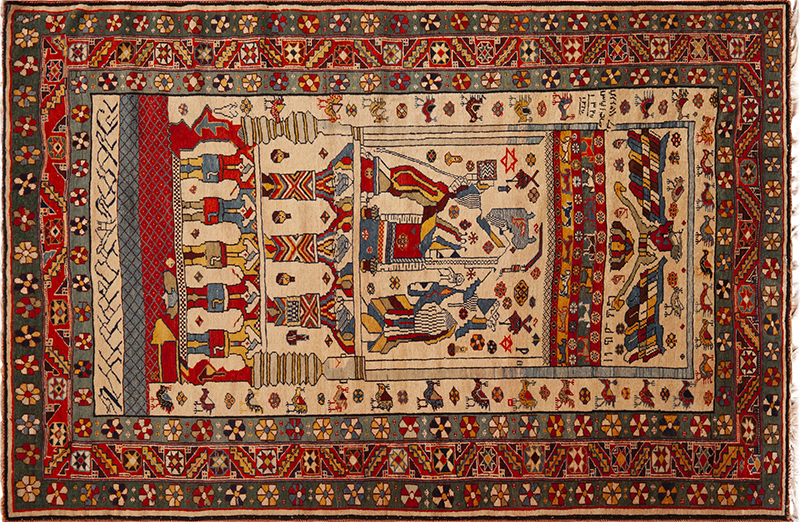
Rare Antique Qashqai Pictorial Rug with Historic Imagery and Tribal Charm Nazmiyal Collection #73522
Featured Qashqai Rugs
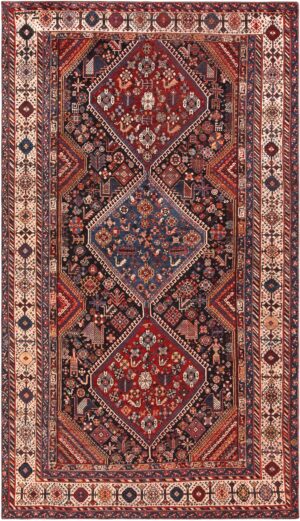
Antique Persian Qashqai Runner Rug 71098 (c. 1900) View Rug #71098 Antique Persian Qashqai Rug, c. 1900s, 4 ft 5 in x 11 ft 5 in — Nazmiyal #71098
Antique Persian Qashqai Rug 71385 (c. 1880) View Rug #71385 Antique Persian Qashqai Rug, c. 1880s, 6 ft 3 in x 10 ft 2 in — Nazmiyal #71385
Antique Persian Qashqai Pictorial Rug 73522 (c. 1910) View Rug #73522 Antique Persian Qashqai Rug, c. 1910s, 4 ft 4 in x 6 ft 2 in — Nazmiyal #73522
What makes a Qashqai rug “Qashqai”?
Qashqai rugs are tribal pile weavings associated with the Qashqai people of southern Persia. The look is usually direct and confident: geometric medallions, strong borders, packed fields of small symbols, and a sense that the design was “drawn by hand,” not engineered by a workshop.
If you want the bigger picture, it helps to browse Qashqai rugs inside the wider family of Persian Rugs and Tribal Rugs—because collectors don’t buy labels, they buy weaving voices.
The investment window: 1860–1910
This is the period I keep coming back to for one simple reason:
Hand-spun wool first — then vegetable dyes — plus real tribal production — created a standard that isn’t repeating today.
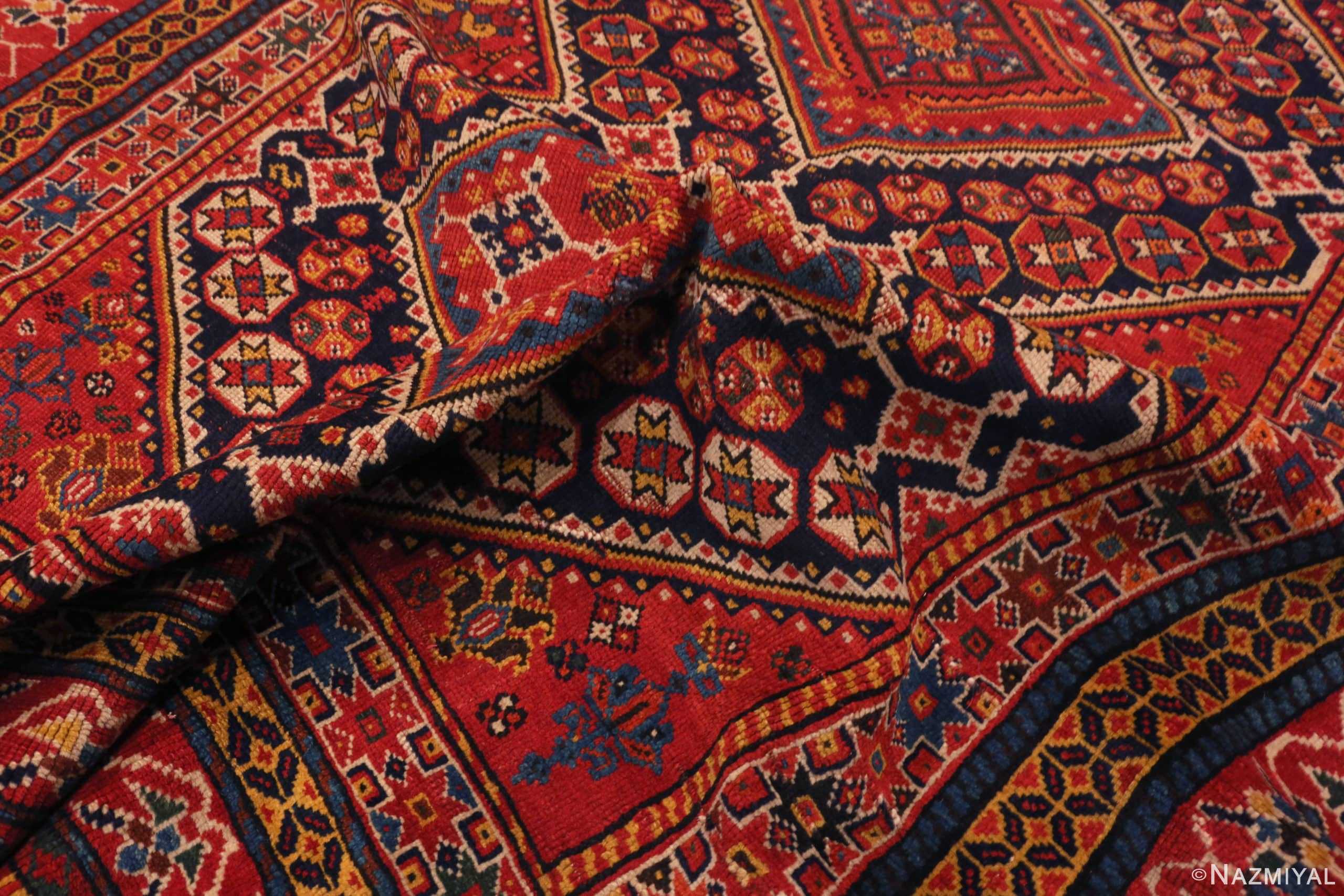
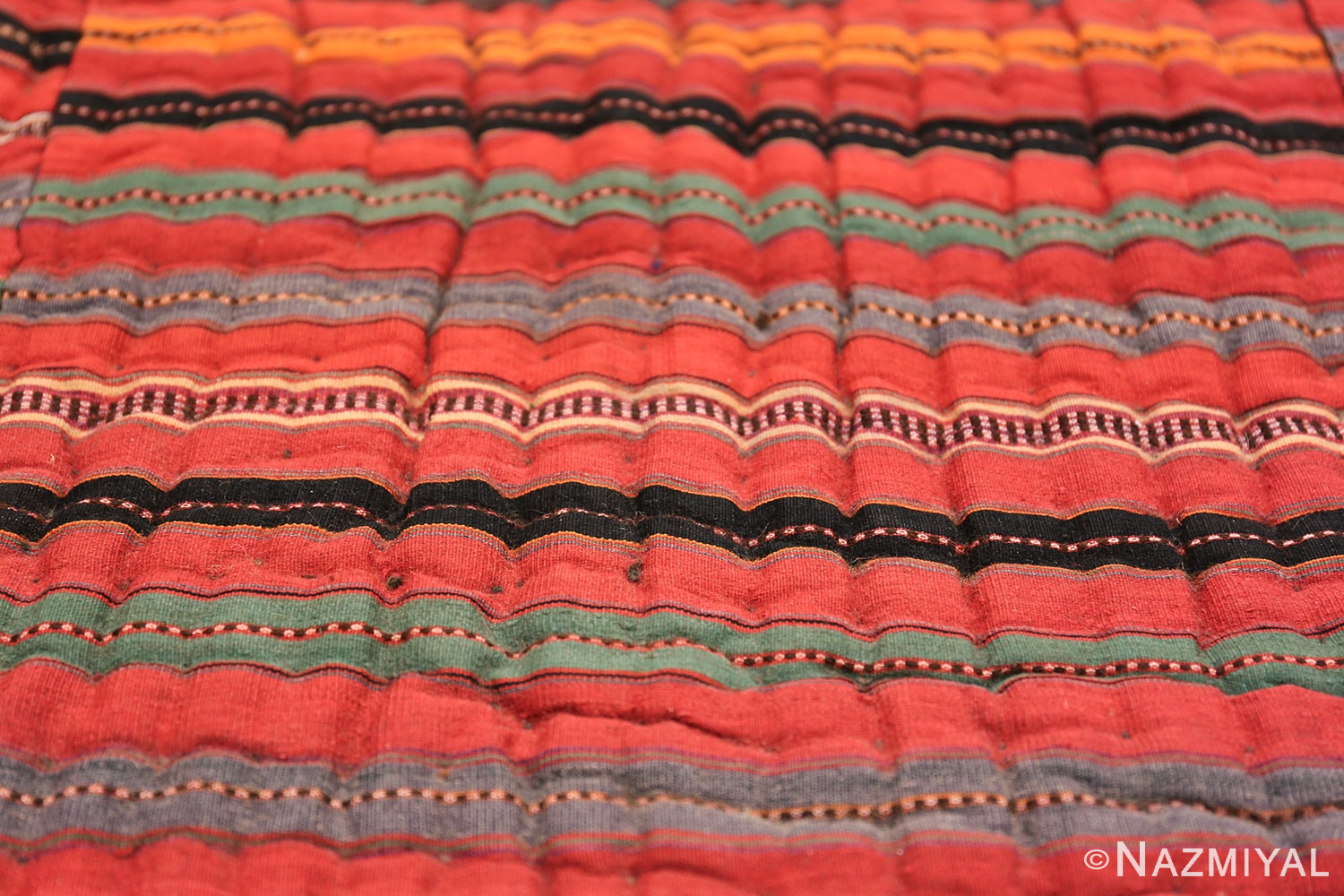
The wool in better examples from this window has a particular “life” to it. It doesn’t read flat. It has spring, depth, and that subtle irregularity that makes the surface glow instead of shout. Then the vegetable dyes sit on top of that wool in a way that feels natural—especially when you see abrash movement across the field.
And here’s the part that matters for long-term value:
That combination is limited. Not because people can’t make rugs today—but because the exact conditions that produced these (materials, habits, taste, and time) are not the modern default.
So when I call it an “opportunity,” I’m not trying to be dramatic. I’m saying the obvious collector truth:
Finite supply + non-repeatable quality + lagging prices = a real window.
How to identify a strong example
If you’re looking at Qashqai rugs with a collector’s brain (not just a decorator’s eye), these are the tells that matter:
1) Wool you can feel from across the room
“Springy” pile
Natural variation in yarn thickness
A surface that looks alive, not printed
2) Vegetable-dye color behavior (not just “nice colors”)
Colors that settle into each other instead of sitting on top
Gentle tonal movement (abrash)
A palette that looks better the longer you stare at it
3) Drawing that has authority
Motifs that are confident, not fussy
Borders that frame the field with purpose
A composition that reads clearly even in a busy room
4) Honest condition (foundation first)
Strong edges/ends
Stable foundation
Restoration that conserves, not “rewrites”
What drives value?
What tends to hold value best:
The 1860–1910 sweet spot (when materials + dyes + character line up)
Distinctive drawing (you remember it after you leave the room)
Condition that’s healthy and honest
What I care less about (as an investment signal):
“Perfect symmetry” for its own sake (tribal rugs aren’t meant to feel factory-perfect)
Trendy colorways that only work in one specific interior moment
Over-cosmetic restoration that makes an antique rug look like a new rug
Related Rugs
Qashqai Rugs vs Gabbeh Rugs
Gabbeh tends to be bolder and simpler—open fields, thicker pile, more minimal “graphic” language. Explore: Gabbeh Rugs
Qashqai Rugs vs Lori (Luri) Rugs
Lori/Luri weavings often lean even more “tribal-direct,” with rugged geometry and strong color impact, sometimes in smaller nomadic formats. Explore: Lori Rugs
Care & stewardship
A great Qashqai rug is not fragile—but it deserves correct care:
Rotate for even wear (especially runners)
Avoid harsh chemical cleaning
Prioritize foundation stability over cosmetic touch-ups
Trustindex verifies that the original source of the review is Google.
My wife and I are so pleased with the antique Uzbek Bokhara Rug purchased from the Nazmiyal Collection. Not only does the rug have a spectacular design, it also was very reasonably priced. The way it transforms our living room, reconciling the classic modern furniture with the 1913 Craftsman interior is remarkable.
Posted on Google
Terence Hayes
Trustindex verifies that the original source of the review is Google.
I have purchased multiple rugs at multiple Nazmiyal auctions and I am extremely pleased with the quality, price, and experience. Highly recommended!
Posted on Google
Victor Florintsev
Trustindex verifies that the original source of the review is Google.
The only ones I'd ever buy rugs from. The best.
Posted on Google
Jeffrey NeumanB
Trustindex verifies that the original source of the review is Google.
I bought two gorgeous Serapi rugs from Farhad at Nazmiyal Rugs! Beautiful carpets, fair prices and great service. Very happy customer. Farhad (the sales person) was very patient and gave us great service.
Posted on Google
john haid
Trustindex verifies that the original source of the review is Google.
Alen is a gentleman and an expert. Really great to work with.
Posted on Google
Edward Yasuna
Trustindex verifies that the original source of the review is Google.
I recently purchased a modern Kandinsky rug from Nazmiyal Auctions. It was just as described, and the director (Farhad) of the auctions had it sent to me quickly and safely. Payment was easy, the rug was reasonably priced, and I highly recommend Nazmiyal Auctions and Antique Rugs. Quality merchandise and first-class service.
Posted on Google
Nicholas Carr
Trustindex verifies that the original source of the review is Google.
Had a excellent experience buying a rug in Nazmiyal's 1/18/26 online auction. First, prior to the auction, viewing a number of lots at the 32nd St showroom (I had prepared a list from the online catalog). The staff were great to work with: helpful, knowledgable, honest, and flexible. Second, after placing an online bid and winning the desired item, arranging payment and pickup was simple and straightforward. Everything went seamlessly and the overall experience was educational and fun. Many thanks to Jason and his team.
Posted on Google
Andrea Gared
Trustindex verifies that the original source of the review is Google.
Everyone at Naziyal is proffessional, especially Jason and Farhad.
They are knowledgeable, truthful, and true gentlemen. I have sold several rugs through them and will always go to them first, to buy or sell. The best in the business!
Frequently Asked Questions
Antique Qashqai rugs are known for their expressive tribal designs, saturated natural dyes, and lively geometric motifs. Woven by nomadic Qashqai tribes in southwest Persia, these rugs reflect a strong artistic identity rooted in portable weaving traditions.
Collectors appreciate Qashqai rugs for their rich colors, dynamic patterns, and authentic tribal character. Designers favor them for the warmth, movement, and individuality they bring to both eclectic and modern interiors.
Identification focuses on the dense wool pile, vibrant natural dyes, and motifs such as hooked diamonds, stylized animals, and angular medallions. Qashqai rugs often have a supple handle and balanced yet energetic compositions.
Yes. Despite their tribal origins, Qashqai rugs were woven with strong wool and resilient construction suitable for daily use. Proper care—including rotation and occasional professional cleaning—helps preserve their structure and color depth.
Value is shaped by age, condition, dye quality, and the strength of the tribal drawing. Pieces with saturated natural dyes, well-composed medallions, and minimal restoration are especially prized among collectors.
THE NAZMIYAL NEWSLETTER
Discover Your Next Favorite Rug
Get new arrivals, rug inspiration, educational blogs, and collection highlights delivered to your inbox.
By subscribing, you agree to receive marketing emails from Nazmiyal. Unsubscribe anytime. View our Privacy Policy.