
Buy Antique Rugs in Asia: Japan, China, Hong Kong, Taiwan, and South Korea
Nazmiyal helps collectors, interior designers, architects, homeowners, and project clients across key Asian design and collecting markets buy antique, Persian, Chinese, vintage, modern, and custom rugs from our New York gallery. This page focuses on Japan, Hong Kong, Mainland China, Taiwan, and South Korea — markets where antique rugs are often chosen with careful attention to material quality, proportion, restraint, craft, and long-term value.
Asia is not a single rug market. Tokyo, Kyoto, Seoul, Hong Kong, Shanghai, Taipei, and other major cities each have their own relationship to interiors, collecting, architecture, and imported works of art. Some clients want a refined Persian rug for a formal residence, others want an antique Chinese rug with symbolic restraint, and others need a quiet vintage or modern rug that works in a high-rise apartment, gallery-like room, or design-led home.
Explore our antique rugs, Persian rugs, Chinese rugs, vintage rugs, and modern rugs, or contact a Nazmiyal specialist for help choosing the right rug for your country, room, or project.
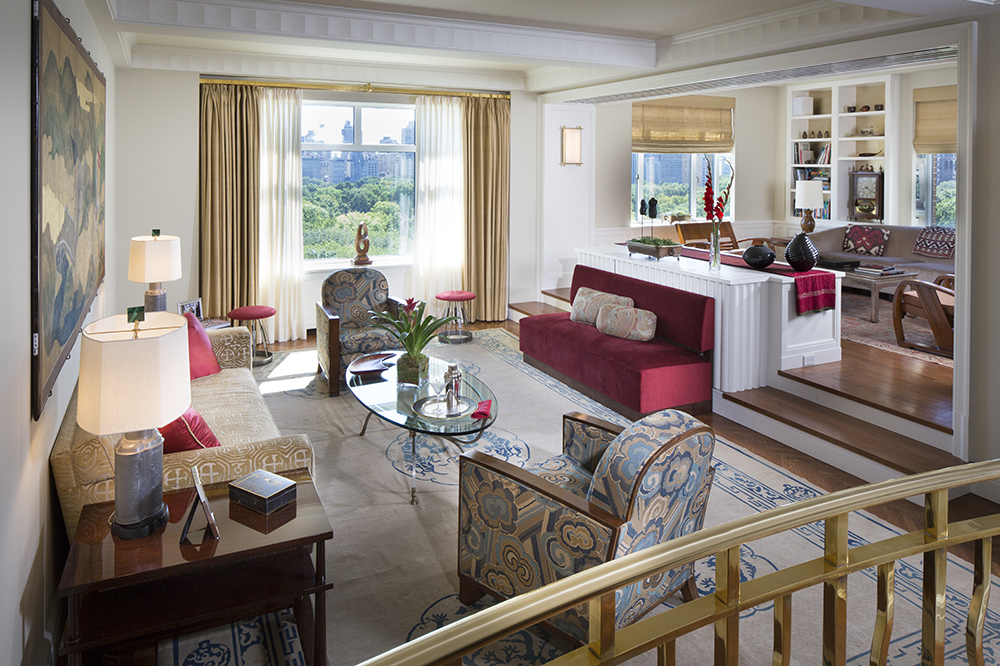
Why Asian Collector Markets Are Different
The best Asian rug buyers often look for something different from spectacle. In many Japanese, Korean, Hong Kong, Taiwanese, and Chinese interiors, a rug has to hold the room together without overwhelming it. Balance, negative space, color discipline, natural materials, and architectural proportion matter as much as age or rarity.
That makes this region different from the Middle East, where palace-size carpets and the majlis can drive the design conversation, and different from North America, where proximity to the New York gallery and domestic U.S. shipping are central advantages. In Asia, the strongest buying question is often more precise: which rug has enough history, material presence, and visual intelligence to work in a highly considered room?
Nazmiyal’s role is to help clients answer that question clearly. A specialist can compare scale, palette, pile, condition, age, origin, materials, and room fit before a rug is shipped, so the choice feels intentional rather than decorative.
China, Hong Kong, and the Culture of Rug Collecting
China has its own long history of textile and carpet production, including antique Chinese rugs, Peking and Art Deco carpets, symbolic motifs, silk traditions, and designs that often use spacing, balance, and restraint differently from Persian or European rugs. For clients in Hong Kong, Shanghai, Beijing, Taipei, and other Chinese-speaking markets, this creates a layered collecting context: buyers may be interested in Persian and Turkish rugs, but they may also understand antique Chinese rugs through a local tradition of material culture and decorative symbolism.
Nazmiyal’s Chinese rugs page is a useful starting point for buyers interested in Peking, Ningxia, Kansu, and Art Deco-era Chinese carpets. Our guide to antique rug collecting in Beijing, Shanghai, and Hong Kong also discusses how Chinese collectors and designers approach Persian, Central Asian, vintage, and modern rugs today.
For Hong Kong clients, the rug often has to work within dense vertical living, refined design schemes, strong natural light, and rooms where every object is visible. For Shanghai and Taipei clients, scale, humidity, apartment layout, and polished modern interiors often matter just as much as origin or pattern. The right rug should add warmth and seriousness without making the room feel crowded.
Japan and Korea: Restraint, Precision, and Material Calm
Japan and South Korea often reward rugs with quiet authority. In Tokyo, Kyoto, Osaka, Kobe, and Seoul interiors, the best rug is not always the loudest or most ornate. It may be a softly toned Persian rug, an antique Chinese rug, a Swedish or Scandinavian flatweave, a restrained Oushak, or a modern rug with enough texture to warm a clean architectural space.
Nazmiyal works with clients who want rugs to support architecture, not fight it. In Japan, that may mean a rug that complements wood, plaster, low furniture, controlled sightlines, or a room where empty space is part of the design. In Korea, it may mean a piece that softens stone, glass, contemporary furniture, and city light while still feeling refined and intentional.
Clients can start with our Japan antique rugs page, our Tokyo antique rugs page, or our Seoul antique rugs page before requesting a more specific selection from the New York gallery.
Rugs for Urban Asian Interiors
Many Asian clients are buying for apartments, high-rise residences, villas, design-forward city homes, galleries, offices, or hospitality settings rather than large suburban rooms. That changes the rug decision. Proportion, elevator access, building delivery requirements, furniture footprint, humidity, sunlight, and daily use all matter.
In compact rooms, a rug may need to bring warmth and depth without adding visual clutter. In larger residences, the rug may need enough scale to organize seating, dining, or entertaining zones. In more formal rooms, a Persian city rug or antique Chinese carpet may serve as the anchor; in cleaner modern spaces, a vintage, Scandinavian, Oushak, or modern rug may provide texture without overpowering the architecture.
Before shipping, Nazmiyal specialists can review photos, measurements, furniture plans, and room goals to help determine whether a rug should act as a quiet foundation, a collector’s object, or the visual center of the room.
Buying Remotely from Asia, with Confidence
Most clients here buy remotely, and the decision is rarely about finding a beautiful rug — it is about which piece has the history, material presence, and visual intelligence to hold a highly considered room. A Persian city rug, an antique Chinese carpet, a softly toned Oushak, and a Scandinavian flatweave each solve a different problem. A specialist provides photography, video, measurements, and condition detail, and helps compare options across traditions for your specific architecture, light, and proportion before anything ships.
Shipping, Customs, and Landed-Cost Planning in Asia
Rugs ship from New York to destinations across Asia, professionally packed and insured. Import duties, VAT, consumption tax, brokerage charges, customs clearance, and local documentation requirements vary by destination and are typically handled by the carrier, customs broker, or local authorities at or before delivery. These charges are separate from the rug price and shipping quote unless explicitly stated otherwise in writing.
Japan, Mainland China, Hong Kong, Taiwan, and South Korea each handle imports differently. Hong Kong is generally a lower-friction import destination, while Japan, South Korea, Taiwan, and Mainland China have their own customs, tax, and clearance systems. Buyers should confirm shipping, insurance, customs clearance, and any applicable local import costs before purchase, especially for valuable rugs, oversized pieces, silk rugs, and project installations.
Nazmiyal provides export documentation to support customs clearance. For a specific rug and destination, contact our team before purchase so shipping, insurance, delivery requirements, and documentation can be reviewed in advance.
Asian Markets We Serve
Nazmiyal works with collectors, homeowners, designers, decorators, architects, and project clients across major East Asian and Greater China markets. The links below route clients to more specific country and city pages where available.
Japan
Greater China
South Korea
Services for Asian Collectors, Designers, and Project Clients
Collectors: comparison and guidance across antique Persian, Chinese, Oushak, Caucasian, Central Asian, silk, Art Deco, and Scandinavian rugs — including the Peking, Ningxia, Kansu, and Art Deco Chinese carpets that connect to the region’s own collecting tradition.
Interior designers and architects: curated selections and project support for urban, high-rise, gallery-like, and hospitality interiors through the Nazmiyal Trade Program.
Urban residences and apartments: guidance on scale for compact and high-rise rooms, elevator and building-delivery access, humidity, light, and material durability — the practical constraints of dense vertical living.
Custom and modern projects: when no antique fits the exact size, palette, or restraint a clean modern space needs, Nazmiyal can discuss custom options.
Selling or sourcing from Asian collections: to discuss a piece, visit our sell your rug page.
Approval and Returns in Asia
Eligible purchases may qualify for Nazmiyal’s 3-day in-home approval period. Given the distance, the cost of return shipping from East Asia and the recovery of any import duties or consumption tax already paid are real considerations, so the terms are worth confirming before purchase — particularly for valuable, oversized, or silk pieces. All terms are subject to the Nazmiyal purchase policy.
Frequently Asked Questions: Buying Antique Rugs in Asia
Does Nazmiyal ship antique rugs to Japan, Hong Kong, China, Taiwan, and South Korea?
Yes. Rugs ship from New York, professionally packed and insured, to major Asian destinations including Japan, Hong Kong, Mainland China, Taiwan, and South Korea. Shipping, insurance, customs clearance, and local import requirements vary by destination, so buyers should confirm details for the specific rug and country before purchase.
What customs duties or taxes apply when buying a rug in Asia?
Import duties, VAT, consumption tax, brokerage charges, customs clearance, and local fees vary by destination and are usually collected by the carrier, customs broker, or local authorities at or before delivery. These charges are separate from the rug price and shipping quote unless explicitly stated otherwise in writing.
Is Hong Kong different from Japan, Korea, Taiwan, and Mainland China?
Yes. Hong Kong is generally a lower-friction import destination than many other Asian markets, while Japan, South Korea, Taiwan, and Mainland China each have their own customs and tax systems. Buyers should confirm current local requirements before purchase.
Can Nazmiyal help me choose a rug remotely?
Yes. Most Asian clients buy remotely. A Nazmiyal specialist can provide photos, video, measurements, condition information, and remote consultation support before you decide.
What types of rugs work well in Japanese and Korean interiors?
Japanese and Korean interiors often respond well to rugs with restraint, material quality, balanced color, and controlled pattern. Persian rugs, antique Chinese rugs, Oushaks, Scandinavian flatweaves, vintage rugs, and modern rugs can all work depending on the architecture and room.
What types of rugs work well in Hong Kong, Shanghai, and Taipei interiors?
Hong Kong, Shanghai, and Taipei interiors often need rugs that balance polish, proportion, and space efficiency. Refined Persian rugs, antique Chinese rugs, softly toned Oushaks, Scandinavian designs, vintage rugs, and select modern pieces can work well in high-rise homes, apartments, and design-led residences.
Can Nazmiyal help source antique Chinese rugs?
Yes. Nazmiyal offers antique Chinese rugs, including Peking, Ningxia, Kansu, and Art Deco-era Chinese carpets, along with Persian, Turkish, Caucasian, Central Asian, vintage, and modern rugs that may suit Asian interiors.
Can designers and project clients work with Nazmiyal across Asia?
Yes. Nazmiyal works with interior designers, architects, homeowners, collectors, and project clients, offering curated selections, high-resolution photography, remote review, trade support, custom options, and insured shipping coordination.
Work With Nazmiyal in Asia
Whether you are furnishing a Tokyo apartment, sourcing for a Hong Kong residence, choosing a rug for a Shanghai or Taipei interior, or building a collection in Seoul, Nazmiyal specialists can help you choose the right antique rug and coordinate insured delivery from New York. Contact Nazmiyal to begin.