Quick Navigation
Key Takeaways
- Wilton carpets are prized for clean drawing and balanced ornament, making them easy to place in both traditional and transitional interiors.
- Many examples show Persian-influenced layout logic (medallions, allover repeats, structured borders) filtered through English color sensibility.
- Because these are often loom-woven and machine-made, condition, pile consistency, and edge stability matter as much as the pattern itself.
At-a-Glance Specs
- Origin: England (Wilton tradition)
- Construction: typically machine-made rugs / loom-woven pile carpets (piece-dependent)
- Common eras: early 1900s through mid-1900s (varies by rug)
- Typical looks: Persian-inspired medallions • allover florals • Art Deco geometry • framed borders
- Best rooms: living rooms • dining rooms • libraries • bedrooms • formal sitting rooms
- What to look for: crisp motif resolution • stable edges • even pile • clean perimeter • cohesive palette
Popular Searches
Large rugs | Oversized rugs | Floral rugs | Allover rugs | Medallion layouts | Shop by color | Rug size guide
Featured Wilton Rugs from the Collection
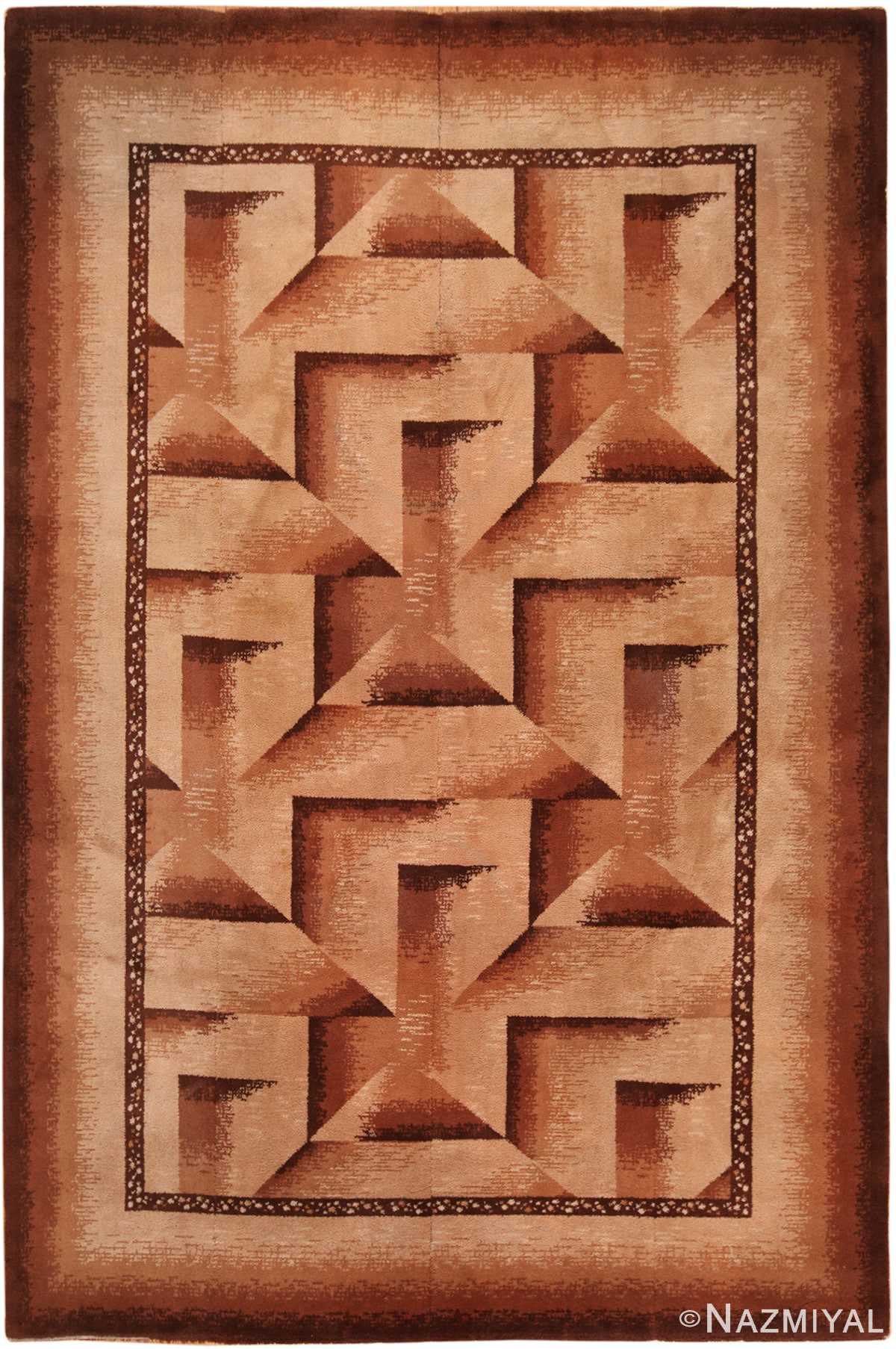
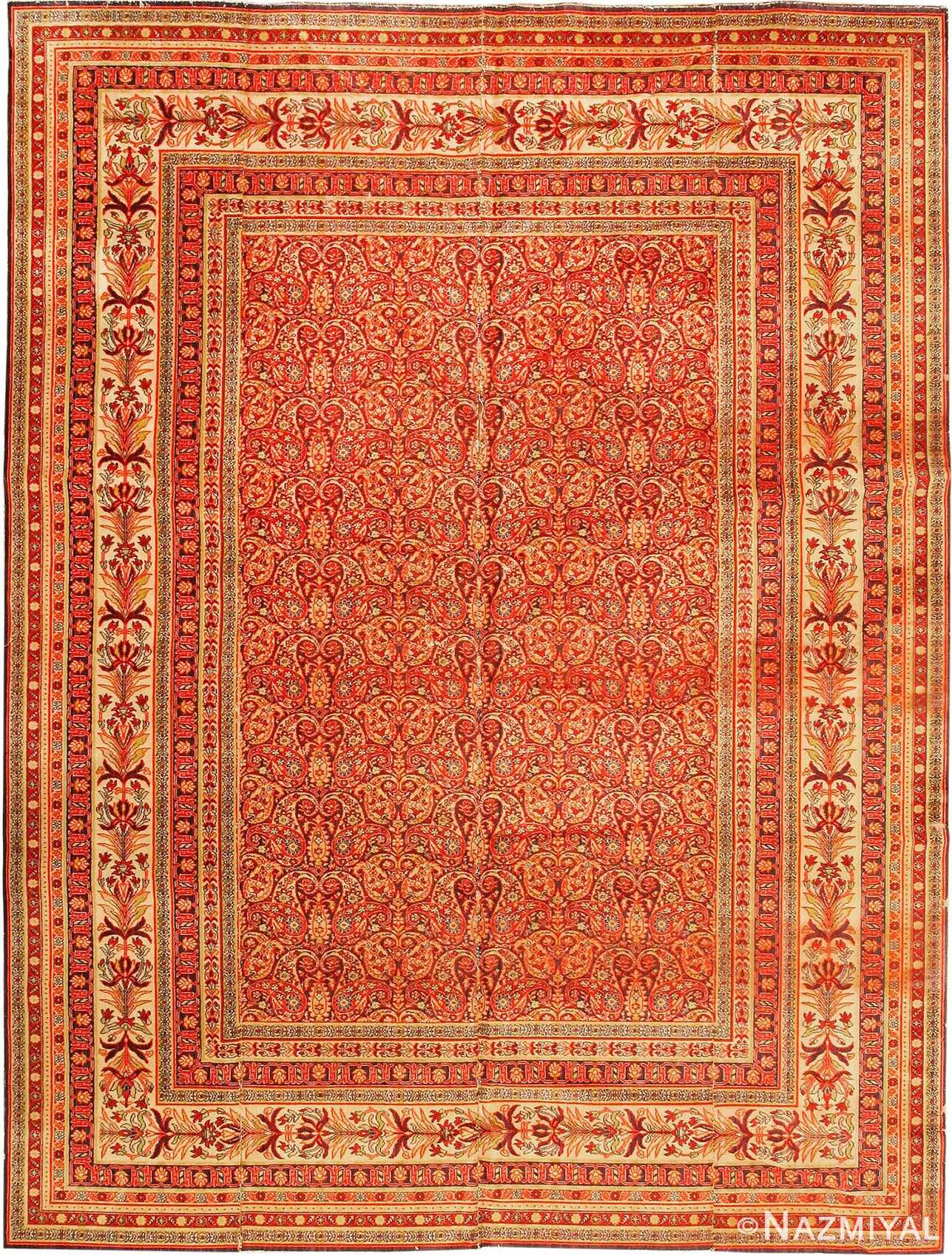
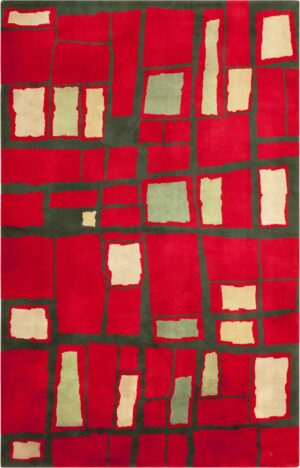
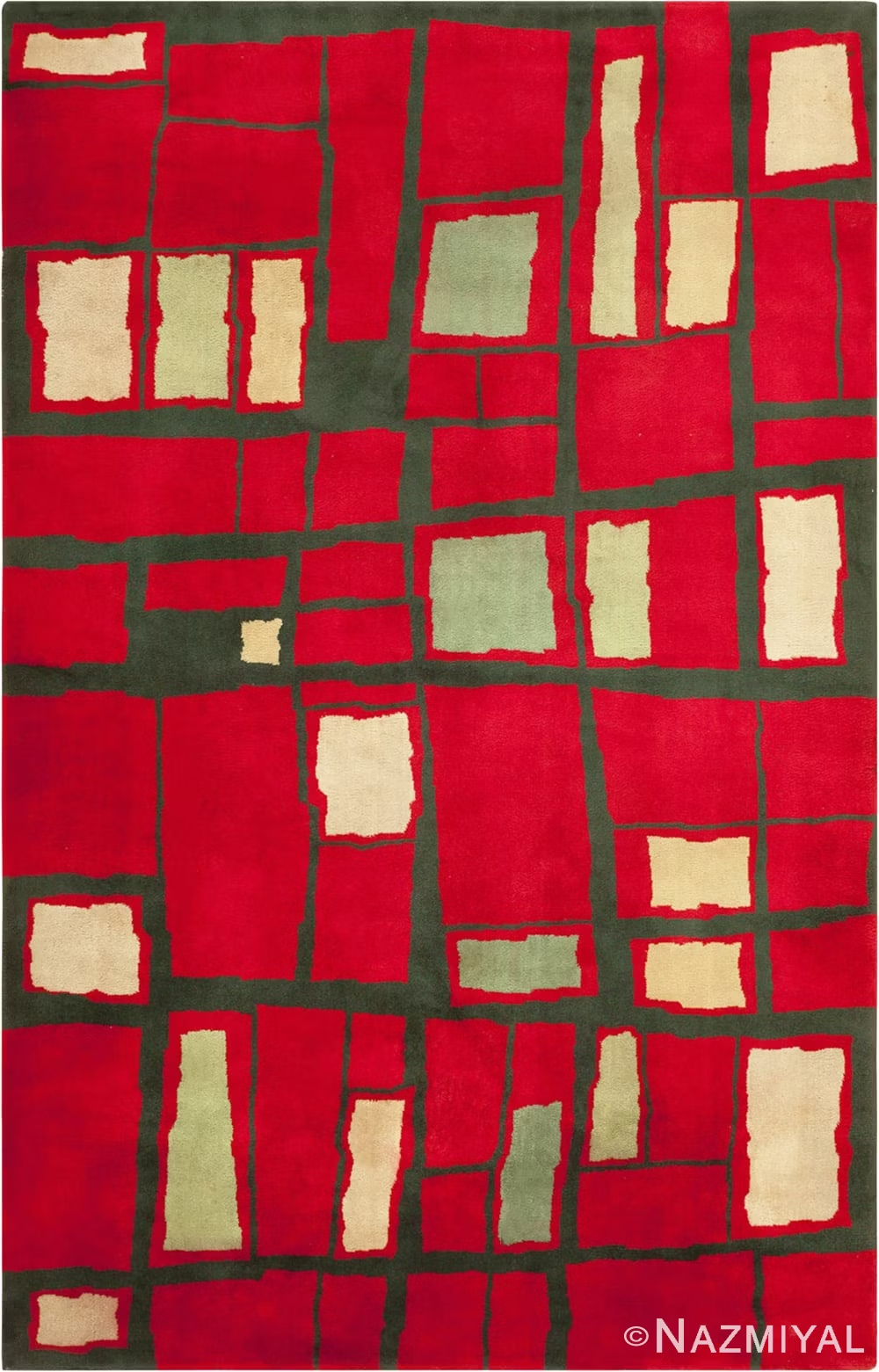
Inventory changes frequently. These featured rugs are examples of English Wilton carpets across different design moods and early-to-mid 20th century production.
History & Design Notes
Wilton carpets take their name from the English weaving tradition associated with Wilton production. Many Wilton designs are admired for their disciplined repeat, consistent drawing, and a measured palette that sits comfortably in elegant interiors. You will often see a fusion of decorative systems: European framing and proportion paired with structured field logic that collectors also associate with Persian rugs.
Because these carpets are commonly loom-woven, designers and collectors often evaluate them the way they would evaluate fine interior textiles: balance, clarity, stability, and how confidently the rug “anchors” a room without becoming visually loud.
Identification & Construction
What makes a Wilton rug a Wilton?
Most Wilton rugs are produced with a structured weaving system that supports precise, repeatable patterning and clean outlines. In practice, this means you often get crisp borders, reliable symmetry, and a composition that reads “finished” from across the room—ideal for formal spaces, dining rooms, and libraries.
Materials, surface feel, and long-term livability
Wilton carpets are frequently wool-forward, offering a durable surface with a refined hand. When evaluating a piece, prioritize edge stability, even pile, and consistent wear. If you like to browse by regional weaving families beyond England, explore rug origins for broader context.
Decorating & Placement Guidance
Use Wilton carpets to “compose” the room
Wilton designs often look best when the surrounding décor supports their structure: calmer wall tones, intentional lighting, and a few complementary accents that echo the rug’s border or central motif. In dining rooms, a Wilton carpet can add the kind of composed patterning that makes the room feel complete.
Choose the era that matches how you live
For a more collected, traditional look, start with an antique rug that carries formal framing and time-earned character. If you prefer an easier day-to-day blend with mixed furnishings, explore vintage rugs. For cleaner lines and quieter fields, a modern rug can deliver similar structure with less ornament.
Rugs over carpeting: keep it stable and intentional
If placing a Wilton rug over wall-to-wall carpet, aim for a stable, flat presentation. Low-to-moderate pile rugs tend to sit more cleanly over plush carpeting than very thick piles. A clean perimeter and proper underlay help the rug look deliberate and stay safe.
Wilton Rugs vs Axminster Rugs
If you love English carpets and want a close parallel for comparison, explore Axminster rugs—a classic cousin category with its own decorative emphasis.
| Feature | Wilton Rugs | Axminster Rugs |
|---|
| Typical look | Precise repeats, framed borders, Persian-influenced layout with English palette control | Neoclassical framing, floral ornament, “salon” refinement and European composition |
| How it reads in a room | Structured, anchoring, quietly formal | Decorative, elegant, classically composed |
| Best for | Dining rooms, libraries, formal living rooms, transitional interiors | Formal sitting rooms, dining rooms, traditional interiors, composed decorative schemes |
| Shopping mindset | Prioritize drawing clarity, edge stability, and cohesive palette | Prioritize composition, condition honesty, and foundation stability |
Closest Cousins
- Axminster rugs — a classic English cousin category for decorative comparison.
- Arts and Crafts rugs — English design sensibility that often overlaps with Wilton palette and motif taste.
- Needlepoint rugs — another refined, interior-friendly category with composed ornament.
Glossary
Border system: The framing elements (main border + guard borders) that organize the rug’s field.
Medallion: A central focal motif used to anchor the composition.
Allover pattern: A repeating design that fills the field without a single dominant center.
Motif clarity: How cleanly the design resolves—especially curves, outlines, and transitions between colors.
For more definitions, see the rug glossary.
FAQ
Are Wilton rugs handmade?
Most Wilton rugs are loom-woven and produced with structured, repeatable construction rather than hand-knotting. The appeal is often in their precision, stability, and interior-friendly design language.
Do Wilton carpets use Persian-style designs?
Many do. It’s common to see medallions, structured borders, and repeating systems that echo Persian composition, adapted to English taste and palette.
What should I look for when buying a Wilton rug?
Prioritize motif clarity, stable edges, an even pile, and a cohesive palette. Because production is often consistent, condition and how the rug reads in your space can be the main differentiators.
Where do Wilton rugs work best in the home?
They tend to excel in living rooms, dining rooms, libraries, and bedrooms—anywhere you want composed patterning and a finished, intentional foundation.
How do Wilton rugs compare to Axminster rugs?
Both are highly collectible English carpet traditions. Wilton rugs often emphasize structured repeat and Persian-influenced layout, while Axminster rugs frequently lean into neoclassical framing and European decorative ornament.
Nazmiyal White-Glove Service
We make it easy to shop with confidence—whether you’re choosing a single statement piece or sourcing an entire room.
Nazmiyal Collection has been a trusted source for antique rugs and vintage carpets for over 45 years. Our NYC gallery curates one-of-a-kind pieces with an emphasis on authenticity, provenance, and lasting decorative value.
Need help? Call us at (212) 545-8029 or visit our New York City showroom to work with a rug expert.

 Size: 8 ft 10 in x 13 ft 5 in (2.69 m x 4.09 m)
 Size: 8 ft 8 in x 11 ft 7 in (2.64 m x 3.53 m)
 Size: 6 ft 7 in x 10 ft 2 in (2.01 m x 3.1 m)