Quick Navigation
Key Takeaways
- Kars rugs typically deliver bold geometry and clear structure, making them easy to place in modern and eclectic interiors.
- Many pieces show cross-regional influence—especially a close visual relationship with Caucasian design language.
- Prioritize livability: look for stable edges, honest wear, and clean contrast so the pattern stays crisp in your space.
At-a-Glance Specs
- Origin: Kars region, northeastern Turkey
- Palette (typical): slate blue • denim • teal • sage • ivory • charcoal • softened rust accents
- Common materials: wool pile • cotton foundation (piece-dependent)
- Typical looks: tribal geometry • medallions • repeating motifs • strong border systems
- Best rooms: living rooms • bedrooms • studies • hallways (gallery runners) • relaxed dining rooms
- Typical sizes: long runners and gallery sizes • room-size 8×10+ • occasional smaller accents
- What to look for: motif clarity • even wear • stable selvages • balanced contrast • a palette that matches your light
Popular Searches
Geometric rugs | Tribal rugs | Medallion layouts | Kilim rugs | Cool rugs | Large rugs | Oversized rugs | Shop by color | Rug size guide
Featured Kars Rugs from the Collection
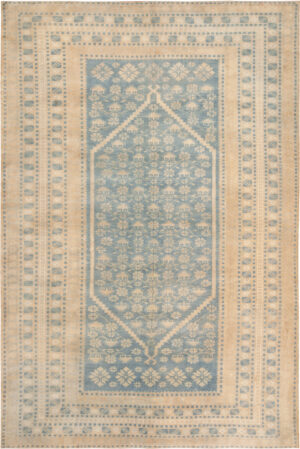
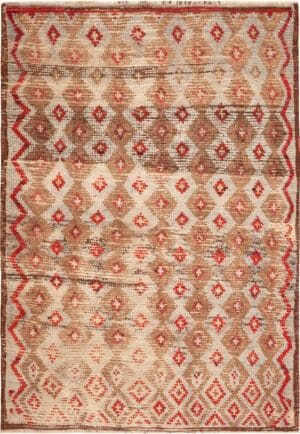
Inventory changes frequently. These featured rugs are examples of Kars design across runner, gallery, and room-size formats.
Design Language of Kars Rugs
Kars sits close to the Caucasus borderlands, and many Kars rugs reflect that proximity: strong geometry, emblem-like motifs, and a pattern rhythm that reads confidently from across the room. You will often see medallion-based organization and framed border systems—compositions that feel familiar to collectors of both Turkish and Caucasian weavings. Some pieces also echo the “logic” of classical Oriental layouts, where borders and field structure work together the way they often do in established Persian workshop traditions.
A practical way to read Kars design is to look for three signals: (1) big, legible motifs; (2) a clear border hierarchy that frames the field; and (3) a palette that feels cool or tempered—ideal for interiors that want pattern without visual heat.
Identification & Construction
How to recognize a Kars rug
Most Kars rugs present a bold, tribal-geometric vocabulary: repeated motifs, angular medallions, and strong outlines. The drawing tends to favor clarity and rhythm over microscopic detail, which is one reason these carpets can feel so “design-forward” in contemporary rooms.
Materials, knotting, and what to check in person
Kars rugs are generally wool-forward and are commonly woven with the symmetrical Turkish knot (often called the Gördes knot). When you evaluate a piece, focus on stability: straight edges, sound ends, and consistent pile wear. If you love the graphic look of flatwoven geometry, you may also enjoy exploring kilim rugs for a lighter, pile-free surface.
Decorating & Placement Guidance
Use Kars rugs to add “structure” to relaxed rooms
Because Kars rugs read clearly at a distance, they work well when you want pattern that organizes a space—especially open plans, reading corners, and living rooms with mixed furniture silhouettes. Let the rug do the anchoring, then keep surrounding textiles quieter so the geometry stays intentional.
Balance cool palettes with warm materials
Many Kars rugs lean cooler, which can make a room feel calmer and more expansive. To keep the space inviting, pair them with warm woods, leather, brass, or layered textiles in creams and natural tones. If you want a more color-driven path, browse the Rug colors hub to compare palettes across categories.
Choose scale first: runner, gallery, or room-size
Kars rugs are often found in long formats that are perfect for halls and galleries, but room-size examples can be outstanding under seating groups. If you’re deciding between sizes, consult the rug size guide and prioritize a clean perimeter around furniture legs so the composition reads “finished.”
Kars Rugs vs Caucasian Rugs
Kars rugs often live right next to Caucasian aesthetics: both can be geometric, emblematic, and high-impact. If you want to compare the closest design neighbor, explore Caucasian rugs.
| Feature | Kars Rugs | Caucasian Rugs |
|---|
| Region | Turkey (Kars region) | Caucasus region (many sub-groups) |
| Visual language | Bold geometry, medallions, structured borders; often “room-friendly” rhythm | High-impact tribal symbolism, sharp geometry, strong icon-like motifs |
| Palette tendency | Often cooler or tempered with earth tones | Often saturated, high-contrast, and energetic |
| Best for | Modern-eclectic rooms, halls/galleries, calm pattern foundations | Statement spaces, collectors of tribal symbolism, bold focal moments |
Closest Cousins
- Caucasian rugs — the closest visual cousin for bold geometry and emblem-like motif language.
- Kazak rugs — a major Caucasian family with strong, graphic designs that pair naturally with Kars aesthetics.
Glossary
Gördes (Turkish) knot: A symmetrical knotting method common in Turkish weaving.
Medallion: A central focal motif used to organize the field.
Border system: The framing elements (main border + guard borders) that structure the rug’s perimeter.
Motif clarity: How crisply the design resolves—especially outlines and transitions between colors.
For more definitions, see the rug glossary.
FAQ
What are Kars rugs known for?
Kars rugs are known for bold geometric composition, tribal motifs, and palettes that often feel cooler and calmer—making them easy to integrate into modern and eclectic interiors.
Are Kars rugs Turkish or Caucasian?
Kars rugs are Turkish (from the Kars region), but many designs show a close relationship to Caucasian aesthetic language because of geography and shared design influence.
What patterns are common in Kars rugs?
Expect geometric repeats, medallions, strong border framing, and emblem-like motifs that read clearly across a room.
What should I check before buying a Kars rug?
Look for stable edges, consistent pile wear, clean contrast, and a size that suits your layout. Runner and gallery formats are especially common and can be transformative in halls and long spaces.
Do Kars rugs work in contemporary interiors?
Yes. Their clear geometry and measured palettes can feel surprisingly modern, especially when paired with warm woods, clean upholstery, and intentional lighting.
Nazmiyal White-Glove Service
We make it easy to shop with confidence—whether you’re choosing a single statement piece or sourcing an entire room.
Nazmiyal Collection has been a trusted source for antique rugs and vintage carpets for over 45 years. Our NYC gallery curates one-of-a-kind pieces with an emphasis on authenticity, provenance, and lasting decorative value.
Need help? Call us at (212) 545-8029 or visit our New York City showroom to work with a rug expert.