Antique Mughal Carpets from India with Courtly Florals, Millefleurs, and Persian-Influenced Design
Mughal rugs are among the most collectible Indian court carpets—prized for fine drawing, lush botanical detail, and a refined palette that can feel regal without reading as “busy.” Many were woven for imperial taste in North India between the 16th and 18th centuries, often blending local artistry with design language familiar to collectors of Persian rugs. If you’re looking for rare examples, period-correct character, and guidance on what separates true court production from later workshop interpretations, begin with Nazmiyal.
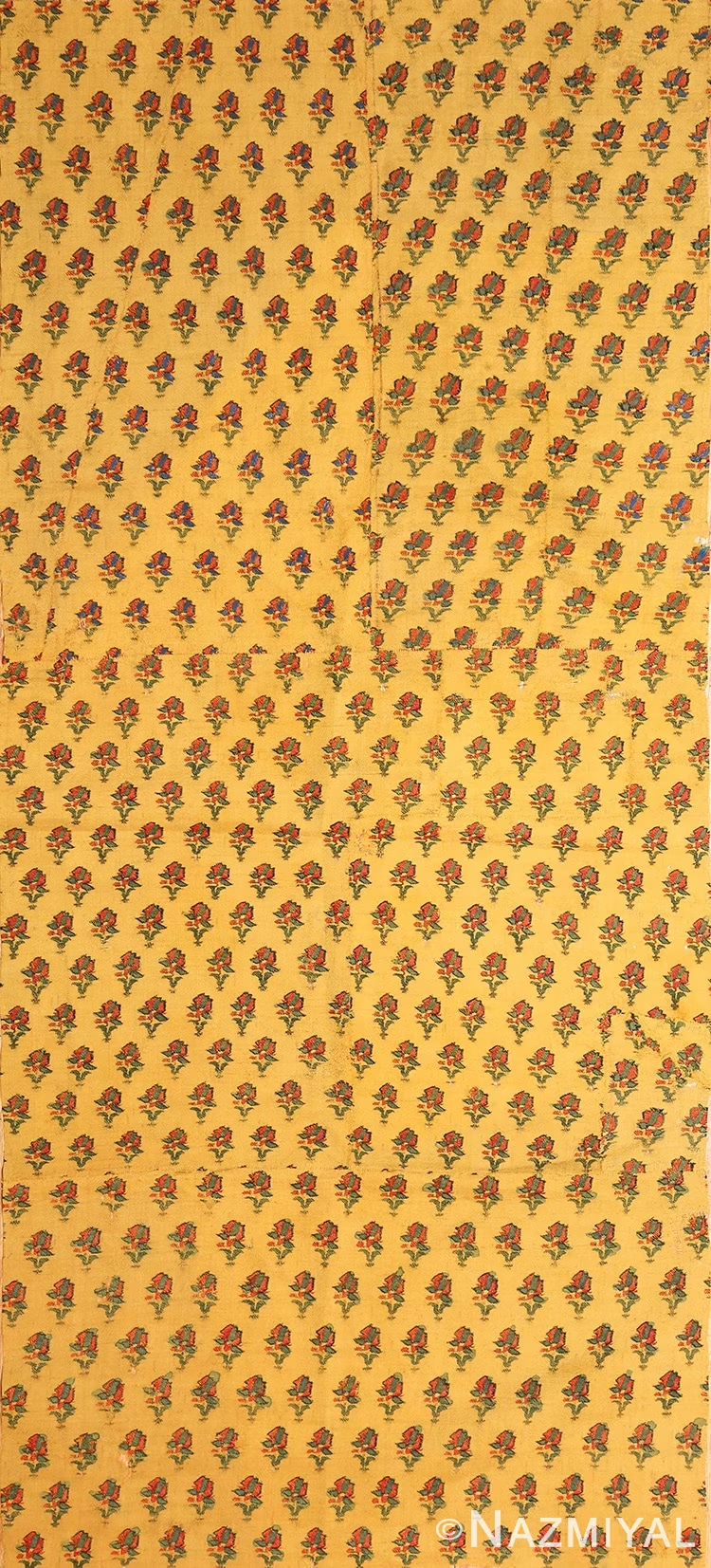
Mughal rugs are rare Indian court carpets—most associated with the 16th–18th centuries—known for refined floral drawing, millefleur-style repeats, and a Persian-influenced design vocabulary rendered with distinctive Indian color and character.
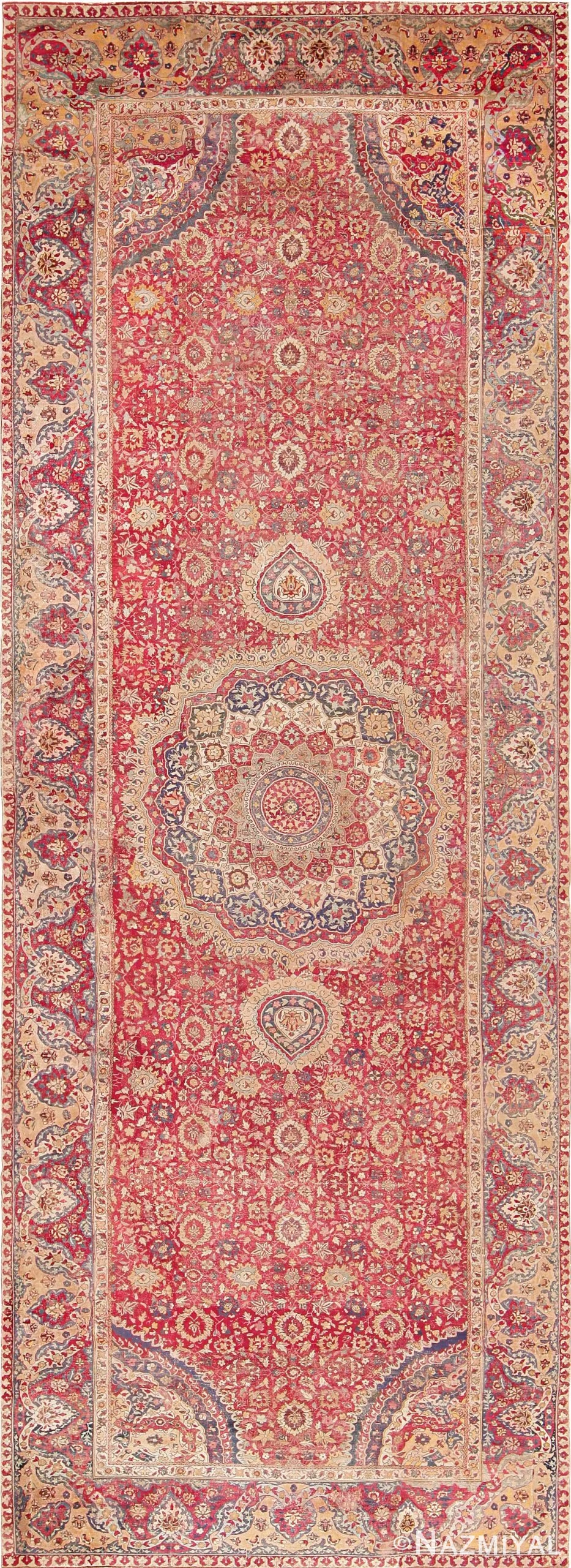
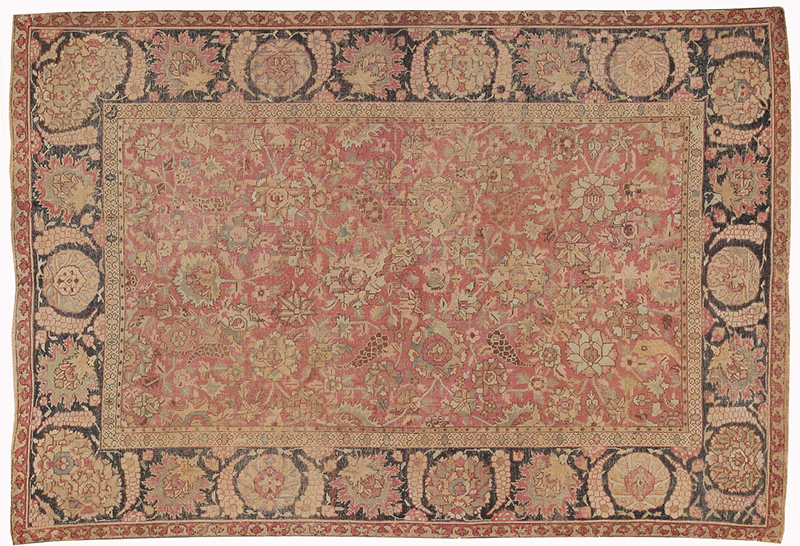
c. 1600s • 4 ft 7 in x 6 ft 6 in • allover floral drawing with courtly balance
Why Nazmiyal? 3 Pillars of Nazmiyal
Curated depth: a focused inventory that emphasizes rarity, artistry, and period character.
Expert guidance: help comparing workshop traditions, construction details, and decorative fit.
Confidence in the purchase: practical support for shipping, approvals, and service from a long-established gallery.
How to Identify Mughal Rugs
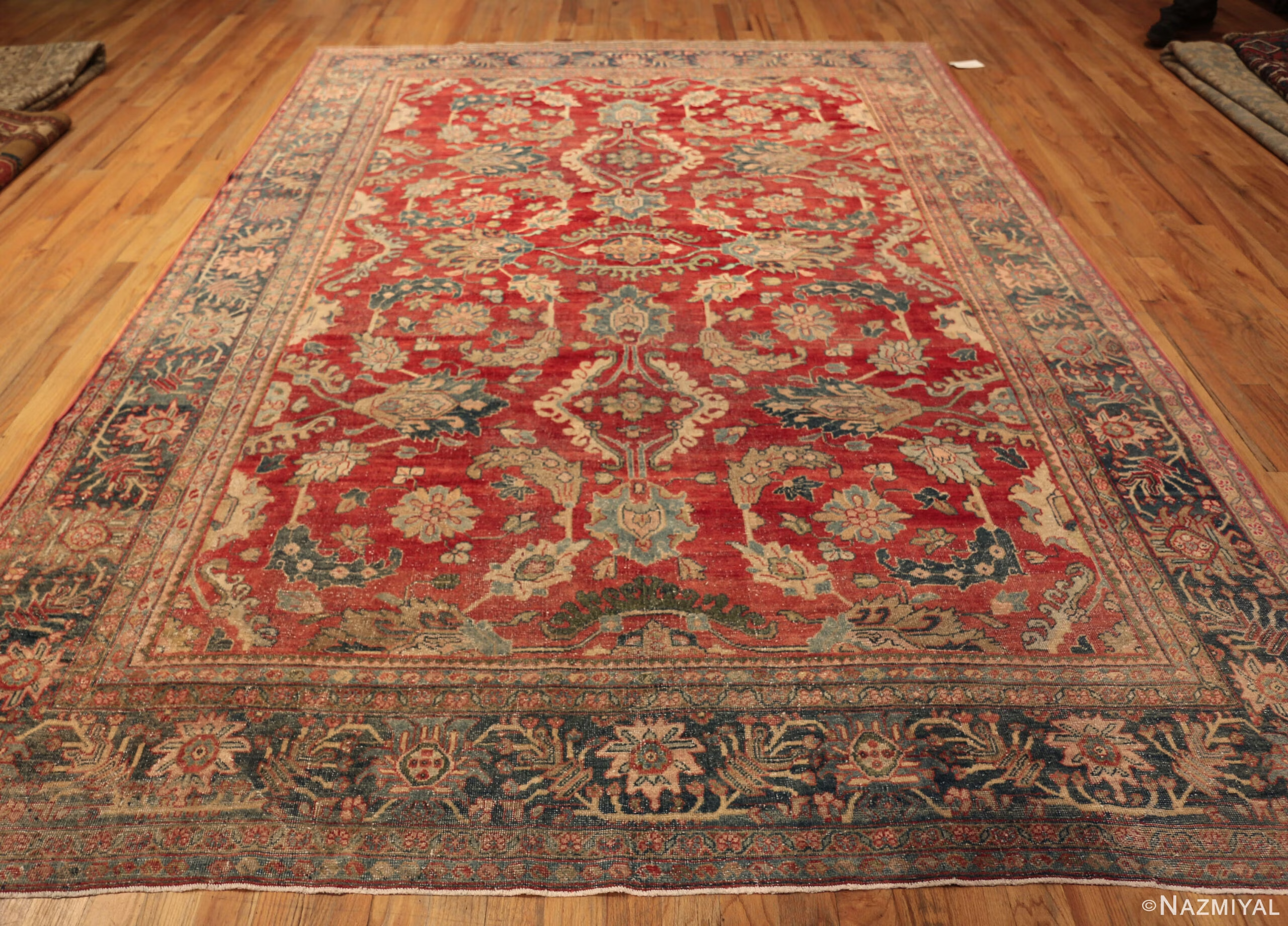
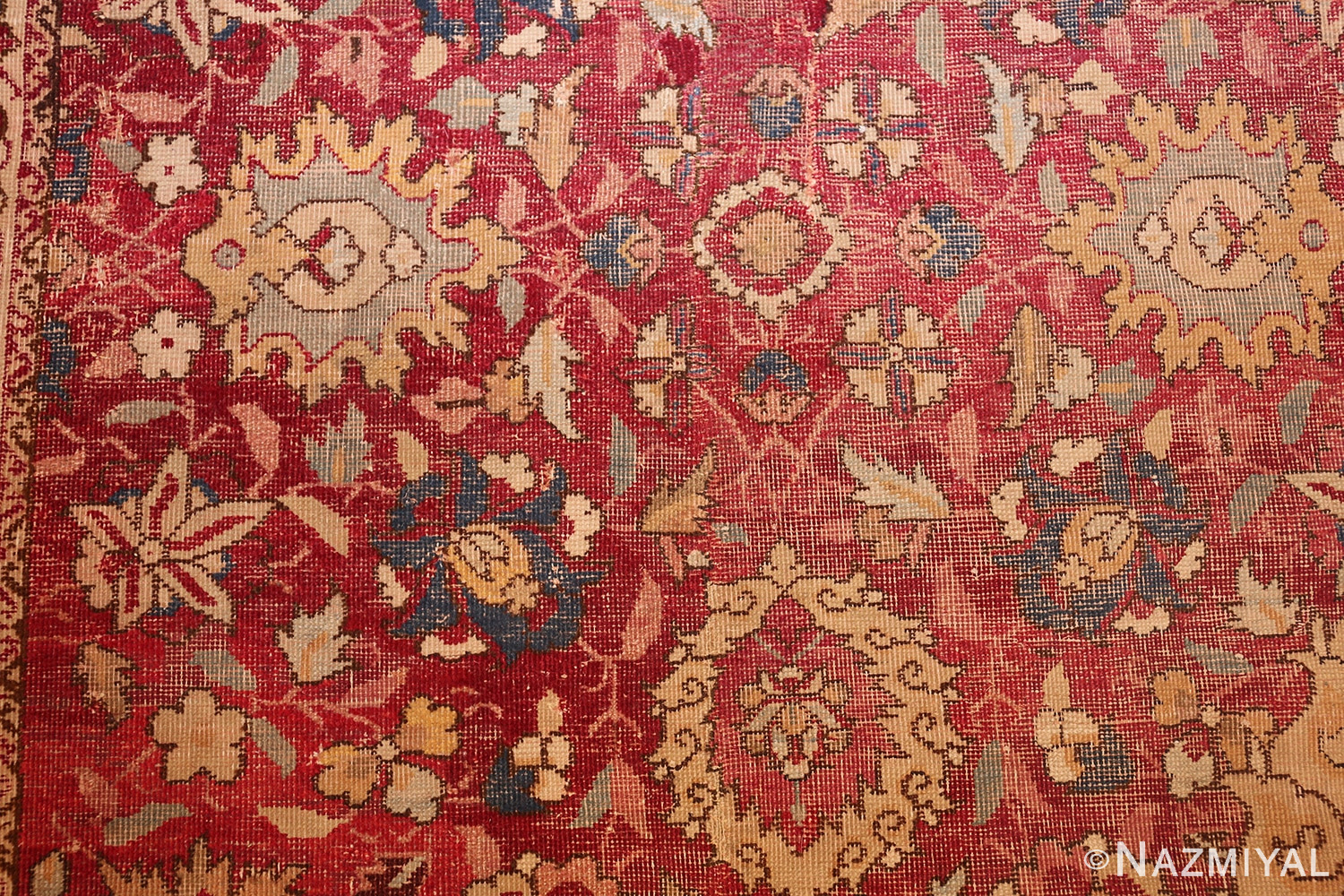
Mughal carpets often read as “garden-like” at first glance: naturalistic blossoms, flowering sprays, and carefully spaced palmettes connected by fine vine-scrolls. Look for a disciplined composition that feels planned at court scale, not improvised—along with borders that may include multiple guard stripes separating the frame from the field.
Botanical realism: flowers and plants drawn with an almost illustrative clarity (often more naturalistic than many neighboring traditions).
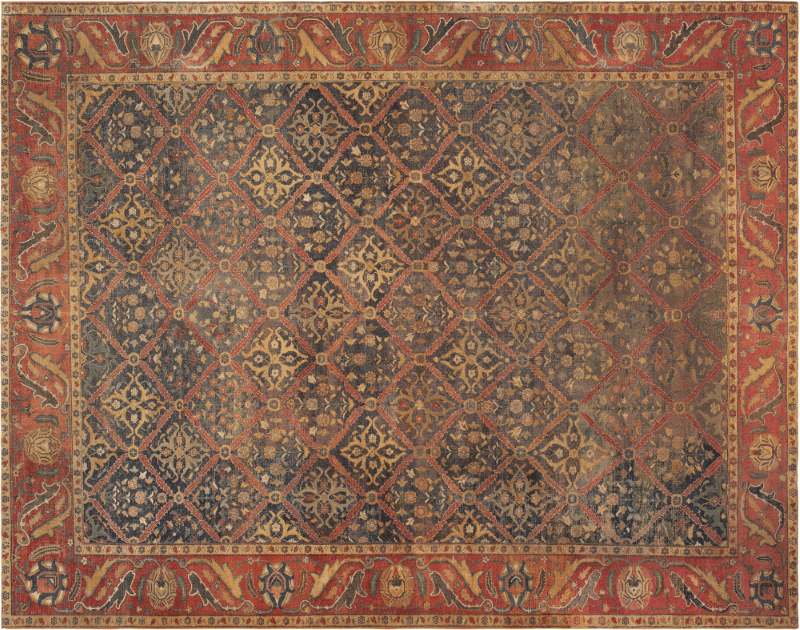
Allover rhythm: repeated floral units or lattice structures that feel continuous rather than centered on a single medallion.
Imperial palette cues: saturated reds and greens balanced by ivory, gold, or dark outlining that sharpens detail.
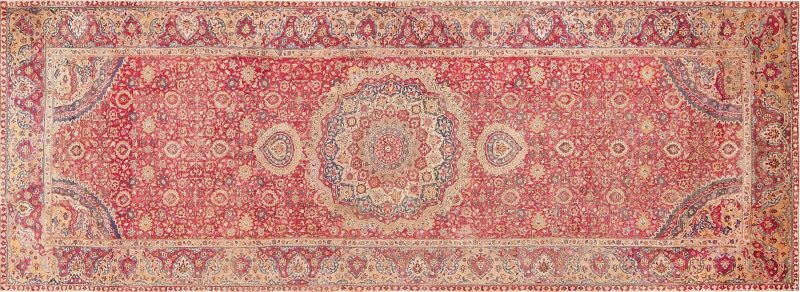
Format variety: beyond room-size carpets, you may see gallery runners, prayer formats, or pictorial/hunting themes in select examples.
Materials & Construction
Mughal rugs can be exceptionally fine, with a soft handle and crisp detail in the drawing. Many examples use high-quality wool, sometimes paired with silk highlights; foundations are often cotton or silk depending on workshop and intended prestige. Dye work is a major tell—depth and clarity matter more than “brightness.”
Pile: fine wool; occasional silk accents; select court pieces can feel especially supple.
Foundation: commonly cotton; silk foundations appear in more elite production.
Detail level: tight knotting supports delicate vine-scrolls, small blossoms, and precise outlining.
Borders: multiple guard bands are common, often used to “step” the eye from field to frame.
Decorating with Mughal Rugs
Treat a Mughal rug like a patterned foundation: let it set the tone, then keep big furniture shapes calm so the carpet can do the storytelling. In layered interiors, Mughal rugs pair beautifully with other antique rugs, while collectors often mix them with select vintage rugs for contrast; they can also anchor clean-lined rooms where modern rugs might feel too minimal for the architecture.
Room scale: use larger formats to create “palace” presence; smaller pieces can shine as collectors’ accents.
Palette strategy: echo one supporting shade (green, ivory, saffron) in textiles; keep walls and casegoods quieter.
Balance: if the field is busy, choose solid upholstery; if the field is airy, you can bring in more pattern elsewhere.
Value & Collecting
True Mughal-period rugs are scarce, and value is driven by a mix of age credibility, workshop quality, and condition. Collectors tend to pay for “court authority”: confident drawing, balanced negative space, and colors that remain clear rather than muddy. Size matters too—strong room sizes in good condition are difficult to replace.
Age & attribution: construction consistency and design vocabulary should align with the claimed period.
Condition integrity: prioritize stable foundation and honest wear over heavy restoration that blurs detail.
Design clarity: crisp botanical drawing and harmonious spacing typically outperform trend-only palettes.
Rarity factors: unusual formats (gallery, prayer, hunting themes) and elite materials can elevate collectibility.
Related Rugs
If you love Mughal rugs but want a closely related look with broader availability at room scale, your closest cousin is Agra rugs, a workshop tradition that often carries Mughal-era influence into later production.
In the rug trade, “Mughal” and “Mogul” are often used interchangeably to reference court-era Indian carpets associated with imperial Mughal taste.
What designs are most typical in Mughal rugs?
Botanical themes dominate—millefleurs, floral sprays, palmettes, and garden-like lattice structures. Select examples feature prayer layouts or hunting imagery.
Do Mughal rugs use Persian patterns?
Many Mughal carpets show Persian influence in curvilinear structure and motif vocabulary, but they tend to present it with distinctly Indian proportion, color, and botanical handling.
How can I tell court-quality from later workshop interpretations?
Look for balanced spacing, confident drawing at scale, crisp articulation of small motifs, and a palette that remains clear. Later pieces can be beautiful, but often feel less “imperial” in proportion and finish.
Do Mughal rugs work in contemporary interiors?
Yes—especially when you treat the rug as the room’s artwork and keep big furniture shapes and major textiles more restrained.
What should I prioritize when collecting?
Condition integrity, credible age, workshop quality, and design clarity. Rarity in strong, serviceable condition is often the biggest value driver over time.
Nazmiyal White-Glove Service
We make it easy to shop with confidence—whether you’re choosing a single statement piece or curating a full room.
Trustindex verifies that the original source of the review is Google.
My wife and I are so pleased with the antique Uzbek Bokhara Rug purchased from the Nazmiyal Collection. Not only does the rug have a spectacular design, it also was very reasonably priced. The way it transforms our living room, reconciling the classic modern furniture with the 1913 Craftsman interior is remarkable.
Posted on Google
Terence Hayes
Trustindex verifies that the original source of the review is Google.
I have purchased multiple rugs at multiple Nazmiyal auctions and I am extremely pleased with the quality, price, and experience. Highly recommended!
Posted on Google
Victor Florintsev
Trustindex verifies that the original source of the review is Google.
The only ones I'd ever buy rugs from. The best.
Posted on Google
Jeffrey NeumanB
Trustindex verifies that the original source of the review is Google.
I bought two gorgeous Serapi rugs from Farhad at Nazmiyal Rugs! Beautiful carpets, fair prices and great service. Very happy customer. Farhad (the sales person) was very patient and gave us great service.
Posted on Google
john haid
Trustindex verifies that the original source of the review is Google.
Alen is a gentleman and an expert. Really great to work with.
Posted on Google
Edward Yasuna
Trustindex verifies that the original source of the review is Google.
I recently purchased a modern Kandinsky rug from Nazmiyal Auctions. It was just as described, and the director (Farhad) of the auctions had it sent to me quickly and safely. Payment was easy, the rug was reasonably priced, and I highly recommend Nazmiyal Auctions and Antique Rugs. Quality merchandise and first-class service.
Posted on Google
Nicholas Carr
Trustindex verifies that the original source of the review is Google.
Had a excellent experience buying a rug in Nazmiyal's 1/18/26 online auction. First, prior to the auction, viewing a number of lots at the 32nd St showroom (I had prepared a list from the online catalog). The staff were great to work with: helpful, knowledgable, honest, and flexible. Second, after placing an online bid and winning the desired item, arranging payment and pickup was simple and straightforward. Everything went seamlessly and the overall experience was educational and fun. Many thanks to Jason and his team.
Posted on Google
Andrea Gared
Trustindex verifies that the original source of the review is Google.
Everyone at Naziyal is proffessional, especially Jason and Farhad.
They are knowledgeable, truthful, and true gentlemen. I have sold several rugs through them and will always go to them first, to buy or sell. The best in the business!
Frequently Asked Questions
Mughal rugs originate from the imperial courts of India and are known for their exceptional artistry, fine craftsmanship, and sophisticated floral designs. They draw heavily from Persian influences while introducing uniquely Indian motifs and luxurious detailing.
Mughal rugs are prized for their rarity, refined weaving, and historical significance. Their elegant botanical motifs, courtly aesthetics, and exceptional materials make them some of the most celebrated carpets in South Asian weaving traditions.
Identification focuses on finely drawn floral sprays, scrolling vines, and palmettes inspired by Mughal miniature painting. Mughal rugs often feature symmetrical compositions, soft wool, and harmonious palettes with intricate, painterly detailing.
Yes. Despite their elegance, Mughal rugs were woven with high-quality wool and strong knotting. They can be used in living rooms, dining areas, libraries, and formal spaces where their artistry can be appreciated.
Value depends on age, rarity, design complexity, and condition. Early pieces with masterful floral drawing, rich dyes, and well-preserved details are the most desirable among collectors and museums.
THE NAZMIYAL NEWSLETTER
Discover Your Next Favorite Rug
Get new arrivals, rug inspiration, educational blogs, and collection highlights delivered to your inbox.
By subscribing, you agree to receive marketing emails from Nazmiyal. Unsubscribe anytime. View our Privacy Policy.