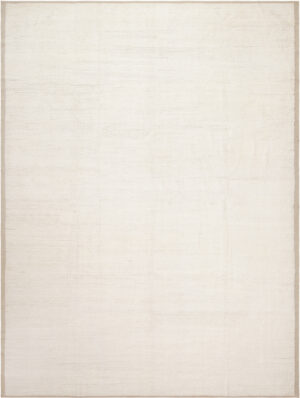
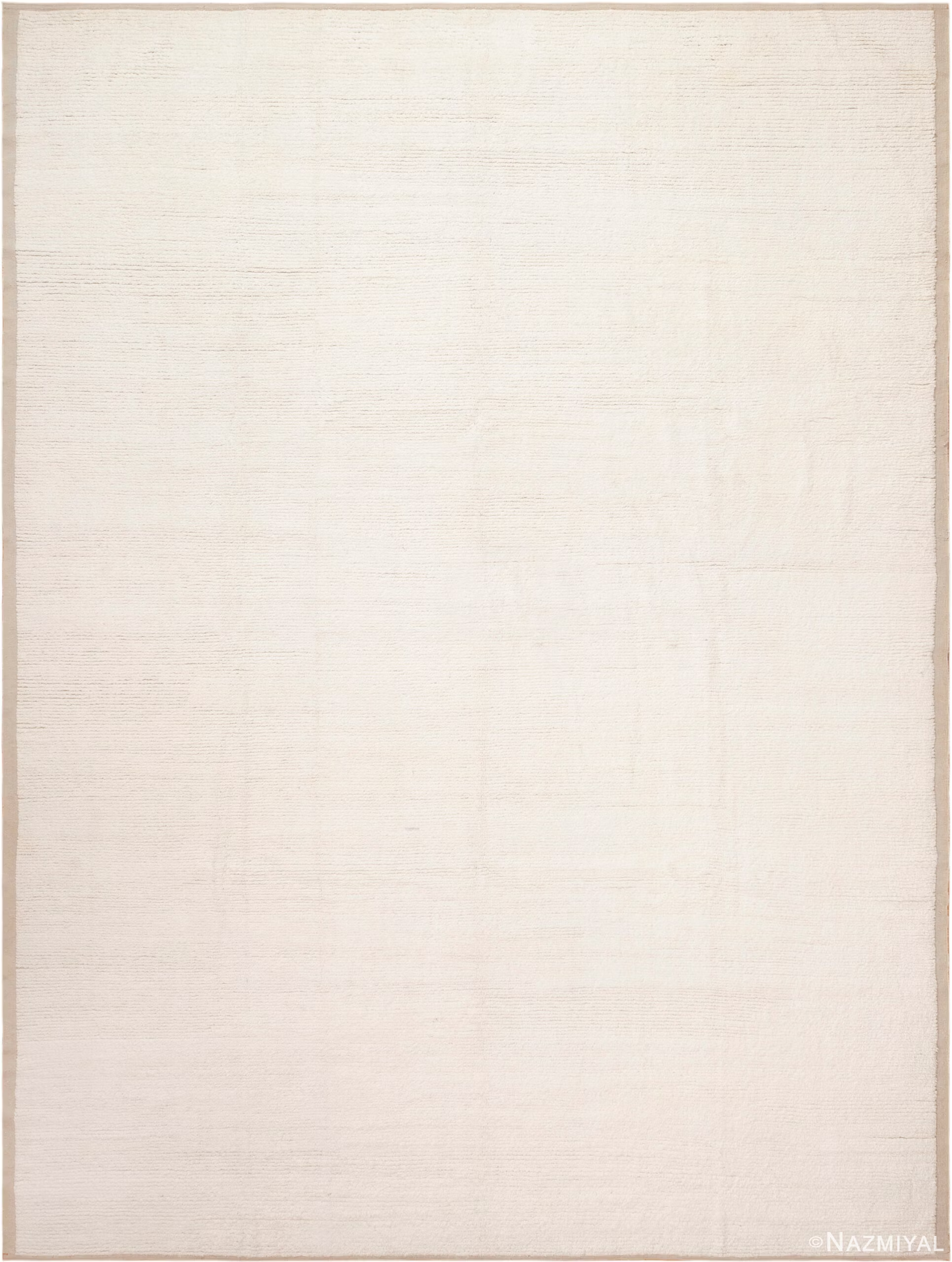
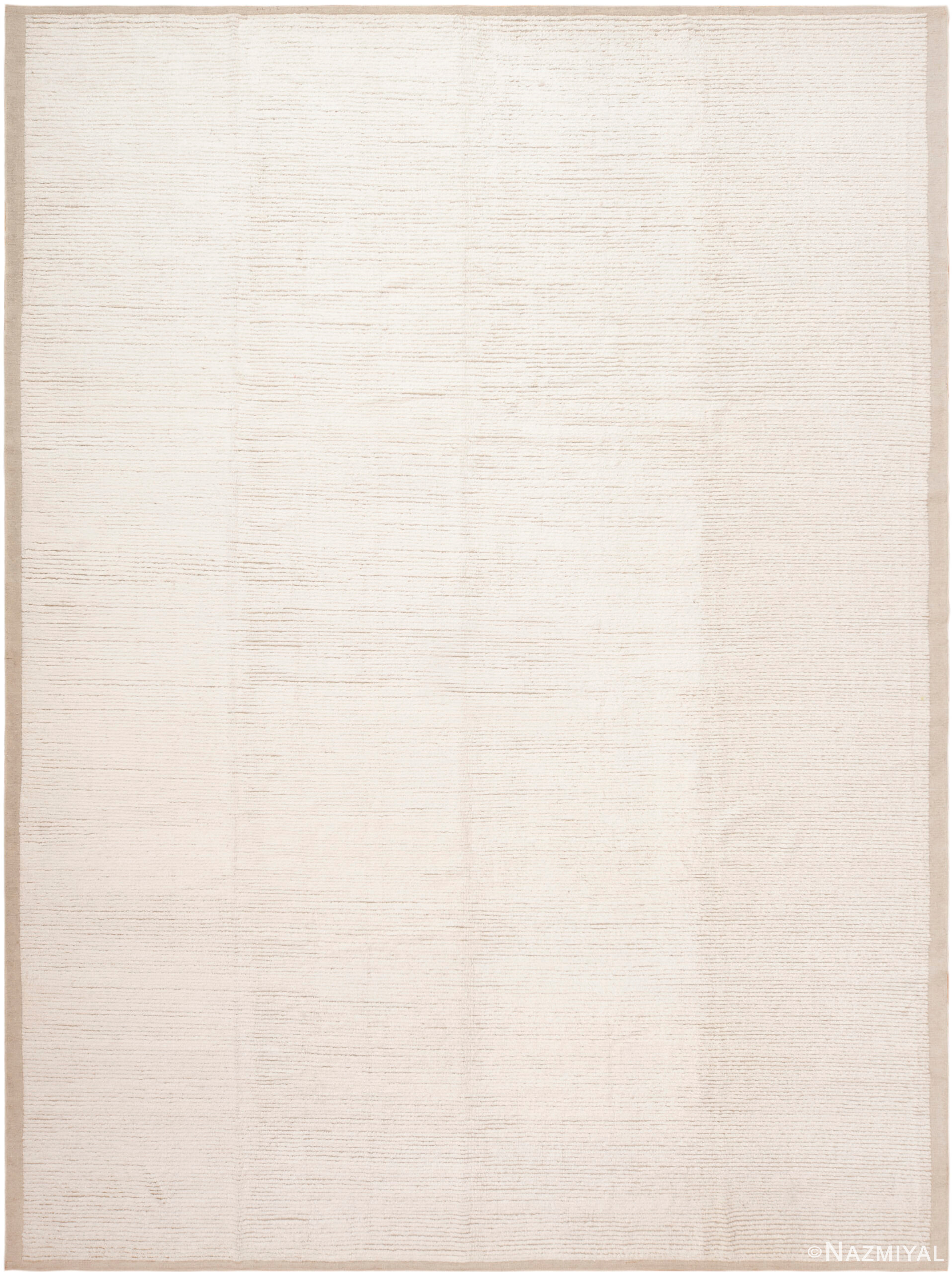
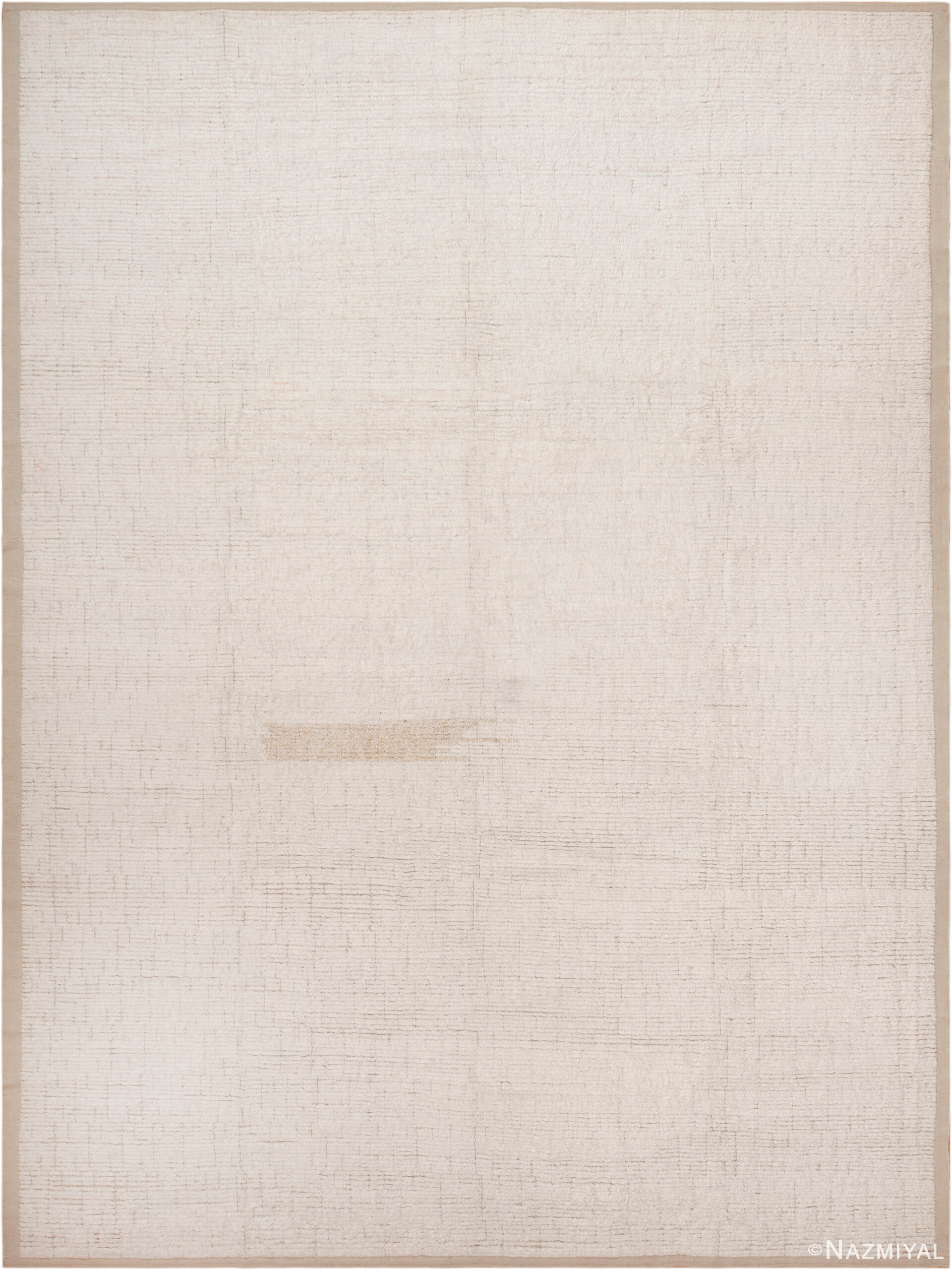
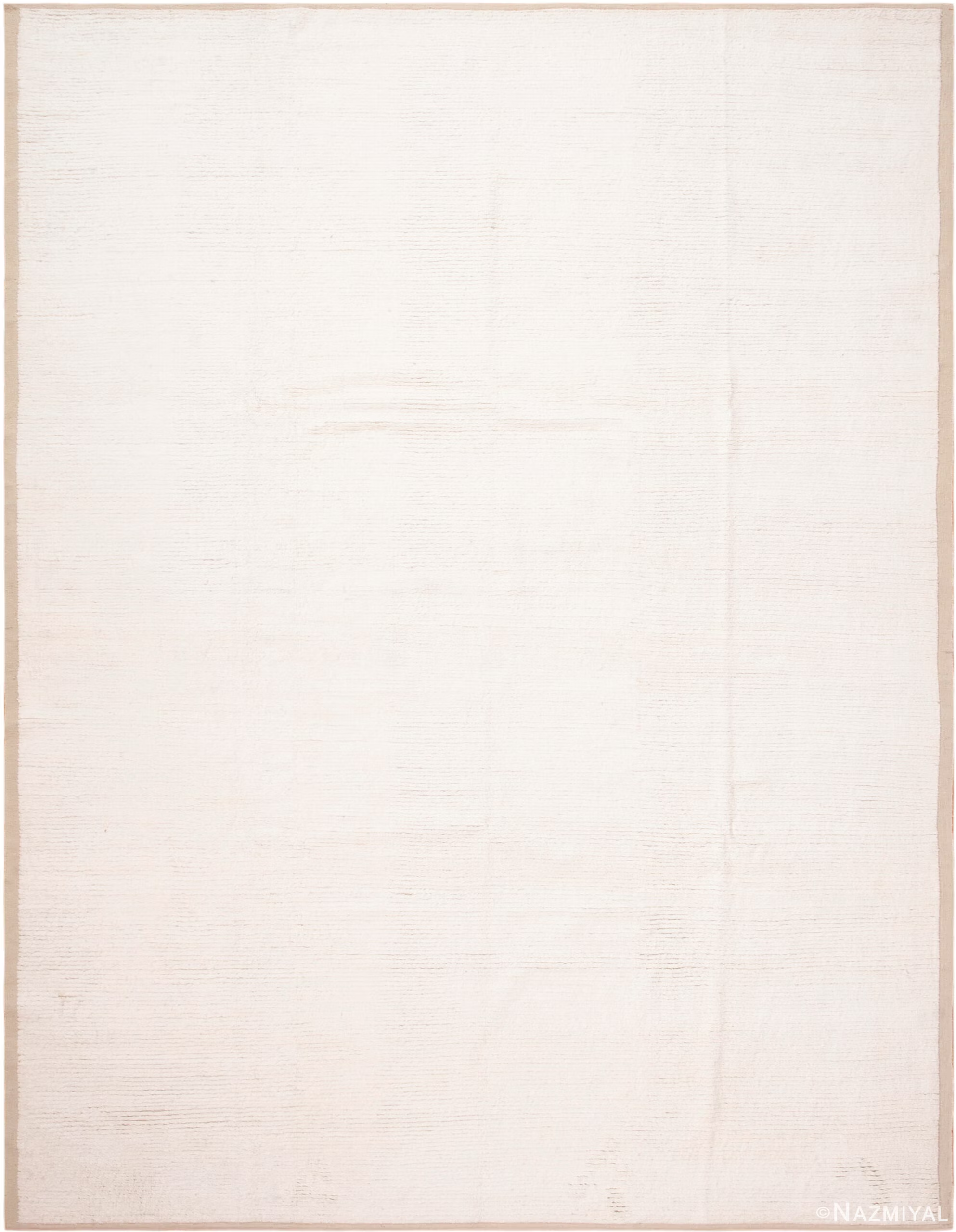
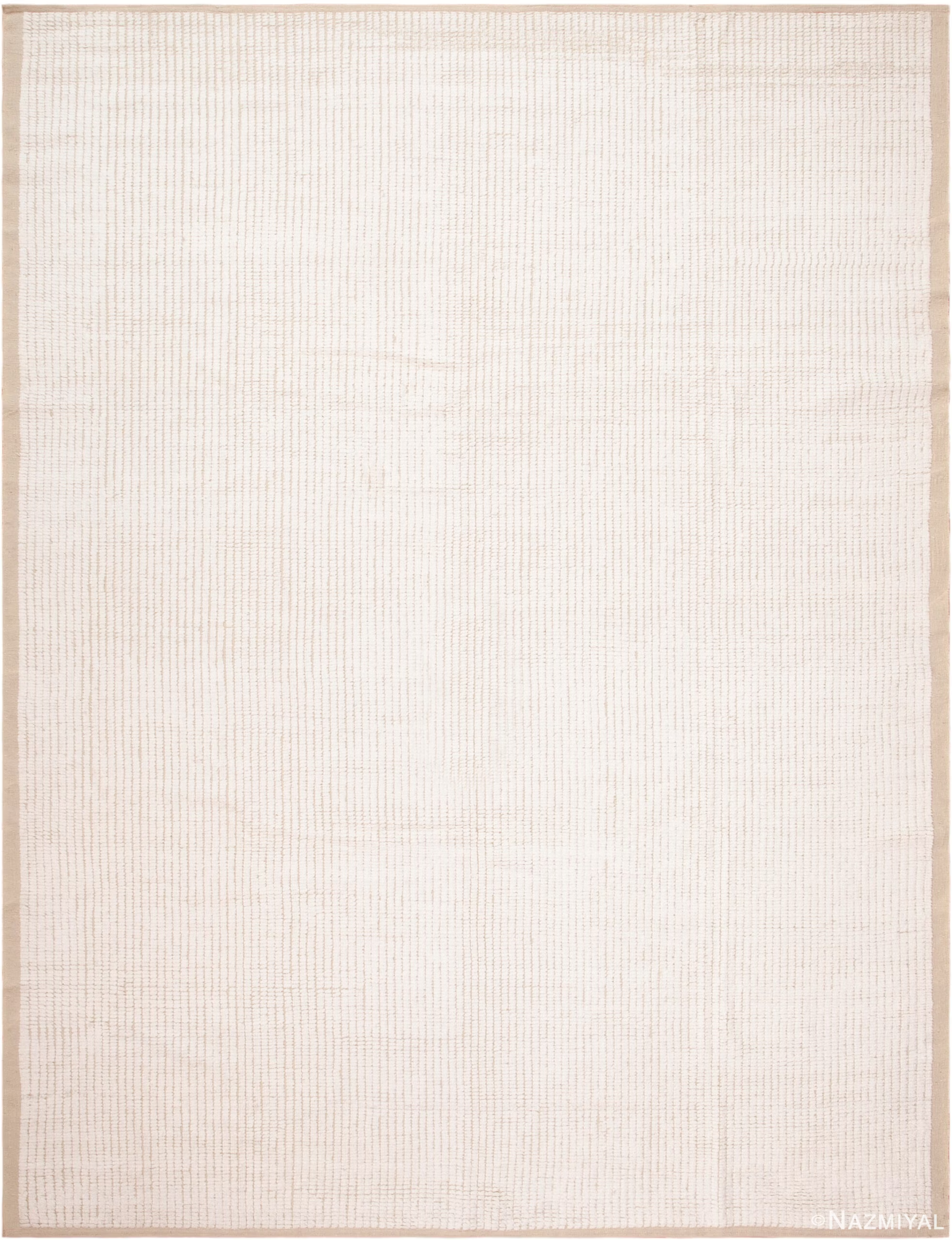
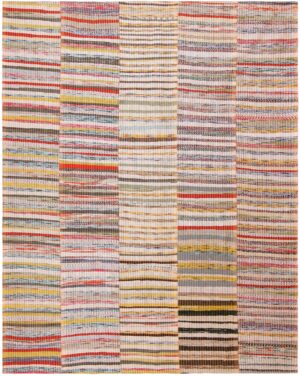
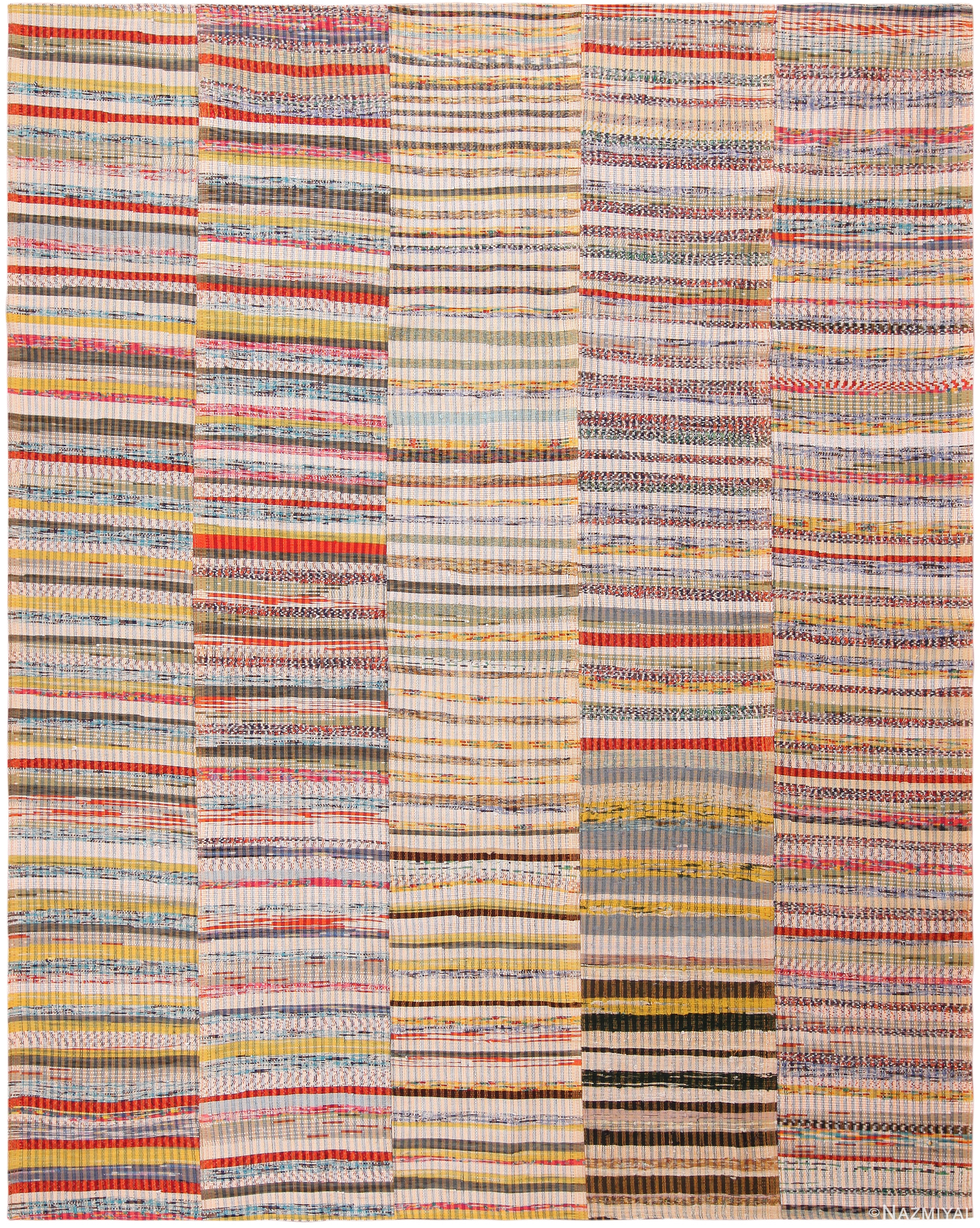
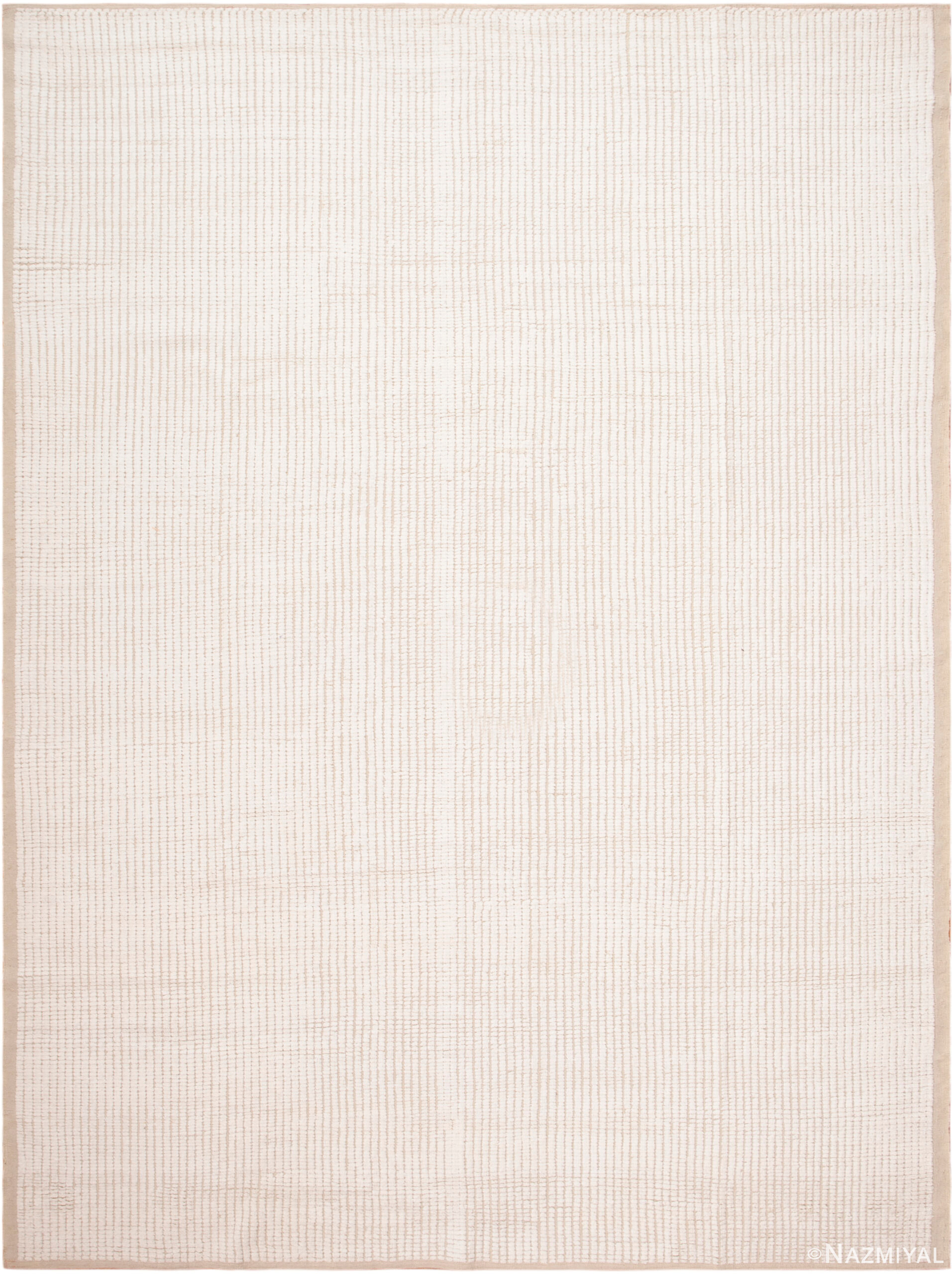
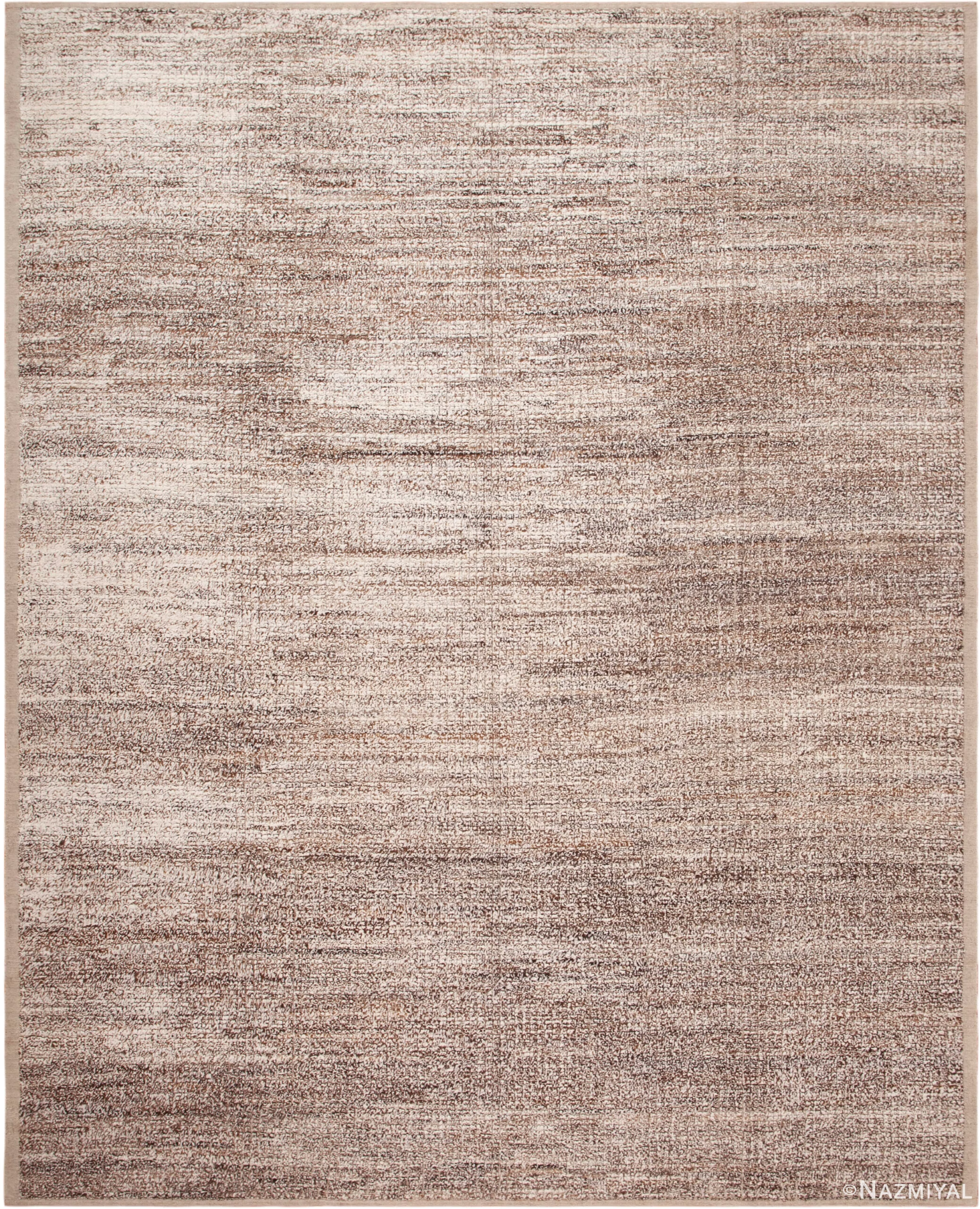
About cotton rugs – Cotton is a vegetable fiber derived from agricultural cultivation. It is used most commonly in the foundation of the rug rather than its pile or flat-woven facing. It’s fibers are stronger and less elastic than those of wool, and weavers can maintain an even tension more easily with cotton yarns.
When used for the rug foundation, it makes it easier to produce a straight-sided, evenly-proportioned, tightly woven rug, and that is why urban and court weavers with high standards of technical precision long ago adopted cotton as the main material for the foundation of the rug.
Cotton can, however, be used for the pile or flat-woven facing of rugs. This is done to get an extremely bright white color, since it will do this better than wool. It’s yarns are stronger and less elastic than those of wool, and weavers can maintain an even tension more easily with cotton yarns.
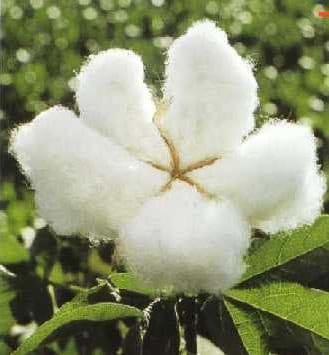
Cotton
When used for the rug foundation, it makes it easier to produce a straight-sided, evenly-proportioned, tightly-woven rug, and that is why urban and court weavers with high standards of technical precision long ago adopted cotton as the main material for the foundation of the rug.
Cotton can, however, be also used as the actual pile of a carpet or the kilim flat woven facing of rugs. This is done to get an extremely bright white color, since it will do this better than wool.
Cotton in Rug Making
The most common fibers used in traditional rug making are cotton, wool, and silk. They can be used singly, or any combination using a different fiber for the warp and weft of the rug. Cotton is one of the most common materials used for the f warp of rugs. There are many reasons why this is so.
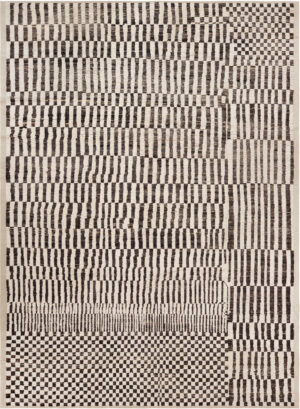
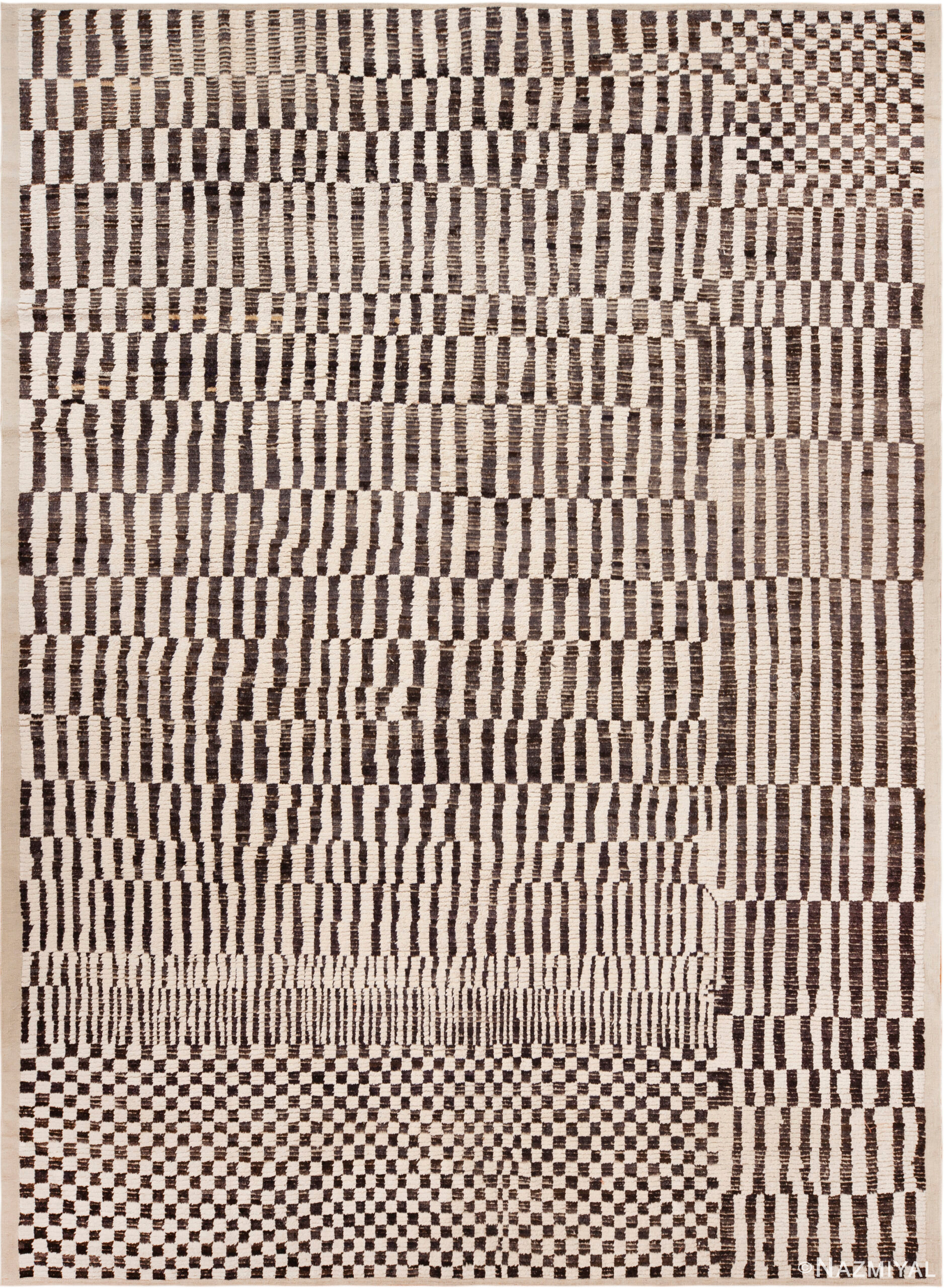
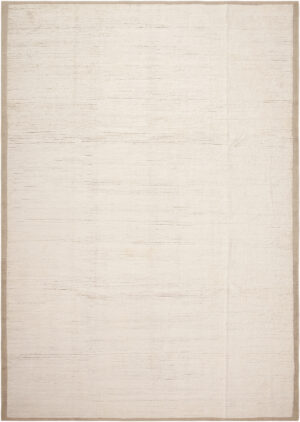
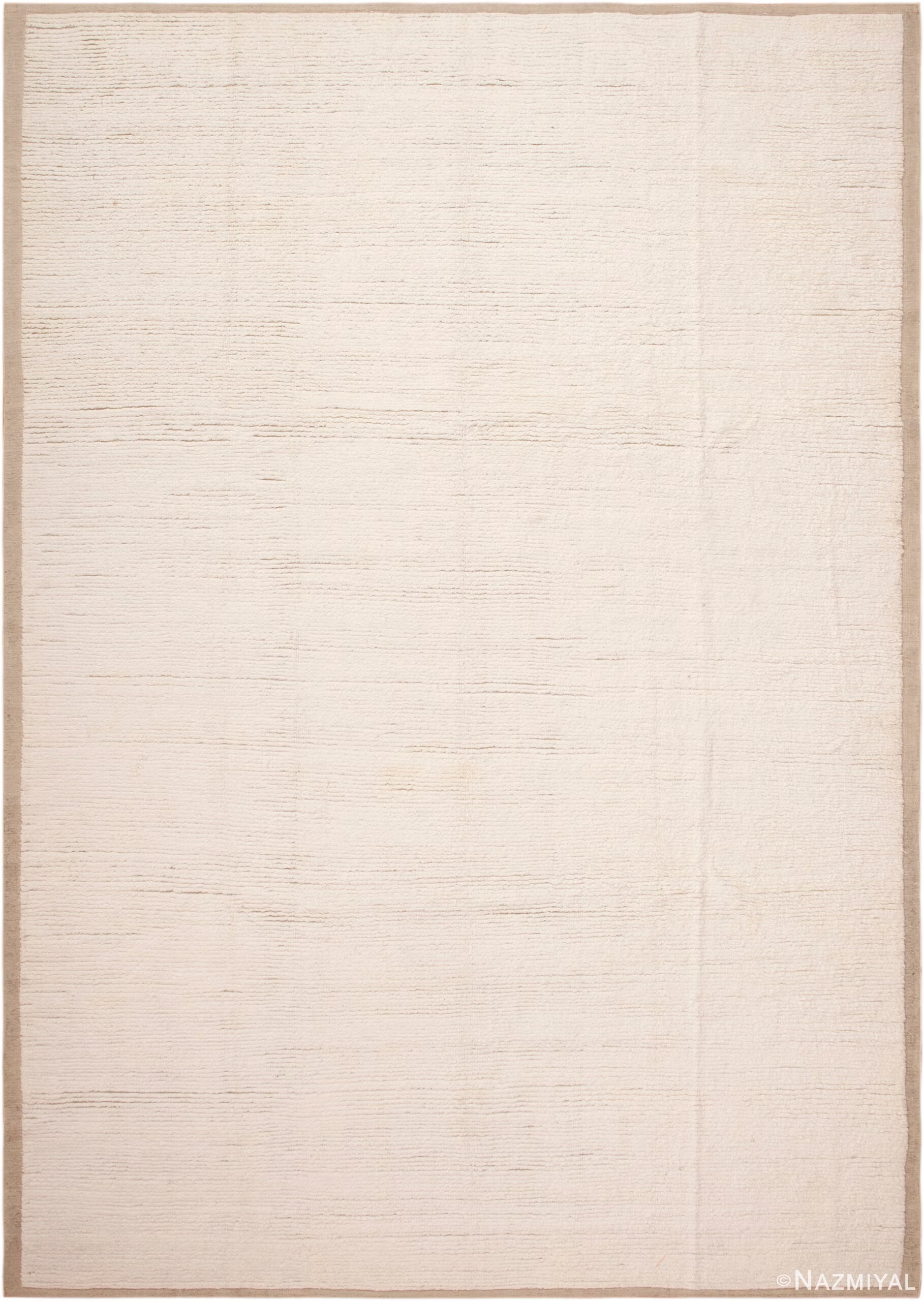
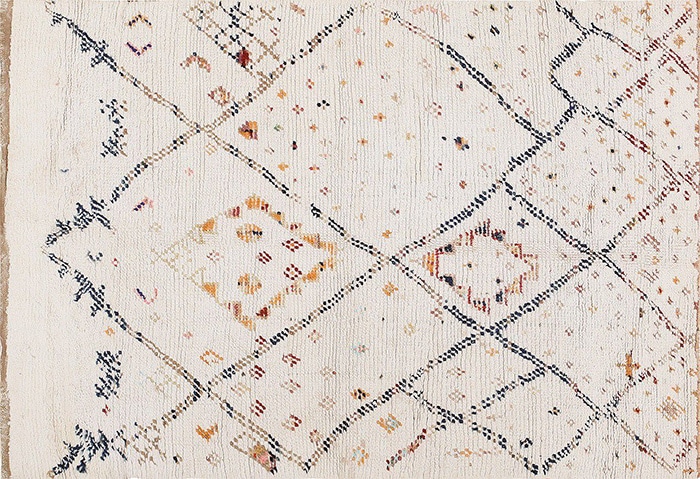
Example Of Moroccan Cotton Rugs
Cotton Production
Cotton is pure cellulose fibers produced from plants in the family Malvaceae and the genus Gossypium. There are four main species used in commercial cotton production around the world, but there are also many species of wild cotton to be found in Africa, Australia, India, and the Americas. Cotton requires a long growing season with moderate rainfall, high amounts of sunshine, and a long frost free season. It is also quite nutrient intense.
When the flower of the cotton plant matures, it produces fluffy balls containing the seed, called bolls. These are harvested and processed into fibers that can be spun. Traditionally, this was done by hand carding and combing, but the invention of the cotton gin in the late 1700’s allowed for the introduction of the commercial cotton processing similar to that which is still used today.
Throughout the years, the center of cotton production has shifted to various cotton producing centers around the world with different countries leading production at different times. Cotton is known to have been used on the Indian subcontinent since Neolithic times, about 6,000 BC. The centers of cotton production have shifted between Egypt, the Arabian Peninsula, Persia, China, India, England, and more recently, the USA.
Making Cotton Rugs
Cotton is the most common fiber used for rug warps. This is because it has a higher tensile strength than wool or other fibers, with the exception of silk perhaps. However, silk is usually reserved for the making of fine cloth, but it is used as the rug wefts with a cotton warp. In some remote locations cotton is not readily available and rug makers are limited to locally available materials such as sheep’s wool.
Cotton has a finer fiber diameter, allowing it to be spun into thread that is both finer and stronger than wool. The fibers of cotton range between 11 to 22 microns. Wool can go up to 40 microns on some sheep. The makes a strong cotton rug warps with a fluffier wool weft.
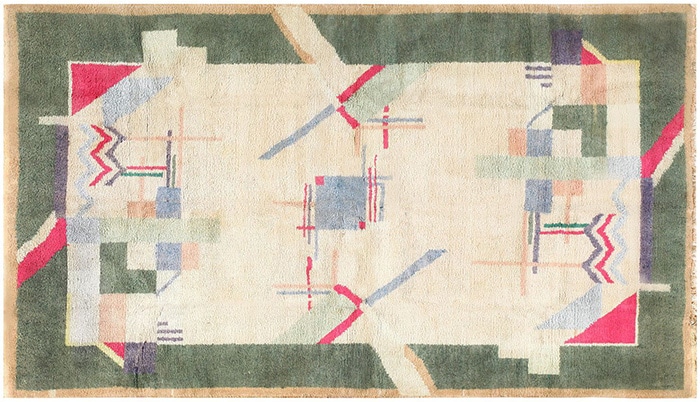
Example of cotton rugs from India
Another advantage to using cotton in rug making is that it can be mercerized, a process that gives it a sheen that is difficult to distinguish from silk at first glance. The mercerization process was developed in 1844 by John Mercer of Lancashire, England. However, even though mercerized cotton looks similar to silk, it is not as durable and will wear out quicker.
Cotton shrinks less and more evenly than wool because it does not have the elastic qualities of wool. In addition, during the weaving process, the warp of the rug must be placed under high tension. Wool is springy and when stretched under tension on the loom, it will bounce back when it is cut free and this can cause buckling too. This is why cotton and the rug making industry have a long standing relationship and why cotton is still the preferred material for many area rugs and carpets on the market today.
Do rugs that were made from cotton have a different texture from rugs that were made from other materials?
Yes, cotton rugs have a different texture compared to rugs made from other materials. The texture of a rug is influenced by the type of fiber used, the weaving or construction technique, and the overall design.
Here are some characteristics of cotton rugs and how they might differ in texture from rugs made from other materials:
Softness: Cotton fibers are generally soft and comfortable underfoot. Rugs made from cotton tend to have a smoother and softer texture, making them a popular choice for areas where you might be walking barefoot, such as bedrooms or living rooms.
Smoothness: Cotton rugs often have a smoother surface texture compared to rugs made from wool or other natural fibers. The smoothness of cotton fibers can contribute to a sleek and clean appearance in the rug’s design.
Weight: Cotton rugs are tend to be denser in pile and since the pile is pack pretty tight, the cotton rugs tend to be heavier than other types of area rugs that were woven using different materials.
Absorbency: Cotton has good absorbent properties, which can affect how the rug feels to the touch. Cotton rugs might feel slightly cooler and more absorbent underfoot, making them suitable for warmer climates.
Durability: While cotton rugs can be durable, they might not be as resilient as rugs made from certain other materials like wool. Depending on the weave and construction, cotton rugs could have a slightly different feel in terms of sturdiness.
Texture Variations: Cotton rugs can be woven in various ways, such as flatweave, pile, or looped textures. Each weaving technique can result in a different tactile experience. For example, flatweave cotton rugs might have a smoother, flatter texture, while a looped or pile cotton rug could have a more plush and cushioned feel.
Comparatively, rugs made from materials like wool, silk, jute, or synthetic fibers will have their own distinct textures. Wool, for instance, often has a more luxurious and looser texture, while jute has a coarse and natural feel. Synthetic fibers can mimic the textures of natural materials while offering additional benefits like stain resistance and durability.
Ultimately, the choice of rug material and its resulting texture depends on personal preferences, the intended use of the rug, and the overall design aesthetic you’re aiming for in your space.
             Posted on Google        Victor Florintsev     Trustindex verifies that the original source of the review is Google. The only ones I'd ever buy rugs from. The best.         Posted on Google        Jeffrey NeumanB     Trustindex verifies that the original source of the review is Google. I bought two gorgeous Serapi rugs from Farhad at Nazmiyal Rugs!  Beautiful carpets, fair prices and great service.  Very happy customer.  Farhad (the sales person) was very patient and gave us great service.         Posted on Google        john haid     Trustindex verifies that the original source of the review is Google. Alen is a gentleman and an expert.  Really great to work with.         Posted on Google        Edward Yasuna     Trustindex verifies that the original source of the review is Google. I recently purchased a modern Kandinsky rug from Nazmiyal Auctions.  It was just as described, and the director (Farhad) of the auctions had it sent to me quickly and safely.  Payment was easy, the rug was reasonably priced, and I highly recommend Nazmiyal Auctions and Antique Rugs.  Quality merchandise and first-class service.         Posted on Google        Nicholas Carr     Trustindex verifies that the original source of the review is Google. Had a excellent experience buying a rug in Nazmiyal's 1/18/26 online auction.  First, prior to the auction, viewing a number of lots at the 32nd St showroom (I had prepared a list from the online catalog). The staff were great to work with: helpful, knowledgable, honest, and flexible.  Second, after placing an online bid and winning the desired item, arranging payment and pickup was simple and straightforward. Everything went seamlessly and the overall experience was educational and fun. Many thanks to Jason and his team.         Posted on Google        Andrea Gared     Trustindex verifies that the original source of the review is Google. Everyone at Naziyal is proffessional, especially Jason and Farhad.
They are knowledgeable, truthful, and true gentlemen. I have sold several rugs through them and will always go to them first, to buy or sell. The best in the business!         Posted on Google        Lori Silverberg     Trustindex verifies that the original source of the review is Google.          Posted on Google        Jesse Zilberman     Trustindex verifies that the original source of the review is Google. Excellent customer service! Alen was very helpful over the phone and email. The rug we acquired was stunning, and photos do not do it justice. I would definitely work with Alen and team again!         Posted on Google        Rachel Paul     Trustindex verifies that the original source of the review is Google. Jason was incredibly kind and helpful! I work for a small museum that had some rugs we had no information on. Jason responded to us quickly and gave us the information we needed for free! Incredible service, we are super thankful for his help!

 Size: 4 ft 6 in x 26 ft 6 in (1.37 m x 8.08 m)
 Size: 12 ft 11 in x 16 ft 6 in (3.94 m x 5.03 m)
 Size: 9 ft 8 in x 16 ft 2 in (2.95 m x 4.93 m)
 Size: 11 ft 11 in x 15 ft 2 in (3.63 m x 4.62 m)
 Size: 11 ft 11 in x 14 ft 10 in (3.63 m x 4.52 m)
 Size: 13 ft x 14 ft 10 in (3.96 m x 4.52 m)
 Size: 11 ft 11 in x 14 ft 9 in (3.63 m x 4.5 m)
 Size: 10 ft 3 in x 14 ft 9 in (3.12 m x 4.5 m)
 Size: 10 ft 9 in x 14 ft 5 in (3.28 m x 4.39 m)
 Size: 9 ft 11 in x 14 ft 4 in (3.02 m x 4.37 m)
 Size: 10 ft 2 in x 14 ft 4 in (3.1 m x 4.37 m)
 Size: 10 ft 6 in x 14 ft 2 in (3.2 m x 4.32 m)
 Size: 10 ft 6 in x 14 ft 1 in (3.2 m x 4.29 m)
 Size: 9 ft 8 in x 13 ft 11 in (2.95 m x 4.24 m)
 Size: 10 ft x 13 ft 10 in (3.05 m x 4.22 m)
 Size: 10 ft x 13 ft 8 in (3.05 m x 4.17 m)
 Size: 8 ft 9 in x 12 ft 7 in (2.67 m x 3.84 m)
 Size: 9 ft 2 in x 12 ft (2.79 m x 3.66 m)
 Size: 9 ft x 11 ft 10 in (2.74 m x 3.61 m)
 Size: 9 ft 1 in x 11 ft 10 in (2.77 m x 3.61 m)
 Size: 9 ft 2 in x 11 ft 6 in (2.79 m x 3.51 m)