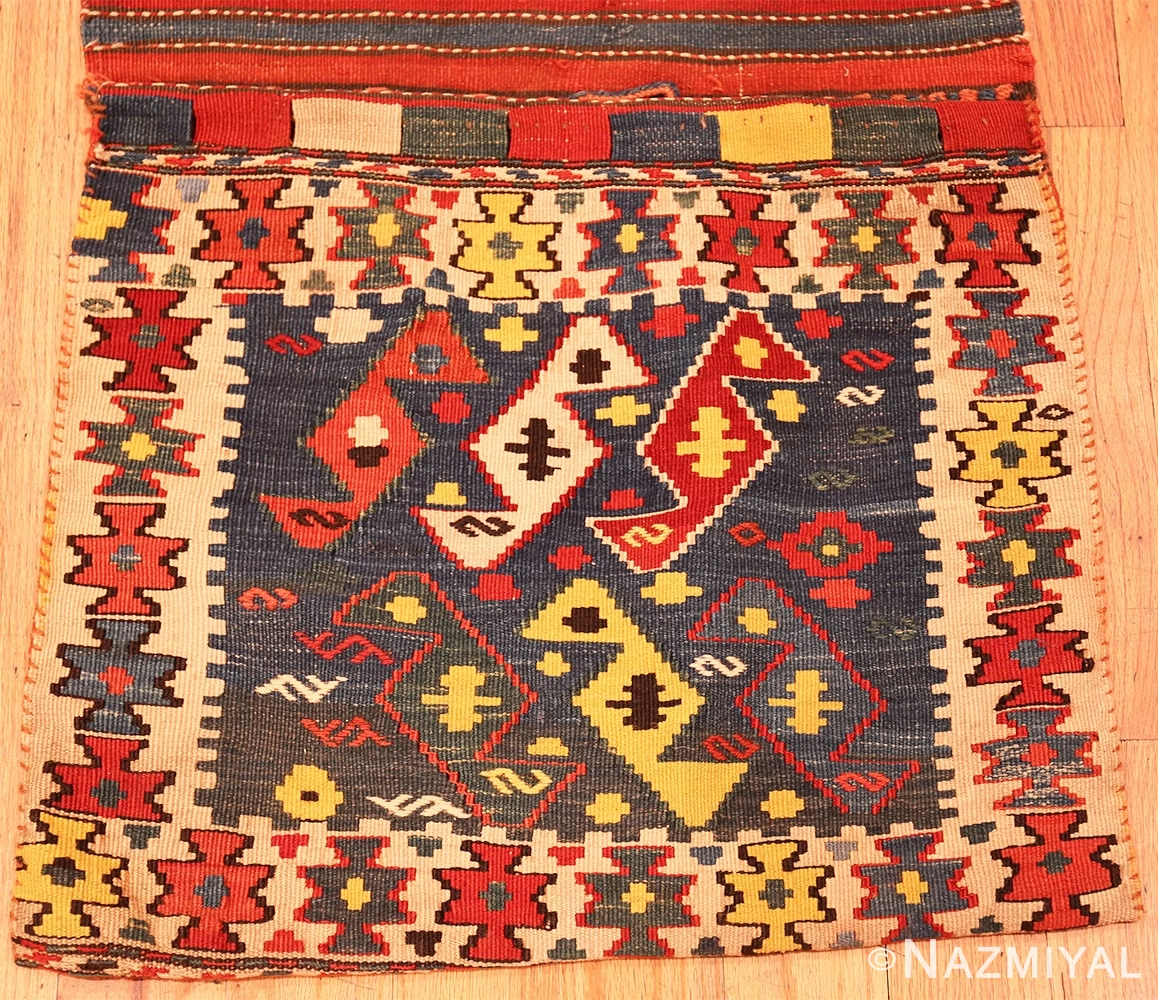
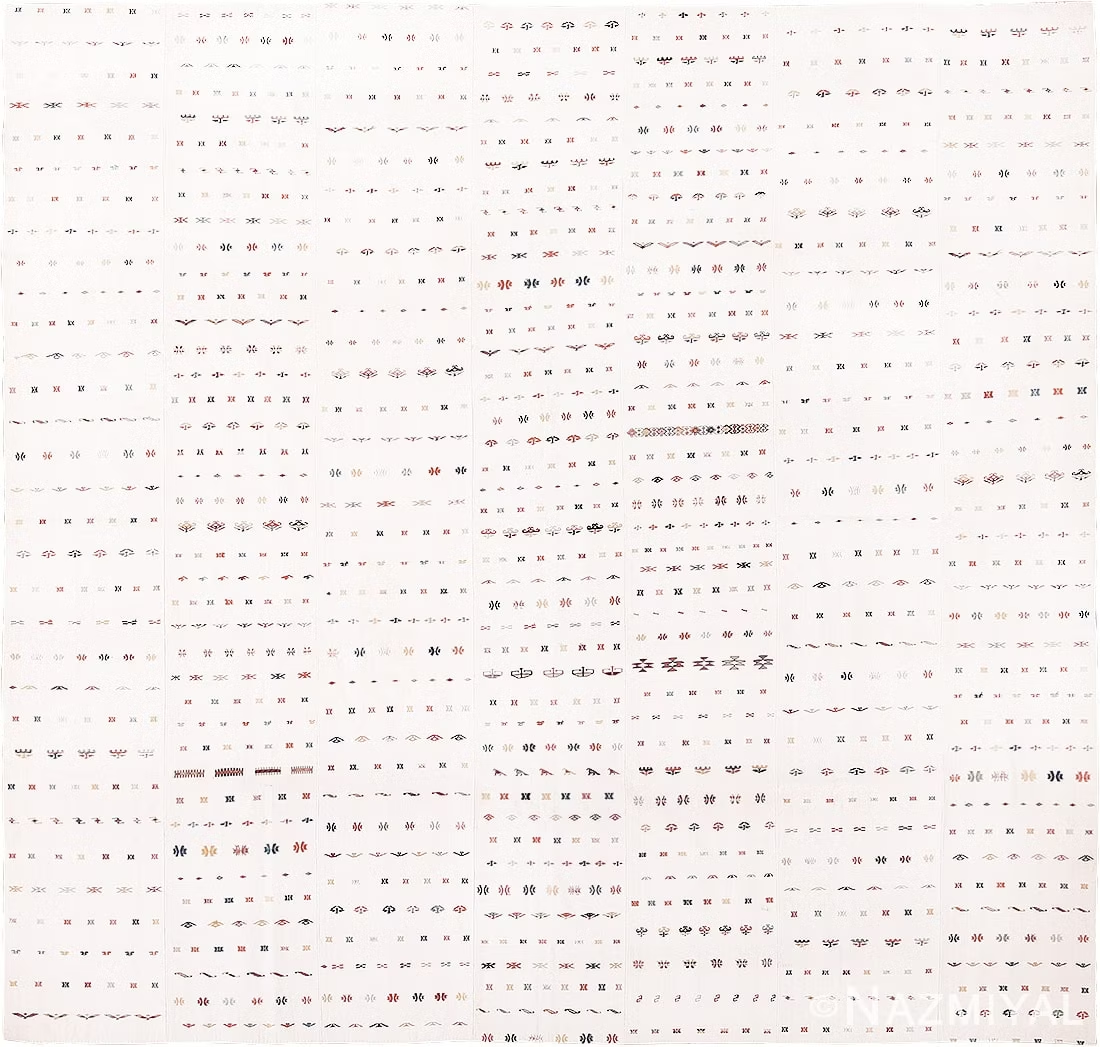
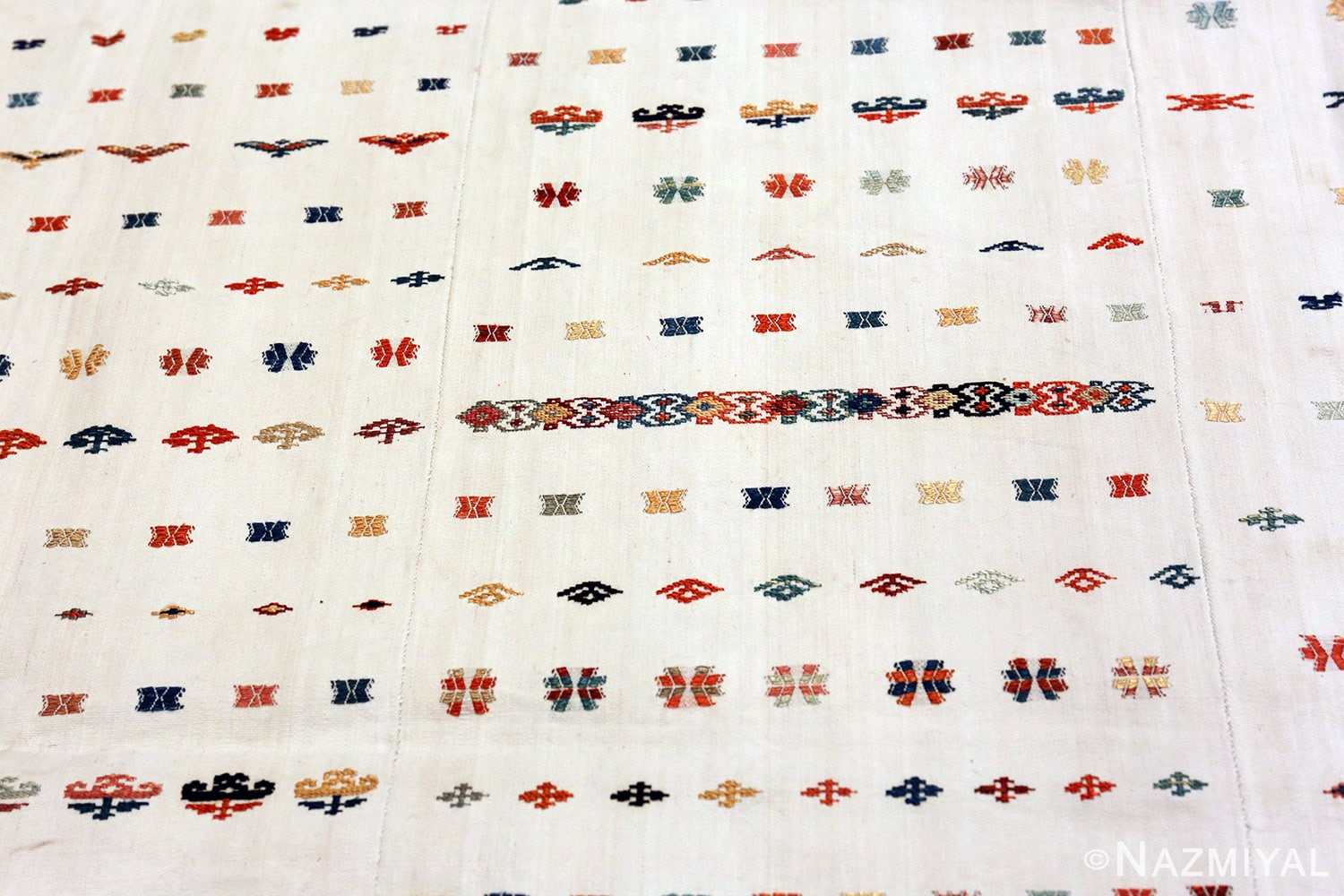
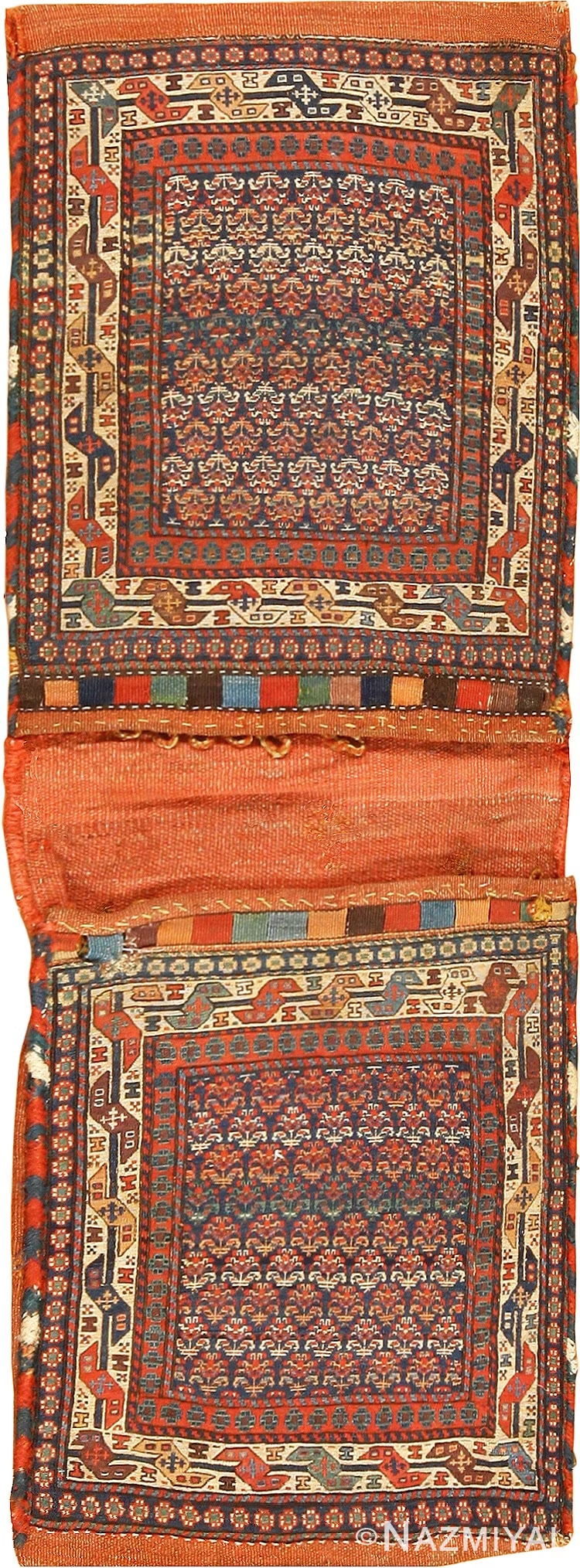
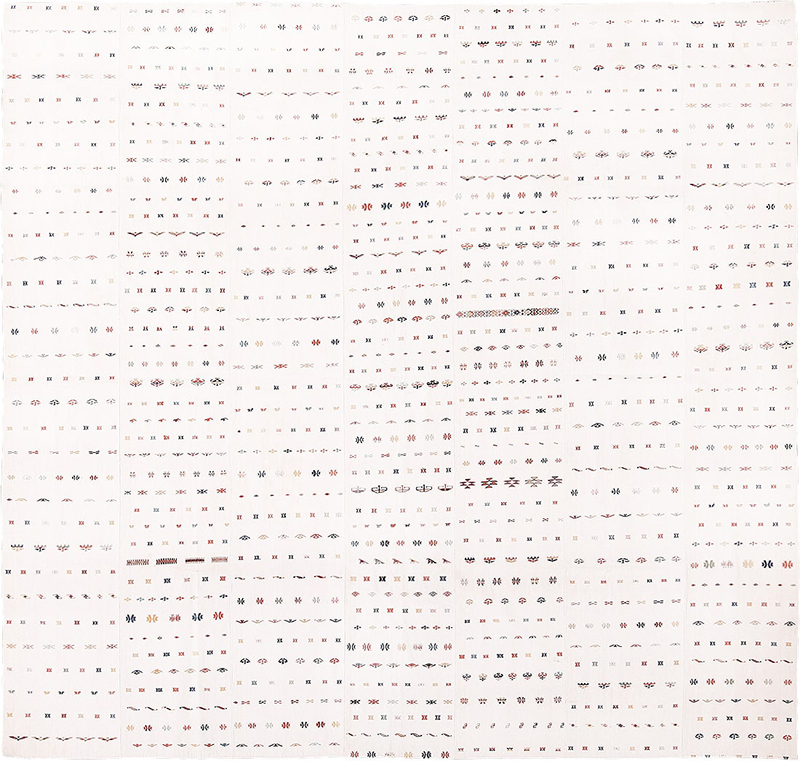
Shahsavan (Shahsevan) rugs are antique tribal Persian and Transcaucasian weavings—often geometric and highly abstract—made by (or associated with) Shahsavan groups in Northwest Iran, frequently including both pile rugs and flatwoven kilim-style textiles.
Shahsavan (Shahsevan) rugs and kilims are prized for their bold tribal geometry, lively color accents, and distinctive Transcaucasian character. At Nazmiyal, you can explore antique Shahsavan weavings as a collectible subset of the wider Persian rugs tradition—especially appealing for shoppers who want graphic design with strong cultural identity.
Updated February 9, 2026 • Reviewed by Jason Nazmiyal
Browse the Shahsavan selection on this page and use filters to narrow by size, color, and construction (pile vs flatweave).
Identification & Construction
A reliable way to identify Shahsavan rugs is by their design “grammar”: bold geometric medallions, angular motifs, and an improvisational tribal quality that feels personal rather than workshop-standardized. Many pieces balance strong shapes with open breathing room, which helps Shahsavan weavings read as graphic, architectural statements in modern interiors.
Construction varies by piece. Some Shahsavan rugs are pile-woven with a compact, sturdy handle; others are flatwoven in kilim-style techniques that feel lighter and more textile-like. If you are comparing origin families across regions, our Rug origins hub is a helpful starting point for understanding how borderland weaving traditions overlap.
History & Cultural Context
The Shahsavan are widely associated with the Persian borderlands of Northwest Iran, a region historically shaped by movement, trade, and shifting political boundaries. Many historians connect Shahsavan identity to 17th-century Persian statecraft (including resettlement and consolidation of tribal groups), which helps explain why Shahsavan textiles can feel simultaneously Persian, Turkish, and Caucasian in design sensibility.
In market terms, “Shahsavan” (and the alternate spelling “Shahsevan”) often signals a tribal aesthetic: confident geometry, lively color contrasts, and a preference for abstract motifs that prioritize rhythm and structure over naturalistic floral rendering.
Decorating & Placement Guidance
Shahsavan pieces can function as the “graphic anchor” of a room: a long runner adds cadence to halls and galleries; a small area rug can sharpen a seating vignette; and a flatwoven kilim introduces pattern without visual heaviness. These weavings also layer beautifully—try pairing a Shahsavan rug with simple upholstery and let the rug’s geometry do the talking.
For a collected look across eras, Shahsavan rugs pair naturally with curated Antique rugs, clean-lined Vintage rugs, and graphic Modern rugs—especially when you repeat one or two tones from the rug in artwork, pillows, or ceramics.
Shahsavan Rugs vs Caucasian Rugs
Shahsavan weavings are often discussed alongside Caucasian rugs because both traditions favor bold geometry and strong, legible compositions. This quick comparison helps you choose based on the “feel” you want in a space.
Shahsavan / Shahsevan: A tribal identity associated with Northwest Iran; the name is often translated as “those who love the Shah.”
Transcaucasia: A historic borderland region linking the South Caucasus and Northwest Iran, influencing textile design and trade.
Kilim: A flatwoven textile (no pile) that reads more graphic and lightweight than a pile rug.
Abrash: Natural-looking color variation from hand-dyed yarns; often prized in tribal weavings for warmth and depth.
For more terms (materials, dyes, motifs, and condition language), see the Rug glossary.
FAQ
What are Shahsavan (Shahsevan) rugs? They are tribal weavings associated with Northwest Iran and the Transcaucasian borderlands, known for bold geometric designs and both pile and flatweave constructions.
Are Shahsavan rugs Persian or Caucasian? They are commonly categorized within Persian tribal weavings, but the borderland context means many pieces share strong visual kinship with Caucasian design traditions.
Are Shahsavan pieces always kilims? No—many are pile rugs or runners, while others are flatwoven kilims and related tribal textiles.
What makes older Shahsavan rugs collectible? Collectors value confident geometry, authentic tribal color, strong structure, and the distinctive cultural “crossroads” feel of Northwest Iran.
How do I choose between pile and flatweave? Choose pile for softness and warmth underfoot; choose flatweave for a lighter, more graphic textile that layers easily and suits casual spaces.
How should I care for an antique tribal rug? Vacuum gently, rotate periodically, and address spills quickly. For deeper cleaning or condition concerns, professional rug care is recommended.
Why Nazmiyal? 3 Pillars of the Nazmiyal Collection
Curated authenticity: We focus on real, well-chosen antique and vintage weavings—selected for design, condition, and integrity.
Deep expertise: Our team lives and breathes rugs—helping you compare origins, construction, and value with confidence. Learn more on About Nazmiyal.
Client-first service: From detailed photos to logistics support, we make it easy to buy thoughtfully—whether you’re furnishing a home or building a collection.
Nazmiyal White-Glove Service
We make it easy to shop with confidence—whether you’re choosing a single statement piece or curating a full room.
Nazmiyal Collection has been a trusted source for antique rugs and vintage carpets for over 45 years. Our NYC gallery curates one-of-a-kind pieces with an emphasis on authenticity, provenance, and lasting decorative value.
Need help? Call us at (212) 545-8029 or visit our New York City showroom to work with a rug expert.
             Posted on Google        Clay Pendergrast     Trustindex verifies that the original source of the review is Google. My wife and I are so pleased with the antique Uzbek Bokhara Rug purchased from the Nazmiyal Collection. Not only does the rug have a spectacular design, it also was very reasonably priced. The way it transforms our living room, reconciling the classic modern furniture with the 1913 Craftsman interior is remarkable.         Posted on Google        Terence Hayes     Trustindex verifies that the original source of the review is Google. I have purchased multiple rugs at multiple Nazmiyal auctions and I am extremely pleased with the quality, price, and experience.  Highly recommended!         Posted on Google        Victor Florintsev     Trustindex verifies that the original source of the review is Google. The only ones I'd ever buy rugs from. The best.         Posted on Google        Jeffrey NeumanB     Trustindex verifies that the original source of the review is Google. I bought two gorgeous Serapi rugs from Farhad at Nazmiyal Rugs!  Beautiful carpets, fair prices and great service.  Very happy customer.  Farhad (the sales person) was very patient and gave us great service.         Posted on Google        john haid     Trustindex verifies that the original source of the review is Google. Alen is a gentleman and an expert.  Really great to work with.         Posted on Google        Edward Yasuna     Trustindex verifies that the original source of the review is Google. I recently purchased a modern Kandinsky rug from Nazmiyal Auctions.  It was just as described, and the director (Farhad) of the auctions had it sent to me quickly and safely.  Payment was easy, the rug was reasonably priced, and I highly recommend Nazmiyal Auctions and Antique Rugs.  Quality merchandise and first-class service.         Posted on Google        Nicholas Carr     Trustindex verifies that the original source of the review is Google. Had a excellent experience buying a rug in Nazmiyal's 1/18/26 online auction.  First, prior to the auction, viewing a number of lots at the 32nd St showroom (I had prepared a list from the online catalog). The staff were great to work with: helpful, knowledgable, honest, and flexible.  Second, after placing an online bid and winning the desired item, arranging payment and pickup was simple and straightforward. Everything went seamlessly and the overall experience was educational and fun. Many thanks to Jason and his team.         Posted on Google        Andrea Gared     Trustindex verifies that the original source of the review is Google. Everyone at Naziyal is proffessional, especially Jason and Farhad.
They are knowledgeable, truthful, and true gentlemen. I have sold several rugs through them and will always go to them first, to buy or sell. The best in the business!
THE NAZMIYAL NEWSLETTER
Discover Your Next Favorite Rug
Get new arrivals, rug inspiration, educational blogs, and collection highlights delivered to your inbox.
By subscribing, you agree to receive marketing emails from Nazmiyal. Unsubscribe anytime. View our Privacy Policy.