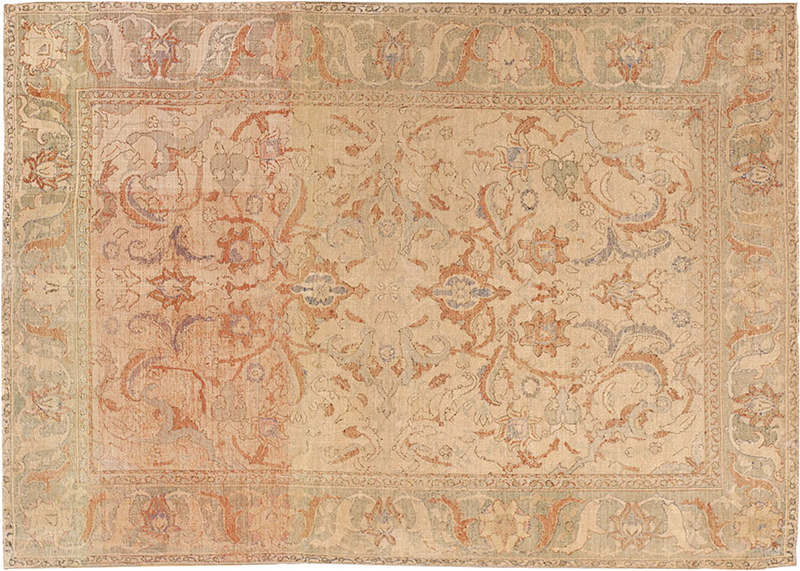
Polonaise rugs are rare Safavid-era Persian silk carpets—often accented with metal-thread brocading—celebrated for courtly design, luminous surfaces, and high collector significance.
Polonaise rugs are among the most luxurious Persian court carpets associated with the Safavid era—best known for silk construction and shimmering metal-thread brocading that reads beautifully in refined interiors. Collectors value them for rarity, design quality, and the way their softened, time-aged palette still brings a “finished room” presence. If you are starting your search broadly, begin with our antique rugs hub, then narrow into Polonaise examples that fit your scale, use-case, and condition requirements. For curated inventory and straightforward guidance, work with Nazmiyal Collection.
Updated February 10, 2026 • Reviewed by Jason Nazmiyal
Many Safavid-era Polonaise carpets entered European aristocratic collections early, including prominent ownership in Poland. That history helped cement the “Polonaise” label, even though the carpets are Persian in origin. Some were even made with heraldic devices for European patrons, further reinforcing the old misconception.
Construction and materials
Silk-driven clarity: fine silk construction supports crisp drawing and elegant curves.
Metal-thread brocading: metallic accents create a luminous surface that changes with viewing angle and light.
Design grammar: scrolling vines, palmettes, arabesques, and courtly compositional control—often with a soft gold-toned ground.
Color today vs color when new
Because these carpets are centuries old, many no longer show the original intensity they likely had at weaving. Natural aging of dyes, silk, and metallic elements often produces a calmer, more muted harmony—part of the appeal for collectors who want grandeur without harsh contrast.
To place Polonaise rugs in a broader Persian context, start with Persian rugs, then explore weaving-center perspectives like Isfahan rugs and Kashan rugs.
Decorating & Placement Guidance
How designers use Polonaise carpets
Let the surface read. These rugs reward space: give them breathing room and avoid over-layering nearby patterns.
Think “statement room,” not “hallway traffic.” Silk and metal-thread pieces are best suited to low-traffic settings or careful display.
Repeat one or two tones. Pull a muted green, soft red, or warm gold into textiles or art to create a cohesive room story.
For a cohesive home approach, many clients anchor with antique rugs, layer in livable companions from vintage rugs, and use modern rugs to keep the architecture clean around an important early statement piece.
Care notes for silk and metal-thread rugs
Light management: avoid prolonged direct sun; rotate when appropriate.
Underlay matters: a proper pad helps stability and reduces abrasive movement.
Cleaning: consult specialists for silk/metal-thread textiles before any wet cleaning.
Polonaise Rugs vs Silk Rugs (Closest Cousin)
Polonaise carpets sit inside the broader world of silk rugs, but they represent a specific courtly category with its own material signature and historical context.
Focus
Polonaise Rugs
Silk Rugs (Broader Category)
Era
Primarily Safavid-era (16th–17th century)
Can span many periods (antique to modern)
Materials
Silk with metal-thread brocading is a defining hallmark
Silk, wool-and-silk, or silk highlights (varies widely)
Design character
Courtly arabesques, palmettes, luminous grounds, grand sweep
Ranges from courtly to tribal to contemporary
Best use
Low-traffic statement placement or display
Depends on structure and fiber mix; many are more flexible
If you want to widen options while staying historically focused, explore 17th century rugs for broader early examples beyond Polonaise.
No. The term “Polonaise” reflects European ownership history and early export patterns, but these carpets are Persian in origin and associated with Safavid-era luxury production.
What makes a rug a “Polonaise”?
Polonaise carpets are best known for silk structure paired with metal-thread brocading, plus courtly design systems (arabesques, palmettes, refined drawing) that read as luminous and elegant.
Why do many Polonaise rugs look muted today?
Most surviving examples are centuries old. Aging of dyes, silk, and metallic elements often softens contrast, leaving a mellow, harmonious palette that many collectors find especially livable.
Can a Polonaise rug be used on the floor?
Sometimes, but they are typically best treated as statement pieces in low-traffic rooms or displayed as textile art. Placement should reflect condition, materials, and the owner’s tolerance for risk.
How can I assess authenticity and condition?
Focus on structure, materials, and how the brocading and edges have survived. Honest condition disclosure matters: repairs and restoration should be clearly explained and photographed.
What should I do about sizing?
Start with your room footprint and furniture plan. For general sizing principles, use our rug size guide.
Nazmiyal White-Glove Service
We make it easy to shop with confidence—whether you’re choosing a single statement piece or curating a full room.
Nazmiyal Collection has been a trusted source for antique rugs and vintage carpets for over 45 years. Our NYC gallery curates one-of-a-kind pieces with an emphasis on authenticity, provenance, and lasting decorative value.
Need help? Call us at (212) 545-8029 or visit our New York City showroom to work with a rug expert.
             Posted on Google        Clay Pendergrast     Trustindex verifies that the original source of the review is Google. My wife and I are so pleased with the antique Uzbek Bokhara Rug purchased from the Nazmiyal Collection. Not only does the rug have a spectacular design, it also was very reasonably priced. The way it transforms our living room, reconciling the classic modern furniture with the 1913 Craftsman interior is remarkable.         Posted on Google        Terence Hayes     Trustindex verifies that the original source of the review is Google. I have purchased multiple rugs at multiple Nazmiyal auctions and I am extremely pleased with the quality, price, and experience.  Highly recommended!         Posted on Google        Victor Florintsev     Trustindex verifies that the original source of the review is Google. The only ones I'd ever buy rugs from. The best.         Posted on Google        Jeffrey NeumanB     Trustindex verifies that the original source of the review is Google. I bought two gorgeous Serapi rugs from Farhad at Nazmiyal Rugs!  Beautiful carpets, fair prices and great service.  Very happy customer.  Farhad (the sales person) was very patient and gave us great service.         Posted on Google        john haid     Trustindex verifies that the original source of the review is Google. Alen is a gentleman and an expert.  Really great to work with.         Posted on Google        Edward Yasuna     Trustindex verifies that the original source of the review is Google. I recently purchased a modern Kandinsky rug from Nazmiyal Auctions.  It was just as described, and the director (Farhad) of the auctions had it sent to me quickly and safely.  Payment was easy, the rug was reasonably priced, and I highly recommend Nazmiyal Auctions and Antique Rugs.  Quality merchandise and first-class service.         Posted on Google        Nicholas Carr     Trustindex verifies that the original source of the review is Google. Had a excellent experience buying a rug in Nazmiyal's 1/18/26 online auction.  First, prior to the auction, viewing a number of lots at the 32nd St showroom (I had prepared a list from the online catalog). The staff were great to work with: helpful, knowledgable, honest, and flexible.  Second, after placing an online bid and winning the desired item, arranging payment and pickup was simple and straightforward. Everything went seamlessly and the overall experience was educational and fun. Many thanks to Jason and his team.         Posted on Google        Andrea Gared     Trustindex verifies that the original source of the review is Google. Everyone at Naziyal is proffessional, especially Jason and Farhad.
They are knowledgeable, truthful, and true gentlemen. I have sold several rugs through them and will always go to them first, to buy or sell. The best in the business!
THE NAZMIYAL NEWSLETTER
Discover Your Next Favorite Rug
Get new arrivals, rug inspiration, educational blogs, and collection highlights delivered to your inbox.
By subscribing, you agree to receive marketing emails from Nazmiyal. Unsubscribe anytime. View our Privacy Policy.