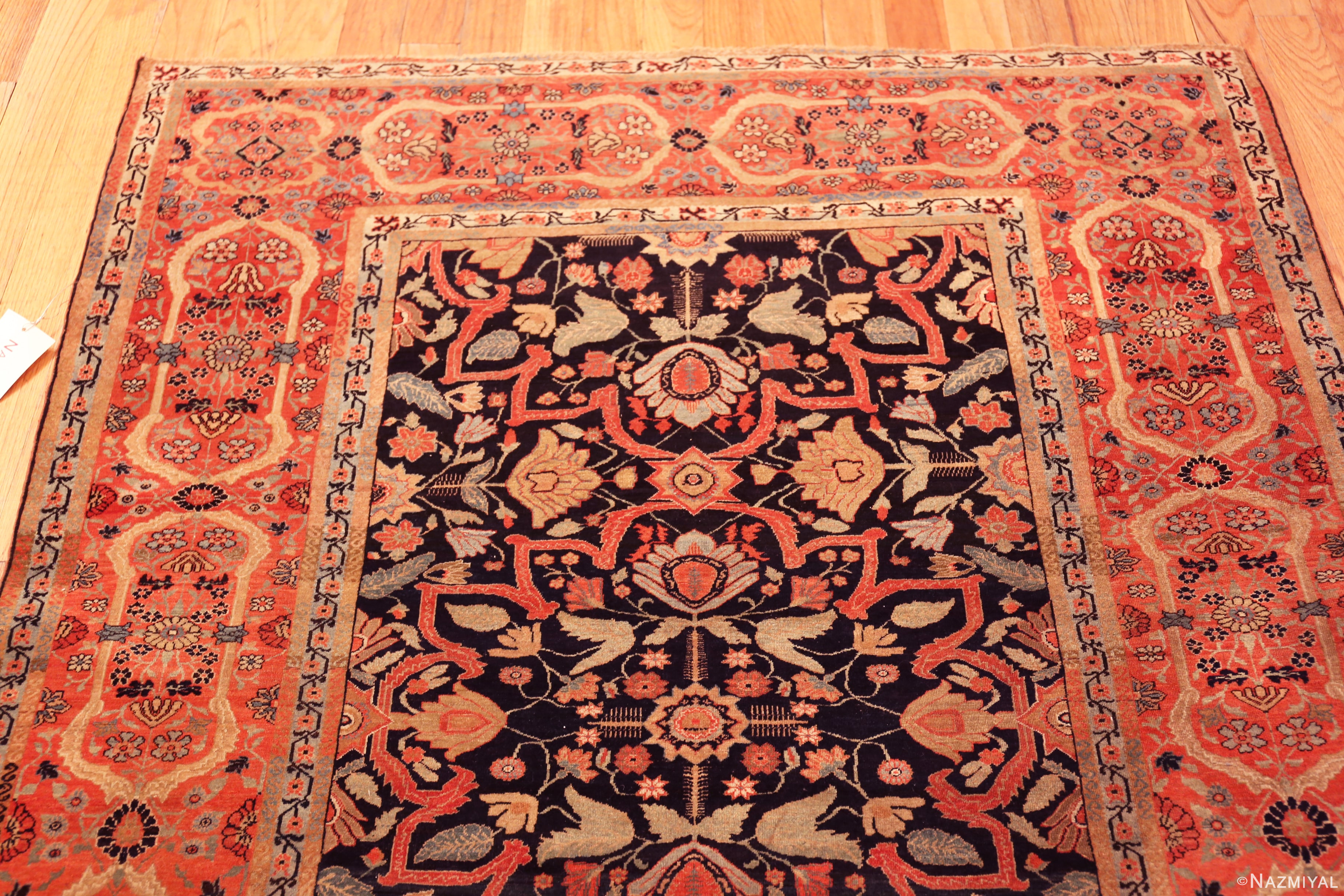
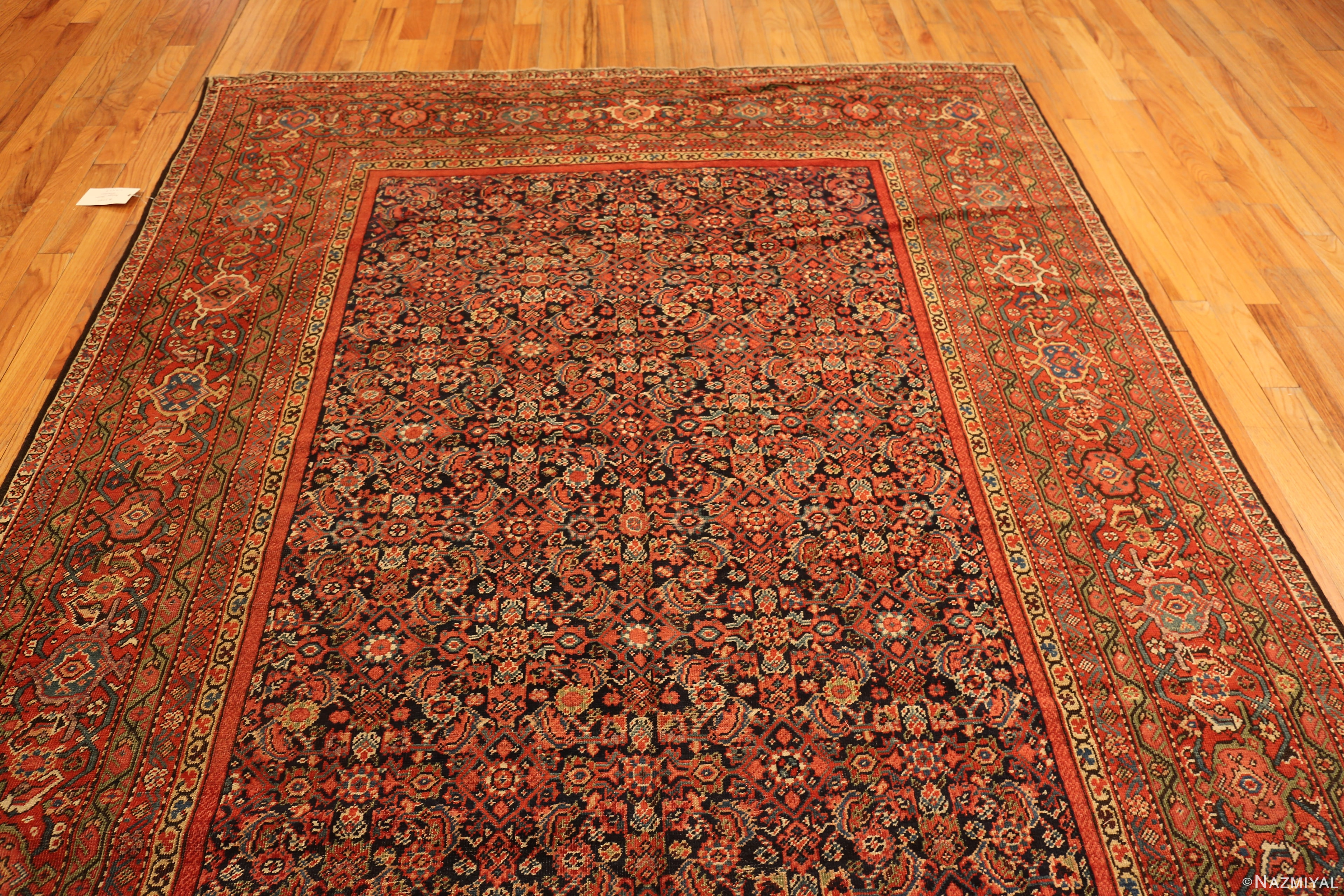
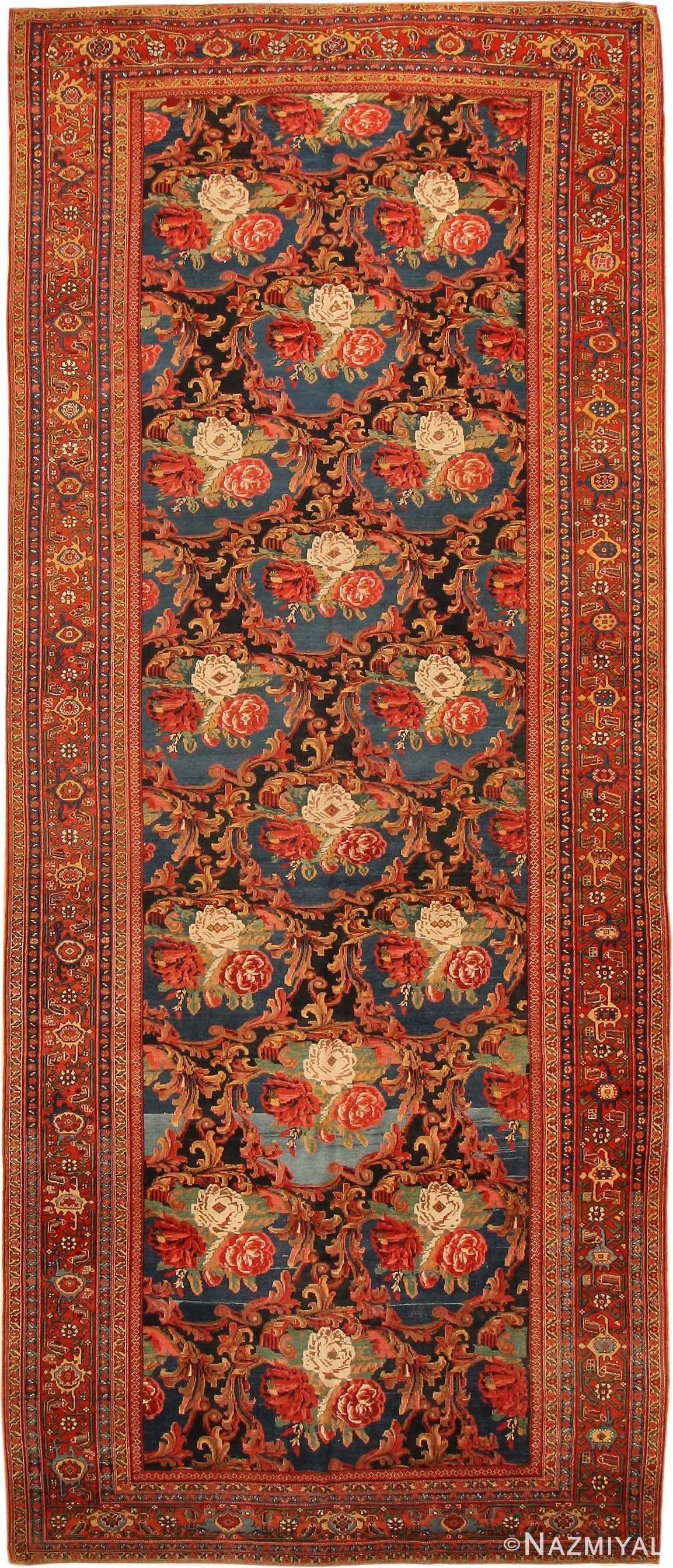
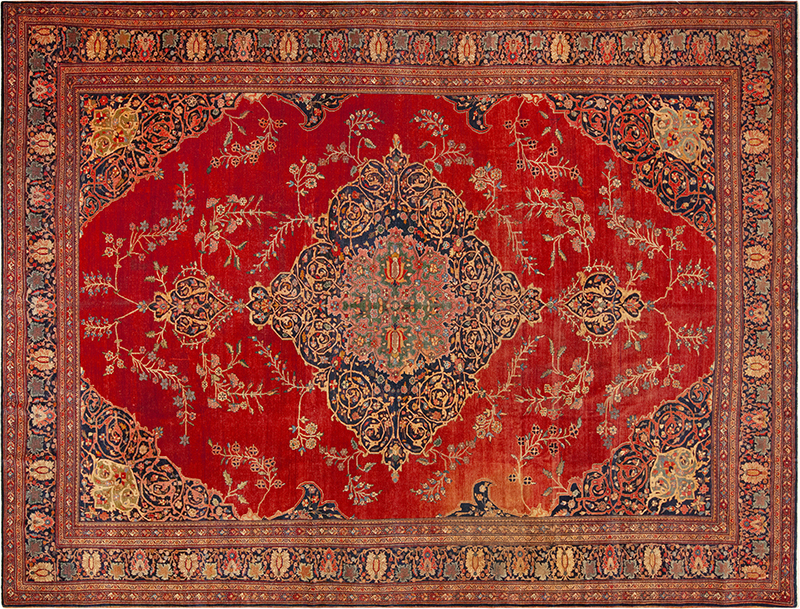
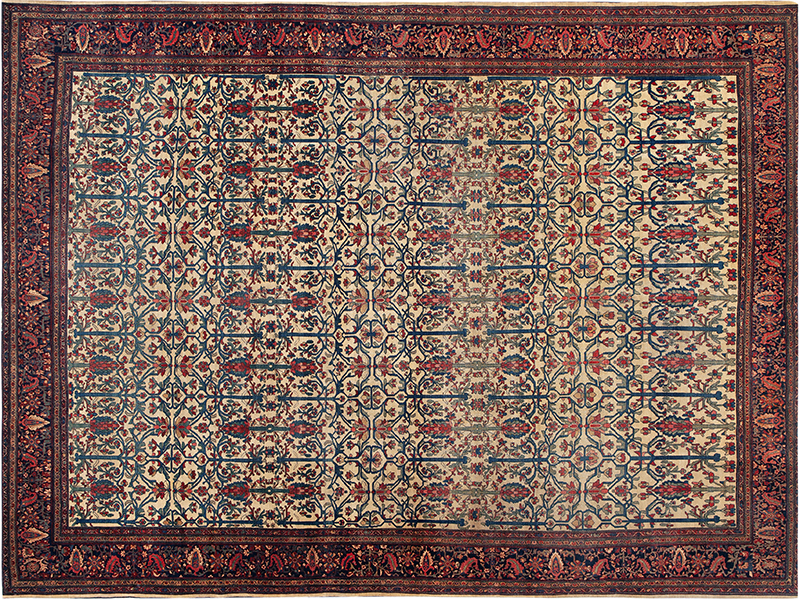
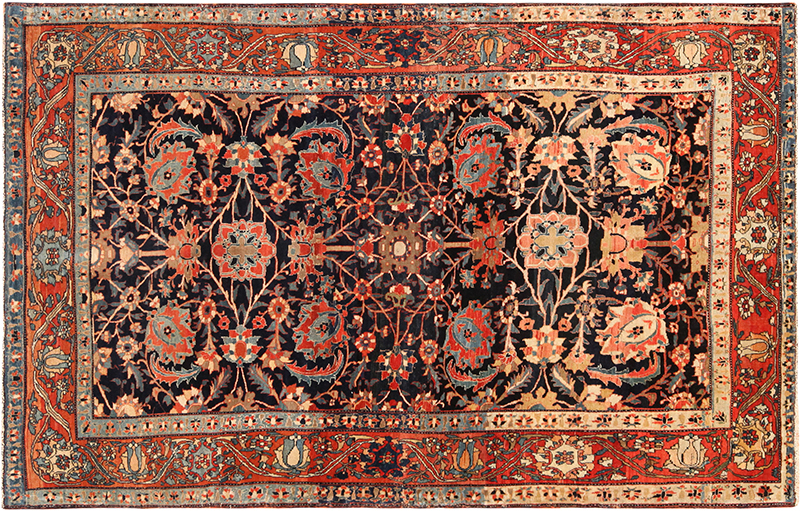
Antique Persian Farahan Carpets with Fine Weave, Luminous Dyes & Collector-Level Presence
If you love Persian rugs with refined drawing—but you don’t want something that feels overly “perfect” or rigid—Sarouk Farahan is a sweet spot. These antiques balance classical Persian elegance (medallions, Herati, floral scrolls) with an architectural clarity that designers love in both traditional and modern rooms.
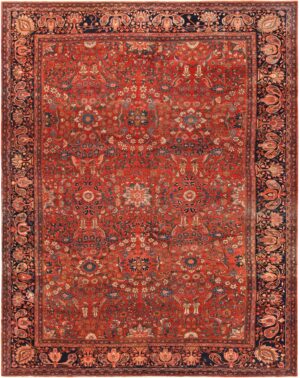
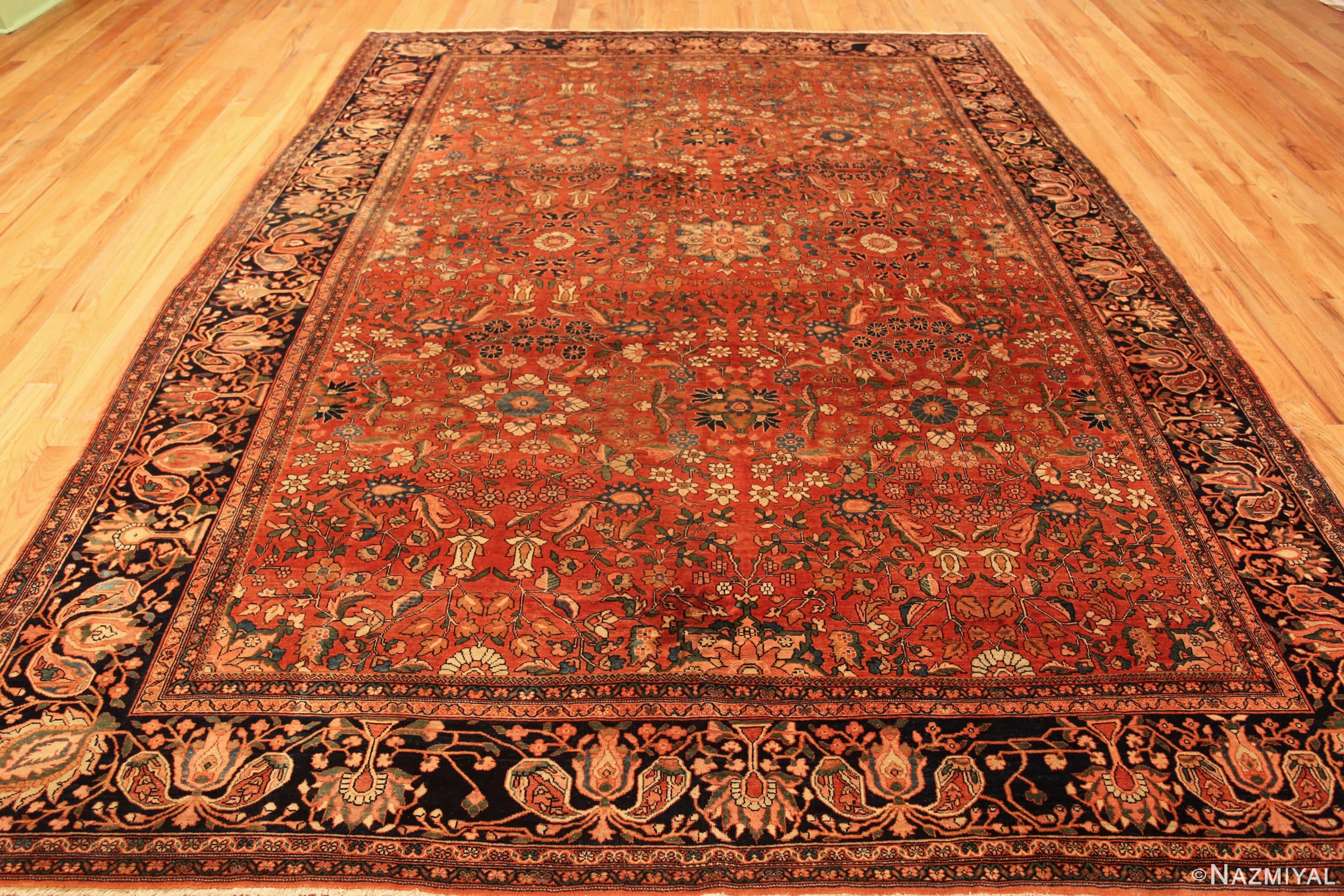
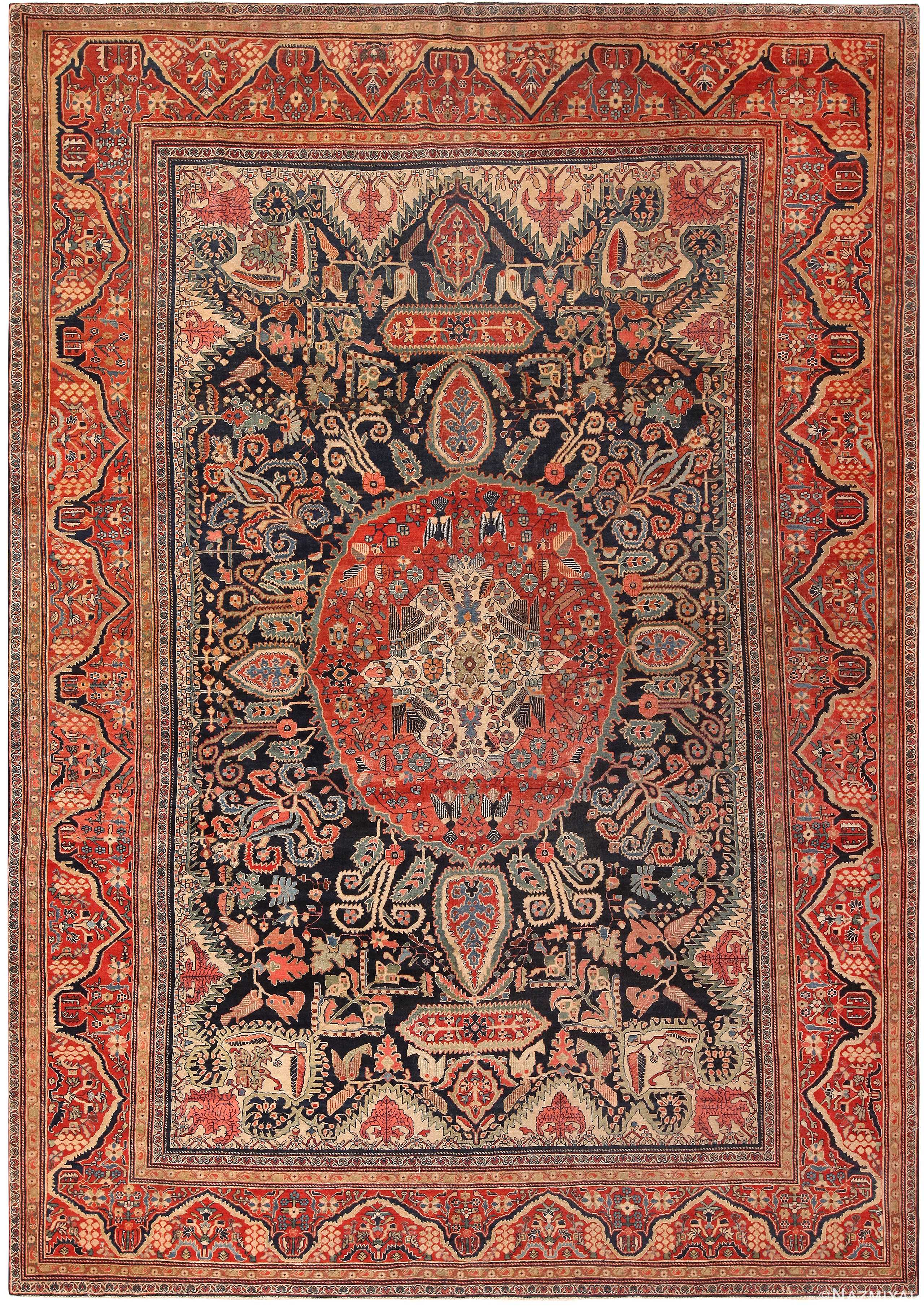
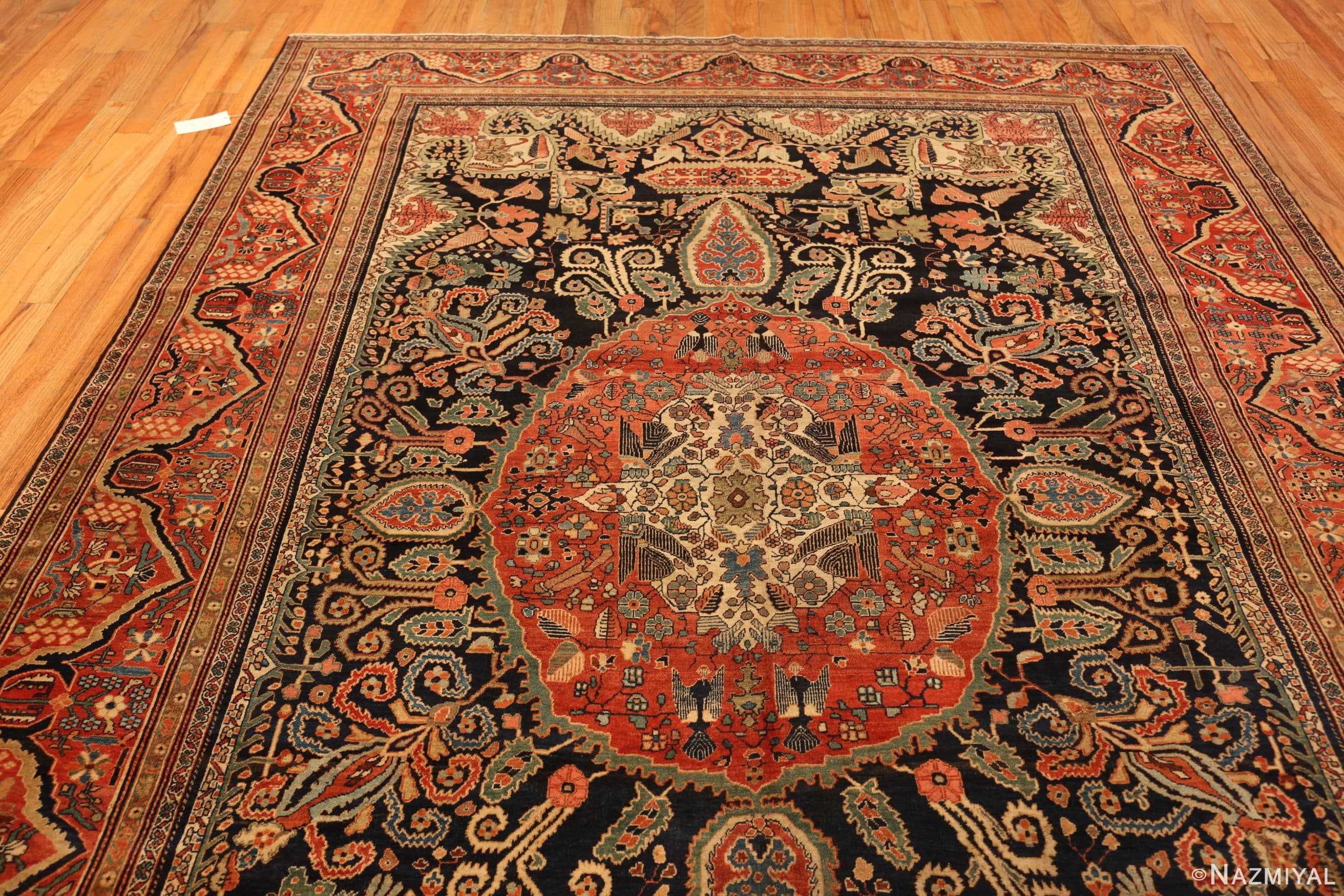
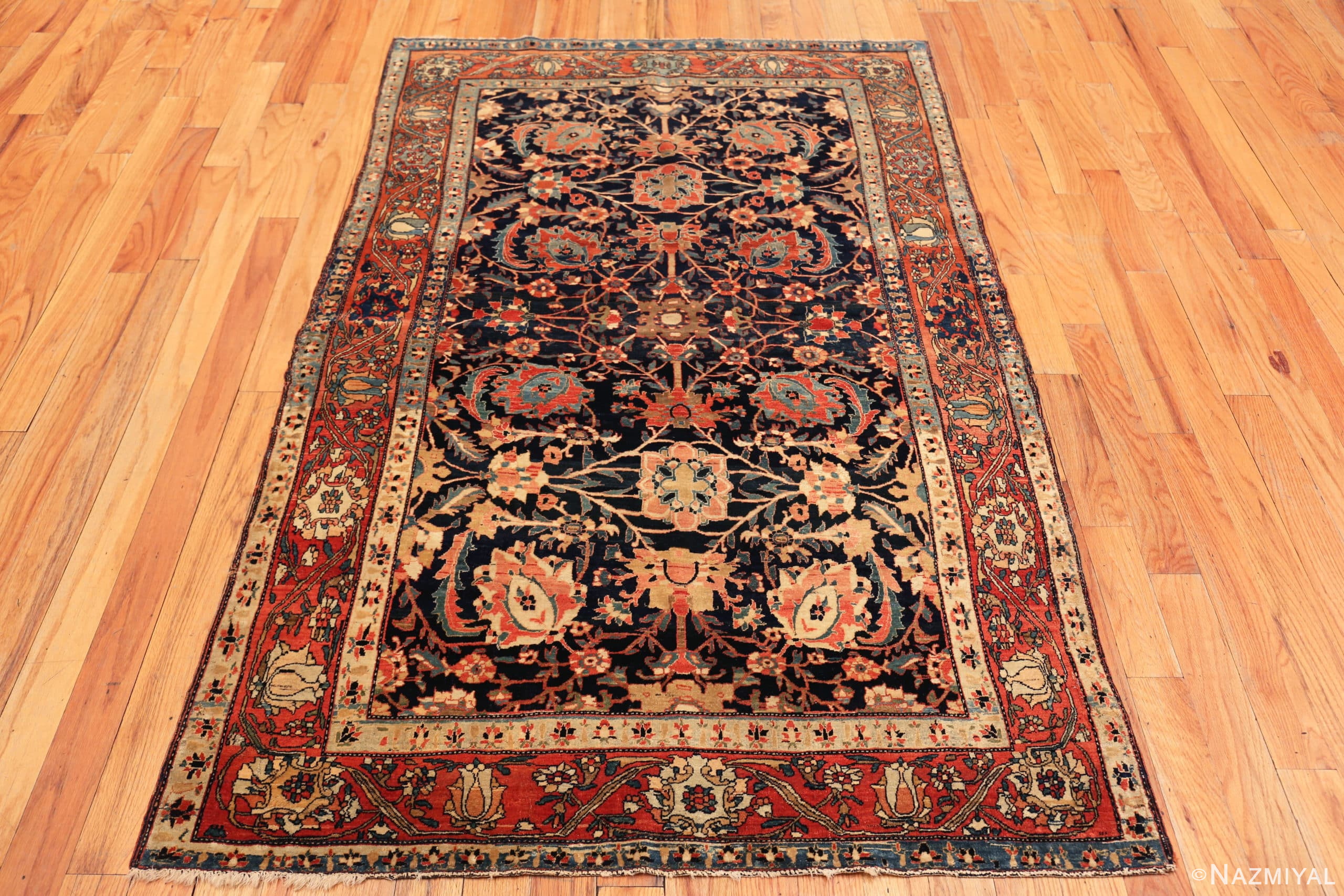
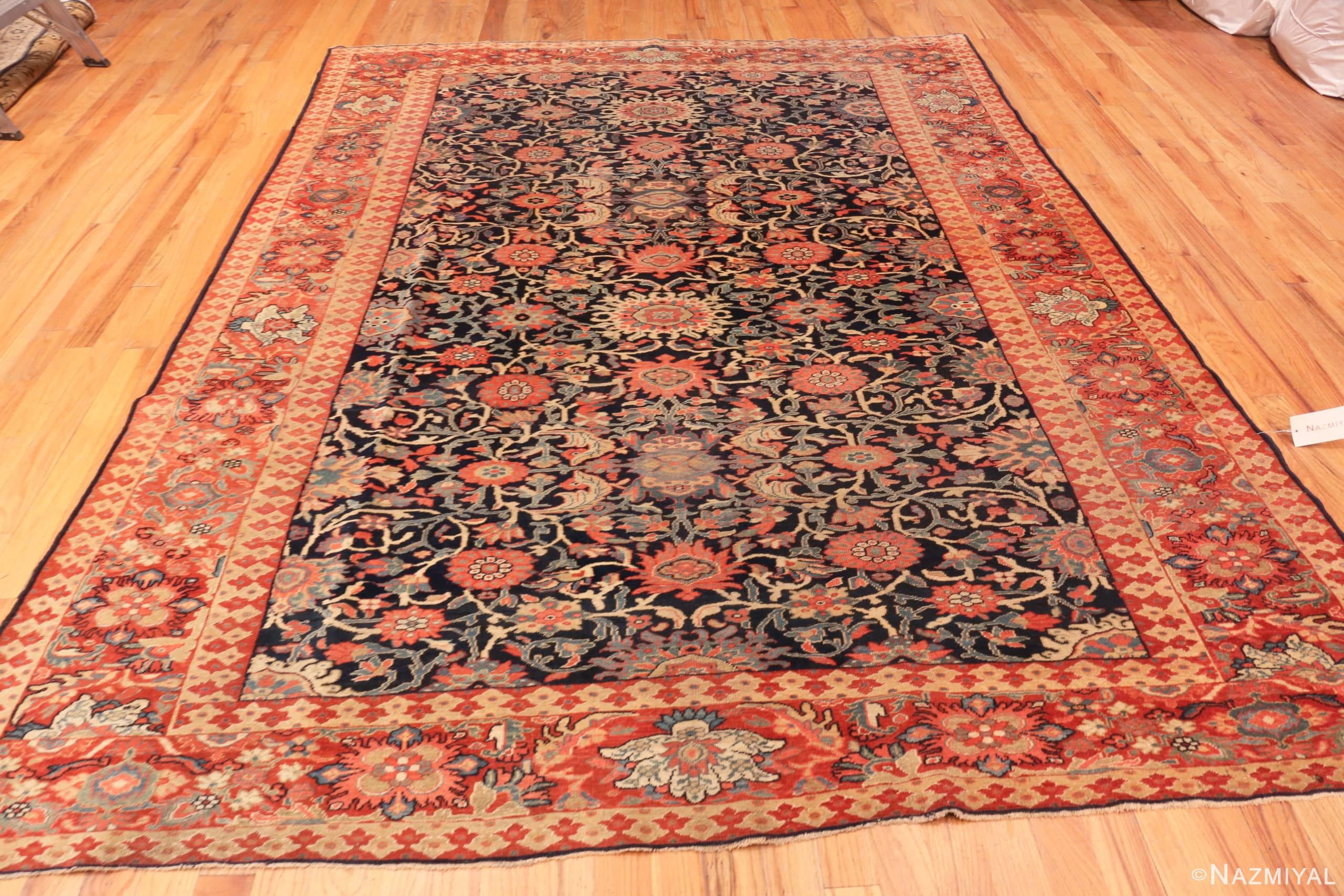
Sarouk Farahan rugs are fine antique Persian carpets from the Arak/Sarouk–Farahan region, prized for their tight weave, sophisticated Persian motifs, and naturally dyed palettes that age into a quiet, confident glow.
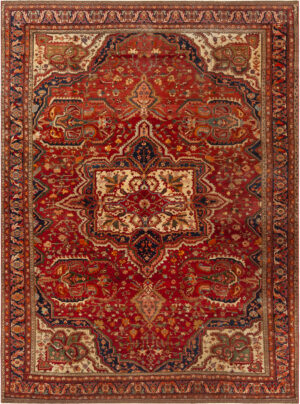
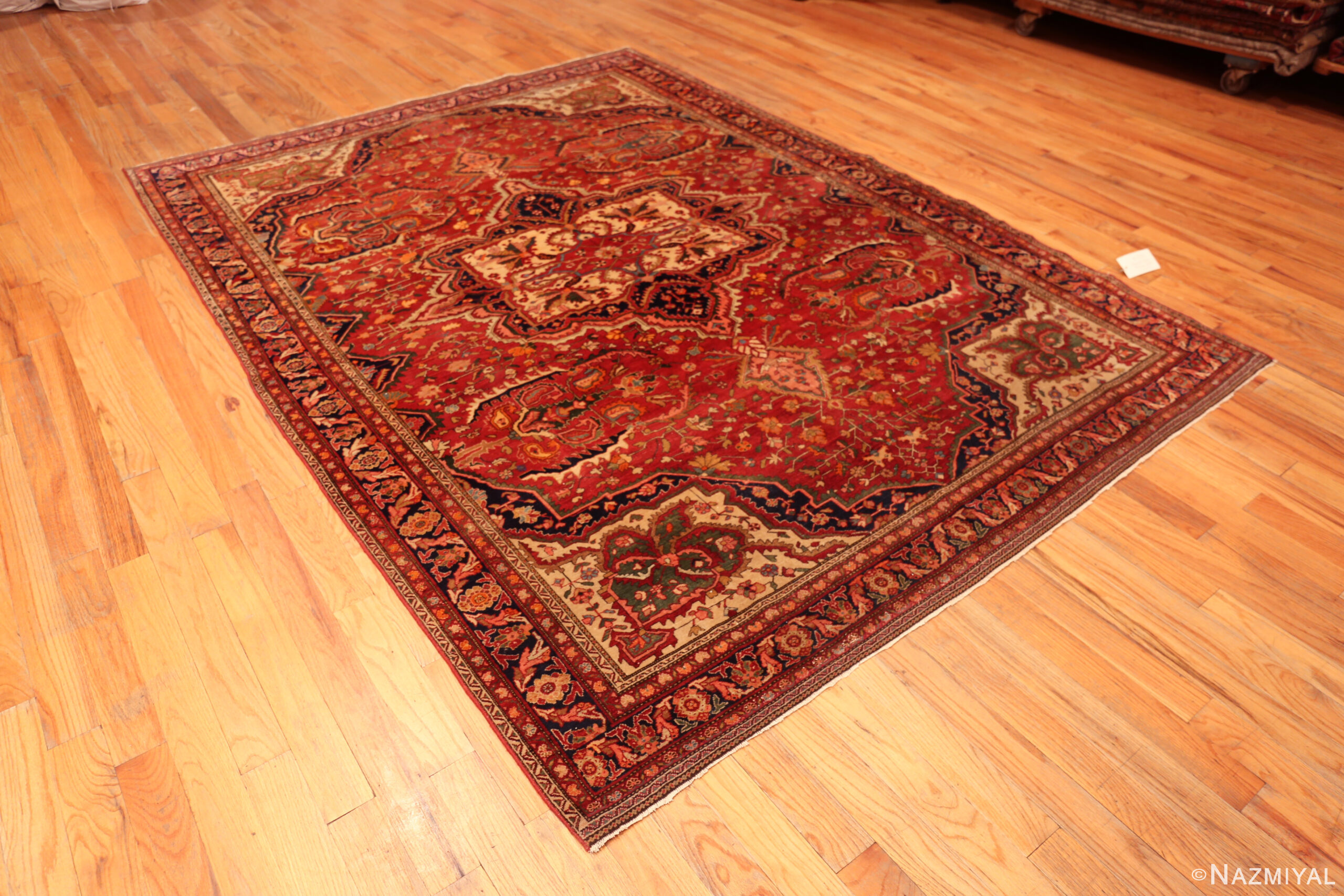
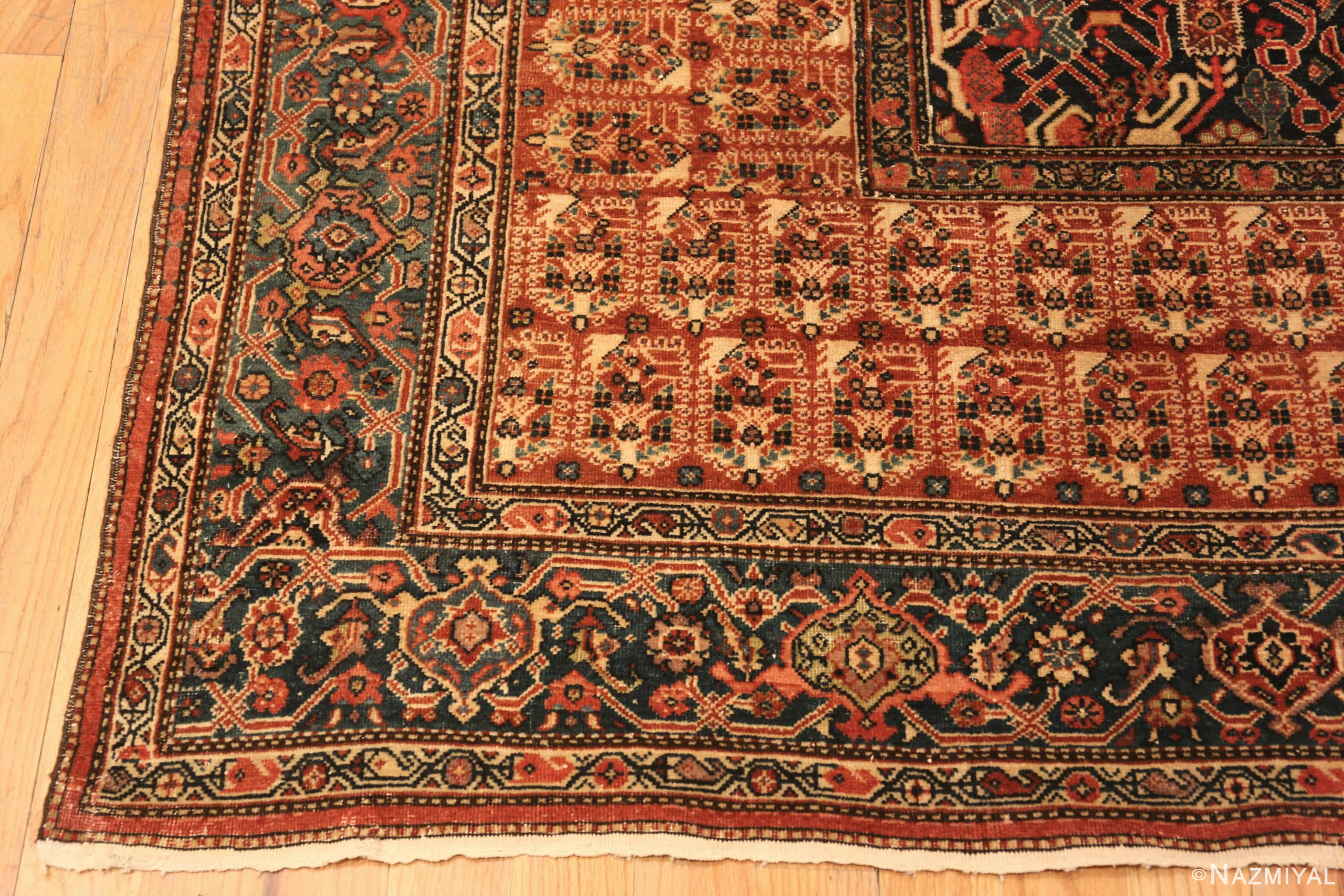
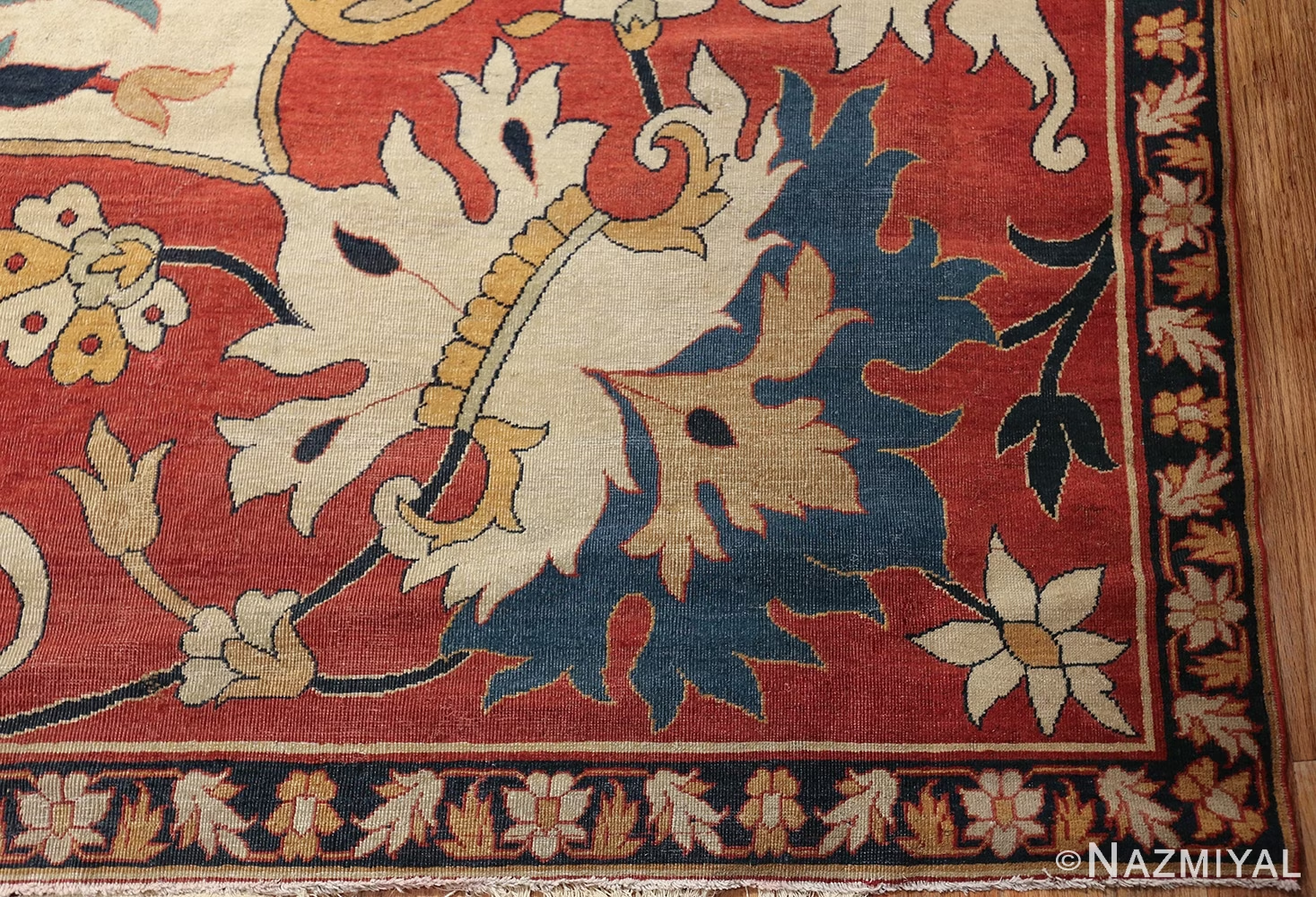
Sarouk Farahan sits in a rare category where the rug reads beautifully from across the room—structure, balance, proportion—but still rewards you up close with nuanced drawing and detail. The best examples show:
Crisp pattern legibility (even with dense ornament)
Soft, well-aged color rather than harsh contrast
Confident borders that frame the field without feeling heavy
Signature Design Families
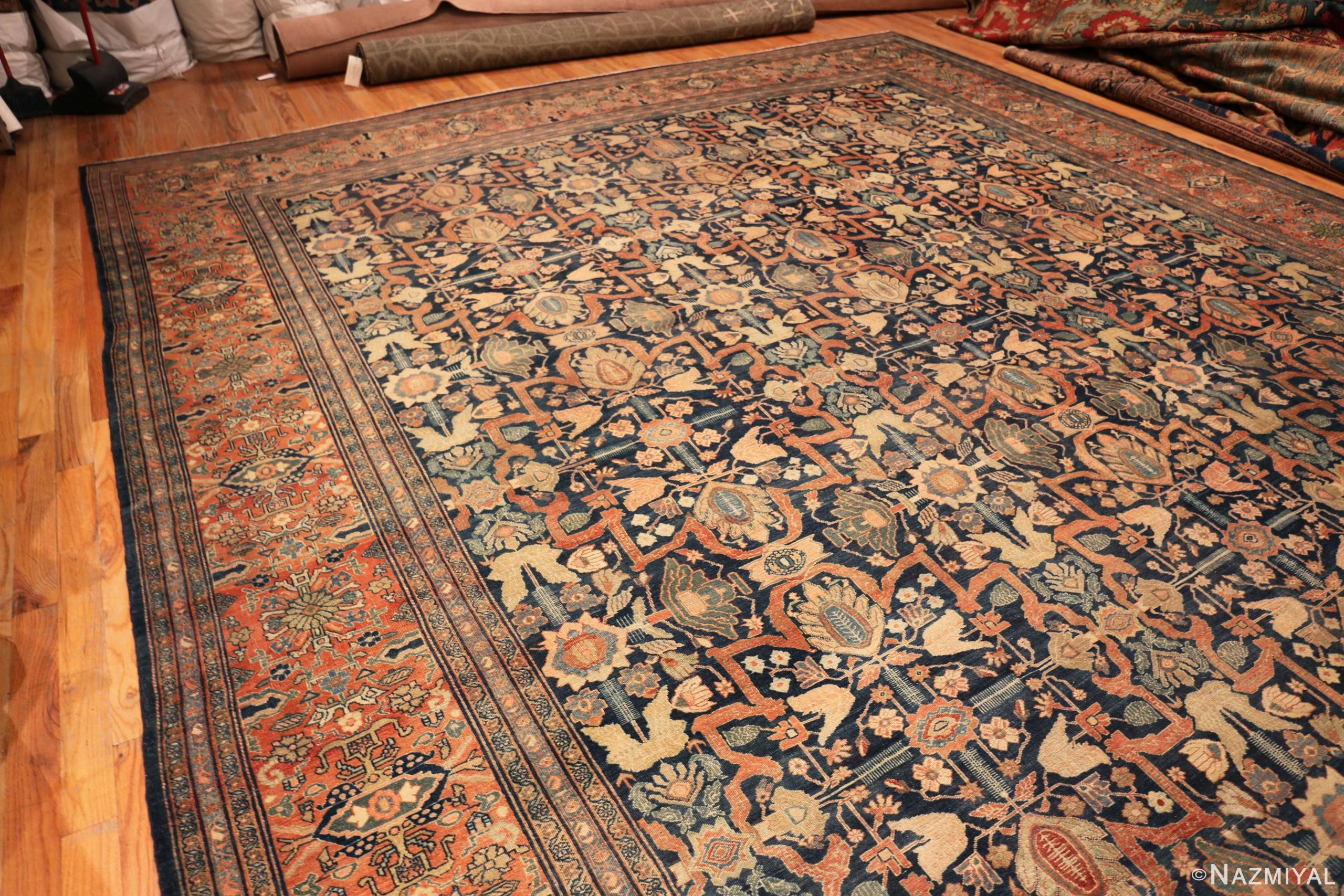
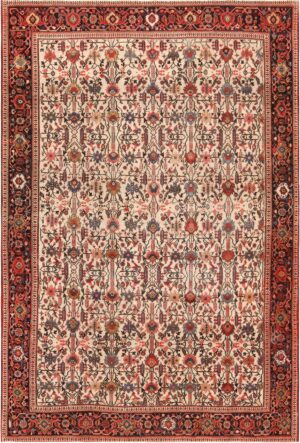
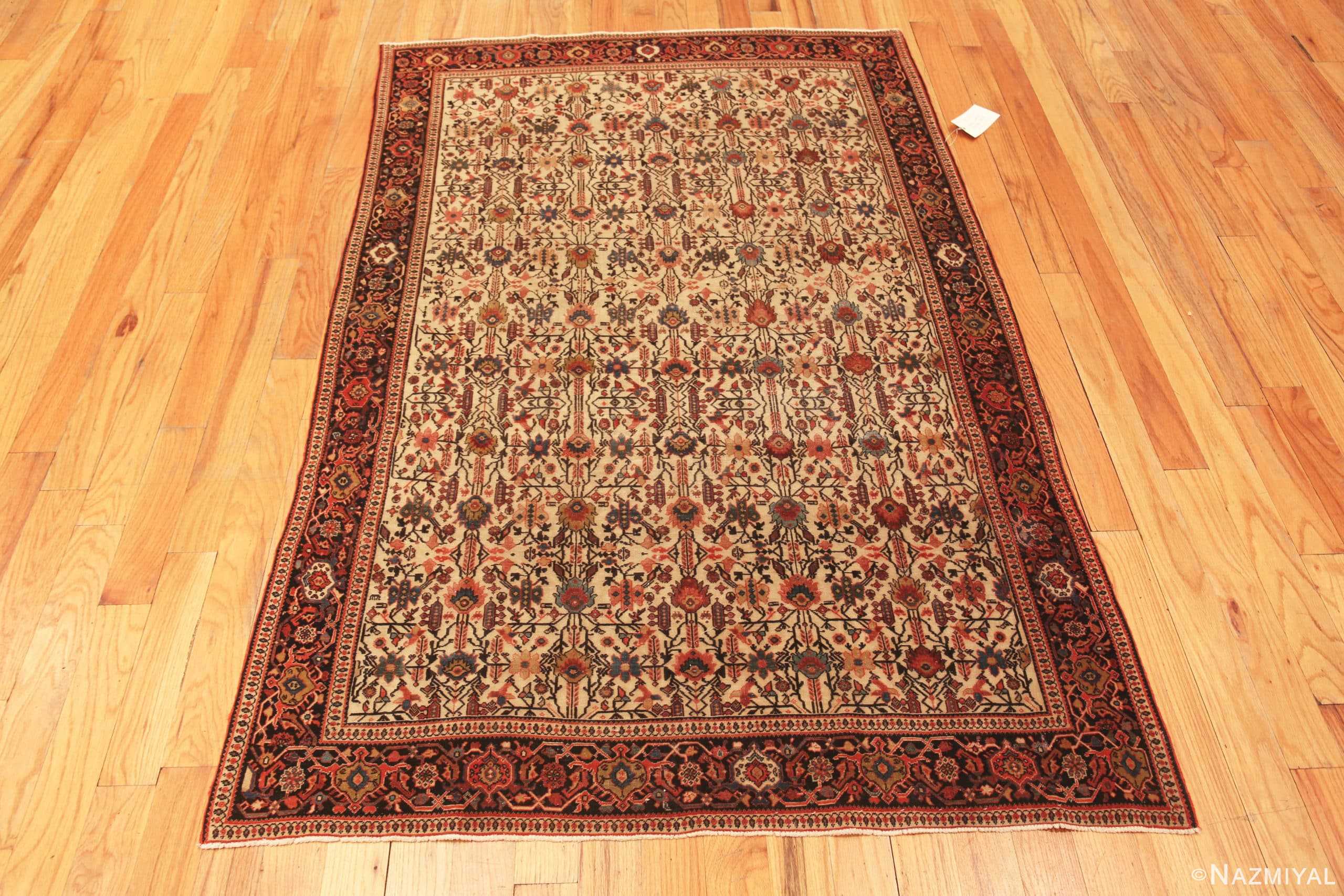
Herati (fish) allover rugs: refined repeats that decorate effortlessly.
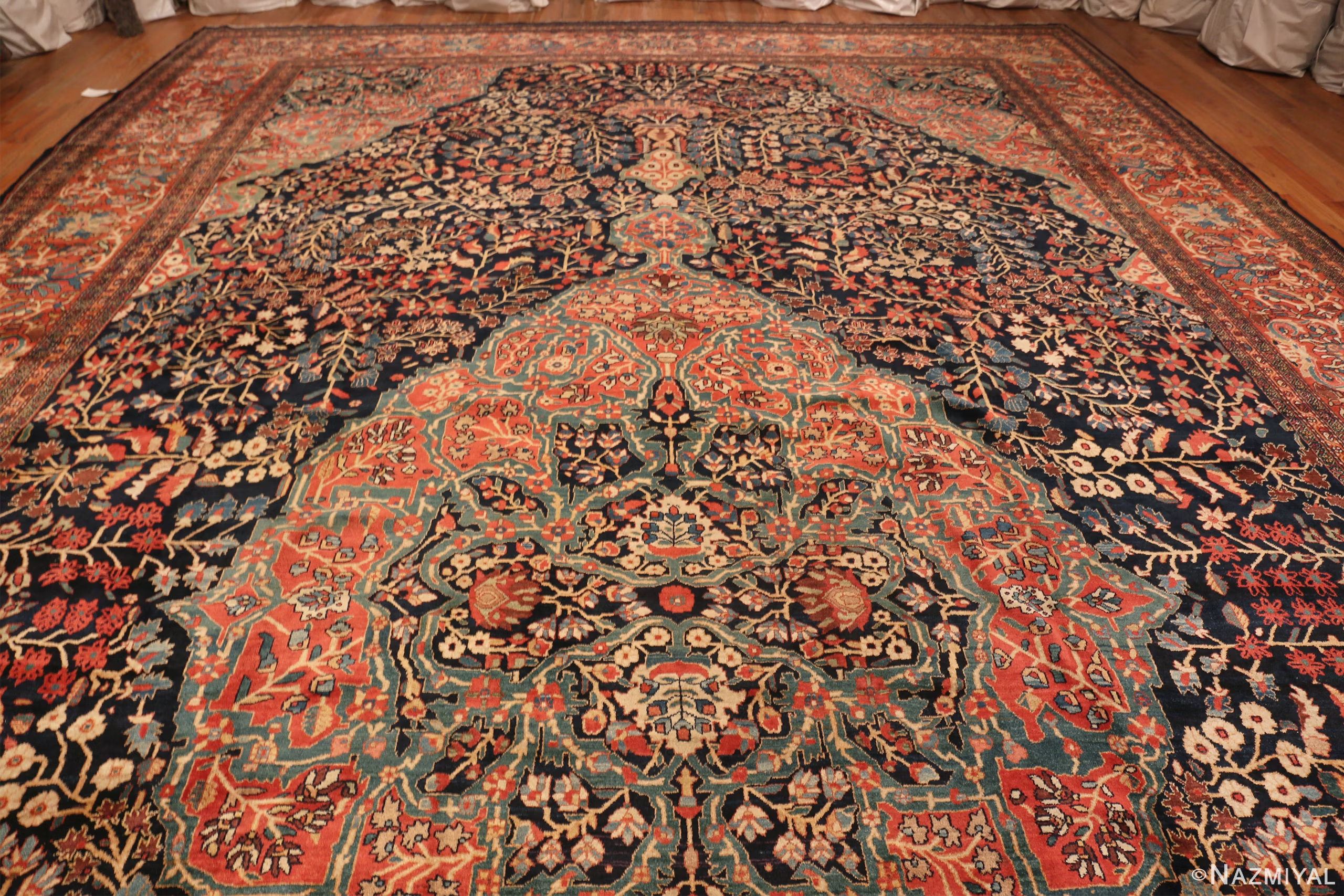
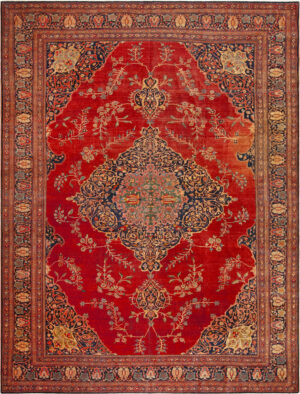
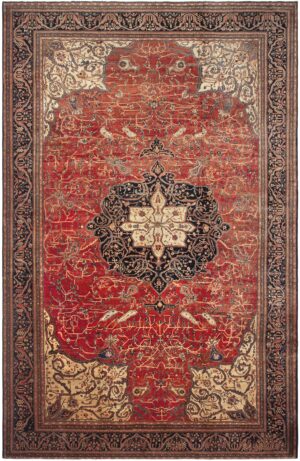
Central medallion rugs: formal, centered compositions with floral spandrels.
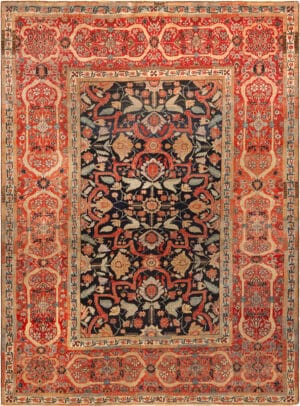
Tree of Life variants: less common, highly decorative, and often very collectible.
Color That Ages Gracefully
Collectors love Sarouk Farahan palettes because they tend to mature into a mellow, harmonious spectrum—the kind of rug that makes a room feel finished without shouting.
How to Shop Sarouk Farahan the Smart Way
1) Start with size
Living room: often 9×12, 10×14, 12×15 (depending on layout)
Dining room: size up so chairs stay on the rug when pulled out
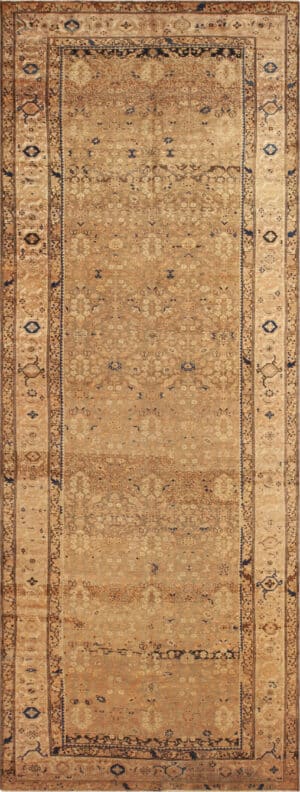
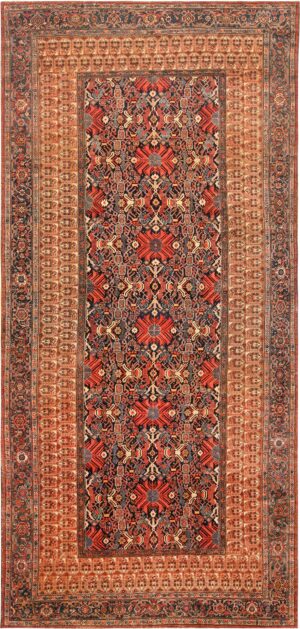
Hall/runner: prioritize length and walkway clearance
Sarouk Farahan is typically finer and more classically “Persian” in drawing, often collected for crisp detail and nuanced color. The broader Sarouk category ranges across periods and intentions, including later workshop production with different palette habits.
If you love Sarouk Farahan refinement but want an even more city-workshop feel, Kashan is a natural cross-shop: classical authority, strong structure, and a deep Persian presence.
Rotate every 6–12 months for even wear (especially in sunny rooms).
Use a quality pad to protect the foundation and improve feel underfoot.
Vacuum gently (avoid aggressive beater bars).
For cleaning, choose a specialist who understands antique, naturally dyed textiles.
If you want guidance based on room size and lifestyle, contact Nazmiyal and we’ll point you to the best candidates quickly.
Glossary
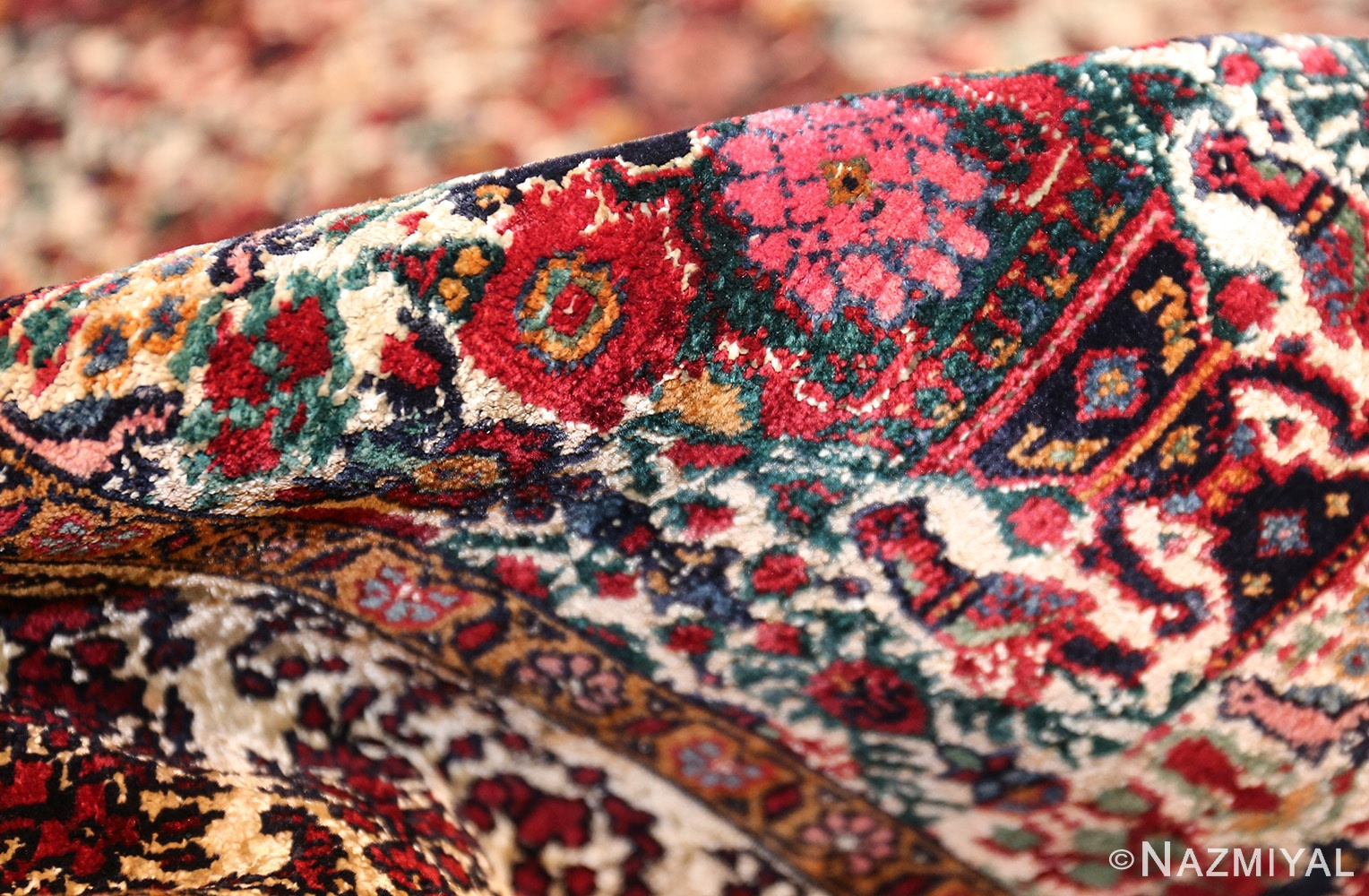
Herati: an allover “fish” style pattern with rosettes and curling leaves. Abrash: natural color variation from hand-dye batches. Medallion: a central focal motif anchoring the field’s composition. Cotton foundation: warp/weft structure supporting the wool pile. Vegetable dyes: plant/mineral-based dyes that often age into softer, more dimensional color.
Are Sarouk Farahan rugs good for modern interiors?
Yes. Their structure reads clean and intentional, which plays extremely well with modern furniture—especially when you let the rug be the “art” and keep upholstery quieter.
What time period are most Sarouk Farahan rugs from?
Many strong examples date to the late 19th and early 20th century, though earlier pieces exist and tend to be scarcer.
What patterns are most common?
Herati allover, medallions with floral spandrels, and refined floral fields. Tree of Life examples also appear.
Are Sarouk Farahan rugs durable?
Generally, yes—especially well-made wool-pile examples on stable foundations. Condition still matters, so always review photos and structure.
How can I tell if the colors are naturally dyed?
Look for depth and natural variation (including abrash). If you’re unsure, ask us—we’re happy to walk you through it.
Should I choose medallion or allover?
Medallion for formality and symmetry; allover for easy decorating and flexibility.
Nazmiyal White-Glove Service
We make it easy to shop with confidence—whether you’re choosing a single statement piece or curating a full room.
Trustindex verifies that the original source of the review is Google.
My wife and I are so pleased with the antique Uzbek Bokhara Rug purchased from the Nazmiyal Collection. Not only does the rug have a spectacular design, it also was very reasonably priced. The way it transforms our living room, reconciling the classic modern furniture with the 1913 Craftsman interior is remarkable.
Posted on Google
Terence Hayes
Trustindex verifies that the original source of the review is Google.
I have purchased multiple rugs at multiple Nazmiyal auctions and I am extremely pleased with the quality, price, and experience. Highly recommended!
Posted on Google
Victor Florintsev
Trustindex verifies that the original source of the review is Google.
The only ones I'd ever buy rugs from. The best.
Posted on Google
Jeffrey NeumanB
Trustindex verifies that the original source of the review is Google.
I bought two gorgeous Serapi rugs from Farhad at Nazmiyal Rugs! Beautiful carpets, fair prices and great service. Very happy customer. Farhad (the sales person) was very patient and gave us great service.
Posted on Google
john haid
Trustindex verifies that the original source of the review is Google.
Alen is a gentleman and an expert. Really great to work with.
Posted on Google
Edward Yasuna
Trustindex verifies that the original source of the review is Google.
I recently purchased a modern Kandinsky rug from Nazmiyal Auctions. It was just as described, and the director (Farhad) of the auctions had it sent to me quickly and safely. Payment was easy, the rug was reasonably priced, and I highly recommend Nazmiyal Auctions and Antique Rugs. Quality merchandise and first-class service.
Posted on Google
Nicholas Carr
Trustindex verifies that the original source of the review is Google.
Had a excellent experience buying a rug in Nazmiyal's 1/18/26 online auction. First, prior to the auction, viewing a number of lots at the 32nd St showroom (I had prepared a list from the online catalog). The staff were great to work with: helpful, knowledgable, honest, and flexible. Second, after placing an online bid and winning the desired item, arranging payment and pickup was simple and straightforward. Everything went seamlessly and the overall experience was educational and fun. Many thanks to Jason and his team.
Posted on Google
Andrea Gared
Trustindex verifies that the original source of the review is Google.
Everyone at Naziyal is proffessional, especially Jason and Farhad.
They are knowledgeable, truthful, and true gentlemen. I have sold several rugs through them and will always go to them first, to buy or sell. The best in the business!
Frequently Asked Questions
Antique Sarouk Farahan rugs combine the elegance of Sarouk weavings with the finely detailed drawing of Farahan workshops. They are known for delicate floral patterns, graceful medallions, and unusually refined compositions for central Persian rugs.
Farahan weavers produced rugs with higher artistic precision, thinner lines, and more sophisticated pattern layouts. Compared to standard Sarouk rugs, Sarouk Farahan pieces display greater finesse and a more aristocratic design sensibility.
Identification is based on the fine drawing of floral motifs, elongated medallions, delicate vinework, and balanced spacing. Sarouk Farahan rugs often feature subtle color transitions and carefully articulated borders that distinguish them from heavier Sarouk designs.
Yes. Although more refined than standard Sarouk pieces, Sarouk Farahan rugs were woven with strong wool and durable foundations. With proper care, they are suitable for long-term use in living rooms, studies, and formal spaces.
Value is influenced by design precision, age, condition, rarity, and the clarity of the floral drawing. Well-preserved Sarouk Farahan rugs with balanced medallions and harmonious colors are especially desirable to collectors.
THE NAZMIYAL NEWSLETTER
Discover Your Next Favorite Rug
Get new arrivals, rug inspiration, educational blogs, and collection highlights delivered to your inbox.
By subscribing, you agree to receive marketing emails from Nazmiyal. Unsubscribe anytime. View our Privacy Policy.