Dagestan rugs are among the most collectible small-format antique rugs from the Caucasus—valued for tight, repeating geometry, bold borders, and color that stays graphic under furniture. Many pieces were woven in the eastern Caucasus and share regional DNA with nearby weaving centers, which is why Dagestan rugs are often discussed alongside other Caucasian groups. Start your search at Nazmiyal for vetted inventory, and use the Dagestan tradition as a clean reference point for tribal balance, symmetry, and scale.
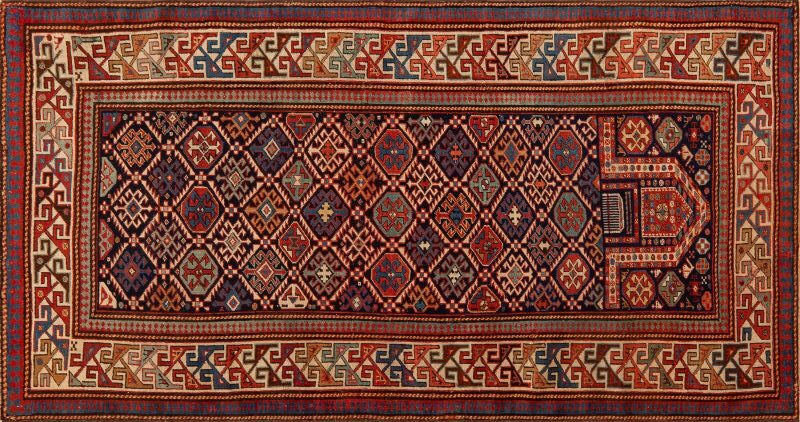
Dagestan rugs are antique Caucasian carpets known for small-scale geometric repeats, strong border architecture, and frequent prayer-rug formats that read crisp and structured in real rooms.
Museum-vetted selection: We prioritize authentic weaving, strong design, and pieces that hold up under collector scrutiny.
Condition transparency: Clear guidance on wear, repairs, and what matters structurally—so you buy with confidence.
Real decorating guidance: Not just “beautiful”—we help you place scale, palette, and pattern so the rug actually works in your space.
What Are Dagestan Rugs?
Dagestan (often spelled “Daghestan”) refers to a weaving region in the eastern Caucasus, historically known for village-made rugs that emphasize tight pattern logic over oversized flourishes. In practice, Dagestan rugs tend to look “designed” in the best way: repeating small motifs, tidy compartments, and borders that feel architectural. Many were woven in sizes that fit real homes—perfect for entryways, bedside placement, or layering in living rooms where you want tribal character without visual chaos.
Dagestan rugs are closely related to other eastern Caucasian traditions, which is why collectors often organize them within the broader Caucasian rugs category when comparing structure, drawing, and regional palettes.
How to Identify a Dagestan Rug
Use this collector-first checklist when you’re deciding whether a rug “reads” Dagestan (and whether it’s a strong example):
Small-scale repeats: motifs often repeat tightly across the field rather than expanding into one huge centerpiece.
Border dominance: multiple borders with crisp geometry; borders feel like a frame, not an afterthought.
Prayer format (common): a simplified niche/mihrab at one end, often paired with compact allover patterning.
Color structure: clear contrast—deep blues/reds with light accents—so the pattern stays legible across the room.
Design discipline: symmetry and spacing feel intentional, not loose or “painterly.”
Materials & Construction
Most antique Dagestan rugs are wool pile pieces with a sturdy, practical village build. When evaluating quality, focus less on buzzwords and more on what you can feel and see:
Wool handle: good examples feel resilient—springy rather than flat or brittle.
Knot clarity: sharper geometry usually correlates with tighter weaving and better design control.
Edges and ends: check for stable selvages and sound ends; these are common stress points in older Caucasian rugs.
Back view: pattern should remain readable on the back—muddy backs often signal heavy wear or later production.
Decorating With Dagestan Rugs
Dagestan rugs are decorating powerhouses because their geometry acts like visual “structure.” Here’s how to make them look intentional in a modern home:
1) Use them to sharpen a soft room
If your space leans neutral, Dagestan geometry adds definition. In a room with linen upholstery, warm woods, and soft lighting, a Dagestan rug reads like a clean graphic anchor—especially when the border is strong.
2) Scale matters: let the border do its job
In small rooms (entries, studies, bedside), Dagestan rugs often look best when you can see all four borders. That frame is part of the design. For larger rooms, consider layering: let the Dagestan sit on top of a larger, quieter base rug.
3) Compare eras when matching wear and tone
If you’re balancing patina and palette, compare an antique Dagestan with the softer surfaces you’ll find in vintage rugs and the cleaner, more controlled look of modern rugs. When you want the most authentic tribal character, antique examples usually win on drawing and presence.
Value, Rarity & Collecting
Dagestan rug value is usually driven by design strength and condition integrity more than size alone. Collectors pay up when the rug has:
Exceptional drawing: crisp geometry, balanced spacing, and confident borders.
Great color: strong contrast with harmonious accents (especially when the light tones stay clean).
Healthy structure: stable foundation, intact edges/ends, and no major distortion.
Honest age and patina: tasteful wear is fine; heavy abrasion in the field reduces both visual impact and value.
Because these rugs are often collected in smaller sizes, even a “modest” piece can feel museum-level if the design is precise and the condition is strong.
Caucasian rugs are the big umbrella; Dagestan sits inside it as a more tightly patterned, design-disciplined tradition. If you like Dagestan for its small repeats and crisp borders, exploring the wider Caucasus category is the fastest way to find close substitutes in similar palettes and village character.
If you’re building a whole-home palette by weaving geography, start with Rug Origins to browse by region and compare neighboring traditions with similar structure and color logic. For two especially useful comparisons inside the Caucasus family, explore Caucasian Kuba rugs and Kazak rugs.
Glossary
Mihrab • Prayer Rug • Field • Border System • Geometric Repeat • Village Weaving Full A–Z: Rug Glossary
FAQ
Are Dagestan rugs antique?
Many collectible examples are antique (often late 1800s to early 1900s). Age is best judged through structure, materials, design quality, and condition—not the label alone.
What makes a Dagestan rug look “crisp” compared to other tribal rugs?
Dagestan rugs often use tight geometric repeats and strong border architecture, so the pattern stays legible across a room—even under furniture.
Are Dagestan rugs usually prayer rugs?
Prayer formats are common, but not universal. Many Dagestan rugs adapt small-scale allover designs into prayer compositions with a simplified niche at one end.
What colors are typical in Dagestan rugs?
Deep blues and reds are common, often with ivory/cream highlights and occasional yellow or green accents that sharpen contrast.
What affects Dagestan rug value the most?
Design strength (drawing and balance), clean color, and structural integrity (edges/ends and overall condition) are the biggest drivers.
Do Dagestan rugs work in modern interiors?
Yes. Their geometry behaves like graphic structure, making them easy to pair with modern furniture, clean-lined rooms, and edited palettes.
Nazmiyal White-Glove Service
We make it easy to shop with confidence—whether you’re choosing a single statement piece or curating a full room.
Trustindex verifies that the original source of the review is Google.
The only ones I'd ever buy rugs from. The best.
Posted on Google
Jeffrey NeumanB
Trustindex verifies that the original source of the review is Google.
I bought two gorgeous Serapi rugs from Farhad at Nazmiyal Rugs! Beautiful carpets, fair prices and great service. Very happy customer. Farhad (the sales person) was very patient and gave us great service.
Posted on Google
john haid
Trustindex verifies that the original source of the review is Google.
Alen is a gentleman and an expert. Really great to work with.
Posted on Google
Edward Yasuna
Trustindex verifies that the original source of the review is Google.
I recently purchased a modern Kandinsky rug from Nazmiyal Auctions. It was just as described, and the director (Farhad) of the auctions had it sent to me quickly and safely. Payment was easy, the rug was reasonably priced, and I highly recommend Nazmiyal Auctions and Antique Rugs. Quality merchandise and first-class service.
Posted on Google
Nicholas Carr
Trustindex verifies that the original source of the review is Google.
Had a excellent experience buying a rug in Nazmiyal's 1/18/26 online auction. First, prior to the auction, viewing a number of lots at the 32nd St showroom (I had prepared a list from the online catalog). The staff were great to work with: helpful, knowledgable, honest, and flexible. Second, after placing an online bid and winning the desired item, arranging payment and pickup was simple and straightforward. Everything went seamlessly and the overall experience was educational and fun. Many thanks to Jason and his team.
Posted on Google
Andrea Gared
Trustindex verifies that the original source of the review is Google.
Everyone at Naziyal is proffessional, especially Jason and Farhad.
They are knowledgeable, truthful, and true gentlemen. I have sold several rugs through them and will always go to them first, to buy or sell. The best in the business!
Posted on Google
Lori Silverberg
Trustindex verifies that the original source of the review is Google.
Posted on Google
Jesse Zilberman
Trustindex verifies that the original source of the review is Google.
Excellent customer service! Alen was very helpful over the phone and email. The rug we acquired was stunning, and photos do not do it justice. I would definitely work with Alen and team again!
Posted on Google
Rachel Paul
Trustindex verifies that the original source of the review is Google.
Jason was incredibly kind and helpful! I work for a small museum that had some rugs we had no information on. Jason responded to us quickly and gave us the information we needed for free! Incredible service, we are super thankful for his help!

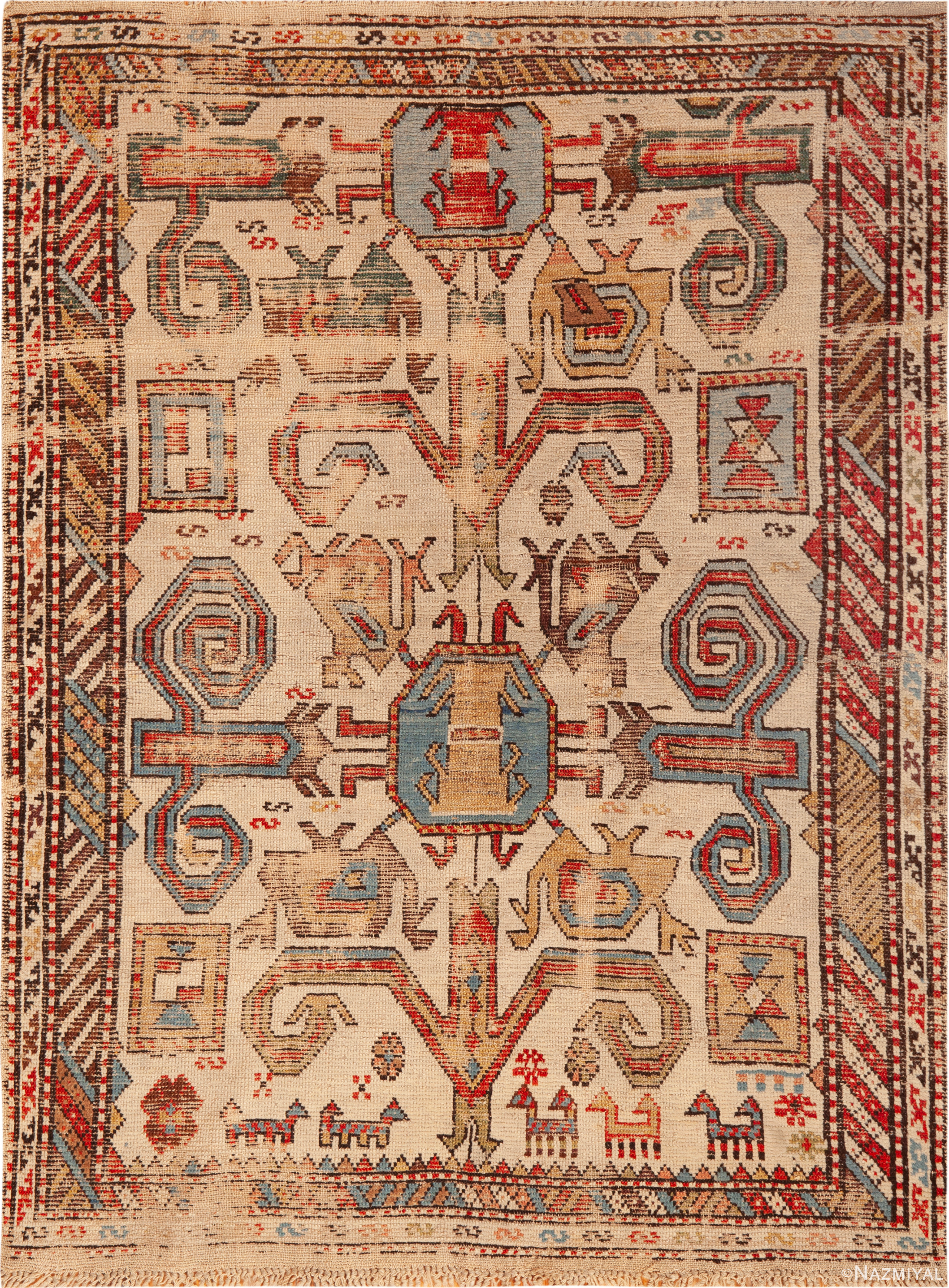
 Size: 3 ft 7 in x 4 ft 9 in (1.09 m x 1.45 m)