
Persia’s Golden Age of Carpet Design: What to Know, What to Look For, and Why it Still Matters
Persian carpets with an architectural design are almost certainly from a style that peaked during the Safavid era. Bold medallions, disciplined arabesques, and garden-like structures are staple compositional devices. At the Nazmiyal Collection, we study these early masterpieces from a collector’s perspective. We analyze how they’re made, what survives today, and how to distinguish between true antiques and later revivals.
If you’re comparing eras, start with Antique Rugs and Early Rugs. For broader context, explore Persian Rugs and our Worldwide Hub.
Safavid rugs are elite Persian carpets from the Safavid dynasty, which lasted from 1501-1736. These rugs were celebrated for their refined court design, technical innovation, and a classic Persian aesthetic that influenced design worldwide.
Featured From the Nazmiyal Collection
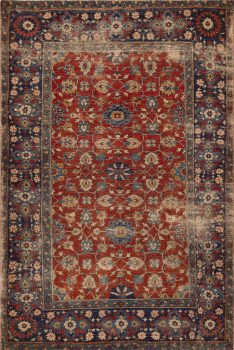
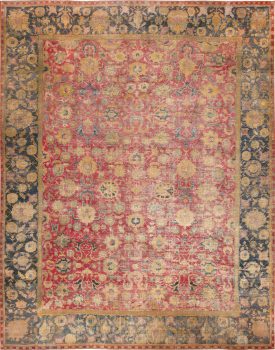
What are Safavid Rugs?
Safavid rugs refer to Persian carpets woven under the Safavid dynasty’s court culture. This was a period of time where carpet design truly became a high art industry. It was supported by workshops, designers, and a sophisticated patronage system. During this era, Persian design staples were refined into a standard that still exists today. These include curves, florals, medallions, and garden structures.
Why the Safavid Era Changed Carpet Design
Safavid Persia didn’t just produce more rugs, it professionalized the craft. Designs that once lived in manuscript illumination, architecture, and decorative arts were translated into woven form with extraordinary control. The results were developed design conventions. These consisted of disciplined symmetry, elegant borders, and an effortless flow of curvilinear line with a painterly quality.
Tip for collectors: proper work from the Safavid era reads like a blend of design and engineering. They’re beautiful pieces that hold together structurally.
The Safavid Design Conventions
- Medallion Architecture – Large central medallions with radiating pendants and carefully organized corners known as spandrels. Even when the composition is busy, the framework stays calm.
- Arabesques and Curvilinear Florals – Sinuous vine work, scrolling leaves and elegant floral devices. This is where Persian drawing is unmistakably classic.
- Garden Logic – Not always literal gardens, but a sense of planned order: panels, compartments, and pathways for the eye.
- Shah Abbas Palmettes and Related Motifs – Stylized palmettes integrated into arabesque systems became a hallmark of later Safavid aesthetics.
- Specialty Families (Vase, Animal, Hunting, Polonaise, Brocaded Silks) – Certain Safavid-era groups are defined by theme, workshop habits, and materials. They make up some of the most collectible early carpets in the world.
Major Weaving Centers
Scholars often associate Safavid weaving with major urban centers and courts. In practice, attribution can be complex, but these names come up repeatedly:
- Tabriz – early court culture and design leadership with a strong capital identity.
- Isfahan – later capital prestige and a major magnet for design.
- Kashan – frequently linked to fine silk work and court taste.
- Kerman – associated with outstanding workshop production, including famous vase traditions.
For collectors, the city name is helpful, but the rug itself must prove the case through structure, drawing, and materials.
Materials and Techniques
Safavid period carpets can be incredibly fine. Clean curves, stable color palettes, and dense weaves are common in earlier textiles. In certain workshop pieces the use of silk or silk piles are prevalent, as well as metallic thread.
- Precision in curve – curves that stay clean under magnification
- Sophisticated palette – deep, stable ground; controlled contrast
- High weave refinement – density, crisp pattern edges, balanced handle
- Metal-thread embellishment – in special elite examples
Rarity: What Actually Survives
Safavid carpets are rare by nature. The mix of organic materials, heavy historic use, and the inevitability of time mean many early pieces are fragments today. A commonly cited estimate suggests there are only a few thousand surviving Safavid carpets and fragments. The most famous example is the Ardabil Carpet, dating back to 1539 in the Victoria and Albert Museum in London.
How to Identify an Authentic Early Safavid Period Carpet
There are several characteristics to look out for when trying to identify a true Safavid carpet. No single detail does it. Instead, look for a combination of traits such as these:
- Design Authority – confident linework and balanced spacing; borders that lock the composition into place with no decorative afterthoughts
- Structure – wool/cotton/silk foundational materials consistent with period and workshop habit; knotting and weave quality that support the drawing
- Color – intentional and architectural palette harmony; natural-dye character rather than flat saturation
- Condition and Integrity – honest wear is normal, watch for heavy reweaving that changes the drawing; fragments with intact design and structure are still important
If you want a broader collecting context, start with Antique Rugs. Then compare to later developments in Vintage Rugs and modern interpretations in Modern Rugs.
Safavid Rugs vs Mughal Rugs
The biggest difference between the two is geographic, though there is a lot of overlap. The Mughal style of artwork and textiles was largely influenced by the Safavid style, given the reigning powers’ origins. However, due to differing cultural developments, there are still differences between rugs from either period.
Safavid Rugs
Safavid rugs originate from Persia, modern-day Iran. They consist of an architectural classicism. This includes medallion systems, arabesques, garden logic, and court aesthetics.
Mughal Rugs
Mughal rugs, on the other hand, originate from India. Their carpets are instead comprised of an imperial refinement with different accent details. The embellishments lean more botanical, with patterned luxuriance and workshop character tied to Mughal court taste.
Choosing between both is tricky, but if you favor a classic and foundational Persian design, choose a Safavid rug. If you’d rather a design that isn’t quite Persian but certainly Persian influenced, consider a Mughal textile.
Why Trust Nazmiyal?
The Nazmiyal approach is built on three foundational pillars that guide every decision, from acquisition to expertise to client trust: deep scholarly knowledge developed through decades of hands-on experience, rigorous standards of authenticity and transparent valuation, and a globally curated collection shaped by historical depth, cultural understanding, and market insight.
Your questions answered
Frequently Asked Questions
Are Safavid rugs always Persian?
Yes, the term is fundamentally tied to Persian carpet history. Safavid rugs are associated with Safavid Persia and its court culture.
What time is the Safavid era for rugs?
The Safavid dynasty spans 1501-1736. The “golden age” for carpet production was the 16th-17th centuries.
Why are Safavid carpets so rare?
Age, organic materials, and centuries of use. Many surviving examples are fragments and complete court carpets are limited.
What is the Ardabil Carpet and why is it famous?
It’s one of the best known named persian carpets from this era. It’s dated 1539 and widely referenced in Safavid carpet scholarship.
What designs are most associated with Safavid carpets?
Medallion layouts, arabesques, garden structure, Shah Abbas palmettes, and specialty groups like vase and brocaded silk/metal-thread pieces.
How can I identify a true Safavid rug?
Look at structure, materials, the authority of the drawing, and color character. When in doubt, consult an expert.
Do Safavid rugs work in modern interiors?
Absolutely. Their disciplined architecture and sophisticated palettes can anchor minimalist rooms without feeling busy.