
Mamluk Dynasty Carpets: Cairo’s Kaleidoscopic Medallion Masterpieces
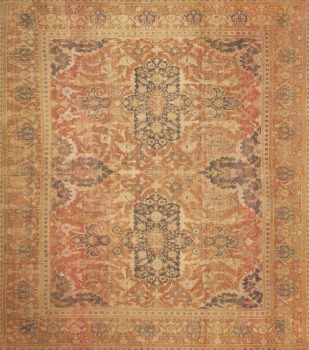
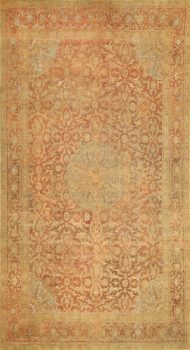
Antique Mamluk rugs, hailing from Egypt, have a very special place in carpet history. Large in size with bold geometric patterns built around a central medallion, they’re visually unmistakable. The medallion designs are usually surrounded by smaller motifs, creating a kaleidoscope effect. Mamluk rugs are historically important, influencing later Ottoman and Persian carpet designs.
Featured From the Nazmiyal Collection
What Makes a Rug “Mamluk”?
The term “Mamluk rug” is used for rare court carpets associated with the Mamluk Sultanate and its artistic legacy in Egypt. Workshop production achieved an unusually confident and mathematically organized geometry, especially in Cairo. The look is distinct, with a powerful central medallion surrounded by smaller motifs that lock together like a mosaic.
If you’re interested in exploring further, visit our Egyptian Rugs and Antique Rugs collections. Both give context for how Egypt fits into the wider carpet category.
Who Were the Mamluks?
The Mamluk Sultanate ruled from 1250 to 1517, and is often discussed in two major phases. While the political history is complex, Cairo became a serious production center where designs could converge into a signature style.
The “Kaleidoscope” Medallion
Most collectors recognize Mamluk carpets instantly by three traits. The first is a central medallion that serves to anchor the general composition. Then the smaller geometric motifs that surround the center, often radiating outward in organized rings. The third is a limited but high-impact palette that keeps the geometry crisp and legible across a large surface.
The three recognizable traits of Mamluk carpets:
- Central medallion
- Geometric motifs around the center
- Limited palette
The medallion is one of the biggest reasons Mamluk carpets matter beyond Egypt. The composition is later transformed and developed across different classical traditional designs. This includes both Ottoman court work and Persian pieces.
For broader context, see Persian Rugs and Turkish Rugs. Both traditions absorb and reinterpret medallion designs in their own styles.
Mamluk Rugs vs Cairene Rugs
Mamluk and Cairene era rugs share geographic origins. The context of their distinction comes from the reigning powers of either era. While “Mamluk” refers to the classic era, “Cairene” rugs are specifically named after Cairo during the Ottoman period in Egypt. Despite their similarities, there are also traits that distinguish them from each other.
Mamluk Rugs:
- More strictly geometric “kaleidoscopic” structure
- Typically associated with the late 15th-16th century Cairo production
- Extremely scarce in private hands
Cairene Rugs:
- Curvilinear and “Persianized” design
- Strong courtly refinement (large and luxurious)
- Practical choice for collectors interested in Mamluks but cannot find any
Explore more from Cairene Rugs.
Damascus Rugs: Why They’re Sometimes in the Same Conversation
You’ll occasionally see Damascus rugs discussed alongside Mamluk work. This is because Syria fell under Mamluk control for some time. Some surviving Damascene carpets share overlapping geometry, palette preferences, and workshop influence.
How to Identify Mamluk or Mamluk-Influenced Carpets
When you’re evaluating a purported Mamluk carpet, there are certain things to look out for.
- Design planning: resolved corners, coherent symmetry, deliberate spacing
- Crisp geometry: polygons and radiating motif systems that feel intentional rather than decorative filler
- Palette discipline: limited colors used with confidence and purpose
- Scale + presence: Mamluk carpets are often impressively sized
- Condition honesty: restorations are inevitable with older textiles, but the quality of the restoration matters
If you want a modern counterpart for everyday use, browse Vintage Rugs or Modern Rugs. You can still capture the graphic nature of a Mamluk without worrying about maintaining museum-level quality.
Decorating With Mamluk Style Carpets
When incorporating a Mamluk-style rug, keep in mind that these aren’t “background rugs”. The textile should be leading the room’s design, serving as the basis for the interior palette. Linen, plaster, walnut, and quiet neutrals pair best with the geometric patterns found in Mamluk rugs. Keep in mind, these rug compositions are complex, and need room to breathe. Avoid overly busy upholstery right on top of the rug.
- Build palette off the rug’s colors
- Pair with calm solids
- Use negative space
Why Trust Nazmiyal?
The Nazmiyal approach is built on three foundational pillars that guide every decision, from acquisition to expertise to client trust: deep scholarly knowledge developed through decades of hands-on experience, rigorous standards of authenticity and transparent valuation, and a globally curated collection shaped by historical depth, cultural understanding, and market insight.
Your questions answered
Frequently Asked Questions
What years are Mamluk rugs from?
The Mamluk Sultanate ruled from 1250-1517. However many classic Mamluk styles appear in the late 15th through mid-16th century range.
Are Mamluk rugs Egyptian?
Yes, classic Mamluk carpets are primarily associated with Egypt, especially Cairo, though there are also related Levantine productions.
What do Mamluk rugs look like?
Most are defined by a bold central medallion surrounded by smaller geometric motifs and a vivid but limited color palette. The designs tend to be highly organized.
What’s the difference between Mamluk and Cairene rugs?
Mamluk carpets lean more geometric. Cairene carpets often preserve technical traits but shift toward more curvilinear, Persianized designs.
Are Mamluk rugs rare?
Mamluk rugs are extremely rare. Many documented examples are in museums or major private collections. Complete, high-quality pieces are uncommon.
Can I use a Mamluk style rug in a modern interior?
Absolutely. The geometry reads surprisingly modern. Pair it with clean-lined furniture and calmer solids to make the rug a statement piece.