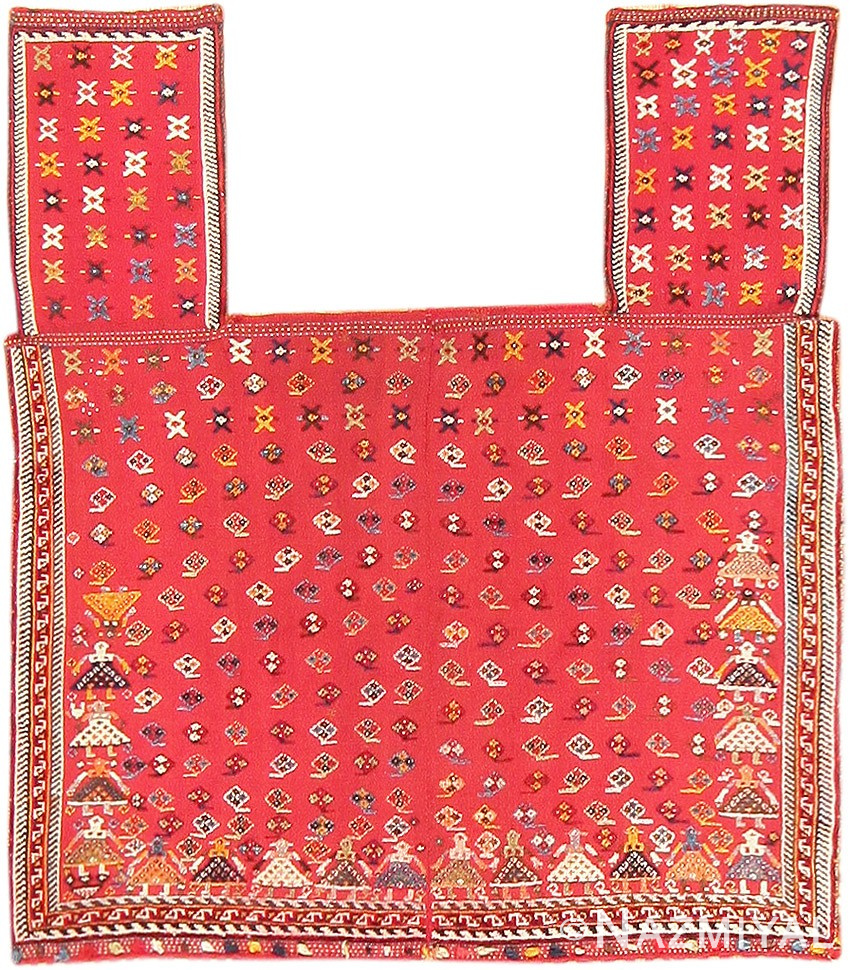
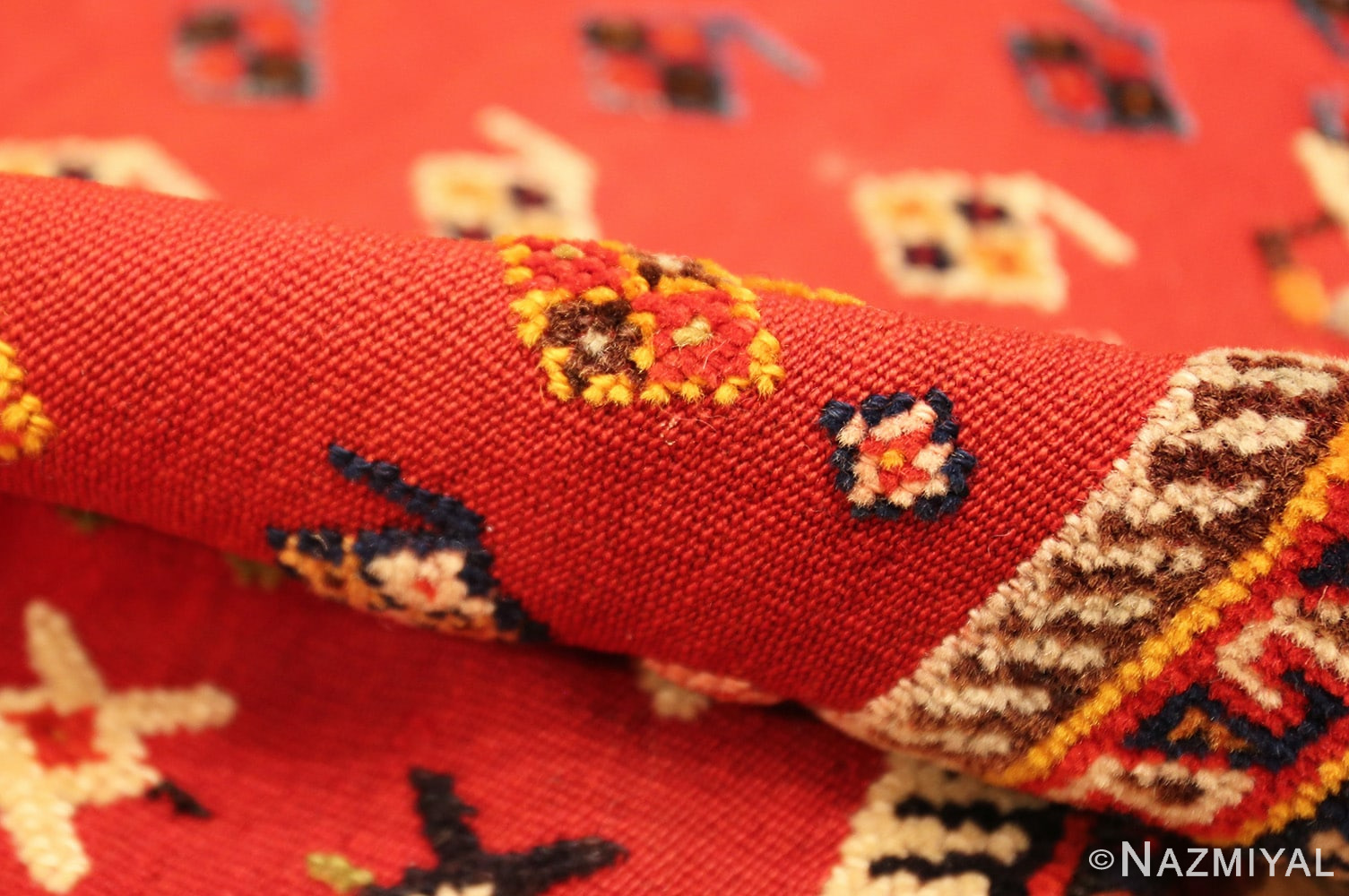
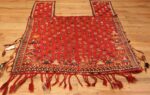
Highly Collectible Red Color Background Tribal Antique Persian Qashqai Horse Cover, Country of Origin: Persia, Circa Date: Late 19th Century –
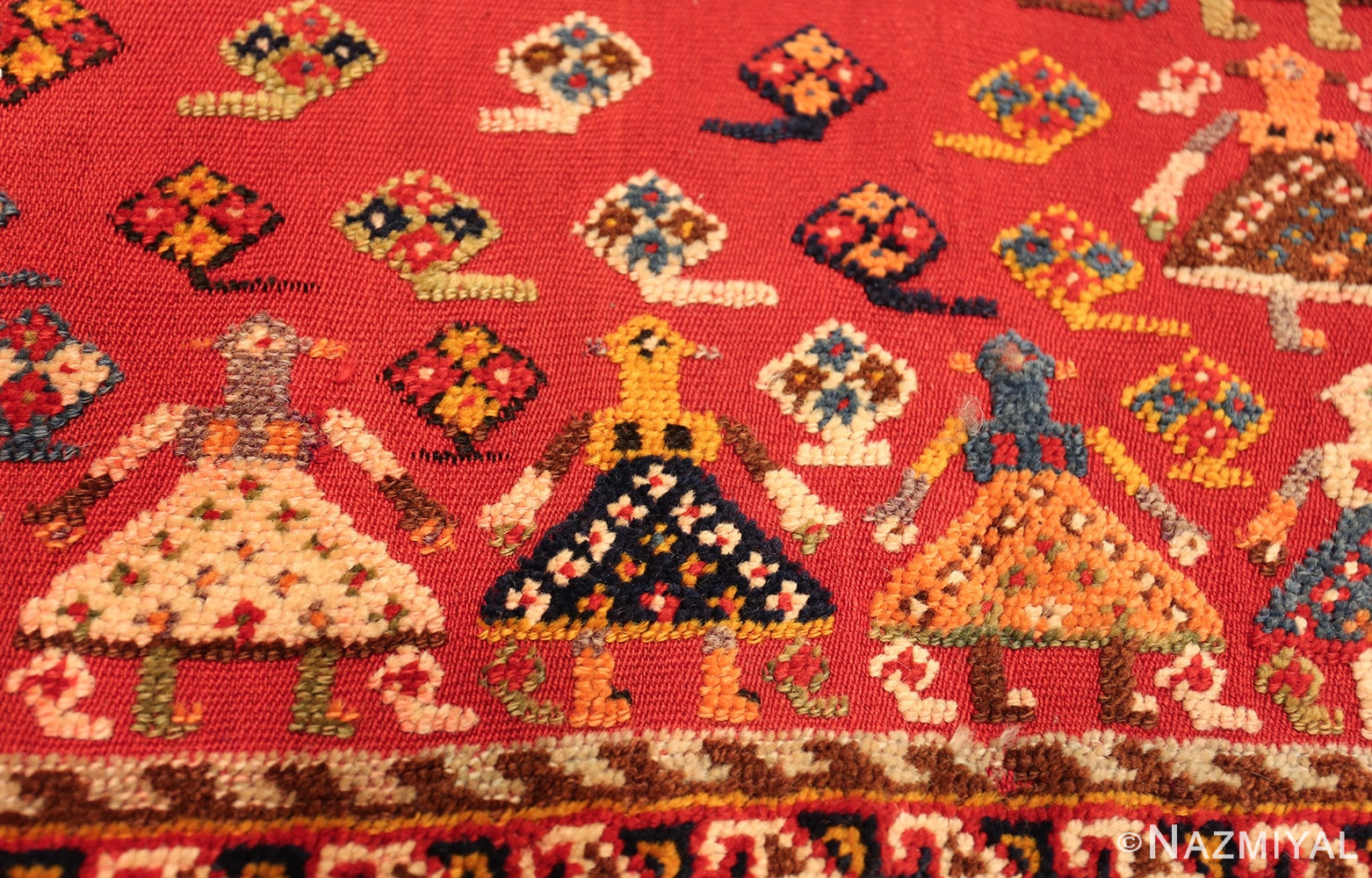
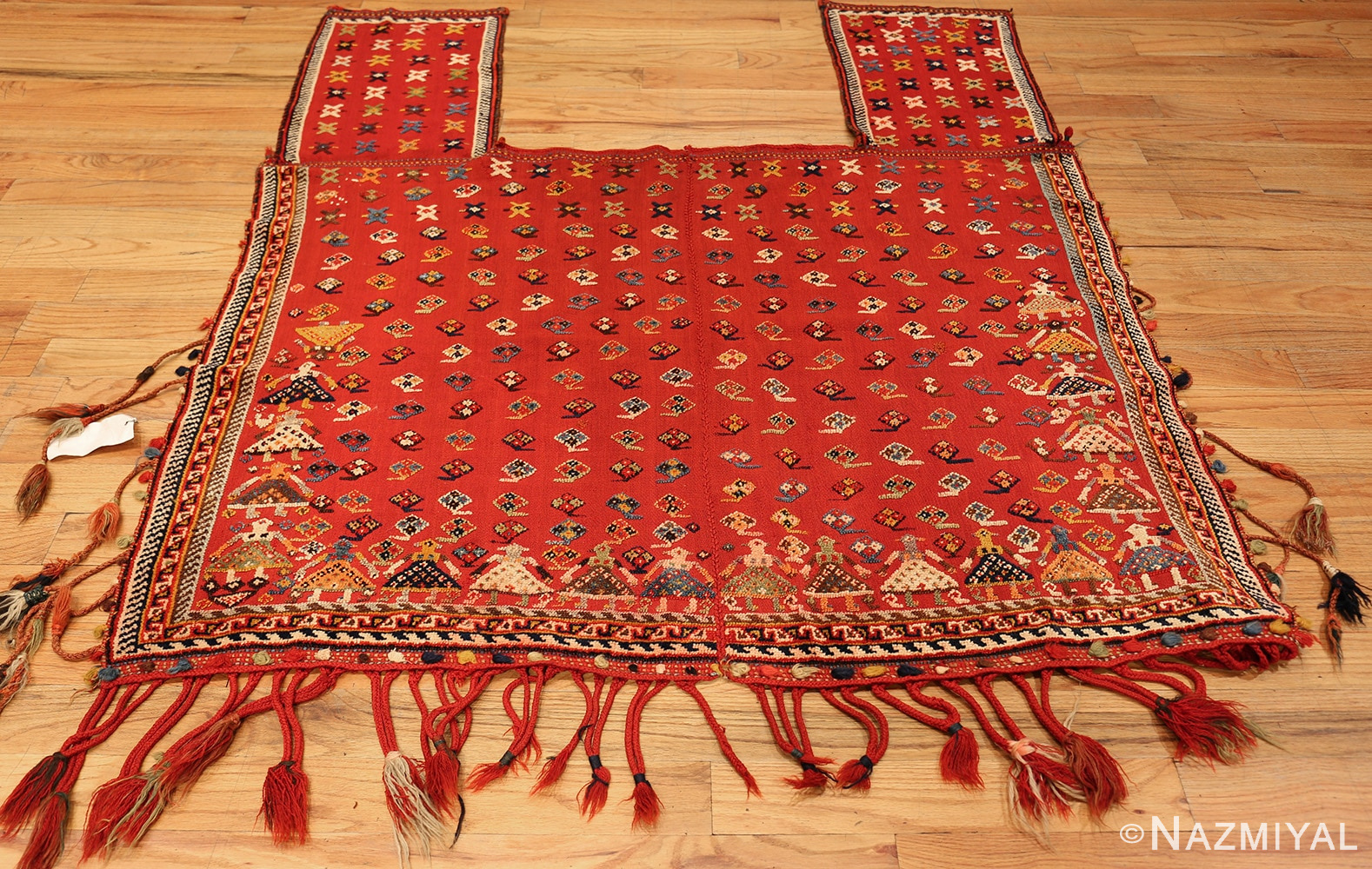
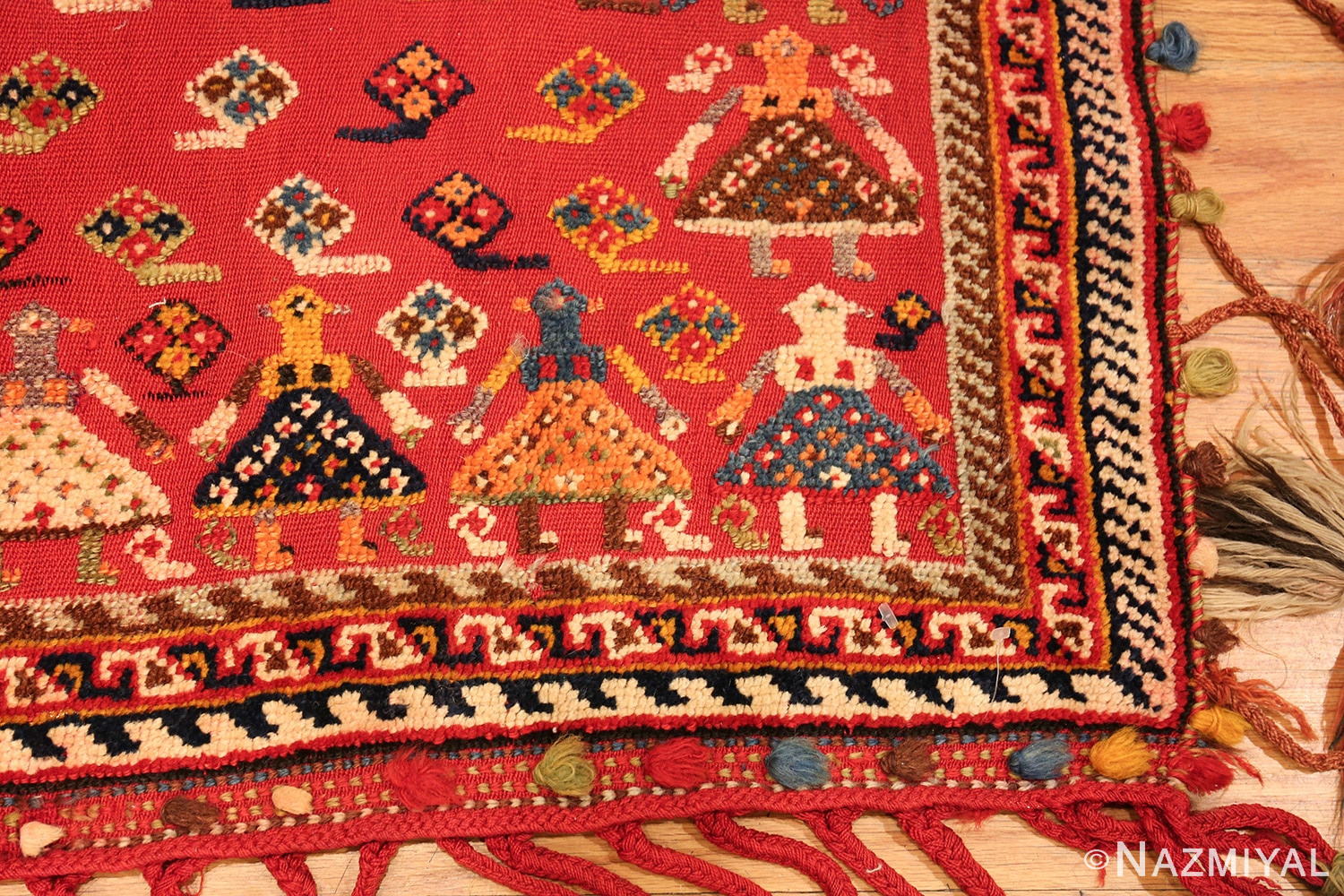
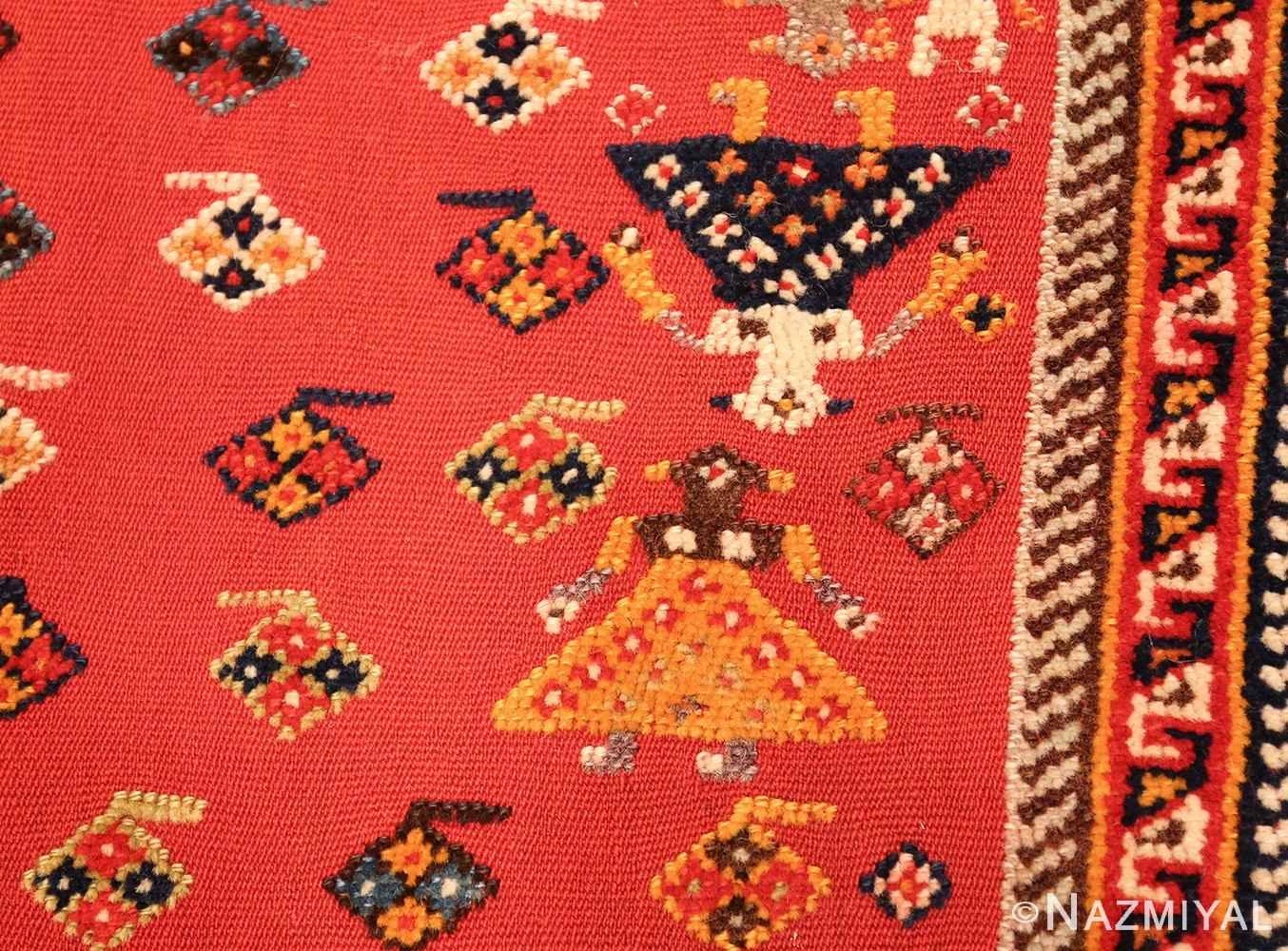
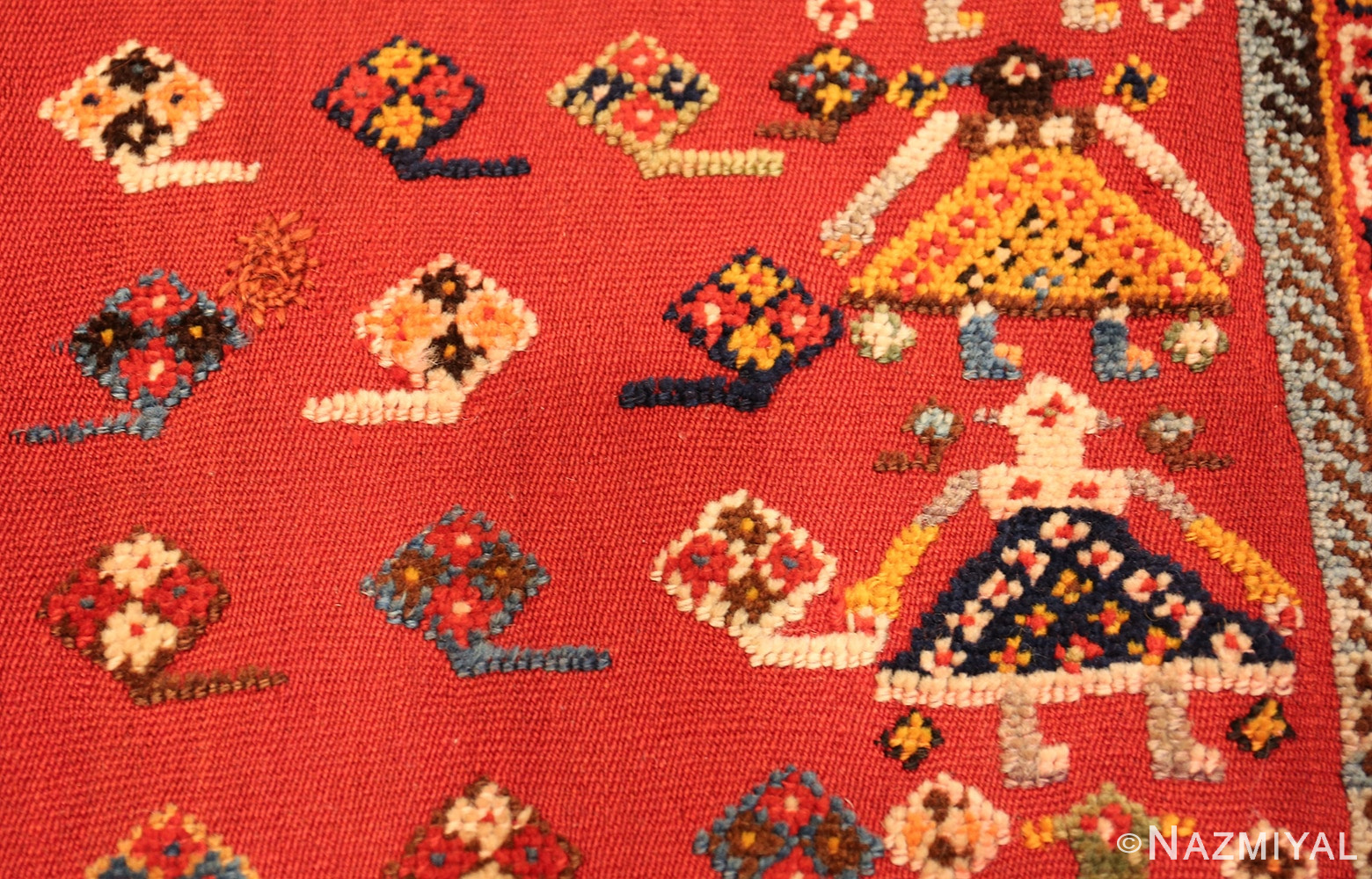
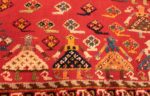
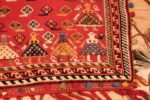
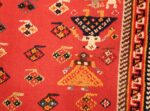
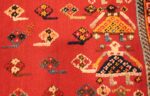
The brightly colored figures of numerous people are placed in a line on the bottom edges, giving the impression of a vibrant community. Each figure in this tribal antique Persian Qashqai horse cover, has a design that is similar in style but different in coloring from each of its neighbors. These slight differences give each figure a sense of their own individuality. None of these figures are interchangeable, since each one has a unique aspect to their design.
At the same time, the various geometric human figures share a particular kind of garment clothing style and are similar in shape, if not in color. This similarity establishes that the Persian tribes people are all part of a single community. This balance of uniformity and independence is symbolic of the interplay between the identity of the self and that of the culture it belongs to. Each tribal figure is an individual while still being connected to the larger whole.
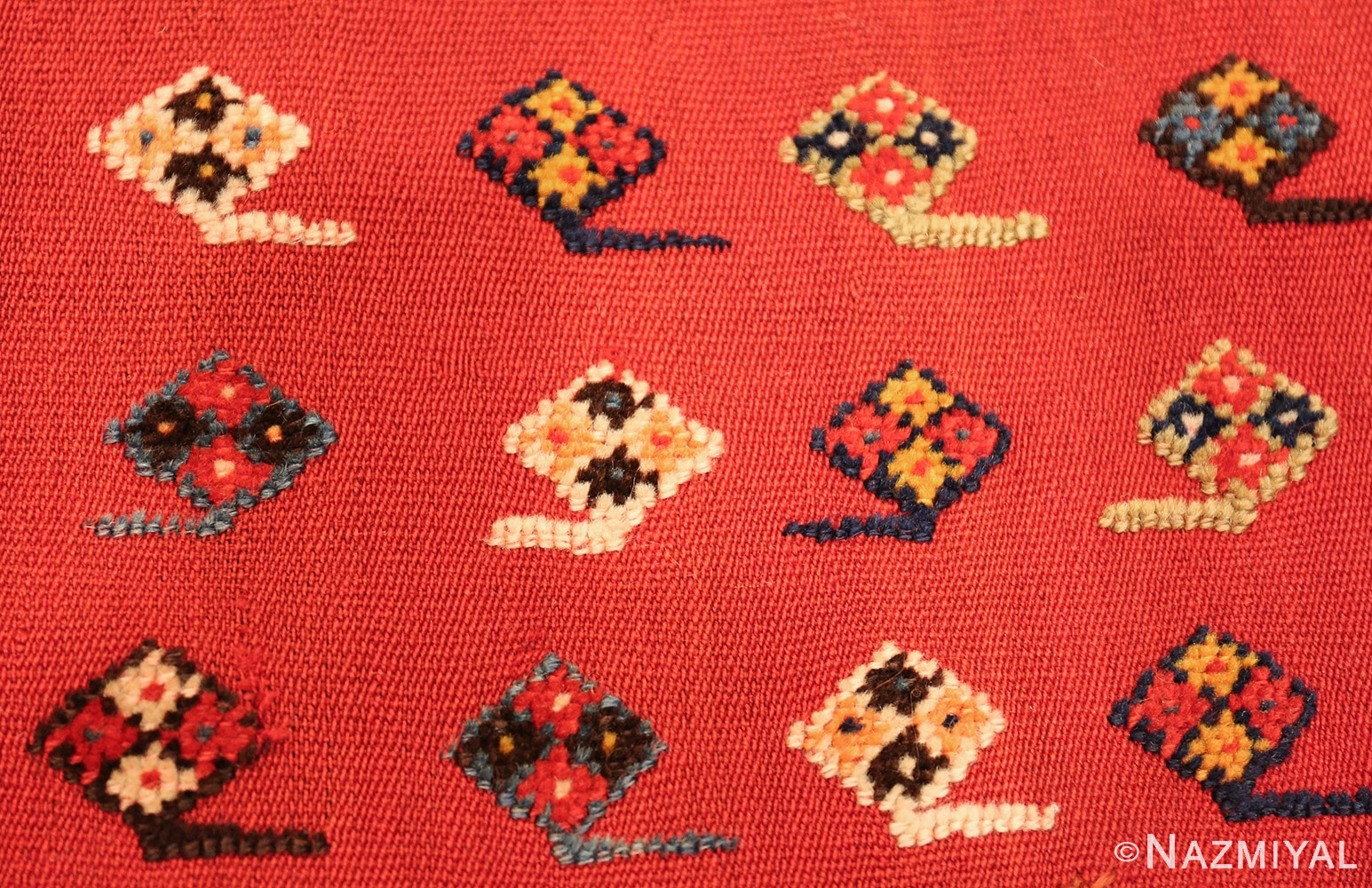
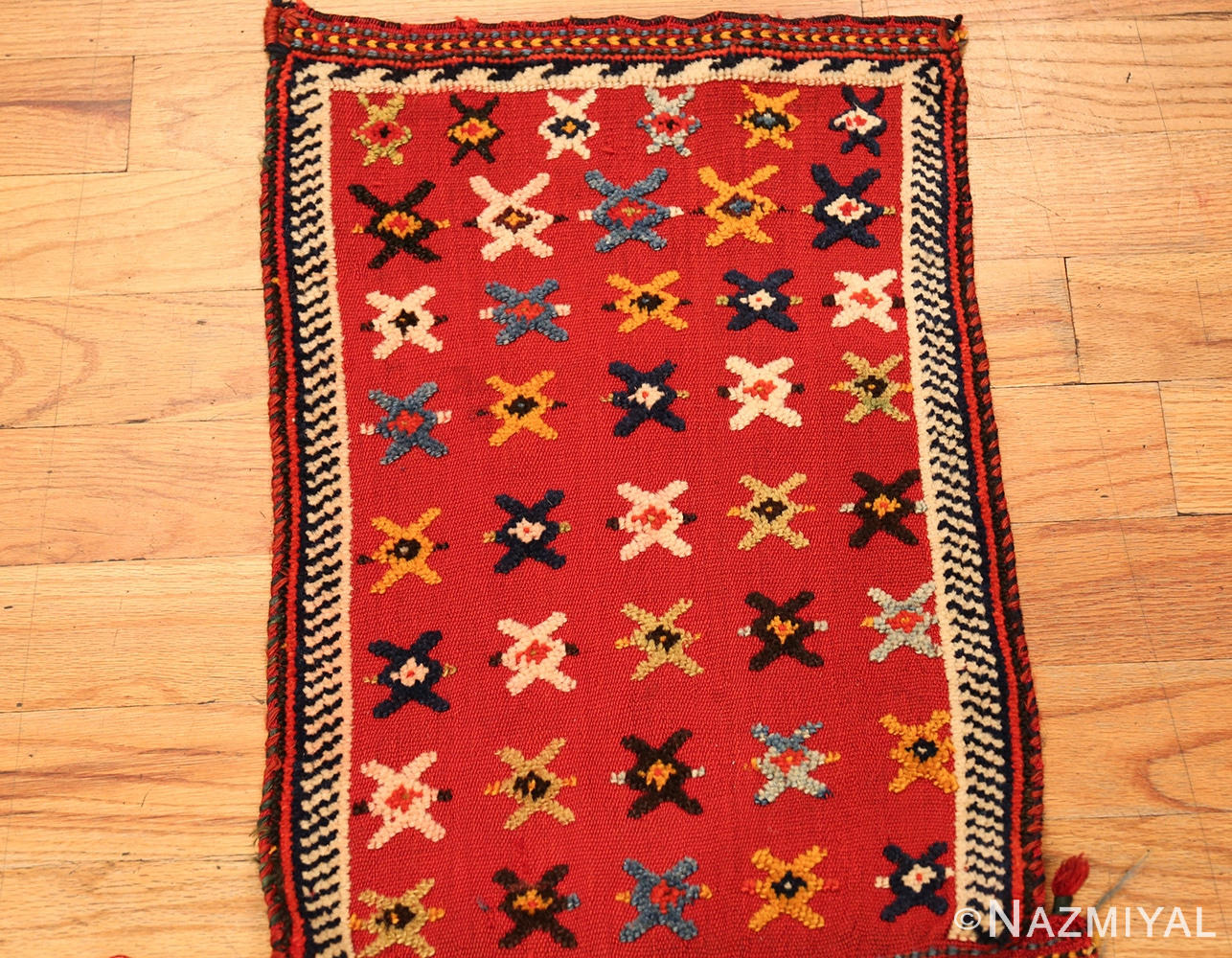
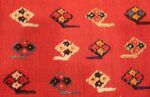
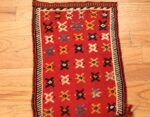
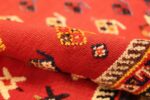
This concept of being ‘part of a larger whole’ is extended to the rest of the tribal antique Persian Qashqai horse cover. The community of people is only a small part of the Persian rug’s design and do not take center stage. Above the people are rows of geometric designs, reminiscent of the crops needed to support a society. These crops and the red field they grow on take up significantly more space than the figures do. This is symbolic of humanity’s reliance upon the larger world around them.