
Guide For Antique Rug Collectors
Search the Most Comprehensive Collection of Antique Rugs Online | View Our Collection Of Collectible Rugs
Antique Rug Collectors Guide
To the untrained consumer, buying antique rugs and vintage rugs may seem daunting and intimidating. After all, there are so many different styles, so much history, and so much to know in general. Below, find an educational and informative series of articles designed to assist you in your quest for an antique Oriental rug all your own.
What do antique rug collectors look for?
Antique Rug Collectors – Each antique rug collector values slightly different qualities and aesthetics in vintage and antique rugs, so generalizing as to what will please them all is a difficult, if not impossible, task. Still, a few general motives and goals that many antique rug collectors share rise to the forefront.
Antique rug collectors of all specialties and interests tend to collect rugs that can be termed “culturally authentic.” This means pieces that were not specifically intended for the Western market from the late 1800’s onward. Rather, collectors want pieces that either predate this period or were intended for the specific use of a non-Western culture.
Rugs that seem for one reason or another to have been produced for local use by the weavers rather than for export or commerce are currently “hot” among collectors. Those that seem to be unusual are more desirable than types that are represented by numerous examples.
Rugs that appear to be influential, which represent the beginning of a new development or type are deemed “important” and are therefore highly desirable. Collectors compete especially fiercely for such pieces when they are “fresh” or new to the market. Age and rarity matter considerably, especially insofar as they affect or intersect with these other issues.
Collecting rugs – below we have put together articles and information about collecting rugs.
If you are looking to learn about antique rugs the you should view our: Comprehensive Guide to Area Rugs and Carpets. This guide covers a wide range of topics and discusses many of the different facets that pertain to this beautiful textile art form.
Looking for Antique Rugs through the Eyes of a Collector
Guide to Collecting Antique Rugs – Collectors are a special breed of antique carpet enthusiast. While they are motivated fundamentally by a “passion for rugs” and the world that produces them, their interest tends to be inordinately intense, knowledgeable, and idiosyncratic. There is no telling what particular set of concerns and objectives will motivate an individual collector, but every collector has such a unique motivation along with a huge store of knowledge accumulated over the years.
Collectors literally see rugs differently from other people. They look at rugs creatively, through the lens of knowledge, in a way that allows them to see past problems of condition or damage in order to appreciate the artistic worth of a great piece. At times they are not motivated by the immediate impression that the rug may make, but rather by its uniqueness or its historical importance. In the latter regard, collectors depart substantially from the great majority of rug buyers and enthusiasts.
View our entire Antique Rugs Collector’s Guide below, with links to useful information about rug age, rug restoration, and more.
1. Consumer Guide to Buying Rugs and Carpets

Some people buy a rug purely as a household furnishing. For them a rug is an integral piece of a larger puzzle, like a sofa, table, or a drapery. Others have what may be called a passion for rugs. They are rug enthusiasts, rug lovers. They like the very idea of rugs. They may be quite knowledgeable in terms of rug history or typology, or they may have a purely visual interest and response to the rug. [Read More: Consumer Guide to Buying Rugs]
2. City Rugs vs. Tribal Rugs
Different people have different needs in mind when they decide that they are interested in buying antique rugs. It is important to be aware of these concerns before even beginning to look. Some people buy a rug purely as a household furnishing. For them a rug is an integral piece of a larger puzzle, like a sofa, table, or a drapery. [Read More: City Rugs vs. Tribal Rugs]
3. Safavid Rugs – Early Antique Persian Rugs
The Safavid Dynasty ruled over Persia and oversaw a golden age in the arts during the 16th century. In particular, this era marked the creation of a variety of new designs and techniques in rug-weaving. The boon in the arts of this era was due to the patronage of the Safavid Shahs, some of whom were artists and weavers in their own rights. [Read More: Safavid Rugs – Early Antique Persian Rugs]
4. 17th Century Rugs and Early Carpets
The 17th century marked the later years of the Renaissance in Europe, as well as the golden age of rug-making in Turkey and Persia. Trade of both rugs and ideas was common during this era, helping to incentivize the creation of these gorgeous masterpieces. [Read More: 17th Century Rugs]
5. What Size Rug Does a Room Require?
Many rug buyers think that the carpet should fill the room or most of it. This is not necessarily the way to go, unless the primary concern is acoustic sound absorption. If the floors are attractive, a certain amount flooring should remain exposed around the edge of the room. One or more carpets can also be used to establish different spaces or areas within a larger room. [Read More: What Size Rug Does a Room Require]
6. Styles of Antique Oriental Rugs and Carpets
With such a wide variety of rug types and designs, it may be hard to decide which rug is the right fit for your home. For this reason, it is good to have an idea of the various trends that have existed in rugmaking over the centuries. Here on some broad overviews of the different styles available, to help you get started. [Read More: Styles of Antique Rugs and Carpets]
7. What Do Designers Look for in a Rug?

Designers can be helpful in determining the rug that will best complement the décor of a room. Though it is hard to generalize, designers usually make decisions based on a combination of the current trends, their own preferences and the desires of the client. Designers usually will prioritize the room’s overall look rather than the look of the rug on its own. [Read More: What Do Designers Look for in a Rug]
8. How to Determine the Value of an Antique Rug
On the most basic level, cost or value is determined by market demand. The price of a rug will depend on how much buyers are willing to compete to acquire it. This in turn depends on the size, rarity, quality of wool, weave, and color, condition, and age, and especially on the convergence of these factors in a piece. [Read More: How to Determine the Value of an Antique Rug]
9. How to Determine the Quality of Your Rugs and Carpets
The quality of a rug is judged by two things–the design, and the technique and materials. Judging the quality of a rug’s design can be a subjective thing, although often designs that are well-drawn or have an unusual quality will be deemed as more valuable. In terms of technique, the tightness of a weave is especially important when assessing quality, as it can determine how long a rug will last. [Read More: How to Determine the Quality of Your Rugs]
10. How Old Are My Rugs and Carpets?
The age of a rug is critical in determining its value, but determining age is also one of the most difficult skills to acquire for the rug enthusiast. Older rugs will show some evidence of wear. The pile may be low or worn away exposing foundation, but relatively new rugs can get worn quickly, and very old rugs can sometimes survive in good condition if they have been in the possession of thoughtful owners. [Read More: How Old Are My Rugs and Carpets]
11. Quality Handmade Rugs vs. Commercial Carpets

During the twentieth century, the production of factory-made rugs began to outpace those handspun by artisans. Today, the majority of rugs are spun in mass by machines. Though this has allowed for the production of a larger number of rugs, it has also led to a loss in the average rug’s quality. In the interest of cutting costs, most commercial rugs have resorted to using inferior materials and poor weaving techniques. [Read More: Quality Handmade Rugs vs Commercial Carpets]
12. Why Should I Look at the Back of the Rug?
The back of a rug may not seem all that interesting to a casual observer. After all, it is the front of the rug that is meant to be on display. To a trained eye, however, a rug’s reverse side is the source of a variety of important information to know before making a purchase. By flipping a rug over, one can glean knowledge about the rug’s origin, structure, and the fineness of the rug’s weave. [Read More: Why Should I Look at the Back of the Rug]
13. What to Consider When Shopping for a Rug
Shopping for a rug can take time and knowledge. There are many different factors to consider to ensue that the rug is worth the investment. Size, age, and quality are important, as is the condition of the rug. [Read More: What to Consider When Shopping for a Rug]
14. Folk Art Rugs and Antique Carpets

If fine art is art that has been created by someone who studied art extensively and has gained recognition for their artistic skill, then folk art is its exact opposite: art created by someone who has not had any formal artistic training. Folk art rarely gathers the same range of audience as fine art does, but often exhibits a tremendous amount of raw talent. [Read More: Folk Art Rugs and Antique Carpets]
15. Antique Rugs Woven by Master Weavers
Although all antique Oriental rugs hold their own unique charm and patina, some are revered as the crème de la crème because of their quality and provenance. These pieces are often woven by master weavers that are respected and known for their weaves both in quality and design. [Read More: Antique Rugs Woven by Master Weavers]
16. Early Egyptian Coptic Textiles

Coptic textiles are ancient works of art, created between the 4th and 6th century AD. The Copts were Egyptian Christians based in Alexandria. They were historically renown for their cultural contributions to the fields of language and art. Despite the remarkable age of these textiles, many examples of Coptic weaving have survived the strain of time thanks to Egypt’s arid climate. [Read More: Early Egyptian Coptic Textiles]
17. Moroccan Rugs and Modern Art
Though it is clear that rugs are works of art requiring skill and talent to create, even the most captivating of rugs are valued significantly less than paintings made by famous artists. This is despite the fact that many modern artists have drawn their ideas from the designs woven into handmade carpets. Here we have listed some images of Moroccan rugs and the paintings they have inspired. [Read More: Moroccan Rugs and Modern Art]
18. The Most Expensive Rug Ever Sold
Following a recent sale of Christies in London, the world record for most expensive rug ever sold was broken. This designation went to an intricately designed Kerman vase carpet from the 17th century. This lovely textile went for ten million dollars, nearly twice as much as the previous record. [Read More: The Most Expensive Rug Ever Sold]
19. Collection Antique Kilims of the Caucasus and Persia
The Antique kilim rugs from the late 19th century are magnificent examples of tribal arts. Over the last few decades, younger collectors have shown quite an interest in these pieces. This is mostly due to the fact that, generally speaking, the older kilims tend to be priced quite affordably. [Read More: Collection Antique Kilims of the Caucasus and Persia]
20. International Conference on Oriental Carpets (ICOC)
Fewer European cities command the historical importance and romance of the Turkish capital. In 2007, when the International Conference on Oriental Carpets (ICOC) held its annual conference, it chose Istanbul, Turkey to be the meeting place. This beautiful and ancient European city has a more than 500-year-long history of fine carpet commerce and production. [Read More: International Conference on Oriental Carpets (ICOC)]
21. Nazmiyal Acquires Centennial Quilt From Andy Warhol

Andy Warhol is widely regarded as one of the finest American pop artists, and his unexpected death on the surgeon’s table in 1987 took the art world by surprise. His gall bladder surgery was expected to be routine. The artist’s personal art collections were offered at auction by Sotheby’s in New York City in April-May 1988. It was at this time that Nazmiyal acquired the highly collectible quilt. [Read More: Nazmiyal Acquires Centennial Quilt From Andy Warhol]
22. Antique Rug Designs
When it comes to artisanal rugs and carpets, there are few things more important than the rug design. After all, the design of a rug or a carpet is what makes it distinct, what makes it unique. Just as individual taste varies incredibly from person to person, so to does the design of a carpet vary from piece to piece. [Read More Here: Antique Rug Designs]
23. The Importance of Dyes and Colors
 Rug collectors obsess endlessly over color and the dyes used to achieve them in antique rug weaving. The introduction of synthetic dyes between about 1860 and 1880 marks a kind of cutoff point between what is generally collectible and what is not. Even small amounts of synthetic dye will put some collectors off from buying a rug for fear of the reaction the piece will provoke. [Read More Here: Rug Dyes and Colors]
24. The Effect of Antique Rug Restoration in Rug Collecting
 Restoration of worn and damaged rugs is widely practiced in the old and antique rug market. High quality restoration is not immediately detectable, and often it is can only be detected on the reverse of the rug to a well trained eye. There can be no doubt that the average buyer and user of antique rugs desires pieces that appear complete. [Read More Here: Should You Repair Antique Rugs?]
Five Celebrities and Famous Antique Rug Collectors
Antique Rug Collectors – If you are thinking about starting your own antique carpet collection, you will be in good company. You will join the likes of Sigmund Freud, Ursula Andress, Christopher Meloni, Howard Hesseman who are among these famous rug lovers. Antique rugs enjoy a special status among celebrity collectors from television and movie stars to politicians and leading intellectual figures.
Many of these icons have fallen in love with the unique beauty and unsurpassed quality of antique rugs.
Below are five such icons who are also antique rug collectors:
1) Christopher Meloni plays a tough-talking detective in the NYPD’s Special Victim’s Unit on NBC’s Law and Order: SVU, but he has a softer side that includes an appreciation for fine textiles. According to a profile for the “It Works for Me” feature in Men’s Health Magazine, Meloni first caught the collecting bug in 1995 during a trip to Turkey. His collection now includes Persian rugs, Turkish prayer rugs, and Navajo rugs.

2) Howard Hesseman is best known for his hilarious portrayal of DJ Dr. Johnny Fever in the late 1970’s sitcom WKRP in Cincinnati, but he is serious about rugs. In a November 1979 interview with People Magazine, he described himself as a “thread head” who collects a range of textiles, including Oriental rugs.

3) Ursula Andress – As the original Bond girl, Ursula Andress played bikini-clad femme fatale Honey Ryder opposite Sean Connery in Dr. No, the very first James Bond movie. Her unique position in film history has led Andress to cultivate a deep appreciation for beautiful objects from the past.
In 2003, Andress spoke to Southeastern Antiquing and Collecting Magazine about her passion for collecting antiques and rarities, including antique rugs.

4) Henry Kissinger – Nobel Prize winner and former Secretary of State Henry Kissinger has an appreciation for high craftsmanship as well as high politics. In addition to being an expert on foreign affairs, Kissinger is also a connoisseur of antique rugs.
His love of buying Oriental rugs is documented in Kissinger: A Biography published in 2005 by Walter Isaacson.

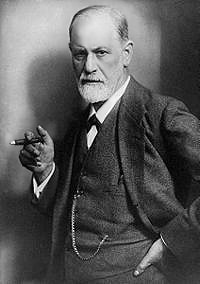
5) Sigmund Freud – Viennese physician Sigmund Freud was the father of psychoanalysis and one of the leading intellectual lights of the twentieth century. He was also an avid rug collector. His collection of antique rugs was one of the finest private collections known to exist in Europe.
Freud did not hide his rugs away, but put several of them on display in his study and library, using some as floor and furniture coverings and notably using a Qashqai rug to cover the couch on which his patients rested as they revealed their secrets to him. Many of the rugs in Freud’s amazing collection are on view at the Freud Museum in London, which is located in the home in which the Freud family lived after fleeing to England to escape the Nazis.
Freud’s library and study have been preserved exactly as he kept them during his lifetime, complete with his splendid rugs.
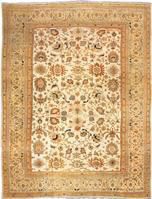
One of Sigmund Freud’s rugs is actually part of the Nazmiyal Collection (click the image to see the rug):
This rug blog was published by: Nazmiyal Antique Rugs