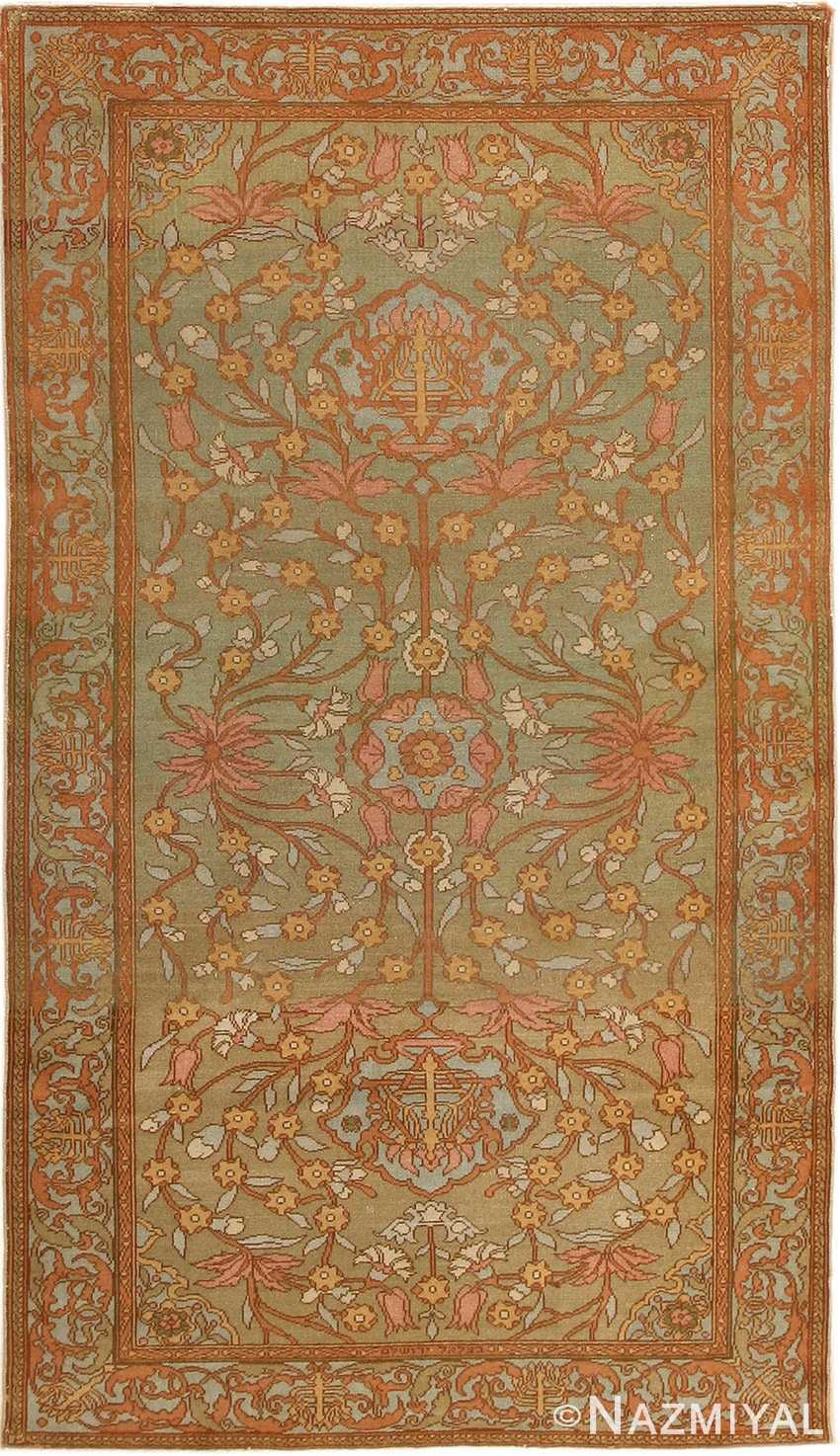
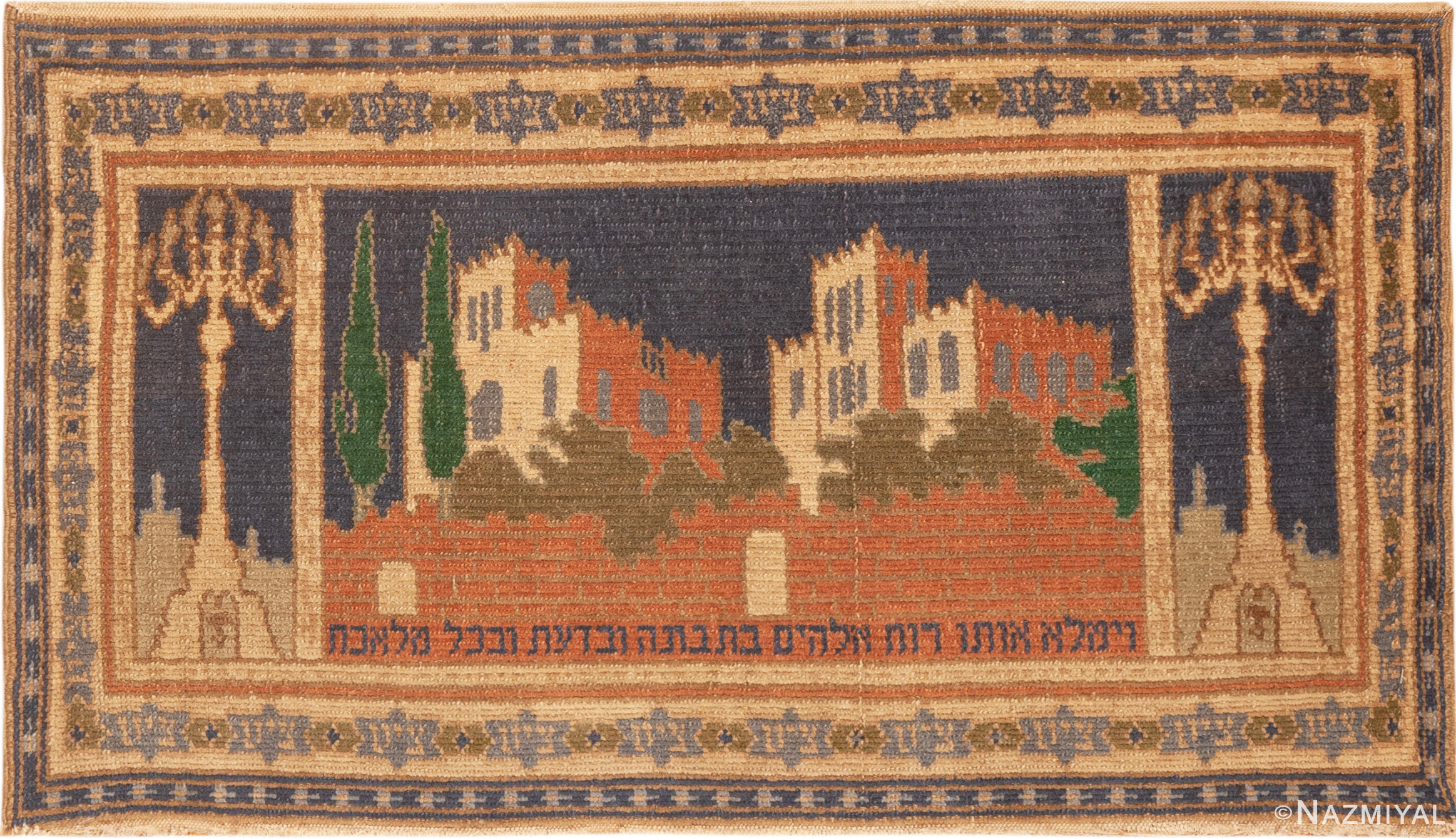
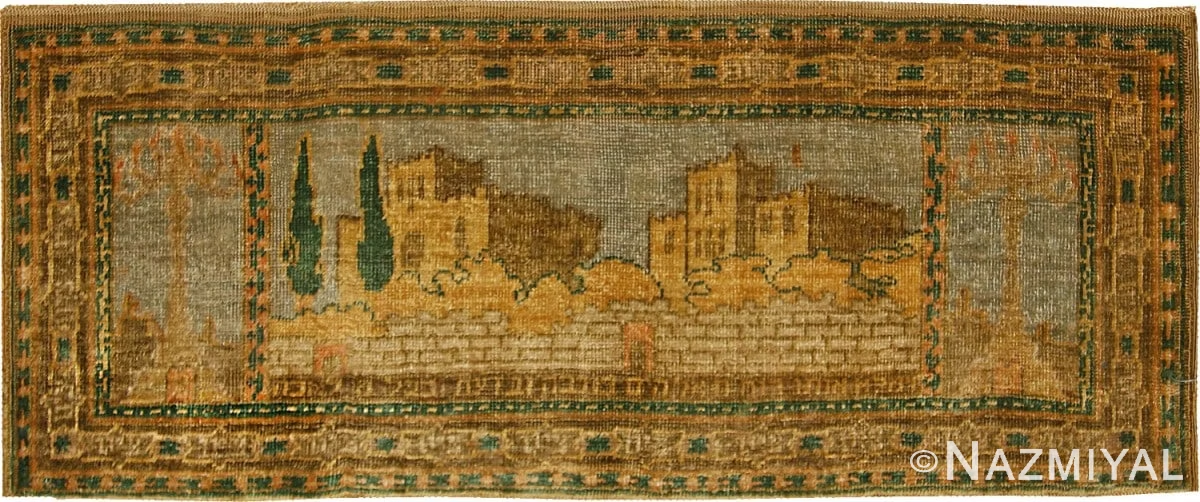
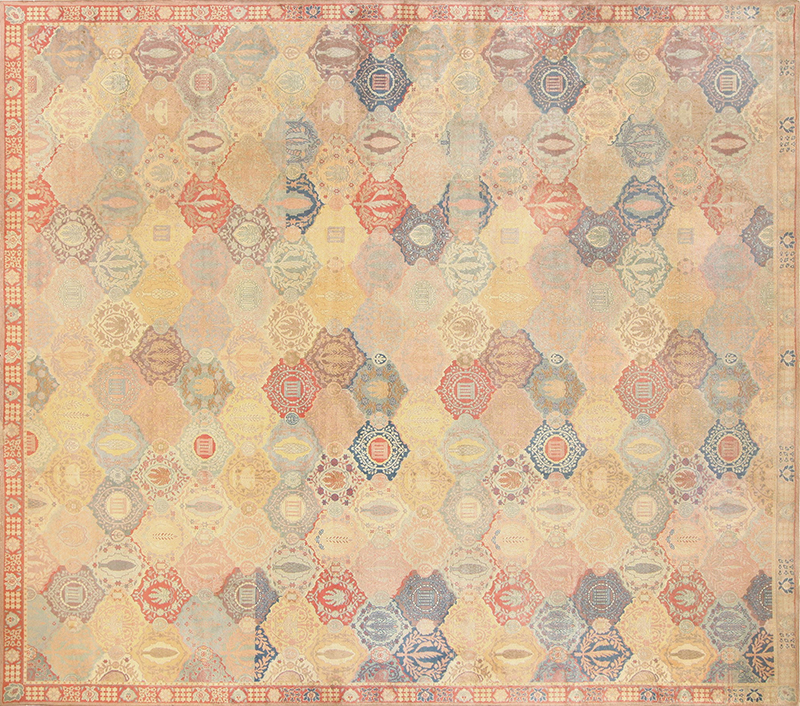
Bezalel rugs are among the rarest early 20th-century carpets associated with Jerusalem’s Bezalel School of Arts and Crafts—celebrated for Judaica symbolism, strong drawing, and a distinctive blend of Middle Eastern tradition with European decorative design. For curated inventory and guidance from the Nazmiyal Collection, cross-browse the broader context of Israeli rugs and related Judaica rugs.
Bezalel rugs are early 20th-century Israeli carpets associated with the Bezalel art school in Jerusalem, known for Jewish motifs, inscriptions, and a fusion of Persian, regional, and European design ideas.
Updated January 29, 2026 • Reviewed by Jason Nazmiyal
What to prioritize: clear drawing • legible inscriptions (when present) • stable structure • honest condition and professional restoration when needed
Origins & History: Why Bezalel Rugs Exist at All
The Bezalel School of Arts and Crafts was founded in Jerusalem in 1906 by artist and educator Boris Schatz, with the goal of developing a distinctively Jewish visual arts tradition rooted in local craft and regional design. In rug form, that vision produced a small but exceptional body of carpets—objects that function as fine textiles and cultural artifacts at the same time.
In the rug world, “Bezalel” often signals both place (Jerusalem / early Israeli production) and intent (artistic programs, symbolism, and a high standard of execution). Many collectors also encounter related pieces connected to the Bezalel weaving workshop name Marbediah, a closely linked designation seen in the trade.
Design Language & Motifs
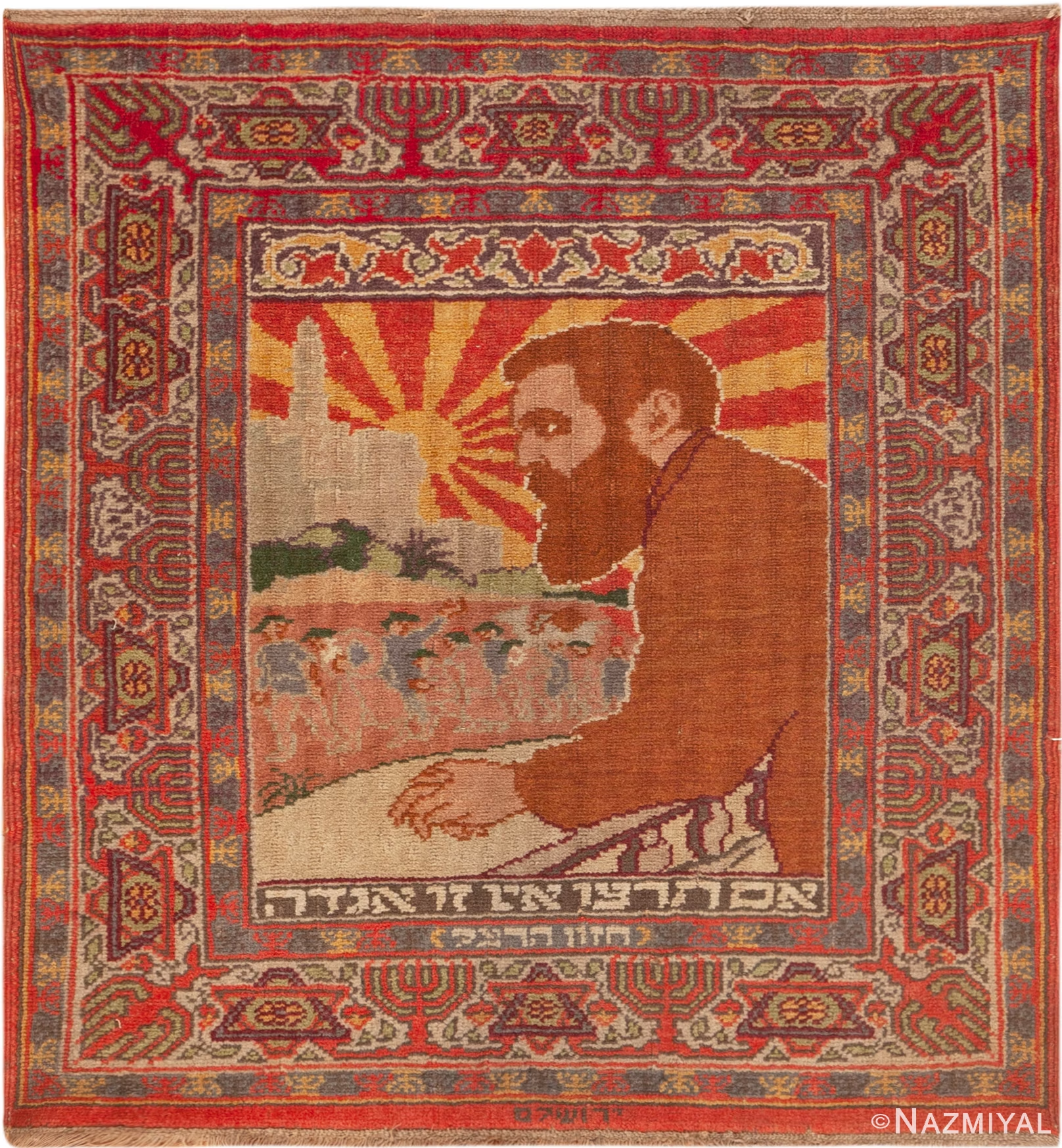
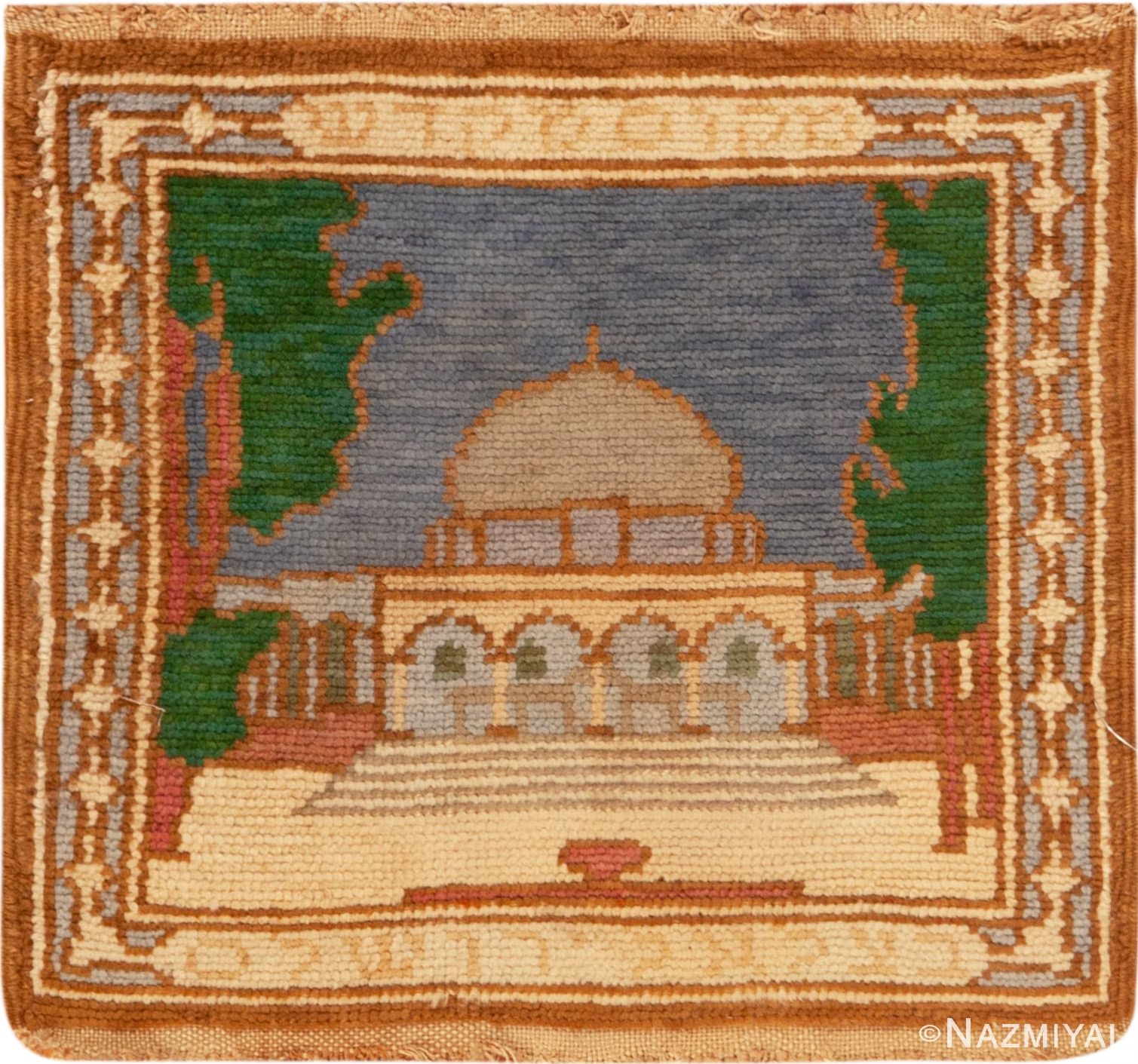
Bezalel rugs can read like “woven illustration” or “symbolic decoration,” depending on the piece. Some lean into Persian-derived structure—balanced borders, allover repeats, medallions—while others feel closer to folk narrative or pictorial art. If you love story-driven carpets, you may also enjoy browsing pictorial rugs.
Judaica symbols: menorahs, Torah imagery, Temple references, Stars of David, and other emblematic elements.
Inscriptions: Hebrew lettering or workshop identifiers may appear in the field, cartouches, or borders.
Holy Land themes: Jerusalem-centric motifs, landscapes, and cultural references woven into decorative frameworks.
Persian echoes: classic repeats and drawing approaches reminiscent of workshop traditions found in Persian carpets.
European design influence: flowing linework and stylization that can feel adjacent to Art Nouveau rugs—especially in floral handling and curve logic.
How to Shop Bezalel Rugs
Start with the image: decide whether you want symbolic, pictorial, or “Persian-structured” design.
Confirm scale: many Bezalel rugs are smaller; large room-size and oversized examples are considerably rarer.
Check clarity: crisp drawing, readable details, and balanced borders tend to drive value.
Prioritize condition: stable edges, consistent pile, and professional restoration (when present) matter more than “perfect” age-free surfaces.
Match the room: treat these like art—choose placement where symbolism and design can be appreciated, not swallowed.
Bezalel rugs work best when treated as “collectible decor”: a meaningful anchor that can elevate a room without needing a fully traditional setting. If you want to compare by era as you decorate, cross-shop antique rugs, vintage rugs, and modern rugs.
Living room: choose a balanced, legible design so symbols and drawing read from seating distance.
Study / library: a symbolic or pictorial Bezalel can feel like a “woven manuscript” underfoot.
Dining room: prefer sturdy structure and stable edges; use a pad to reduce movement.
Hall / entry: smaller or mid-size pieces can add meaning and warmth where you see them daily.
In the trade, Marbediah is often treated as Bezalel’s closest cousin—closely linked workshop naming and overlapping period, with a similar emphasis on artistic intent and cultural symbolism.
Judaica: Jewish-themed cultural or religious symbolism expressed through art and objects. Pictorial rug: a carpet designed to depict figures, scenes, or narrative imagery (browse pictorial rugs). Border / field: the framing system and the central ground where the main design lives. Motif: a repeatable design element (menorah, star, floral, cartouche, inscription).
Many Bezalel rugs date to the early decades of the 20th century. Whether a specific piece qualifies as “antique” depends on its date, documentation, and accepted trade definitions.
What makes Bezalel rugs valuable?
Value is driven by rarity, artistic quality, cultural content (symbols/inscriptions), condition, and the clarity of drawing. Exceptional pictorial or unusually large examples tend to command stronger collector interest.
Do Bezalel rugs relate to Persian designs?
Often, yes. Some Bezalel carpets adopt Persian-style structure—balanced borders, allover repeats, and workshop-like drawing—while layering in Jewish symbolism and Jerusalem-centered themes.
How should I care for a Bezalel rug?
Use a rug pad, rotate for even wear, vacuum gently, and avoid soaking. For cleaning or repairs, use a specialist—especially for older collectible rugs with symbolic or pictorial detail.
Why Buy Bezalel Rugs from Nazmiyal
Curated authenticity: guidance aligned with collector expectations and documentation support through our Authenticity Guarantee.
Condition transparency: clear communication on wear, restoration, and what to expect when placing a meaningful older rug in a real home.
Need help choosing the right Bezalel rug—symbolic, pictorial, or Persian-structured? Contact us—we’ll guide you quickly and honestly.
Nazmiyal Collection has been a trusted source for antique rugs and vintage carpets for over 45 years. Our NYC gallery curates one-of-a-kind pieces with an emphasis on authenticity, provenance, and lasting decorative value.
Need help? Call us at (212) 545-8029 or visit our New York City showroom to work with a rug expert.
             Posted on Google        Victor Florintsev     Trustindex verifies that the original source of the review is Google. The only ones I'd ever buy rugs from. The best.         Posted on Google        Jeffrey NeumanB     Trustindex verifies that the original source of the review is Google. I bought two gorgeous Serapi rugs from Farhad at Nazmiyal Rugs!  Beautiful carpets, fair prices and great service.  Very happy customer.  Farhad (the sales person) was very patient and gave us great service.         Posted on Google        john haid     Trustindex verifies that the original source of the review is Google. Alen is a gentleman and an expert.  Really great to work with.         Posted on Google        Edward Yasuna     Trustindex verifies that the original source of the review is Google. I recently purchased a modern Kandinsky rug from Nazmiyal Auctions.  It was just as described, and the director (Farhad) of the auctions had it sent to me quickly and safely.  Payment was easy, the rug was reasonably priced, and I highly recommend Nazmiyal Auctions and Antique Rugs.  Quality merchandise and first-class service.         Posted on Google        Nicholas Carr     Trustindex verifies that the original source of the review is Google. Had a excellent experience buying a rug in Nazmiyal's 1/18/26 online auction.  First, prior to the auction, viewing a number of lots at the 32nd St showroom (I had prepared a list from the online catalog). The staff were great to work with: helpful, knowledgable, honest, and flexible.  Second, after placing an online bid and winning the desired item, arranging payment and pickup was simple and straightforward. Everything went seamlessly and the overall experience was educational and fun. Many thanks to Jason and his team.         Posted on Google        Andrea Gared     Trustindex verifies that the original source of the review is Google. Everyone at Naziyal is proffessional, especially Jason and Farhad.
They are knowledgeable, truthful, and true gentlemen. I have sold several rugs through them and will always go to them first, to buy or sell. The best in the business!         Posted on Google        Lori Silverberg     Trustindex verifies that the original source of the review is Google.          Posted on Google        Jesse Zilberman     Trustindex verifies that the original source of the review is Google. Excellent customer service! Alen was very helpful over the phone and email. The rug we acquired was stunning, and photos do not do it justice. I would definitely work with Alen and team again!         Posted on Google        Rachel Paul     Trustindex verifies that the original source of the review is Google. Jason was incredibly kind and helpful! I work for a small museum that had some rugs we had no information on. Jason responded to us quickly and gave us the information we needed for free! Incredible service, we are super thankful for his help!

 Size: 15 ft 9 in x 17 ft 10 in (4.8 m x 5.44 m)
 Size: 4 ft 9 in x 7 ft 9 in (1.45 m x 2.36 m)
 Size: 2 ft x 3 ft 5 in (0.61 m x 1.04 m)
 Size: 2 ft 5 in x 2 ft 5 in (0.74 m x 0.74 m)
 Size: 1 ft 6 in x 1 ft 8 in (0.46 m x 0.51 m)