Bergama rugs are Anatolian village carpets associated with the Bergama region and surrounding districts, recognized for bold geometric drawing, saturated dyes, and a distinctive structural character that collectors and designers reliably respond to.
These rugs (also spelled Bergama carpets) are among the most collectible Turkish rugs for buyers who want bold geometry, saturated color, and unmistakable village character. Historically associated with the Bergama area of northwest Anatolia (and neighboring weaving districts), these rugs are prized for strong design “architecture,” expressive symbols, and a format that works as easily in classic rooms as it does in modern interiors. For a broader foundation on collecting across eras and regions, start with our antique rugs hub.
Geometry with authority: confident motifs, clear spacing, and strong border hierarchy.
Color that reads “older” when right: deep reds, dark blues, ivory highlights, and occasional greens/yellows in earlier examples.
Structure matters: wool character, foundation integrity, and stable edges/ends often matter more than the label on a listing.
Updated January 28, 2026 • Reviewed by Jason Nazmiyal
Bergama rugs are hand-knotted Anatolian village carpets associated with the Bergama area and nearby weaving districts in northwest Turkey. In the trade, “Bergama” can be used both specifically (for the Bergama region) and more broadly (for related village production that shares a similar structural feel and design vocabulary). The most convincing attributions come from structure + motif logic + period coherence—not the name alone.
Where Do Bergama Rugs Come From?
Bergama is a historic town in northwest Anatolia. Rugs associated with “Bergama” are often linked to village weaving traditions in and around the region, with related local production sometimes grouped under the name in dealer descriptions. You’ll also see design and structural traits that connect Bergama-area rugs to wider Anatolian village traditions—especially in geometry, border framing, and the way motifs are “drawn” in wool.
Because Anatolia sits near major crossroads of weaving culture, Bergama rugs are often discussed alongside other regional traditions and historical influences, including the broader world of Persian rugs (especially when comparing workshop versus village drawing styles).
Design Language & Motifs
What makes a Bergama rug instantly recognizable is the combination of bold geometry and disciplined spacing. While styles vary, strong Bergama rugs typically feel “architectural”—motifs are placed with intent, borders frame the field with confidence, and color supports structure rather than cluttering it.
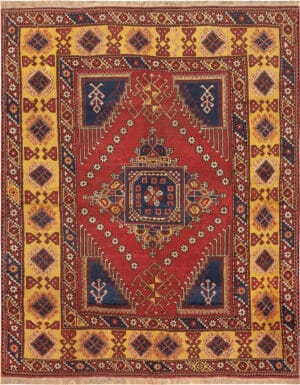
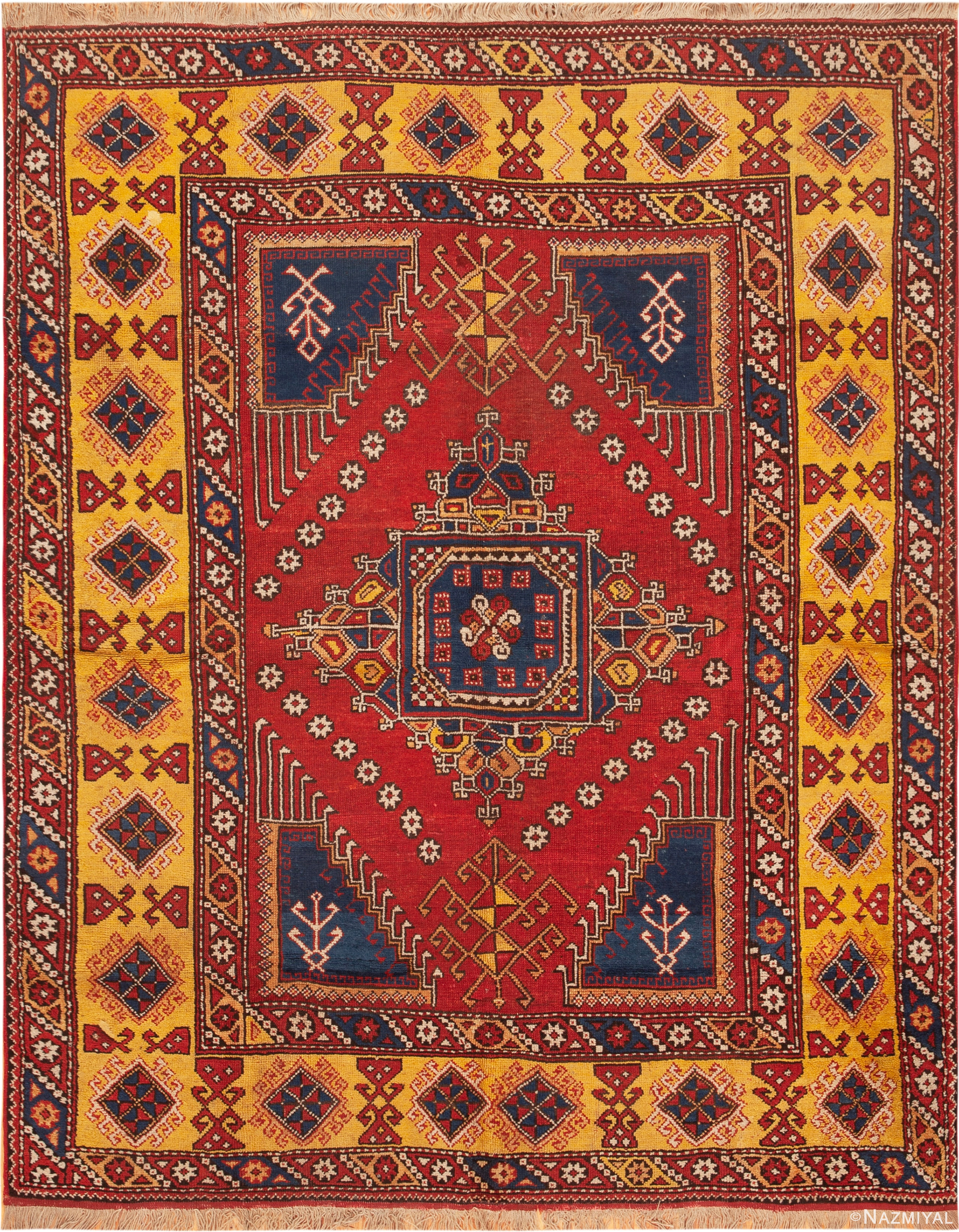
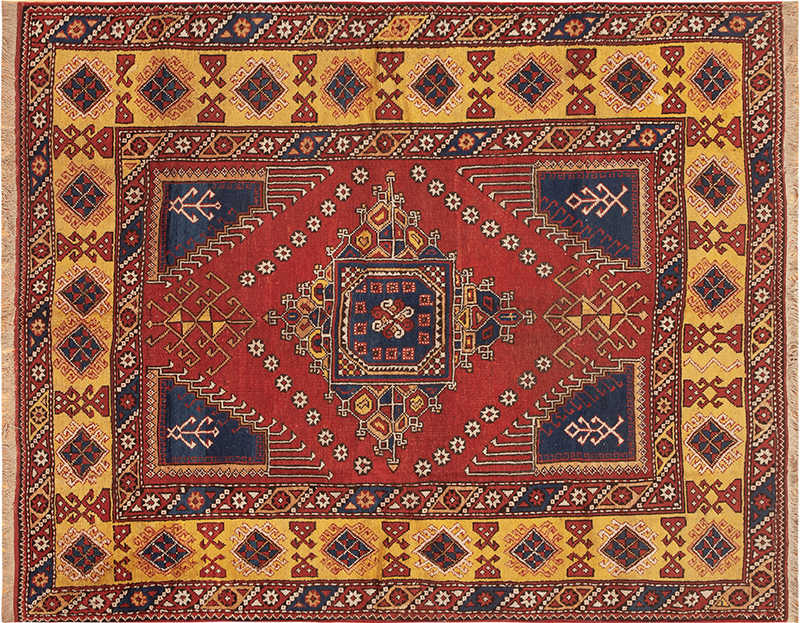
Geometric medallions: compartmental medallions, stacked frameworks, and bold central devices.
Directional formats: prayer-niche compositions appear in some village examples.
Star and gul-like elements: you may see motifs that echo broader regional geometry (including patterns collectors connect to Caucasus-adjacent design language).
Border hierarchy: strong main borders with guard borders that “lock” the composition.
Collector note: some design families associated with historic European painting are described in the rug trade using painter-linked names (e.g., “Holbein” or “Lotto” types). For buyers, the practical takeaway is simple: prioritize coherent drawing and strong composition over terminology.
Materials & Construction
Pile: typically wool; quality ranges from practical village weaves to exceptionally lustrous examples.
Foundation: varies by village/workshop practice; stability and integrity matter more than “rules.”
Weave character: often direct and robust, with a tactile surface that reads well in lived-in interiors.
Finishing: look for secure edges/ends and honest wear consistent with age and use.
How to Identify an Authentic Bergama Rug
Use a cluster of indicators rather than a single “tell”:
Design logic: motifs feel intentional; spacing and border weight are resolved rather than random.
Color character: saturated reds and deep blues are common; older palettes often show tonal nuance rather than flat uniformity.
Structural honesty: the back/structure should match the type; avoid listings that label everything “Bergama” without structural support.
Condition integrity: edges/ends and foundation stability are the first priorities; surface wear is secondary if the rug is structurally sound.
Restoration quality: conservative, skilled restoration can protect value; heavy-handed work can reduce it.
Why Bergama Rugs Are Valued
Graphic power: bold geometry that anchors both traditional and contemporary rooms.
Color authority: saturated palettes that read warm, grounded, and “real.”
Collectible village character: a strong sense of hand and tradition that doesn’t feel manufactured.
Decorator versatility: works especially well under clean-lined furniture and alongside contemporary art.
What Drives Value in Antique Bergama Rugs
Age and weaving period (with 19th–early 20th century examples most commonly traded)
Design strength (clarity, spacing, and border resolution)
Palette desirability (saturated but balanced color)
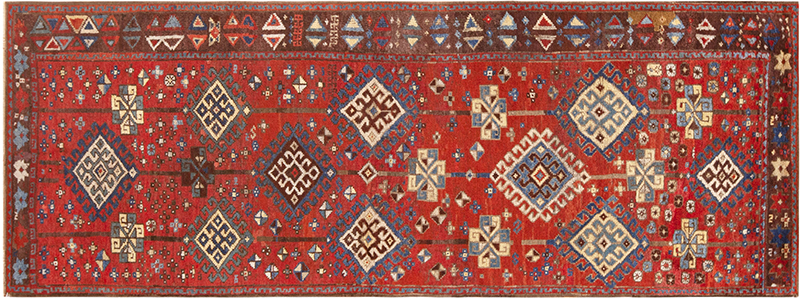
Size and usability (runners and strong scatter sizes are consistently in demand)
Condition (structure first: foundation, edges, ends, and sound pile)
Provenance and credibility of sourcing (when available)
Decorating & Placement Guidance
Bergama rugs are a smart choice when you want an antique rug with bold structure that still plays well in modern rooms. They pair beautifully with clean-lined furniture, sculptural pieces, and layered interiors—whether you’re grounding a living room with a confident village carpet, adding rhythm to a hallway runner, or mixing an older piece with a refined vintage rug and a crisp modern rug palette elsewhere in the home.
Go confident on scale: when choosing between sizes, the larger option usually reads more intentional.
Protect edges/ends: use correct padding and avoid constant harsh sunlight on older dyes.
Let the border breathe: Bergama rugs look strongest when the framing system is visible and not buried under furniture.
Bergama Rugs vs Oushak Rugs vs Konya Rugs
Comparison Lens
Bergama Rugs
Oushak Rugs
Konya Rugs
Primary look
Bold village geometry with strong borders
Room-size decorative elegance; softer, more “open” classical design
Tribal Anatolian energy with varied geometric motifs
Best for
Anchoring a space with graphic structure
Large rooms needing calm sophistication
Collectors/designers who want high character and pattern presence
If you love Bergama rugs, these related traditions are often the next best step—either for palette kinship, village character, or shared Anatolian design logic:
Milas / Melas rugs (closest cousin: collectible village rugs with refined drawing and distinctive palettes)
Kazak rugs (related geometry and bold motif presence—useful when comparing regional design language)
Caucasian rugs (for broader context on neighboring geometric traditions)
Care, Cleaning & Restoration
Rotate periodically for even wear and balanced fading.
Use a proper rug pad to reduce slippage and protect edges/ends.
Avoid prolonged direct sunlight—especially on saturated village palettes.
Vacuum gently; avoid aggressive brush rollers on older pile.
For antique rugs, cleaning and restoration should be handled by specialists familiar with older Anatolian construction.
Not always. “Bergama” can be used specifically for the region and also more broadly for related village production that shares similar structure and design vocabulary. Confirm by structure, motif logic, and period coherence.
What colors are most common in antique Bergama rugs?
Deep reds and dark blues are especially common, often balanced with ivory. Strong examples show tonal nuance and harmony rather than flat, uniform color.
Do Bergama rugs work in modern interiors?
Yes. Their geometric clarity and strong borders make them excellent anchors under clean-lined furniture and contemporary art.
What matters most when buying an antique Bergama rug?
Design strength, border completeness, and structural condition (foundation + edges/ends) usually matter more than any single label or claim.
Nazmiyal White-Glove Service
We make it easy to shop with confidence—whether you’re choosing a single statement piece or curating a full room.
Nazmiyal Collection has been a trusted source for antique rugs and vintage carpets for over 45 years. Our NYC gallery curates one-of-a-kind pieces with an emphasis on authenticity, provenance, and lasting decorative value.
Need help? Call us at (212) 545-8029 or visit our New York City showroom to work with a rug expert.
             Posted on Google        Victor Florintsev     Trustindex verifies that the original source of the review is Google. The only ones I'd ever buy rugs from. The best.         Posted on Google        Jeffrey NeumanB     Trustindex verifies that the original source of the review is Google. I bought two gorgeous Serapi rugs from Farhad at Nazmiyal Rugs!  Beautiful carpets, fair prices and great service.  Very happy customer.  Farhad (the sales person) was very patient and gave us great service.         Posted on Google        john haid     Trustindex verifies that the original source of the review is Google. Alen is a gentleman and an expert.  Really great to work with.         Posted on Google        Edward Yasuna     Trustindex verifies that the original source of the review is Google. I recently purchased a modern Kandinsky rug from Nazmiyal Auctions.  It was just as described, and the director (Farhad) of the auctions had it sent to me quickly and safely.  Payment was easy, the rug was reasonably priced, and I highly recommend Nazmiyal Auctions and Antique Rugs.  Quality merchandise and first-class service.         Posted on Google        Nicholas Carr     Trustindex verifies that the original source of the review is Google. Had a excellent experience buying a rug in Nazmiyal's 1/18/26 online auction.  First, prior to the auction, viewing a number of lots at the 32nd St showroom (I had prepared a list from the online catalog). The staff were great to work with: helpful, knowledgable, honest, and flexible.  Second, after placing an online bid and winning the desired item, arranging payment and pickup was simple and straightforward. Everything went seamlessly and the overall experience was educational and fun. Many thanks to Jason and his team.         Posted on Google        Andrea Gared     Trustindex verifies that the original source of the review is Google. Everyone at Naziyal is proffessional, especially Jason and Farhad.
They are knowledgeable, truthful, and true gentlemen. I have sold several rugs through them and will always go to them first, to buy or sell. The best in the business!         Posted on Google        Lori Silverberg     Trustindex verifies that the original source of the review is Google.          Posted on Google        Jesse Zilberman     Trustindex verifies that the original source of the review is Google. Excellent customer service! Alen was very helpful over the phone and email. The rug we acquired was stunning, and photos do not do it justice. I would definitely work with Alen and team again!         Posted on Google        Rachel Paul     Trustindex verifies that the original source of the review is Google. Jason was incredibly kind and helpful! I work for a small museum that had some rugs we had no information on. Jason responded to us quickly and gave us the information we needed for free! Incredible service, we are super thankful for his help!

 Size: 5 ft 10 in x 7 ft (1.78 m x 2.13 m)