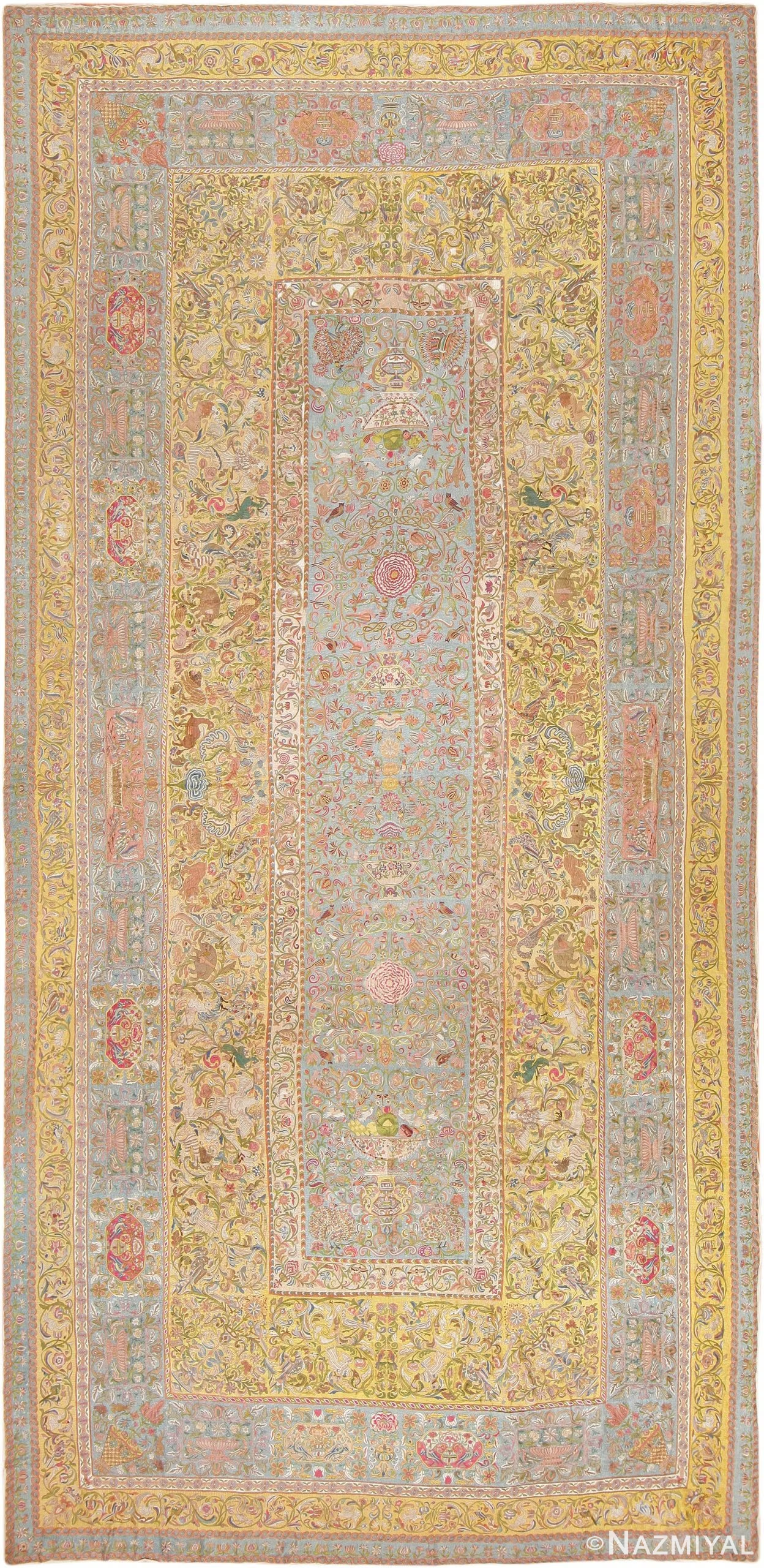
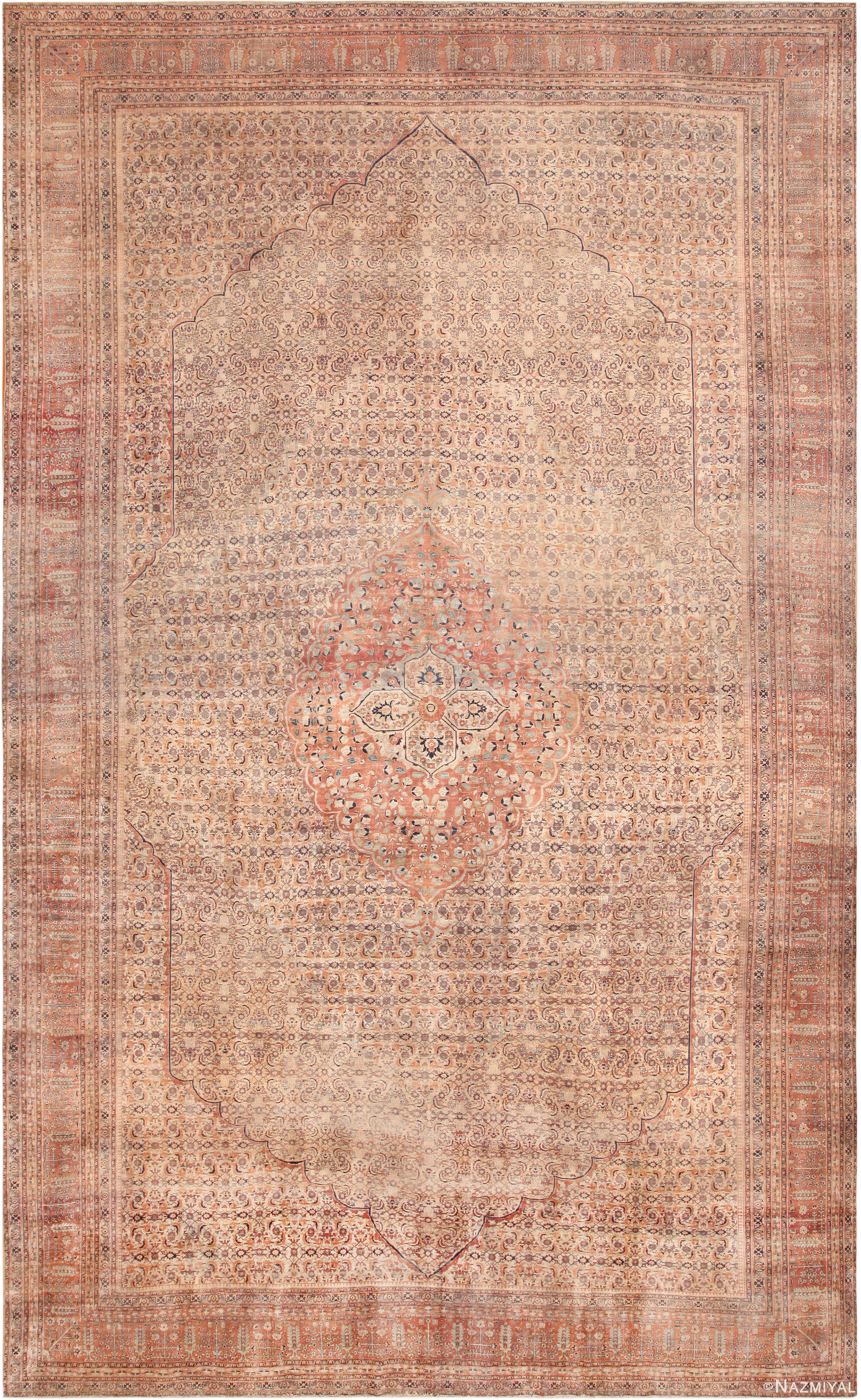
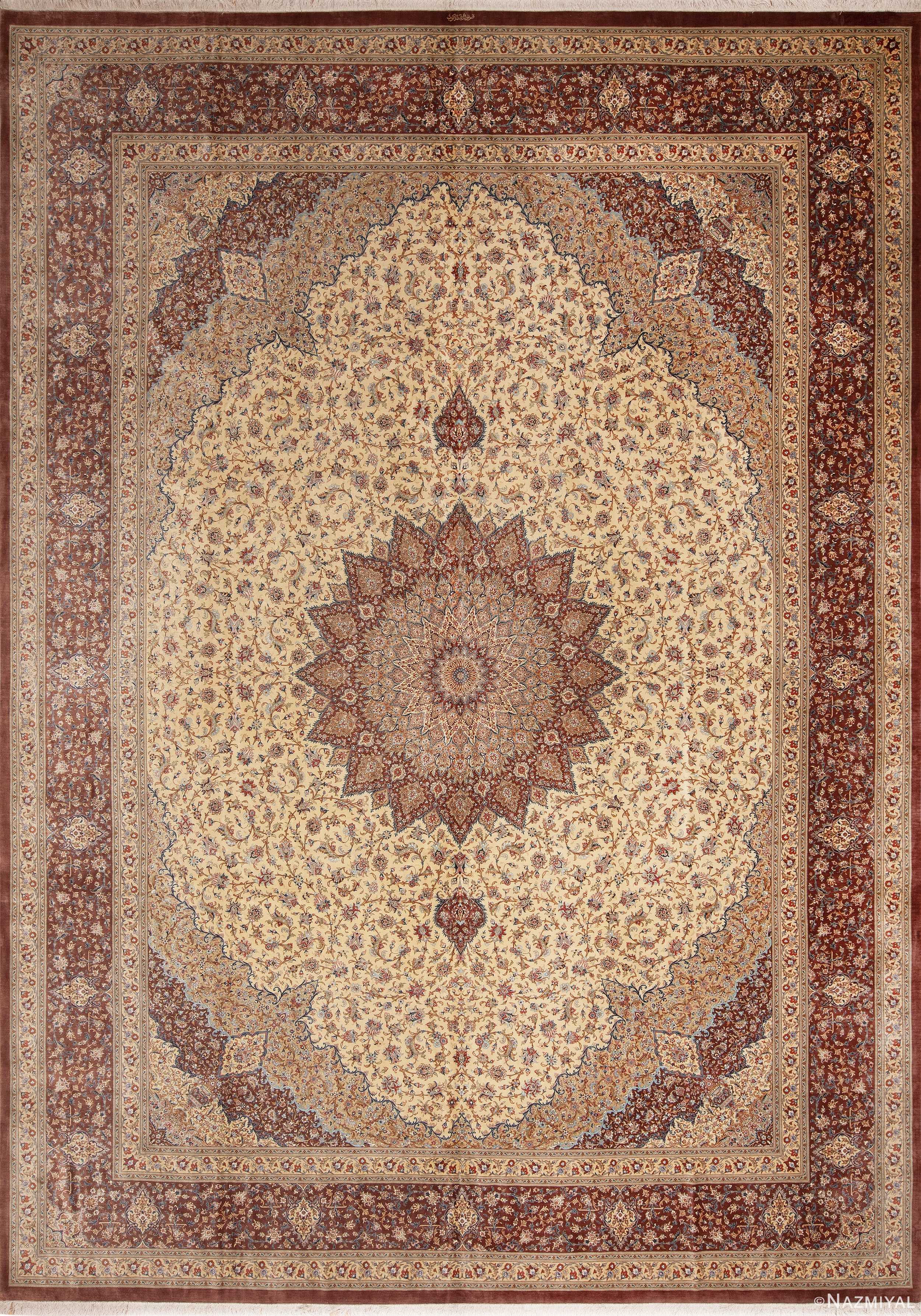
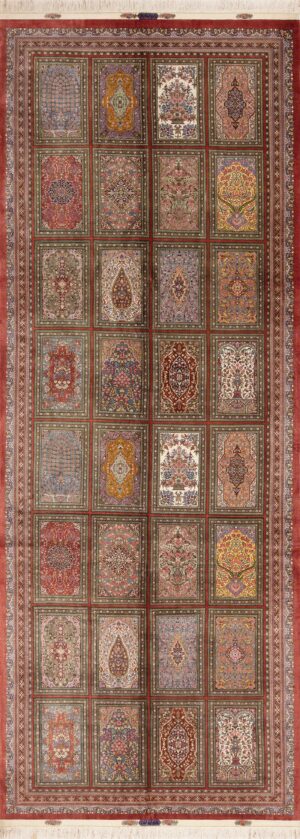
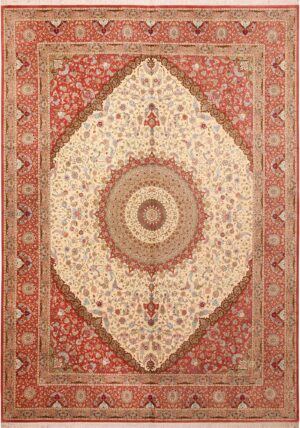
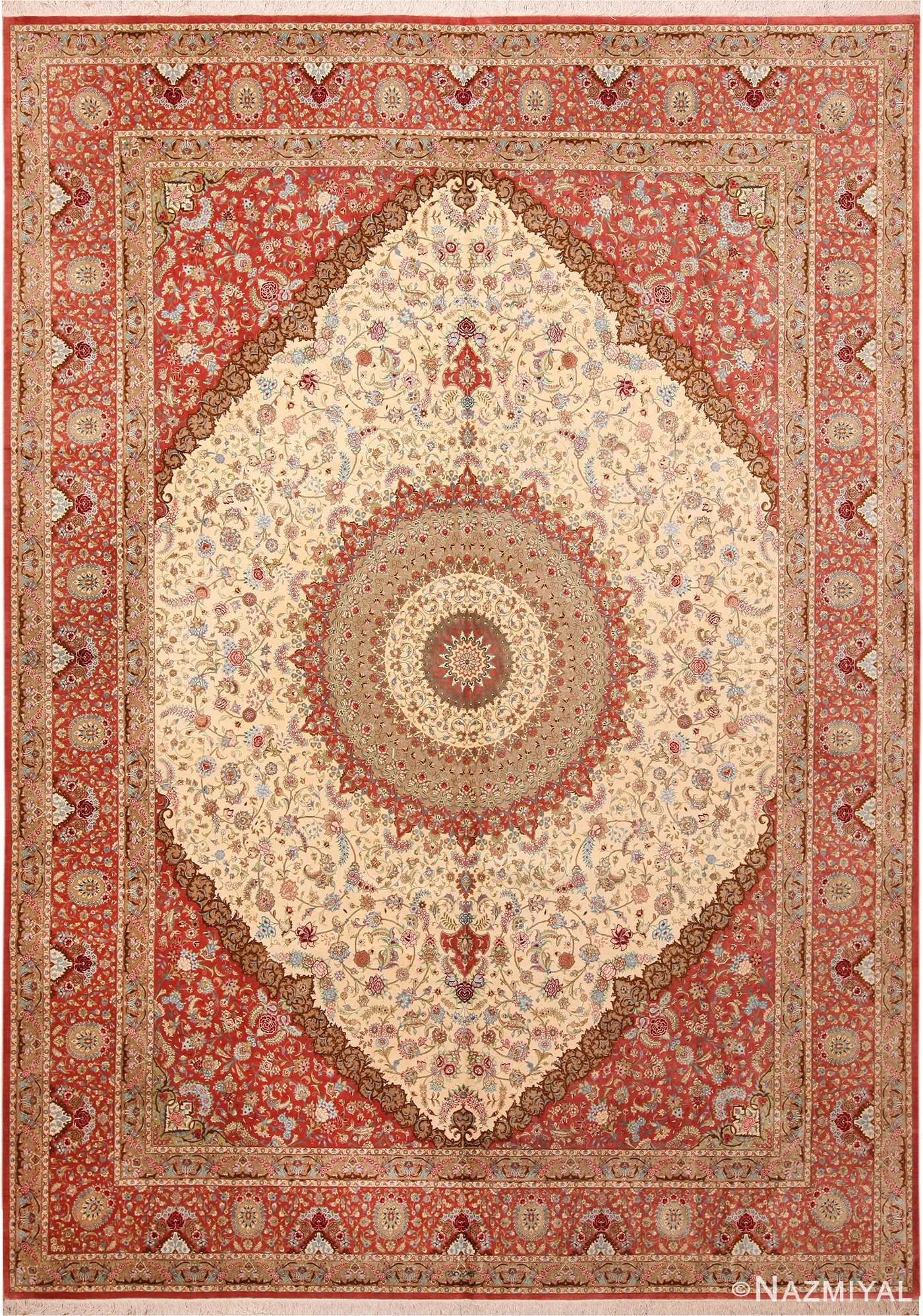
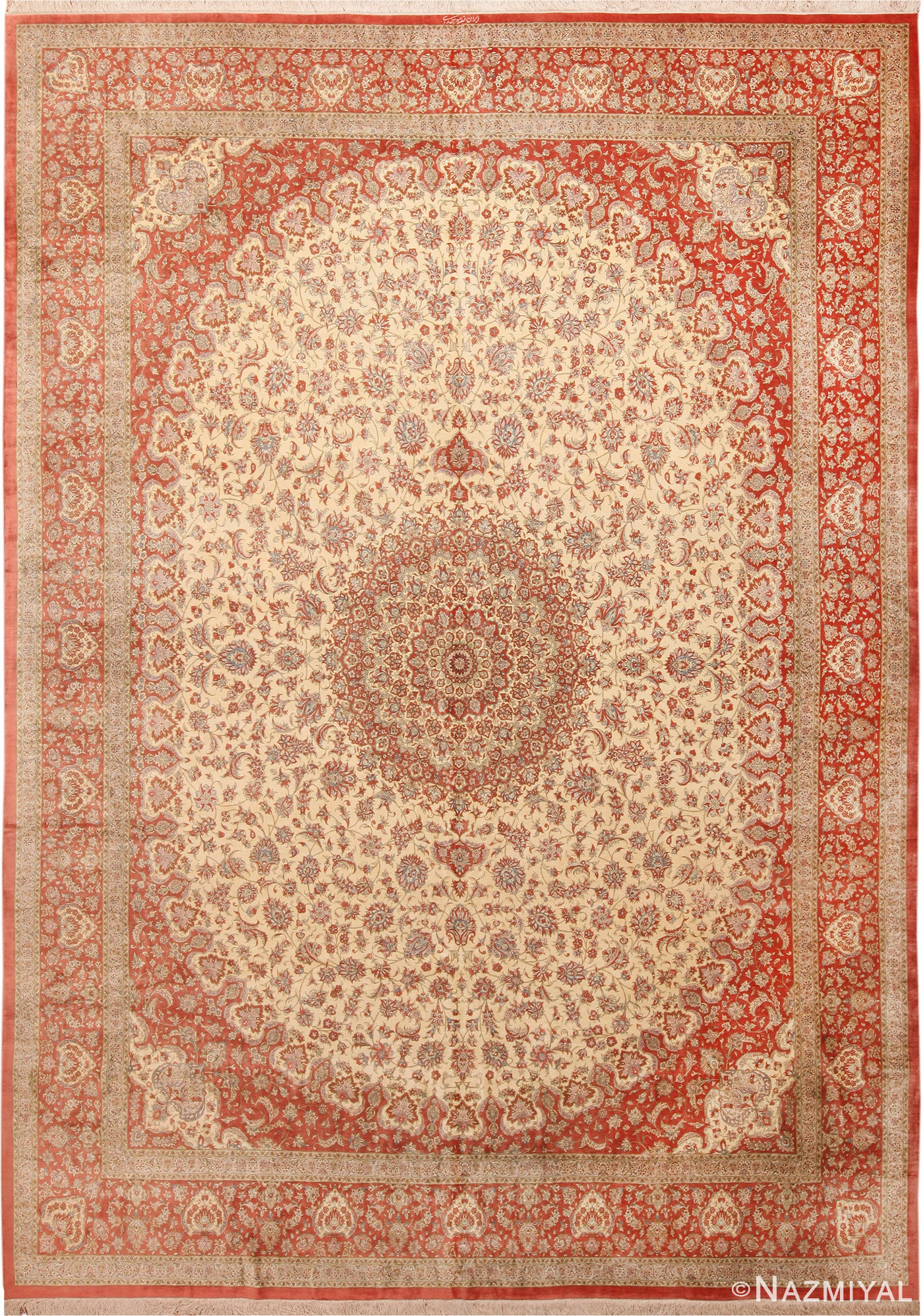
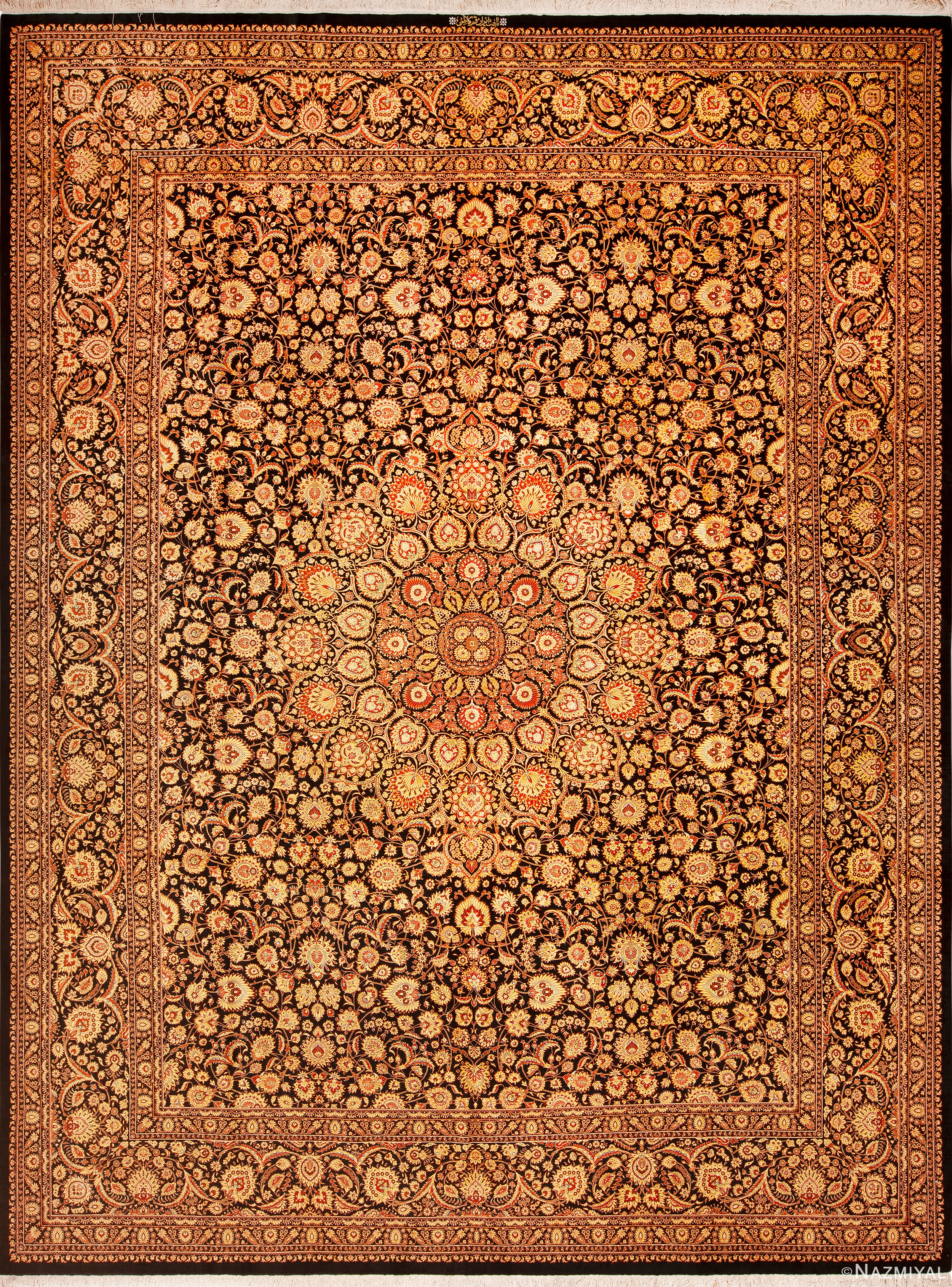
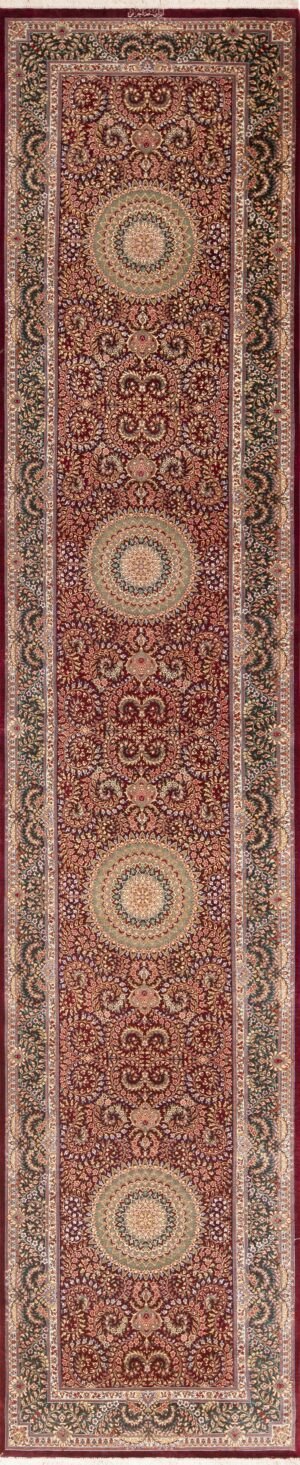
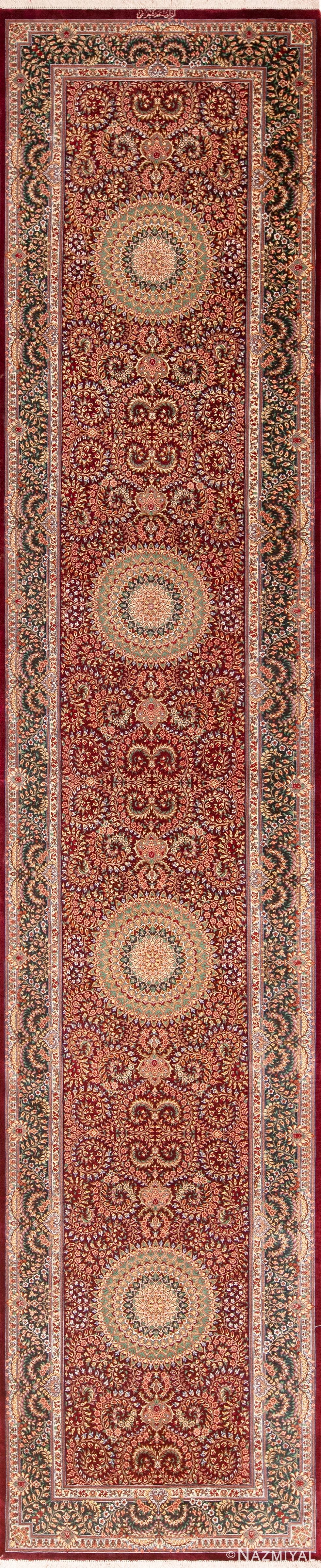
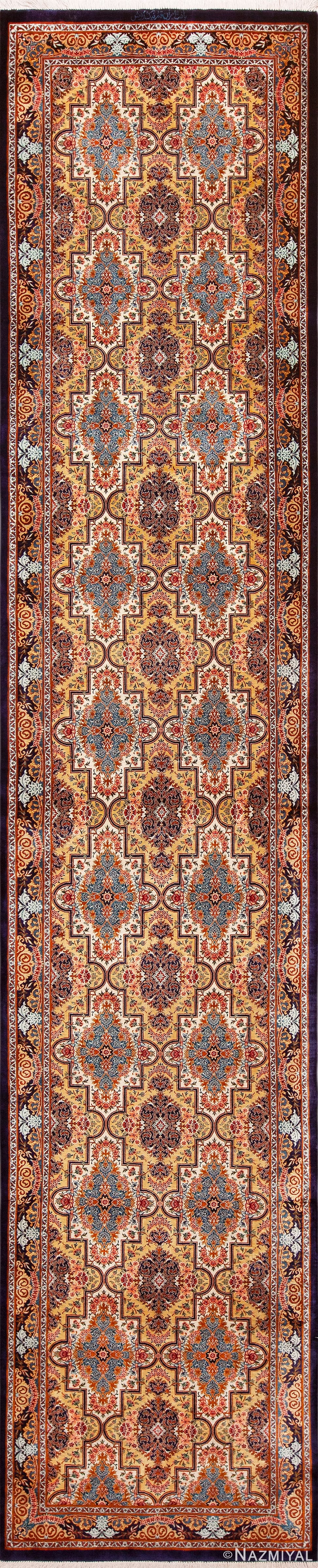
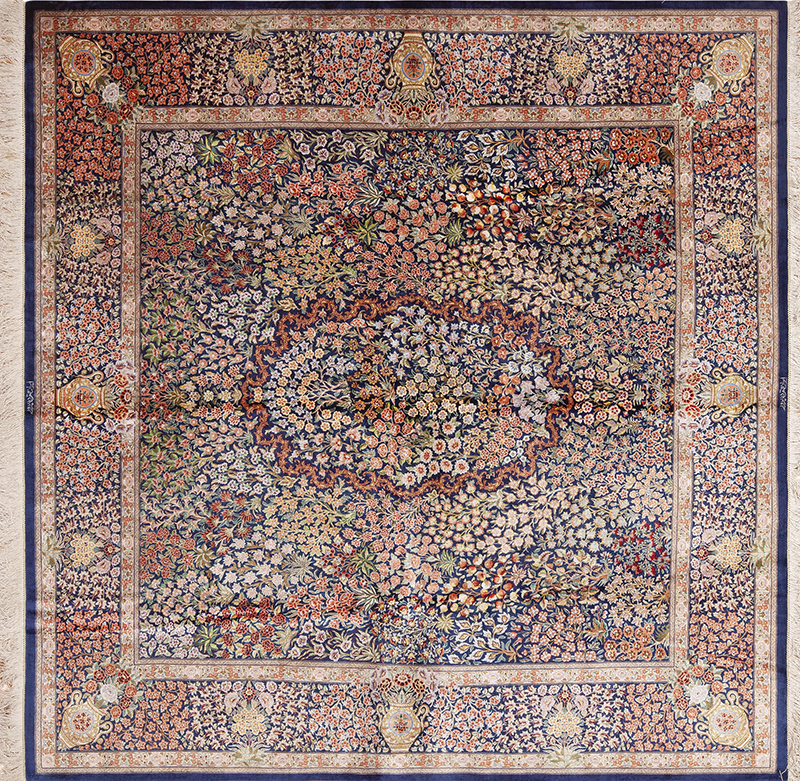
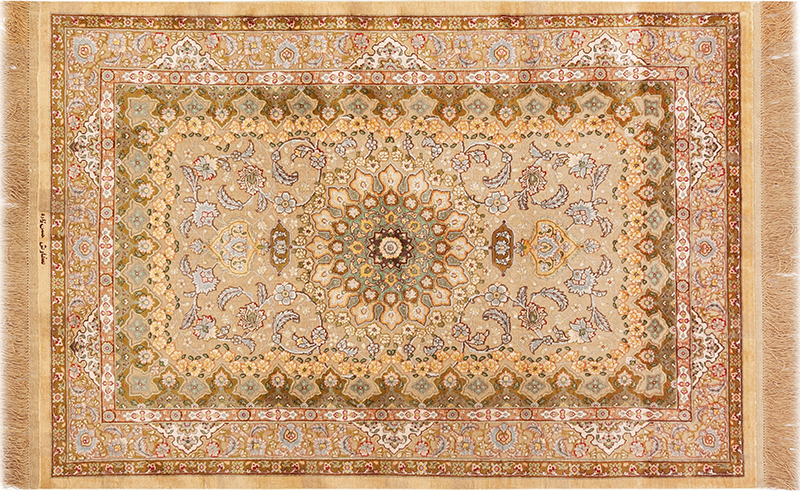
Silk rugs are handwoven and made with silk pile, foundation, or accents that add luster, sharpen detail, and elevate the overall visual resolution of a rug’s design.
These rugs are prized for their luminous surface, refined detail, and remarkable precision. Whether a carpet is fully silk or made with silk highlights over a wool foundation, the result often reads like textile art—especially in fine workshop pieces and pictorial weavings. At Nazmiyal Collection, we curate silk carpets across multiple weaving traditions, including collectible Persian rugs, with an emphasis on design strength, material integrity, and real-world decorative usability.
Updated February 13, 2026 • Reviewed by Jason Nazmiyal
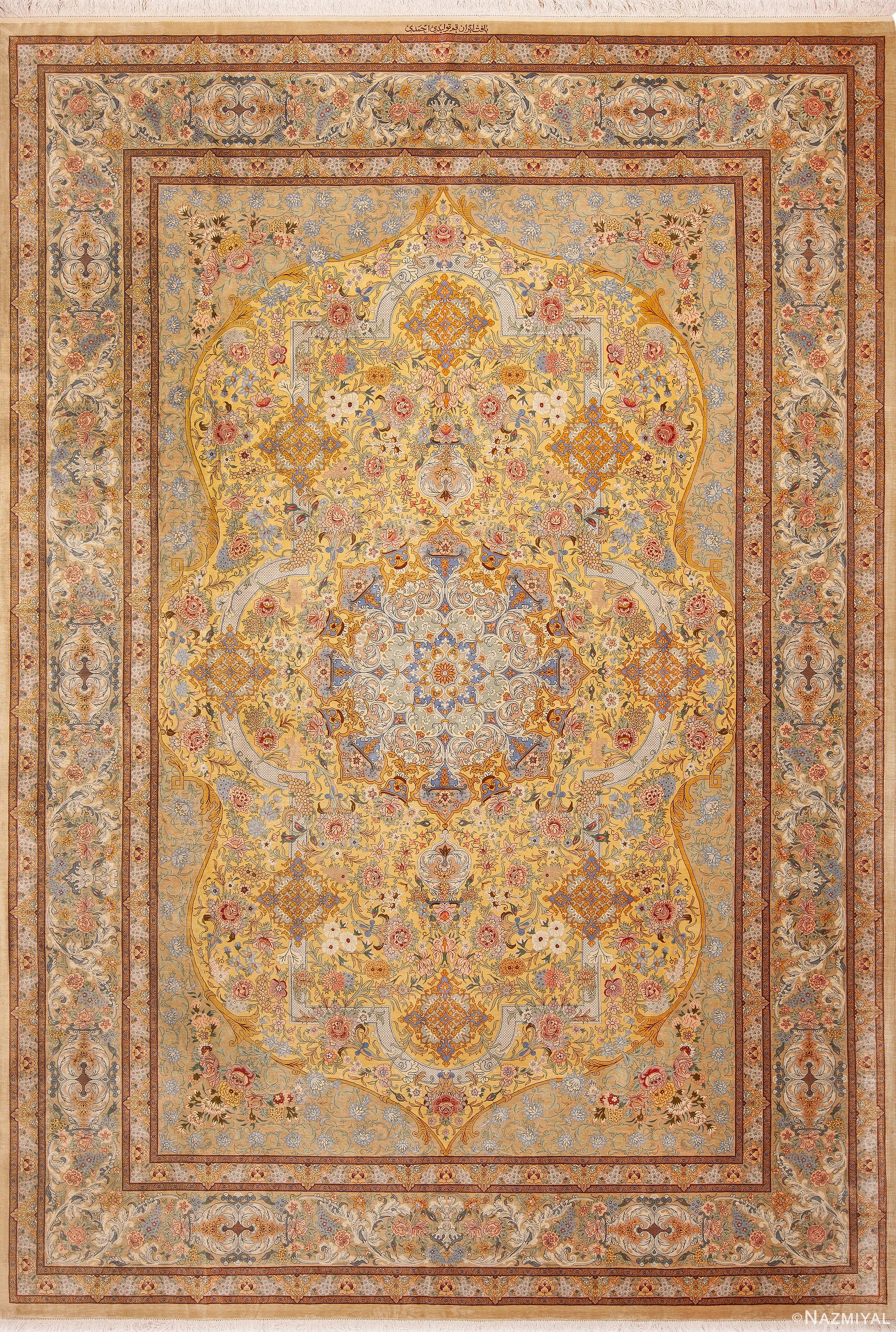
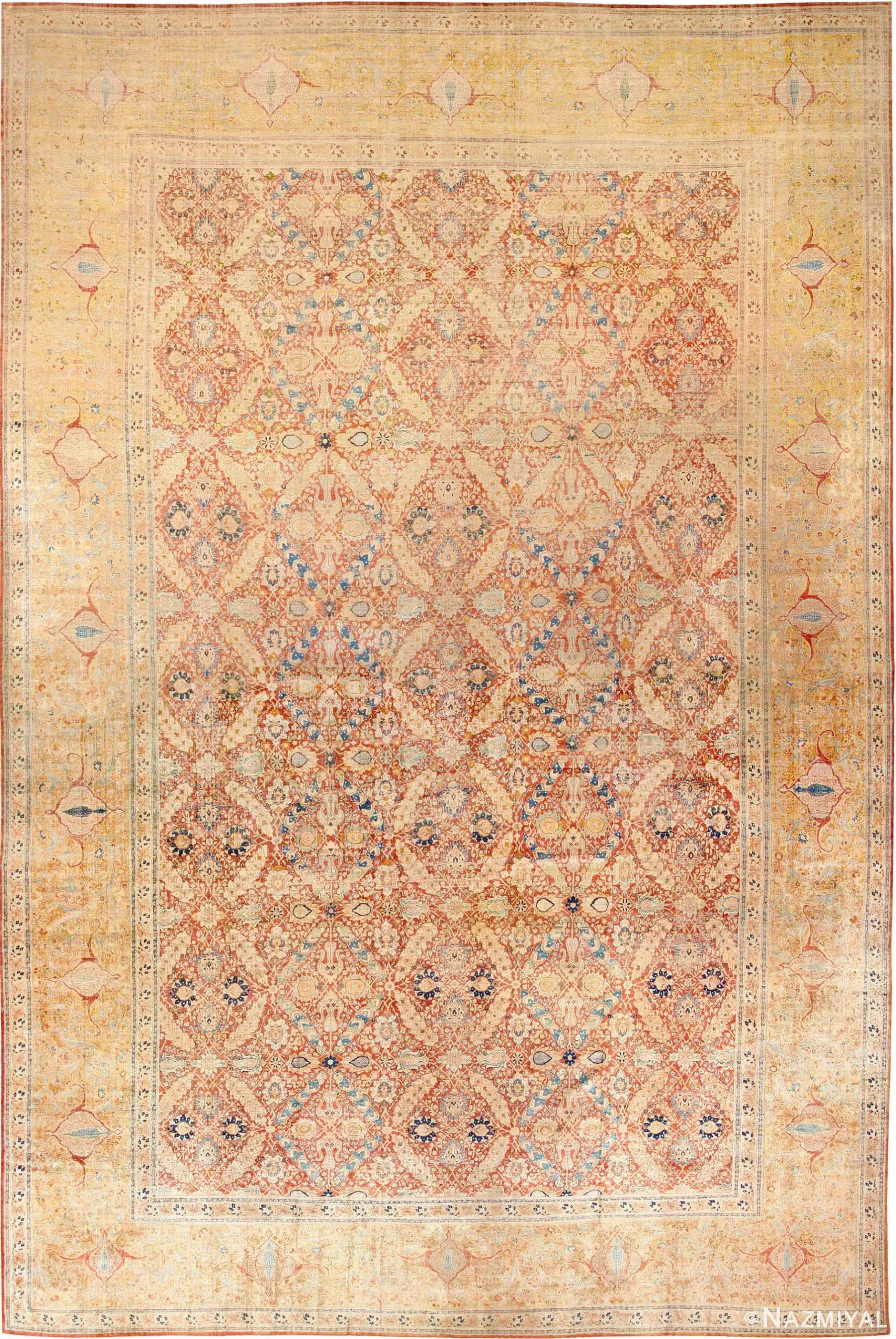
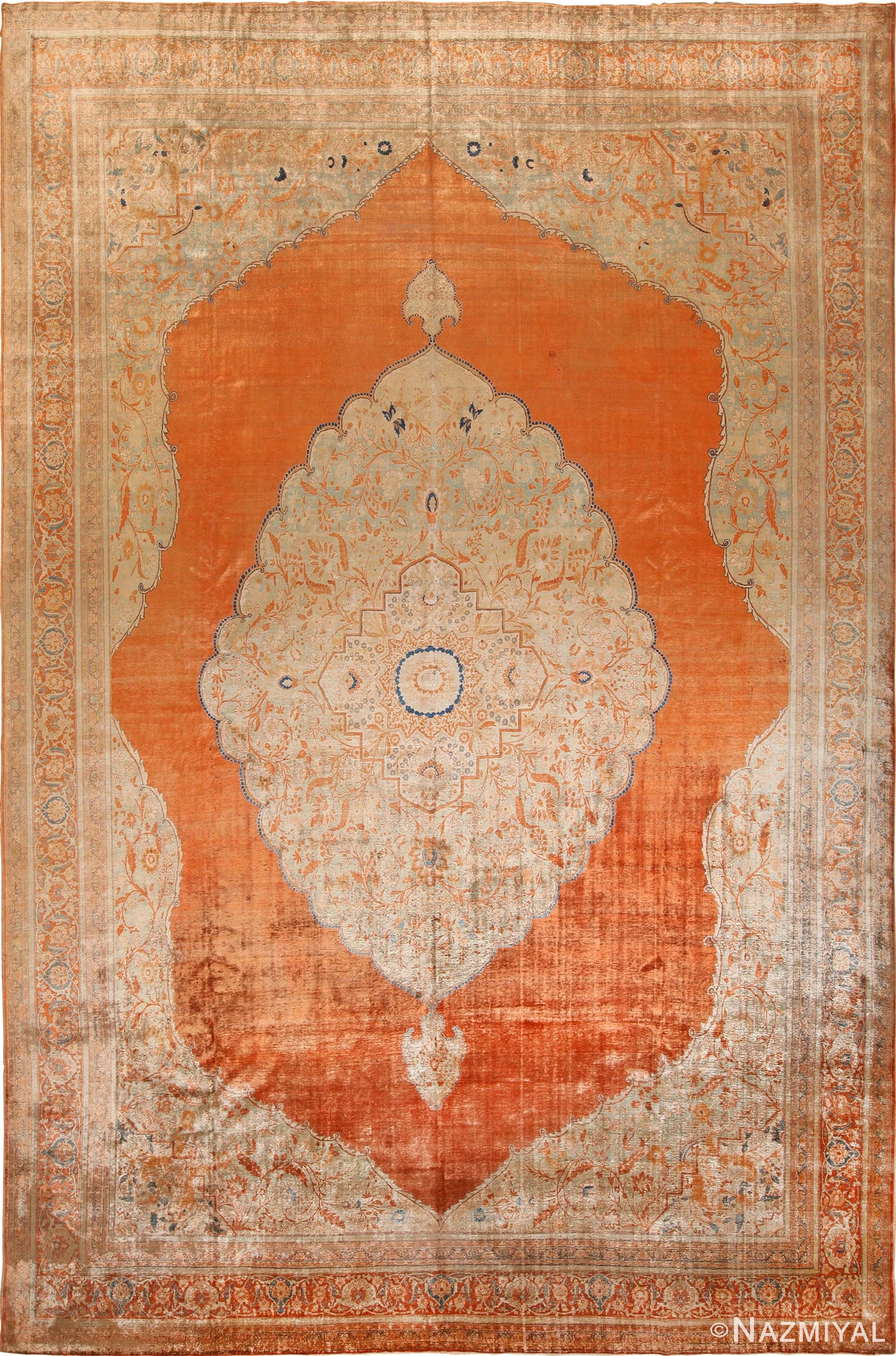
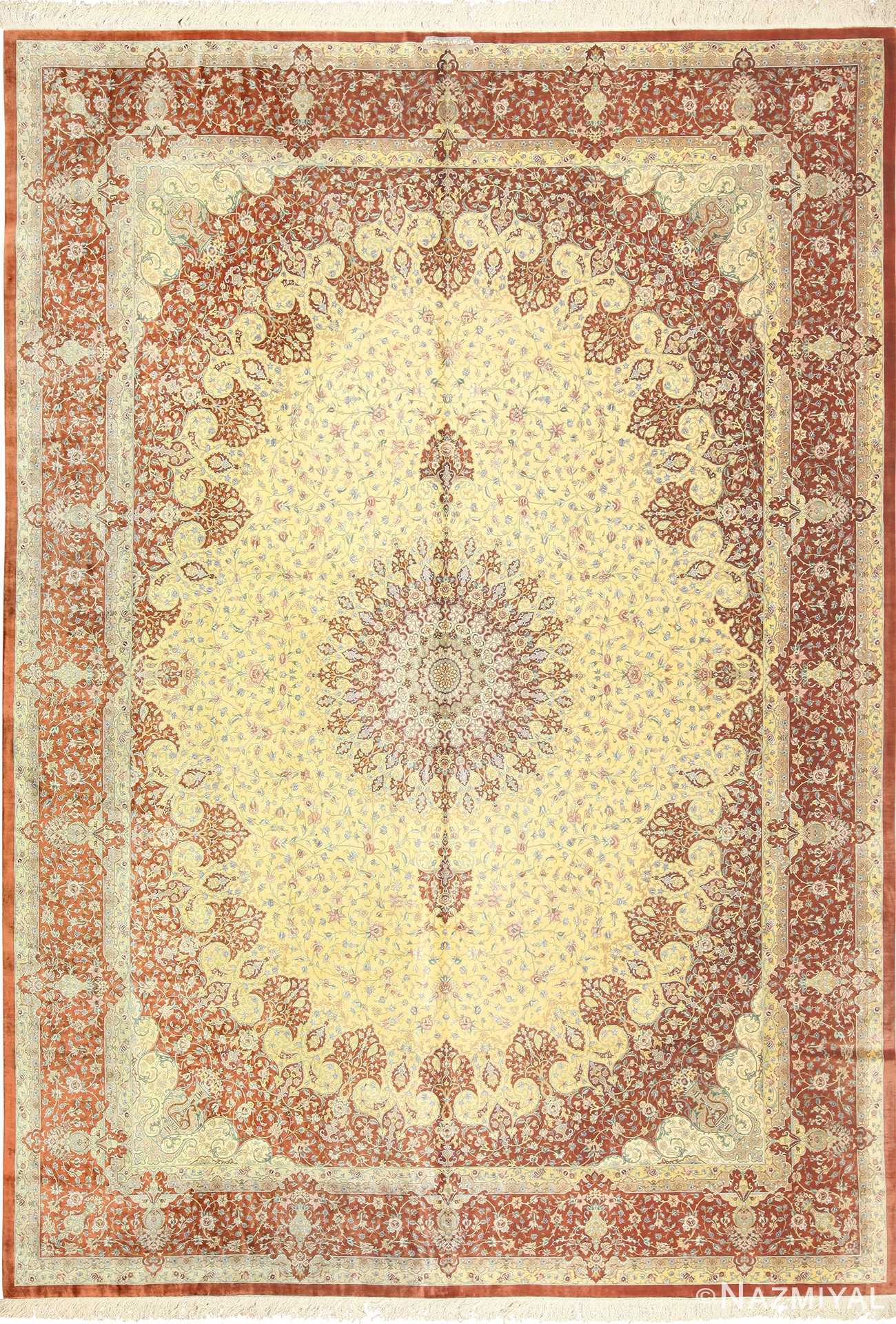
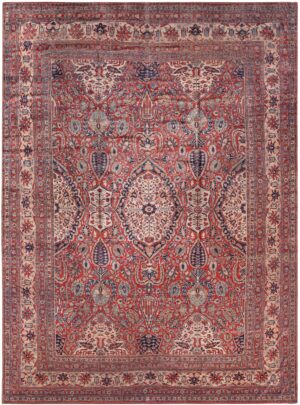
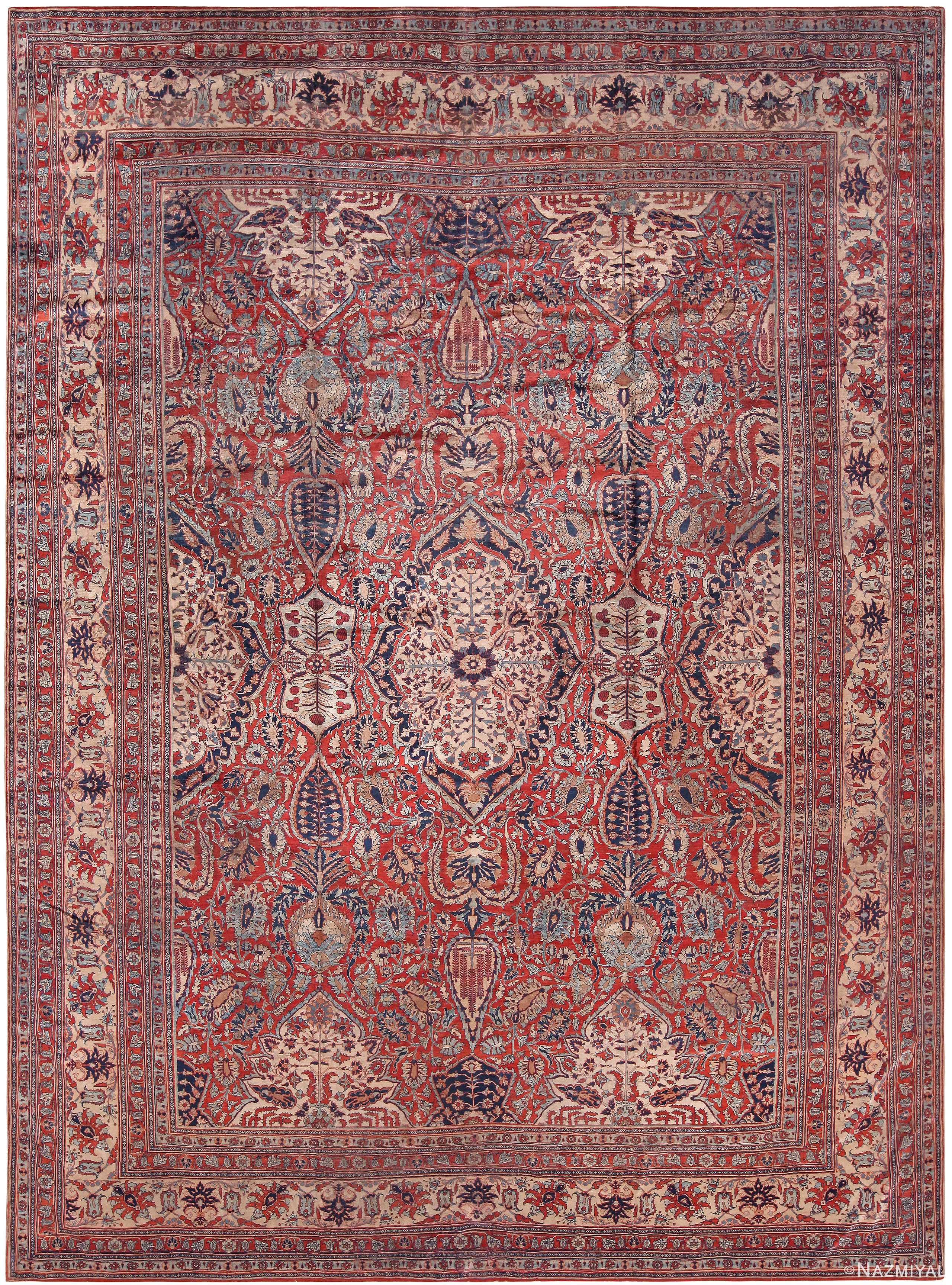
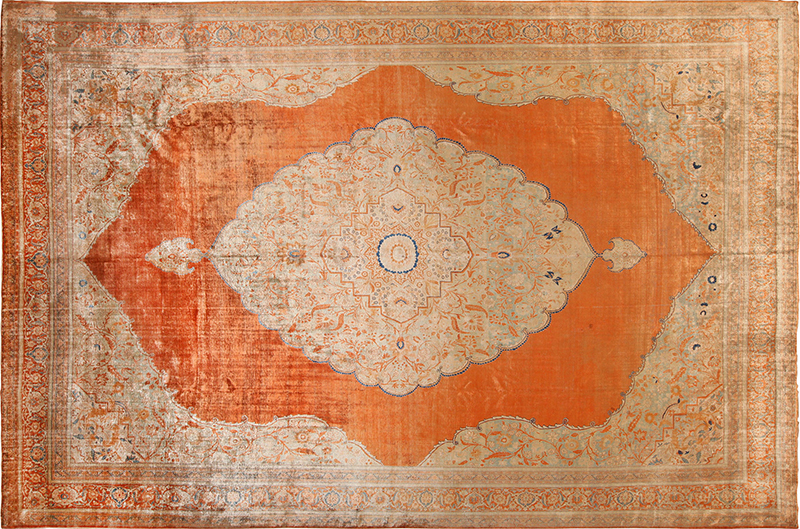
Antique Silk Tabriz Haji Jalili Rug — Nazmiyal Collection #49453
Circa: 1880
Size: 10 ft 10 in x 16 ft
Notes: Grand scale with refined workshop character
What Are Silk Rugs?
Silk rugs are handwoven rugs made either entirely of silk or with silk used selectively to add sheen and definition. Fully silk rugs can achieve extremely fine drawing and, in many workshop pieces, very high knot density. Wool-and-silk rugs combine wool’s resilience with silk accents that sharpen outlines, highlight motifs, and add dimension—often delivering a refined look with more everyday practicality.
Why Silk Looks Different Than Wool
Silk reflects light differently from wool. That natural luster gives silk rugs their “glow,” makes colors appear deeper, and can sharpen pattern edges so designs read with crisp clarity. It also means silk rugs can shift in appearance depending on lighting and viewing angle—one reason they photograph beautifully and feel elevated in person.
Where Silk Rugs Are Commonly Made
Silk weaving appears across multiple rug traditions, but a few are especially recognized in the market:
Persian silk traditions often emphasize intricate floral drawing, medallion compositions, and controlled pattern work.
Turkish silk traditions (including Hereke) are frequently associated with fine workshop rugs known for precision and refinement.
Select workshop pieces in other traditions may use silk to heighten detail, add shimmer, or elevate decorative impact.
Silk vs Wool-and-Silk Rugs
Many buyers assume “all silk” is automatically better. In practice, the better choice depends on how and where the rug will be used.
All-silk rugs
Best for lower-traffic rooms, formal settings, and clients who want maximum refinement and detail.
Wool-and-silk rugs
A smart everyday option: wool adds resilience while silk adds highlights and definition. Often the best “best of both worlds” choice. Explore wool-and-silk rugs.
How to Identify a High-Quality Silk Rug
Drawing and resolution: Fine silk rugs look “resolved.” Curves are smooth, outlines are clean, and small details feel intentional—not fuzzy or improvised.
Structure and stability: Look for secure edges, clean corners, and a rug that sits flat without distortion or rippling.
Materials and handle: Good silk feels smooth and luminous—not brittle, overly dry, or scratchy. In wool-and-silk rugs, the wool should still feel strong and springy.
Color control: Color changes should be controlled and deliberate. Messy transitions can indicate weaker production or later issues.
Condition and honesty: Silk can show wear differently from wool. Watch for areas that appear aggressively thinned, over-washed, or “polished” to imitate age.
What Affects Value
Silk rug value is driven by a combination of aesthetics, execution, condition, and demand. The most consistent value drivers are:
Design strength (composition, drawing, palette)
Technical fineness (especially in very detailed workshop weaving)
Condition and integrity (including the quality of any repairs)
Origin/workshop recognition (where applicable)
Size and usability (room-size pieces can carry premiums)
Decorative fit (how convincingly it works in real interiors)
Decorating With Silk Rugs
Silk rugs are ideal when you want refinement without heaviness. They can be styled as the “art layer” beneath seating, or used to add luminous detail in more intimate spaces.
Best placements
Bedrooms, offices, libraries, sitting rooms, and formal living rooms—anywhere foot traffic is moderate.
Styling guidance
Pair silk with matte textures (linen, plaster, oak, stone) so the sheen reads clearly. For a broader mix of aesthetics, compare antique rugs, vintage rugs, and modern rugs to find the right balance of character, palette, and texture for your room.
Light awareness
Avoid direct sunlight; rotate periodically to keep wear and light shift even across the surface.
Care & Cleaning for Silk Rugs
Silk rugs should be handled conservatively.
Day-to-day
Use a quality rug pad. Vacuum gently (avoid aggressive beater bars). Rotate periodically.
Spills
Blot immediately with a clean cloth—do not rub. Avoid DIY chemical spot treatments that can set stains or damage fibers.
Deep cleaning
Use a professional rug cleaner experienced with silk. Improper washing can cause distortion, shrinkage, or dye issues.
Frequently Asked Questions
Are silk rugs durable?
They can be, but silk is generally less forgiving than wool in high-traffic areas. For active homes, wool-and-silk rugs are often the smarter choice.
Are silk rugs always more valuable than wool rugs?
No. Value follows quality, rarity, condition, and demand. Many wool rugs are more valuable than many silk rugs.
How can I tell if a rug is all silk or a wool-and-silk blend?
Close inspection helps, but the best confirmation is a careful material check in person. If you’re unsure, request close-up photos and confirm materials before purchase.
Why Nazmiyal? 3 Pillars of Nazmiyal Collection
Unmatched Inventory Depth
Rigorous Authenticity Standards
Expert Advisory (size, placement, value — real guidance, not guesswork)
Nazmiyal Collection has been a trusted source for antique rugs and vintage carpets for over 45 years. Our NYC gallery curates one-of-a-kind pieces with an emphasis on authenticity, provenance, and lasting decorative value.
Need help? Call us at (212) 545-8029 or visit our New York City showroom to work with a rug expert.
             Posted on Google        Victor Florintsev     Trustindex verifies that the original source of the review is Google. The only ones I'd ever buy rugs from. The best.         Posted on Google        Jeffrey NeumanB     Trustindex verifies that the original source of the review is Google. I bought two gorgeous Serapi rugs from Farhad at Nazmiyal Rugs!  Beautiful carpets, fair prices and great service.  Very happy customer.  Farhad (the sales person) was very patient and gave us great service.         Posted on Google        john haid     Trustindex verifies that the original source of the review is Google. Alen is a gentleman and an expert.  Really great to work with.         Posted on Google        Edward Yasuna     Trustindex verifies that the original source of the review is Google. I recently purchased a modern Kandinsky rug from Nazmiyal Auctions.  It was just as described, and the director (Farhad) of the auctions had it sent to me quickly and safely.  Payment was easy, the rug was reasonably priced, and I highly recommend Nazmiyal Auctions and Antique Rugs.  Quality merchandise and first-class service.         Posted on Google        Nicholas Carr     Trustindex verifies that the original source of the review is Google. Had a excellent experience buying a rug in Nazmiyal's 1/18/26 online auction.  First, prior to the auction, viewing a number of lots at the 32nd St showroom (I had prepared a list from the online catalog). The staff were great to work with: helpful, knowledgable, honest, and flexible.  Second, after placing an online bid and winning the desired item, arranging payment and pickup was simple and straightforward. Everything went seamlessly and the overall experience was educational and fun. Many thanks to Jason and his team.         Posted on Google        Andrea Gared     Trustindex verifies that the original source of the review is Google. Everyone at Naziyal is proffessional, especially Jason and Farhad.
They are knowledgeable, truthful, and true gentlemen. I have sold several rugs through them and will always go to them first, to buy or sell. The best in the business!         Posted on Google        Lori Silverberg     Trustindex verifies that the original source of the review is Google.          Posted on Google        Jesse Zilberman     Trustindex verifies that the original source of the review is Google. Excellent customer service! Alen was very helpful over the phone and email. The rug we acquired was stunning, and photos do not do it justice. I would definitely work with Alen and team again!         Posted on Google        Rachel Paul     Trustindex verifies that the original source of the review is Google. Jason was incredibly kind and helpful! I work for a small museum that had some rugs we had no information on. Jason responded to us quickly and gave us the information we needed for free! Incredible service, we are super thankful for his help!

 Size: 8 ft 3 in x 11 ft 9 in (2.51 m x 3.58 m)
 Size: 6 ft 8 in x 10 ft 2 in (2.03 m x 3.1 m)
 Size: 8 ft x 11 ft (2.44 m x 3.35 m)
 Size: 13 ft 2 in x 26 ft (4.01 m x 7.92 m)
 Size: 12 ft 2 in x 19 ft (3.71 m x 5.79 m)
 Size: 10 ft 10 in x 16 ft (3.3 m x 4.88 m)
 Size: 1 ft 10 in x 15 ft (0.56 m x 4.57 m)
 Size: 10 ft x 13 ft 9 in (3.05 m x 4.19 m)
 Size: 9 ft 7 in x 13 ft 9 in (2.92 m x 4.19 m)
 Size: 10 ft x 13 ft 8 in (3.05 m x 4.17 m)
 Size: 2 ft 9 in x 13 ft 7 in (0.84 m x 4.14 m)
 Size: 5 ft 2 in x 13 ft 6 in (1.57 m x 4.11 m)
 Size: 9 ft 6 in x 13 ft 6 in (2.9 m x 4.11 m)
 Size: 9 ft 9 in x 13 ft 5 in (2.97 m x 4.09 m)
 Size: 2 ft 7 in x 13 ft 3 in (0.79 m x 4.04 m)
 Size: 2 ft 8 in x 13 ft (0.81 m x 3.96 m)
 Size: 9 ft 10 in x 13 ft (3 m x 3.96 m)
 Size: 2 ft 8 in x 13 ft (0.81 m x 3.96 m)
 Size: 10 ft x 13 ft (3.05 m x 3.96 m)
 Size: 5 ft 2 in x 12 ft 10 in (1.57 m x 3.91 m)
 Size: 9 ft 9 in x 12 ft 10 in (2.97 m x 3.91 m)
 Size: 2 ft 7 in x 12 ft 9 in (0.79 m x 3.89 m)