Quick Navigation
Key Takeaways
- Kuba rugs are prized for tight weaving and crisp motif clarity, often featuring meticulous allover patterning.
- Many examples include iconic Caucasian elements such as Lezghi stars, latticework, and prayer-format designs (including Chi-Chi types).
- When shopping, prioritize structure and condition: stable edges, even wear, and clean outlines matter as much as the design.
At-a-Glance Specs
- Region/Association: Quba (Kuba), Eastern Caucasus (present-day Azerbaijan)
- Common motifs: latticework • small repeating rosettes • stars • radiant medallions • prayer layouts
- Typical look: refined, detail-rich, “elegant” tribal geometry (often more delicate than bold Kazak types)
- Construction notes: dense pile • precise drawing • pattern built from small units
- Best rooms: hallways (runners) • libraries • living rooms • collected, layered interiors
- What to look for: motif resolution • stable selvedges • clean perimeter • cohesive palette • honest wear
Popular Searches
Large rugs | Oversized rugs | Hallway runner rugs | Geometric rugs | Rug size guide
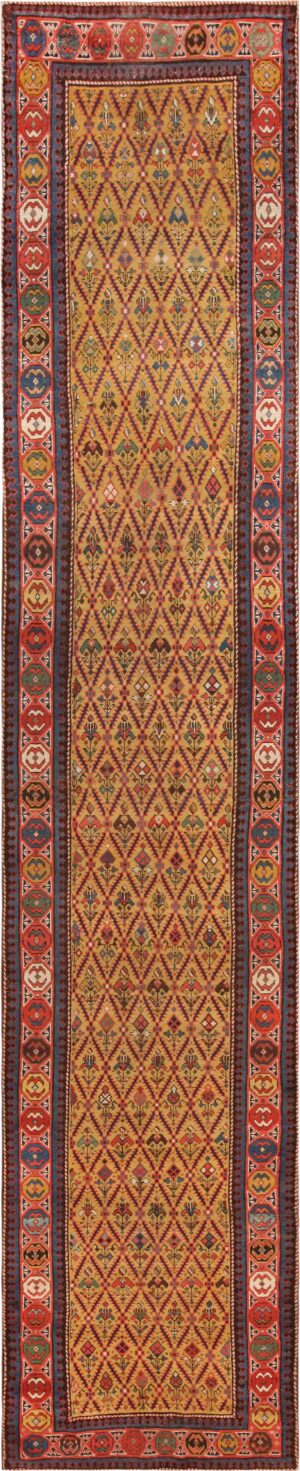
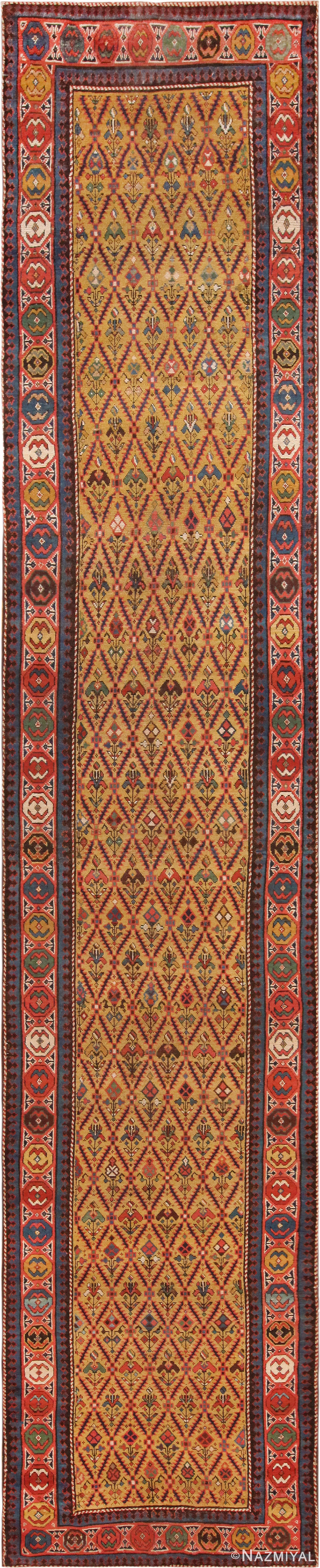
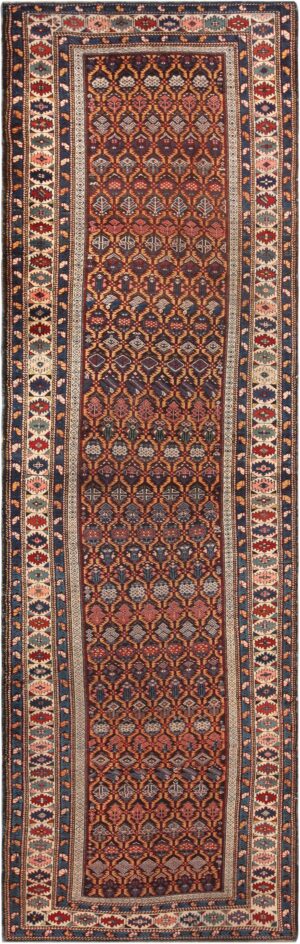
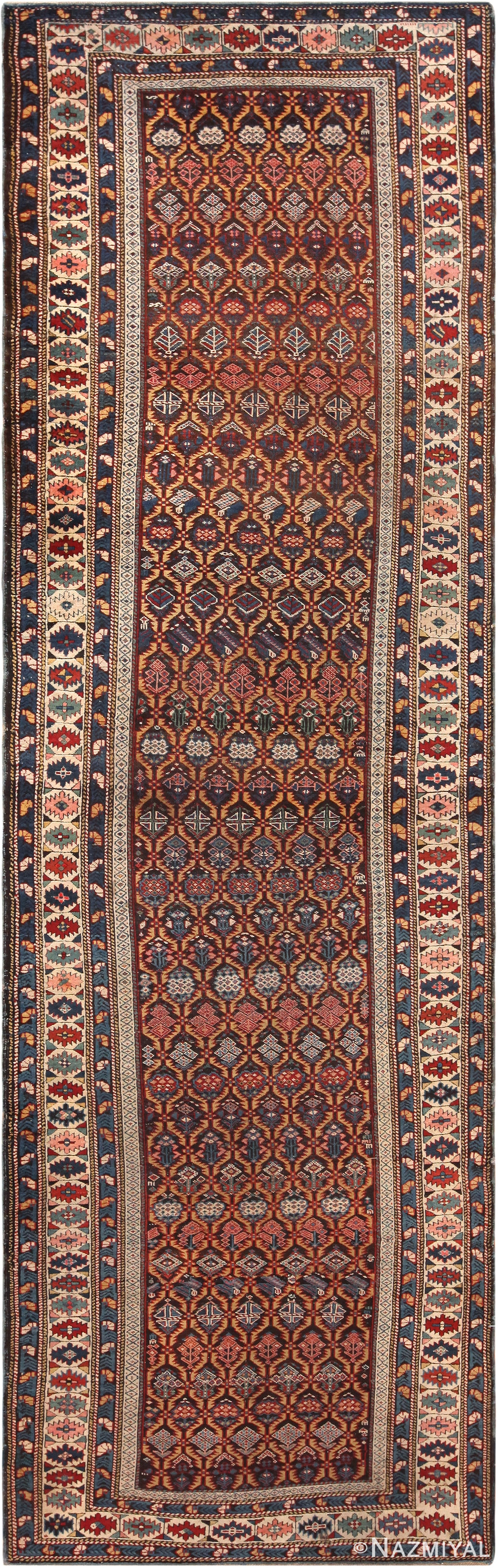
Featured Kuba Rugs from the Collection
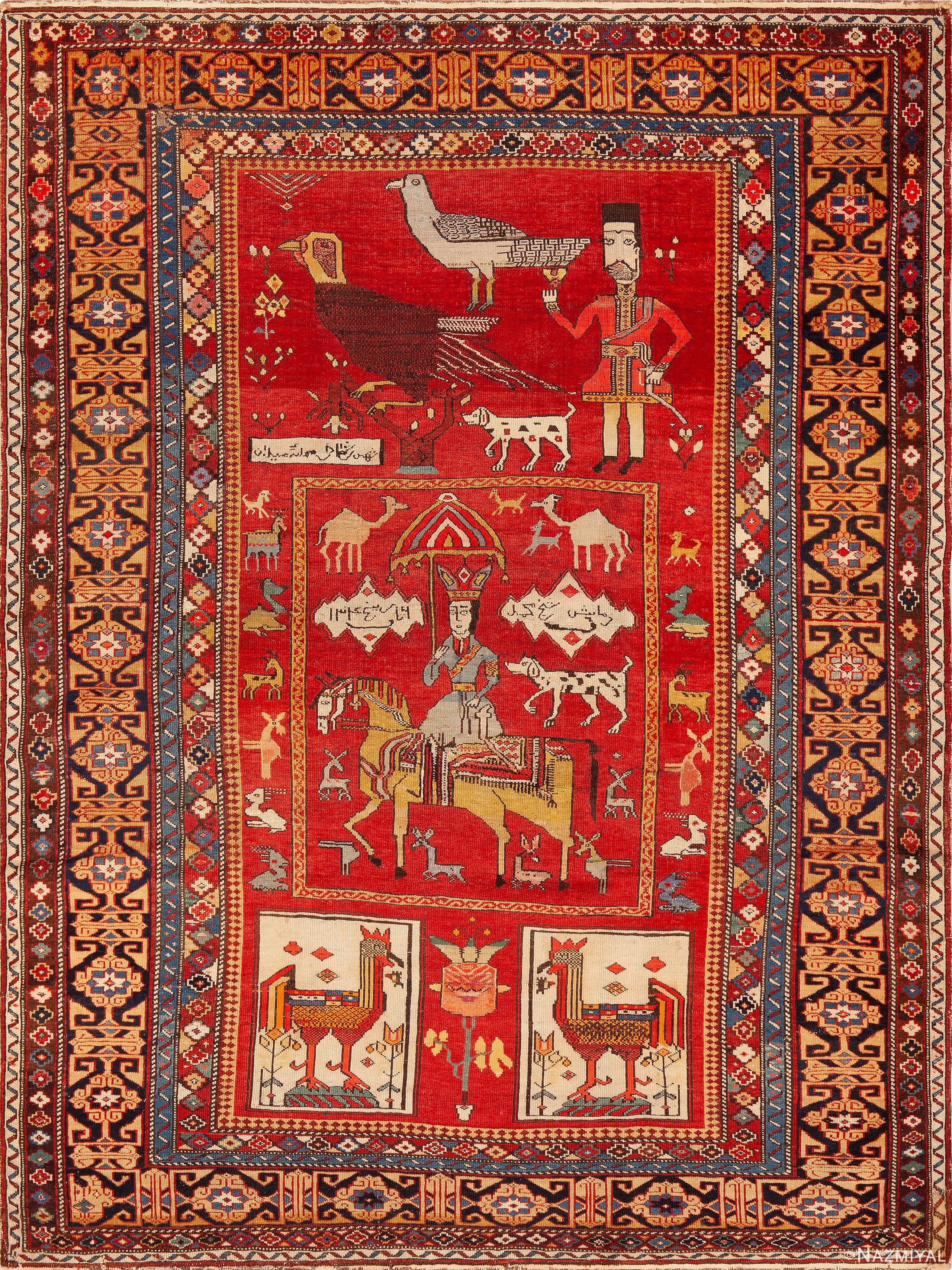
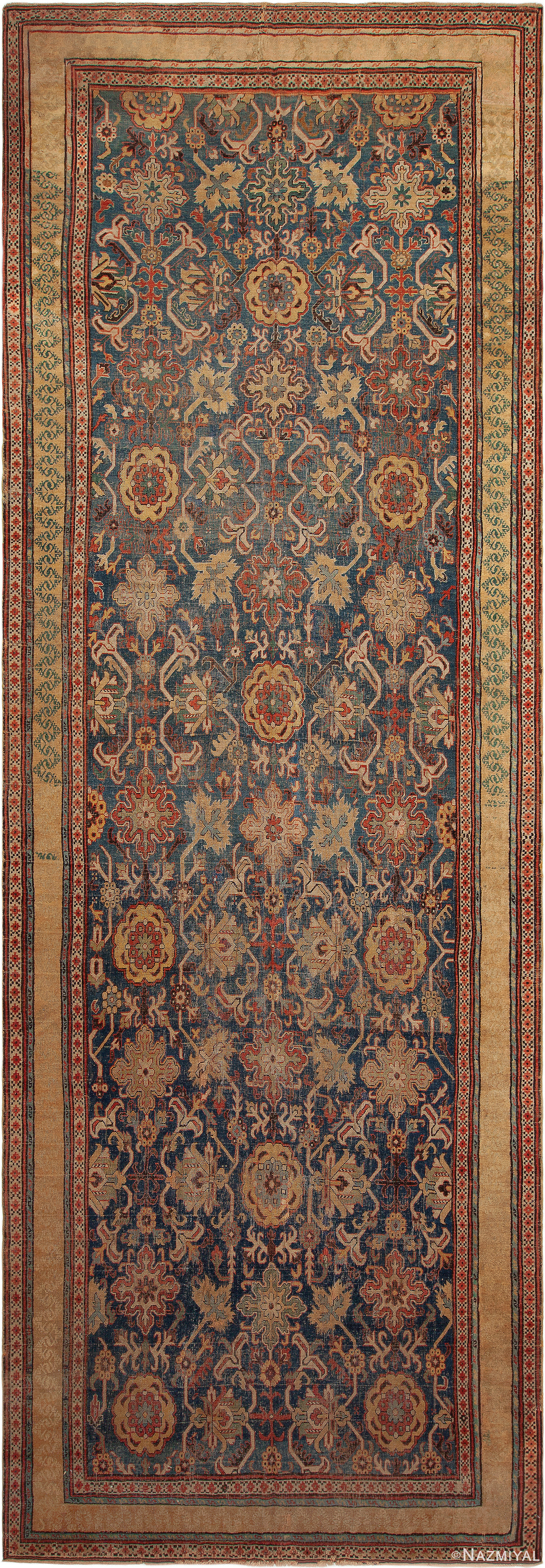
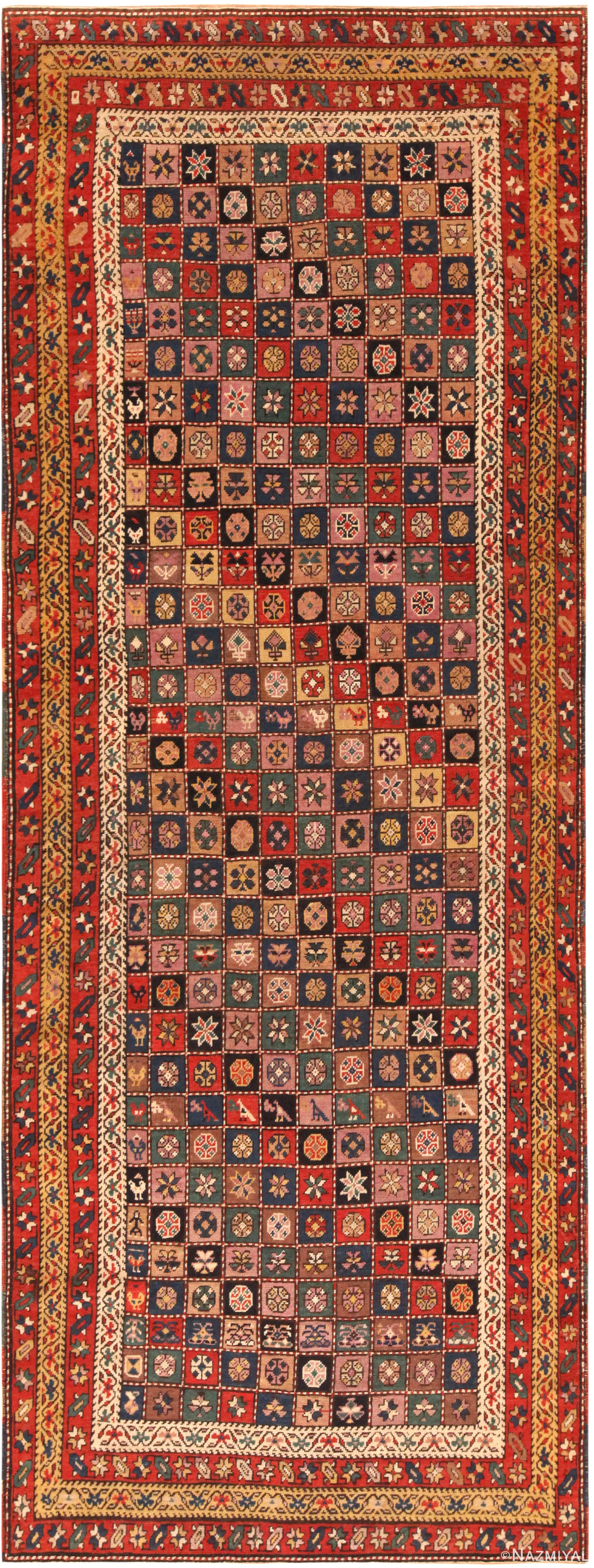
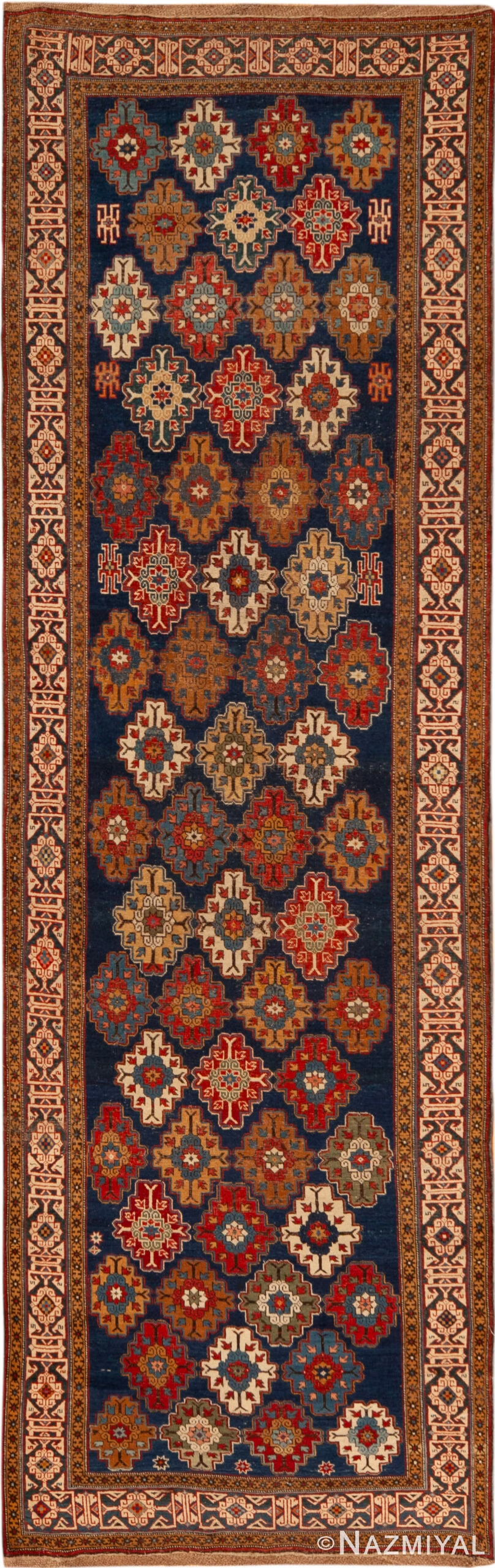
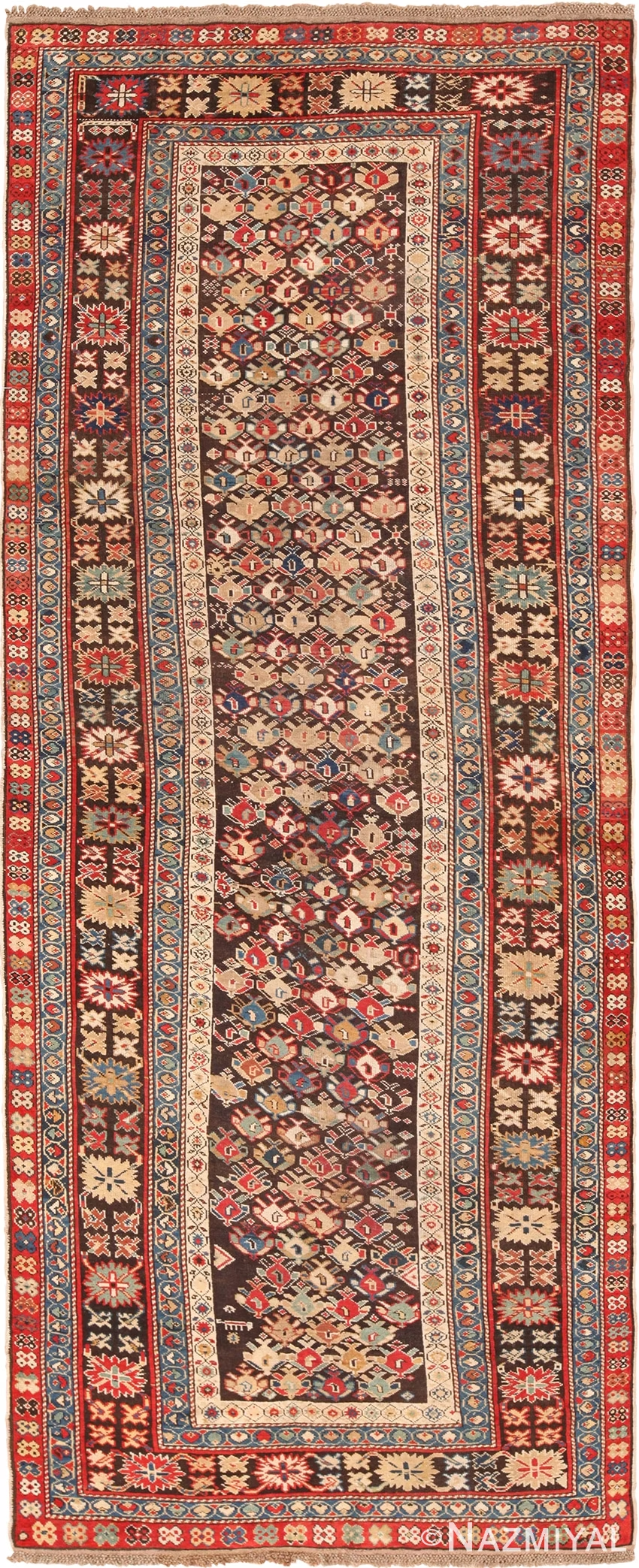
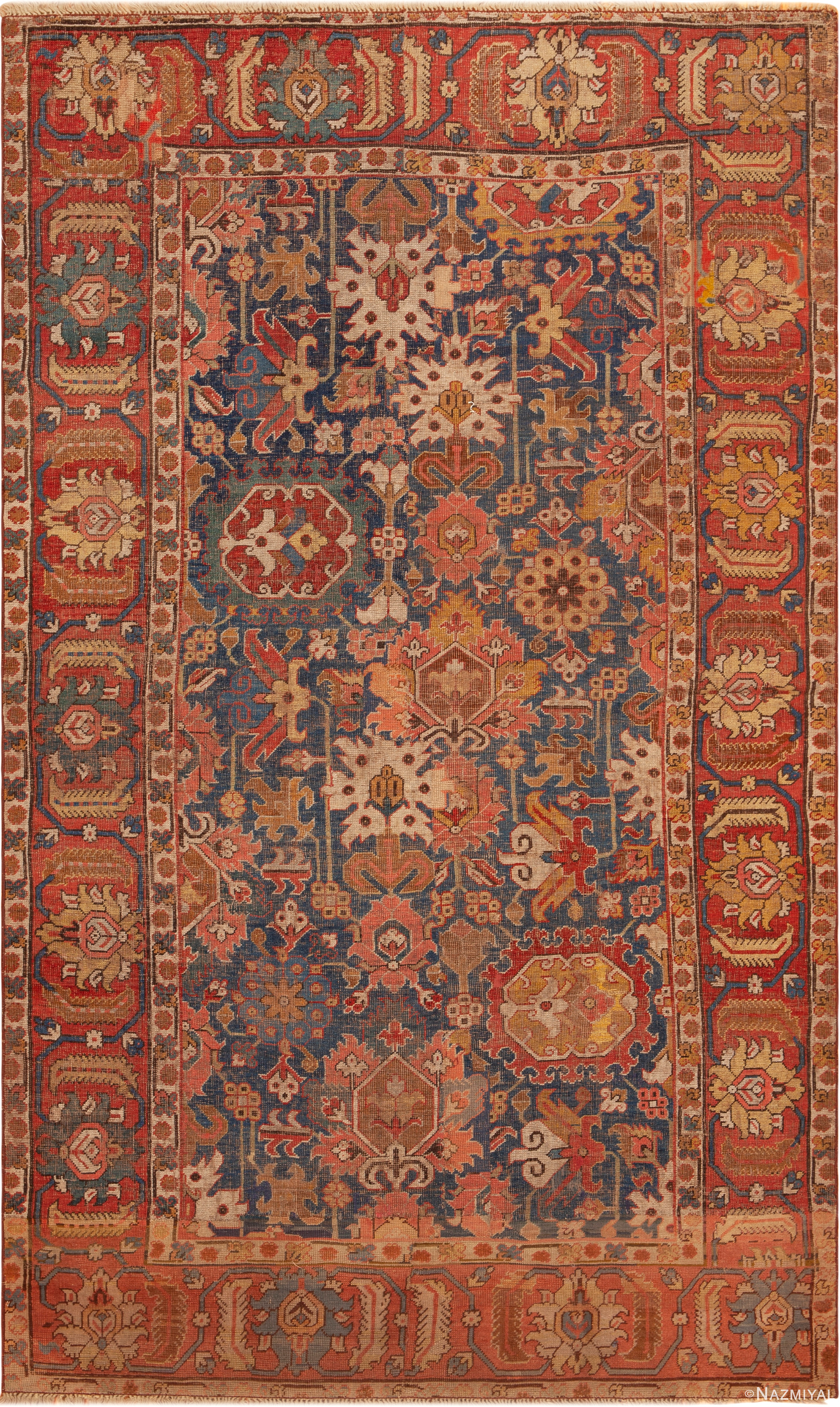
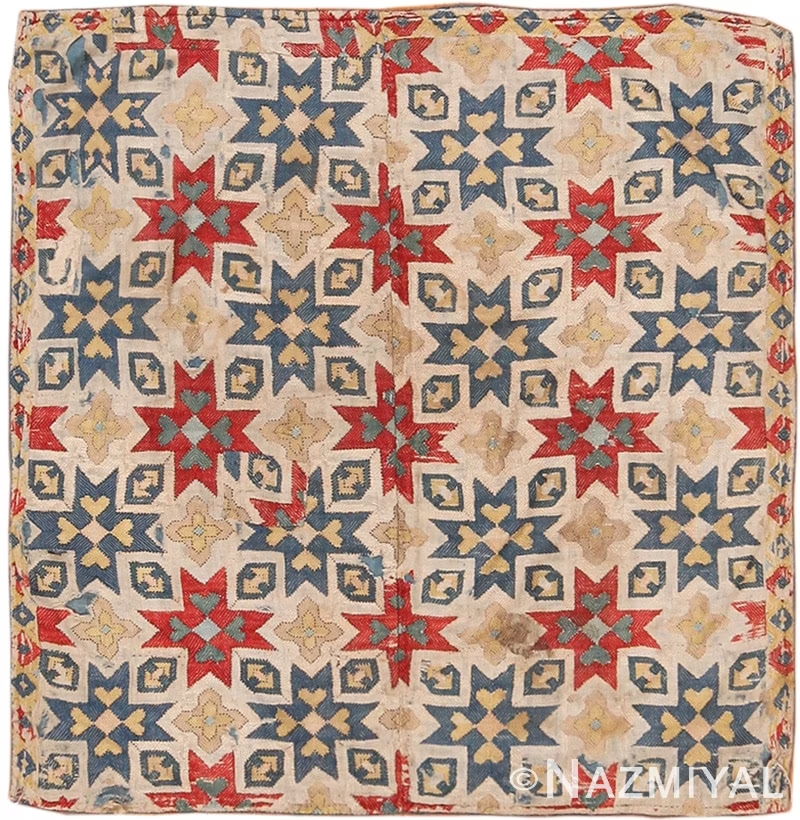
Inventory changes frequently. These featured rugs are live examples of Kuba weaving across different sizes and eras.
Design Language of Kuba Rugs
Kuba rugs are famous for their geometric precision and the way they build rich surfaces from small, repeated design units.
Many classic Kuba types are organized as allover lattices or neatly repeated motifs rather than one oversized central statement.
You will often see refined “Caucasian symbols” and disciplined outlines, with pattern density that feels intentional—not chaotic.
Collectors commonly associate Kuba weaving with categories such as Chi-Chi prayer formats, radiant medallion systems, and fine latticework filled with small floral sprigs.
Because Kuba patterns rely on clarity at a small scale, strong examples read exceptionally “clean” from across the room.
History and Regional Context
The Kuba/Quba region sits in the eastern Caucasus (in modern Azerbaijan) and has long been connected to wider trade and artistic exchange.
That position helped Kuba weaving absorb influences from surrounding Caucasus traditions as well as broader ornamental systems that collectors also recognize in Persian rugs.
Over time, Kuba workshops and village weavers developed a distinctive signature: refined drawing, dense weaving, and pattern systems that reward close viewing.
Identification & Construction
Why Kuba rugs feel “finer” than many other tribal Caucasian rugs
Kuba rugs are often described as the most elegant of the Caucasian weavings because the pattern is built from smaller, more carefully resolved components.
That finesse typically shows up in crisp outlines, clean transitions between colors, and a “finished” look that holds together at both room scale and close range.
Structure, knotting, and what to check before you buy
While individual pieces vary, Kuba rugs are frequently dense and detail-forward, so condition checks matter.
Look for stable selvedges, secure ends, even wear across the field, and motifs that still resolve cleanly.
If you like to shop by geography and weaving family beyond Kuba, explore our rug origins hub for a broader map of traditions.
Decorating & Placement Guidance
Use Kuba rugs where detail will be appreciated
Because Kuba designs are intricate, they shine in spaces where you’ll see them often: hallways, libraries, studies, and collected sitting rooms.
Runners are especially effective for adding rhythm and structure to long corridors without overwhelming the space.
Match the era to how you live
For the most authentic, collector-forward experience, start with an antique rug in a Kuba or related Caucasus style.
If you want similar character with more flexibility for everyday decorating, browse vintage rugs.
For cleaner lines and simplified patterning that still feels structured, consider modern rugs inspired by tribal geometry.
Control the room around the rug
Kuba rugs tend to look best when the surrounding décor supports their clarity: quieter upholstery, a restrained wall color, and a few intentional accents that echo one tone from the field or border.
If the rug is dense, give it “breathing room” with simpler furniture silhouettes so the pattern reads as curated rather than busy.
Kuba Rugs vs Shirvan Rugs
Kuba rugs are closely related to Shirvan rugs, but they often read finer and more miniature in motif resolution.
Use this comparison to decide which visual tempo fits your room.
| Feature | Kuba Rugs | Shirvan Rugs |
|---|
| Motif scale | Often smaller, more intricate, detail-forward | Often slightly larger, bolder, more graphic at distance |
| Overall feel | Elegant, precise, “miniature” patterning | Structured, rhythmic geometry with village energy |
| Best placement | Hallways, studies, rooms where detail is noticed | Living rooms, dining rooms, bold statement moments |
| Shopping priority | Motif clarity, dense structure, clean borders | Color balance, strong geometry, stable condition |
Closest Cousins
- Shirvan rugs — the closest day-to-day comparison for structure, geometry, and collecting logic.
- Dagestan rugs — another refined Caucasus tradition with intricate patterning and strong tribal character.
Glossary
Allover pattern: A repeating design that fills the field without a single dominant center.
Lezghi star: A Caucasian star motif often used as a structural anchor in tribal compositions.
Motif clarity: How cleanly a pattern resolves—especially outlines and transitions between colors.
Prayer format: A composition organized like a niche or directional layout (common in some Kuba-related types).
For more definitions, see the rug glossary.
FAQ
Where do Kuba rugs come from?
Kuba (Quba) rugs are associated with the eastern Caucasus region, most commonly linked to areas in present-day Azerbaijan.
What patterns are common in Kuba rugs?
Many Kuba rugs feature intricate allover lattices, small repeating rosettes, star motifs, radiant medallion systems, and prayer-format layouts (including Chi-Chi types).
Are Kuba rugs considered “finer” than other Caucasian rugs?
Often, yes. Many Kuba pieces are admired for dense weaving and small-scale motif resolution, giving them a refined, detail-rich look compared to bolder Caucasus types.
How can I tell if a Kuba rug is high quality?
Look for crisp drawing, stable edges, even wear, and a composition that stays clear across the whole field. Condition and structure are key value drivers.
What rugs are most closely related to Kuba rugs?
Shirvan and Dagestan rugs are close cousins in collecting and design language, and they’re useful comparisons when deciding on motif scale and room impact.
Nazmiyal White-Glove Service
We make it easy to shop with confidence—whether you’re choosing a single statement piece or curating a full room.
Nazmiyal Collection has been a trusted source for antique rugs and vintage carpets for over 45 years. Our NYC gallery curates one-of-a-kind pieces with an emphasis on authenticity, provenance, and lasting decorative value.
Need help? Call us at (212) 545-8029 or visit our New York City showroom to work with a rug expert.

 Size: 4 ft 3 in x 5 ft 8 in (1.3 m x 1.73 m)
 Size: 6 ft 6 in x 18 ft 6 in (1.98 m x 5.64 m)
 Size: 3 ft x 16 ft 10 in (0.91 m x 5.13 m)
 Size: 3 ft 6 in x 11 ft 6 in (1.07 m x 3.51 m)
 Size: 3 ft 10 in x 10 ft 6 in (1.17 m x 3.2 m)
 Size: 3 ft 3 in x 10 ft 5 in (0.99 m x 3.17 m)
 Size: 4 ft x 10 ft 2 in (1.22 m x 3.1 m)
 Size: 5 ft x 8 ft 3 in (1.52 m x 2.51 m)