
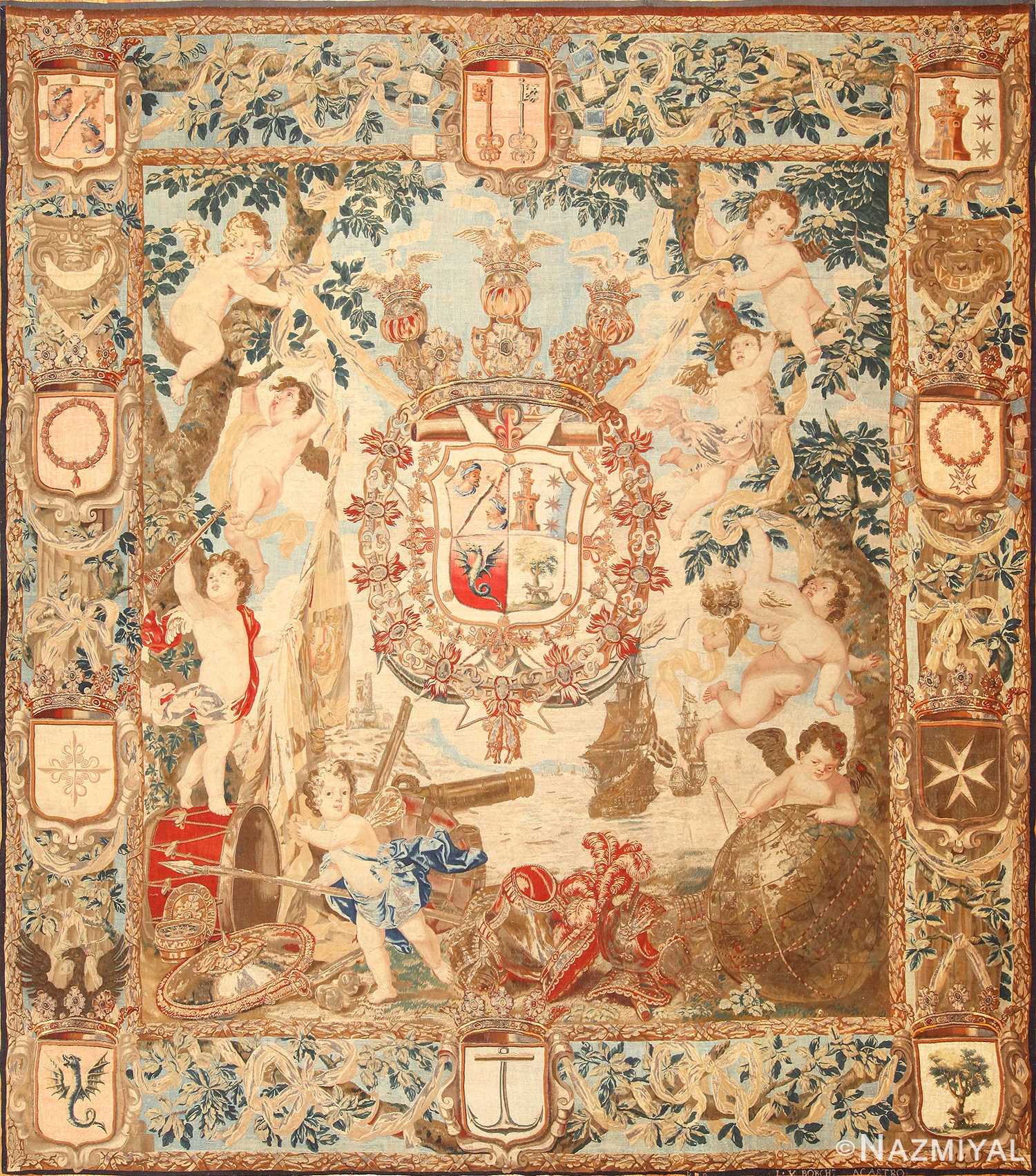


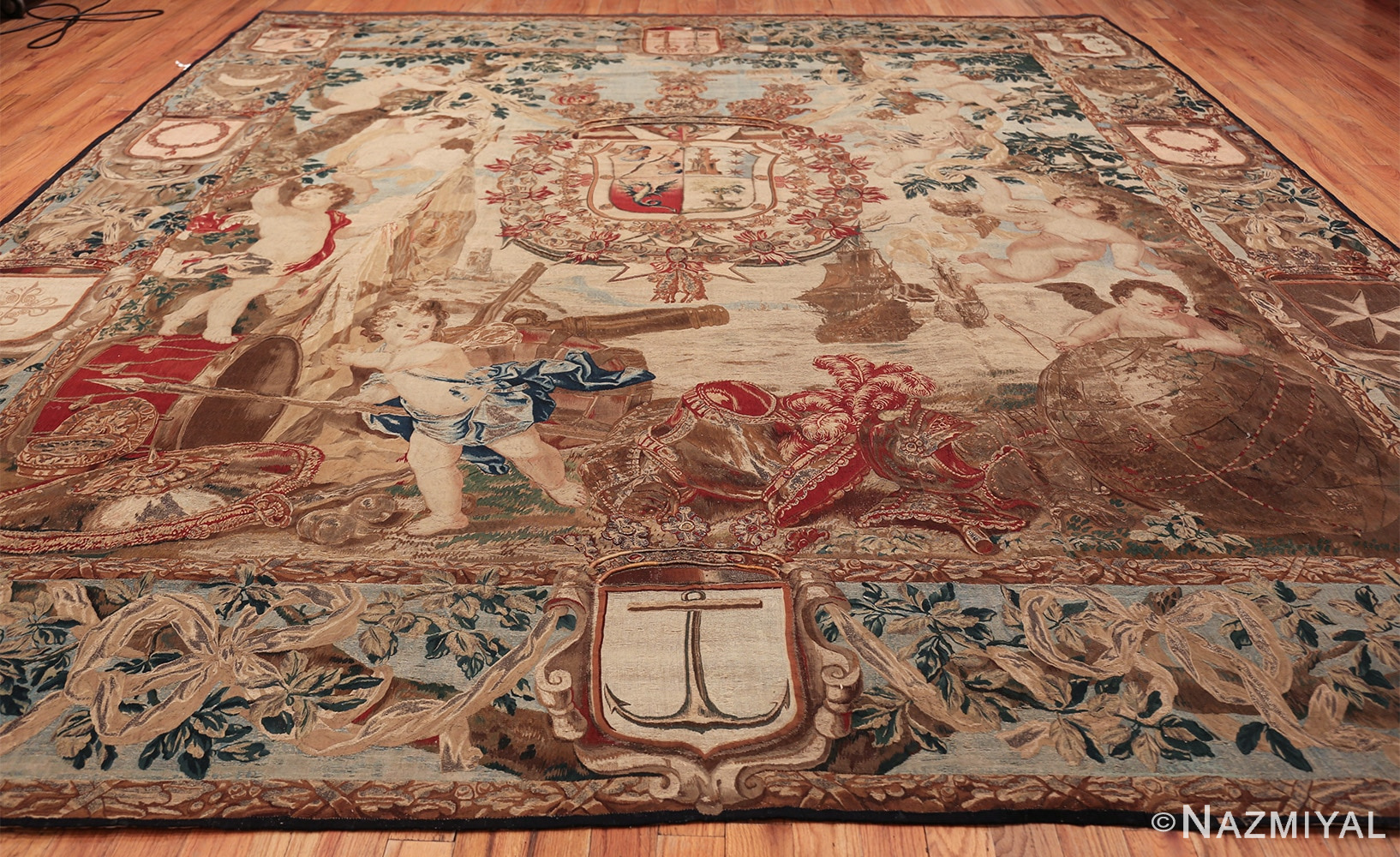




Here we see an antique heraldic Flemish wall hanging woven in the Baroque style. Created in Brussels by a renowned tapestry maker, this piece was most likely one of many in a series in which the other textiles were unfortunately lost to time. The importance of this piece cannot be understated, cited in three important bibliographical texts specializing in antique tapestries.
Though this is a Flemish made tapestry, the region at the time was under Spanish rule. This particular textile was most likely a commissioned piece by someone of high importance in Spanish society. It’s meant to embody the splendor of this Spanish family lineage, documenting important heretical crests traced down to what their present was.
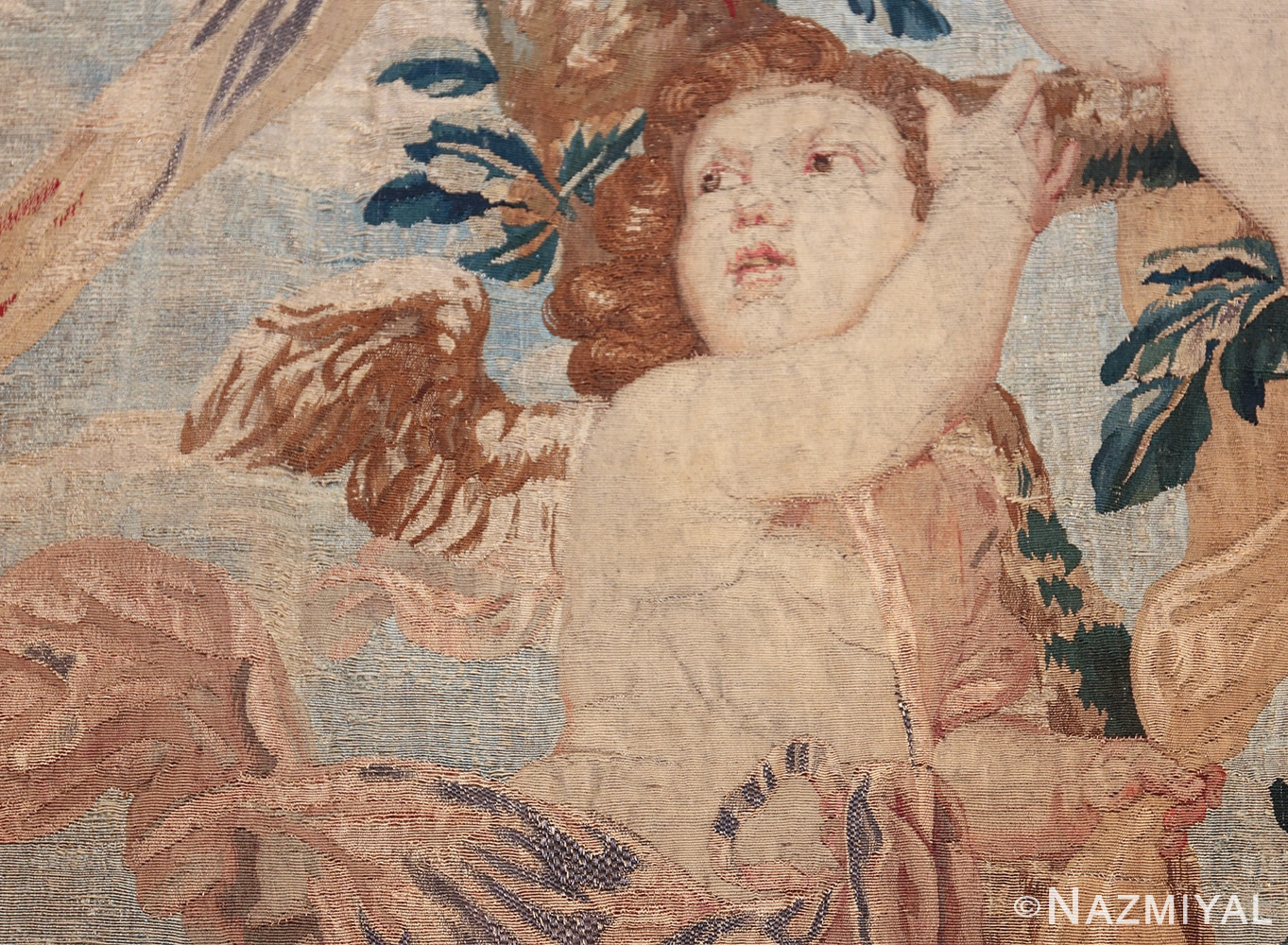
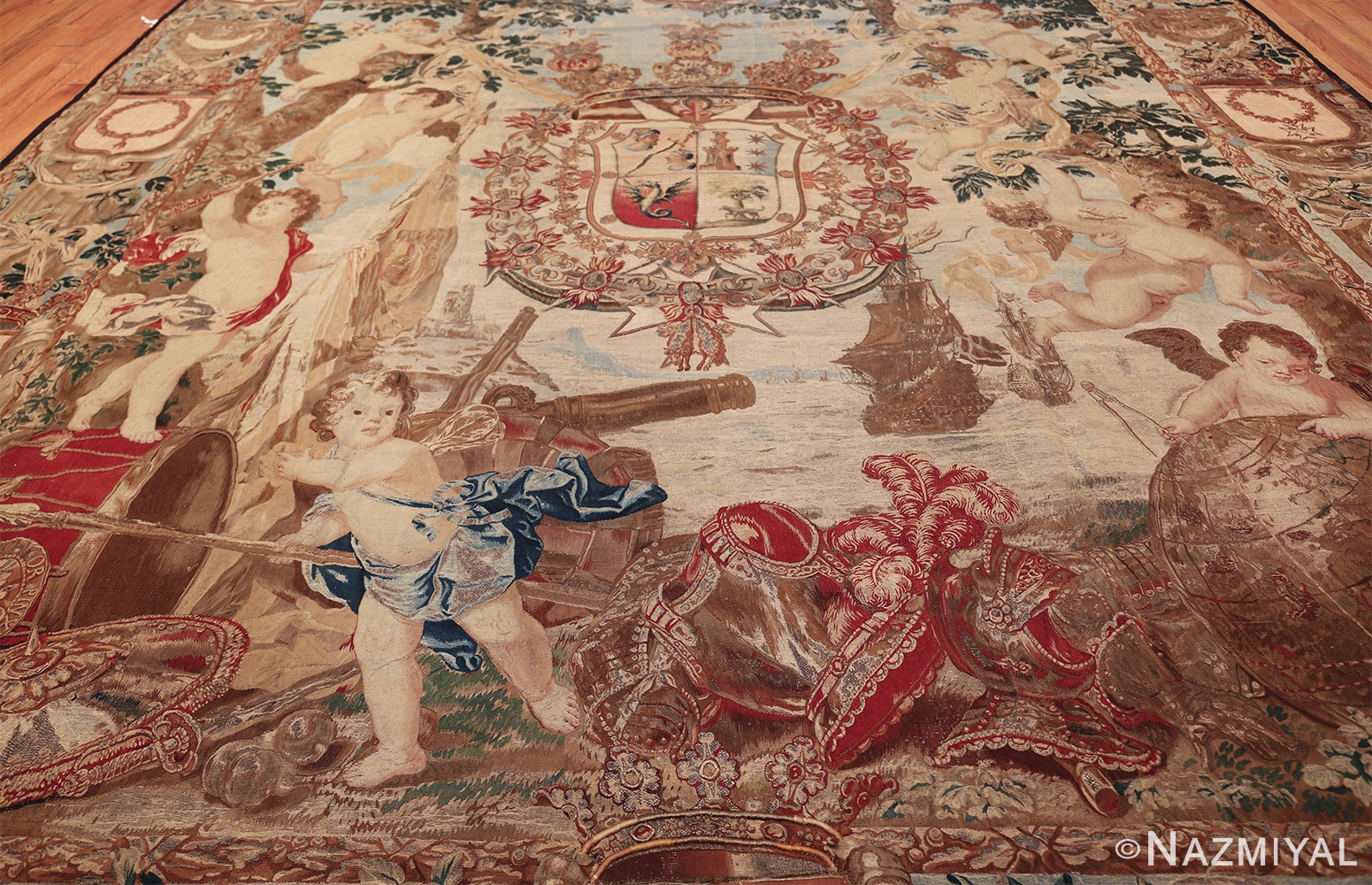
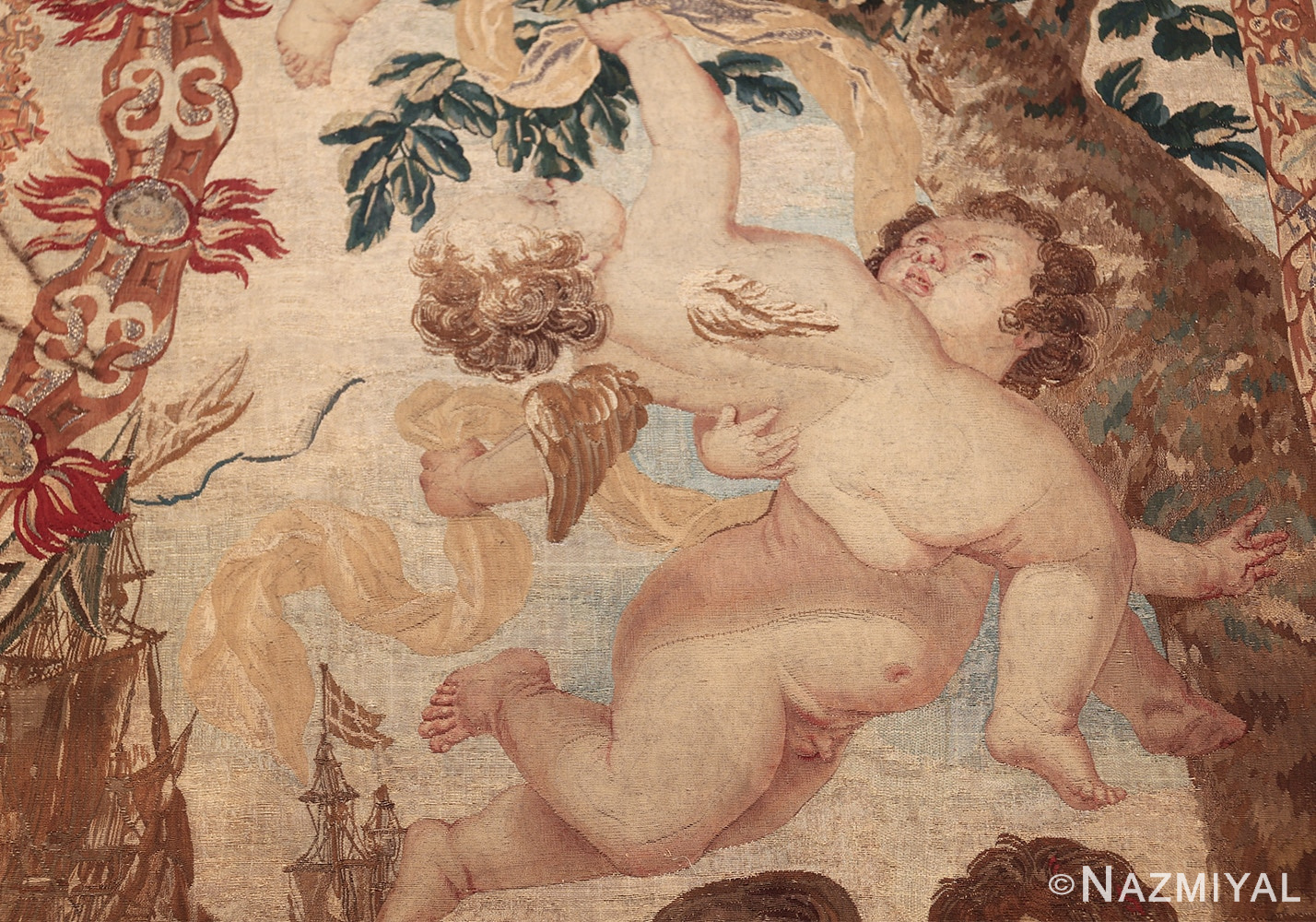
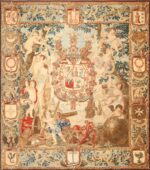
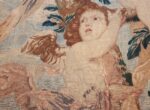
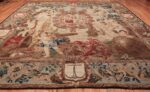
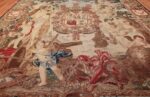
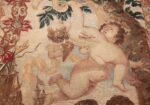
The piece itself is composed of nine different putti, or winged cherub figures surrounding a central emblem. Its background is a seascape, with large sailing ships in the distance. The foreground makes up the shore, where washed up treasures sit. The border is made up of ten crests each different and surrounded by botanical and gold coronal structures. On either side, two composite columns stand tall at the textile’s trim. The dense and dynamic composition of the tapestry encompasses the dramatic style of Baroque art.
An Heirloom Flemish Tapestry
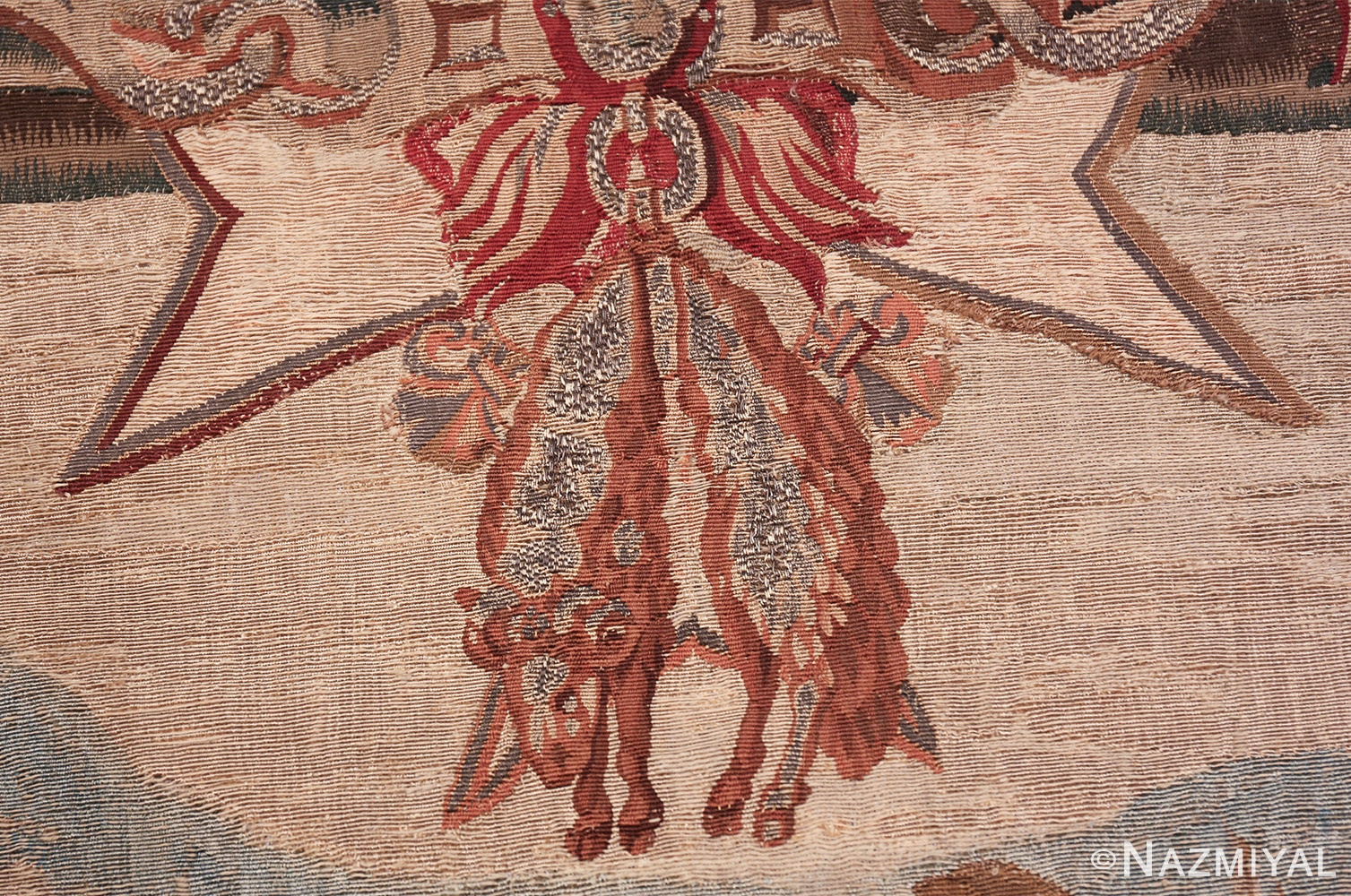
The center piece of this Flemish tapestry was previously subject to restoration, as the chain was the only part of the emblem that is fully intact. Upon examination, however, it is revealed that these substitutions of the emblem are almost as antique as the tapestry itself. The expert way in which its center was rewoven can be attributed most likely to this textile being passed down through generations, undergoing modifications to the heraldic symbol with each new owner.
The Golden Fleece
The heraldic emblem at the center of the piece most likely belonged to a Grand Admiral of Spain. The surrounding embellishment of the center crest is the gold chain of the Order of the Golden Fleece. This was a Catholic order of chivalry founded in the 1400s by a Duke of Burgundy. Though its origins are from the Flemish region of Belgium, it inspired two other Golden Fleece branches in Spain and Austria. The Spanish branch particularly, became one of the most prestigious orders of chivalry in history.
The Golden Fleece is a reference to the Greek epic “Jason and the Argonauts”. The original tale details the adventures of the hero, Jason, and his quest to find a legendary golden fleece. It’s a story about heroism and overcoming the impossible, with godly interference, sorcery, and royal politics. The Pagan origins of the story were somewhat controversial for the Flemish Catholic order. This was especially true, since Jason is not a perfect protagonist, having to lie and “cheat” his way into victory. To avoid any contention, a bishop instead attributed the fleece to a Biblical story, referring to the “fleece of Gideon” from the Book of Judges.
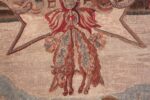
As a badge of chivalry, the order is symbolized through a golden chain with the figure of a hanging sheep and its fleece towards the bottom. The order was very exclusive. High-ranking members of the royal family were the only ones eligible, with special exceptions made to important religious authorities. In the tapestry, the gold chain is combined with chainlinks also seen in the Holy Ghost pendant, further supporting the idea that the subject of the piece is a grand and pious figure.
The Center Crest
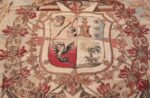
The middle escutcheon is divided into four quarters, each with a distinct image. The top left is one of two crowned heads facing each other on a pink background. A sword gripped by a hand separates them. The top right quarter is a tower with three stars stacked vertically on the right against a light blue background. On the bottom left is a wyvern, a kind of mythical dragon-like beast, on a red background. Finally, on the bottom right is a tree with a canine against a silver background.
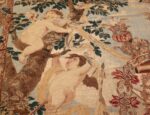
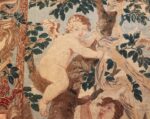
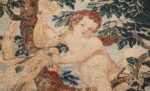
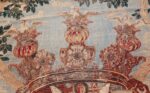
The escutcheon itself is depicted against an anchor, the emblem of an Admiral, and to an eight-pointed star, a symbol of the Order of the Knights of Malta. Atop the emblem rests a crown with three highly decorative points, each with a perched bird. The birds all have their wings spread and a title banner attached with a different inscription in each one. The text reads SPES, FIDES, and CARITAS, respectively, a Latin phrase that translates to “faith, hope, and charity”. The overall center crest is hung by ribbons held up by two cherubs sat on tree branches on either side.
Military Glory and Marine Ventures
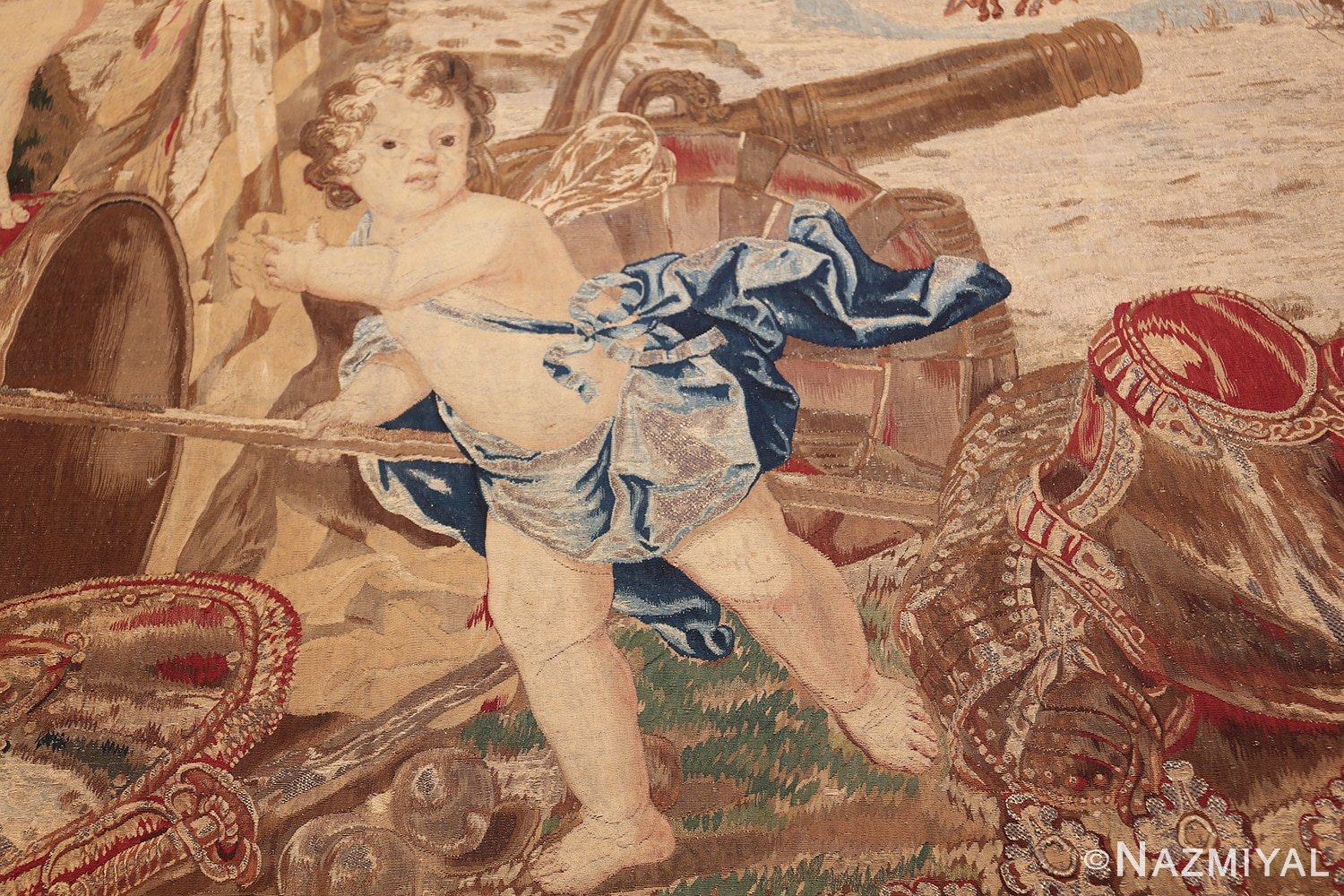
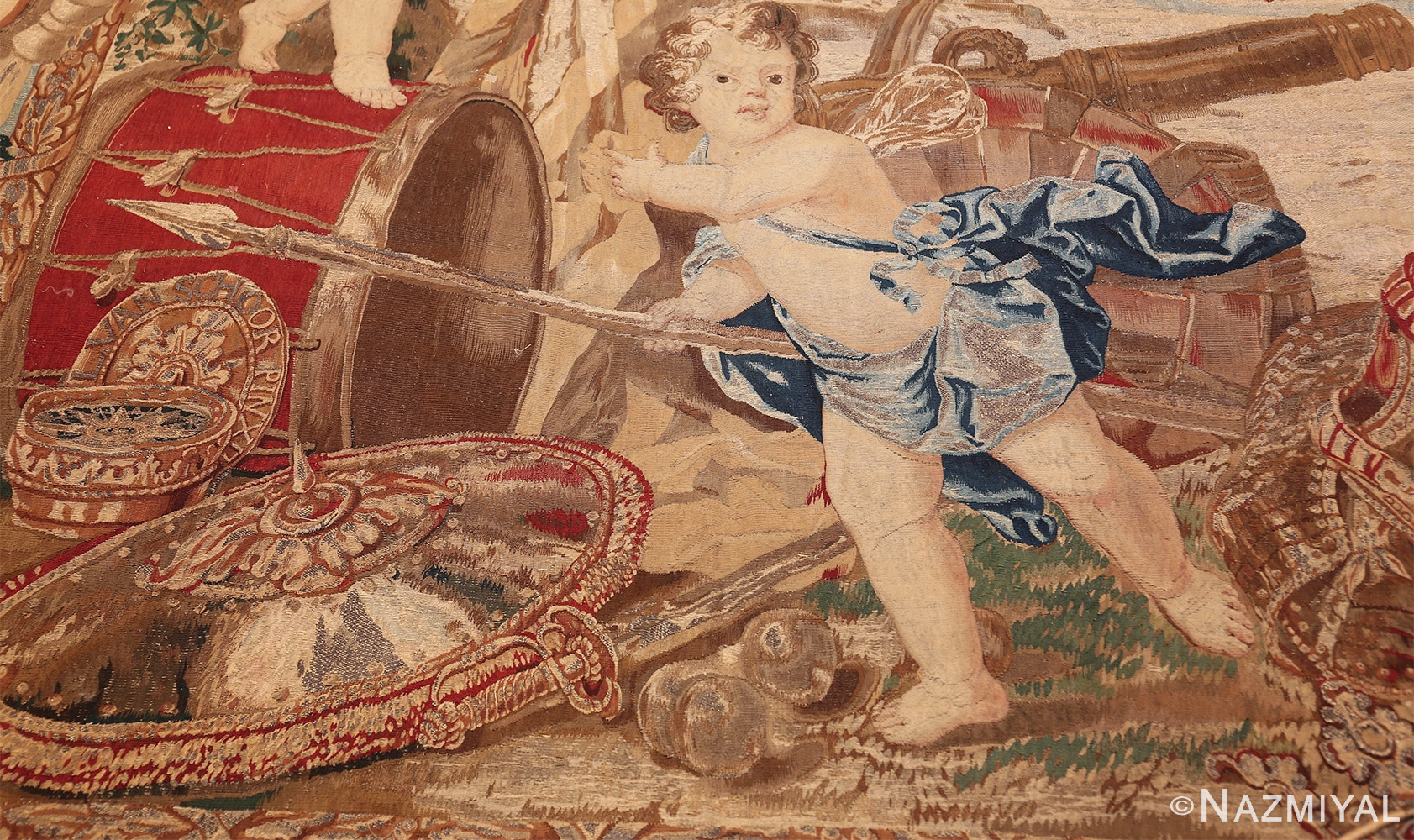
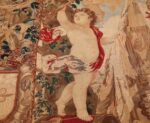
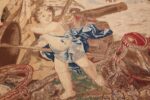
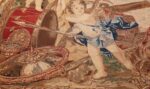
Towards the bottom of the scene, along the shore are three cherubs amongst the spoils of a successful maritime venture. On the bottom left, the child figure is cloaked in red and standing on a drum. In his hands are a flag, lofted high and proud, and a military bugle. A little to his right is another child figure, this one donning a blue cloak. This cherub is holding a lance pointed to his left, the direction in which his body language suggests he’s headed. On the ground on either side of him is evidence of a military expedition. This is represented through a sword, shield, and suit of armor, complete with a feathered helmet.
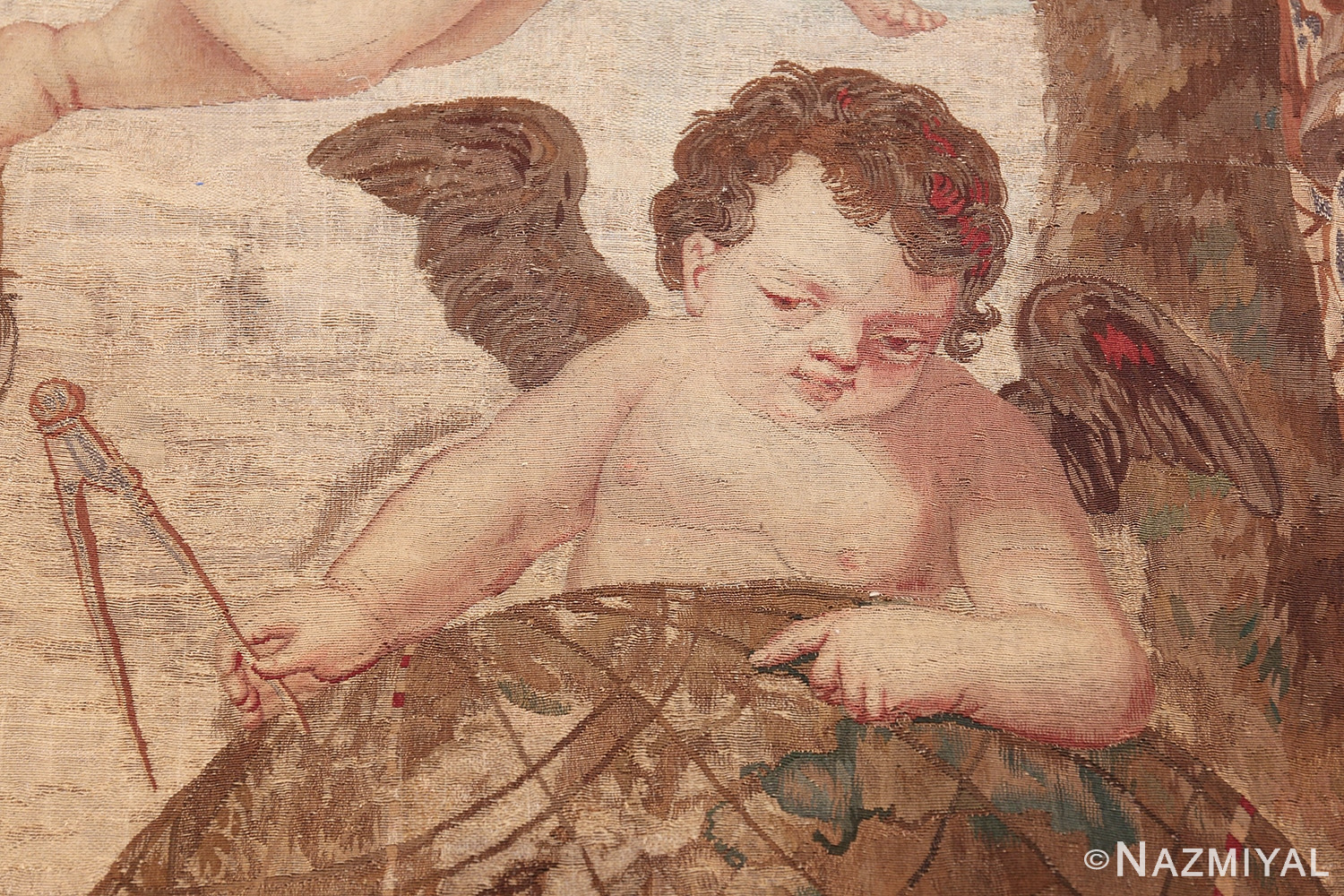
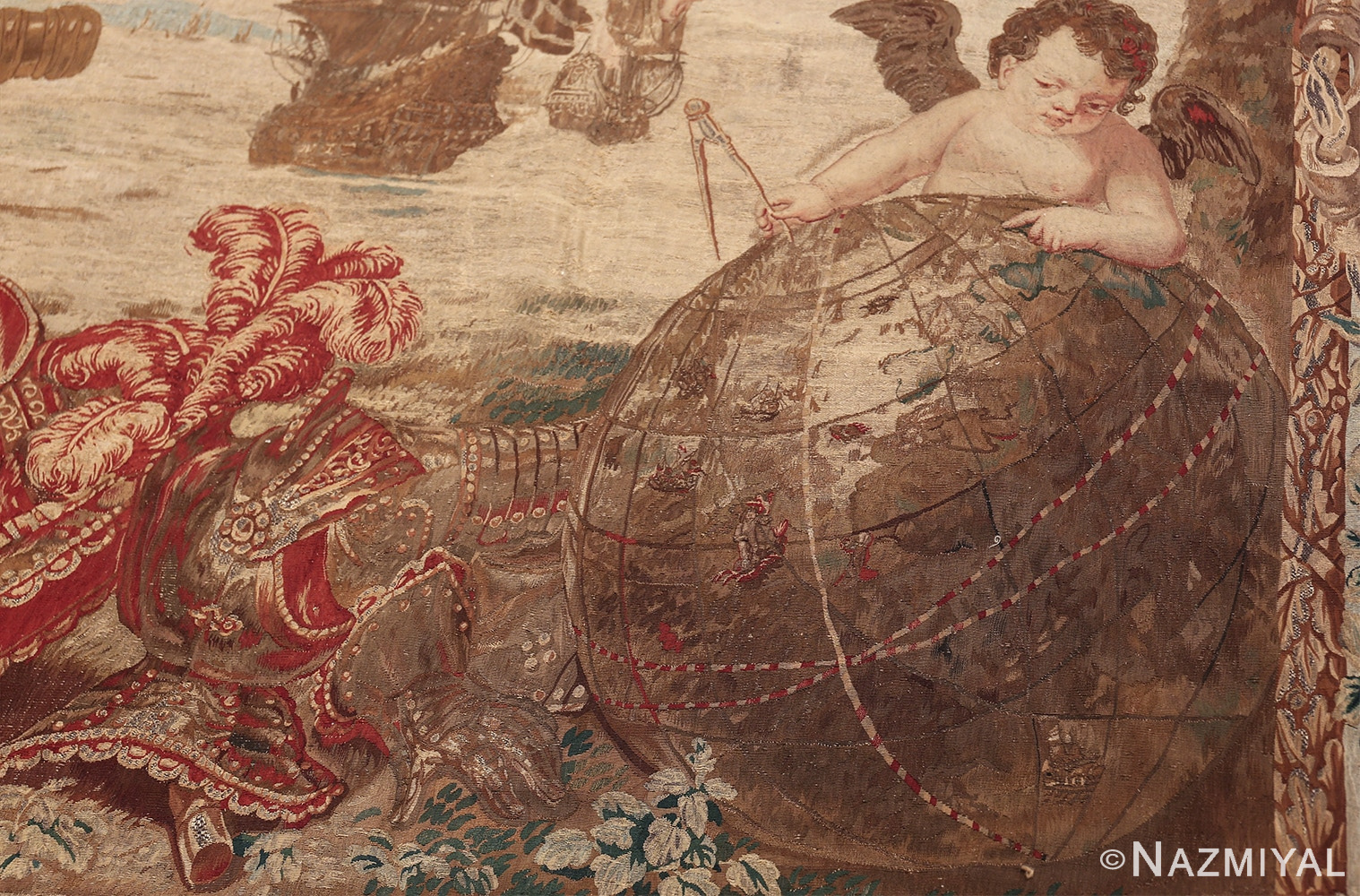
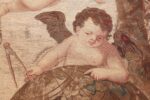
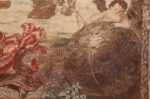
The final child figure on the lower right corner measures directions on a large globe, the Atlantic Ocean between Europe and the Americas on prominent display. The seascape background is important not just in its indication of marine ventures, but also in its geography. It includes a landscape as well, three mountainous coasts encircling the sea where the sailing ships reside.
What we can derive from the depicted scene is that the crest belonged to someone with either close ties or direct involvement in a Spanish expedition towards the “New World” colonies. The bugle, flag, weapons, and armor pieces suggest military glory and victory in battle.
Symbolism in the Border
The border of the Flemish tapestry is equally packed with symbolism. The flanking columns are decorated with ribbons and foliage. Towards their tops are etched words that together say PLUS ULTA, a Latin phrase meaning “further beyond”. The national motto of Spain, adopted by Emperor Charles V in the 16th century, the phrase’s origins are rooted in Ancient Greece. It was supposedly inscribed in the famed Pillars of Hercules, two mountains overlooking the Strait of Gibraltar. It was meant to represent the Spanish empire’s power and expansion across the Atlantic.
The four corner crests along the border directly relate to the four quarters of the central shield. The second crest from the top on the left side contains the previously mentioned Order of the Golden Fleece chain, this time against a plain background. The border crest parallel to the Fleece emblem also has a collar chain, that of The Holy Ghost. Below both are crests each with a different cross depicted. On the left, a lilied cross resembling the insignia of the Order of Knights of Calatrava. The right cross emblem is the insignia of the Order of the Knights of Malta.
Then finally, the top and bottom border emblems. On the bottom, an anchor, another reference to nautical ties, likely implying the position of Admiral. And at the top, a pair of keys, one gold and one silver. The keys suggest one of the owners of the tapestry was likely entrusted with an important task, possibly related to finances.
The Order of the Knights
The Order of the Knights of Malta is a Catholic religious order founded in 1048. They are still an active organization today, though they are now known as the Sovereign Military Order of Malta. The group was founded through the establishment of a hospital in Jerusalem. Their mission was to care for pilgrims of any religious faith, and was so successful they were eventually officially recognized as a monastic community in the 1110s. Moreover, they were an organization dedicated to chivalry, historically exclusive to those born of noble class.
The Order of the Knights of Calatrava were a similarly religious order, though these were more militaristic. Calatrava refers to a historic Spanish castle that this knighthood was founded to protect. This order was not so much an altruistic one, but instead had important political ties during the Christian reconquest of the Iberian Peninsula in 1158.
Both orders are heavily referenced in this tapestry, suggesting the owner(s) were religious men proud of their Spanish heritage.
Flemish Tapestry to Spanish Ownership
Unfortunately, neither first nor second owner of this piece has been identified, though we can assume certain conclusions based on context. We can conclude the first buyer commissioned the piece in the late 1600s. They were likely a Spanish noble, involved in the Army and the Navy. Also probable is their affiliation to the Order of the Golden Fleece, as well as a lineage that traces back to Pizarro de las Charcas, a Spanish conquistador from the early 1500s.
The second owner seemed to be particularly accomplished. Accolades from the Order of the Knights of Calatrava, and Malta, in addition to that of the Golden Fleece all seem to be from the second owner. This owner most likely came into possession of the tapestry around 1700, where they then personalized it.
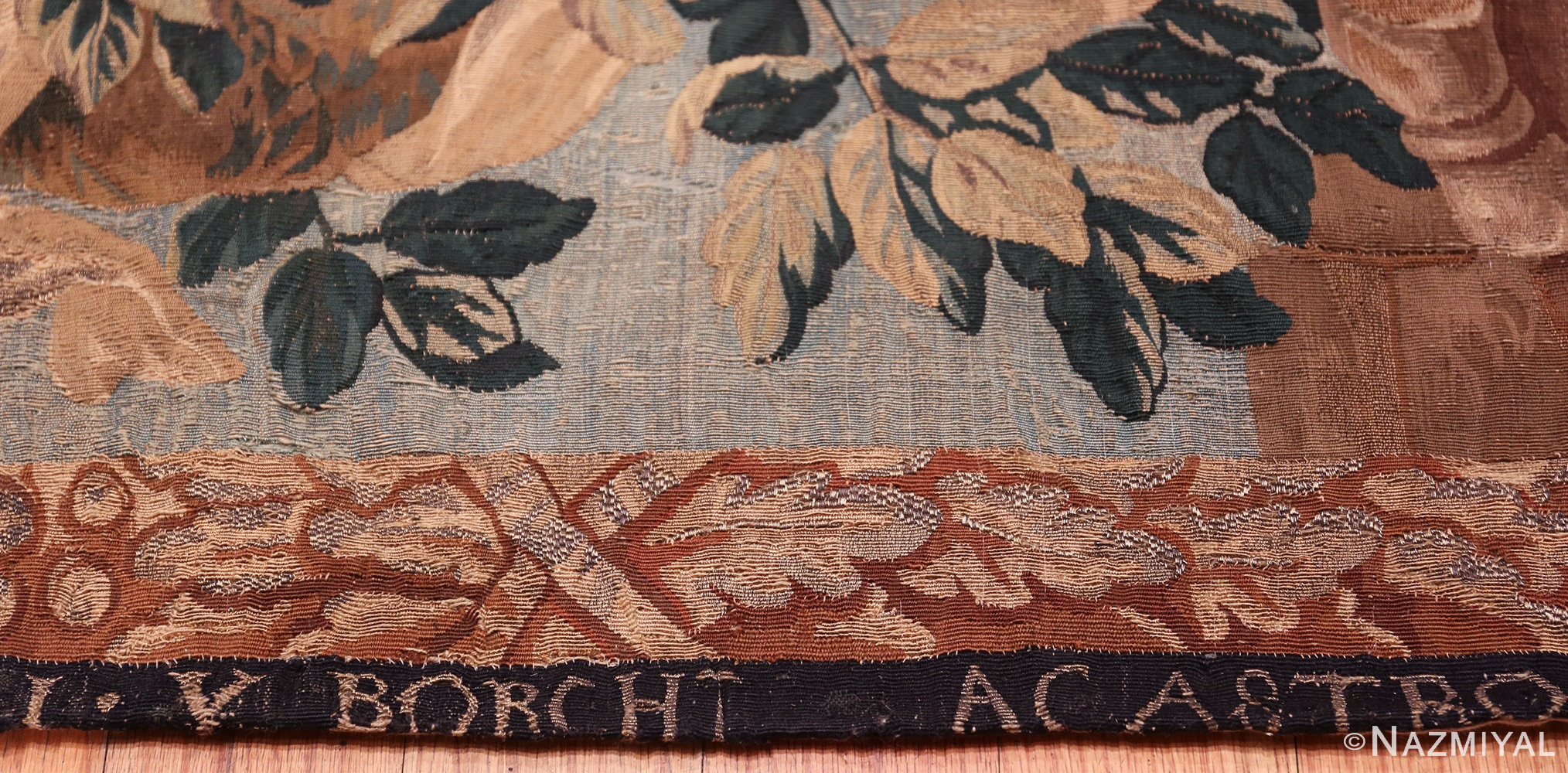
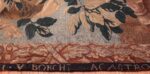
Each emblem on this Flemish tapestry signifies a title or guild, making it difficult to pinpoint family. Though its splendor obviously indicates someone of a noble class, it is not yet known which family specifically. We can see, however, an artist signature towards the bottom reading “I.V. BORCHT A CASTRO”. This signature is one found on several highly valuable works, indicating a highly sought after artist was behind it. There’s been plenty of speculation around who this could be, though no solid conclusion has been reached.
According to Belgian historian Alphonse Wauters, this tapestry is the work of a 17th century Flemish artist by the name of Jacques van der Borcht. German academic Heinrich Göbel made the argument that this was instead created by Brussels tapestry maker Gaspard van der Borcht, and woven in 1685.
The Construction Behind the Flemish Tapestry
The wealth and status of the owners of this tapestry were not only apparent in the depicted scenes and emblems, but also in its construction. Material-wise, this is a piece of extreme luxury. It’s made with a partially wool and silk weft, requiring copious amounts of this once very precious and expensive fabric. Beside the silk, the luminous quality of the tapestry is achieved through the use of legitimate silver and gold.
The skill needed to create such a textile speaks to the no doubt hefty commission paid to the artist. Apart from its exceptional size, the level of detail and depth perception achieved is unprecedented. This particular style of tapestry making involves a predetermined “pattern” or design, by way of painting. This template means that the involvement of a highly skilled painter was also necessary for its production. Most likely, this was the work of prolific pattern creator David III Taniers.