
Explore Rug Origins Worldwide — Region Guide, Identification Tips & Origin Index
If you ask most seasoned rug people what to look at first, they’ll tell you the same thing: origin. Not because borders define beauty—but because each weaving tradition leaves a fingerprint in structure, materials, and “drawing.”
This hub organizes antique rugs by country and region of origin so you can shop the way collectors and designers actually think—by weaving family. And because this is Nazmiyal, you can always widen your search into our core collections—Antique Rugs, Vintage Rugs, and Modern Rugs—once you’ve found the “voice” you like.
Rug origin is the geographic weaving tradition a rug comes from—best verified by structure (knotting, foundation, wefts) alongside design—often the most useful clue for authenticity, value, and how a rug will feel in a room.



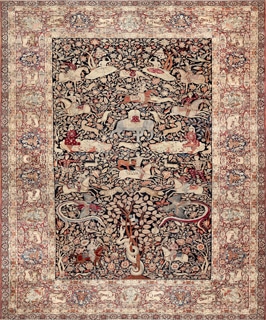
Quick Navigation
- Top Origins in 60 Seconds (Start Here)
- Browse Rug Origins (Full Index)
- Browse by City (International Hub)
- How Experts Identify Rug Origin
- Rug Origins vs Rug Types
- FAQ
Top Origins in 60 Seconds
Not sure where to begin? These are the origin “families” clients ask for most often:
- Persia
Classic drawing, deep design vocabulary, and incredible range—from tribal power to court refinement. - Turkey
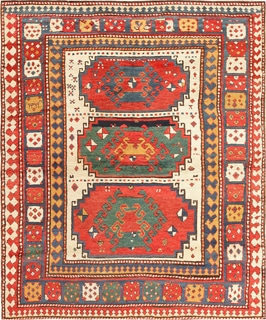
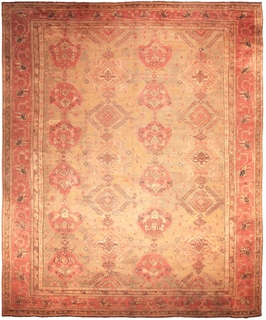
Village geometry and decorative Oushak scale—warm palettes, strong presence, and easy livability. - Caucasus
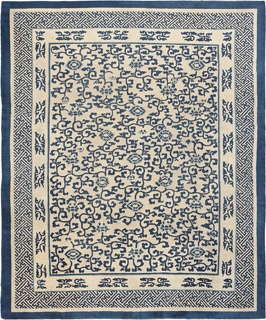
Bold, graphic patterning that reads “architectural” in modern rooms—especially great for statement pieces. - China
Elegant restraint, balanced compositions, and a calm decorative rhythm that designers love. - India (Antique / Workshop)
Spacious drawing and workshop refinement—often influenced by Persian design language, but with its own scale and hand. - Morocco
Texture and graphic simplicity—perfect when you want warmth, depth, and a modern edge. - Scandinavian
Modernist clarity on wool: clean forms, smart color, and high day-to-day usability. - Central Asia
Tribal heritage, repeating motifs, and strong cultural identity—often with a bold “pattern energy.” - France
Aubusson and Savonnerie traditions bring classical elegance and an unmistakably decorative European voice. - Tibet
Distinctive handle and wool character, bridging classic and contemporary interiors beautifully.
If you want geography-first browsing beyond origin lists, our Worldwide Rugs (Countries & Cities) hub is the master map for international clients and projects.
Browse Rug Origins
Explore every origin currently organized on this hub:
- Afghanistan
- Africa
- America
- Balkans
- Belgium
- Caucasus
- Central Asia
- China
- Colombia
- Dagestan
- East Turkestan
- Ecuador
- Egypt
- England
- Europe
- France
- India – Antique
- India – New
- Ireland
- Israel
- Italy
- Laos
- Mongolia
- Morocco
- Nepal
- Norway
- Pakistan
- Persia
- Peru
- Portugal
- Romania
- Scandinavian
- Spain
- Syria
- Tibet
- Turkey – Antique
- Turkey – New
- Ukraine
- Uzbekistan
- West Turkestan
Browse by City (International Hub)
Working on a project in a specific market? Use the city pages inside our Worldwide Rugs (Countries & Cities) hub to shop with local architecture and lifestyle in mind:
If you’re sourcing for multiple properties or a hospitality project, start with Worldwide, then filter by origin here.
How Experts Identify Rug Origin
Design is helpful—but it’s not the final judge. Patterns travel: workshops borrow, regions imitate, and popular motifs migrate. What usually tells the truth is the build.
The “Flip It Over” Checklist
When we determine origin, we look at:
- Knot type (symmetrical vs asymmetrical) and how it’s tied
- Foundation (warp/weft materials: wool, cotton, silk)
- Wefting (color, thickness, ply, and spacing)
- Handle & density (tightness and how the rug flexes)
- Dye behavior (especially older palettes and how they age)
- Design language (drawing style, border logic, and motif grammar)
If you want help evaluating a piece you own—or you’re sourcing for a project—our Area Rug Services team can guide next steps with the same clarity we bring to our core Antique Rugs collection.
Rug Origins vs Rug Types
Rug Origins vs Rug Types (Closest Cousin Module)
Rug Origins (this page):
- Best when you care about weaving tradition, heritage, and structure
- Helps narrow choices by how a rug is built (not only how it looks)
Rug Types / Styles:
- Best when you care about format and design family (Oushak, Art Deco, Savonnerie, Gabbeh, etc.)
- Helps you shop by visual style, even when multiple regions make similar designs
Browse the style-first directory here: Types of Rugs & Antique Carpet Styles.
Frequently Asked Questions
Is “Persia” the same as “Iran” in rug terms?
“Persian rugs” is the traditional category name tied to Iran’s weaving heritage and its historic production centers. It’s also the most widely recognized term in the market.
Why do some designs appear in more than one country?
Because designs travel—through trade, migration, workshop influence, and simple popularity. Structure (knots, foundation, wefting) is often more reliable than pattern alone.
What’s the quickest way to tell where a rug is from?
Flip it over. The back reveals the weaving “handwriting” that the front can disguise.
Do collectors actually shop by origin?
All the time. Origin correlates with structure, palette tendencies, and how a rug “reads” in a room—so it’s one of the fastest filters.
Nazmiyal White-Glove Service
- Authenticity Guarantee
- 3-Day Return / Money-Back Policy
- Worldwide Shipping & International Home Approval
- Designer Trade Program
- White-Glove Delivery
- Purchase Policy
Whether you’re comparing origins for a collection or sourcing for a project, our team can help you confirm structure, attribution details, and the right placement.
Explore Nazmiyal Collection
For decades, clients have relied on Nazmiyal for guidance on identifying, valuing, and collecting rugs by origin—pieces chosen for design impact, documentation, and lasting value.