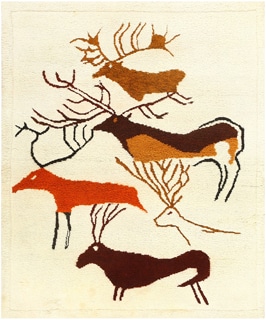
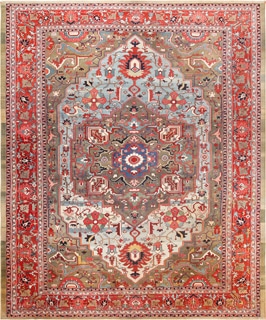
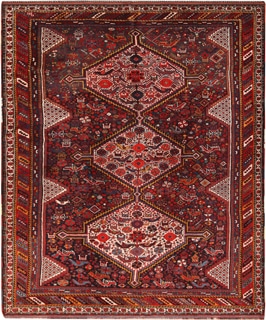
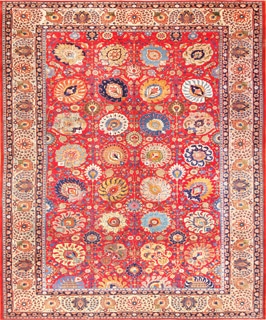
Authentic Handwoven Antique Rugs from the World’s Great Weaving Traditions
Antique rugs are among the most significant surviving examples of traditional craft, woven more than 80 years ago across Persia, Anatolia, the Caucasus, China, India, and Europe using natural fibers and hand-mixed dyes. Nazmiyal Collection has been sourcing and selling antique rugs for over four decades, building one of the largest collections spanning every major weaving tradition from 17th-century Safavid Persian masterpieces to Caucasian tribal rugs and decorative Oushak weavings.
As Jason Nazmiyal notes: “An antique rug is not just old, it is the surviving record of a weaving tradition and regional aesthetic. That is what gives them their staying power in great interiors.”
Reviewed by Jason Nazmiyal, Founder, Nazmiyal Collection, 44 years in the antique rug trade.
Handwoven; primarily hand-knotted, with some flatwoven examples
Materials
Handspun wool, silk, cotton foundations
Dyes
Natural vegetable and mineral dyes, producing tonal variation and patina over time
Primary Regions
Persia (Iran), Turkey (Anatolia), Caucasus, China, India, Europe
Design Types
Workshop, village, and tribal traditions, each with distinct design languages
Typical Uses
Decorative interiors, collecting, historic and architectural settings
The Ultimate Guide to Antique Rugs
Antique rugs are historical textiles that combine craftsmanship, cultural identity, and material integrity. Unlike modern or decorative carpets, these rugs were woven within clearly defined regional traditions, using natural fibers and dyes, and intended for long-term use. Their value lies not only in age but in the survival of original structure, materials, and design language that cannot be sourced, manufactured, or reproduced today.
Across centuries, antique rugs served practical, ceremonial, and artistic roles. Some were commissioned in formal workshops for palaces and affluent households. Others were woven in village or nomadic settings for everyday life, carrying in their patterns the cultural memory of the people who made them. Today, these rugs are studied, collected, and used in interiors precisely because they preserve this layered history in physical form.
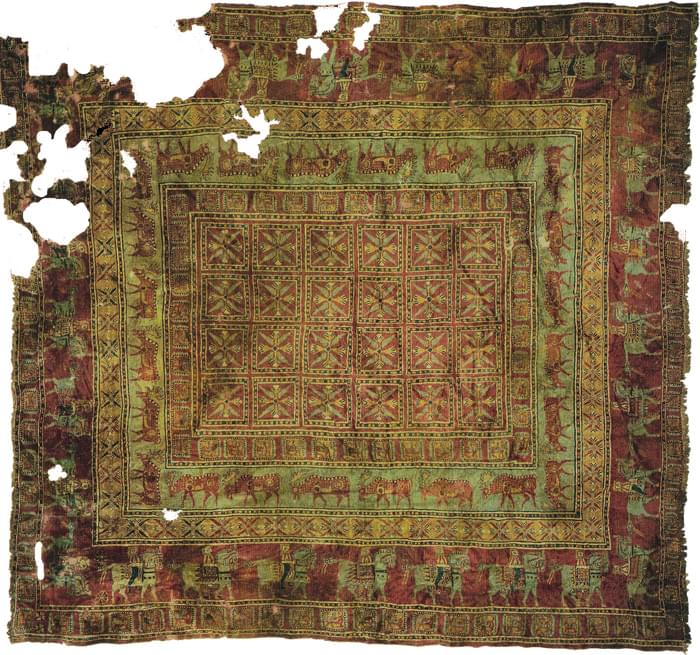
The Pazyryk Carpet, the world’s oldest known pile rug, dating to the 5th century BCE
Antique rugs represent one branch within a broader continuum that includes vintage rugs, modern rugs, and region-specific traditions explored through our rug origins and rug types collections.
How Antique Rugs Are Identified
Authenticating an antique rug requires evaluating multiple factors together. Age alone is not sufficient, a rug can be old but poorly preserved, heavily restored, or misattributed. Specialists examine materials, weaving structure, dyes, wear patterns, and regional consistency to determine whether a rug qualifies as genuinely antique and to establish its origin and approximate period.
Materials: Handspun wool, silk, and cotton foundations are standard in antique examples. Synthetic fibers indicate later production and disqualify a rug from the antique category.
Dyes: Natural vegetable and mineral dyes produce tonal variation and patina not found in modern chemical dyes. The way a rug’s colors have aged is one of the most reliable indicators of authenticity.
Weave & Structure: Knot type, density, selvedges, and foundation construction reveal regional technique and period. An experienced specialist can often identify origin from structure alone.
Design Language: Motifs and layouts must align with known historical traditions from the claimed region. Inconsistencies in design grammar are a common indicator of later reproduction.
Condition: Honest wear is expected and desirable in genuine antiques. Heavy restoration, reweaving, or repainting affects both classification and value and must be disclosed clearly.
Because these elements interact, proper identification is best handled by experienced specialists with direct knowledge of historic weaving traditions. Nazmiyal’s team has authenticated antique rugs from every major tradition for over four decades.
Major Regions and Weaving Traditions
Persian (Iranian) Antique Rugs
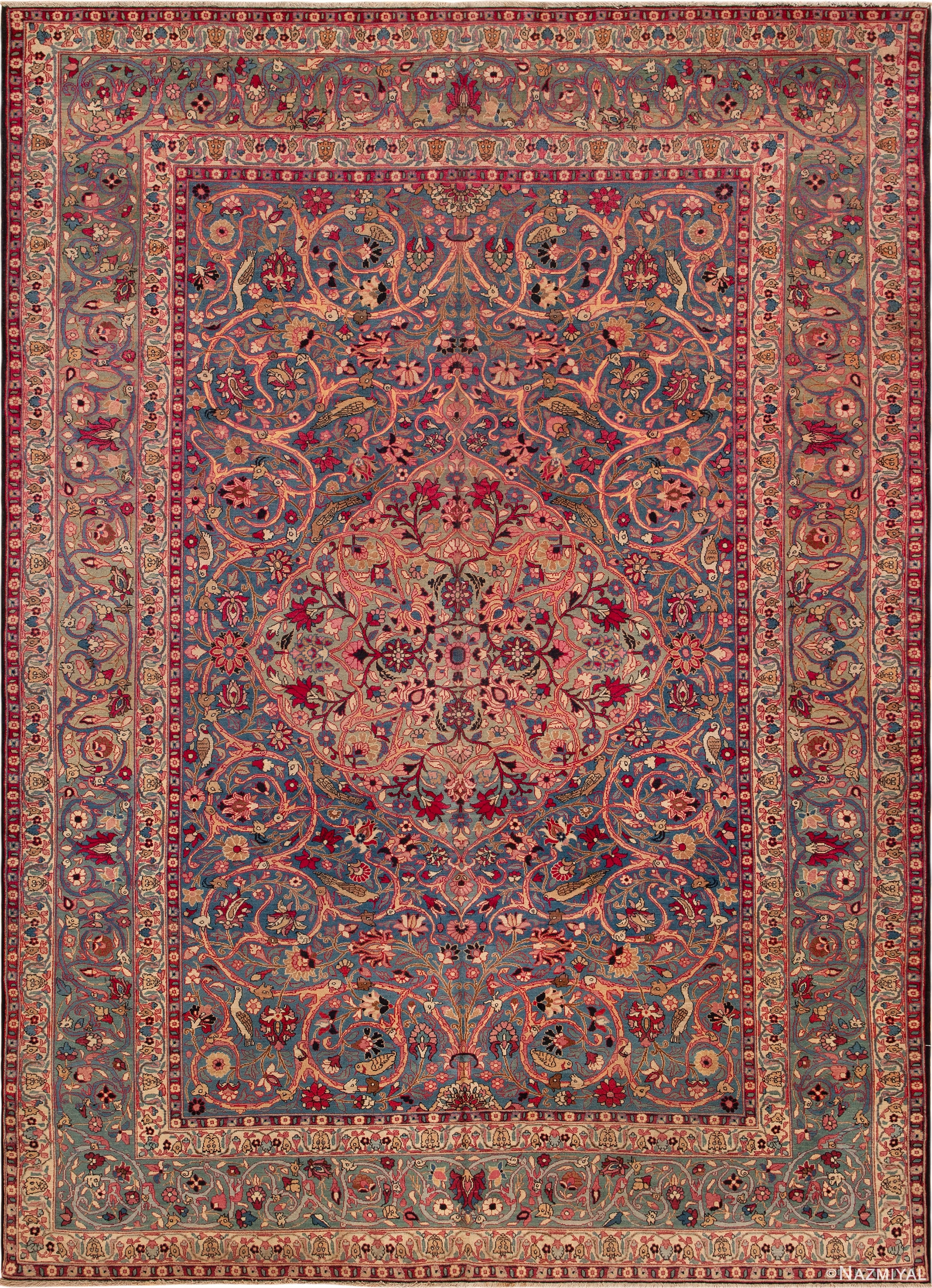
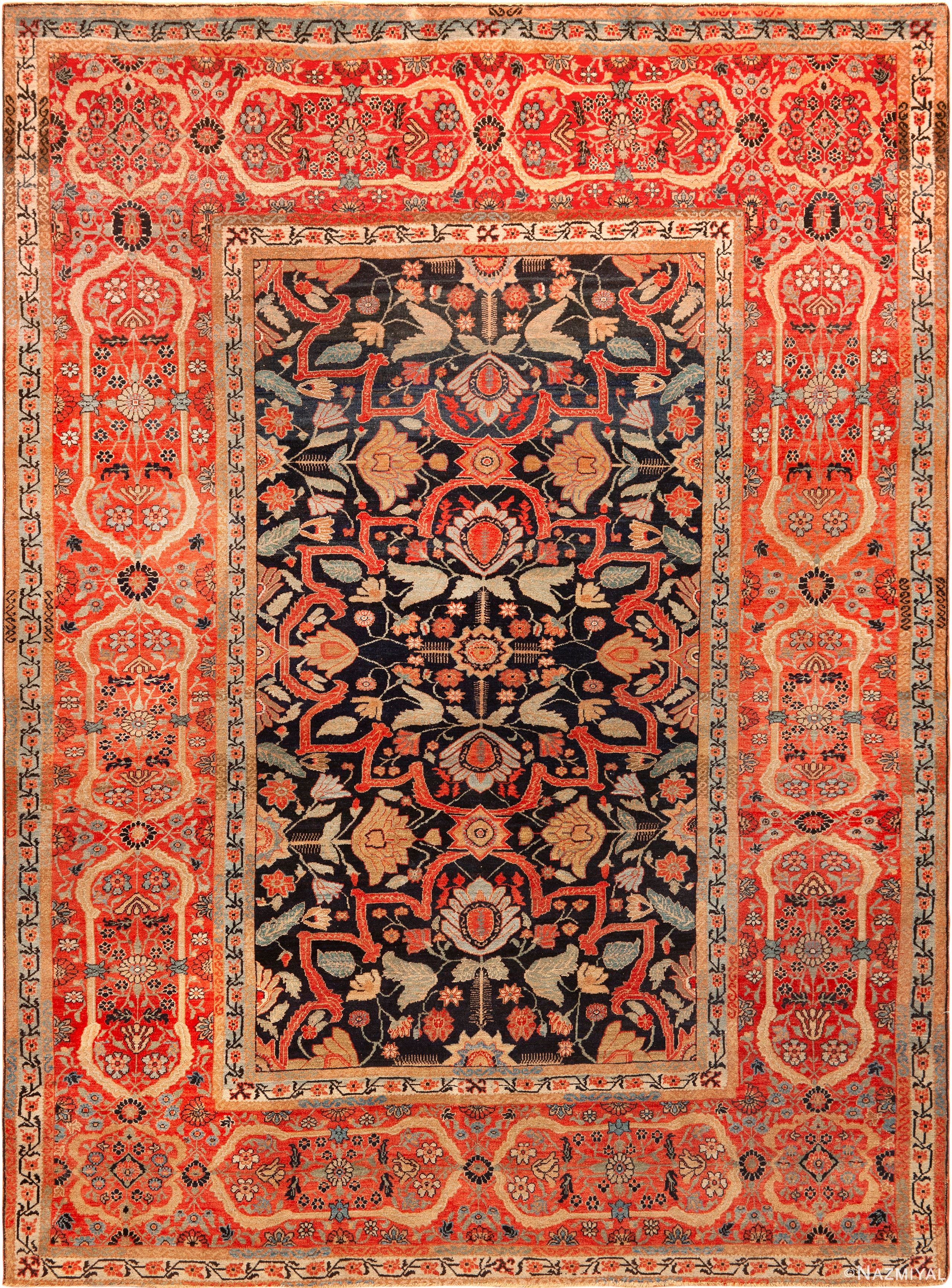
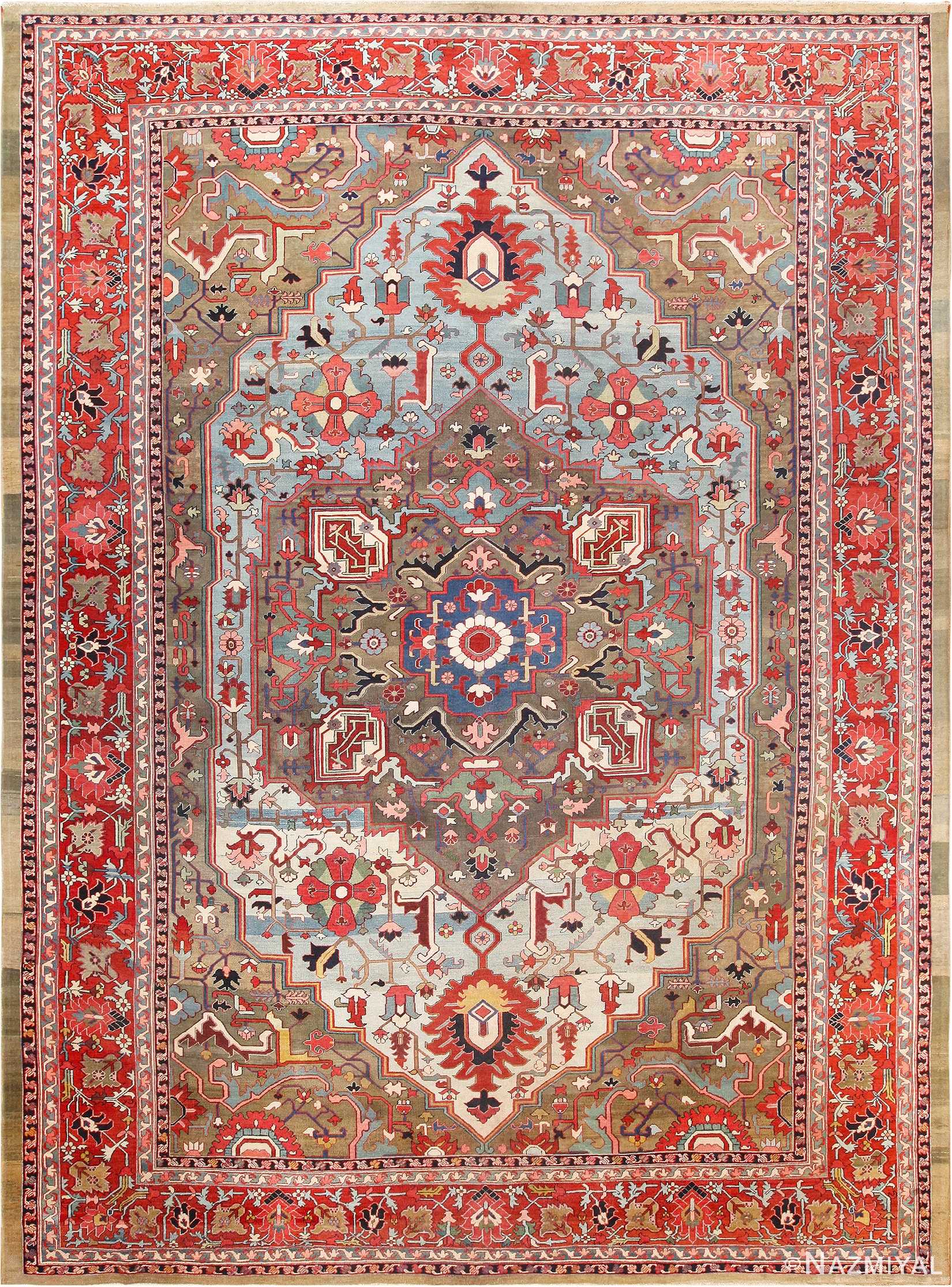
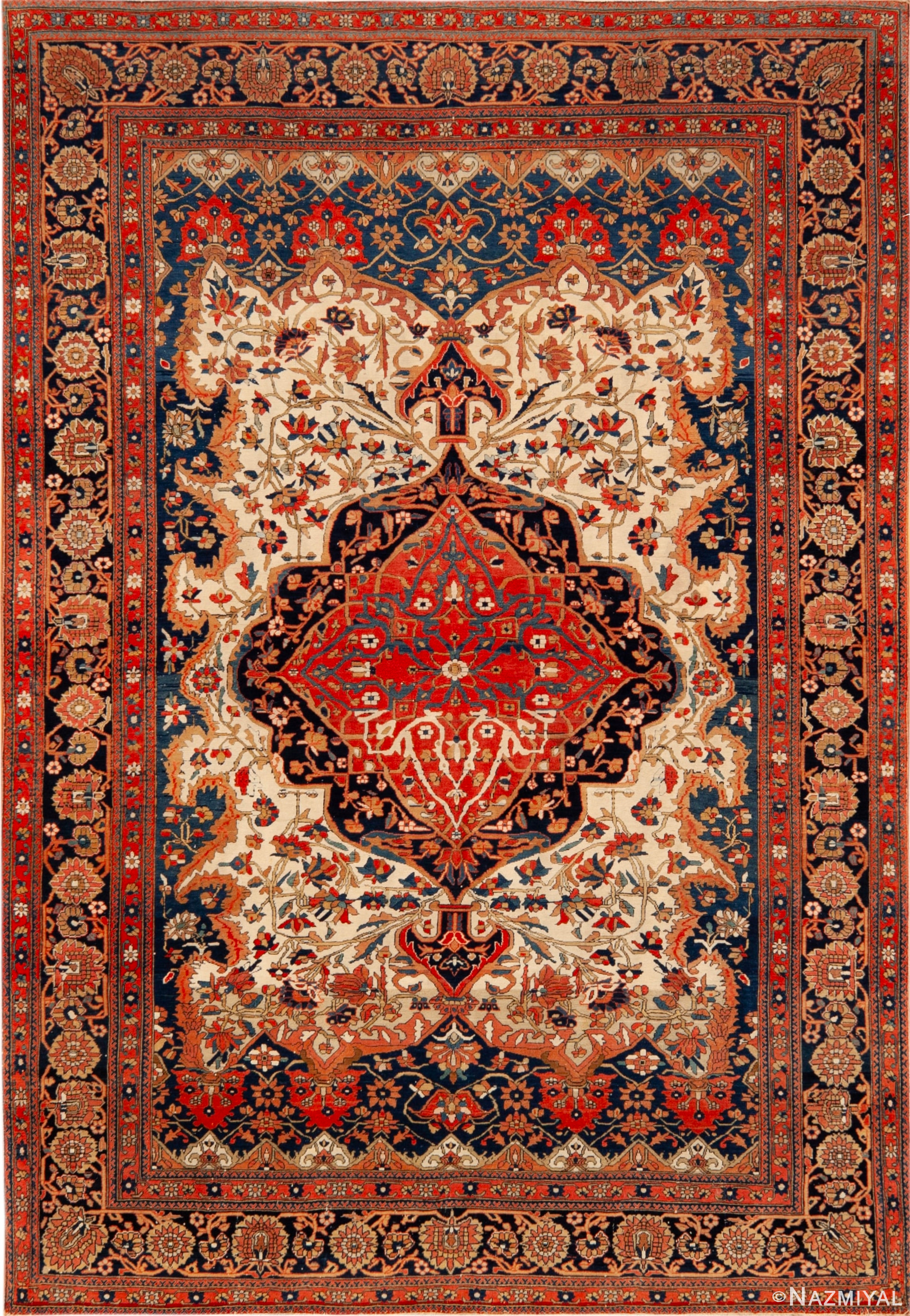
Persian antique rugs are among the most studied and collected in the world. Workshop centers such as Tabriz, Kashan, Isfahan, Kerman, and Sultanabad produced rugs with planned compositions, balanced proportions, and refined execution, often working from detailed design cartoons and using the finest available wool and silk. Tribal and village Persian rugs, including Qashqai, Bakhtiari, and Kurdish weavings, favor bolder forms and more spontaneous expression, woven from memory rather than formal blueprints.
As Rodolfo, Nazmiyal’s senior rug specialist with 45 years of hands-on experience, notes: “The breadth of Persian weaving is something buyers consistently underestimate. A Sultanabad and a Tabriz from the same decade can look so different that a non-specialist would never guess they came from the same country. Learning to read those regional differences is what separates a serious collector from someone who just buys by color.”
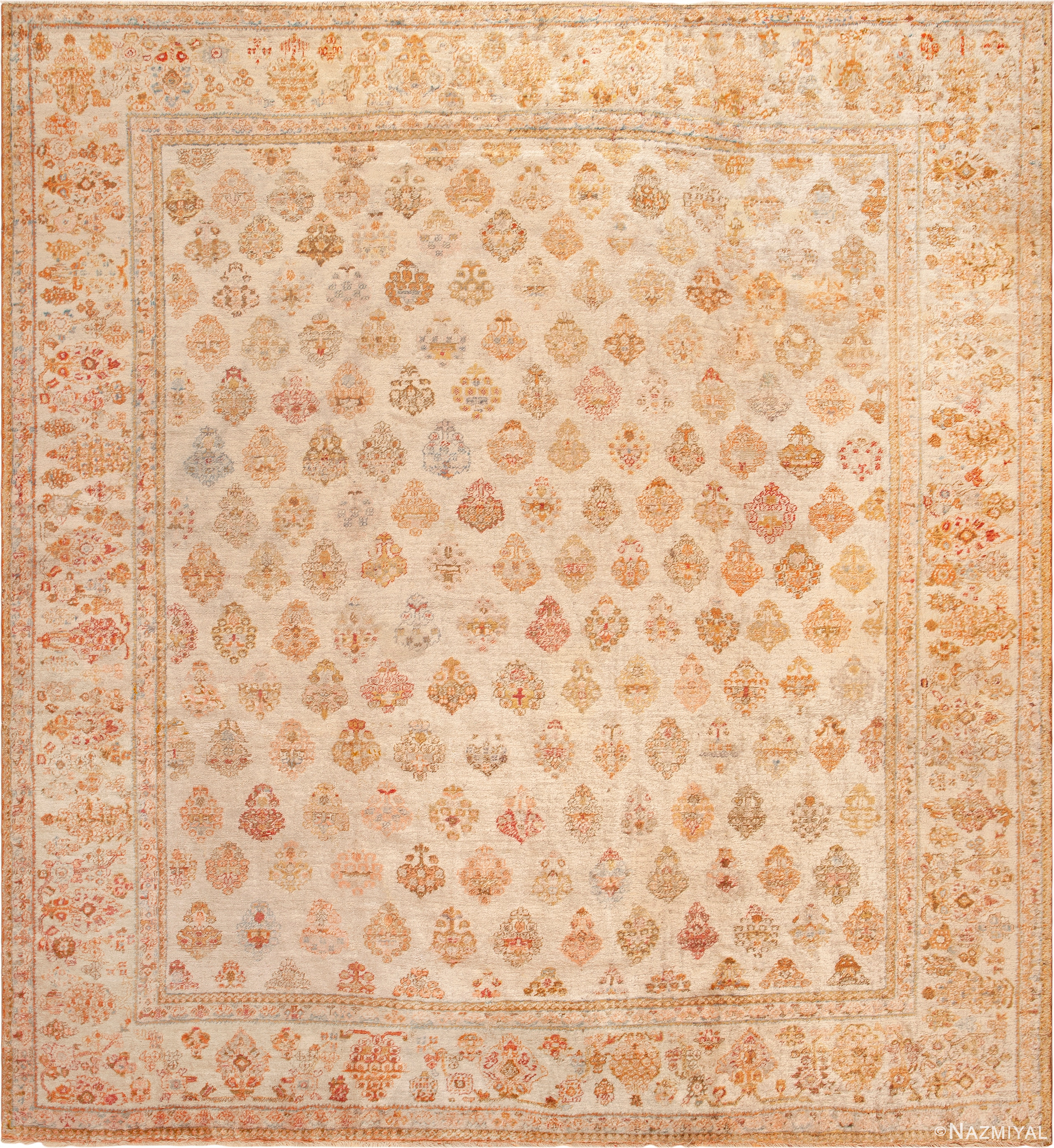
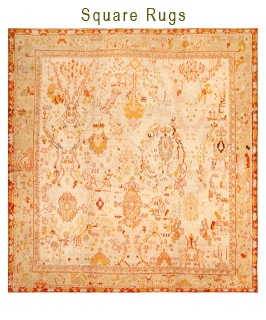
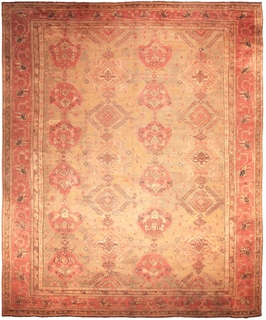
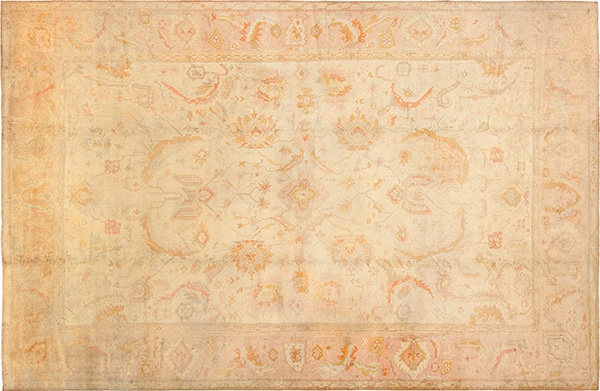
Antique Turkish rugs are recognized for their geometric layouts, strong color contrasts, and symmetrical knotting. Oushak rugs, some of the most sought-after antique rugs in the Western decorator market, are known for large-scale decorative patterns and softened, warm palettes that work beautifully in contemporary interiors. Village and tribal Anatolian rugs emphasize symbolic motifs and direct visual impact, with a bold graphic quality that has made them favorites among designers and collectors alike.
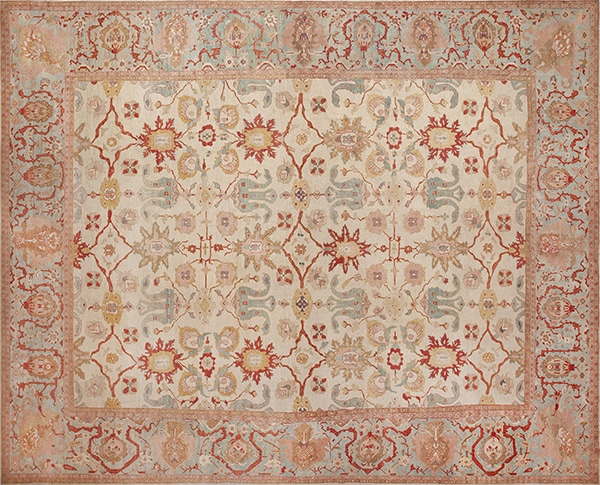
Large Oversized Cream Antique Decorative Turkish Oushak Rug #49166
Anatolian traditions such as Oushak rugs and Hereke rugs represent opposite ends of the Turkish tradition, Oushak for spacious, decorative grandeur; Hereke for precise, fine-knot luxury production.
Caucasian Antique Rugs
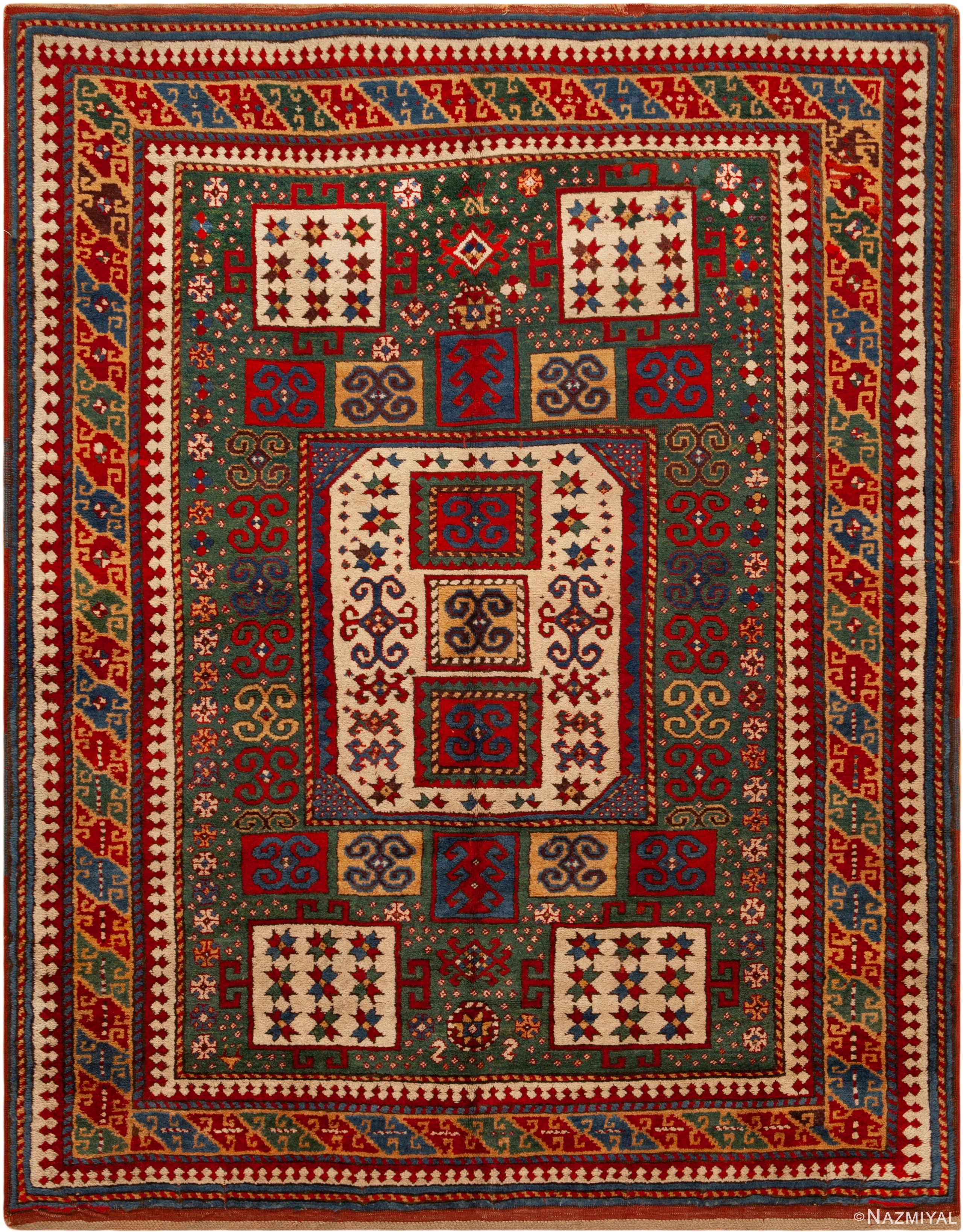
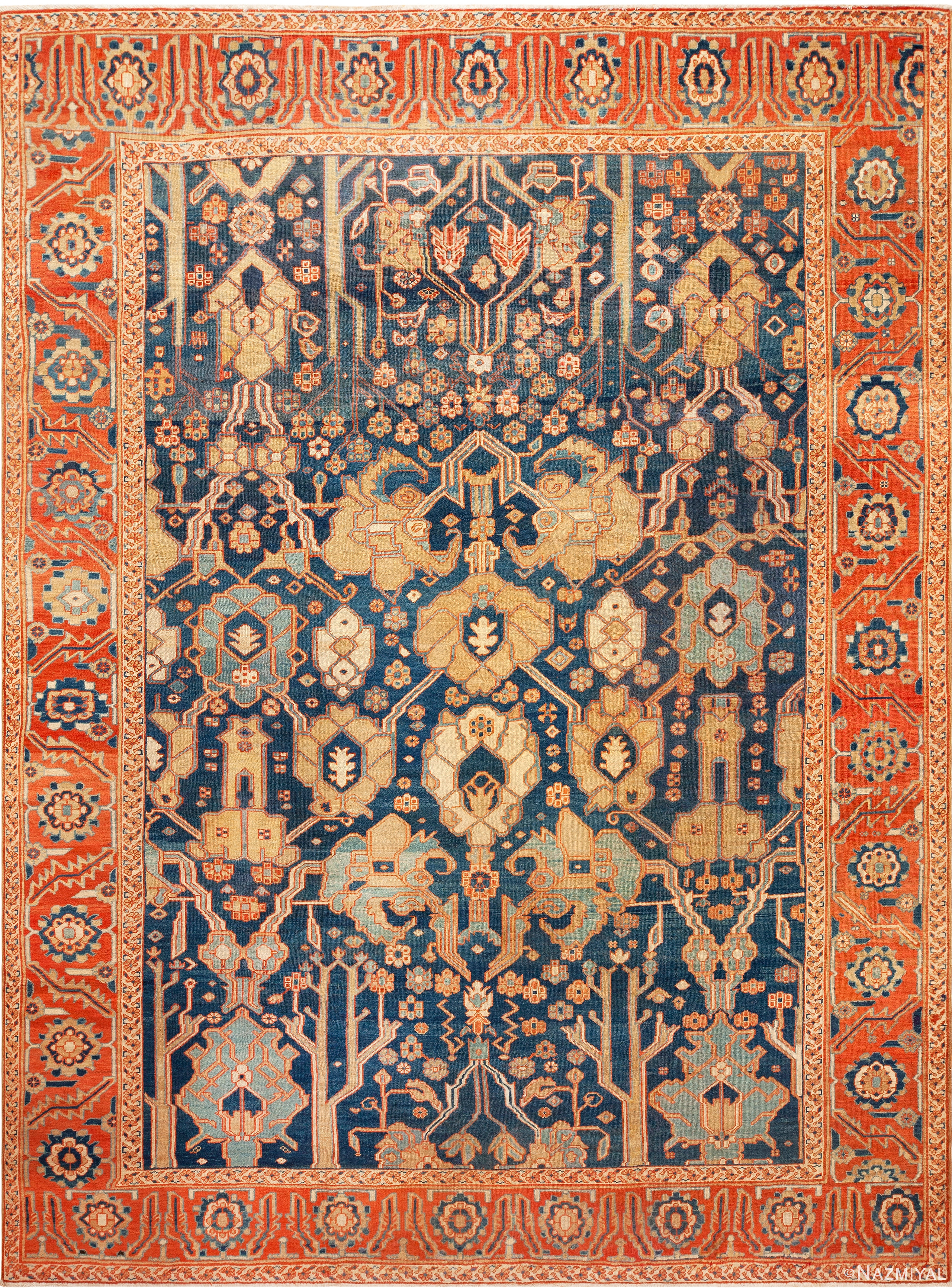
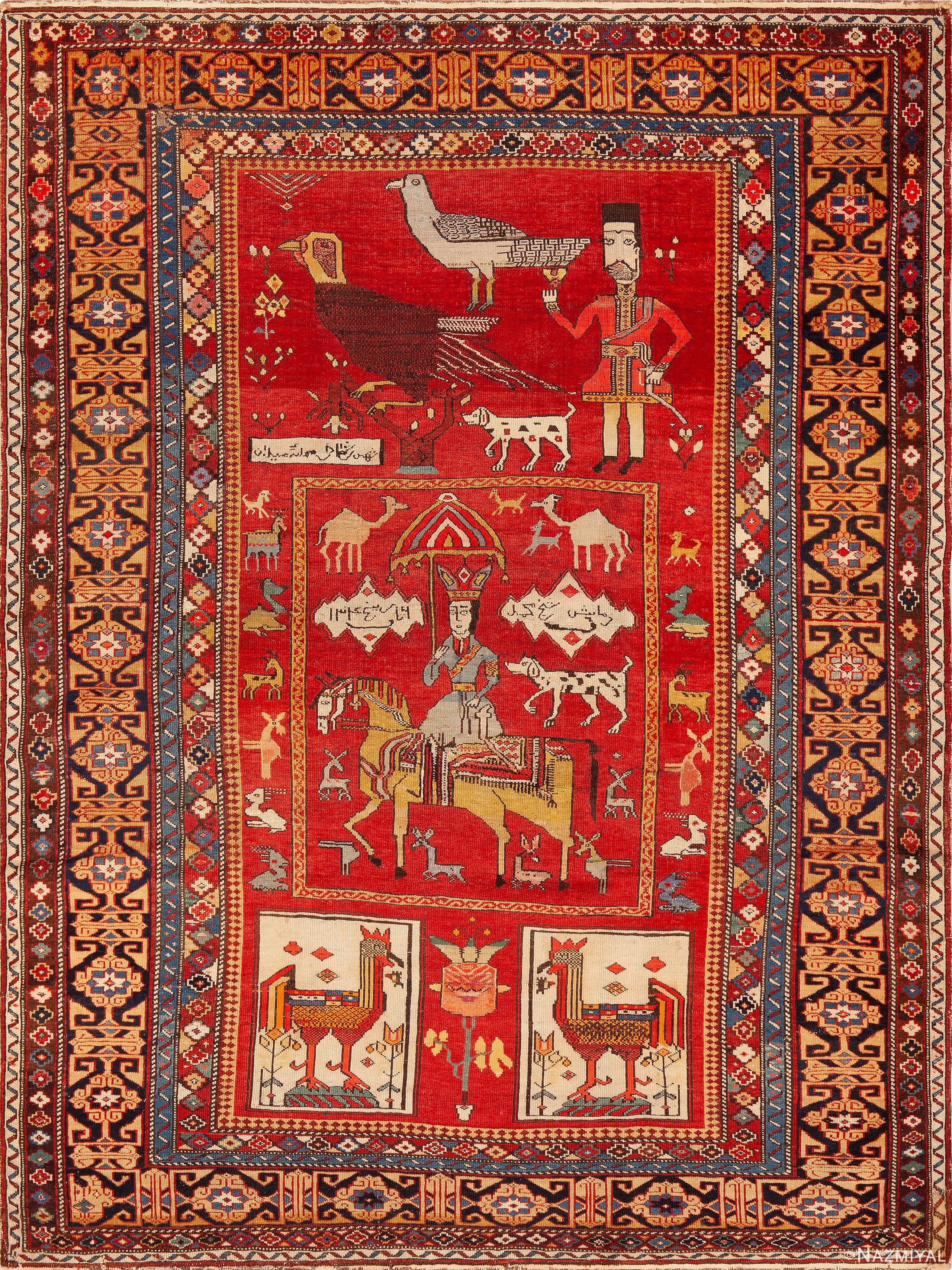
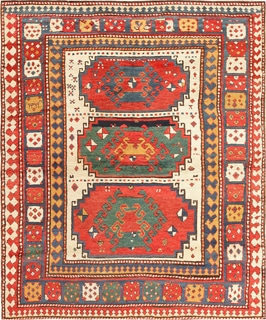
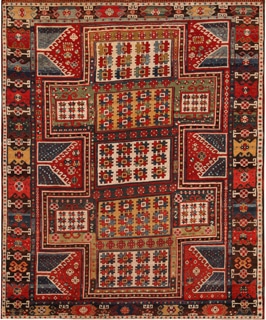
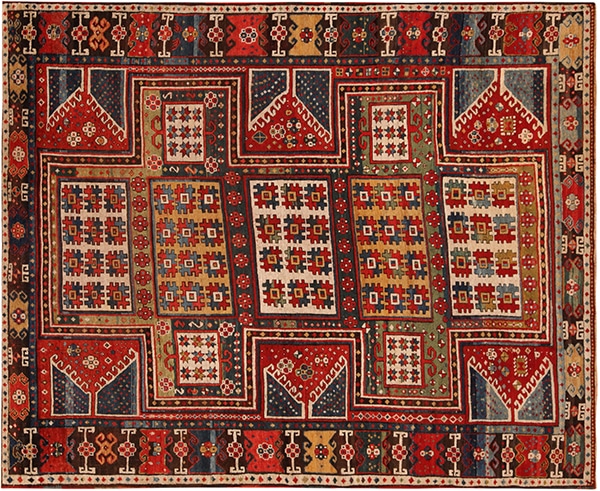
Woven in regions now associated with Armenia, Azerbaijan, and Georgia, Caucasian antique rugs feature angular geometry, saturated colors, and compact formats that give them an immediate graphic power unlike any other weaving tradition. The Caucasus was a crossroads of cultures, Armenian, Azerbaijani, Russian, and Persian influences all converge in these rugs, producing a density of design vocabulary that rewards close study.
Antique Caucasian Kazak Sewan Rug #71614
Village and tribal traditions such as Kazak rugs, Shirvan rugs, and Karabagh carpets favor bold geometry, saturated colors, and direct graphic expression, qualities that make Caucasian rugs some of the most versatile antiques for modern interiors.
Chinese Antique Rugs
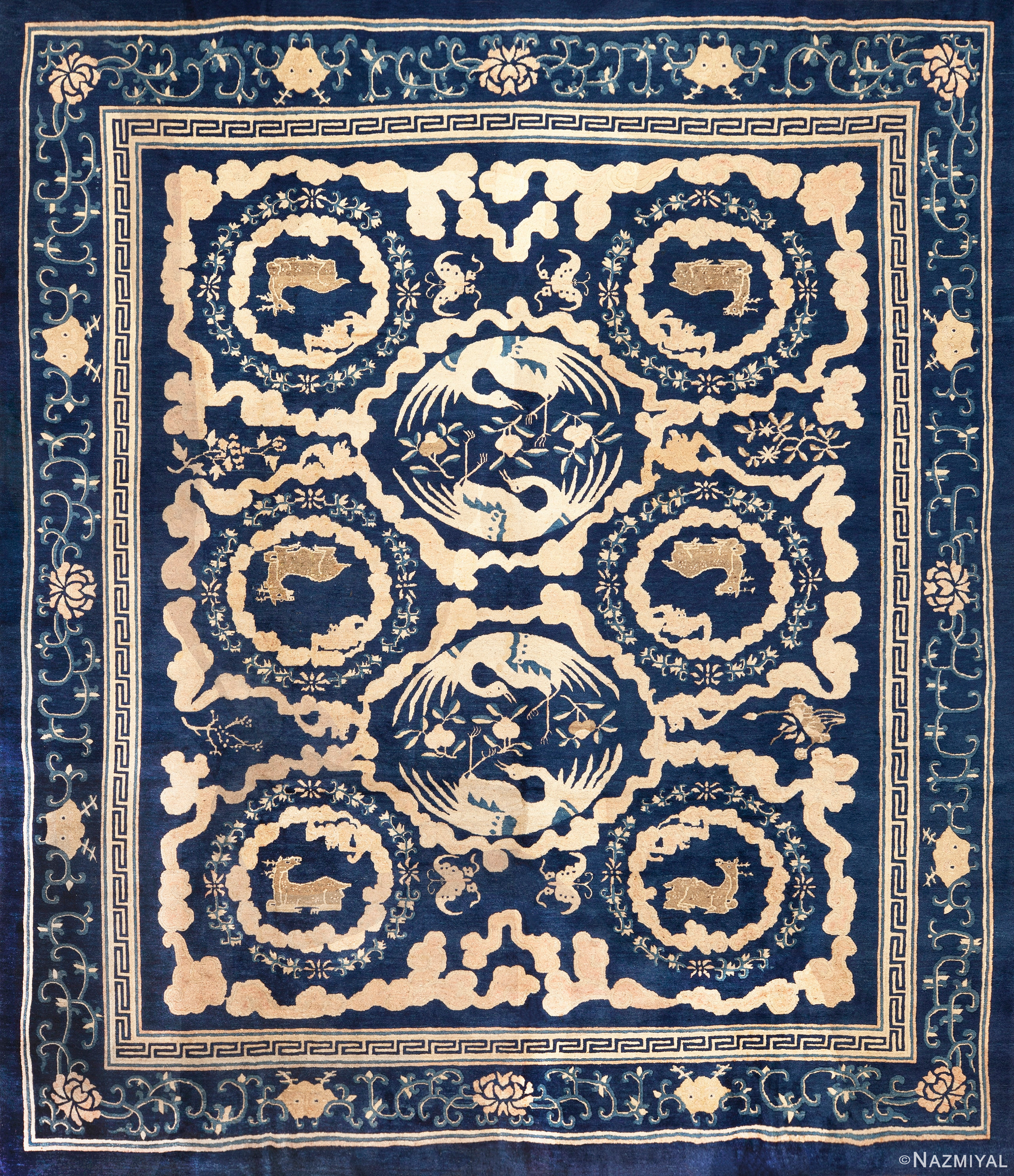
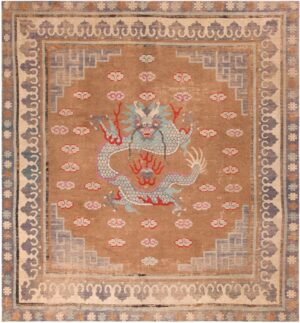
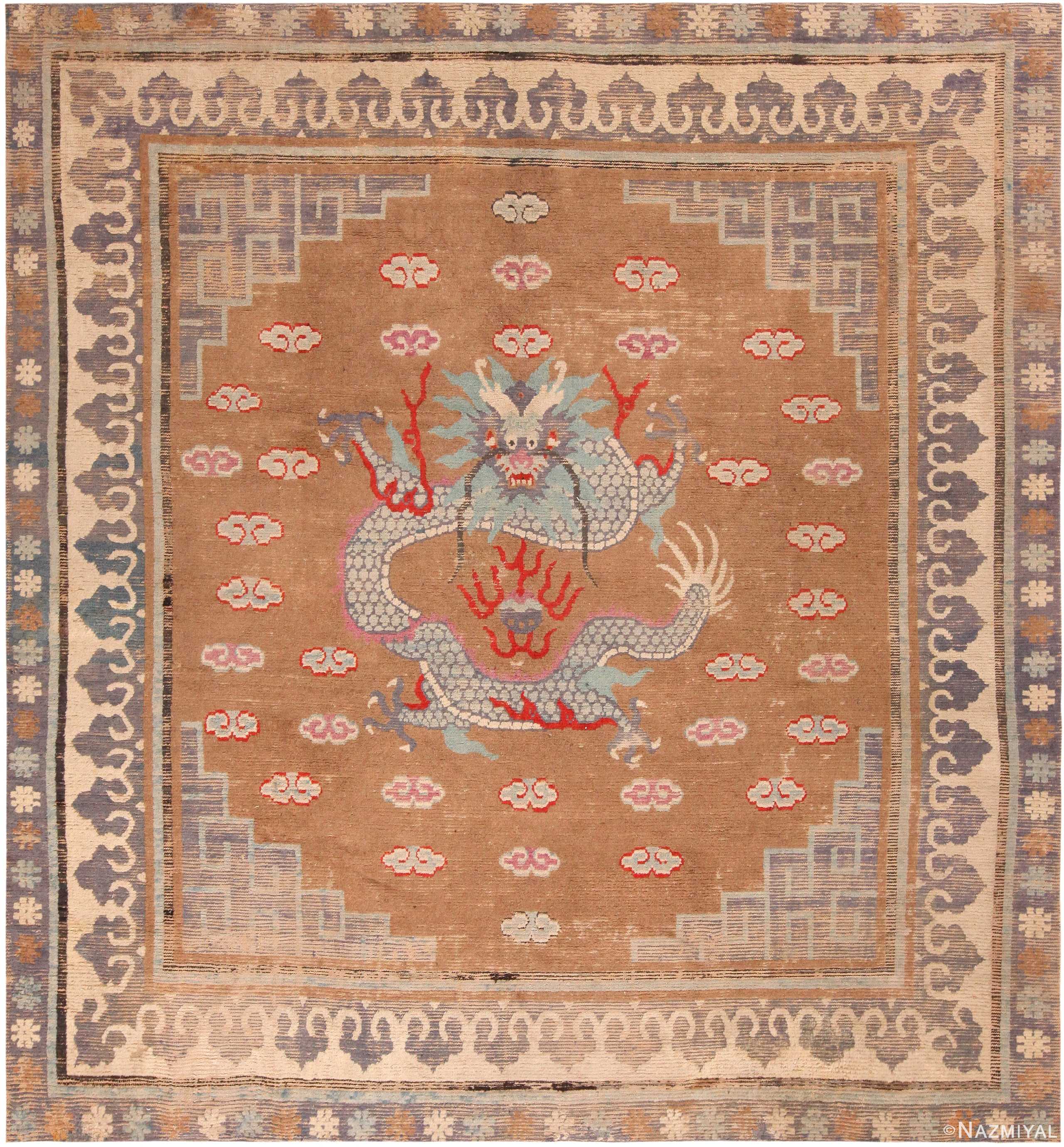
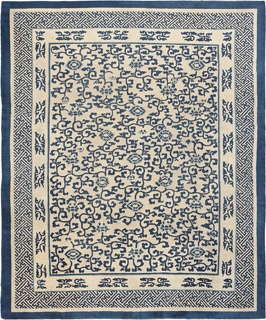
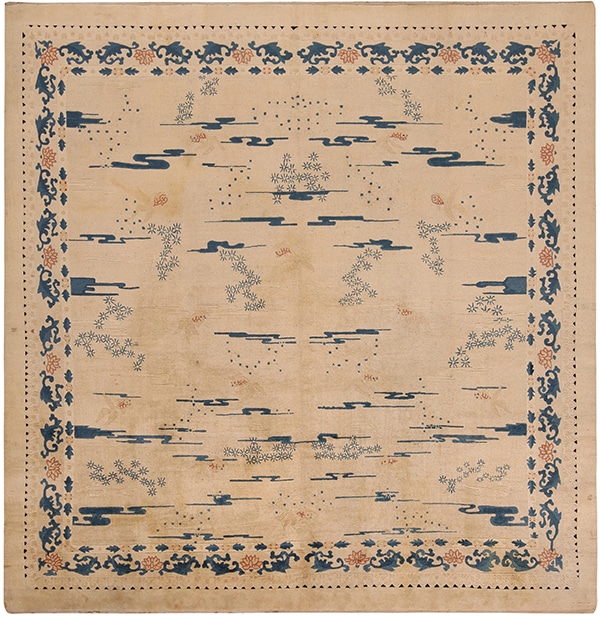
Antique Chinese rugs favor restrained palettes and symbolic imagery, clouds, dragons, bats, and floral medallions drawn from Taoist and Buddhist iconography. Their aesthetic emphasizes balance and negative space rather than dense ornament, giving them a quiet visual authority that pairs exceptionally well with both classical and minimalist contemporary interiors.
Antique Square Chinese Rug #71495
Indian Antique Rugs
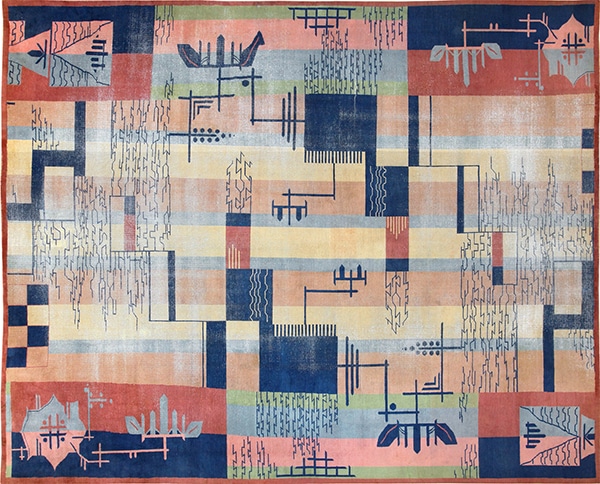
Indian antique rugs, particularly those from Agra and Amritsar, reflect Persian design systems adapted to local materials and the monumental scale demanded by Mughal palace interiors. Agra rugs are celebrated for their large-format compositions, fine wool, and the particular richness of their red and ivory palettes, qualities that have made them among the most desirable antique rugs for grand architectural spaces.
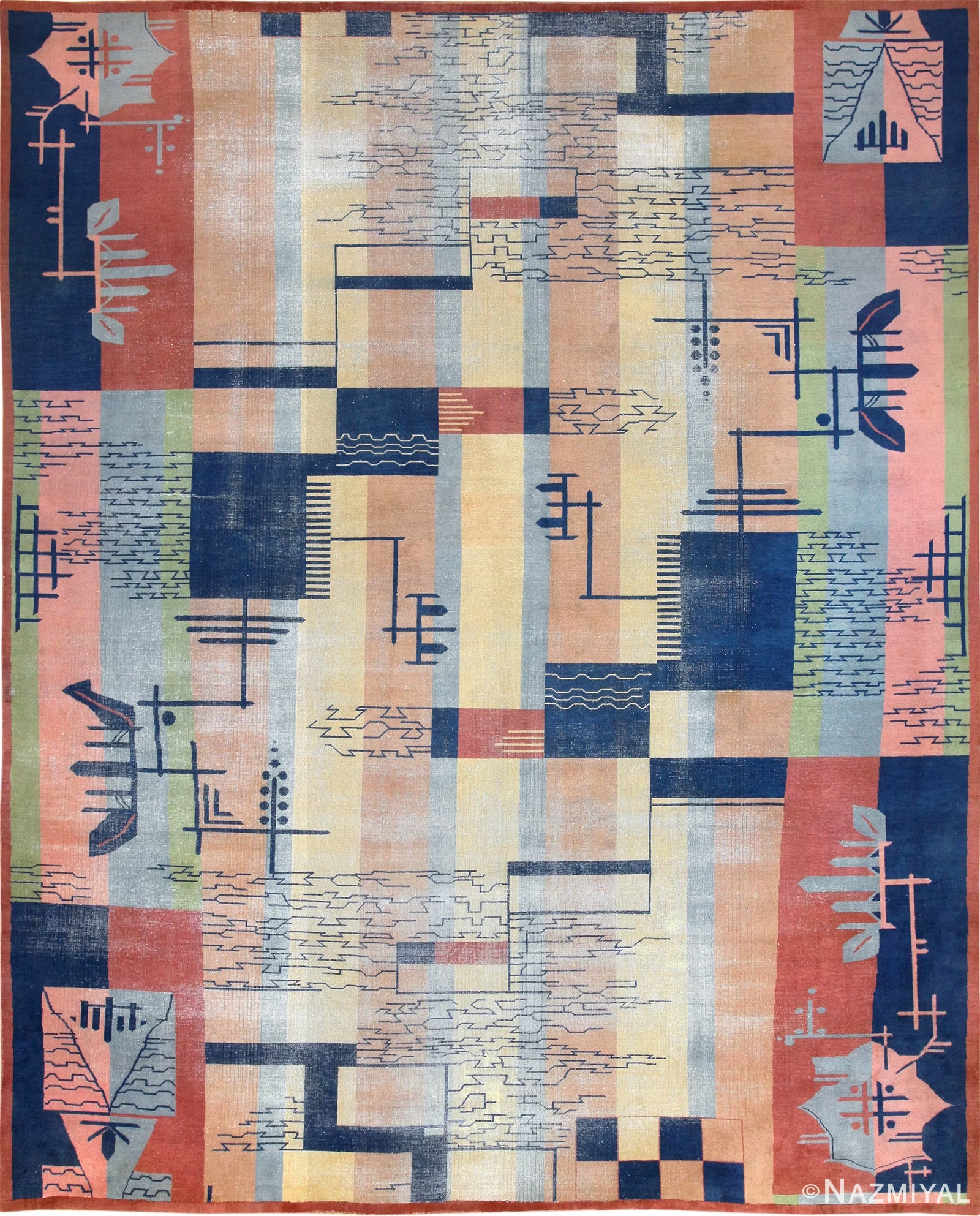
Antique Art Deco Indian Rug #49386
Court workshops producing Agra rugs and Amritsar carpets adapted Persian design into finely balanced compositions emphasizing scale, symmetry, and refined floral detail.
French Antique Rugs and Carpets
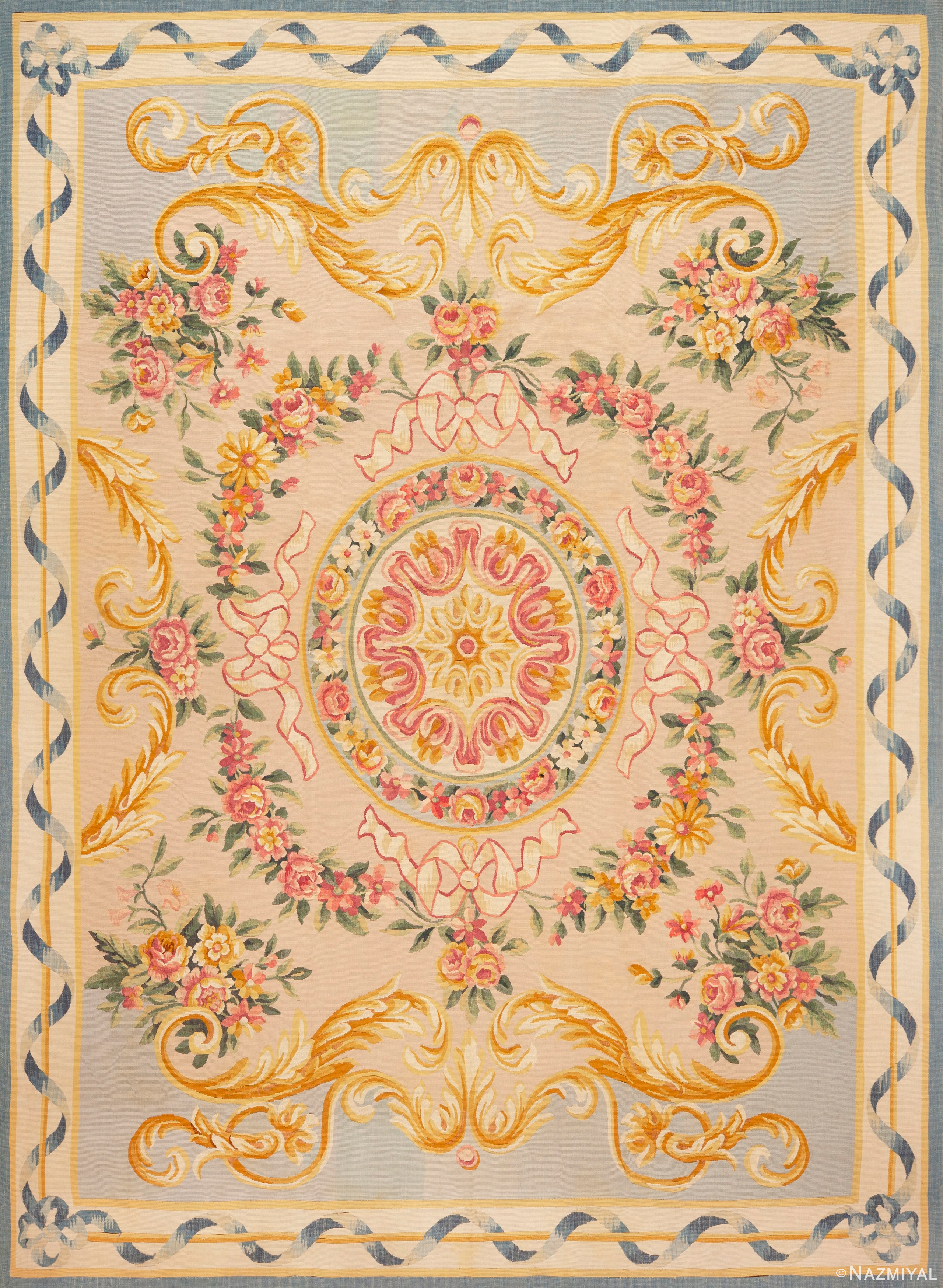
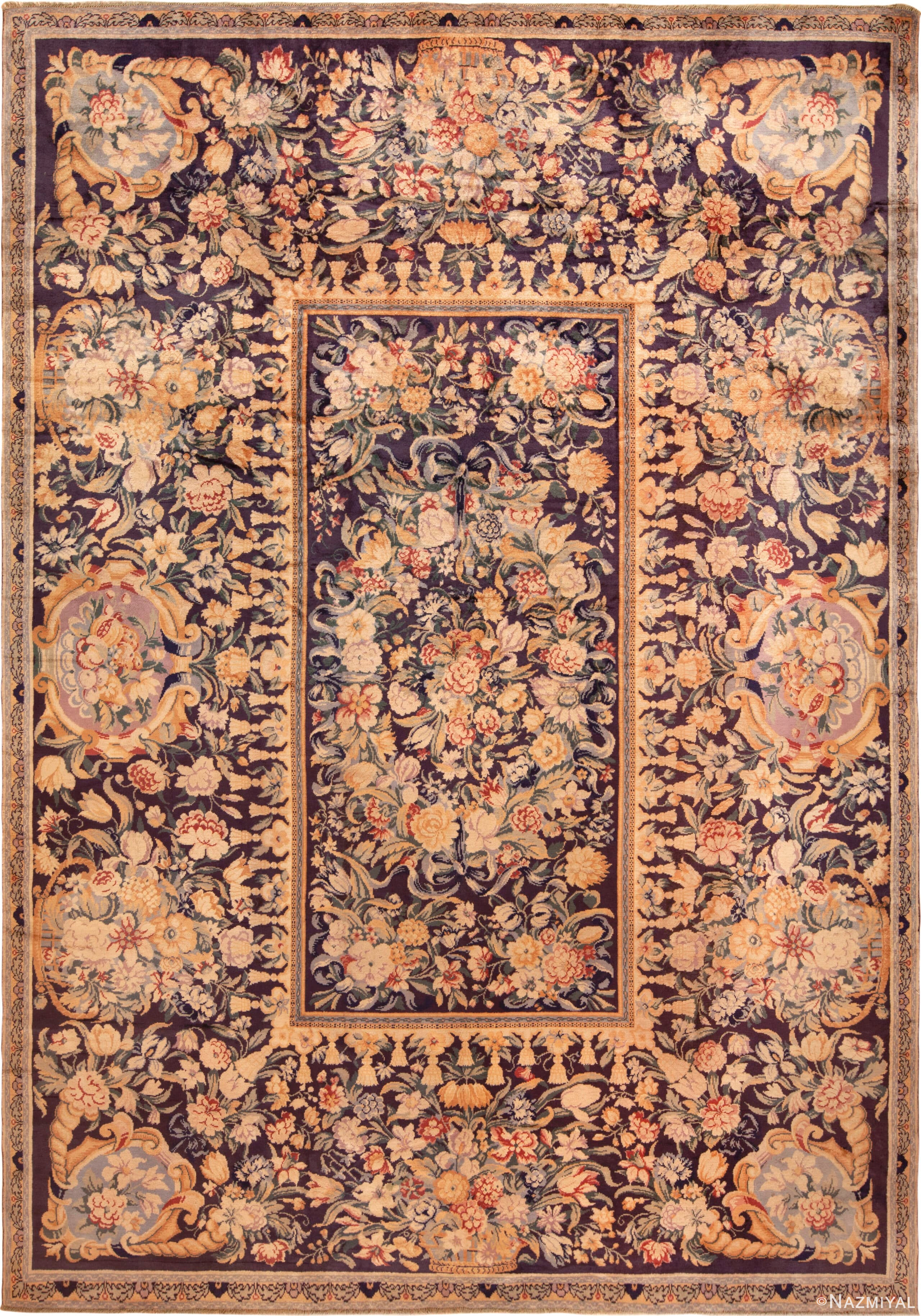
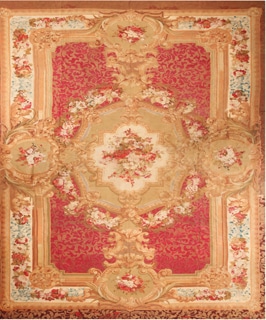
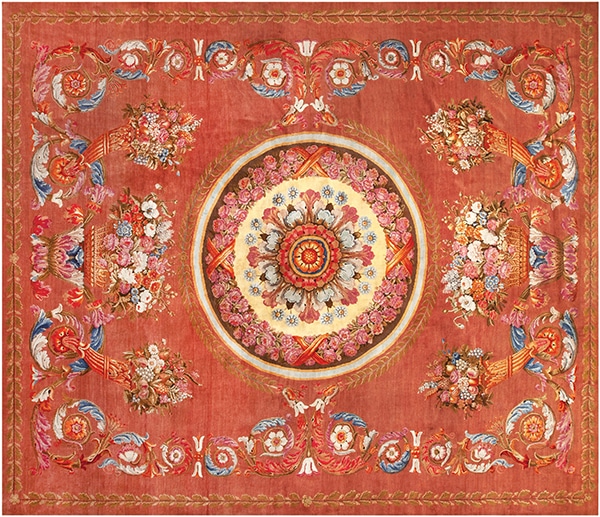
French antique rugs and carpets were woven primarily for aristocratic and royal interiors, emphasizing elegance, symmetry, and decorative refinement. The Savonnerie workshop, established under royal patronage in the 17th century, produced some of the most elaborate floor coverings ever made, designed to complement the palace interiors of Versailles. Aubusson carpets, flatwoven and more accessible than Savonnerie, brought refined French design to a wider aristocratic market.
Spectacular Large Antique French Savonnerie Rug #72695
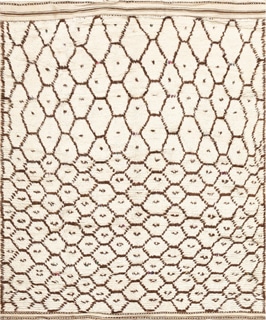
Beyond these major traditions, Nazmiyal’s collection also includes antique Moroccan rugs — bold, tribal flatweaves and pile rugs from the Atlas Mountains and Saharan regions, increasingly sought by designers for their graphic simplicity and raw material character.
Antique Rugs in Interior Design
Antique rugs are widely used by leading interior designers to introduce depth, authenticity, and visual authority into rooms that would otherwise feel incomplete. Their material richness, the warmth of hand-spun wool, the luminosity of natural dyes, the subtle irregularity of hand-knotted pile, cannot be achieved by any modern reproduction, regardless of price. Designers including Thomas Jayne, Alexa Hampton, Cullman & Kravis, Michael S. Smith, and Alexandra Lowe have all sourced antique rugs from Nazmiyal Collection for projects ranging from classic Manhattan apartments to contemporary Los Angeles residences.
Large-scale antique rugs anchor living rooms and dining spaces, providing a foundation that ties furniture groupings together with authority.
Tribal and geometric rugs add structure and warmth to minimalist interiors without competing with clean architectural lines.
Decorative workshop rugs, Persian Kashan, French Aubusson, Indian Agra, complement classical and transitional spaces and add historical depth to formal rooms.
Caucasian and village rugs bring bold color and graphic energy to modern interiors where a more formal rug would feel incongruous.
Because no two antique rugs are identical, selection should consider scale, color balance, and the role the rug will play within the room. Nazmiyal’s specialists are available to help guide these decisions for both in-person and remote clients.
Antique Rugs as Collectible Assets
The finest antique rugs have long been treated as stores of value alongside gold, property, and art. Historically, Persian merchants kept the best examples in underground vaults, referred to in Iranian markets as “stocks and shares.” This tradition reflects a fundamental truth about genuinely rare antique rugs: their supply can only decrease over time.
The record price for a single antique rug sold at auction currently stands at $34 million. Museum-quality Persian carpets, particularly those from the Safavid Dynasty or attributed to master weavers like Mohtashem of Kashan or Haji Jalili of Tabriz, trade at prices that reflect their status as cultural artifacts rather than furnishings. But even below the museum tier, well-preserved antique rugs with strong regional attribution, intact original materials, and clear provenance have demonstrated consistent long-term value appreciation.
Rarity and condition strongly influence market value, the number of genuine antique rugs will only decrease as time passes.
Well-preserved examples with original materials, natural dyes, and intact structure are increasingly scarce.
Provenance, regional attribution, and connection to known master weavers add significantly to desirability and price.
Unlike purely decorative purchases, the best antique rugs have historically shown resilience compared to mass-produced furnishings.
Collectors should approach antique rugs as cultural assets first, any financial appreciation is a secondary benefit. Informed evaluation by a specialist matters far more than following current trend or price momentum.
Caring for Antique Rugs
Proper care preserves both the appearance and structural integrity of antique rugs. Natural fibers and dyes require different treatment than synthetic materials, harsh chemicals, aggressive vacuuming, and prolonged sunlight exposure all accelerate deterioration that cannot be reversed.
Vacuum gently using low suction, always in the direction of the pile. Avoid running the vacuum over the fringe.
Rotate the rug annually to distribute foot traffic and sunlight exposure evenly.
Protect from prolonged direct sunlight, UV exposure fades natural dyes irreversibly over time.
Address spills immediately by blotting with a clean cloth. Never rub, rubbing drives liquid deeper into the pile and can distort the weave.
Use professional cleaning and restoration services for anything beyond routine maintenance. Antique rugs should never be machine washed or steam cleaned.
Antique Rugs vs. Vintage Rugs
Antique Rugs
Vintage Rugs
Typically over 80 years old (pre-1945)
Usually 20–80 years old (1945–2005)
Natural fibers and vegetable/mineral dyes
May include early synthetic dyes and commercial fibers
Historical and cultural significance
Primarily decorative and design appeal
Collected as art, heritage, and investment objects
Collected mainly for interior design use
Supply decreasing as examples are lost or absorbed into collections
Broader supply, mid-century production was significantly higher volume
Why Nazmiyal Collection
Nazmiyal Collection has been one of the world’s leading sources for authenticated antique rugs since the 1980s. Based in Midtown Manhattan, we have built our reputation on a straightforward principle: every rug we offer is accurately described, honestly conditioned, and presented with the context buyers need to make an informed decision.
Unmatched Inventory Depth: Over 1,400 authenticated antique rugs spanning every major weaving tradition, one of the most comprehensive selections available anywhere in the world.
Rigorous Authenticity Standards: Each rug is evaluated by specialists for materials, weaving structure, dye behavior, and historical accuracy before it enters our collection.
Expert Advisory: Guidance on selection, placement, condition assessment, and long-term stewardship, for collectors, interior designers, and first-time buyers alike.
Remote Buying Support: Detailed condition reports, precise measurements, and high-resolution photography for every piece. Clients worldwide shop with the same confidence as those visiting our Manhattan showroom.
Every antique rug offered by Nazmiyal Collection is presented with accuracy, context, and respect for its history.
What is the difference between an antique rug and a vintage rug? Antique rugs are generally defined as pieces over 80 years old, typically woven before 1945. Vintage rugs are younger, usually from the mid-20th century onward. Antique rugs are more likely to use natural fibers and dyes, carry greater historical significance, and command higher values in the collector market. Vintage rugs are prized primarily for their decorative appeal and period design.
How can I tell if an antique rug is authentic? Authentic antique rugs show hand-knotted construction visible on the reverse, natural fibers (wool, silk, cotton), integrated fringe that extends from the warp threads, and dye behavior that has softened and developed patina over decades. Any rug that is machine-made or hand-tufted, regardless of how it is marketed, is not a genuine antique.
What makes antique rugs more valuable than modern rugs? Three things: rarity, materials, and irreproducibility. The hand-spun wool, natural dyes, and regional weaving traditions that produced the great antique rugs of the 19th and early 20th centuries no longer exist in their original form. The supply of genuine antiques can only decrease over time, while the supply of modern reproductions is effectively unlimited.
Are antique rugs a good investment? The finest examples, those with strong provenance, intact original materials, clear regional attribution, and exceptional design, have demonstrated consistent long-term value. The auction record for a single antique rug stands at $34 million. Collectors should approach antique rugs as cultural assets first, with financial appreciation as a secondary benefit rather than a guarantee.
What types of antique rugs work best in modern interiors? Oushak rugs are among the most versatile, their warm, softened palettes and spacious designs integrate naturally into contemporary rooms. Caucasian rugs bring bold geometry that complements minimalist architecture. Persian Sultanabad and Serapi rugs offer large-scale decorative presence without the formality of city workshop rugs. The key is scale: a rug should anchor the room, not disappear beneath the furniture.
How do I buy an antique rug remotely from Nazmiyal? Nazmiyal has sold antique rugs to collectors and designers worldwide for decades. We provide detailed condition reports, precise measurements, and high-resolution photography for every piece. Our specialists are available to answer questions by phone or email before any commitment is made. Contact us directly to begin.
What is the difference between antique Persian rugs and other antique rugs? Persian rugs come from Iran and represent one specific, though exceptionally broad, weaving tradition. Antique rugs is a wider category that includes Persian rugs alongside Turkish, Caucasian, Chinese, Indian, European, and many other traditions. Persian rugs are the most widely collected antique rugs globally, but other traditions, particularly Caucasian tribal rugs and French Savonnerie carpets, have their own dedicated collector markets.
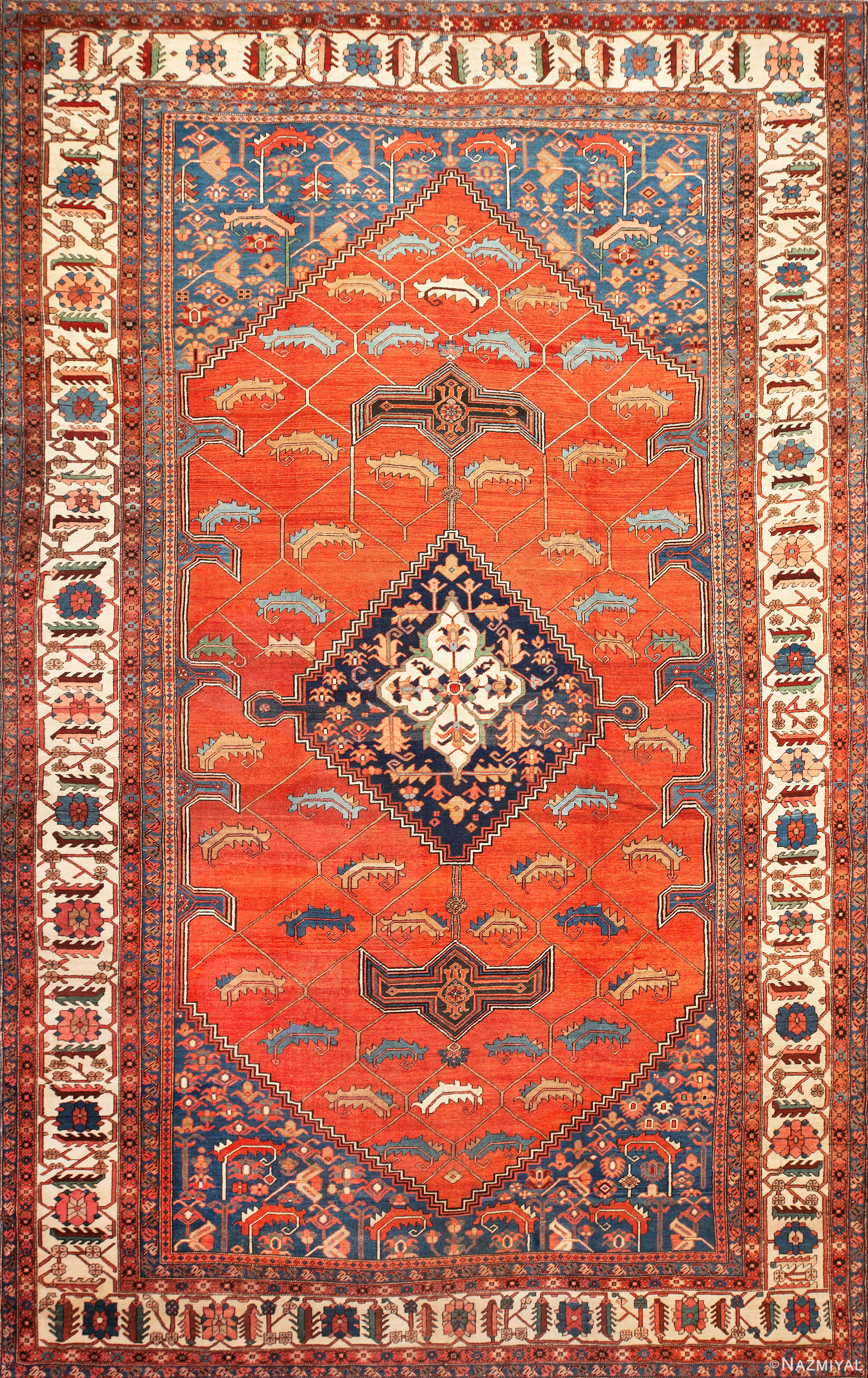
Are antique rugs durable enough for everyday use? Yes, most antique rugs were made for household use and are entirely appropriate for everyday life. Village and tribal rugs (Heriz, Kazak, Bidjar, Oushak) are particularly durable and well-suited to high-traffic areas. Finer city workshop rugs and silk pieces are better suited to lower-traffic settings or display.
Trustindex verifies that the original source of the review is Google.
The only ones I'd ever buy rugs from. The best.
Posted on Google
Jeffrey NeumanB
Trustindex verifies that the original source of the review is Google.
I bought two gorgeous Serapi rugs from Farhad at Nazmiyal Rugs! Beautiful carpets, fair prices and great service. Very happy customer. Farhad (the sales person) was very patient and gave us great service.
Posted on Google
john haid
Trustindex verifies that the original source of the review is Google.
Alen is a gentleman and an expert. Really great to work with.
Posted on Google
Edward Yasuna
Trustindex verifies that the original source of the review is Google.
I recently purchased a modern Kandinsky rug from Nazmiyal Auctions. It was just as described, and the director (Farhad) of the auctions had it sent to me quickly and safely. Payment was easy, the rug was reasonably priced, and I highly recommend Nazmiyal Auctions and Antique Rugs. Quality merchandise and first-class service.
Posted on Google
Nicholas Carr
Trustindex verifies that the original source of the review is Google.
Had a excellent experience buying a rug in Nazmiyal's 1/18/26 online auction. First, prior to the auction, viewing a number of lots at the 32nd St showroom (I had prepared a list from the online catalog). The staff were great to work with: helpful, knowledgable, honest, and flexible. Second, after placing an online bid and winning the desired item, arranging payment and pickup was simple and straightforward. Everything went seamlessly and the overall experience was educational and fun. Many thanks to Jason and his team.
Posted on Google
Andrea Gared
Trustindex verifies that the original source of the review is Google.
Everyone at Naziyal is proffessional, especially Jason and Farhad.
They are knowledgeable, truthful, and true gentlemen. I have sold several rugs through them and will always go to them first, to buy or sell. The best in the business!
Posted on Google
Lori Silverberg
Trustindex verifies that the original source of the review is Google.
Posted on Google
Jesse Zilberman
Trustindex verifies that the original source of the review is Google.
Excellent customer service! Alen was very helpful over the phone and email. The rug we acquired was stunning, and photos do not do it justice. I would definitely work with Alen and team again!
Posted on Google
Rachel Paul
Trustindex verifies that the original source of the review is Google.
Jason was incredibly kind and helpful! I work for a small museum that had some rugs we had no information on. Jason responded to us quickly and gave us the information we needed for free! Incredible service, we are super thankful for his help!

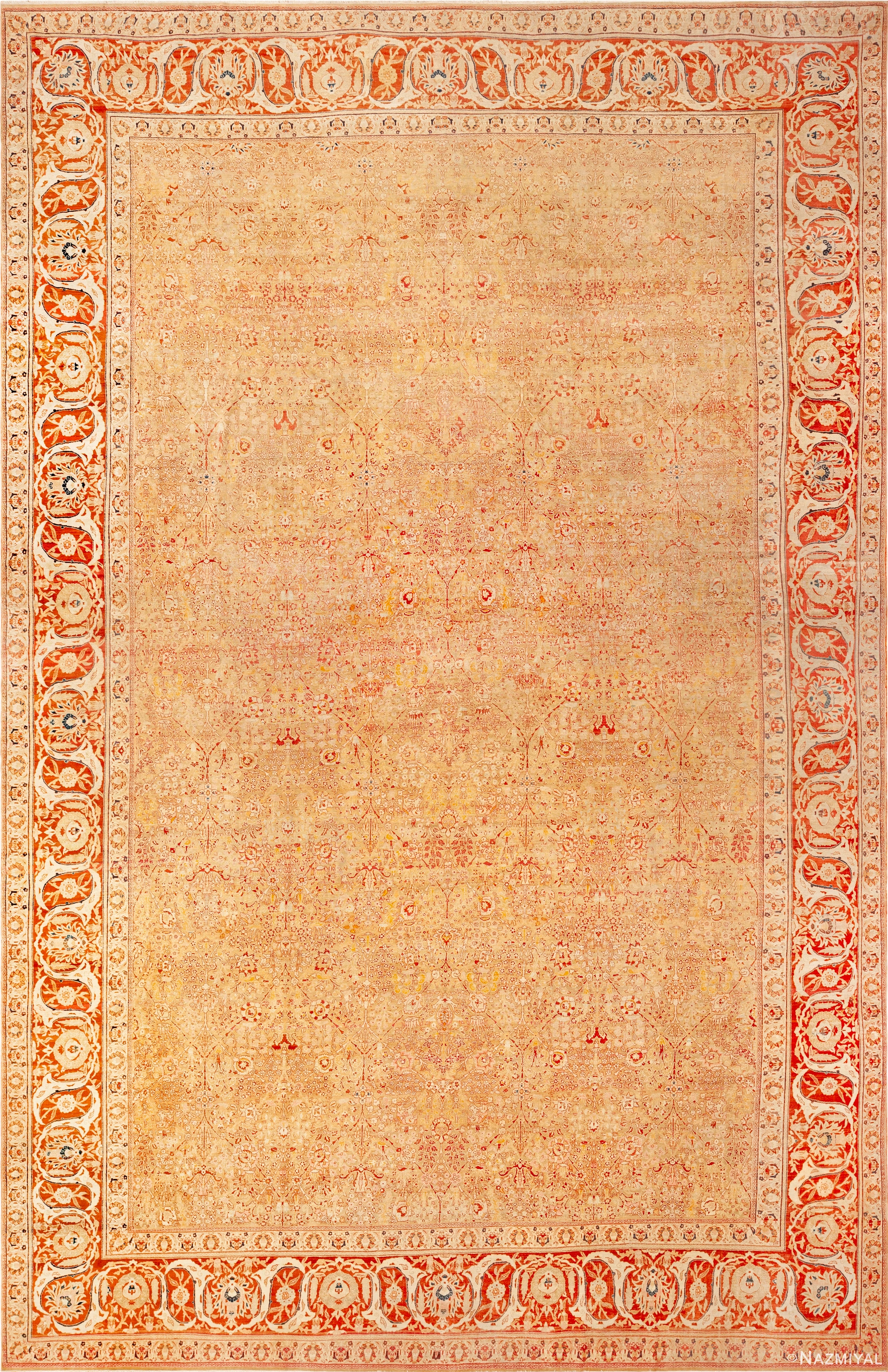
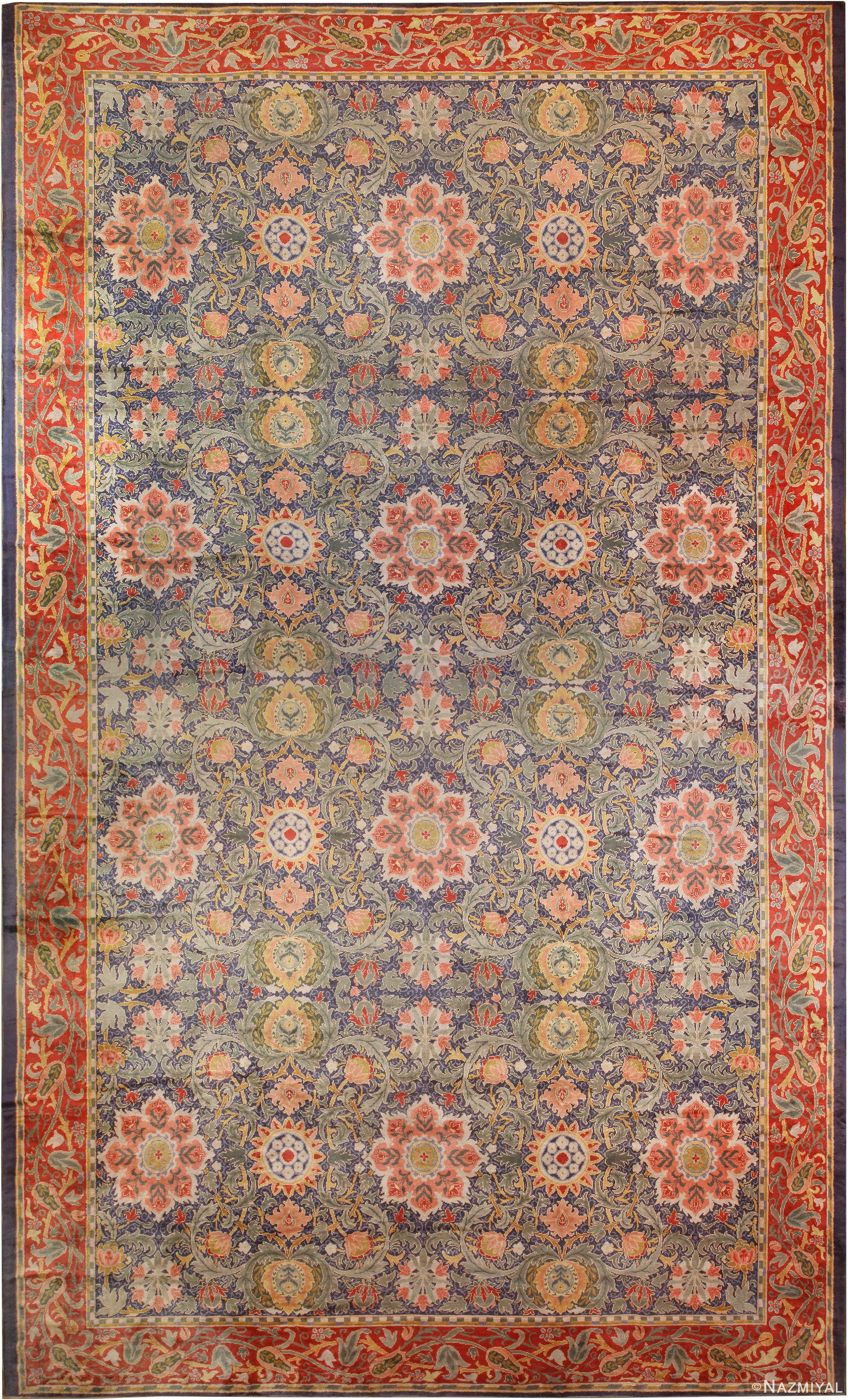
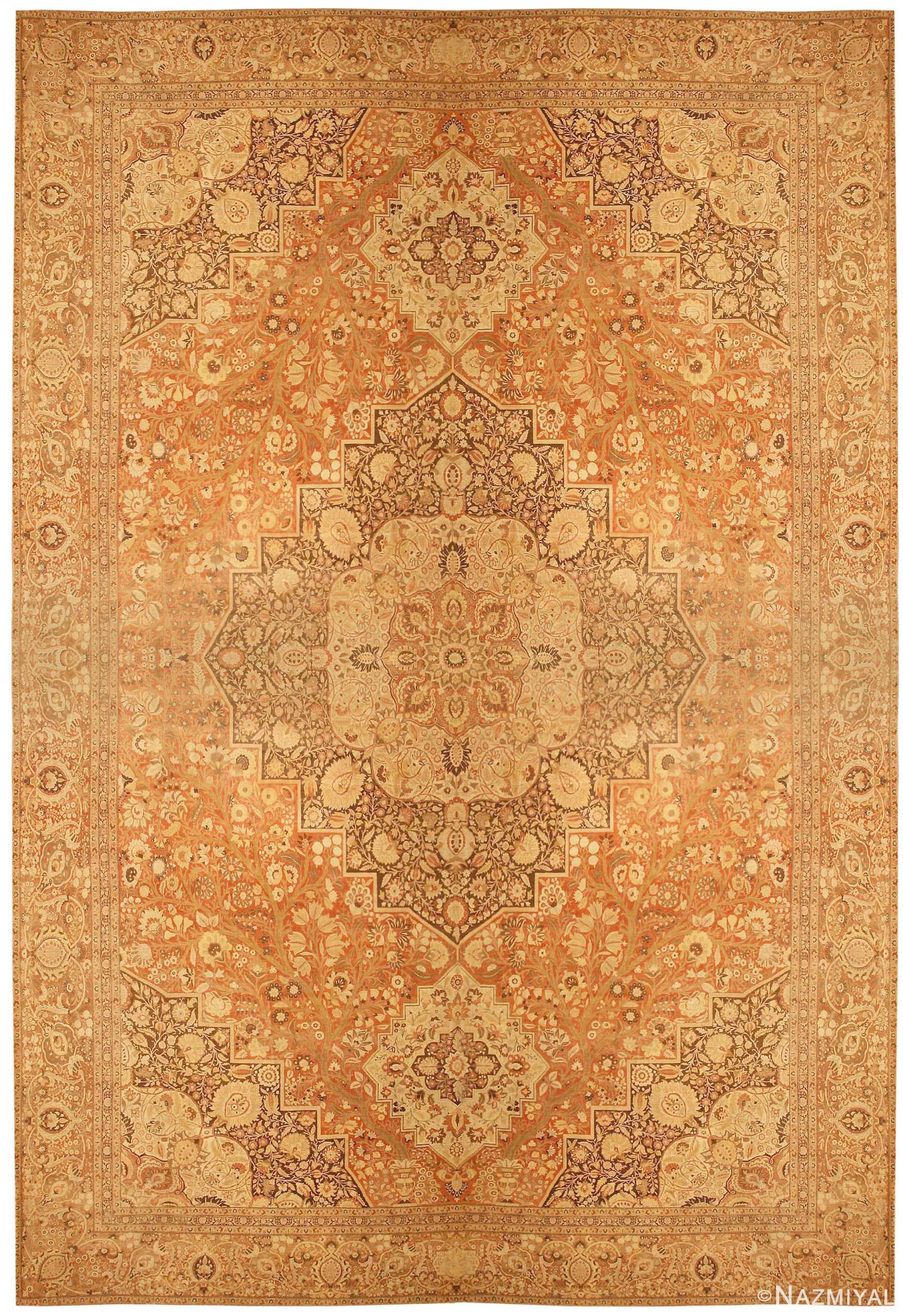
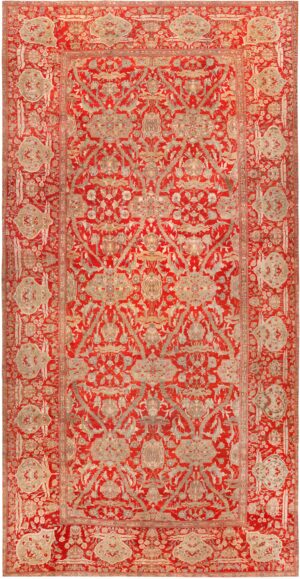
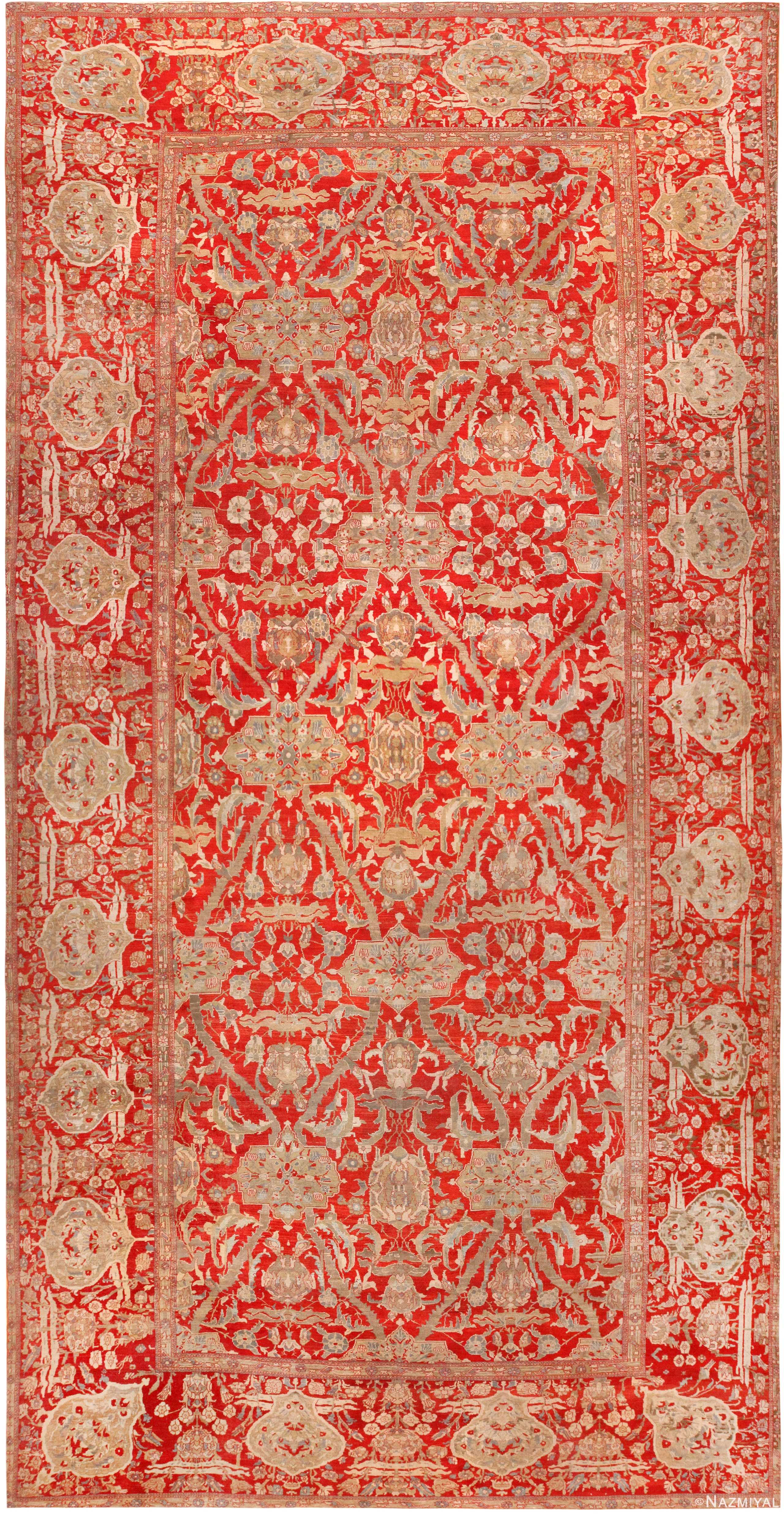
 Luxury Antique Oversized Persian Tabriz Rug with Sophisticated Floral Pattern and Coral Border 73648Size: 13 ft 7 in x 21 ft 7 in (4.14 m x 6.58 m)
 Size: 5 ft 8 in x 7 ft 4 in (1.73 m x 2.24 m)
 Size: 10 ft 3 in x 11 ft 5 in (3.12 m x 3.48 m)
 Size: 11 ft 7 in x 15 ft 3 in (3.53 m x 4.65 m)
 Size: 9 ft x 12 ft 3 in (2.74 m x 3.73 m)
 Size: 4 ft 3 in x 5 ft 8 in (1.3 m x 1.73 m)
 Size: 11 ft 3 in x 12 ft (3.43 m x 3.66 m)
 Size: 11 ft 10 in x 18 ft (3.61 m x 5.49 m)
 Size: 7 ft 2 in x 9 ft 9 in (2.18 m x 2.97 m)
 Size: 9 ft 4 in x 12 ft 10 in (2.84 m x 3.91 m)
 Size: 10 ft 3 in x 11 ft (3.12 m x 3.35 m)
 Size: 4 ft 4 in x 6 ft 4 in (1.32 m x 1.93 m)
 Size: 19 ft x 30 ft (5.79 m x 9.14 m)
 Size: 11 ft 8 in x 18 ft 10 in (3.56 m x 5.74 m)
 Size: 12 ft 4 in x 15 ft (3.76 m x 4.57 m)
 Size: 10 ft 9 in x 12 ft 10 in (3.28 m x 3.91 m)
 Size: 9 ft 10 in x 14 ft 10 in (3 m x 4.52 m)
 Size: 19 ft 7 in x 41 ft (5.97 m x 12.5 m)
 Size: 17 ft 5 in x 34 ft (5.31 m x 10.36 m)
 Size: 21 ft 2 in x 32 ft 3 in (6.45 m x 9.83 m)
 Size: 22 ft 5 in x 32 ft (6.83 m x 9.75 m)