Quick Navigation
Key Takeaways
- North West Persian rugs often balance tribal geometry with workshop-level structure, making them powerful but still interior-friendly.
- Because the region overlaps trade routes and shifting borders, you’ll often see Caucasus-adjacent motifs and crisp color contrast alongside Persian framing systems.
- Shopping success comes down to clarity + condition: stable edges, even wear, and legible drawing matter as much as age.
At-a-Glance Specs
- Region: Northwest Persia borderlands (historic overlap with today’s Iran, Azerbaijan, and Armenia)
- Common design cues: rectilinear geometry • bold lozenges • serrated motifs • strong borders • dramatic medallion systems
- Typical palette: brick red • indigo/navy • ivory • soft blues • walnut brown • accents of green and gold
- Construction notes: varies by sub-region; village and tribal pieces often emphasize sturdy structure and direct drawing
- Best rooms: living rooms • halls and galleries • libraries • dining rooms • collected interiors that benefit from pattern “architecture”
- What to look for: stable edges • clean perimeter • cohesive contrast • honest wear • motifs that read clearly from across the room
Popular Searches
Heriz rugs | Serab rugs | Tabriz rugs | Caucasian rugs | Tribal rugs | Geometric rugs | Runner rugs | Gallery rugs
Featured North West Persian Rugs from the Collection
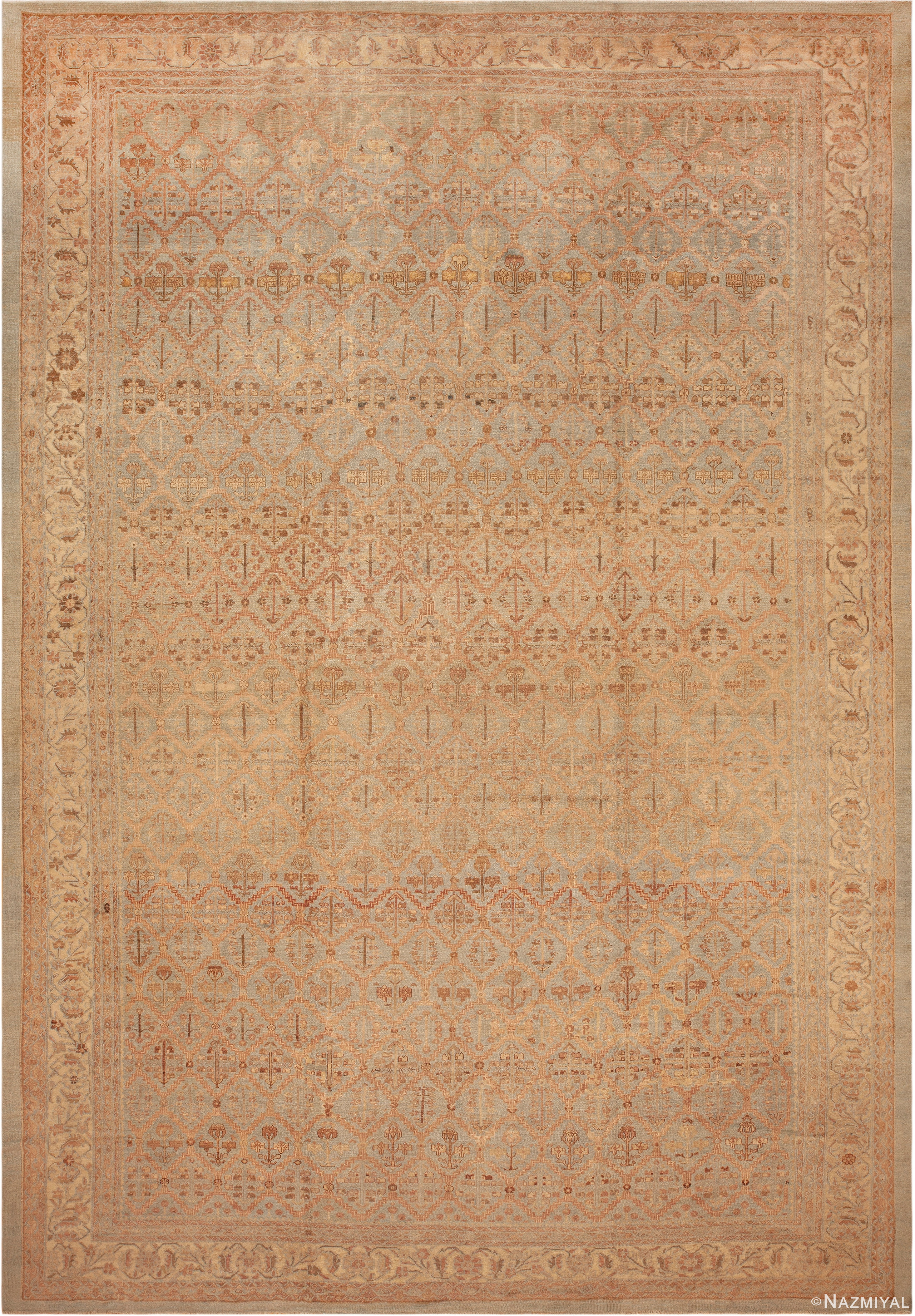
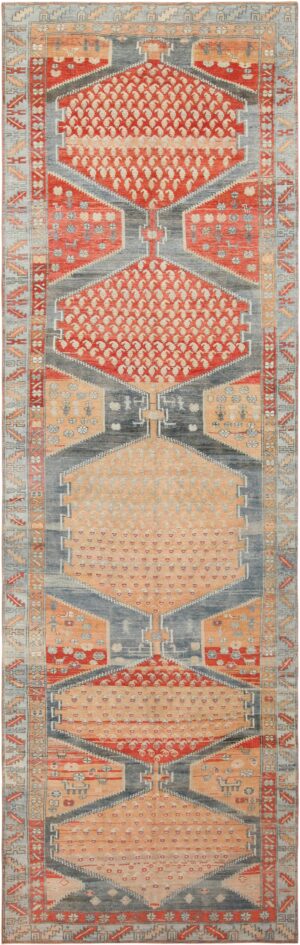
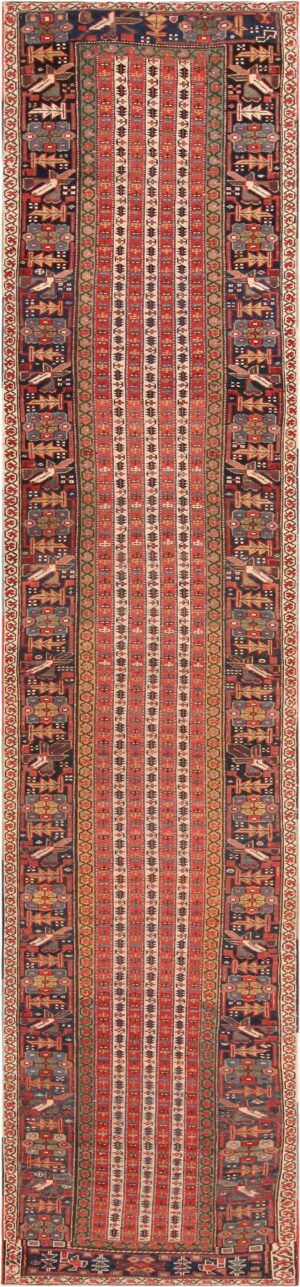
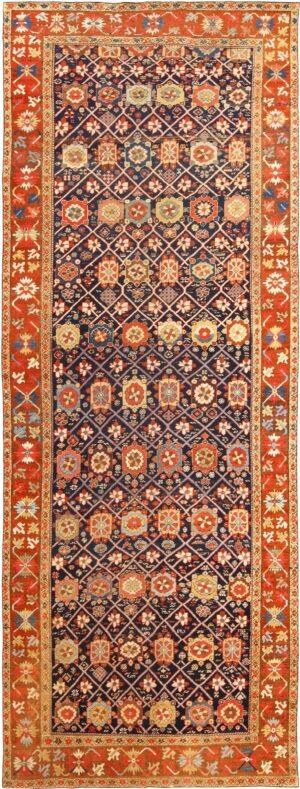
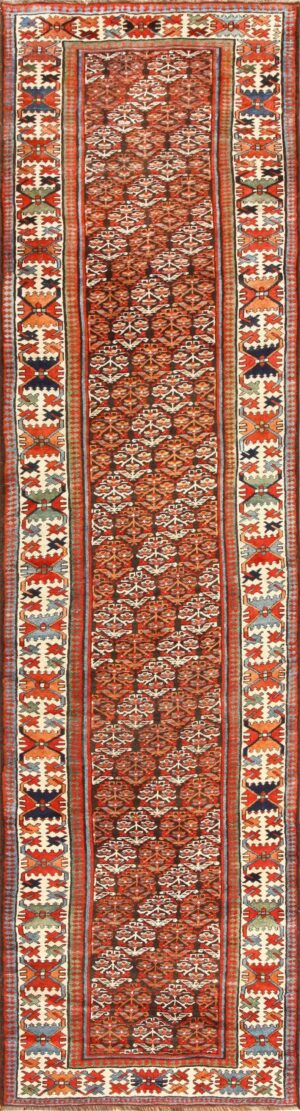
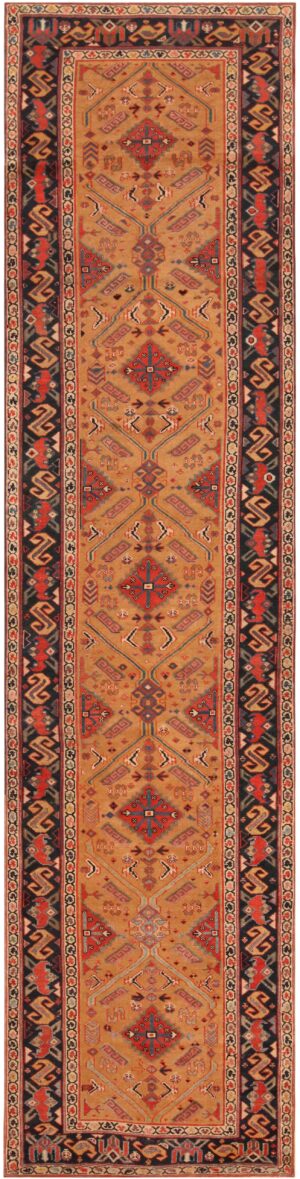
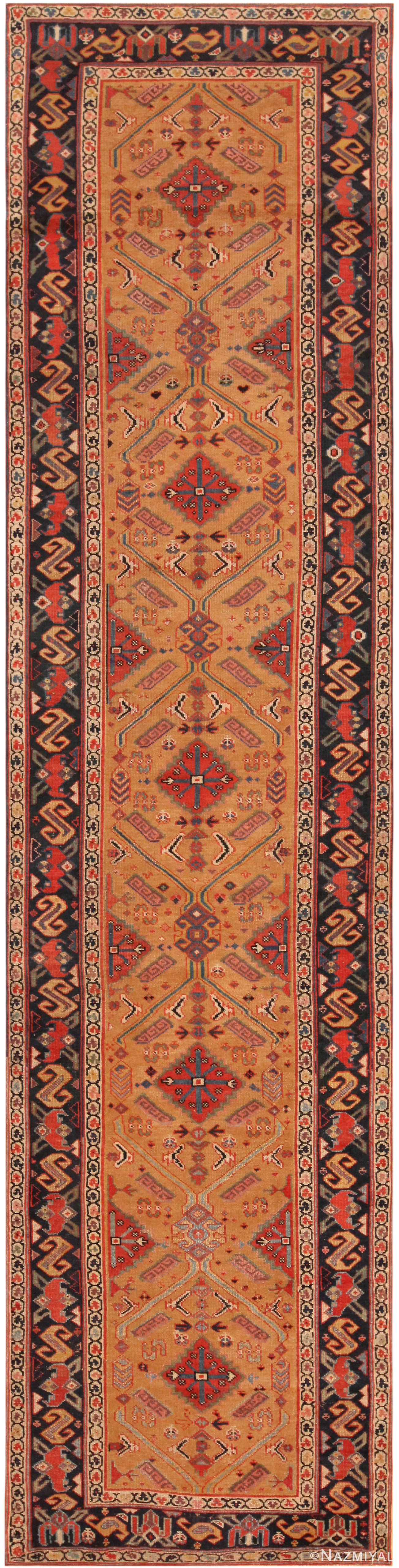
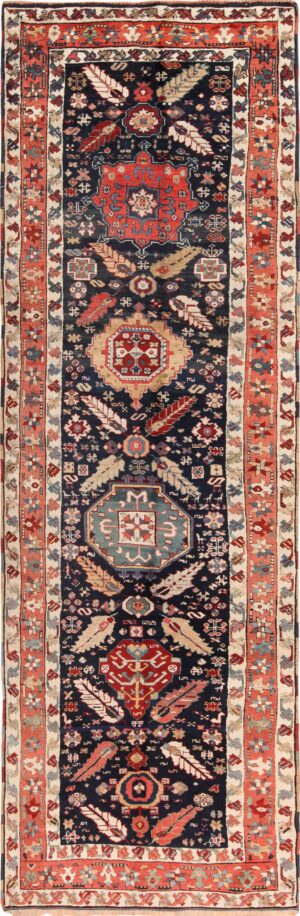
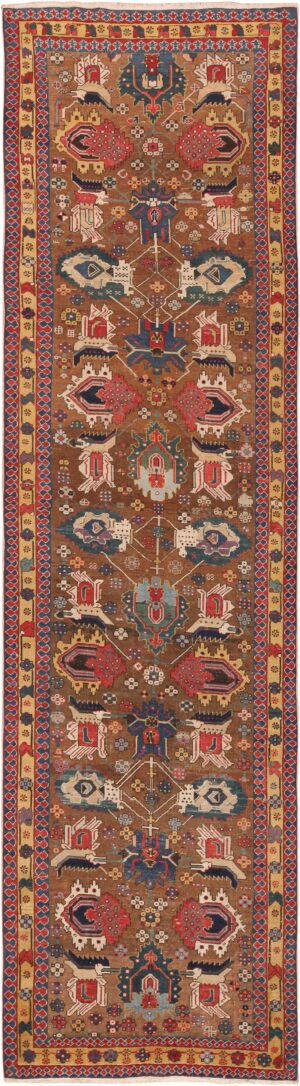
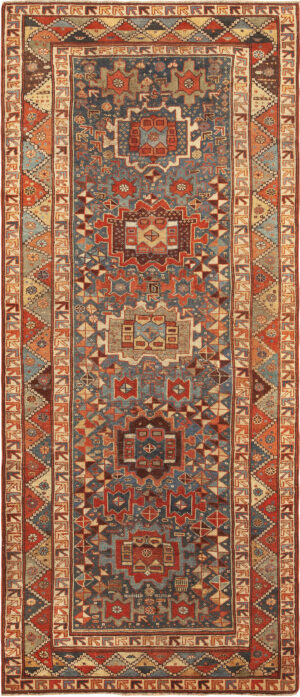
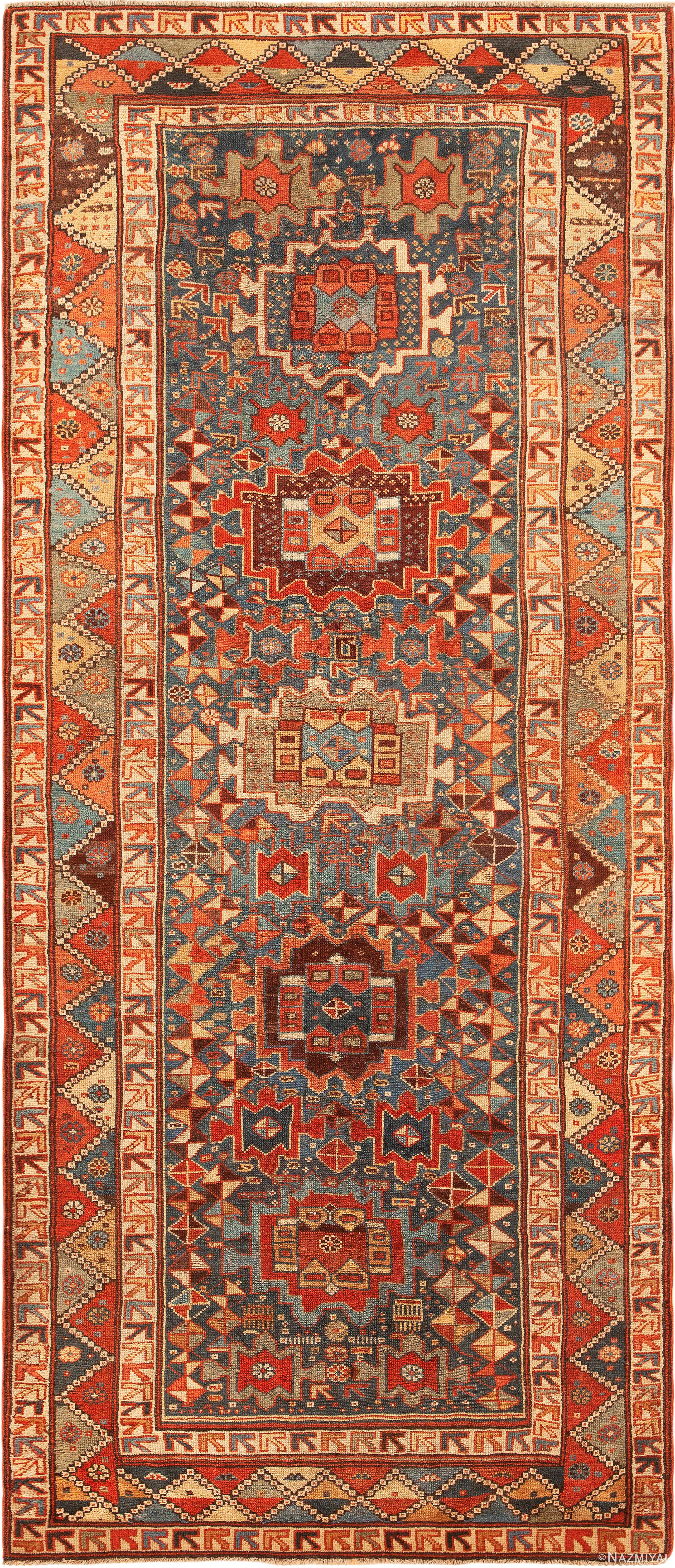
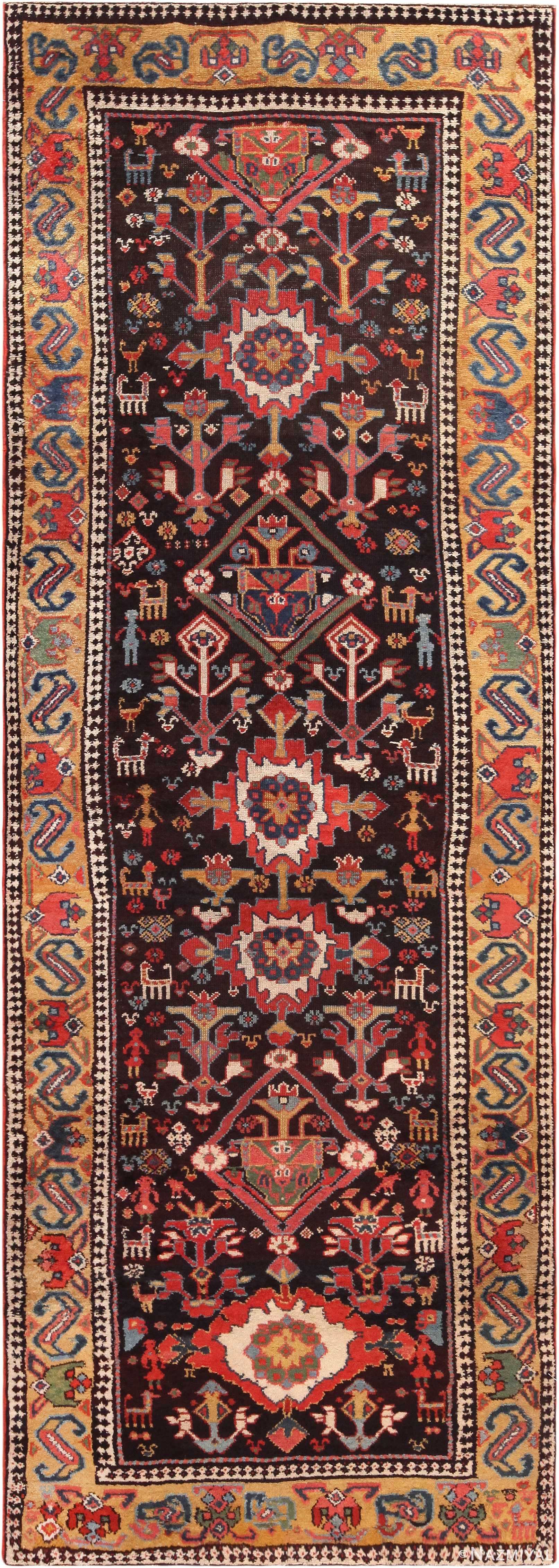
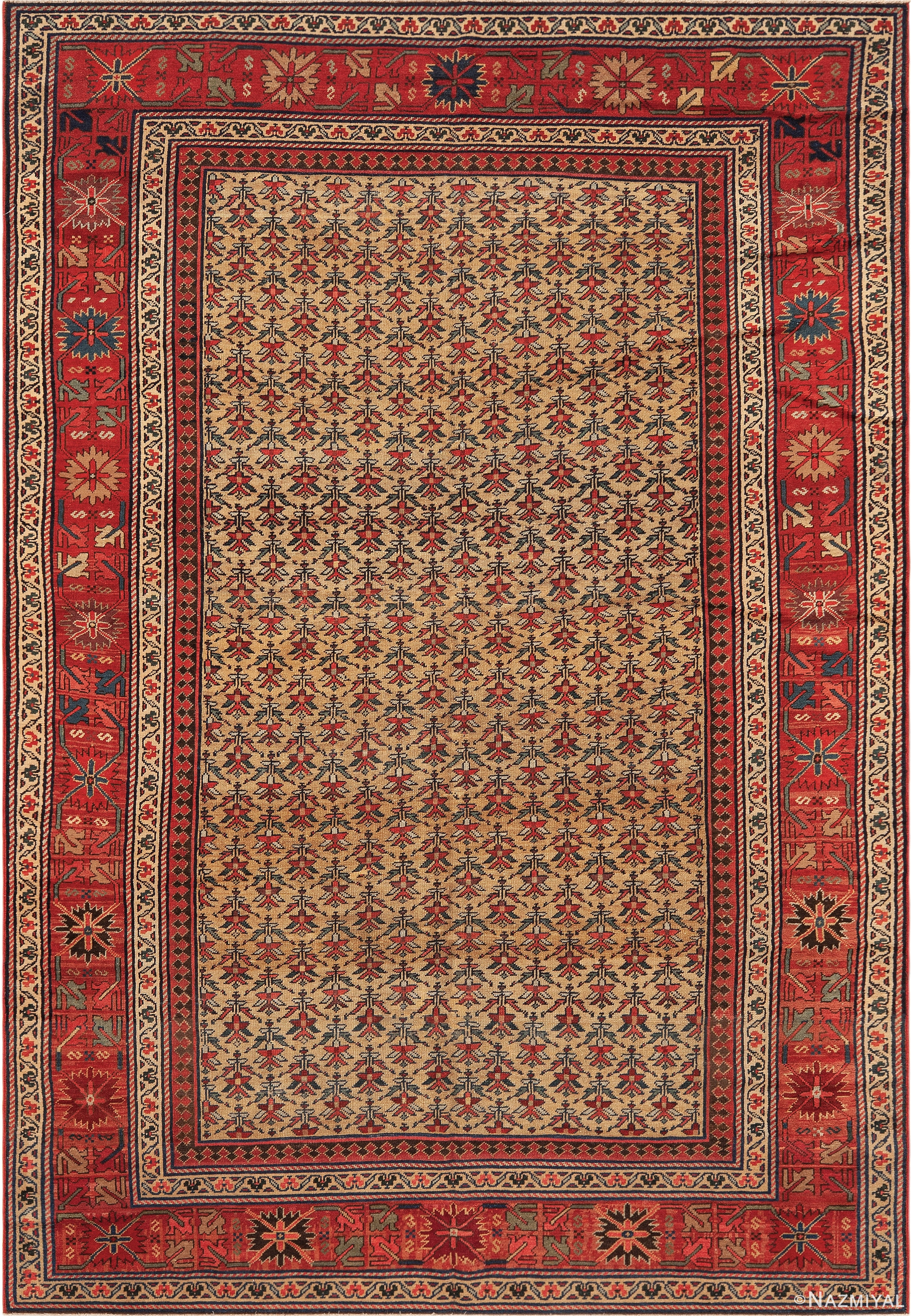
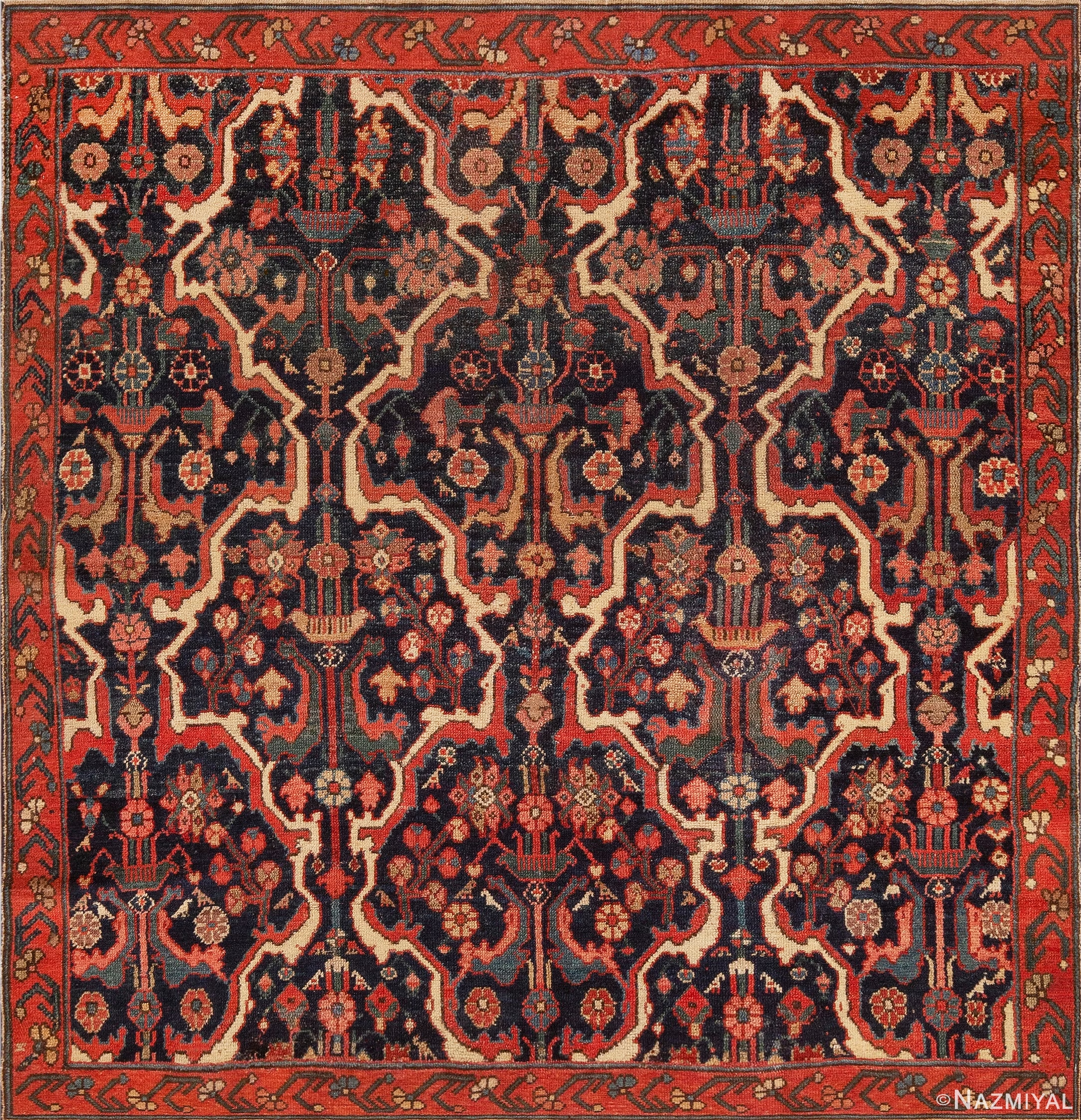
Inventory changes frequently. These featured rugs are examples of Northwest Persian weaving—showing the range from large room-size carpets to long hallway runners.
Identification & Construction
How to recognize Northwest Persian design “grammar”
Many Northwest Persian rugs share a confident, architectural layout: strong borders, bold medallions or grand lozenges, and rectilinear drawing that reads clearly at distance. Even when floral elements appear, they often feel “disciplined” and geometric rather than delicate. Because the region sits near major cultural crossroads, you’ll sometimes see motifs and color relationships that feel adjacent to Caucasian rugs, while still retaining Persian framing and field organization.
Structure, materials, and what varies by sub-region
Northwest Persian production spans tribal, village, and workshop traditions, so structure is not one-size-fits-all. Many rugs are wool-forward (wool pile on a sturdy foundation), and well-spun wool can hold saturated reds and deep indigos beautifully—especially in long runners and gallery formats. If you like to compare weaving families by geography, use rug origins to browse by region and tradition.
Decorating & Placement Guidance
Let the pattern “anchor” the room
North West Persian rugs bring visual structure. In large rooms, they can organize open plans by creating a clear center and perimeter; in narrower spaces, long runners can turn hallways into intentional “galleries.” Pair bold borders with calmer walls and a few natural materials (wood, leather, linen) so the rug feels curated rather than busy.
Match the era and density to your lifestyle
For heritage and collector presence, start with an antique rug in a strong palette and stable condition. If you want a softer, lived-in look that blends easily with mixed furnishings, explore vintage rugs. For cleaner lines (and fewer competing motifs), a modern rug in a restrained geometric language can deliver the same “architectural” grounding with less ornament.
Choose the right scale for the footprint
Because these rugs often use strong contrast, scale matters. In compact rooms, consider a simpler field or lighter ground. In large rooms, dense patterns can feel richly layered—especially when furniture “sits” within the border system rather than cutting through it.
North West Persian Rugs vs Heriz Rugs
Many buyers encounter Northwest Persian rugs while searching for Heriz rugs. Heriz is one of the best-known Northwest Persian families—so this comparison helps clarify what’s specific to Heriz versus what belongs to the broader borderland category.
| Feature | North West Persian Rugs | Heriz Rugs |
|---|
| Category scope | Broad borderland family with multiple sub-types and village/tribal inputs | A famous Northwest Persian type with recognizable layout conventions |
| Design language | Geometry + strong borders; can range from tribal to workshop-influenced | Often bolder, more “architectural” medallions and angular drawing |
| Shopping focus | Identify the sub-type, then prioritize condition and clarity | Look for confident drawing, stable edges, and a cohesive palette |
Closest Rugs
- Heriz rugs — the best-known Northwest Persian family, often the closest “cousin” shoppers compare first.
- Serab rugs — typically runner-forward and structural, with a direct village-to-tribal sensibility.
- Caucasian rugs — a close neighbor influence; great for comparing motif logic and crisp geometry.
Glossary
Border system: The framing elements (main border + guard borders) that organize the rug’s field.
Medallion logic: How the central motif and surrounding elements distribute visual weight and symmetry.
Lozenge: A diamond-shaped motif often used as a central organizing shape in tribal and village designs.
Contrast control: The balance of light and dark tones so motifs stay legible without feeling harsh.
For more definitions, see the rug glossary.
FAQ
Where are North West Persian rugs from?
They come from Persia’s northwest border regions—historically connected to routes and communities near the Caucasus. Because borders and populations shifted over time, the category includes multiple sub-types and design influences.
Are Northwest Persian rugs considered tribal?
Many are. The region includes tribal and village weaving traditions, so you’ll often see bold geometry and direct drawing. Some pieces also show workshop-level structure or more formal framing.
Do Northwest Persian rugs relate to Heriz rugs?
Yes. Heriz is one of the most recognized Northwest Persian families, and many shoppers use Heriz as a reference point for the broader regional style.
What colors are common in antique Northwest Persian rugs?
Brick reds, deep indigo/navy, ivory, soft blues, and warm browns are common, often with crisp contrast that keeps the pattern legible at distance.
What should I check first when buying a Northwest Persian rug?
Start with condition: stable edges, honest wear, and a clean perimeter. Then evaluate clarity—motifs should read clearly and the overall layout should feel balanced for your room.
Nazmiyal White-Glove Service
We make it easy to shop with confidence—whether you’re choosing a single statement piece or curating a full room.
Nazmiyal Collection has been a trusted source for antique rugs and vintage carpets for over 45 years. Our NYC gallery curates one-of-a-kind pieces with an emphasis on authenticity, provenance, and lasting decorative value.
Need help? Call us at (212) 545-8029 or visit our New York City showroom to work with a rug expert.

 Size: 13 ft 4 in x 19 ft 3 in (4.06 m x 5.87 m)
 Size: 2 ft 7 in x 18 ft (0.79 m x 5.49 m)
 Size: 5 ft 4 in x 17 ft (1.63 m x 5.18 m)
 Size: 3 ft 3 in x 15 ft (0.99 m x 4.57 m)
 Size: 3 ft 8 in x 14 ft 3 in (1.12 m x 4.34 m)
 Size: 5 ft 5 in x 14 ft (1.65 m x 4.27 m)
 Size: 3 ft 7 in x 13 ft 5 in (1.09 m x 4.09 m)
 Size: 3 ft 4 in x 13 ft 2 in (1.02 m x 4.01 m)
 Size: 4 ft 3 in x 13 ft (1.3 m x 3.96 m)
 Size: 3 ft 3 in x 11 ft 9 in (0.99 m x 3.58 m)
 Size: 3 ft 4 in x 10 ft 4 in (1.02 m x 3.15 m)
 Size: 4 ft x 9 ft 8 in (1.22 m x 2.95 m)
 Size: 3 ft 6 in x 9 ft 8 in (1.07 m x 2.95 m)
 Size: 6 ft 7 in x 9 ft 7 in (2.01 m x 2.92 m)
 Size: 4 ft 8 in x 4 ft 9 in (1.42 m x 1.45 m)